Connect with us

News

TISL assesses Lanka’s progress in fulfilling its commitments under United Nations Convention Against Corruption

Published

on

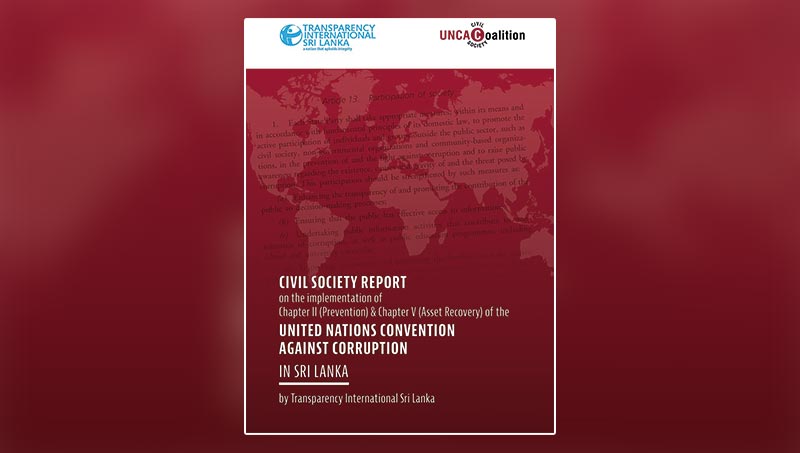
Transparency International Sri Lanka (TISL) has released an independent Civil Society Report assessing Sri Lanka’s progress in fulfilling its commitments under the United Nations Convention Against Corruption (UNCAC), the first legally binding global instrument to combat corruption.

Sri Lanka signed and ratified the UNCAC in 2004, committing to align national laws and institutions with global standards on preventing corruption, promoting transparency and accountability and combatting illicit financial flows.

The newly launched Civil Society Report focuses on two key sections of the Convention: Chapter II – Preventive Measures, which includes obligations to strengthen public sector integrity, ensure transparency in political financing, adopt effective access to information laws, and establish independent anti-corruption bodies; Chapter V – Asset Recovery, which covers international cooperation in tracing, freezing, and returning proceeds of corruption, improving financial transparency, and strengthening law enforcement coordination to combat money laundering and related offences.

This parallel report was produced with the technical support of the UNCAC Coalition – a global civil society network of over 400 organisations promoting the implementation and monitoring of the UNCAC. The report is the result of nearly a year of research, legal analysis, and interviews with public officials, civil society representatives, and institutional stakeholders. It covers developments up to 30 January 2025 and is intended to supplement the official UNCAC review process.

While Sri Lanka has made notable strides in legal reform, gaps remain in implementation. Key findings include: Weak enforcement of regulations continues to undermine the effectiveness of anti-corruption legislation; Key public institutions lack the structural independence and institutional capacity needed to function effectively; Limited inter-agency coordination on complex corruption and money laundering investigations; Low compliance with proactive disclosure requirements by Public Authorities under the Right to Information Act.

The report acknowledges that the enactment of Anti-Corruption Act No. 09 of 2023 and the Election Expenditure Act No. 03 of 2023, and the development of the National Action Plan on Anti-Corruption (2025-2029) as important steps forward. However, institutional weaknesses – such as a lack of resources, ineffective enforcement, and the absence of a mechanism for meaningful public participation – continue to undermine these reforms.

The report outlines recommendations to: Develop and streamline anti-corruption mechanisms by ensuring legal reforms are supported by clear implementation processes and coordinated institutional action; Strengthen institutional oversight and accountability by enhancing the independence, mandate, and resources of key oversight bodies; Improve transparency and public participation by formalising timely consultations and expanding proactive disclosure of laws, budgets, and government decisions; This Civil Society Report provides an evidence-based picture of Sri Lanka’s anti-corruption efforts – highlighting progress, gaps, and practical means forward. It is intended to support constructive engagement between government agencies, civil society, and international partners to advance the country’s anti-corruption commitments.



Continue Reading
Advertisement
Click to comment

Leave a Reply

Your email address will not be published. Required fields are marked *

News

Representatives from the Ceylon Chamber of Commerce meet PM

Published

on

By

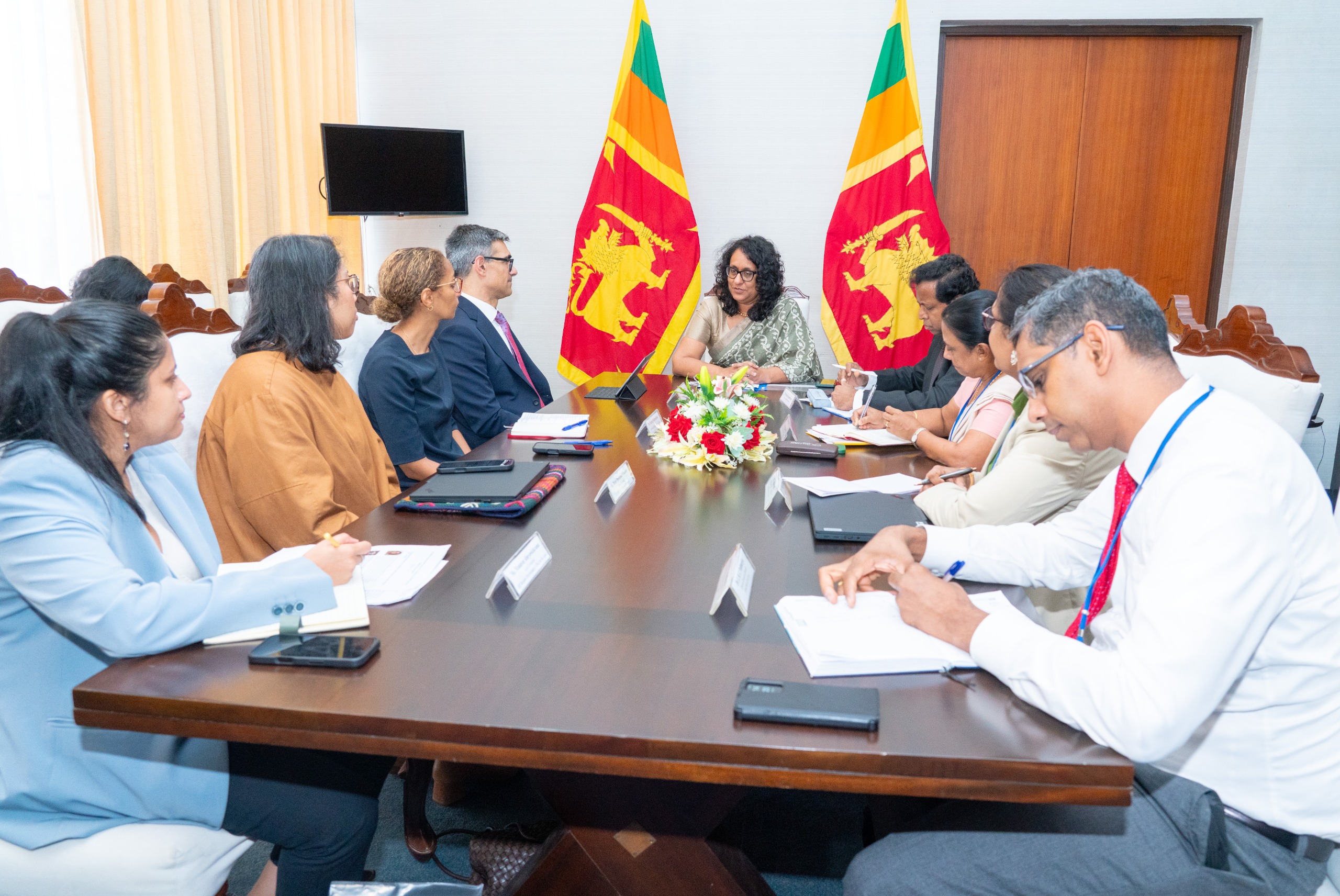
Representatives from the ’The Ceylon Chamber of Commerce’ met with Prime Minister Dr. Harini Amarasuriya on Wednesday [24th of June] at the Parliament premises.

During the meeting, discussions focused on the Sri Lanka Economic and Investment Summit 2026 (SLEIS 2026), which is scheduled to be held on 12 and 13 October 2026. Attention was also given to digitalization initiatives, the introduction of digital technologies in schools under new education reforms, and the transformative role of Artificial Intelligence (AI) in Sri Lanka’s education sector.

Representatives of the Chamber noted that the summit would serve as an important platform for encouraging both local and foreign investment, while also contributing to the shaping of the country’s future economic policies.

The meeting was attended by Krishan Balendra, Chairman of The Ceylon Chamber of Commerce; Vinod Hirdaramani, Deputy Vice Chairman; Shiran Fernando, Secretary General and Chief Executive Officer; Aliki Perera, Deputy Secretary General and Chief Operating Officer; and Anagi Rodrigo-Weerasekera, Chief Economist and Head of Economic Intelligence, along with several other representatives.

[Prime Minister’s Media Division]

Continue Reading

News

Progress of Housing Project for Malayagam Community families funded by India reviewed

Published

on

By

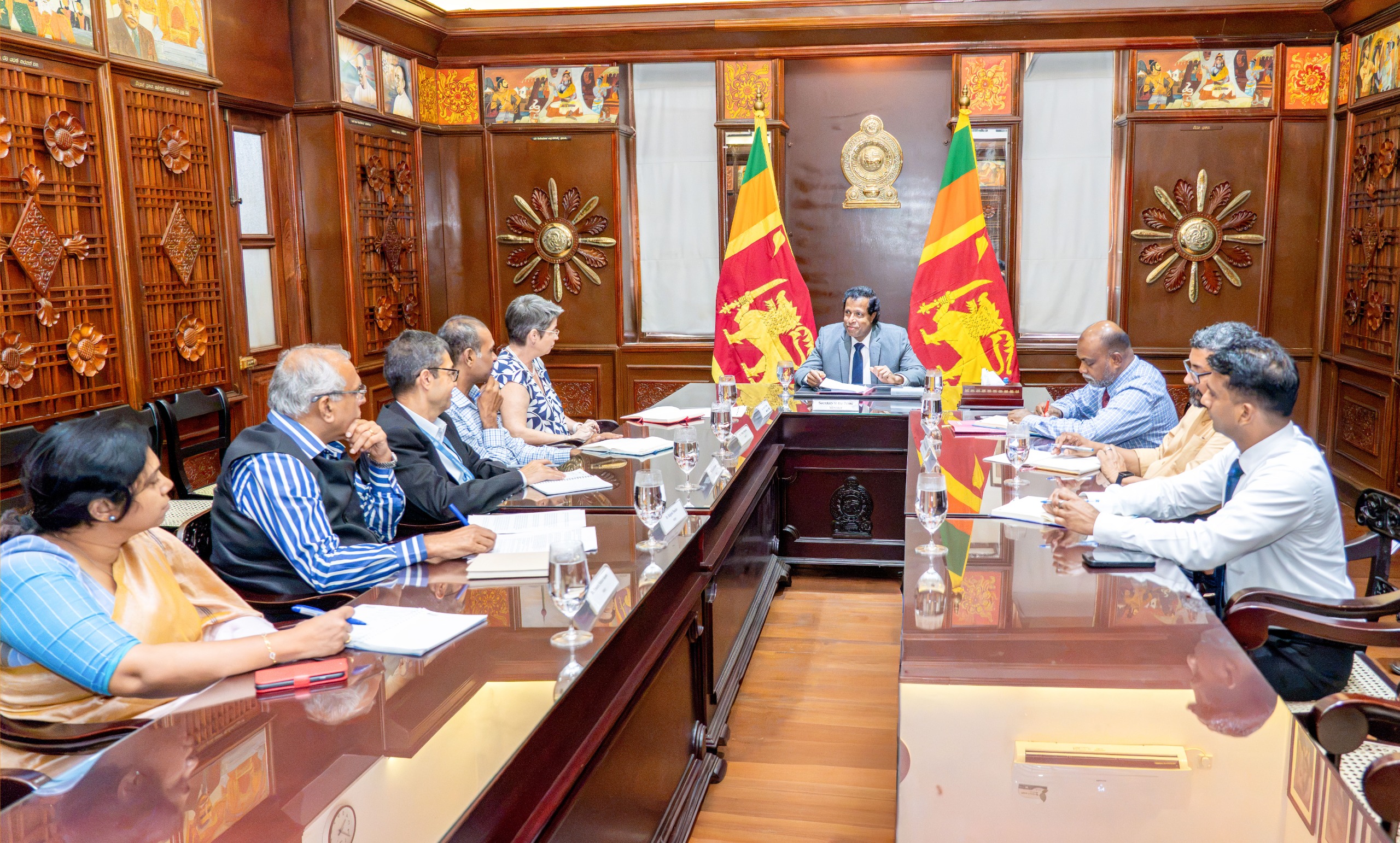
A discussion to review the progress of the housing project under which 4,700 houses are being constructed for the Malayagam community with Indian assistance was held this afternoon (24) at the Presidential Secretariat under the chairmanship of the Chief of Staff to the President, Prabath Chandrakeerthi.

Under this housing programme, 2,026 houses are to be provided to families identified by the National Building Research Institute (NBRI) as being at disaster risk. The remaining houses are expected to be allocated to eligible workers residing in the plantation sector.

Accordingly, the houses will be provided to Malayagam community families living on estates belonging to 22 Regional Plantation Companies, as well as estates under the State Plantations Corporation, Janawasama and Elkaduwa Plantations.

For the construction of each house, the Government of India has allocated Rs. 2.8 million, while the Government of Sri Lanka has contributed Rs. 400,000.

During the discussion, Chandrakeerthi instructed officials to ensure that the housing project is completed before the end of this year. He further directed that land identified for the construction of houses be released without delay and that the National Building Research Institute provide the necessary reports to identify suitable land for the project.

The housing project is being implemented jointly by the Ministry of Plantation and Community Infrastructure, the National Housing Development Authority, the State Engineering Corporation and the Plantation Human Development Trust.

Among those present were Additional Secretary (Development) of the Ministry of Plantation and Community Infrastructure, K. S. Wijayakeerthi; Director General (Engineering), N. D. N. Pushpakumara; Director General (Planning), W. A. K. S. Damayanthi; the Secretary General of the Planters’ Association; and officials from the National Housing Development Authority, the State Engineering Corporation, relevant institutions and plantation companies.

(PMD)

Continue Reading

Latest News

Former Minister Wijeyadasa Rajapakshe’s son arrested by CIABOC

Published

on

By

It has been reported that Attorney at Law Rakitha Rajapakshe, the son of former Minister of Justice Wijeyadasa Rajapakshe, has been arrested by the Commission to Investigate Allegations of Bribery or Corruption (CIABOC) over alleged links with the underworld.

Continue Reading

Trending