
Foreign News
Three men accused of plotting 9/11 reach plea deal – Pentagon

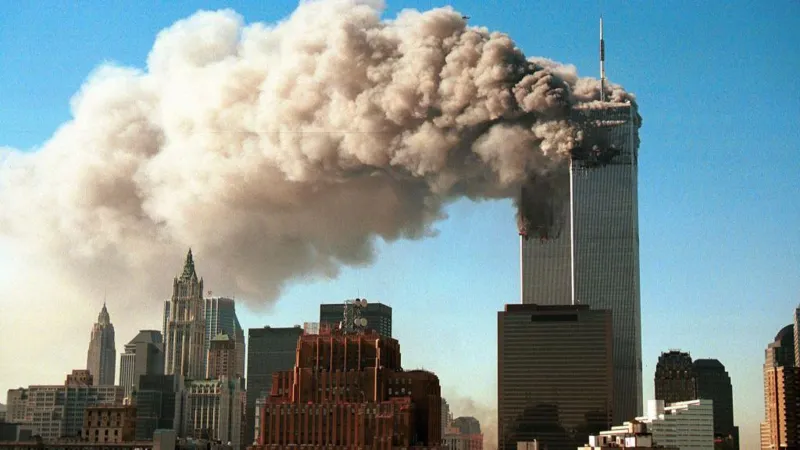
Three of the men accused of plotting the 11 September 2001 attacks on the US have entered into a pre-trial agreement, the Department of Defense says.
Khalid Sheikh Mohammed, Walid Muhammad Salih Mubarak Bin Attash, and Mustafa Ahmed Adam al-Hawsawi have been held at the US Navy base at Guantanamo Bay, Cuba, for years without going to trial.
Details of the deal have not been announced, but US news outlets say the men will plead guilty in exchange for the prosecution agreeing not to seek the death penalty.
Nearly 3,000 people in New York, Virginia and Pennsylvania were killed in the attacks, which sparked the “War on Terror” and the invasions of Afghanistan and Iraq.
Brett Eagleson, the president of 9/11 Justice, an organisation that represents 9/11 survivors and relatives of victims, said in a statement provided to the BBC that the families are “deeply troubled by these plea deals”. He said the process lacked transparency and urged the authorities to pursue more information on the role of Saudi Arabia in the attacks.
Terry Strada, who lost her husband Tom, told the BBC’s Today Programme: “It was a gut-punch to hear that there was a plea deal today that was giving the detainees in Guantanamo Bay what they want.” Ms Strada, the national chair of the campaign group 9/11 Families United, added: “This is a victory for Khalid Sheikh Mohammad and the other two, it’s a victory for them,” she said.
The 9/11 attacks were the deadliest assault on US soil since the 1941 Japanese attack on Pearl Harbor, Hawaii, where 2,400 people were killed.
The plea deal was first announced in a letter sent by prosecutors to the families of victims, according to The New York Times. It said the plea before a military court could come as early as next week.
In its announcement, the US defence department said “the specific terms and conditions of the pretrial agreements are not available to the public at this time”.
The men have been accused of a litany of charges, including attacking civilians, murder in violation of the laws of war, hijacking and terrorism.
Khalid Sheikh Mohammed is widely considered the architect of the attack, in which hijackers seized passenger planes and crashed them into the World Trade Center in New York and the Pentagon outside of Washington. A fourth plane crashed into a field in Pennsylvania after passengers fought back.
Mohammed, a US-educated engineer, was captured along with Hawsawi in Pakistan in March 2003.
Prosecutors argued that he brought his idea of hijacking and flying planes into US buildings to al-Qaeda leader Osama Bin Laden, and later helped recruit and train some of the hijackers.
He was subjected to a number of “enhanced interrogation techniques”, including waterboarding – simulated drowning – at least 183 times before the practice was banned by the US government.
The trial has been delayed for so long partly because of fears that the so-called brutal interrogation techniques which critics say amounted to torture could have undermined the evidence against the detainees.
“This is the least bad deal in the real world that would ever happen,” national security analyst Peter Bergen told CNN.
In September, the Biden administration reportedly rejected the terms of a plea deal with five men held at the US Navy base in Cuba, including Mohammed.
The men had reportedly sought a guarantee from the president that they would not be kept in solitary confinement and would have access to trauma treatment.
The White House National Security Council said that the president’s office was told on Wednesday of the new deal and had played no role in negotiations.
Fifteen of the 19 plane hijackers were Saudi nationals and families are bringing a lawsuit against the kingdom, which denies any involvement.
Republicans were quick to attack the Biden administration for striking a deal with the accused.
Senate Minority Leader Mitch McConnell condemned the move as “a revolting abdication of the government’s responsibility to defend America and provide justice”.
“The only thing worse than negotiating with terrorists is negotiating with them after they are in custody,” he said.
[BBC]

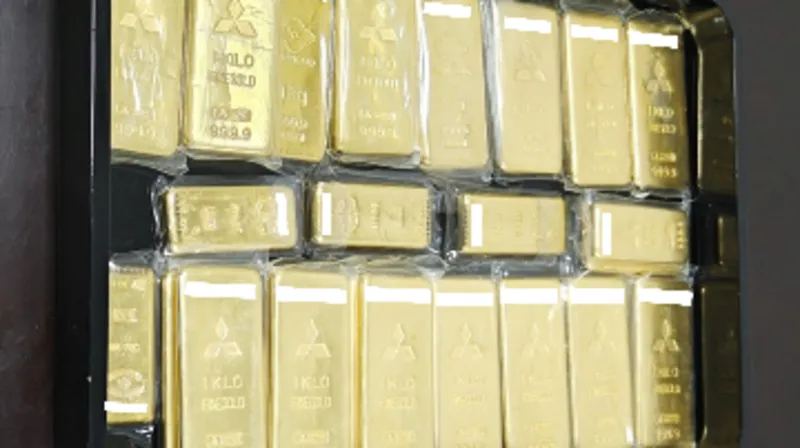
A Japanese city has received a hefty donation to help fix its ageing water system: 21kg (46lb) in gold bars.
The gold bars, worth an estimated 560 million yen ($3.6m; £2.7m), were given last November by a donor who wished to remain anonymous, Osaka Mayor Hideyuki Yokoyama told a press conference on Thursday.
Home to nearly three million people, Osaka is a commercial hub located in the Japan’s Kansai region and the country’s third-largest city.
But like many Japanese cities, Osaka’s water and sewage pipes are ageing – a growing cause for safety concern.
Osaka recorded more than 90 cases of water pipe leaks under its roads in the 2024 fiscal year, according to the city’s waterworks bureau.
“Tackling ageing water pipes requires a huge investment. So I have nothing but appreciation,” Yokoyama told reporters on Thursday, in response to a question about the huge gold donation.
Yokoyama said the amount was “staggering” and he was “lost for words”.
The same mystery donor had previously given 500,000 yen in cash for municipal waterworks, he added.
The city’s waterworks bureau said in a statement on Thursday that it was grateful for the gold donation and would put it to good use – including tackling the deterioration of water pipes.
More than 20% of Japan’s water pipes have passed their legal service life of 40 years, according to local media.
Sinkholes have also become increasingly common in Japanese cities, many of which have ageing sewage pipeline infrastructure.
Last year, a massive sinkhole in Saitama Prefecture swallowed the cab of a truck, killing its driver. The sinkhole was believed to have been caused by a ruptured sewage pipe.
That incident prompted Japanese authorities to step up efforts to replace corroded pipes across the country. But budget issues have stalled the progress of such pipe renewal works.
[BBC]

Several countries which have signed up to Donald Trump’s Board of Peace have contributed more than $7bn (£5.2bn) towards a Gaza “relief package”, the US president has said.
Trump made the announcement during the first meeting of the organisation that many of US’s Western allies have refused to join, fearing the body originally meant to help end the war between Israel and Hamas may be intended to replace the UN.
The second phase of a US-brokered Gaza ceasefire plan includes the disarmament of Hamas and the reconstruction of Gaza.
It “looks like” Hamas would disarm, Trump told participants. However, there are few signs of the Palestinian group disarming. Gazans say it is extending its control over the Strip.
Speaking as the Board of Peace convened on Thursday, Israeli Prime Minister Benjamin Netanyahu said Israel had “agreed with our ally the US there will be no reconstruction of Gaza before the demilitarisation of Gaza”.
The war was triggered by the Hamas-led attack on southern Israel on 7 October 2023, in which about 1,200 people were killed and 251 others were taken hostage.
Israel responded to the attack by launching a military campaign in Gaza, during which more than 72,000 people have been killed, according to the territory’s Hamas-run health ministry.
The enclave’s economy is in ruins, with its buildings and infrastructure largely destroyed. The UN estimates the cost of damage at $70bn.
Countries including the UK, Canada, France and Germany have refused to join the Board of Peace that came into being last month.
In an effort to address concerns that the organisation was meant as a way of sidelining the UN, Trump told the board’s first meeting in Washington that “we’re going to be working with the United Nations very closely, we’re going to bring them back”.
Gaza, the US president said, was “no longer a hotbed of radicalism and terror”.
“And to end that, we have today, and I’m pleased to announce that Kazakhstan, Azerbaijan, UAE, Morocco, Bahrain, Qatar, Saudi Arabia, Uzbekistan, and Kuwait have all contributed more than $7bn toward the relief package”.
“Every dollar spent is an investment in stability,” he said, adding that the UN would contribute $2bn for humanitarian assistance, while football body Fifa would raise $75m for soccer-related projects in the Strip.
Nickolay Mladenov, a Bulgarian politician who has been given the title of high representative for Gaza as part of the board, said the process of recruiting a new transitional Palestinian police force had begun and “just in the first few hours we have 2,000 people who have applied”.
But both Israel and the US have insisted that the force is not drawn from the existing Hamas-controlled police without stringent vetting, nor do they want it simply made up of the security forces of the Palestinian Authority in the West Bank.
That means starting from scratch, and the task is daunting.
Mladenov has previously said the Palestinian police force must be the primary security agency in Gaza, assisted by the International Stabilisation Force (ISF), and not vice-versa.
According to the US plan, the ISF will work with Israel and Egypt, along with a newly trained and vetted Palestinian police force, to help secure border areas and ensure the process of permanently disarming non-state armed groups, including Hamas.
But Mladenov said there is little evidence such a force could yet oversee the disarmament of Hamas and other Palestinian factions.
Meanwhile, there was no indication at the meeting that Hamas was prepared to hand over its weapons, despite Trump’s combination of optimism and threat on this point.
So far, Hamas has publicly appeared to make handing over weapons contingent on – at least – Israeli withdrawal from Gaza.
Progress on this issue is critical because none of Trump’s proposals for reconstruction and governance can take place without a security force on the ground that has broad backing of the Palestinian population, given its role includes assuming a monopoly of force within Gaza.
The Washington meeting itself was characteristic of Trump’s approach to Israeli-Palestinian peace-making over his two terms – involving a future for Palestinians seen often through the lens of real-estate development and wealthy investor funding.
Meanwhile Israel’s leadership has been wary about some of Trump’s efforts, particularly the invitations to his board for Turkey and Qatar, whom Israel does not want to see take a prominent role in decisions on the future of Gaza.
Trump and his team have defended his unconventional approach saying it amounts to “new thinking” to try to solve the conflict.
However, Mladenov has warned that without rapid progress, Gaza will remain split into two territories, one under continuing Israeli occupation and the other under Hamas control – and also split from the West Bank, making a future independent state unviable and failing to secure either Palestinians or Israelis.
[BBC]
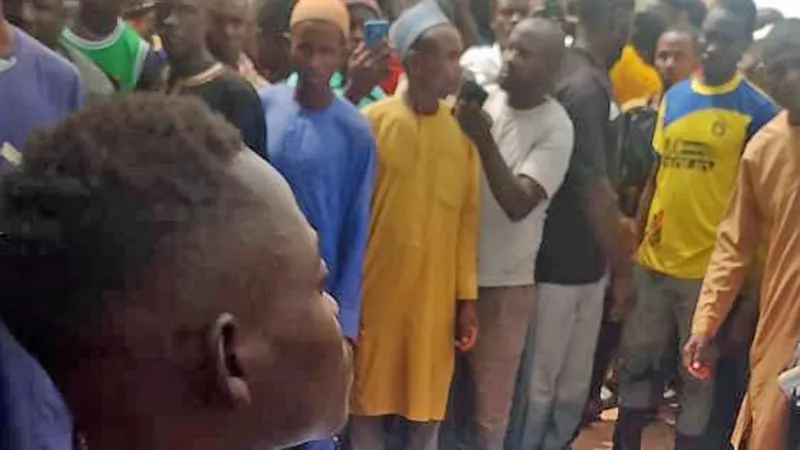
At least 33 miners have died in a suspected carbon-monoxide leak at a lead and zinc mine in central Nigeria’s Plateau state, witnesses have told the BBC.
The tragedy is believed to have happened just before sunrise at a site outside the town of Wase run by the mining company Solid Unity Nigeria Ltd.
Toxic gas is believed to have built up underground in poorly ventilated tunnels, causing the workers to collapse just before the end of their night shift.
They were discovered by those reporting to work in the morning – more than 20 other miners were rescued and rushed to hospital for treatment.
Security personnel have sealed off the mine, which is about 200km (124 miles) south-east of the state capital of Jos, as investigations get under way to find out the cause of the leak.
State officials are yet to visit the area and response efforts have reportedly been slow because of security concerns – armed criminal gangs, known locally as bandits, have been active there in recent years.
Safiyanu Haruna, one of the miners who found the bodies at the start of his shift, told the BBC that some of the miners who were underground survived and were taken to a hospital in Wase for treatment.
According to Haruna, the incident occurred at around 06:30 local time (05:30 GMT) killing 37 miners.
He said the miners had just finished performing their early morning Muslim prayers and had returned underground to finish their shift.
The Plateau state government has issued a statement saying that according to its preliminary investigation 33 miners were killed in a blast at the mine – but workers at the scene say this is not the case.
“It was carbon-monoxide gas that leaked and killed them,” Haruna said.
“There was no rescue for them at the time because those who were coming for the morning shift had yet to arrive,” he said.
“It is sad to lose 37 miners who were struggling to make ends meet. We’re disturbed by the incident.”
The victims, believed to be men aged between 20 and 40, were buried shortly afterwards in accordance with local tradition, another local resident told the BBC.
The news has devastated the mainly Muslim community.
Mining disasters occur relatively frequently in Nigeria.
Less than two years ago, dozens of gold miners died after being trapped underground when a pit collapsed in neighbouring Niger state.
Officials believe that incident was caused by torrential rains which had softened the soil.
The tragedy is likely to renew concerns over safety standards in Nigeria’s mining sector.
[BBC]

Mystery donor gives Japanese city $3.6m in gold bars to fix water system

Trump directs US government to prepare release of files on aliens and UFOs

‘Best time to crush’ Australia, says Oman captain Jatinder Singh

Fairly heavy showers likely in the Eastern province and in Matale, Badulla, Mullaitivu and Polonnaruwa districts

CEB trade unions hint at stringent industrial action after talks fail

PM reveals allowances and perks available to MPs

‘Dates have the highest sugar content to fight Coronavirus’

Sunday Island 27 December – Headlines

#SundayIsland 17th December – Headlines

Sunday Island – 28th March

Sunday Island Headlines – 21 March

Sunday Island – 21st February – Headlines
-
 Life style5 days ago
Marriot new GM Suranga
-

 Business4 days ago
Ministry of Brands to launch Sri Lanka’s first off-price retail destination
-

 Features5 days ago
Monks’ march, in America and Sri Lanka
-
 Features5 days ago
The Rise of Takaichi
-
 Features5 days ago
Wetlands of Sri Lanka:
-

 News5 days ago
Thailand to recruit 10,000 Lankans under new labour pact
-
 News5 days ago
Massive Sangha confab to address alleged injustices against monks
-
 Sports1 day ago
Old and new at the SSC, just like Pakistan