
Features
Three gutsy women who chose the less travelled road


I was totally impressed reading about a Chinese woman of 56 who, tiring of her duty- filled work as housewife in an unhappy marriage just took off on a solo trip across China that, writers about her – Joy Dong and Vivian Wang – say “challenged deep-rooted gender norms.” She spends each night alone, curled up in a four and a half by eight foot tent, balanced on stilts on the roof of her car. She has seen her daughter and grandchildren only once in the past six months, and her husband not at all. Cheers to Su Min from Hunan Province, I say, now a feminist icon to the entirety of China. And she says, she has never been happier before cutting free “this time to find myself.” Cheers again!
The solo tripper
That is certainly not the end of the story nor all about Su Min. She felt she had done all she could as dutiful Chinese woman, maybe subservient to a domineering husband too. So she is “embracing a new identity: fearless road–tripper and internet sensation. For six months, she has been solo driving across China, documenting her journey for more than 1.35 million followers across social media platforms.” More interesting than the vistas she describes are intimate details of domestic life she reveals along with her dissatisfaction that drove her to a most unconventional step taken.
Su Min grew up in Tibet and when she missed the school bus, she walked the 12 miles on mountain roads. She used to drool seeing trucks pass by and imagined herself at the wheel. In China, she took on a factory job and married and found her 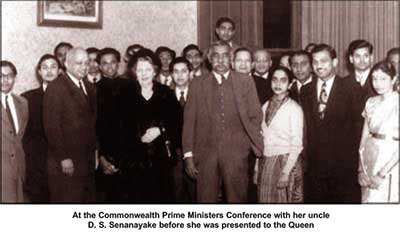 husband would be away from home for long spells and not tolerate her asking him questions. Physical abuse was frequent. She never considered leaving home or him, due to fearing the social stigma that would surely follow. In 2017, her daughter gave birth to twins whose care was transferred to her. Her husband cooled down but there was nothing in the marriage. She sought solace in novels and travel books, and romantic Korean soap operas but loneliness increased until finally a doctor diagnosed depression,
Then, in late 2019, she came across a video online of someone introducing their camping gear while on a solo road trip. She remembered her childhood dream of driving – the freedom and comfort it represented. She planned her trip. She had already bought herself a white hatchback Volkswagen with her savings. Her monthly pension was around $300.
When her grandsons started schooling, she decided to leave on her trip, Her family did not approve; her husband mocked her. With her daughter finally turning cooperative, she left her home in Zhengzhou on September 24, 2020, with a tent atop her car and a packed minifridge.
Millions watched the video she shared on social media, marveling at her new found freedom and doing exactly what she wanted like eating hot peppers which at home she could not, the others not sharing her taste.
She has encountered hostility, along with hosannas. Once a man asked her how she aired her family’s private affairs and said he would beat her if they met in person. She replied, “Good thing I haven’t met you.” However, it’s been more sympathy and praise that she’s received. “Older women send her messages about how painfully familiar her story feels and greet her at each destination with fruit and home-cooked meals. For the younger, she is a fount of advice about marriage and child rearing.” “Her unexpected popularity speaks to the collision of two major forces in Chinese society: the rapid spread of the internet and a flourishing awareness of gender equality in a country where traditional gender roles are still deeply rooted, especially among the older generations.”
Ms. Su’s daughter, Du Xiaoyang, who visited her in Hainan last month, said her mother was a new person.”Anything she wants to do, she just does, whereas before she seemed afraid of everything.”
 She plans to travel much more for a couple of years. She does not contemplate divorce but may move away from her husband if he continues his ill-treatment of her. “Now that I’ve finally come out, I need time to let it melt away,” she said. “There are many things that, as time passes, may have an outcome you never imagined.”
Local women solo trippers
Sri Lanka is definitely short of the likes of Su Min, and if there are women who threw it all away to fulfill themselves as independent women, managing adventuring forth alone, they have not taken off with their go-ahead instincts. Several young unmarried women travel in-country and overseas but in groups and maybe pairs; women only though.
I knew a young woman who said she dreams of throwing a backpack on her shoulders and just roaming around. That was in the 1960s with hippies breaking away. She did lead a fairly free life, mostly overseas, travelling alone, but with others in Sri Lanka.
Which brings to mind two daring women who deserve our unreserved admiration. The first has undoubtedly got it; actually not enough public acclaim. The second earned censure then, but she was a trailblazer in many ways.
Jayanthi Kuru-Utumpala scales Everest
Jayanthy Kuru-Utumpala is the most prestigious of women who went their way, who was the first Lankan and one of the very few South and South East Asian and Western women to scale the Himalayas. She conquered Mt Everest on the Vesak full moon night of May 21, 2016.
From her childhood, Jayanthi’s dream had been to climb Everest, even though two decades ago it would have seemed most unlikely. On any holiday the family went, she would find a hill to climb; five times up Sri Pada. Kirigalpotha and Horton Plains.
She has a Master’s degree in Gender Studies from Sussex University and is employed in the women’s rights field. When she attended seminars overseas, she saved every penny of her stipend and went mountain climbing: the Argentine Andes and Spanish Pyrenees being high points in her adventures. At the ages of 23 and 24 she followed basic and advanced mountaineering courses which taught her skills in rock and ice climbing. Both courses culminated in her scaling a 20,000 foot Himalayan peak in Sikkim, N E India.
And then she was set to climb the mountain of all mountains. In 2011 she met Johaan Peries who shared her zeal for mountaineering and her intrepid nature. They teamed up. She told me, with gratitude obvious in her voice, how much he helped her, supported her morally which was the kind of support she needed most. He was always a good companion. Jayanthi realized her dream.
Damayanthi Dunuwila sails with one other
My second example of an intrepid woman, adventurer really, is even more daring as she set forth on a sailing trip from Colombo to Lisbon with an American millionaire in his yacht during the later part of the 1950s. You can imagine the sensation she caused and censure among conservative women of Kandyan lineage. But she went her way and all we can say is ‘good for her!’
She was in University College when offered a scholarship to the London Royal Academy of Music. She grabbed it as her lifelong love was music. Elected a Licentiate of the Royal Academy, in 1950 she won the prestigious History of Music Prize, first Asian to win it. In 1955 her father fell seriously ill and she returned home. She performed on Radio Ceylon. When her father recovered, she wanted to return to London but her scholarship had lapsed, The lucky break (to diehard conservatives the daring temptation) was her being recruited by a visiting globetrotting American millionaire to assist him write his travelogue. Having a passport to travel anywhere, she sailed with him in his yacht to Lisbon to study Portuguese history. She met engineer Sven Sahlin and they married in 1962, making their home in Sweden. Her daughter engineer Shanaz married Per Sandberg. Damayanthi was a niece of D S Senanayake and probably was the inspiration for a famous baila still sung at parties.
This to be admired woman who broke bonds of conservatism and rigid stereotyping of women then, more so those of the ‘upper class’ was a talented musician, linguist and woman who achieved her desire to return to music studies in London unconventionally, yet successfully.
An anecdote told me by a Lake House staffer of then goes thus. In the furor raised by Damayanthi’s impending trip a journo visited her home to interview her. He found it full of dignified women in Kandyan dress. He asked her what they thought of her travelling alone across the ocean with a white man. “They are welcome to think whatever they want to, I care not.” Bravo to this intrepid woman who took the less travelled road which made all the difference!


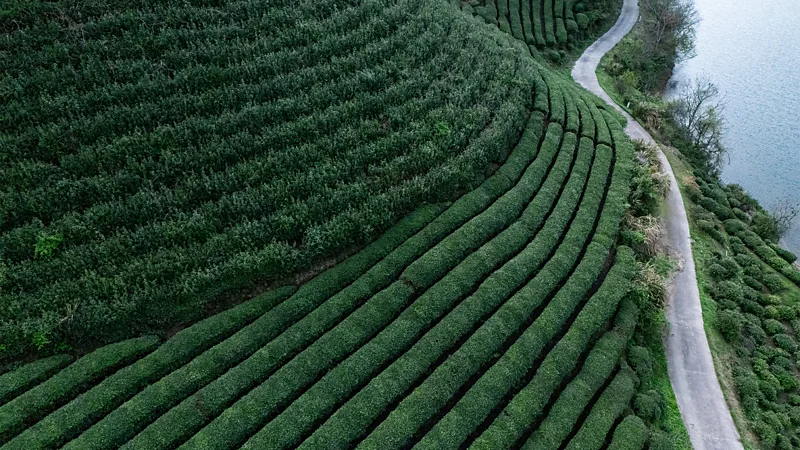
Longjing is one of China’s most revered green teas. But as its traditional production has dwindled, one of the best ways to taste the real thing is to head to the hills where it’s harvested.
On a lush hillside on the fringes of Hangzhou, Ge Xiaopeng stands between rows of tea bushes and examines a tiny leaf. He grips it between his thumb and forefinger and carefully lifts it upward, effortlessly detaching it from its stem. He drops the bud into his basket, which is already full of tender leaves, each one smooth and slender, green as jade.
Xiaopeng, like other farmers who grow Longjing tea, has been waiting for this moment all year. Literally meaning “Dragon Well”, Longjing is one of China’s most revered green teas, famous for flourishing in the rolling hills around West Lake in Hangzhou, a former imperial capital in eastern China’s Zhejiang Province. On this breezy day in March, right around the spring equinox, Xiaopeng says the leaves have finally reached the standard of 2.5cm in length, which means the annual spring harvest is underway.
Longjing has been a recognisable name among tea lovers for centuries, ever since the Qianlong Emperor visited Hangzhou in the 18th Century. According to legend, he was so taken with the tea that he ordered 18 bushes to be bestowed with imperial status and reserved their yields for the court.
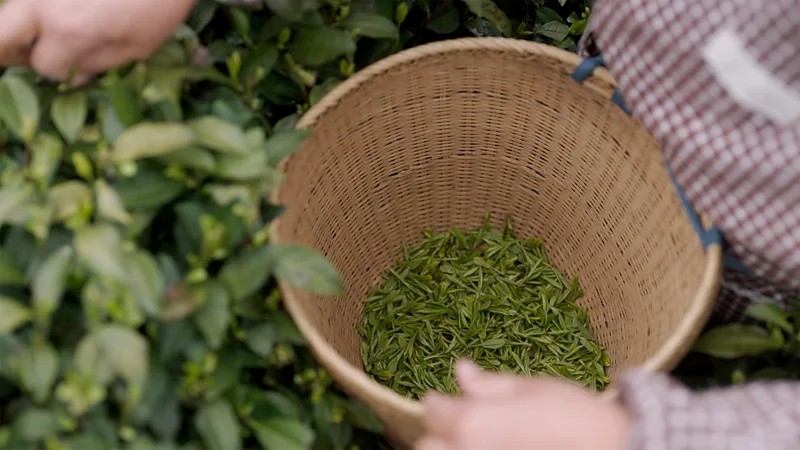
For centuries, farmers have built their year around the springtime Longjing harvest [BBC]
In recent years, Longjing’s reputation has only deepened, driven by a tightened geographic designation, renewed domestic appetite for traditional goods, and rising global awareness of regional Chinese teas. At the same time, the case for visiting these hillside farms has never felt more pressing. A persistent counterfeit market has made genuine Longjing trickier to identify, while the labour-intensive hand-firing work that shapes the tea’s character is increasingly being replaced by machines.
Today, traditionally made Longjing is both more coveted and harder to come by. As a result, visiting Hangzhou’s tea villages is one of the surest ways to see the tea made at its source.
For Xiaopeng, a fourth-generation tea grower, the year has always been organised around the springtime harvest.
“Timing is highly important when it comes to Longjing,” he explains.
The earliest flushes, which bud in mid- to late-March, are the most prized, renowned for their restrained chestnut aroma and delicate, understated flavour. So treasured are these buds that Longjing is graded according to when it was plucked in the Chinese calendar, which divides the year into 24 micro-seasons based on the Earth’s position relative to the Sun.

The mingqian tier refers to the early batches plucked before Qingming, the solar term that begins on 4 or 5 April; while later harvests are called yuqian (meaning “before Guyu”, the following solar term). Even a few days’ difference when harvesting can significantly influence the value of the leaves: from Xiaopeng’s family farm, just 500g of the earliest mingqian batches can now fetch upwards of 30,000 yuan (roughly £3,250 or $4,400). Xiaopeng says this figure would have been unimaginable a generation ago – the result of rising labour costs and a widening gap between supply and demand.
I came to Xiaopeng’s family farm in Longwu Tea Village at the recommendation of my friend and Hangzhou native Meng Keqi, who previously owned a tea shop in Chicago before returning to his hometown. As I follow Xiaopeng through his field as part of a tour, the sky is overcast, the air balmy. “These conditions are ideal for the leaves,” he says, explaining that light, misty drizzles and gentle sunshine allow the shoots to grow slowly, lending the early harvests their signature clean, delicate flavour, free of astringency or grassiness.
Yet, this approximately two-week mingqian harvest window is as anticipated as it is narrow – not to mention increasingly hard to predict as climate change alters seasonal weather patterns. Once the calendar approaches Guyu, around 19 or 20 April, warmer temperatures and heavier rainfall hasten growth, drawing out more of the tea’s bitter notes. Not only do early-budding leaves have a sweeter, more subtle flavour, their delicateness also requires an especially careful and precise touch when wok-firing – a critical step in the craft of Longjing.
After the leaves are plucked, artisans perform the laborious work of pan-firing them by hand, tossing the leaves in enormous woks heated up to 200C. I watch as Xiaopeng’s father, Ge Zhenghua, sweeps leaves across the wok, scoops them up, then releases them back down in precise, practiced strokes – all without wearing gloves.

Because my mother is from near Hangzhou, I grew up drinking Longjing, but this is my first time watching the wok-firing process up close, and I marvel at the fact that there are nothing but tea leaves protecting his palms from the searing hot pan.
The firing process is arguably what makes Longjing what it is, says Zhenghua. It halts oxidation, preserving the leaves’ green hue; and presses them into their distinctive spear shape, a Longjing hallmark. Importantly, it also evaporates moisture.
“Drying thoroughly is what helps release their fragrance, and it allows the leaves to be stored without spoiling,” says Zhenghua. “I don’t wear gloves because I need to feel the level of heat, the moisture.”
Nowadays, more farmers are relying on machines to handle the task of wok-firing, saving a great deal of time and exertion during the busy harvest season. “When we were young, we hardly slept during this stretch,” recalls Zhenghua, explaining how the family would fire leaves around the clock.

While machine-firing produces consistent-enough results that most drinkers likely wouldn’t perceive a difference, Zhenghua says he can still taste what is lost – a fuller-bodied fragrance and a more lingering sweetness. “Hands can decipher what machines cannot,” he says. “Machines are dead. These hands are alive.”
Where and how to experience Longjing
Mid-to-late March to early April is the best time to visit Hangzhou to see the Longjing harvest. To best access the tea villages, book a hotel in the West Lake scenic area and consider chartering a car for the day through the Chinese ride-share app Didi, or you can join a tour organised by a farm or tea centre.
•China National Tea Museum – A Hangzhou museum dedicated to Chinese and global tea cultures, where visitors can wander through Longjing tea plantations, watch tea demonstrations, trace the history of Longjing, sample brews and browse tea-ware and tea leaves to take home.
• Suve Tea Institute – A tea school in Hangzhou that organises Longjing farm tours, wok-firing demonstrations and tastings.
• Luzhenghao – A long-established tea brand with shops and tea houses across Hangzhou.
• Yige Tea House – A cafe in Longwu Tea Village owned by the Ge family, who run farm tours, pan-firing demonstrations, and tastings.
When the firing is complete, Zhenghua weighs the leaves and packages them, pressing a sticker certifying their authenticity onto each bundle. He explains that the government has limited the designated growing area for genuine West Lake Longjing to within a 168-sq-km region. In certain production zones elsewhere in Zhejiang Province, the tea can be called Longjing, without the West Lake designation. Anything grown outside of that can only legally be sold as green tea. To curb counterfeiting, authorities now issue a limited number of authentication stickers for verified growers to affix to their products; each sticker carries a QR code linking to a traceability system.
Demand for real Longjing has surged in recent years, propelled in part by the guochao movement, a trend drawing younger Chinese consumers back towards traditional Chinese heritage products. But enthusiasm for Longjing – especially mingqian leaves – far surpasses what the hills can yield during the brief and variable harvest window. The supply gap has made Longjing a target for fraudulent buds grown elsewhere in China but still bearing the name.
For many customers, the most reliable guarantee is to know the hands that produced the leaves. It’s why, come spring, Zhenghua says that many of his regulars visit his farm, where they watch him fire the leaves with their own eyes. It’s also why the family opened Yige Tea House nearby, where the Longjing-curious can participate in farm tours, pan-firing demonstrations and tastings.

Tea education centres, too, can offer a more intimate look at Longjing, including guided farm visits, wok-firing workshops and expert-led tasting experiences. After leaving the tea fields, I head to one such school, Suve Tea Institute to meet tea instructor Chen Yifang, who had just sourced a batch of the season’s mingqian leaves.
All the effort that goes into producing a batch of Longjing ultimately expresses itself in the cup – a flavour so delicate and subtle that I always find it hard to describe. Chen likens its clean, fresh quality to the gentle aroma of spring pea flowers or fava bean blossoms – softly floral, mildly nutty, the faintest bit sweet.
“Part of the beauty is its understatedness,” says Chen, as she pours me a cup brewed from leaves harvested nearby just a few days earlier. Longjing, she explains, is a ritual that rewards patience and attention. She draws a comparison to bolder beverages, like black tea and coffee: “They will tell you very directly, ‘This is what I am,’ whereas with Longjing, you must spend time sitting with it before it reveals its personality.”
For years, Zhenghua worried that his craft might fade out with his generation. Many children of Longjing growers left the villages, pursuing university education and higher-paying jobs in the cities. Now, more people are returning to the fields to learn their parents’ skills, including his son, as the tea’s market value makes it a more sustainable livelihood than it once was. There is another pull, too: a recognition that if they do not inherit the knowledge, it could well die with their parents.

“Young people who grew up on these tea farms, they smell this every spring,” says Zhenghua. “This is the aroma of their hometown.”
Over many visits to my mum’s home region throughout my life, I’ve come to understand that what draws people to Hangzhou every spring isn’t only the tea. It’s also the chance to experience a precious, fleeting seasonal window, one when timing and terroir align to summon the year’s first buds from those misty hillsides. Nowadays, perhaps it is also an opportunity to bear witness to a time-honoured trade that may not endure in its present form forever.
[BBC]

Tales of Mystery and Suspense 2
A very different sort of murder mystery today, one of the few intended to provide laughter too. Written in the thirties, it deals with a murder during a ballet, its title being A Bullet at the Ballet. It was a collaborative effort by Caryl Brahms and S J Simon, to whom I was introduced nearly half a century ago by Robert Scoble, the friend with whom I have discussed and shared books more than with anyone else.
Brahms was a ballet critic whose parents were Jews who had emigrated to Britain from Turkey while Simon was born in Manchuria in 1904 to a White Russian Jewish family, and then ended up in England, where he was renowned as an expert on bridge.
Having been fellow lodgers in London, they wrote together for newspapers and then tried out a novel. A Bullet in the Ballet, published in 1937, was an instant success, and over the next few years they published a couple of sequels, involving the Ballet Stroganoff, and the detective Adam Quill, who was tasked with investigating the first murder.
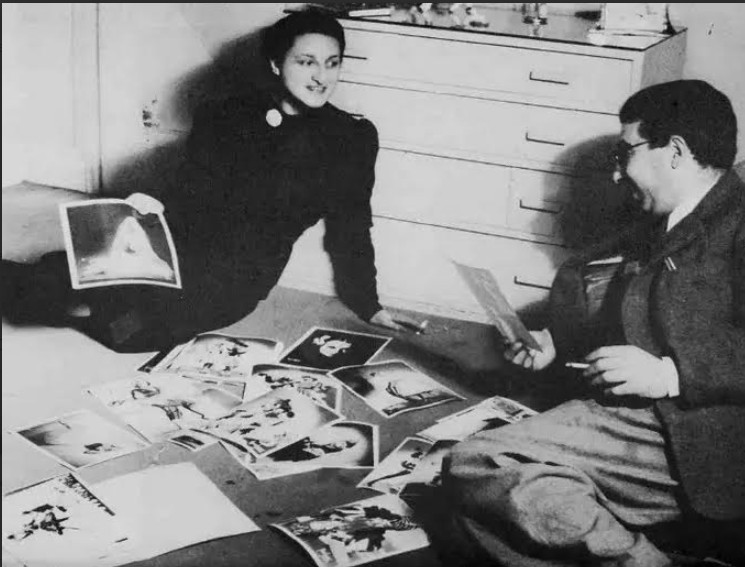
Brahms and Simon
In Robert’s Books and other reading around the world, published by Godage & Bros a few years back, I mentioned the first of these and also what then entertained me most, when I read these books in his luxurious flat in Chidlom Place in Bangkok, No Bed for Bacon, a romp through the days of Queen Elizabeth. Historical absurdities were their other forte, but in this series, I will confine myself to the three books that feature Quill, and the gloriously dotty Ballet Stroganoff.
It is owned by the impresario Vladimir Stroganoff, whose motley crew includes the once renowned ballerina Arenskaya, who is now his trainer, and the avant garde composer Nicolas Nevajno, who wants anyone, as he meets them, ‘to schange me small scheque’. The dancers are less memorable, except that two of them are the murder victims, both when dancing the title role in ‘Petroushka’. Neither Anton Palook nor Pavel Bunia was especially popular, and Quill was on the point of arresting the latter for the murder of the former when, having put it off at Stroganoff’s request so that he could dance the title role, the suspect was killed in the course of the ballet.
Both before and after the second murder, Quill is confronted with multiple motives, multiple means and multiple opportunities, to cite the formula in the Detective’s Handbook he has studied. Palook for instance had affairs with lots of girls but had recently taken up with the homosexual Pavel, whose lover, his dresser Serge Appelsinne, was profoundly jealous. The young dancers who performed brilliantly in the final performance of Petroushka, with which the novel ends, were also involved, in that Palook had been friendly towards Kasha Ranevsky, making Pavel jealous; and the ballerina Rubinska, involved with Palook, had tried to wean him away from Pavel, an appeal Pavel may have heard, after which she met Palook again just before he died, and he had said he was sick of being chased since his affairs were never lasting.
Preposterous intricacies one might have thought, had I not come across similar exchanges when we hosted the London City Ballet in Sri Lanka in 1985 on a British Council tour. Brahms and Simon simply push everything well over the top, with the characters pursuing their own obsessions without reference to the predilections, let alone the obsessions, of the others, all of which makes for high drama at a cracking pace.
But in dwelling at length on the plot of this first Brahms and Simon novel, I have omitted what perhaps provides the most zest to the plot, the constant bickering between Stroganoff and his orchestra, his efforts to avoid his relentlessly talkative Secretary, the endless stream of catch phrases, such as the Wiskyansoda Stroganoff offers his visitors, only to find there is none, just Russian tea, or the vigilant mothers determined to bag the best roles for their daughters.
Then there is Arenskaya, who flirts with the incredibly handsome Quill, and turns out to have had an affair years back with his boss, the usually grumpy Snarl, who softens surprisingly when he comes to a performance. And her husband, Puthyk, who was not at all jealous it seemed of her having had an affair with Palook, reminisces endlessly of his own wonderful performances in the past, though now at most he can only be used in crowd scenes.
Quill – and the ubiquitous press – meanwhile discover that a third Petroushka had died while playing the role, in Paris, before the two deaths in London. He had been found dead in his dressing room, and suicide had been the verdict, but now it was assumed that he too had been murdered, and there was thought to be a jinx on anyone dancing the title role. But Stroganoff was determined to go ahead with the gala performance he had planned, for which he hoped Benois, who had been involved in the original production with Njinsky, would come.
Though it was increasingly clear Benois would not appear, with tickets selling like hot cakes, in anticipation of a death, there was no way Stroganoff would cancel the performance. And his great rival Lord Buttonhooke, the newspaper proprietor, who it was rumoured wanted to start a ballet and had persuaded Palook to come over to him, had headlines about another murder all ready as the curtain rose.
Rubinskaya had earlier begged Quill to arrest Ranevsky, who was to dance the roll, as the only way of saving him, but there is no reason to do this, and so the performance does happen, with inspired performances by both of them. And, so, the murderer, who could not bear to have the role traduced, refrains from killing Ranevsky, and confesses to the earlier crimes. ‘Lord Buttonhooke strode from the theatre, a disappointed man’.
But that is not the end, for there is an epilogue in which Stroganoff writes to Quill to plead for kindness to ‘not an assassin, but an artist, that you have put in that pretty home in Sussex’. The letter has other elements that take up themes from the book, such as a new ballet by Nevajno, with ‘a scene where the corps de ballet is shot with a machine-gun. London will be shaken.’ And he will not tell Kasha and Rubinska that they dance better every day ‘lest their mother ask for bigger contracts’.
It was no wonder that the book was a triumph. The ballet scenes, if brilliantly exaggerated, did create a sense of how such spectacles were created, the murder mystery was full of suspense with the two deaths – and the discovery of another, treated earlier as suicide – well paced, and the climax when the ballet ends without another murder was gripping.
LEST WE FORGET – IV
Dag Hjalmar Agne Carl Hammarskjöld
(‘DH’ for short) was appointed Secretary-General of the United Nations in April 1953, when he was 47 years old. He was a member of an aristocratic Swedish family, a diplomat and reformer, in whom the Western world and United States of America had faith to do the ‘right’ thing. His mission was to prevent minor skirmishes among countries from escalating into a third World War. In short, his role was to implement the UN Charter (Peace, Security, Development and Human Rights).
The Korean War was just ending, and the Cuban situation (1956 to 1958) occurred during his watch. The Vietnam North/South conflict had also commenced in 1955. So did the Suez crisis in 1956. By 1960 another crisis had occurred in the Congo. He applied himself with religious zeal, sometimes trusting his conscience, judgement and personal commitment to maintain the UN’s integrity during the Cold War. As a result, he was not too popular with the US, the UK and Russia, which at one point wanted him to resign. By now DH was serving a second term as Secretary-General.
In the Congo, mineral-rich Katanga province wanted self-rule with Moïse Tshombe as its head, while highly paid white mercenaries (dogs of war?) ran his military. Thus, with this situation creating a civil war, things were going from bad to worse. By now UN troops were fully involved in ‘peace keeping’ in the Congo. DH had made three trips to Congo before, and his fourth trip, on September 13, 1961, was to include a visit to Katanga for a meeting with Tshombe in the hope of negotiating for peace. His first destination was Leopoldville, now known as Kinshasa, the capital of the Democratic Republic of Congo (DRC). There, he spent about four days before flying to Ndola in Northern Rhodesia, the country now known as Zambia. Ndola was situated at the Katanga border.
The flight took off from Leopoldville shortly after 3 pm on September 17. For security reasons, the flight was initially planned for another destination, then diverted to Ndola. The aircraft was a four-engine Douglas DC-6B, with ‘Aramco’ markings, Swedish registration SE-BDY, and named Albertina. With DH there were 15 other passengers and crew on board.
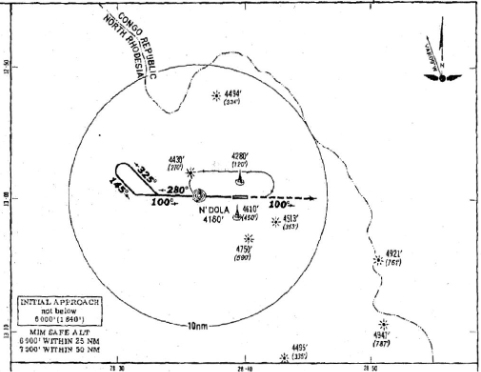
It was midnight when the aircraft overflew the Ndola airport, tracking towards a ground-based Non-Directional radio beacon (NDB) in the vicinity. To observers on the ground, everything about the aircraft looked ‘normal’. This was 1961, and it was still not mandatory to have a Flight Data Recorder (FDR) and Cockpit Voice Recorder (CVR) – collectively known as the ‘Black Box’ – installed onboard. The air traffic control tower had neither radar nor voice-recording facilities.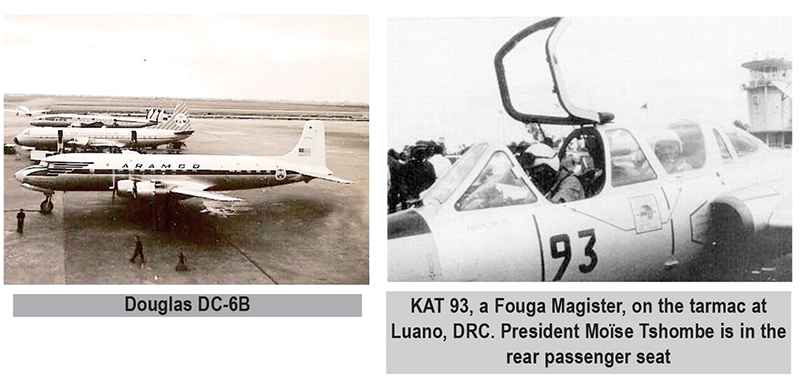
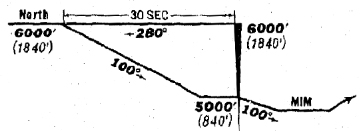
The navigational equipment on the DC-6 was primitive by today’s standards. A needle over a compass dial in the Automatic Direction Finder (ADF) pointed to the beacon which was located close to the final approach. The ‘modus operandi’ was to fly past the beacon (which is at a known position relative to the airport). Pilots know they have flown past the beacon when the ADF needle swings around from pointing toward the nose of the aircraft to the tail. From overhead that Ndola NDB the aircraft is expected to fly on a heading of 280 degrees for 30 seconds, then carry out a course reversal, known as a ‘procedure turn’, offset to the right at 45 degrees (heading of 325 degrees) and flown for precisely 60 seconds, after which another turn is made to the reciprocal direction, in this case 145 degrees, back to intercept the extended centreline of the runway, with a bearing of 100 degrees to the NDB and the runway beyond. All this while descending to a minimum altitude of 5,000ft, as dictated by a landing chart for the airfield approved by the operating airline and local civil aviation authority. (See Chart 1 and 2)
In Chart 1, the significant high ground is only indicated to the north and south of the runway. There is no significant high ground to the west. Because pilots don’t know the exact distance from the airport, an acceptable technique used was ‘dive and drive’. Consequently, Albertina flew over Ndola at 6,000 ft or lower, and when turning ‘beacon inbound’ the pilots asked for a lower altitude of 5,000 ft to descend and maintain. While on descent, the DC-6 impacted unmarked high ground at 13 minutes past midnight, when only 9 miles from the airport.
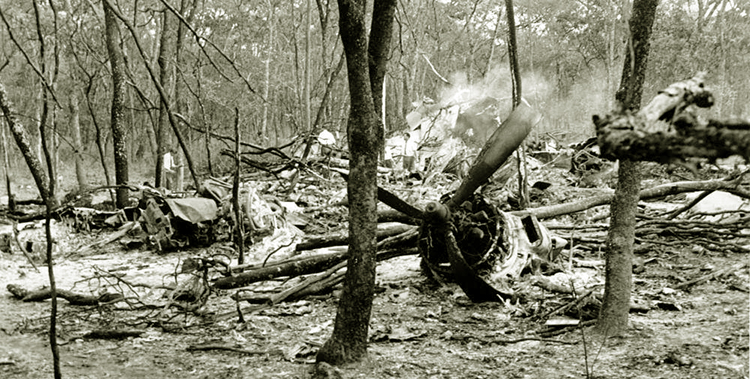
Meanwhile in Ndola, a welcoming party awaited, consisting of Lord Alport, British High Commissioner to the Federation of Rhodesia and Nyasaland, Moïse Tshombe, the Katangese separatist leader, who had been brought in from Congo for talks with DH, and many others. They waited at the airport until shortly after 3 am, when the runway was closed and landing lights were turned off. Strangely, the air traffic control staff in the tower did not observe fire or noise of the crash and assumed that the aircraft had diverted to another airport. (See Image Wreckage)
The impact with trees occurred at a height of 4,357 ft above sea level, slightly left of the extended centreline of the runway. The aircraft should have been at least at 5,000 ft above sea level, as required by the approved landing chart. Significant high ground west of the airfield was not indicated in that chart.
The wreckage was found later in the afternoon of September 18, in the jungle, with over 80% of the airplane destroyed by fire. Although 14 passengers and crew were burnt beyond recognition, one bodyguard, Sergeant Harold Julien, survived for six days before dying in hospital. DH’s unburnt dead body was discovered with grass on his hands, propped up by an anthill and a playing card, the Ace of Spades, under his collar! The first UN officer to arrive at the crash site, Major General Bjørn Egge, a Norwegian, observed that there was a clean bullet hole in DH’s head that was covered up during the postmortem. So, did DH survive the crash to be killed afterward?
In the 24 hours preceding the crash, two of the three crew members had been on duty continuously for 17 hours, while the handling pilot’s duty time was within limits. The Rhodesian accident investigation team that conducted the inquiry declared it was ‘pilot error’. The following day, former US President Harry Truman, who was a confidant of incumbent President John F. Kennedy said that “Hammarskjöld had been killed”. Of course, pilot error was the most convenient explanation, because dead men cannot defend themselves. Therefore, those findings were disputed as there can be reasons why the pilots were forced to fly low. In other words, the cause behind the cause needed to be found.
In one of two UN-authorised inquiries, the UN’s Deputy Spokesperson, Farhan Haq, said that “significant new information” had been submitted to the inquiry for this latest update. This included probable intercepts by the UN member states, of communications related to the crash; the capacity of Katanga’s armed forces, or others, to mount an attack on the DC-6, SE-BDY; and the involvement of foreign paramilitary or intelligence personnel in the area at the time. It also included additional new information relevant to the context and surrounding events of 1961.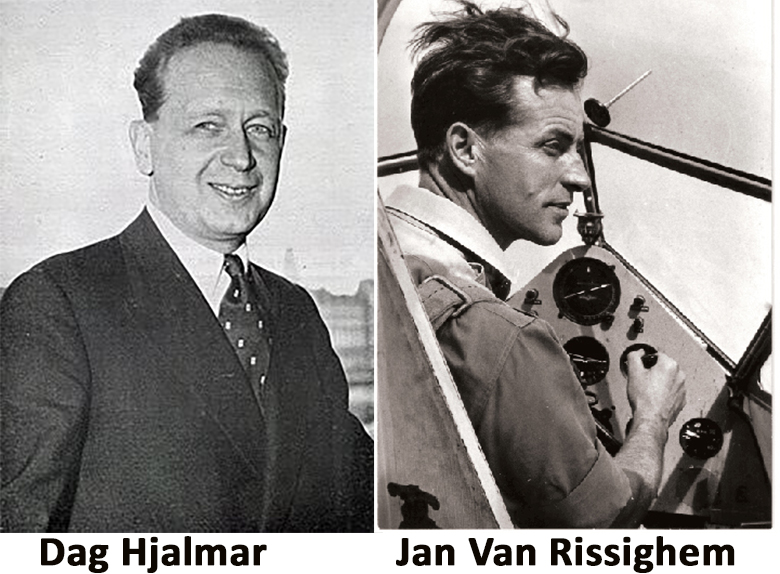
Additionally, in 1998 Archbishop Desmond Tutu, Chairman of South Africa’s Truth and Reconciliation Commission (TRC), stated that with regards to DH’s death in 1961, Britain’s MI5 (Military Intelligence, Section 5), the USA’s Central Intelligence Agency (CIA) and South African Intelligence were implicated in letters where information was withheld before by member nations of the UN.
One possibility was the planting of plastic explosives in the wheel bay of the DC-6 when it was on the ground in Leopoldville. Pieces of wreckage were not spread out over the jungle. The aircraft crashed in one piece, creating a swathe in the treeline. So, it could not have been an explosion.
Many Congolese natives, including ‘charcoal burners’ in the jungle, said that there was more than one aircraft in the sky that night. These reports were dismissed as unreliable by the original accident inquiry. It was possibly because in 1961 the Rhodesian authorities only accepted ‘white’ witnesses’ evidence. So, was the DC-6 shot down, and if so by whom?
A High Frequency (HF) radio listening station in Cyprus monitored a transmission of a highly decorated, ex-Royal Air Force World War II pilot, operating in the Congo as a mercenary with the nickname ‘Lone Ranger’, giving a running commentary while shooting a large passenger aircraft from his modified Fouga CM.170 Magister two-seat jet trainer airplane. The pilot, Jan Van Risseghem (from a Belgian father and English mother), may not have known whose aircraft he was shooting at. He was only told of the mission he needed to accomplish. Besides, he had a strong alibi set up by the Belgian State Security Service (VSSE), saying that he was nowhere in the vicinity. Documents released later confirmed that the alibi was pure fabrication. It is also said that the American Ambassador to the Congo sent a secret cable saying that Van Risseghem was the possible ‘attacker’! (See Images Jan Van and KAT 93)
Harold Julien, the sole survivor of the crash, stated from his hospital bed that the aircraft caught fire before it crashed. But his evidence was disregarded on the grounds that he was seriously ill and delirious before he succumbed to his injuries.
Then, Land Rovers being driven to and fro were observed by natives in the early morning of September 18. This led to speculation that the occupants were suspected French mercenaries attempting to reach the crash site and destroy any evidence of foul play before the official party arrived. Questions were also asked as to how the Ace of Spades (or Six of Spades) playing card ended up under DH’s collar?
Further reports mentioned a de Havilland Dove aircraft flying in the vicinity of the crash. Was it part of an attempt to bomb the DC-6 from a high altitude?
On the other hand, the DC-6 was making a very difficult approach and landing at night, with the possibility for pilots to be distracted by optical illusions. These have been identified and labeled as potential killers by scientists and aviation accident investigators in subsequent crashes. With no lights in the foreground, they would have lost sight of the natural horizon in the dark. Years later, this phenomenon was called a ‘Black Hole’. Did the captain attempt to do a visual approach into uncharted territory, while disregarding the radio navigational beacon landing aid, and collide into high ground, a type of accident described as a Controlled Flight into Terrain (CFIT)?
The verdict is still open
Today’s airliners, equipped with Inertial Navigation Systems (INS) and satellite-aided Global Positioning Systems (GPS), can be set up by the pilots to fly an Artificial Intelligence (AI) generated approach angle, independent of ground navigational facilities, to prevent this type of CFIT accident. Besides that, all turbine-powered aircraft carrying more than nine passengers must be equipped with a Ground Proximity Warning System (GPWS) as mandated by law.
Going even one better, there are enhanced radar displays to show the presence of high ground. Unfortunately, the DC-6 that the Secretary-General of the UN travelled in was powered by four piston engines.
It was said of Dag Hammarskjöld that he served as Secretary-General of the UN with the utmost courage and integrity from 1953 until his death in 1961, setting standards against which his successors continue to be measured.
He is the only Nobel Peace Prize Laureate to have been awarded the distinction posthumously.
God bless all secret service agencies of the world and no one else!
by GUWAN SEEYA

Sri Lanka’s World Cup winning team conduct coaching session in KL

Fatima Sana smashes fastest fifty in women’s T20Is

On the hunt for China’s most famous green tea

Marsh onslaught, Akash three-for dent Chennai Super King’s playoffs chances

ICC suspends funding to Cricket Canada over governance-related issues

Showers will occur at times in the Western, Sabaragamuwa, Central, North-western and Northern provinces and in Anuradhapura, Galle and Matara districts

‘Dates have the highest sugar content to fight Coronavirus’

Sunday Island 27 December – Headlines

#SundayIsland 17th December – Headlines

Sunday Island – 28th March

Sunday Island Headlines – 21 March

Sunday Island – 21st February – Headlines
-

 News7 days ago
Lanka Port City officials to meet investors in Dubai
-

 News4 days ago
Ex-SriLankan CEO’s death: Controversy surrounds execution of bail bond
-

 Features5 days ago
When University systems fail:Supreme Court’s landmark intervention in sexual harassment case
-
Features5 days ago
High Stakes in Pursuing corruption cases
-

 Midweek Review4 days ago
A victory that can never be forgotten
-
 Features7 days ago
Serving as MR’s Deputy Finance Minister and the travel the job entailed
-

 Features7 days ago
Bengal Turns BJP, Didi Falls
-
 News6 days ago
150th anniversary celebrations of Ave Maria Convent, Negombo