
News
Threat to freedom of expression and return of dreaded ‘white van” culture


Church authorities express outrage over the improper arrest of prominent activist Shehan Malaka Gamage
By Robin Gomes
The arrest of an outspoken young Catholic activist last week has drawn the condemnation of Colombo Archbishop Malcolm Cardinal Ranjith, who expressed concern over the threat to the freedom of expression and the return of the dreaded ‘white van” culture in Sri Lanka.
Shehan Malaka Gamage was taken into custody by the Criminal Investigation Department (CID) under dramatic circumstances while he was walking on the road. He streamed his chaotic arrest in a video on Facebook. It shows the activist demanding the document warranting his arrest from the plain-clothed men who came in a white van.
Cardina Ranjith of Colombo on Tuesday lashed out at the arrest saying it was an “abduction”. He said the government was targeting those who criticized its failure to properly investigate the 2019 Easter Sunday terrorist attacks on churches and hotels, which killed nearly 270 people and injured at least 500.
Gamage is among the several activists who have been campaigning for justice and seeking the truth behind the suicide bombings that have been blamed on Islamist terrorists. The Catholic activist has publicly questioned whether politicians used the bombings to force a change of government in the presidential elections later that year, which saw Gotabaya Rajapaksa come to power.
Police Spokesperson Nihal Thalduwa said that Gamage was arrested for a comment he recently made with regard to the Easter Sunday attacks. He was arrested on the advice of the Attorney General (AG), who acted on details submitted by the CID, after they had interrogated Gamage for 8 days in August and September 2021, about a speech he delivered at a press conference held on 17th August 2021 in relation to the Easter attacks.
Cardinal Ranjith slammed the police over the manner of the arrest, demanding that the police should be in uniform when arresting someone and use an official police vehicle, not a white van, which recalled the way many people were abducted and made to disappear in the 1980s and later, and were never heard of.
“Police officers must read the charges against any accused when making an arrest,” he said, adding Gamage was not arrested but abducted in broad daylight. He described the police method as uncivilized and immoral, which is not suitable for a democratic community.
“If Gamage did not go live on social media, the country would have never known that he was being forcefully taken away by a group in a white van. He had the courage to reveal this to the country.” Cardinal Ranjith urged fellow citizens to respond to the attempts being made to suppress the truth through intimidation.
On Tuesday, the Maligakanda magistrate’s court granted Gamage bail and imposed a travel ban on him.
The 74-year-old cardinal has been long pressing Rajapaksa’s government for the truth behind the Easter bombings, saying that the country’s top law enforcement officers had failed to arrest the real conspirators behind the bombings, despite filing charges against some of those directly involved. The cardinal wrote a letter to Rajapaksa last year raising questions over allegations that some members of state intelligence knew and had met with at least one of the attackers.
The cardinal, whose two churches of the archdiocese were targets of the Easter bombings, also took a swipe at the present Attorney General, stressing he is a public servant, not a political stooge. He pointed out that the AG is expected to enforce the recommendations of the Presidential Commission of Inquiry that probed the 2019 Easter Sunday Attacks. Instead, he is making attempts to arrest those who are calling for justice over the terror attacks. He suggested that the country’s attorney general and police chief were acting “on the whims of those in the political world.”
The churchman requested “the people to understand the conspiratorial conduct of the government” and “respond to it at the appropriate time,” He reiterated that if the issues cannot be solved locally, he would not hesitate to take it to an international level.
Father Cyril Gamini Fernando, a member of the Colombo archdiocesan committee seeking the truth behind the Easter attacks, also expressed concern over the return of the ‘white van’ culture in Sri Lanka. “We cannot approve this conduct, as such a culture is not something that is good for democracy,” he told the media. “Everyone has the freedom to speak and express. That is a fundamental right of every person,” he said expressing the fear of an emergence of a culture where people are arrested and detained for criticizing the state.(Vatican News)



The newly appointed Cabinet Committee tasked with ensuring the uninterrupted functioning of Sri Lanka’s public service held its inaugural meeting on Thursday (19) at the Presidential Secretariat under the patronage of Prime Minister Dr Harini Amarasuriya.
The Committee convened to discuss strategies to maintain seamless government operations in the face of potential disruptions caused by the ongoing conflict situation in the Middle East, with particular focus on energy resource management.
According to officials, the discussions emphasised sustaining essential government services, ensuring continued service delivery to the public, and addressing the operational challenges faced by public sector employees during the current circumstances. The Committee also examined measures to mitigate any disruptions that could affect day-to-day administrative and service functions across ministries and departments.
Key attendees at the meeting included the Minister of Public Administration, Provincial Councils and Local Government A. H. M. M. H. Abayaratne; Secretary to the President Dr Nandika Sanath Kumanayake; Secretary to the
Prime Minister Pradeep Saputhanthri; Chief of Staff to the President Prabath Chandrakeerthi; and senior secretaries from key ministries including Health and Mass Media, Transport, Highways and Urban Development, Energy, and Digital Economy.
Representatives from state institutions such as the Ceylon Petroleum Corporation were also present, highlighting the government’s focus on energy security as a central priority. The Committee’s deliberations underscored a coordinated approach to balancing uninterrupted public service delivery with effective management of limited energy resources amid the ongoing geopolitical uncertainties.
Observers note that the formation of this Cabinet Committee reflects the government’s proactive stance in safeguarding national administrative functions and ensuring that critical public services remain resilient during times of external pressures.The Committee is expected to meet regularly to monitor developments, evaluate emerging risks, and implement practical measures to maintain operational continuity across the public sector.
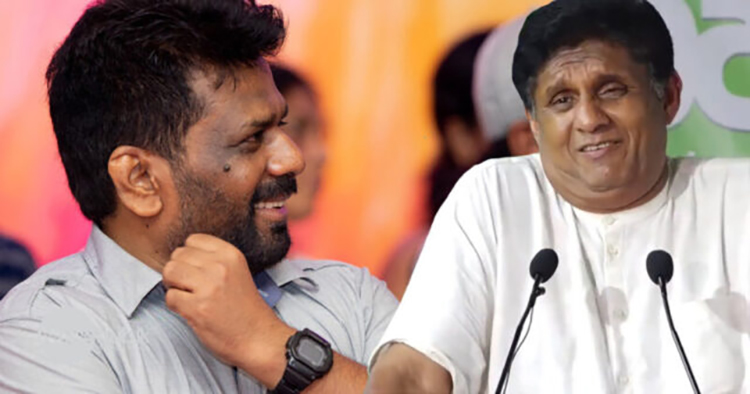
Opposition Leader Sajith Premadasa on Friday lashed out at President Anura Kumara Dissanayake in Parliament, accusing him of failing to uphold international law during wartime.
Premadasa said the President’s claim of neutrality ignored breaches of the UN Charter—including Articles 2.4 and 2.7—and other global conventions. “A neutral stance requires openly acknowledging violations,” he argued, criticizing the absence of ethical mechanisms to safeguard international law.
He also questioned the President’s handling of maritime issues, particularly whether Sri Lanka had been informed of the alleged attack on the Iranian vessel IRIS Dena, stressing that the Exclusive Economic Zone (EEZ) permits only peaceful activity.
On the economic front, Premadasa condemned the government for missing a chance to buy Russian oil during a 30-day U.S. sanctions suspension.
He said attempts to advise the Foreign Ministry, including a meeting with the Russian Ambassador, yielded no progress.
Premadasa further ridiculed the government’s earlier dismissal of the QR code fuel system, noting that officials are now adapting to it.
Turning to broader economic concerns, he called for immediate negotiations with the IMF to secure a new agreement, warning that the current primary balance of 2.3 is unsustainable. He stressed the urgent need for a poverty-reduction program, highlighting that one-third of Sri Lankans live in poverty.
He also demanded that surplus Treasury funds be used to support relief packages, arguing billions in reserves could aid households struggling with income shortfalls.Concluding his address, Premadasa criticized the government for failing to prepare for foreseeable crises, leaving the country vulnerable.

Former Minister Johnston Fernando, his two sons, and three others were remanded by the Wattala Magistrate’s Court yesterday (20) until April 2, the court confirmed.
The suspects, including Fernando’s elder son Johan, younger son Jerome, and a former transport manager of Lanka Sathosa, are under investigation by the Police Financial Crimes Investigation Division (FCID).
Authorities allege the Lanka Sathosa lorry was misused for operations linked to an ethanol company reportedly owned by Fernando, causing an estimated Rs. 2.5 million loss to the state.

Trump says US will ‘obliterate’ Iran’s power plants if Strait of Hormuz not open before 48-hour deadline

Showers may occur at several places in the Western, Sabaragamuwa and Southern provinces and in Nuwara-Eliya district after 1.00 pm.

PM Harini leads panel to protect public services

Sajith slams President over war conduct and economic missteps

Johnston Fernando, sons held in Lanka Sathosa lorry misuse case

Gura: The unsung hero

‘Dates have the highest sugar content to fight Coronavirus’

Sunday Island 27 December – Headlines

#SundayIsland 17th December – Headlines

Sunday Island – 28th March

Sunday Island Headlines – 21 March

Sunday Island – 21st February – Headlines
-

 Business6 days ago
Browns EV launches fast-charging BAW E7 Pro at Rs. 5.8 million
-

 News4 days ago
CIABOC questions Ex-President GR on house for CJ’s maid
-

 News5 days ago
Sri Lankan marine scientist Asha de Vos honoured at UNGA opening
-

 Features6 days ago
Achievements of the Hunduwa!
-

 News5 days ago
Australian HC debunks misleading travel risk claims for Sri Lanka
-

 Latest News6 days ago
Wednesdays declared a government holiday with effect from 18th March
-
 News3 days ago
Bailey Bridge inaugurated at Chilaw
-

 News3 days ago
Pay hike demand: CEB workers climb down from 40 % to 15–20%