
News
There was reason why Shangri-La was attacked twice during Easter Sunday carnage – Dayasiri

By Rathindra Kuruwita
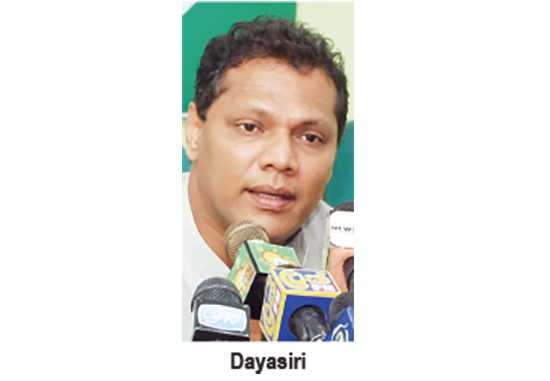
There was a reason why two suicide bombers had attacked the Shangri-La Hotel but the Taj Hotel had been spared, State Minister Dayasiri Jayasekera, on Tuesday night, told the PCoI investigating the Easter Sunday attacks.
External powers had played a role in electing Sri Lankan Presidents and governments since 2015, Jayasekera said. The witness said it must be found out who wanted to remove former President Maithripala Sirisena from power.
The State Minister had been summoned to the PCoI to give evidence about the anti-Muslim riots in Hettipola following the Easter Sunday Attacks. On May 13, 2019, there was unrest in Hettipola, after six youth, arrested over involvement in attacking Muslim-owned properties and mosques in Kiniyama, were brought to the Hettipola Police Station from Bingiriya. When a crowd surrounded the Hettipola Police Station, Jayasekera, who lived close by arrived at the scene and took the youth back to Bingiriya Police Station after the police, civil administrators and community leaders of the area agreed that releasing the six youth on police bail was the best course of action.
Jayasekera: “This incident happened on my public day. Some people came and told me that there was unrest in the town. So I went to the Hettipola Police Station by 12 noon. The OIC told me that there were six youth sent from the Bingiriya Police Station. The OIC also said that during a meeting, it had been agreed to release them. I was told that then State Minister Nalin Bandara too had agreed to the decision. He said that they had to take the youth back to Bingiriya but it was impossible to do so because of the crowd that had gathered outside. I also felt that we needed to get these suspects out of the town. So I spoke to people, got the six people in my vehicle and went to Bingiriya with police protection.”
Chairman of the PCoI: “You are also a lawyer. Should politicians influence how people are arrested or released?”
Jayasekera: “No! I had no involvement in securing their release.”
Chairman of the PCoI: “After the attacks, you said that Taj Hotel in Colombo had not been attacked because some people were staying there. Can you elaborate on that?”
Jayasekera: “Taj is owned by a businessman that belongs to a particular country. A suicide bomber came and left without blowing himself up. There is a reason why there were two attacks on Shangri La hotel and none on Taj. There were also reports that during the time of the attacks, some VIPs were at Taj. That’s why I said that.”
The Chairman of the PCoI then asked Jayasekera why he had said that NTJ leader Zahran Hashim had international links. The witness said that it was the first time that the ‘leader’ of a terrorist group had taken part in the first wave of attacks and died.
“Why would a leader die in the first wave unless there was some good reason? Because of the attacks, President Sirisena could not seek a second term. There may have been some issues concerning Sirisena’s presidency, but he was trying his best to eliminate the drug mafia. The terrorists attacks marked the end of the country’s war on drugs. Now, former IGP, Pujith Jayasundara says the warnings of the attack came from a foreign intelligence source. So, this external intelligence agency knew when the attacks would happen. To be honest Presidents and governments have been brought into power in Sri Lanka by external powers from 2015. In a way Zahran too was a victim, Maithripala and Ranil Wickremesinghe too are victims. Jayasundara and Former Defence Secretary Hemasiri Fernando too are victims,” Jayasekera said.
The PCoI Chairman asked Jayasekera whether the former government had remained on national security in a satisfactory manner. Jayasekera too was a Cabinet Minister in the yahapalana government between 2015 and 2018.
The witness said that there had been many disagreements within the government. Sirisena was not at all happy with cosponsoring a resolution in Geneva in 2015, he said.
“These disagreements affected national security. I wouldn’t say that national security was neglected but it surely was affected by the internal disagreements,” MP Jayasekera said.


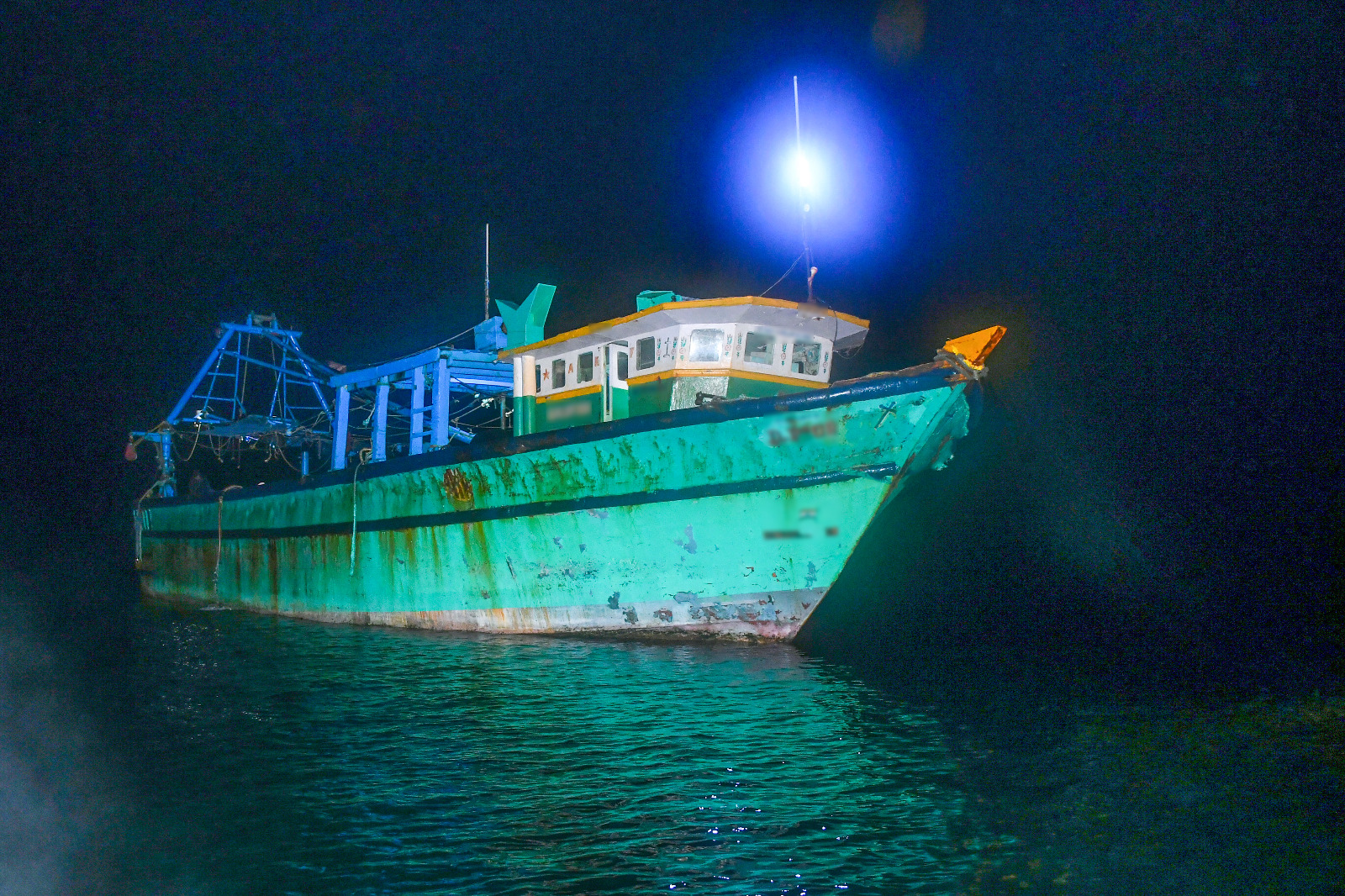
During an operation conducted in the dark hours of 22 Feb 26, the Sri Lanka Navy seized an Indian fishing boat and apprehended twelve (12) Indian fishermen while they were poaching in Sri Lankan waters, in the sea area south of Mannar.
The seized boat and the Indian fishermen were handed over to the Fisheries Inspector of Dikovita for onward legal proceedings.
FSL assures legal backing for them
Families of those sentenced to death by the Three-member Gampaha High Trial-at-Bar, over the killing of SLPP MP Amarakeerthi Atukorale, and his police bodyguard, met a senior official of the Presidential Secretariat, yesterday (23), to seek backing for their move to appeal against the verdict.
Having made representations, they addressed the media, outside the Presidential Secretariat, where they declared their intention to move the higher court against the decision.
The SLPP MP and his security officer were killed by an Aragalaya mob on 09 May, 2022, at Nittambuwa. The same day Aragalaya mobs unleashed violence against the then government MPs across the country, torching dozens of their properties.
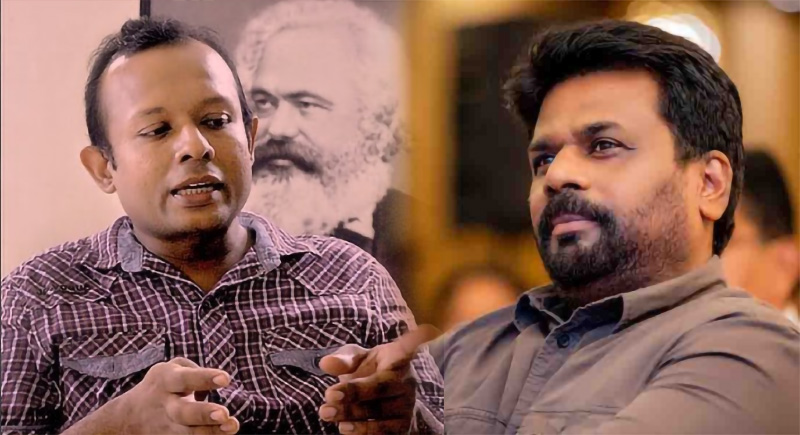
The Frontline Socialist Party (FSP) yesterday said that they would help the families of those sentenced to death to move court against the Gampaha High Court Trial-at-Bar decision. Responding to The Island queries, FSP spokesman Pubudu Jayagoda said that their representatives had already met the families and necessary work was being done to move the Supreme Court. Twenty three persons were acquitted and four handed six-month prison terms, suspended for five years
Jayagoda said that one of the HC judges differed in the ruling. Asked whether they received backing from any other political party and groups that had been involved in the 2022 protest campaign to defend those who had been found guilty, Jayagoda said such support was lacking.
The JVP/NPP played a significant role in the violent protest campaign that forced President Gotabaya Rajapaksa to step down. Pointing out that the Attorney General, too, was appealing against the court decision on the basis that the number of persons sentenced to death should be much higher, Jayagoda said that the Nittambuwa incident couldn’t be examined in isolation without taking into consideration the SLPP goon attack on Galle Face protesters on 09 May, 2022. (SF)
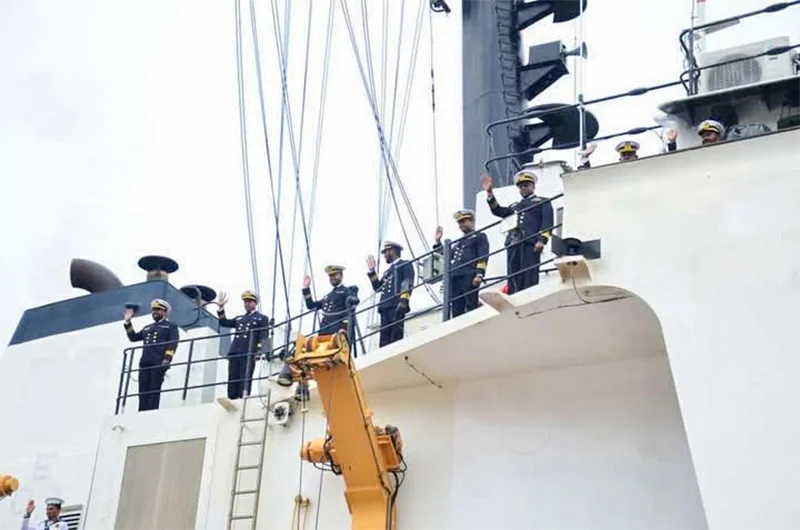
Offshore Patrol Vessel P 628 of the Sri Lanka Navy departed Baltimore, USA, for Colombo, on 20 February.
The ex-United States Coast Guard Cutter, USCGC Decisive was officially handed over to the SLN on 02 December, 2025, as the latest addition to the SLN fleet, under the Pennant Number P 628.
Measuring 64 metres in length, this ‘B-Type Reliance Class 210-foot Cutter’ is equipped with advanced technological systems and facilities, capable of conducting extensive surveillance operations spanning up to 6,000 nautical miles per patrol.
The vessel’s voyage to Colombo is historic, possibly marking the longest-ever passage undertaken by a Sri Lanka Navy ship. Covering approximately 14,775 nautical miles, the journey will see the P 628 navigate from Baltimore through the Atlantic Ocean, the Panama Canal (a first for a Sri Lankan naval vessel), the Pacific Ocean, and into the Indian Ocean, via the Straits of Malacca. The ship is expected to arrive in Sri Lanka during the first week of May, 2026.

Classy Brook century puts nervy England in the semi-final

More than 5,000 flights cancelled as US east coast digs out of record snow

Pakistan bat vs unchanged England with Afridi back

Navy seize an Indian fishing boat poaching in Mannar seas

Fair weather will prevail except for showers in the Southern province and in Rathnapura, Monaragala and Kaluthara districts after 2.00 p.m

Families of those sentenced to death for killing MP Atukorale seek AKD’s intervention

‘Dates have the highest sugar content to fight Coronavirus’

Sunday Island 27 December – Headlines

#SundayIsland 17th December – Headlines

Sunday Island – 28th March

Sunday Island Headlines – 21 March

Sunday Island – 21st February – Headlines
-

 Features3 days ago
Why does the state threaten Its people with yet another anti-terror law?
-

 Features3 days ago
Reconciliation, Mood of the Nation and the NPP Government
-

 Features3 days ago
Victor Melder turns 90: Railwayman and bibliophile extraordinary
-

 Features2 days ago
LOVEABLE BUT LETHAL: When four-legged stars remind us of a silent killer
-
 Features3 days ago
Victor, the Friend of the Foreign Press
-

 Latest News4 days ago
New Zealand meet familiar opponents Pakistan at spin-friendly Premadasa
-

 Latest News4 days ago
Tariffs ruling is major blow to Trump’s second-term agenda
-

 Latest News4 days ago
ECB push back at Pakistan ‘shadow-ban’ reports ahead of Hundred auction