
Features
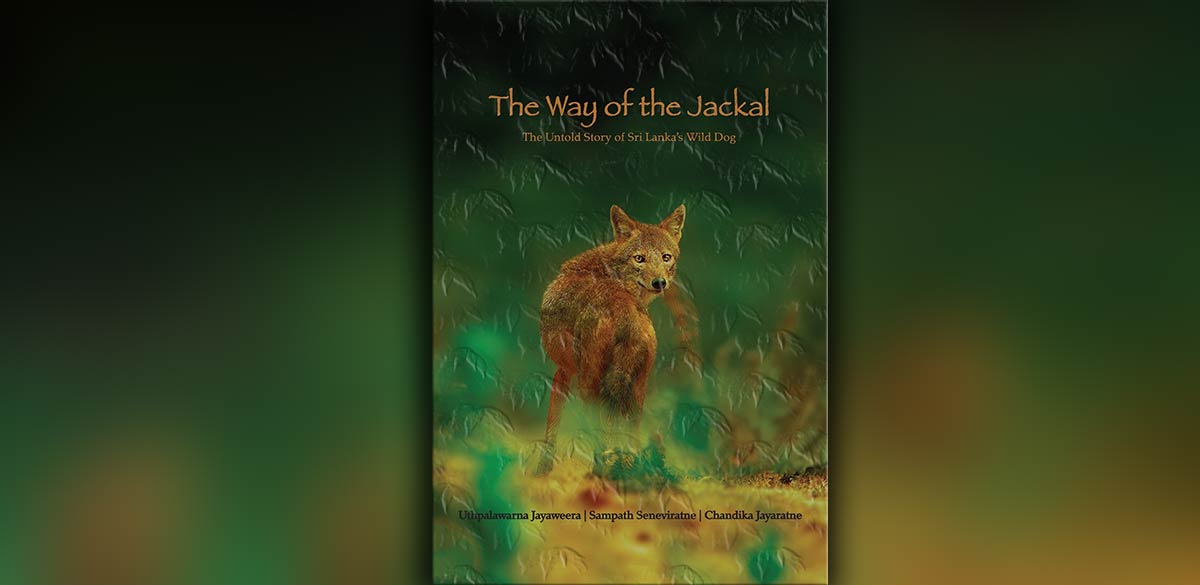
The way of the jackal

By Ifham Nizam
Sri Lanka’s jackal is the only subspecies of the Eurasian Golden Jackal across its range. Historically, it was even considered a species endemic to Sri Lanka.Being the solitary wild dog inhabiting the island, it ranks as the third-largest carnivore in the area, surpassed only by the majestic Leopard and the leisurely Sloth Bear. Despite these remarkable attributes, this creature remains largely unnoticed.
Its grace eludes photographers, its beauty escapes artists’ canvases, tourists seldom seek glimpses of it, and scientists have overlooked its study. Instead, the tale of our Nariya fades into folklore—a misunderstood being, relegated to the shadows of indifference.
Presented in clear language across 152 pages and adorned with over 100 captivating colour photographs, “The Way of the Jackal” offers a thorough exploration of this species, catering to wildlife enthusiasts, biologists, and students alike. Delving into the Jackal’s physical traits, behaviours, social dynamics, and vocalizations, this comprehensive work also equips readers with field-tested techniques for studying the species, strategies for mitigating conflicts, and insights into its potential as a key attraction in wildlife tourism.
By shining a spotlight on the Nariya of rural lore, this book aims to ignite interest, spur research efforts, foster conservation initiatives, and tap into the untapped economic opportunities presented by Sri Lanka’s wild dog population.
Authors:
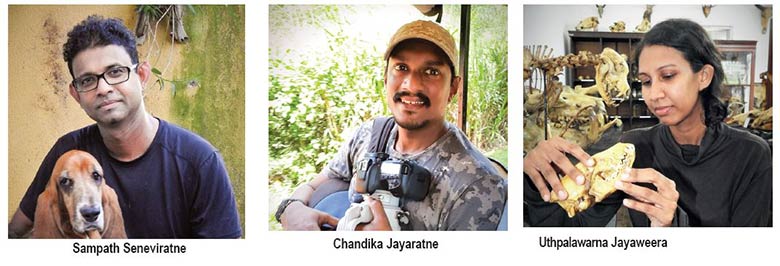
Uthpalawarna Jayaweera is a Science graduate majoring in Zoology at the Department of Zoology and Environment Sciences, University of Colombo. She is a keen researcher who studies carnivore ecology and evolution.
Prof. Sampath Seneviratne is a professor attached to the University of Colombo. He also is a research scientist, a forester, a conservationist, and a public communicator. Sampath spends time in forests across the globe, mostly away from popular places. He loves birding, tracking wildlife and planting.
Chandika Jayaratne is a graduate from the University of Staffordshire in the UK. He pursued a career within the field of hospitality and environmental stewardship. He also has a research background where he studies the ecology of Rusty-spotted Cat and Jackal.
The Island interviewed the three authors regarding their most recent research on Sri Lankan jackals.
Briefly, whose brainchild and how did it kick start?
In Africa, the jackal species found in the northern regions, once considered an African subspecies of the golden jackal, was reclassified as a distinct species of wolf in 2015, following a molecular phylogenetic study conducted by a team of scientists. This discovery served as the catalyst for initiating a project focused on the Sri Lankan jackal.
Our jackal holds a unique position as the sole wild canine species in Sri Lanka and stands as the only island subspecies within the range of the Golden Jackal. The confusion related to its taxonomic status, lack of proper scientific studies on its ecology, and neglect of its potential as a high-value species in Sri Lankan tourism have prompted the need for comprehensive research on this amazing species
Recognizing the Sri Lankan jackal as a promising research model and a valuable asset in Sri Lankan tourism, the project commenced with an investigation into various aspects of the species’ ecology. This included studies on diet, vocalization, taxonomy, geographical distribution, the nature of human-jackal interactions, and the current status of the population. After three years of dedicated work, the culmination of our efforts resulted in the publication of a comprehensive book on the subject.
What are the main species of jackals discussed in the book, and what are their distinguishing characteristics? I understand the species differ from the species stated by W W A Phillips.
There are mainly three species of jackals in the world; Black-backed Jackal, Side-striped Jackal, and Golden Jackal.
The Black-backed jackal (Lupulella mesomelas) is a medium-sized canid native to eastern and southern Africa. The characteristic features of this animal is the dark saddle that extends from the base of the tail to the neck. In addition, they have a long, pointed snout and an overall rufous brown body colour.
The Side-striped Jackal (Lupulella adustus) is a canid native to central and southern Africa. There are two distinguishing characteristics that aid in identifying this animal: a prominent white tip on the tail, and white or off-white sides stripes on the sides
The Golden Jackal (Canis aureus) has the widest range of all jackals. It has a mixture of black, brown, and white hairs in its back fur, giving the impression of a dark saddle, though not as prominent as in black-backed jackals. They range from Europe to the Middle East, Central Asia, and Southeast Asia, including Sri Lanka. So the jackal species that lives in Sri Lanka is the golden jackal and there are 13 subspecies of golden jackals in the world. It is widely believed that the same subspecies is found in the southern parts of India and in Sri Lanka, named Canis aureus nariya.
However, when reviewing the Sri Lankan jackal’s taxonomic history, using published scientific literature and specimens in major museums, such as the Natural History Museum of Colombo, the Museum of the Bombay Natural History Society, and the Natural History Museum of London, we found that:
According to some authors, our jackal is considered a subspecies native to both southern India and Sri Lanka, named Canis aureus nariya. Others see it as a subspecies endemic to Sri Lanka, named Canis aureus Lanka. Also, our jackal has even been considered a unique species, endemic to Sri Lanka, by Wroughton (1916), and Phillips (1935), named Canis Lanka.
As you can see, there is clear confusion regarding its taxonomic status. However, all these classifications have been made, based solely on morphometrics. Therefore, we stress the importance of molecular phylogenetic studies to clarify this taxonomic ambiguity.
How do jackals interact with their environment, and what roles do they play in their ecosystems?
Jackals are considered essential ecosystem service providers due to their pivotal role in pest control within agro-ecosystems. Their diet primarily consists of significant pests, such as rodents, wild boars, peacocks, and granivorous birds like munias. By preying on these pests, jackals help maintain the balance in agricultural environments and reduce crop damage.
In addition to pest control, jackals also serve as nature’s cleaners and health care providers. They scavenge on carcasses and hunt diseased and weak animals, thereby preventing the spread of diseases within the wild and beyond. This scavenging behaviour helps maintain the overall health of the ecosystems they inhabit by removing potential sources of disease. In a country like Sri Lanka, where vultures are absent, the role of jackals, as scavengers, is particularly crucial.
What are some unique adaptations that jackals possess for survival in their habitats?
Jackals are highly adaptable creatures, known for their generalist and opportunistic feeding behaviours. As omnivores, they consume a diverse range of food, including small mammals, birds, reptiles, fruits, carcasses (such as ungulates), insects, and even human food. This high degree of dietary versatility allows them to switch food sources when a particular prey becomes scarce.
Jackals are also capable of thriving in a wide array of habitats, including grasslands, wetlands, forests, valleys, seashores, and areas near human settlements. Their adaptability extends to extreme environmental conditions as well. In Europe, for example, they can inhabit elevations ranging from 1,200 to 2,350 meters and can withstand temperatures as low as -35°C. This remarkable flexibility in both diet and habitat allows jackals to occupy diverse ecological niches and play a crucial role in various ecosystems.
How do jackals communicate with each other, and what social structures do they exhibit?
Like all other canids, jackals exhibit three primary modes of communication: vocal, olfactory, and visual. Jackals use their urine and feces to leave scent marks, which serve as messages to others, especially for marking territory.
Regarding their social structure, the basic social unit of jackals is the breeding pair. It is widely believed that in Golden jackals, the breeding pair mates for life.
What is the hunting behaviour of jackals like, and how do they procure their food?
Our questionnaire survey on the jackal diet showed several interesting behaviours. Jackals are known to visit paddy fields in search of prey, like crabs and rodents. They are also notorious for raiding chicken coops, especially those located near the borders of villages. In certain areas, villagers have observed that jackals howl when they find food. In other regions, it is believed that their howls help to flush out prey, such as Black-naped Hares, from their hiding spots.
Additionally, scavenging is a common behaviour among jackals. Their food may consist of cattle, deer, wild boar, and even elephants that have been killed by predators like leopards, struck by vehicles, or have died from disease or natural causes.
In what ways do jackals interact with human communities, both positively and negatively?
Jackals may be drawn to areas where food is readily available, such as garbage dumps, livestock holdings (including chickens, rabbits, and goats), and paddy fields. Additionally, rabid jackals might enter human settlements due to their increased aggressiveness, fearlessness, and other behavioural changes caused by the disease.
Are there any myths, folklore, or cultural representations of jackals discussed in the book?
Jackals are deeply embedded in folklore, cultural representations, and myths, possibly being the animal most frequently mentioned in our culture, including art, literature, and folklore.
In our folklore and literature, such as “Magul Kema” and stage plays. like “Nari Beana,” the jackal is predominantly depicted as an opportunistic trickster. Art from the Kandyan period often features the jackal in religious contexts, such as in the “Sasa Jathakaya,” which depicts the earlier lives of Gautama Buddha in animal form.
Several famous myths are associated with the jackal. One prominent belief among rural folk is that occasionally a jackal can develop a horn, known as a ‘Jackal Horn,’ ‘Nari-comboo,’ or ‘Nari-anga,’ which is thought to possess magical powers.
What scientific research methods are used to study jackals, and what have these studies revealed about their biology and behaviour?
There are various methods to assess different aspects of jackal ecology. For example, camera traps, thermal imaging cameras, and radio tagging are commonly used to study their behaviour and interactions with other carnivore species.
In our study, we conducted the first-ever dietary analysis of jackals using their scat and stomach contents of road-killed jackals. We found that their diet mainly comprises four types of food: small mammals, birds, invertebrates, and plant-based foods. The presence of a wide variety of items, including rodents, like the black rat (Rattus rattus), grassland birds such as the Tricoloured Munia (Lonchura malacca), invertebrates like beetles and maggots, and plant materials such as jackfruit, bananas, grasses, seasonal berries, and even human food (e.g., cooked rice, scraped coconut, and onion), indicates that our jackal is an opportunistic omnivore rather than a specialist predator.
Even near visitor bungalows, deep inside wildlife parks, surrounded by pristine wilderness, we found jackal scat containing human food remains, such as rice and onion peels. This suggests that jackals prefer easily obtainable food over expending energy on hunting. Therefore, they might frequently visit human habitations in search of such food.
Additionally, we characterized jackal vocalizations for the first time using the playback acoustic method. Through this, we identified different syllables that form five distinct vocal types: the bark, whine, whimper, short-lone howl, and group yip howl. Our findings indicate that the group yip howl is the main vocalization and major group vocal display, primarily associated with reunion and territorial defence.
How do jackals adapt to changing environmental conditions, such as climate change or human-induced alterations to their habitats?
Due to their higher dietary flexibility, jackals can switch to alternative food sources if one type becomes scarce because of climatic changes or human-induced alterations. They generally prefer shrub jungles with higher visibility, as these habitats provide abundant and easily accessible small mammals, like rodents. This preference allows jackals to thrive even in small, isolated patches of jungle, as well as in monocrop plantations, such as coconut, oil palm, rubber, and paddy fields.
However, despite their adaptability, jackals still require certain minimum habitat conditions to survive. If these conditions are not met, they may eventually disappear due to the loss of feeding and breeding grounds to support their survival.



Representatives of almost all the main opposition parties were in attendance at the recent book launch by Pivithuru Hela Urumaya leader Udaya Gammanpila. The book written by the PHU leader was his analysis of the Easter bombing of April 2019 that led to the mass killing of 279 persons, caused injuries to more than 500 others and caused panic and shock in the entire country. The Easter bombing was inexplicable for a number of reasons. First, it was perpetrated by suicide bombers who were Sri Lankan Muslims, a community not known for this practice. They targeted Christian churches in particular, which led to the largest number of casualties. The bombing of Sri Lankan Christian churches by Sri Lankan Muslims was also inexplicable in a country that had no history of any serious violence between the two religions.
There were two further inexplicable features of the bombing. The six suicide bombings took place almost simultaneously in different parts of the country. The logistical complexity of this operation exceeded any previously seen in Sri Lanka. Even during the three decade long civil war that pitted the Sri Lankan military against the LTTE, which had earned international notoriety for suicide attacks, Sri Lanka had rarely witnessed such a synchronised operation. The country’s former Attorney General, Dappula de Livera, who investigated the bombing at the time it took place, later stated, upon retirement, that there was a “grand conspiracy” behind the bombings. That phrase has remained central to public debate because it suggested that the visible perpetrators may not have been the only planners behind the attack.
The other inexplicable factor was that intelligence services based in India repeatedly warned their Sri Lankan counterparts that the bombings would take place and even gave specific targets. Later investigations confirmed that warnings were transmitted days before the attacks and repeated again shortly before the explosions, yet they were not acted upon. It was these several inexplicable factors that gave rise to the surmise of a mastermind behind the students and religious fanatics led by the extremist preacher Zahran Hashim from the east of the country, who also blew himself up in the attacks. Even at the time of the bombing there was doubt that such a complex and synchronised operation could have been planned and executed by the motley band who comprised the suicide bombers.
Determined Attempt
The book by PHU leader Gammanpila is a determined attempt to make explicable the inexplicable by marshalling logic and evidence that this complex and synchronised operation was planned and executed by Zahran himself. This is a possible line of argumentation in a democratic society. Competing interpretations of public tragedies are part of political discourse. However, the timing of the intervention makes it politically more significant. The launch of the PHU leader’s book comes at a critical time when the protracted investigation into the Easter bombing appears to be moving forward under the present government.
The performance of the three previous governments at investigating the bombing was desultory at best. The Supreme Court held former President Maithripala Sirisena and several senior officials responsible for failing to act on prior intelligence and ordered compensation to victims. This judicial finding gave legal recognition to what victims had long maintained, that there was a grave dereliction of duty at the highest levels of the state. In recent weeks the investigation has taken a dramatic turn with the arrest and court production of former State Intelligence Service chief Suresh Sallay on allegations linked directly to the attacks. Whether these allegations are ultimately proven or disproven, they indicate that the present phase of the investigation is moving beyond negligence into possible complicity.
This is why the present moment requires political sobriety. There is a danger that the line of political division regarding the investigation into the Easter bombing can take on an ethnic complexion. The insistence that the suicide bombers alone were the planners and executors of the dastardly crime makes the focus invariably one of Muslim extremism, as the suicide bombers were all Muslims. This may unintentionally narrow public attention away from the unanswered questions regarding intelligence failures, possible political manipulation, and the allegations of a broader conspiracy that remain under active investigation. The minority political parties representing ethnic and religious minorities appear to have realised this danger. Their absence from the book launch was politically significant. It suggests an unwillingness to be drawn into a narrative that could once again stigmatise an entire community for the crimes of a handful of extremists and their possible handlers.
Another Tragedy
It would be another tragedy comparable in political consequence to the havoc wreaked by the Easter bombing if moderate mainstream political parties, such as the SJB to which the Leader of the Opposition belongs, were to subscribe to positions merely to score political points against the present government. They need to guard against the promotion of anti-minority sentiment and the fuelling of majority prejudice against ethnic and religious minorities. Indeed, opposition leader Sajith Premadasa in his Easter message said that justice for the victims of the 2019 Sri Lanka Easter Sunday attacks remains a fundamental responsibility of the state and noted that seven years on, both past and present governments have failed to deliver accountability. He added that building a society grounded in trust and peace, uniting all ethnicities, religions and communities, is vital to ensure such tragedies do not occur again.
Sri Lanka’s post war history offers too many examples of how unresolved security crises become vehicles for majoritarian mobilisation. The Easter tragedy itself was followed by waves of anti-Muslim suspicion and violence in some parts of the country. Responsible political leadership should seek to prevent any return to that atmosphere. There are many other legitimate issues on which the moderate and mainstream opposition parties can take the government to task. These include the lack of decisive action against government members accused of corruption, the passing of the entire burden of rising fuel prices on consumers instead of the government sharing the burden, and the failure to hold provincial council elections within the promised timeframe. These are issues that touch the daily lives of citizens and the health of democratic governance. They offer the opposition ample ground on which to build credibility as a government in waiting.
The search for truth and justice over the Easter bombing needs to continue until all those responsible are identified, whether they were direct perpetrators, negligent officials, or political actors who may have exploited the tragedy. This is what the victim families want and the country needs. But this search must not be turned into a partisan and religiously divisive matter such as by claiming that there are more potential suicide bombers lurking in the country who had been followers of Zaharan. If it is, Sri Lanka risks replacing one national tragedy with another. coming together to discredit the ongoing investigations into the Easter bombing of 2019 is an unacceptable use of ethno-religious nationalism to politically challenge the government. The opposition needs to find legitimate issues on which to challenge the government if they are to gain the respect and support of the general public and not their opprobrium.
by Jehan Perera

* The new duty-free regime for Africa, announced by Chinese President Xi Jinping in February, is the most generous unilateral nonreciprocal trade concession offered by any country to developing countries since the beginning of the modern rule based international trading system.
* Yet, it is a clear violation of the cornerstone of the multilateral trade law, the Most-Favoured-Nation (MFN) principle.
* Hence, its implications on developing countries, without duty-free access to China, will be extremely negative. Sri Lanka is one of the few developing countries without duty-free access to China.
On 14 February, 2026, Chinese President Xi Jinping announced that China will grant zero-tariff treatment to 53 African nations, effective 01 May, 2026. Under this new unilateral policy initiative, China would eliminate all import tariffs on all goods imported from all the countries in Africa, except Eswatini. China already enforces a zero-tariff policy for 33 Least Developed Countries (LDCs) in Africa. Now this policy would be extended to non LDCs as well. This policy initiative clearly aims at reducing the continuously expanding trade deficit between China and Africa. In 2024, China’s trade surplus against Africa was recorded at US $ 61 billion.
This trade initiative, a precious gift amidst ongoing global trade tensions, is the most generous unilateral nonreciprocal trade concession given by any country to developing countries, since the beginning of the modern rule based international trading system.
Though this landmark announcement has far-reaching implications on global trade, as much as President Trump’s “Liberation Day” tariffs, it was almost overlooked by the global media.
Implications for Global Trade
This Chinese policy initiative, though very generous, is a clear violation of the Most-Favoured-Nation (MFN) principle and the “Enabling Clause” of the International Trade Law. The MFN principle is the cornerstone of the multilateral trading system under the World Trade Organisation (WTO) and is enshrined in Article I of the General Agreement on Tariffs and Trade (GATT). It mandates that any trade advantage, privilege, or immunity granted by a WTO member to any country must be extended immediately and unconditionally to all other WTO members. Though, the GATT “Enabling Clause” allows developed nations to offer non-reciprocal preferential treatment (lower tariffs) to developing countries without extending them to all WTO members, this has to be done in a non-discriminatory manner. By extending tariff concessions only to developing countries in Africa, China has also breached this requirement.
This deliberate violation of the MFN principle by China occurs less than 12 months after the announcement of “Liberation Day” tariffs by President Trump, which breached Article I (MFN) and Article II (bound rates) of the GATT. However, it is important to underline that the objectives of the actions by the two Presidents are poles apart; the US objective was to limit imports from all its trading partners, and China’s objective is to increase imports from African countries.
Though the importance of the MFN principle of the WTO law had eroded over the years due to the proliferation of preferential trade agreements and unilateral preferential arrangements, the WTO members almost always obtained WTO waivers, whenever they breached the MFN principle. Now the leaders of the main trading powers have decided to violate the core principles of the multilateral trading system so brazenly, the impact of their decisions on the international trading system will be irrevocable.
Implications for Sri Lanka
China’s unilateral decision to provide zero-tariff treatment to African countries will have a strong adverse impact on Sri Lanka. Currently, all Asian countries, other than India and Sri Lanka, have duty-free access, for most of their exports, into the Chinese market through bilateral or regional trade agreements, or the LDC preferences. Though Sri Lanka, India and China are members of the Asia Pacific Trade Agreement (APTA), preferential margins extended by China under APTA to India and Sri Lanka are limited.
The value of China’s imports from Sri Lanka had declined from US$ 650 million in 2021 to US$ 433 million by 2025. However, China’s exports to Sri Lanka increased significantly during the period, from US$ 5,252 million to US$ 5,753 by 2025. This has resulted in a trade deficit of US$ 5,320 million. Sri Lanka’s exports to China may decline further from next month when African nations with duty-free access start to expand their market share.
Let me illustrate the challenges Sri Lanka will face in the Chinese market with one example. Tea (HS0902) is Sri Lanka’s third largest export to China, after garments and gems. Sri Lanka is the largest exporter of tea to China, followed by India, Kenya and Viet Nam. During the last five years the value of China’s imports of tea from Sri Lanka had declined significantly, from US$76 million in 2021 to US$ 57 million by 2025. Meanwhile, imports from our main competitors had increased substantially. Most importantly, imports from Kenya increased from US$ 7.9 million in 2021 to US$ 15 million in 2025. For tea, the existing tariff in China for Sri Lanka is 7.5% and for Kenya is 15%. From next month the tariff for Kenya will be reduced to 0%. What will be its impact on Sri Lanka exports? That was perhaps explained by a former Ambassador to Africa, when he urged Sri Lankan exporters to “leverage duty free access from Kenya” to expand their exports to China!
(The writer is a retired public servant and a former Chairman of WTO Committee on Trade and Development. He can be reached at senadhiragomi@gmail.com)
by Gomi Senadhira

 Jeevarani Kurukulasuriya was a famous actress and her name still rings a bell with many. And now in the spotlight is her daughter Senani Wijesena – not as an actress but as a singer – and she has been singing, since the age of five!
The plus factor is that Senani, now based in Australia, is also a songwriter, plays keyboards and piano, dancer, and has filmed and edited some of her own music videos.
Says Senani: “I write the lyrics, melody and music and work with professional musicians who do the needful on my creations.”
Her latest album, ‘Music of the Mirror’, is made up of 16 songs, and her first Sinhala song, called ‘Nidahase’, is scheduled for release this month (April) in Colombo, along with a music video.
‘Nidahase’,
says Senani, is a song about Freedom … of life, movement, love and spirit. Freedom to be your authentic self, express yourself freely and Freedom from any restrictions.
In fact, ‘Nidahase’ is the Sinhala translated version of her English song ‘Free’ which made Senani a celebrity as the song was nominated for a Hollywood Music in Media Award in the RnB /Soul category and reached the Top 20 on the UK Music weekly dance charts, as well as No. 1 on the Yes Home grown Top 15, on Yes FM, for six weeks straight.
Senani went on to say that ‘Nidahase’ has been remixed to include a Sri Lankan touch, using Kandyan drums and the Thammattama drum, with extra music production by local music producer Dilshan L. Silva, and Australia-based Emmy Award winning Producer and Engineer Sean Carey … with Senani also in the scene.
The song was written (lyrics and melody) and produced by Senani and it features Australian musicians, while the music video was produced by Sri Lanka’s Sandesh Bandara and filmed in Sri Lanka.

First Sinhala song scheduled for release this month … in Colombo
Senani’s music is mostly Soul, Funk and RNB – also Fusion, using ethnic sounds such as the tabla, sitar, and sarod – as well as Jazz influenced.
“I also have Alternative Music songs with a rock edge, such as ‘New Day’, and upcoming releases ‘Fly High’ and ‘Whisper’“, says Senani, adding that she has also recorded in other languages, such as Hindi and Spanish.
“As much of my fan base are Sri Lankans, who have asked me to release a song in the Sinhala language, I decided to create and release ‘Nidahase’ and I plan to release other original Sinhala songs in the future.
Senani has a band in Australia and has appeared at festivals in Australia, on radio and TV in Australia, and Sri Lanka.
She trained as a vocalist, through Sydney-based Singing Schools, as well as private tuition, and she has 5th Grade piano music qualifications.
And this makes interesting reading:
“I graduated from the University of Newcastle in Australia with a Bachelor of Medicine and I work part time as a doctor (GP) and an Integrative Medicine practitioner, with a focus on nutrition, and spend the rest of the time dedicated to my music career.”
Senani hails from an illustrious family. In addition to her mum, Jeevarani Kurukulasuriya, who made over 40 films, including starring in the first colour movie ‘Ranmuthu Duwa’, her dad is Dr Lanka Wijesena (retired GP) and she has two sisters – all musical; one is a doctor, while the other is a dietitian/ psychotherapist.
-

 Features3 days ago
Ranjith Siyambalapitiya turns custodian of a rare living collection
-

 News6 days ago
2025 GCE AL: 62% qualify for Uni entrance; results of 111 suspended
-

 News3 days ago
Global ‘Walk for Peace’ to be held in Lanka
-

 Business7 days ago
Hour of reckoning comes for SL’s power sector
-

 Editorial6 days ago
Search for Easter Sunday terror mastermind
-
 Opinion5 days ago
Hidden truth of Sri Lanka’s debt story: The untold narrative behind the report
-
Editorial7 days ago
Ideological confusion and identity crisis
-

 Opinion6 days ago
Is there hope for Palestine?