
Opinion
The versatile banker rich in humane values

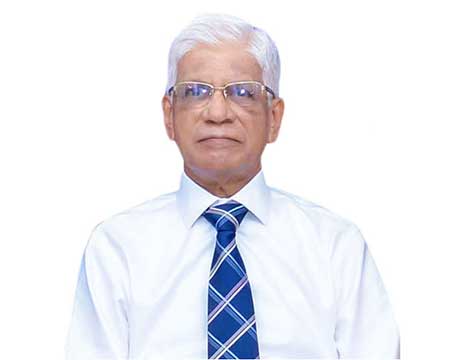
When I read the article ‘Dismal behaviour of people’s representatives’ on 7th July in this newspaper by veteran banker Rienzie T. Wijetilleke (RTW), former Managing Director and Chairman of Hatton National Bank PLC, I noticed he had mentioned that he was in his 80s. That prompted me to pen this article as his next birthday approaches.
A leader is the one who knows how the way goes, and shows the way. Such a man’s name is ever embedded in many hearts. To the world he may be one human being but for many he is the world.
Quite deservingly many articles about him have been written by erudite veterans such as, Dr Upul Wijayawardhana, W. A.Wijewardane, former Deputy Governor of Central Bank in ‘My View’ and Savithri Rodrigo in her ‘Rienzie Wijetilleke – Revisited’. (to name a few of eulogies).
Some of the following accounts of him are not known to many outsiders and may be confined only to some brothers and sisters of HNB. Although I have worked at HNB for 18 years my interactions with this great leader was unfortunately limited to four instances.
If my memory serves me right, I met him for the first time in Panadura in the late 80s as the then Vice President of the Panadura Sports Club when HNB sponsored a cricket match between the club team and a touring English team. The chat lasted less than three minutes. Then, it was when he came to the HNB City Office in 1991 to give his blessings for the very first shipment of foreign currency notes to Singapore. The third was when he visited the Treasury Department of HNB, which was shifted to a new building opposite the City Office in Colombo Fort in the late 90s. My most important and vital meeting was in late September 2001.
When I was selected to Head the Representative Office of HNB in Karachi, Pakistan, in October 2001, I had to meet him. So, on the day of the appointment when I went to his room, I experienced the noble qualities and true humanity of this great gentleman. After a lengthy discussion about my new posting (mainly fatherly advice) and also about my family, the following kind words of his still echo in my mind and will not be forgotten in years to come.
“Lalith, give my direct telephone number to your wife to contact me for any emergency and she and your children can be assured of my protection and care in any emergency”.
Further, he fulfilled a special request made by me before I left. If love, compassion and care define a mother, then he fits in there.
He created and promoted the ‘Hatna Family’ concept, to go deep into the hearts of all at HNB. He never neglected the children and the close relatives of the ex-employees of HNB. However, in this world there are so many ungrateful people who do not have an iota of gratitude even after receiving ‘impossible’ opportunities. Leaving that sad part aside, I just wonder how many fathers, mothers and children are smiling today because of the stability of their lives, well assisted by our Sir, RTW. Surely most of them must be transmitting their telepathic best wishes and gratitude to him.
Our quarterly in-house journal, ‘Hatnamag’ was his brainchild. When I was in Karachi I used to circulate it among the prominent bankers there and some expressed their eagerness to have their own ones. However, the most prominent and enthusiastic reader was our then High Commissioner to Pakistan, (stationed in Islamabad) the ever smiling and amiable, General Srilal Weerasooriya.
The annual dance of HNB, the ‘Hatna Nite’ which was not held for many years was rejuvenated by Sir, RTW, I was told.
Media, especially the television channels, had a special place reserved for HNB. Decades ago when ‘Rupavahini’ broadcast the programmes, ‘Vanija Lovin’ (from the commercial world) and ‘Business Matters’ the channel authorities selected HNB as the provider of the articles. As requested by SDGMT, Mr. GK, I wrote those Sinhala and English articles for HNB. Before the introduction of the Euro in January 1999, ‘Rupavahini’ gave the opportunity for HNB to educate the wide range of viewers about facts related to the same. Then ART TV had a programme called ‘Business Matters’ every fortnight. Those were recorded at the Treasury Department of our bank. In all occasions I was lucky enough to be the interviewee thanks to my boss, Mr. GK, SDGMT. All those opportunities were not conjured by a magic wand but because of the rapport that HNB amassed throughout the years, thanks to the unparalleled leadership of our Sir, RTW,
It is a well-accepted fact that the sport (corruption free) is a real tool that can bring all people together. RTW had a special concern for the sportsmen and women. HNB became an oasis for them as the bank recruited, plethora of players of national fame in cricket, rugby, basketball, netball, soccer and hockey. The lengthy sports fabric of HNB was neatly decorated by the above players who brought plenty of championship trophies in Interbank, Mercantile and National tournaments. The numbers of achievements / trophies are too vast to name one by one. Thus, in the sports arena too HNB, created an indelible reputation.
He also extended the opportunities at HNB for three star athletes who brought honour to our motherland in Asian Games — Jayamini Illeperuma, Sriyani Kulawansa and Dhammika Menike.
Since I was a playing member of the team, I am proud to mention that in 1996 HNB became the Mercantile Over-40 Cricket Champions.
The number of bank branches swelled to over 180 in 2004 from 33 branches when he took over as the MD, with ATMs scattering right round the country.
As a colossal figure in the banking industry of Sri Lanka, while being the Managing Director he built a colossal mansion for the bank – HNB Towers, inaugurated in January 2003. Despite some pessimism about the building by corporate customers, his unhesitant determination, supported by an enthusiastic team saw the giant baby born.
In 2004, our Sir, RTW was elevated to the prestigious position of Chairman of HNB. By then the number of Exchange houses in the Middle East that had commenced agency arrangements with HNB for the inward remittances for the benefit of the expatriate Sri Lankans was very high. Those arrangements extended to some affluent countries such as Australia, Canada, Switzerland, Singapore and the UK as well during his tenure as the MD, with the Inward remittance business expanding many folds.
The establishment of the departure and arrival outlets of HNB at the BIA was another feather in his cap. Gold business of HNB commenced when he was MD. The high volumes of Gold sales by those two outlets and a large number of foreign currency deposits by duty free shops at BIA, the total collections of the same became unprecedented, resulting in the repatriation (export) of foreign currency notes to Singapore and Switzerland weekly. The profits were enormous.
The ‘Gami Pubuduwa’ programme was initiated during his tenure as Managing Director, which the World Bank hailed as a role model of the world in 1995. Under his guidance HNB became first for many local and international accolades.
The enormous number of scholarships offered to the deserving employees of HNB was unparalleled. Most of the ‘lucky’ ones, including me, are in retirement, reminiscing the ‘bright’ flame that glittered throughout, making plenty of opportunities for his subordinates.
The Training Centre of HNB was expanded to greater heights by recruiting well experienced and erudite personnel. The bank conducted the first ever training programme for the school leavers in 1989. The library was revitalized to modern standards in January 1990, and both relocated at HNB Towers.
After the introduction of the free economy, many foreign banks opened their doors in Sri Lanka. With the passage of time almost all of them wanted to quit Sri Lanka. (If I’m not mistaken only the CitiBank and Deutsche Bank remain to date). However, HNB made three record number of mergers, namely with Sri Lankan branches of Emirates Bank, Banque Indosuez and Habib AG Zurich, guided by Sir, RTW. Under his guidance HNB also established two Representative offices in Chennai, India and Karachi, Pakistan.
‘Cheqleaf’ at HNB Towers is an oasis with manna for the ‘exhausted’ but ‘spirited’ loyalists after 6 pm. The Pool Table there is an ideal substitute for billiards and snooker fanatics like me. It has become a good pastime for many employees.
I purposely refrained from obtaining opinions from retired and present senior staff members (joined before 2004) of HNB about our Sir, RTW for the simple and obvious reason that this article would have become too lengthy.
Sir, RTW, as the Chairman ran the best cricket interim committee of the country in 1999. Political interference brought an abrupt end to his top quality management. That is another sad episode of cricket in our motherland.
Like King Dutugemunu had 10 giant warriors, our Sir, RTW also had such capable men around him. One special lieutenant, an amiable character like a shadow enabling his boss to reach the pinnacles of successes, was Mr. Upali De Silva. He was the best ‘midwife’ at HNB who assisted his boss to deliver at all times. His camaraderie with his boss was exemplary.
Sir, RTW retired in 2010 as the proud Chairman of HNB. Even at 80 you are still young at heart. The birthday of our former Big Boss will be on 10th November.
Your wisdom and exemplary humanity will always be etched in our memories. Along with thousands of well wishers, I wish you good health and longevity to serve the human kind for many more years to come.
‘Scent of flowers does not travel against the wind, but the fragrance of good people travels even against the wind. A good man pervades every quarter’.
LALITH FERNANDO
Panadura

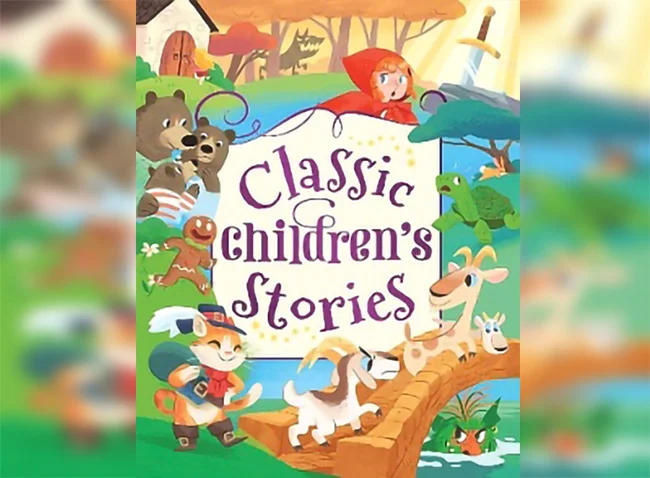
Children’s stories have always been an important part of childhood. From traditional fairy tales to modern picture books, stories entertain children while also helping them understand the world around them. When children are learning English as a language, stories become an especially valuable tool because they provide a natural, enjoyable, and meaningful way to develop language skills. Through characters, plots, and imaginative situations, children’s stories support vocabulary development, improve communication abilities, and encourage confidence in using English.
One of the greatest benefits of children’s stories in English language learning is that they introduce children to new vocabulary in a meaningful context. Instead of memorising isolated words from a list, children learn words through situations and actions within a story. For example, a story about a farm may introduce words such as “animal,” “field,” “farmer,” and “plant” while showing how these words relate to each other. This contextual learning helps children understand and remember new vocabulary more effectively.
Stories also improve children’s listening skills. When teachers, parents, or other speakers read stories aloud, children hear correct pronunciation, sentence structures, and natural expressions in English. Regular exposure to spoken English helps children become familiar with the rhythm, sounds, and patterns of the language. Even when children do not understand every word, they can often follow the meaning through pictures, gestures, and the events of the story. Over time, this develops their ability to understand spoken English in different situations.
Another important impact of children’s stories is the development of speaking skills. Stories encourage children to talk about characters, describe events, answer questions, and share their own ideas. Activities such as retelling a story, acting out scenes, or discussing what might happen next give children opportunities to practise English in a relaxed environment. Because stories are enjoyable and engaging, children are often more willing to participate and communicate without fear of making mistakes.
Children’s stories also support the development of grammar skills. Through repeated exposure to well-formed sentences, children gradually recognize how English works. They learn common sentence patterns, verb forms, and ways of expressing ideas. For young learners, grammar is often easier to understand when it is presented through a story rather than through direct explanations. For example, a story that describes past events naturally introduces the use of past tense verbs, allowing children to observe grammar in action.
In addition to language development, stories have a strong influence on children’s imagination and creativity. Stories allow children to enter different worlds, meet interesting characters, and explore new ideas. When learning English, imagination makes the language experience more meaningful. A child who becomes interested in a story about a brave character or a magical adventure is more likely to remember the words and expressions connected with that experience. Creativity also encourages children to create their own stories, which further strengthens their ability to use English.
Children’s stories can also help develop cultural awareness. Language is closely connected with culture, and stories often introduce children to different traditions, lifestyles, and values. English stories from different countries allow children to learn about people and places beyond their own experiences. This helps them understand that English is not only a subject to study but also a way to communicate with people around the world.
Reading stories in English can also increase children’s motivation and positive attitudes toward learning. Many children may find learning a new language challenging, especially when they focus only on textbooks or exercises. Stories make learning more enjoyable because they combine education with entertainment. When children associate English with fun and creativity, they are more likely to develop curiosity and continue learning.
The emotional impact of stories should not be overlooked. Many children’s stories contain themes such as friendship, kindness, courage, and problem-solving. Through characters and situations, children can learn important social and emotional lessons. Discussing these themes in English gives children opportunities to express feelings, opinions, and personal experiences. This not only improves language ability but also supports emotional growth.
Teachers play an important role in using stories effectively in English language classrooms. Selecting stories that match children’s age, interests, and language levels is essential. Teachers can support understanding by using pictures, asking questions, encouraging predictions, and connecting the story to children’s lives. Repetition is also valuable, as hearing the same story several times allows children to become more familiar with vocabulary and sentence structures.
Parents can also encourage language learning through storytelling at home. Reading English stories together, listening to audiobooks, or watching story-based programs can provide additional exposure to the language. A supportive environment where children feel comfortable experimenting with English can greatly improve their confidence and progress.
In conclusion, children’s stories have a powerful impact on learning English as a language. They provide children with opportunities to develop vocabulary, listening, speaking, reading, and grammar skills in an enjoyable and meaningful way. Beyond language learning, stories encourage imagination, creativity, cultural understanding, and emotional development. By making English learning engaging and enjoyable, children’s stories help young learners build a strong foundation for future communication and lifelong learning.
Saumya Aloysius
(A children’s writer contributing to both local and foreign newspapers as a freelance writer)

Any government that comes into power is a caretaker – of its people, environment and security. This is another glaring occasion where their lack of knowledge, or blatant disregard to the environment is causing long-lasting damage to this country.
After the devastation of the tsunami, then governments took the initiative to raise natural protection of the island by undertaking massive projects to plant mangroves. It was a long-term project, spanning 20 years, by the armed forces, to get these barriers up. Now the same army is used by this government to chop down these mangroves!!
This is happening right now in the Trincomalee lagoon. Nearly 40 lorry loads of mangrove forest have been taken away already. The excuse used for this is dengue control, a circular issued by the presidential secretariat in June. The ignorance is here; the seawater mixed lagoon does NOT breed mosquitoes. Trincomalee does not pop up in the dengue demographics, even as a high risk area. Yes, there is garbage, and plastic thrown into the mangroves that can be breeding grounds for mosquitoes. These can be cleared away in a clean-up operations, without harming the mangrove trees. It has been done a few times before, by previous government authorities, like coast conservation, who know the value of the mangrove belts. The local rumour becomes believable, that this deplorable act is done to please some local business partners of the area who run pleasure boats in the lagoon.
Yes, unhealthy mangroves can breed mosquitoes. But mangroves are ‘decease swamps’ is a dangerous myth. That mangroves are dirty, stagnant swamps teeming with decease carrying mosquitoes is a misconception that promotes harmful policies to control dengue outbreaks. This top myth justifies the illegal coastal clearance today in Trincomalee. It is destroying an important ecological asset of this country, mangroves, while failing to address the true root of dengue transmission. Where is the coast conservation department in this situ? Have they got CCD permission to carry out this butchery?
Healthy mangroves do not breed dengue mosquitoes, especially the one’s closely connected to the sea like in Trincomalee. The larvae needs completely still unmoving water to breathe at the surface, and mature. The power of tidal flushing which keeps water circulating in the mangroves makes this impossible. Also the daily ebb and flow of ocean tides keeps the water moving in the mangroves and frequently drains the forest floor. The natural hydrology of healthy mangroves, acts as an automatic self-regulating barrier against stagnant water collection, making viable breeding sites virtually impossible.
Also mangroves contain nature’s exterminators. It hosts a massive army of mosquito predators. These mangroves are not dead swamps but vibrant nurseries. Young Fish, dragon flies, crusteasians, and insectivorous birds are natural mosquito predators. Clearing mangroves collapses this natural food web, removing this natural pest control.
In fact, clearing mangroves is counterproductive and will backfire with worsened dengue cases. The heavy machinery will leave a scarred landscape with deep tyre tracks in the marshy soil making stagnant water pools and disrupted drainage. When rainwater fills these artificial depressions it will create perfect stagnant, predator free, fresh water pools, Ideal breeding grounds for Aedes aegypti. Also clearing this kind of buffers can bring in the urban sprawl with its people, housing, and garbage, to the new degraded land.
The collateral damage is even bigger. Destroying mangroves in the name of pest control leaves coastal populations poorer, hungrier, and highly vulnerable to extreme weather. One would have thought at least the people in the coast conservation department were knowledgeable enough about the loss of wave attenuation with removal of mangroves and the risk of flooding and storm surge damages to the coastal areas. Collapse of these fish nurseries should ring alarm bells in the fisheries department. Reduced fish harvest and loss of livelihood for the local fishermen should have had fisheries department people rushing to the site. But neither of the mentioned government departments have raised a murmur, in the face of political influence. This is the sad truth of the country at the moment. Sri Lanka’s climate resilience has been compromised by release of stored ‘blue carbon’ and a loss of natural buffer against rising sea levels, while the responsible people in the government are silent in front of an ignorant political hierarchy.
This is an appeal to the highest authority in the country to stop this environmentally insensitive projects of this nature being coughed up by ignorant municipal members. Clearing these forests directly violates so many policies on conservation. Our local fishermen depend entirely on healthy mangrove root systems—such as those being chopped down. From a health perspective, medical professionals have repeatedly assured us that under the current National Policy Framework, marshy lands and mangrove ecosystems pose no threat of dengue. We request your guidance and intervention to ensure our environment is not sacrificed.
Citizen S

In planning a long trip to Sri Lanka from the UK, I was disappointed to see different hotel pricing for foreign visitors when compared to local rates. Like many travellers, I prefer to book directly with hotels, rather than international hotel consolidators, as more money goes to local businesses. But the assumption that foreigners should pay more is simply distasteful. As such, I’ve chosen another long-haul destination that does not follow such practices, and hope that Sri Lanka will change its approach to overseas visitors in the near future.
Neil Roskilly Wetherlee UK

President chairs discussion on 2027 Budget Proposals for the Ministry of Industry and Entrepreneurship Development

Prime Minister meets the Amir of the State of Qatar and conveys condolences on the passing of the Father Emir

Current El Niño Status in Sri Lanka

A few showers may occur in the Western, Sabaragamuwa and North-western provinces and in Kandy, Nuwara-Eliya, Galle and Matara districts.

Argentina face fine for Falklands banner in semi-final win

US launches fresh strikes on Iran as Trump warns Tehran it ‘better behave’

‘Dates have the highest sugar content to fight Coronavirus’

Sunday Island 27 December – Headlines

#SundayIsland 17th December – Headlines

Sunday Island – 28th March

Sunday Island Headlines – 21 March

Sunday Island – 21st February – Headlines
-

 News7 days ago
Herath warns prospective migrant workers not to get fleeced by racketeers
-

 Features5 days ago
Prison riots and politics: NPP’s biggest challenge and Sri Lanka’s biggest opportunity
-

 Editorial6 days ago
What’s the world coming to?
-

 Foreign News7 days ago
Tensions erupt in Indian state after 11-year-old raped and murdered
-

 Features7 days ago
Devanesan Annan – in Memoriam
-
Editorial7 days ago
Punishment in hellholes
-
 Features2 days ago
Dirty Money
-

 Editorial5 days ago
Much ado about crime: Fish or cut bait