
Features
The Third Side of the Coin

by Capt. Elmo Jayawardena
I remember a Christmas a long time ago. I was in my teens; my father was unemployed and things at home were really bad. We were practically poorer than anybody else I knew. But Christmas came the same way, the winds blowing cool as the month changed from November to December. Shops were getting their fill of parent Santa Clauses. The quantum of the celebration in every home was relative to the bulge of the family purse. People were getting ready to have a bash at the birth of Christ, a two thousand year old festivity that had its humble beginnings in an unknown obscure manger, in the even more obscure Palestinian town called Bethlehem.
We did not have any money. But that didn’t stop us from doing what little we could to brighten our own Christmas. I remember our Christmas tree; this was no beautiful pine in leafy green with the special pine smell. No chiming little golden bells. Our tree had no twinkling lights either, nor any gaily coloured tinsel. There were no miniature angels with harps and halos. Our Christmas tree was a Jambu branch. We stripped the leaves off and erected it in an old Nespray tin filled with sand. The tin itself was covered with coloured paper.
What we hung on the Jambu branch is still vivid in my memory; little meaningless things, anything that came to hand that looked hangable. That was our Christmas decor. They hung and swung on the Jambu branch, all sizes and all colours, all totally valueless, acting merely as compensation for the tree’s emptiness. We even tucked small balls of cotton wool between the twigs to depict snow. Man, didn’t we have imagination!
We had Christmas cake too, our cake was kattabibikkan, which my mother made out of treacle and coconut. It tasted all right if your palate wasn’t fussy. I guess real Christmas cake was a patent of the rich. Maybe that is why they called it rich cake.
We had this little crib, a plastic crib (I fail to recall where we got it from) It was the size of a little shoe box. The crib had a musical machine which when wound played the chimes of silent night. But there was a slight problem. It had no speed control. When it was fully wound it played silent night at Rock ‘n Roll speed and as the winding came to an end it dragged like a duet between Domingo and Pavoroti. This little plastic crib was the pride of our Christmas decorations. When someone came to the house one of us would run and wind the crib and we listened to the little chimes at varying speeds as if the very heavens were singing them for us.
I remember that Christmas very clearly. We never went to church as a family. My father had left the fold of the faithful and my mother too was on her way out. We, the children, each trudged to church on our own, solitary celebrants of Christmas. That night I was getting ready to go to church. I looked for something to wear that would be reasonably acceptable to the glittering social standard of the midnight church service.
The only pair of trousers I had was made of jungle khaki, a green material that was somewhat of a refined version of what the soldiers wore in the military. It looked all right if the lights were not too bright, but the church was like Flushing Meadows, lit like a tennis court. No way could I hide there in jungle khaki. I felt ashamed; I felt the need to be better dressed. So I folded the trouser and went back to sleep. No church, no worship, no clothes to go. That was my Christmas.
In the morning I went to church, jungle khaki clad. The early morning mass was usually attended by the lesser children of God. One could hold his own there even in jungle khaki.
Today when I look back, I kind of feel awkward. I feel that I let myself down by not going to church in whatever I had to wear. I feel ashamed that I didn’t have it in me to stand and worship God with people who wore their best. I feel ashamed to think that I valued myself so little. But then, that was a long time ago, in another world. It was a sad and timid world of the poor that I was part of; I was too young to realize at that time that there was much more to men and women than the clothes they wore.
Nowadays when I go to church on Christmas day I make sure I am ordinarily dressed. Sometime it may appear a foolish gesture. I do not question the validity or reason. I know some people wonder why I always wear rubber slippers to church. There are no explanations needed. It is very personal. I am thinking of someone like me in my jungle khaki days, someone without proper clothes. Perhaps he may be able to shed a shred of his shame seeing me in church with him, sharing the embarrassment of his attire.
I know there are so many people today like I was yesterday. People who do not have the means to celebrate the birth of Christ. They have children who believe in Santa Clause’s generosity and write meaningless letters that never gets replied. There are those who erect Jambu branch Christmas trees and hang stupid things to swing. There are those who eat kattabibikkan and pretend it is rich cake. There are people who avoid church and children who select lesser services to hide their shame. We as Christians at times forget the unimaginable agony suffered at Christmas by the less fortunate.
Unfortunately there aren’t that many people who have seen both sides of the coin, the poor side and the better off side. I call them the people from the third side of the coin. The ones who have seen poverty at its extreme and then had managed to drag themselves out of the mire. They are the ones who know the dilemma and the agony of life’s multiple manifestations of poverty. They are the ones who have a duty to voice an awareness, specially at times that are known to embarrass the less fortunate.
This year too, I will go to church dressed up in my almost jungle khaki trousers. I’ll wear my slippers, perhaps look a bit ridiculous. I’d rather be that than forget my own awkward experience and dress in my best.
I would appreciate if these lines I write are read in the context it is written. There is no criticism here, nor any form of anyone’s condemnation. I believe that those of us who are on the “third side” should make their own narrations, to tell about the side we left behind, the side that suffers in silence. They too are entitled to the joys and blessings of Christmas. Maybe what I have written will influence a few, perhaps even one, to follow me to church attired in a manner that creates no difference. I like to think that this simple gesture would help some young man sitting in a corner, in jungle khaki trousers, feel that he is not cornered.
(elmojay1@gmail.com)

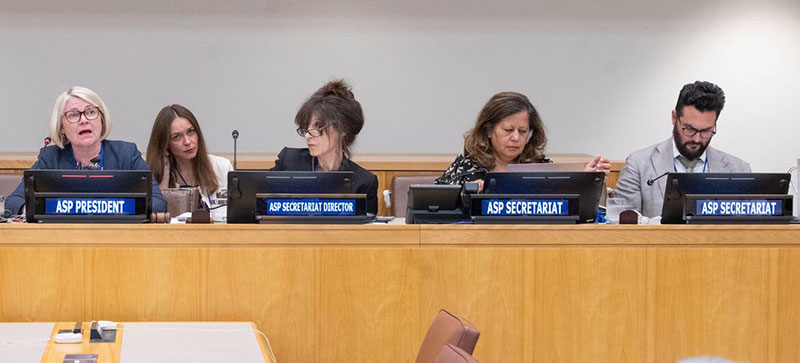
 US Secretary of State Marco Rubio’s warning to the International Criminal Court (ICC) was stark: ‘Either the ICC will end its threats, or we will end the ICC.’ It followed US central administration accusations that the court was unfairly targeting Americans on the basis of trumped-up war crimes charges.
However, a new plethora of sanctions has been clamped on the ICC by the US, which in turn has spurred accusations by sections of the world that the latter has unleashed an ‘assault’ on the international legal order.
What some of the sanctions would mean for the ICC was outlined by Rubio: ‘We will ban transactions with this rogue court, cutting off their resources and crippling their ability to operate against us.’
The ICC has shown consistency of purpose over the years. Despite some operational constraints it has indicted a large number of political strongmen from around the world, accused of war crimes and other governance excesses that come under its purview. Two such recent figures are: Russian President Vladimir Putin and Israeli Prime Minister Benjamin Netanyahu.
Rather than enjoy a mere nominal presence in the world community, the ICC has proved its effectiveness by detaining and bringing to justice scores of VIP politicians and others of their ilk who have been found guilty of human rights abuses and kindred excesses that come within the terms of reference of the ICC.
Accordingly, the international justice system would be stymied considerably as a result of the ICC being dis-empowered, particularly financially. Needless to say, potential and real perpetrators of the species of crime coming under the jurisdiction of the ICC would stand to gain most from such anarchic tendencies. That is, political repression globally would be enabled to enjoy a new lease of life.
A detailing of the types of crime coming under the purview of the ICC provides an idea of what it would cost the international community if the ICC’s operations are gravely hampered. They are mainly: genocide, war crimes, crimes against humanity and the crime of aggression.
That is, the part of the world to be worst affected would be the global South, since the latter is awash with the mentioned crimes. Needless to say, a chronically-disaffected South will sooner rather than later undermine the well being of the world dangerously. The world is already being put through these paces.
At the time of writing, ‘illegal migrants’ from the South, for example, are aggravating many a Western economy’s woes, besides creating for them acute law and order issues. The fact that these migrants’ presence goes on to become a virtual test of the migrant receiving states’ ability to forge domestic social inclusion in the face of jingoistic protests by mainly white supremacist groups is evidence of the latter. As is known, the US, to take just one example, has been up against this crisis for quite a while.
Accordingly, it will be in the best interests of the West if ‘illegal’ migrant arrivals on their shores are stemmed. If the socio-political and economic problems assailing the South are effectively managed through North-South collaborative, ‘trouble-shooting’ efforts the causes leading to ‘illegal’ migration and connected issues could be resolved at source as it were. For, it is the aggravation of the South’s material questions that lays the basis for the emergence of repressive and anti-democratic regimes in the hemisphere.
Until such time that the aforementioned issues in North-South relations are visited afresh and addressed urgently, a vibrantly functioning ICC would be needed. For, the latter would prove a deterrent to Southern political and military strongmen, highly prone to power abuse and like excesses, from coming into being in the wake of the South’s chronic material woes and the wars and conflicts that result from them.
It stands to reason then that the US would be acting in its own interests by enabling the ICC to perpetuate its mandate without hindrance. For a crop of issues that impinges negatively on internal law and order would be defused.
Meanwhile, there needs to be a meeting of minds among the rest of the West to put back in place a North-South dialogue process aimed at reducing some of the economic pressures that are weighing on the South.
Since economics usually drives politics it will be in the interests of the world community to scrutinizingly re-visit North-South issues of the past and put in place economic relief packages for Southern publics that would enable them to tide over their material hardships rather than permit the latter to aggravate into social disaffection and eventually armed militancy. It is the latter juncture that paves the way for the emergence of authoritarian rulers in the South who then go on to be a blight on their publics.
Accordingly, the Southern-based global development thinking of the past that envisaged a more equitable world economic order needs to be seen as an urgent need. That is, NAM’s international development paradigms need to be resuscitated to the extent possible.
It is unlikely that rightist governments of the West, such as the current Republican administration in the US, would find these projects feasible, but democratic states of Europe, led by perhaps the UK, are likely to think otherwise. For it would not be beneficial for the democratic world to be having on their hands repressive governments in the South who would be gravitating towards the major military and economic actors of the South, such as Iran and North Korea, who tend to be in constant power struggles with the West.
However, until such time that the mentioned, pro-people initiatives are given serious thought the ICC would need to be enabled by the international community to be in place comfortably and carry on with its mandate of bringing repressive rulers to book. Besides the ICC should pave the way for the peoples of the developing world to enjoy some substantial respite from the political repression and even terror which tend to be their lot.
Meanwhile, the wars of West Asia are relentlessly aggravating the economic hardships of people everywhere, driving the point home to enlightened sections that there is no alternative to peacemaking. A challenge is to convert the US under President Trump to this line of thinking.
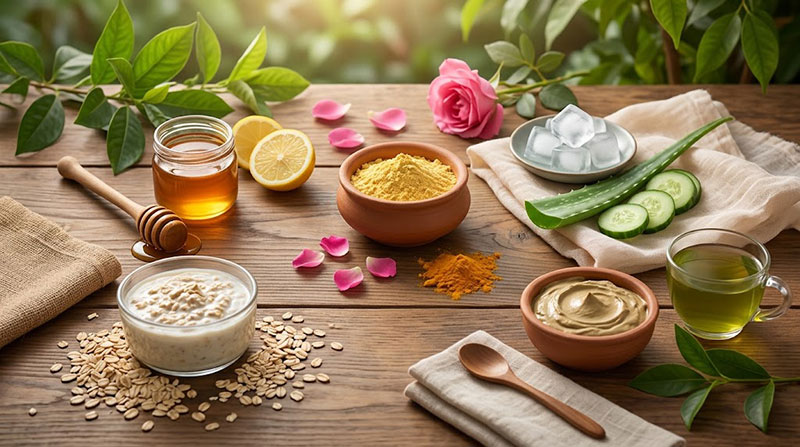
 This week, I give you five simple, time-tested homemade remedies that help reduce the appearance of blemishes, control excess shine and leave your skin feeling softer and smoother.
The Honey and Lemon Brightening Dab:
For stubborn blemish marks, this is a classic. Mix one teaspoon of pure bee honey with three to four drops of fresh lemon juice. Apply gently, only on the affected spots, and leave for 10 minutes before rinsing with lukewarm water. While honey soothes and softens, lemon helps to brighten naturally. Use twice a week in the evening.
Besan and Rose Water Oil-Control Pack:
An ideal remedy to combat shine, especially on the T-zone. Take two teaspoons of besan (gram flour) and mix with sufficient rose water to form a smooth paste. Add a pinch of turmeric for its antiseptic goodness. Apply evenly, keep for 15 minutes and wash off. It absorbs excess oil without over-drying, leaving a beautiful matte finish.
Aloe Vera and Cucumber Ice Soother:
Blend fresh aloe vera gel with the juice of a grated cucumber and freeze the mixture in an ice tray. Each morning, wrap one cube in a soft muslin cloth and gently rub over a cleansed face for 30 seconds. It calms, tightens pores and imparts a baby-soft smoothness.
Oatmeal and Curd Gentle Polish:
Roughness and old blemish marks need gentle exfoliation. Combine one tablespoon of finely powdered oatmeal with one tablespoon of fresh curd (yoghurt). Massage very gently, in circular motions, for one minute, leave for five minutes and rinse. It removes dead cells and unveils softer, clearer skin.
Multani Mitti and Green Tea Magic Mask:
Brew some green tea and allow it to cool completely. Mix one and a half teaspoons of Multani Mitti (Fuller’s Earth) with the tea water to make a fine paste. Apply for 10 to 12 minutes – do not let it dry and crack completely – and wash off. It draws out impurities, fades blemishes and bestows a fresh, shine-free glow.
A Gentle Reminder:
As with any natural remedy, always do a patch test on your inner arm first. For those with oily or combination skin, avoid heavy coconut oil application and harsh scrubbing, as they tend to aggravate shine and blemishes.

 Dream of performing on a world stage? Well, here is your unique, golden opportunity!
The World Championships of Performing Arts (WCOPA) — the one and only official “Talent Olympics” — is the world’s premier global platform for aspiring singers, dancers, actors, models, instrumentalists, etc., to compete, shine and be discovered!
And, yes, this world stage is open to YOU, Sri Lankans living in Sri Lanka and overseas!
Held annually in glittering Las Vegas, WCOPA brings together over 70 countries, all competing for Gold, Silver and Bronze Medals, just like the traditional Olympics.

Lakisha Bernard: Will represent Team Sri Lanka at WCOPA 2027
Outstanding performers vie for the coveted titles of Junior and Senior Grand Champion Performer of the World, with winners and standout participants awarded over $500,000 in scholarships, cash awards and prizes to catapult their education and careers!
Sri Lanka is already making waves! At WCOPA 2026, Natharie Wickramasinghe, representing Team Sri Lanka, made the nation proud by winning a Bronze Medal in the Ethnic/Folklore Dance category!

Lakisha: Accomplished freelance Model and Fashion Design graduate
Recruitment for this prestigious competition is handled through a system of scouts and licensed National Directors — and this is where our very own Chris Rajendra, now based in Las Vegas, and National Director for Team Sri Lanka, comes into the scene.
If you are a singer, dancer, actor, model, instrumentalist — if you have talent burning inside you — contact Chris Rajendra today for registration and, who knows, you may find yourself in Las Vegas, and proudly draped in the Sri Lankan flag, at WCOPA 2027!
The contact address is: Chris Rajendra, wcopa.nationaldirector.sl@gmail.com
or chris.rajendra@gmail.com
Meanwhile, a star is born for 2027, in the form of Lakisha Bernard who is all set to represent Team Sri Lanka at WCOPA 2027.
Originally hailing from the sun-drenched coastal city of Colombo and now carving out her creative career in Canada, 22-year-old Lakisha is stepping into the international spotlight.
This accomplished freelance Model and Fashion Design graduate has officially been appointed as the Team Sri Lanka Promoter for Canada as she prepares to represent Team Sri Lanka at WCOPA in Las Vegas.
Lakisha brings a unique blend of high-fashion sensibility, captivating camera presence and expert garment design to the Team.
Having built her career, from local college shoots to high-glamour concepts, Lakisha’s inspiring journey embodies the true spirit of cultural bridge-building and creative resilience, bringing immense pride and recognition to Sri Lanka on the global stage.
WCOPA 2027 will be held at the legendary Westgate Hotel & Casino, Las Vegas, from 12th to 20th July – the very same iconic arena where the late, great Elvis Presley himself performed!
Your moment is now. Your stage is Las Vegas, so hurry and contact Chris Rajendra.

AgriConnect Sri Lanka’ to be launched on 30 October to Modernise the Agricultural Sector Through Digitalisation

57th Annual Saints’ Quadrangular Tournament on Saturday and Sunday

Showers or thundershowers will occur at most parts of the island

Prison rules to be revised over monks’ attire

AC President recuses himself from hearing prison attire case pertaining to Gnanasara Thera

Court orders steps to obtain INTERPOL Red Notice against Basil

‘Dates have the highest sugar content to fight Coronavirus’

Sunday Island 27 December – Headlines

#SundayIsland 17th December – Headlines

Sunday Island – 28th March

Sunday Island Headlines – 21 March

Sunday Island – 21st February – Headlines
-

 News7 days ago
NDB fraud Rs 60mn more than reported
-

 News7 days ago
Removing monk’s robes matter for Sangha to decide: Mahanayake Theras
-

 News5 days ago
Sri Lanka escalates anti-graft drive with Shiranthi’s jailing
-

 News6 days ago
NPP govt. reminded of its responsibilities as US warship leaves Colombo
-
 Latest News6 days ago
Farhan, Sadaqat help Pakistan ace 183 chase to go 1-0 up
-
 News7 days ago
BHC, Colombo: “LTTE remains a proscribed org. in the UK”
-

 Latest News4 days ago
Farhan and Sadaqat help Pakistan seal series in style
-

 News5 days ago
Iranian ships stranded, Lanka fears US sanctions