
News
The system change will not work for environmental conservation without first changing human attitudes

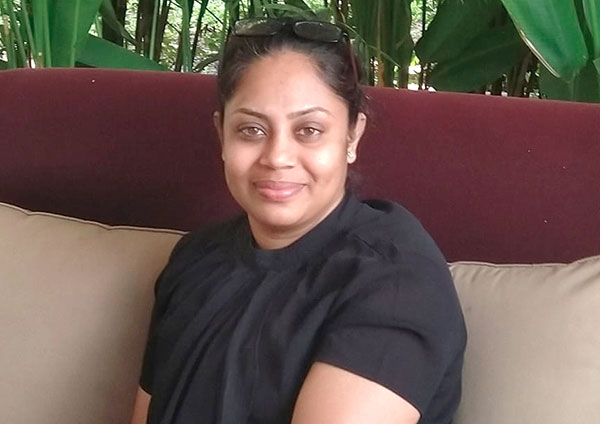
The environmental devastation caused to Sri Lanka’s seabed and coastal ecosystem as a result of the X-Press Pearl disaster is incalculable.
The wreck of the feeder vessel now lies partially submerged off the coast of Sri Lanka. According to the available information, there are still around 46 different chemical containers aboard the gutted ship and they are believed to be highly toxic to flora, fauna, human beings and the environment as a whole. The contents of some of these containers have already leaked into sea water poisoning marine life. The only visible pollutants now are plastic pellets.
So far, the carcasses of 220 turtles, 20 dolphins and seven whales have been found in the coastal areas. The number of carcasses of marine life may increase with the speed of leakages of the chemical containers. Unfortunately, only up to 10% of carcasses are swept to the sea shore by waves. The direct impact here was largely on reptiles and mammals rather than fish.
Mammals and reptiles play a key role both as predators and as well as prey in the seawater ecosystem. Chemicals directly affect plants and plankton and may cause to reduce the oxygen level in the seabed.
Plastic takes between 500 to 1,000 years to decompose. This means that the tons of plastic pellets that remain will continue to cause harm to the ecosystem for anything up to one thousand years. Marine species face the threat of eating these pellets and dying due to damage caused to their digestive system.
Some rare and threatened marine species may become extinct. Corals may have already died, and there is a need for research to conserve corals that may have survived. Acidic rains are also to be expected under the circumstances.
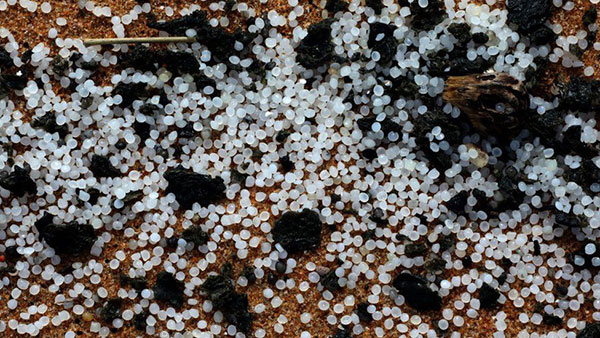 As a result of nitric acid, sodium dioxide, copper and lead in sea water, the toll on marine life will be heavy with small fish dying quickly due to poisoning. The affected seabed and its environs will remain dangerous for fauna and humans for many more years to come.
In such a distressing situation, how can we protect the marine ecosystem and its diversity? Environmental impacts of the X-Press Pearl disaster indicate that it may take millions of years to recover and restore Sri Lanka’s ecosystem.
In addition, we can identify deforestation as a continuing disaster to our natural environment in many forms. Recent causes for deforestation can be identified as agriculture, human settlements and infrastructure development projects.
Deforestation primarily affect the oxygen level of the atmosphere. When we look back at the past few years, floods and droughts were big environmental problems that the country had to grapple with at substantial cost.
Wildlife extinction and habitat loss also impact negatively on the whole ecosystem and biodiversity of the country. Endemic and threatened species are vulnerable in such a situation.
Though reforestation is not the only option, it is a globally effective and long-lasting solution to save the earth. Tree planting programs are also not the only solution in this context. What the government authorities must do is to conserve the existing forest cover, enhance forest patches for planting.
On a daily basis, we hear of environmental conservation and strident calls to address contentious issues and assurances that it will be done. I always look into these burning issues on a different level with focus on changing human attitudes. Without first changing attitudes, I believe the system change will not work for environmental conservation.
Whether it was the X-Press Pearl disaster or deforestation, the key role revolves around humans. All government leaders as well as the people must be given the personal responsibility of protecting the environment, conserving biodiversity and saving the earth.
A change of human attitude will make this world a better place to live in.
– Sujeewa Kumari (LLB, MA, MEM),
Attorney-at-law, Secretary, Wildreach Trust.

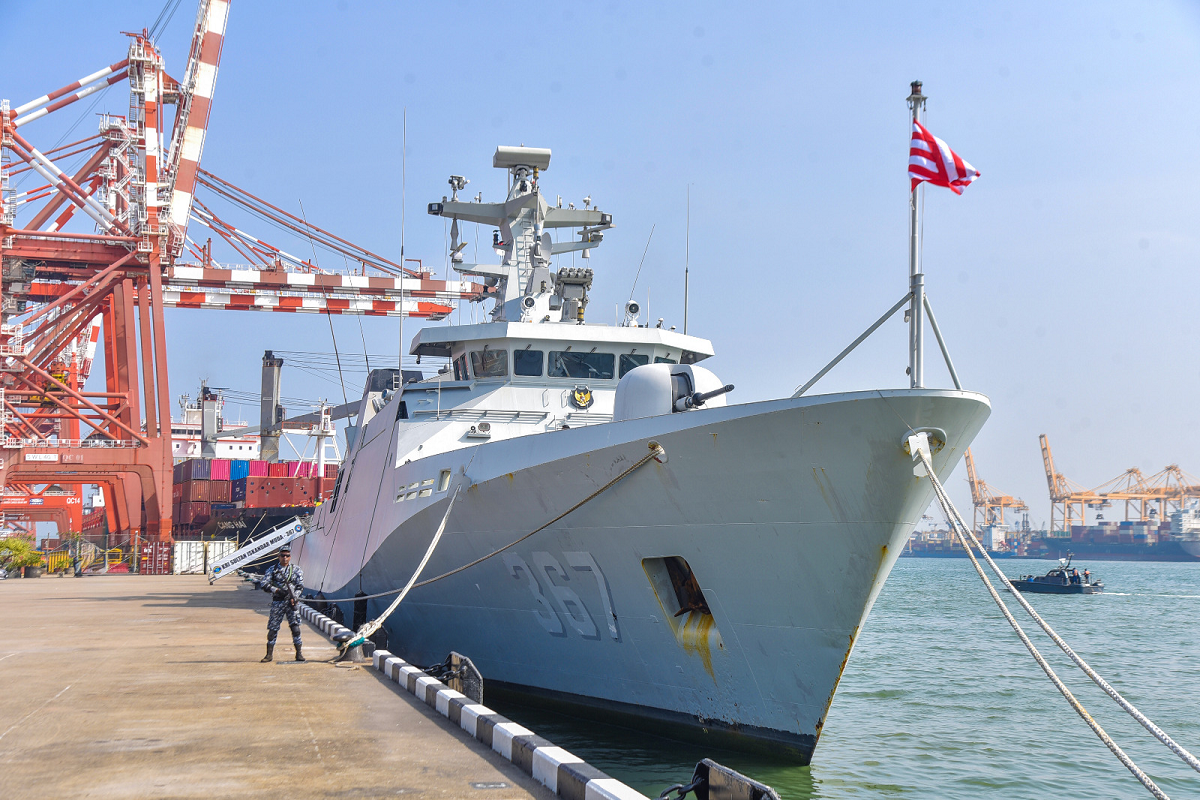
The Indonesian Naval Ship, ‘KRI SULTAN ISKANDAR MUDA – 367’, arrived at the port of Colombo today (22 Jan 26) on a scheduled port call for logistics replenishment and a goodwill mission.
In keeping with time-honored naval tradition the ship was accorded a ceremonial welcome upon arrival.
The 90.71m – long Sigma Corvette FS is commanded by Commander Annugerah Anurullah.
During the stay in Colombo, the crew members of the ship are expected to visit some tourist attractions in the city limits.
Further, this visit provides an avenue to enhance professional interaction and courtesy engagements among two navies.
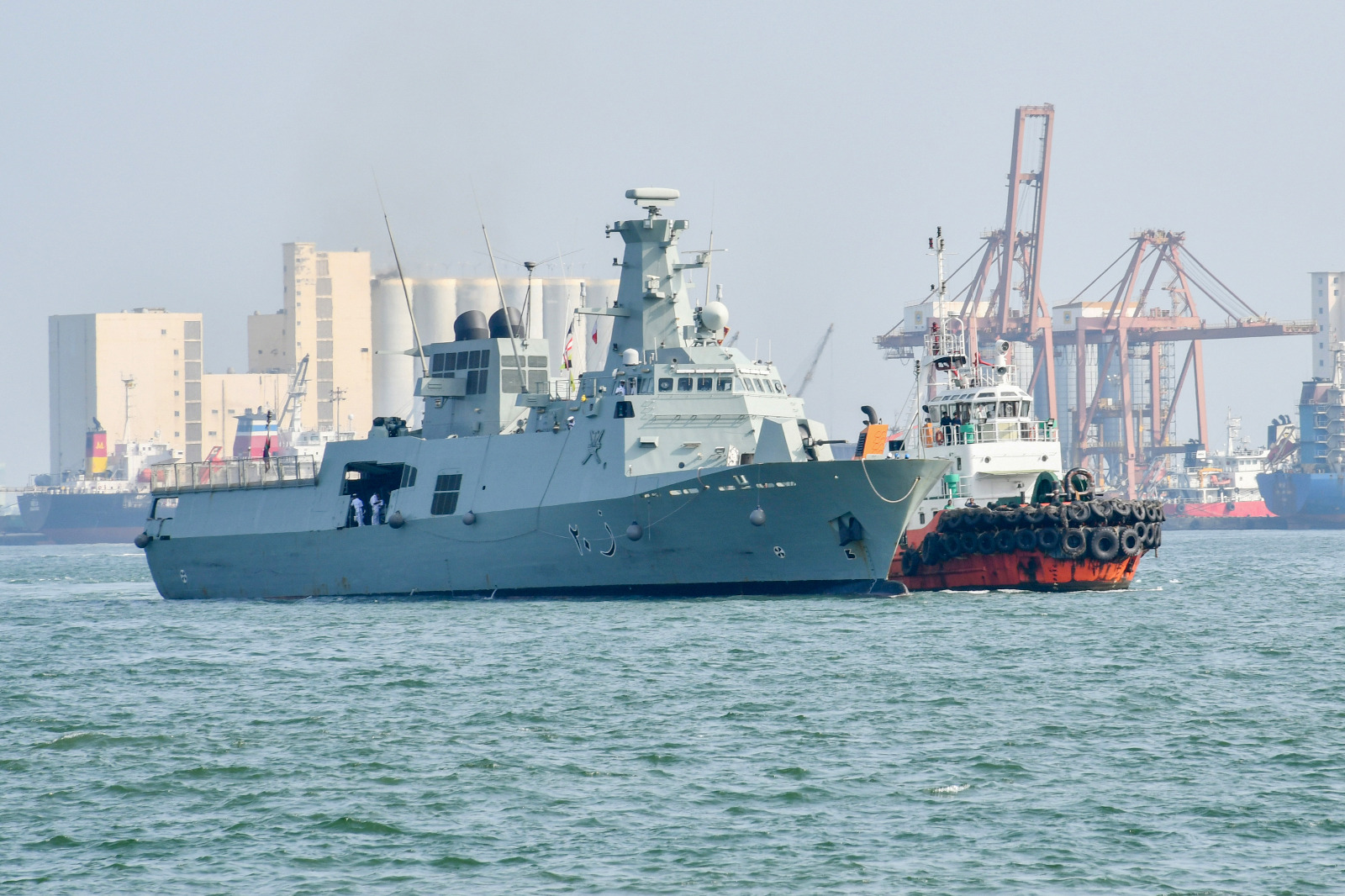
The Royal Navy of Oman Ship ‘AL SEEB’ arrived at the Port of Colombo on a logistics replenishment visit today (22 Jan 26).
The Sri Lanka Navy welcomed the visiting ship in compliance with naval traditions.
The 75m – long ship is commanded by Lieutenant Commander Hamad Bin Mohammed Aldarmaki. The port call will facilitate professional interaction and goodwill exchanges between the two navies.
During her stay in Colombo, crew members of the ship are expected to visit some tourist attractions in the city of Colombo.
News
Mechanism to be established involving university academics and experts for Education Reforms – President

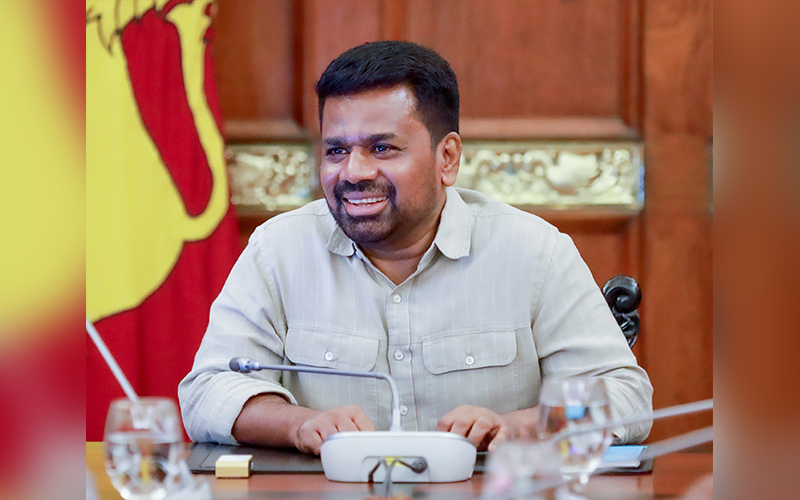
President Anura Kumara Dissanayake stated that the Government is taking steps to establish a comprehensive mechanism, supported by an appropriate legal framework, to bring together university academics, experts and all relevant parties in order to resolve issues arising during the implementation of education reforms.
The President made these remarks during a discussion with the Federation of University Teachers’ Associations (FUTA) held on Wednesday (21) morning at the Presidential Secretariat.
During the discussion, FUTA members emphasized the challenges encountered while trying to implement educational reforms through a framework established by the National Institute of Education, in line with the current laws and regulations.
They further emphasized that while their association acknowledges the need for new education reforms, the urgency of such reforms is greater for students in rural schools than for those in urban schools.
The Federation of University Teachers’ Associations further stated that they appreciate the decision taken by the Government, under the leadership of the President, to address the issues arising from education reforms and affirmed their readiness to contribute to this process.
As a continuation of the previous discussion, proposals addressing the challenges faced by academics within the university system, along with possible solutions, were presented to the President. In response, the President emphasized that the Government would take all possible measures to safeguard the university system and strengthen education.
The discussion also covered proposed amendments to the Universities Act.
President Anura Kumara Dissanayake noted that, in the aftermath of the recent disaster, the Government has been effectively implementing a nationwide rebuilding programme, addressing economic stability, development and all critical sectors. The President also called upon university academics to actively support these reconstruction efforts.
The meeting was attended by Minister of Ports and Civil Aviation, Anura Karunathilaka, as well as representatives of the Federation of University Teachers’ Associations, including its President, Prof. P. R. Weerathunga, Vice President M. A. M. Sameem and Secretary Charudaththe Ilangasinghe.

Indonesian Naval Ship ‘KRI SULTAN ISKANDAR MUDA – 367’ arrives in Colombo

Royal Navy of Oman Ship ‘AL SEEB’ calls at Port of Colombo

Jacks out with illness as Sri Lanka bat against England

Mechanism to be established involving university academics and experts for Education Reforms – President

New integrated framework to bring all stakeholders together to safeguard and rebuild Central highlands – President

ICC T20 World Cup Trophy tour in Sri Lanka launched under President’s patronage

‘Dates have the highest sugar content to fight Coronavirus’

Sunday Island 27 December – Headlines

#SundayIsland 17th December – Headlines

Sunday Island – 28th March

Sunday Island Headlines – 21 March

Sunday Island – 21st February – Headlines
-

 Editorial5 days ago
Illusory rule of law
-
 News6 days ago
UNDP’s assessment confirms widespread economic fallout from Cyclone Ditwah
-
 Editorial6 days ago
Crime and cops
-
 Features5 days ago
Daydreams on a winter’s day
-

 Editorial7 days ago
The Chakka Clash
-
 Features5 days ago
Surprise move of both the Minister and myself from Agriculture to Education
-

 Features4 days ago
Extended mind thesis:A Buddhist perspective
-

 Features5 days ago
The Story of Furniture in Sri Lanka