
Features
The Sandahiru event – celebrating failure

by Anura Gunasekera
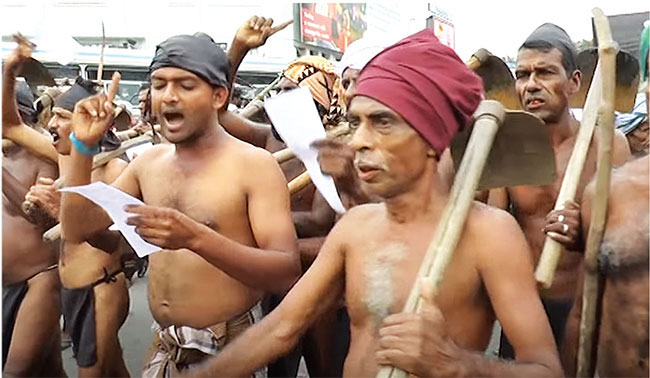
A few days ago President Gotabaya Rajapaksa(GR), the first military man and, unarguably, the most ignorant in the ways of governance to occupy the presidential seat, celebrated the completion of two years as the eighth president of the Republic of Sri Lanka. The salutation coincided with the formal vesting with the Sangha, of the “Sandahiru Seya” in Anuradhapura, a project commenced during brother Mahinda’s last term as president. A towering stupa rising above the Jetawana and the Abhayagiri, ostensibly to honour the services rendered by the armed forces and the police in our ethnic conflict but, in reality, a monument to the Rajapaksa delusions of grandeur, aligns the Rajapaksa Family dynasty with the Sinhala Kings. A tribute to the heroic is justified but the supreme incongruity of conflating the quintessential Buddhist symbol, with success in a bloody military campaign, is inconsequential to a hegemonic mindset. The incompatibility was also ignored by the Rajapaksa-adoring Sangha, including the Anunayake Theros of both Asgiriya and Malwatte Chapters, who participated and enthusiastically endorsed its purpose.
Notwithstanding a grandiose commemoration, as Rajapaksa’s second year in the presidency ends and the year 2021 draws to a close, the country stands mired in calamities on every public front.
The Crisis
The economy is in disaster mode. Foreign reserves which were at USD 7.5 Billion in November 2019, when GR took office, had declined to USD 2.8 Billion by August 2021. Despite Central Bank Governor Cabraal’s blithe assurance that the economy can be restructured without IMF assistance, and that wildly reckless money-printing has no impact on inflation, banks are unable to provide importers with forex to import essentials, whilst prices of basic commodities are placing them beyond the reach of ordinary consumers. According to most economists, in the real world, when money printing increases in a background of stagnant or declining national output, all other factors being equal, hyper-inflation is the certain outcome. Recent historical examples are too numerous to quote here. However, Cabraal, who is one of the architects and, also, a highly privileged inhabitant of the Rajapaksa Dystopia, is obviously reading from a different text!
For the last few months, in every village, town and city across the island, for the first time since the Sirimavo Bandaranaike regime 50 years ago, desperate citizens have been waiting in queues to buy the most basic items. There are frequent shortages of sugar, rice, milk powder and cooking fuel; very recently, suppliers ran short of kerosene oil, the only convenient and affordable alternative to cooking gas. Gathering firewood is not an option, especially for the four million urban population of Sri Lanka.
The government has responded to the foreign exchange shortage by imposing drastic regulations to limit dollar usage, declaring over 600 imported items, including mobile phones, clothing, household appliances and a range of foods, as non-essential. Vehicles imports are also included in the restrictions.
Prices of essential foods, vegetables and staples have seen an astronomic escalation during 2021, due to low supply, either because of import restrictions or, in the case of locally grown items, a result of poor harvests due to denial- through unavailability- of basic nutrient inputs, and disruptions in the supply chain from distant growing areas.
The Cause
The pandemic has contributed to the crisis, dismantling livelihoods with some of the monthly paid subjected to wage cuts or layoffs, whilst daily paid workers are denied earnings through inability to access places of work or, because the lockdown has compelled the closure of many small establishments, which rely mainly on casual labour. As in many countries in the developing world, in Sri Lanka, the informal, small and medium scale entrepreneurial sector collectively supports more livelihoods, than either the State or the corporate sector. However, the Covid pandemic is only a contributory factor to an escalating socio-economic disaster. The government, through the implementation of a series of imprudent and ill-conceived policies, has aggravated the situation to a degree beyond retrieval.
Immediately after assuming the presidency, GR ordered sweeping tax concessions, which resulted in the diminution of government revenues by about 30% in 2020. These concessions were beneficial to a minute proportion of the population, which actually needed no such relief. They did not cascade to the ordinary citizen. Soon thereafter, to bridge the cash supply deficit the money printing spree commenced, according to some sources injecting as much as an additional 35% – 40% in to the economy, by mid-2021.
The pandemic Task Force was led by a retired army commander, appointed by a president unable to distinguish between the scientific complexities of fighting a virus, and the tactical requirements of assaulting an enemy garrison. This mindset was also compounded by an inherent insensitivity to the suffering of ordinary people. The mismanagement of the project in its early, critical stages led to an escalation of infections and deaths, especially amongst the elderly who were denied vaccinations at the outset. Successive waves of infection even led to embarrassing State sponsorship of miracle cures- the ridiculous “Dhammika Elixir” and the casting of holy water pots in to flowing water!!
Whilst people were desperately scrabbling around to sustain themselves in a setting of loss of income, essential item scarcities and other privations, overnight, the president decreed a ban on the use of inorganic fertilizer and agro-chemicals. All professional agriculturists in the country (the writer was one for over 50 years) and scientists in related disciplines, have pointed out the certainty of the disastrous outcomes from the implementation of this irrational, unscientific and impractical policy; the adverse consequences are already visible in the case of short term crops, especially rice and vegetables, whilst the impact on the long-term plantation crops, particularly tea, will very soon be evident in the form of crop declines, diminished exports and shrinking foreign exchange earnings.
The Response
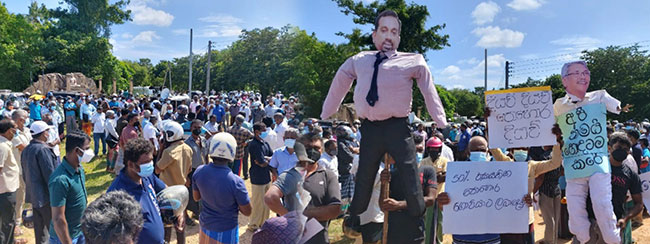
The island-wide uprising of despairing farmers, beating and burning effigies of senior ministers and demanding a reversal of the fertilizer ban, was met with the promise of organic fertilizer as an alternative. The imported organic nutrient, apparently a mixture of sea weed and faeces- a second virus from China after Corona- was found unsuitable, leading to imports from India of “liquid nitrogen”, a product untried on a large scale in that country. One of the President’s responses to the anguish of the farmers was to declare at a public meeting that he could, if he considered it desirable, use the army to seize the farming community by the scruff of its collective neck and compel them to use organic fertilizer!!
The ban on the slaughter of cattle is a similarly ill-considered directive. Alleviating animal suffering is a noble cause but the consequences of the ban will be dire for several hundred thousand people. The cattle rearing industry is multi-faceted and interconnected. Milk production, beef supply and the supply of animal skin to the tanning industry go hand-in-hand. Dairy industry, which is essentially a small farmer collective enterprise, becomes unviable unless unproductive animals are converted to meat. This ban will disempower around 200,000 individual farmers island-wide, many of them Muslims in the Eastern province. The certain consequences will be the decline of local milk production, scarcity of allied dairy products and the unpreventable escalation of illicit cattle slaughter. That proverb of unknown origin, that ” The Road to Hell is Paved With Good Intentions,” is an apt commentary on both the fertilizer and cattle slaughter ban.
Younger brother Basil, hailed by Rajapaksa acolytes as an economic genius of Einsteinian proportions- despite the absence of previous experience and known academic background – has produced a budget reinforced by bloated statistics and unrealizable dreams. His disgracefully incoherent Budget speech, delivered in Sinhala, justifiably lampooned in multiple forums, was not improved by his rambling, garbled contributions in a subsequent English language interview on the same subject, with Ms Indeewari Amuwatte on Ada Derana. The questions were intelligent, precise and designed to elicit clarity. The responses were vague, evasive and inarticulate, by a man struggling to defend the indefensible in a medium clearly unfamiliar to him; at best a cringe-worthy performance.
Consequences
A frustrated electorate propelled GR in to power in justifiable disgust at the dysfunctional governance of the Sirisena- Wickramesinghe regime, only to be confronted, in less than two years, with an ineptitude of colossal proportions. The enormous parliamentary advantage of a two-thirds majority and a presidency with unlimited power, the two moving in parallel rather than in unison, has paved the way for an economic and social disaster. It is an inevitable consequence of the 20th Amendment, which has expanded the powers of the President, whilst encroaching on the authority of the parliament and the judiciary. When the individual so elected believes that he is the sole repository of wisdom in governance – despite a total lack of experience in the field and a wretched absence of ordinary commonsense – chaos ensues. That is what we see everyday, in mass protests against moronic directives.
The only visible success in governance in Sri Lanka today is the inexorable onward march of the Rajapaksa project, which commenced during Mahinda Rajapaksa’s first term and, after a slight hiccup during the abortive Sirisena regime, has gathered a terrifying new momentum since end 2019. It is conservatively estimated that about 64% of the country’s economy is directly controlled by the Rajapaksa family and those connected to it. In a country rapidly sliding in to an abyss where lies the bleak certainty of food and other essential item scarcities – including pharmaceuticals – widespread malnutrition, loss of employment and livelihoods, declining foreign exchange earnings, disruption to education at all levels and the disintegration of the society, the only glow in a leaden sky comes from the Rajapaksa comet. The State will surely fail but the First Family will surely prosper.
Unless a disoriented and vacillatory opposition quickly gathers its wits, firstly jettisoning the toxic Ranil Wickremesinghe and then rallying round Premadasa – not necessarily the best of men but the only possible alternative – the Rajapaksa dynastic succession, from elder brother to younger brother and from uncle to nephew, and thereafter to another sibling or relative, is a certainty.
Gotabaya Rajapaksa was elected President by the convergence of normally divergent political forces. But, once elected, by-passing the legislature and other democratic institutions, he has chosen to govern through the armed forces and a collection of “Task Forces”, staffed or led by ex-military men, and other disciples and profiteers, answerable to only him. A spineless, collusive and essentially corrupt legislature has become a rubber stamp to his will. A reading of the two year performance report establishes beyond doubt that the “Viyathmaga” is the road to certain ruin, and that the “Eliyamaga” will condemn this country to economic darkness before the Gotabaya presidency ends.
Very recently, parliamentarian Kumara Welgama delivered a speech at the Diyawanna assembly, amusing, but brutally frank, in its exposure of the venality of recent regimes and the familial considerations which overrode national interests in decision making at the highest levels of governance, whilst highlighting the aberrant mentality that pervades the current dispensation. It was also prophetic in the warnings sounded to the ruling regime. Not one of his statements were contested. It must now be clear to all that when madmen are allowed to run the asylum, lunacy becomes institutionalized and insanity infiltrates governance.

I. The Constitutional Context
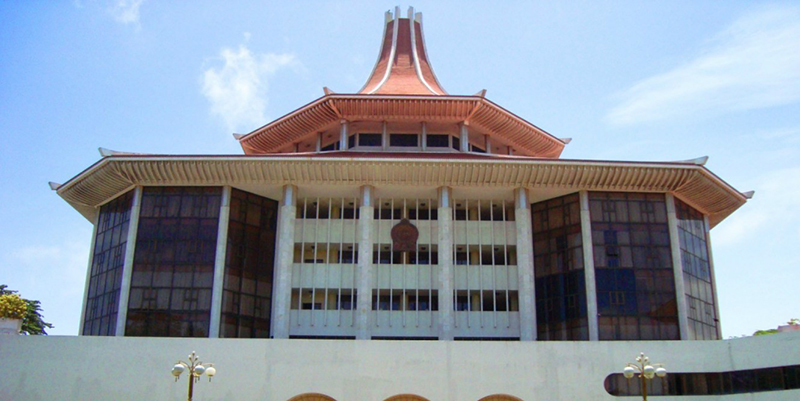
Independence of the judiciary is, without question, an essential element of a functioning democracy. In recognition of this, ample provision is made in the highest law of our country, the Constitution, to engender an environment in which the courts are able to fulfil their public responsibility with total acceptance.
As part of this protective apparatus, judges of the Supreme Court and the Court of Appeal are assured of security of tenure by the provision that “they shall not be removed except by an order of the President made after an address of Parliament supported by a majority of the total number of members of Parliament, (including those not present), has been presented to the President for such removal on the ground of proved misbehaviour or incapacity”[Article 107(2)]. Since this assurance holds good for the entirety of tenure, it follows that the age of retirement should be defined with certainty. This is done by the Constitution itself by the provision that “the age of retirement of judges of the Supreme Court shall be 65 years and of judges of the Court of Appeal shall be 63 years”[Article 107(5)].
II. A Proposal for Reform
This provision has been in force ever since the commencement of the Constitution. Significant public interest, therefore, has been aroused by the lead story in a newspaper, Anidda of 13 March, that the government is proposing to extend the term of office of judges of the Supreme Court and the Court of Appeal by a period of two years.
This proposal, if indeed it reflects the thinking of the government, is deeply disturbing from the standpoint of policy, and gives rise to grave consequences. The courts operating at the apex of the judicial structure are called upon to do justice between citizens and also between the state and members of the public. It is an indispensable principle governing the administration of justice that not the slightest shadow of doubt should arise in the public mind regarding the absolute objectivity and impartiality with which the courts approach this task.
What is proposed, if the newspaper report is authentic, is to confer on judges of two particular courts, the Supreme Court and the Court of Appeal, a substantial benefit or advantage in the form of extension of their years of service. The question is whether the implications of this initiative are healthy for the administration of justice.
III. Governing Considerations of Policy
What is at stake is a principle intuitively identified as a pillar of justice.
Reflecting firm convictions, the legal antecedents reiterate the established position with remarkable emphasis. The classical exposition of the seminal standard is, of course, the pronouncement by Lord Hewart: “It is not merely of some importance, but is of fundamental importance that justice should not only be done, but should manifestly and undoubtedly be seen to be done”. (Rex v. Sussex Justices, ex parte McCarthy). The underlying principle is that perception is no less important than reality. The mere appearance of partiality has been held to vitiate proceedings: Dissanayake v. Kaleel. In particular, reasonableness of apprehension in the mind of the parties to litigation is critical: Ranjit Thakur v. Union of India, a reasonable likelihood of bias being necessarily fatal (Manak Lal v. Prem Chaud Singhvi).
The overriding factor is unshaken public confidence in the judiciary: State of West Bengal v. Shivananda Pathak. The decision must be “demonstrably” (Saleem Marsoof J.) fair. The Bar Association of Sri Lanka has rightly declared: “The authority of the judiciary ultimately depends on the trust reposed in it by the people, which is sustained only when justice is administered in a visibly fair manner”.
Credibility is paramount in this regard. “Justice has to be seen to be believed” (J.B. Morton). Legality of the outcome is not decisive; process is of equal consequence. Judicial decisions, then, must withstand public scrutiny, not merely legal technicality: Mark Fernando J. in the Jana Ghosha case. Conceived as continuing vitality of natural justice principles, these are integral to justice itself: Samarawickrema J. in Fernando v. Attorney General. Institutional integrity depends on eliminating even the appearance of partiality (Mandal Vikas Nigam Ltd. v. Girja Shankar Pant), and “open justice is the cornerstone of our judicial system”: (Sahara India Real Estate Corporation Ltd. v. SEBI).
IV. Practical Constraints
Apart from these compelling considerations of policy, there are practical aspects which call for serious consideration. The effect of the proposal is that, among all judges operating at different levels in the judicature of Sri Lanka, judges of the Supreme Court and the Court of Appeal only, to the exclusion of all other judges, are singled out as the beneficiaries of the proposal. An inevitable result is that High Court and District Judges and Magistrates will find their avenues of promotion seriously impeded by the unexpected lengthening of the periods of service of currently serving judges in the two apex courts. Consequently, they will be required to retire at a point of time appreciably earlier than they had anticipated to relinquish judicial office because the prospect of promotion to higher courts, entailing higher age limits for retirement, is precipitately withdrawn. Some degree of demotivation, arising from denial of legitimate expectation, is therefore to be expected.
A possible response to this obvious problem is a decision to make the two-year extension applicable to all judicial officers, rather than confining it to judges of the two highest courts. This would solve the problem of disillusionment at lower levels of the judiciary, but other issues, clearly serious in their impact, will naturally arise.
Public service structures, to be equitable and effective, must be founded on principles of non-discrimination in respect of service conditions and related matters. Arbitrary or invidious treatment is destructive of this purpose. In determining the age of retirement of judges of the Supreme Court and the Court of Appeal, some attention has been properly paid to balance and consistency. The age of retirement of a Supreme Court judge is on par with that applicable to university professors and academic staff in the higher education system. They all retire at 65 years. Members of the public service, generally, retire at 60. Medical specialists retire at 63, with the possibility of extension in special circumstances to 65. The age of retirement for High Court Judges is 61, and for Magistrates and District Judges 60. It may be noted that the policy change in 2022 aimed at specifically addressing the issue of uniformity and compatibility.
If, then, an attempt is made to carve out an ad hoc principle strictly limited to judicial officers, not admitting of a self-evident rationale, the question would inevitably arise whether this is fair by other categories of the public service and whether the latter would not entertain a justifiable sense of grievance.
This is not merely a moral or ethical issue relating to motivation and fulfillment within the public service, but it could potentially give rise to critical legal issues. It is certainly arguable that the proposed course of action represents an infringement of the postulate of equality of treatment, and non-discrimination, enshrined in Article 12(1) of the Constitution.
There would, as well, be the awkward situation that this issue, almost certain to be raised, would then have to be adjudicated upon by the Supreme Court, itself the direct and exclusive beneficiary of the impugned measure.
V. Piecemeal Amendment or an Overall Approach?
If innovation on these lines is contemplated, would it not be desirable to take up the issue as part of the new Constitution, which the government has pledged to formulate and enact, rather than as a piecemeal amendment at this moment to the existing Constitution? After all, Chapter XV, dealing with the Judiciary, contains provisions interlinked with other salient features of the Constitution, and an integrated approach would seem preferable.
VI. Conclusion
In sum, then, it is submitted that the proposed change is injurious to the institutional integrity of the judiciary and to the prestige and stature of judges, and that it should not be implemented without full consideration of all the issues involved.
By Professor G. L. Peiris
D. Phil. (Oxford), Ph. D. (Sri Lanka);
Former Minister of Justice, Constitutional Affairs and National Integration;
Quondam Visiting Fellow of the Universities of Oxford, Cambridge and London;
Former Vice-Chancellor and Emeritus Professor of Law of the University of Colombo.
Features
Ranked 134th in Happiness: Rethinking Sri Lanka’s development through happiness, youth wellbeing and resilience


In recent years, Sri Lanka has experienced a succession of overlapping challenges that have tested its resilience. Cyclone Ditwah struck Sri Lanka in November last year, significantly disrupting the normal lives of its citizens. The infrastructure damage is much more serious than the tsunami. According to World Bank reports and preliminary estimates, the losses amounted to approximately US$ 4.1 billion, nearly 4 per cent of the country’s Gross Domestic Product. Before taking a break from that, the emerging crisis in the Middle East has once again raised concerns about potential economic repercussions. In particular, those already affected by disasters such as Cyclone Ditwah risk falling “from the frying pan into the fire,” facing multiple hardships simultaneously. Currently, we see fuel prices rising, four-day workweeks, a higher cost of living, increased pressure on household incomes, and a reduction in the overall standard of living for ordinary citizens. It would certainly affect people’s happiness. As human beings, we naturally aspire to live happy and fulfilling lives. At a time when the world is increasingly talking about happiness and wellbeing, the World Happiness Report provides a useful way of looking at how countries are doing. The World Happiness Report discusses global well-being and offers strategies to improve it. The report is produced annually with contributions from the University of Oxford’s Wellbeing Research Centre, Gallup, the UN Sustainable Development Solutions Network, and other stakeholders. There are many variables taken into consideration for the index, including the core measure (Cantril Ladder) and six explanatory variables (GDP per Capita ,Social Support,Healthy Life Expectancy,Freedom to Make Life Choices,Generosity,Perceptions of Corruption), with a final comparison.
According to the recently published World Happiness Report 2026, Sri Lanka ranks 134th out of 147 nations. As per the report, this is the first time that Sri Lanka has suffered such a decline. Sri Lanka currently trails behind most of its South Asian neighbours in the happiness index. The World Happiness Report 2026 attributes Sri Lanka’s low ranking (134th) to a combination of persistent economic struggles, social challenges, and modern pressures on younger generations. The 2026 report specifically noted that excessive social media use is a growing factor contributing to declining life satisfaction among young people globally, including in Sri Lanka. This calls for greater vigilance and careful reflection. These concerns should be examined alongside key observations, particularly in the context of education reforms in Sri Lanka, which must look beyond their immediate scope and engage more meaningfully with the country’s future.
In recent years, a series of events has triggered political upheaval in countries such as Nepal, characterised by widespread protests, government collapse, and the emergence of interim administration. Most reports and news outlets described this as “Gen Z protests.” First, we need to understand what Generation Z is and its key attributes. Born between 1997 and 2012, Generation Z represents the first truly “digital native” generation—raised not just with the internet, but immersed in it. Their lives revolve around digital ecosystems: TikTok sets cultural trends, Instagram fuels discovery, YouTube delivers learning, and WhatsApp sustains peer communities. This constant, feed-driven engagement shapes not only how they consume content but how they think, act, and spend. Tech-savvy and socially aware, Gen Z holds brands to a higher standard. For them, authenticity, transparency, and accountability—especially on environmental and ethical issues—aren’t marketing tools; they’re baseline expectations. We can also observe instances of them becoming unnecessarily arrogant in making quick decisions and becoming tools of some harmful anti-social ideological groups. However, we must understand that any generation should have proper education about certain aspects of the normal world, such as respecting others, listening to others, and living well. More interestingly, a global survey by the McKinsey Health Institute, covering 42,083 people across 26 countries, finds that Gen Z reports poorer mental health than older cohorts and is more likely to perceive social media as harmful.
Youth health behaviour in Sri Lanka reveals growing concerns in mental health and wellbeing. Around 18% of youth (here, school-going adolescents aged 13-17) experience depression, 22.4% feel lonely, and 11.9% struggle with sleep due to worry, with issues rising alongside digital exposure. Suicide-related risks are significant, with notable proportions reporting thoughts, plans, and attempts, particularly among females. Bullying remains a significant concern, particularly among males, with cyberbullying emerging as a notable issue. At the same time, substance use is increasing, including tobacco, smokeless tobacco, and e-cigarettes. These trends highlight the urgent need for targeted interventions to support youth mental health, resilience, and healthier behavioural outcomes in Sri Lanka. We need to create a forum in Sri Lanka to keep young people informed about this. Sri Lanka can designate a date (like April 25th) as a National Youth Empowerment Day to strengthen youth mental health and suicide prevention efforts. This should be supported by a comprehensive, multi-sectoral strategy aligned with basic global guidelines. Key priorities include school-based emotional learning, counselling services, and mental health training for teachers and parents. Strengthening data systems, reducing access to harmful means, and promoting responsible media reporting are essential. Empowering families and communities through awareness and digital tools will ensure this day becomes a meaningful national call to action.
As discussed earlier, Sri Lanka must carefully understand and respond to the challenges arising from its ongoing changes. Sri Lanka should establish an immediate task force comprising responsible stakeholders to engage in discussions on ongoing concerns. Recognising that it is not a comprehensive solution, the World Happiness Index can nevertheless act as an important indicator in guiding a paradigm shift in how we approach education and economic development. For a country seeking to reposition itself globally, Sri Lanka must adopt stronger, more effective strategies across multiple sectors. Building a resilient and prosperous future requires sound policymaking and clear strategic direction.
(The writer is a Professor in Management Studies at the Open University of Sri Lanka. You can reach Professor Abeysekera via nabey@ou.ac.lk)
by Prof. Nalin Abeysekera
Features
Hidden diversity in Sri Lanka’s killifish revealed: New study reshapes understanding of island’s freshwater biodiversity
A groundbreaking new study led by an international team of scientists, including Sri Lankan researcher Tharindu Ranasinghe, has uncovered striking genetic distinctions in two closely related killifish species—reshaping long-standing assumptions about freshwater biodiversity shared between Sri Lanka and India.
Published recently in Zootaxa, the research brings together leading ichthyologists such as Hiranya Sudasinghe, Madhava Meegaskumbura, Neelesh Dahanukar and Rajeev Raghavan, alongside other regional experts, highlighting a growing South Asian collaboration in biodiversity science.
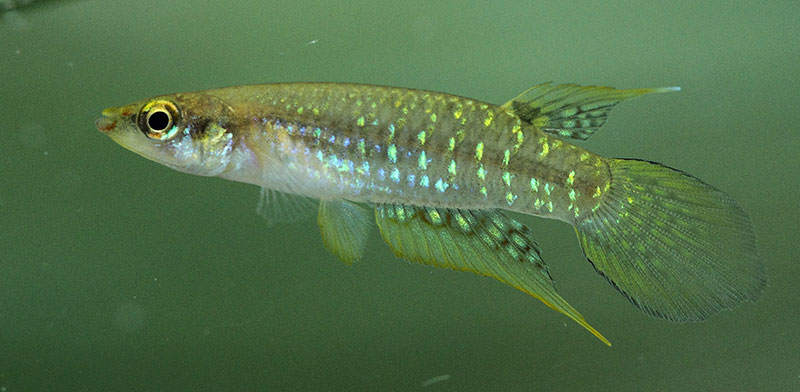
For decades, scientists debated whether Aplocheilus blockii and Aplocheilus parvus were in fact the same species. But the new genetic analysis confirms they are “distinct, reciprocally monophyletic sister species,” providing long-awaited clarity to their taxonomic identity.
Speaking to The Island, Ranasinghe said the findings underscore the hidden complexity of Sri Lanka’s freshwater ecosystems.
“What appears superficially similar can be genetically very different,” he noted. “Our study shows that even widespread, common-looking species can hold deep evolutionary histories that we are only now beginning to understand.”
A tale of two fishes
The study reveals that Aplocheilus blockii is restricted to peninsular India, while Aplocheilus parvus occurs both in southern India and across Sri Lanka’s lowland wetlands.
Despite their close relationship, the two species show clear genetic separation, with a measurable “genetic gap” distinguishing them. Subtle physical differences—such as the pattern of iridescent scales—also help scientists tell them apart.
Co-author Sudasinghe, who has led several landmark studies on Sri Lankan freshwater fishes, noted that such integrative approaches combining genetics and morphology are redefining taxonomy in the region.
Echoes of ancient land bridges
The findings also shed light on the ancient biogeographic links between Sri Lanka and India.
Scientists believe that during periods of low sea levels in the past, the two landmasses were connected by the now-submerged Palk Isthmus, allowing freshwater species to move between them.
Later, rising seas severed this connection, isolating populations and driving genetic divergence.
“These fishes likely dispersed between India and Sri Lanka when the land bridge existed,” Ranasinghe said. “Subsequent isolation has resulted in the patterns of genetic structure we see today.”
Meegaskumbura emphasised that such patterns are increasingly being observed across multiple freshwater fish groups in Sri Lanka, pointing to a shared evolutionary history shaped by geography and climate.
A deeper genetic divide
One of the study’s most striking findings is that Sri Lankan populations of A. parvus are genetically distinct from those in India, with no shared haplotypes between the two regions.
Dahanukar explained that this level of differentiation, despite relatively recent geological separation, highlights how quickly freshwater species can diverge when isolated.
Meanwhile, Raghavan pointed out that these findings reinforce the importance of conserving habitats across both countries, as each region harbours unique genetic diversity.
Implications for conservation
The study carries important implications for conservation, particularly in a country like Sri Lanka where freshwater ecosystems are under increasing pressure from development, pollution, and climate change.
Ranasinghe stressed that understanding genetic diversity is key to protecting species effectively.
“If we treat all populations as identical, we risk losing unique genetic lineages,” he warned. “Conservation planning must recognise these hidden differences.”
Sri Lanka is already recognised as a global biodiversity hotspot, but studies like this suggest that its biological richness may be even greater than previously thought.
A broader scientific shift
The research also contributes to a growing body of work by scientists such as Sudasinghe and Meegaskumbura, challenging traditional assumptions about species distributions in the region.
Earlier studies often assumed that many freshwater fish species were shared uniformly between India and Sri Lanka. However, modern genetic tools are revealing a far more complex picture—one shaped by ancient geography, climatic shifts, and evolutionary processes.
“We are moving from a simplistic view of biodiversity to a much more nuanced understanding,” Ranasinghe said. “And Sri Lanka is proving to be a fascinating natural laboratory for this kind of research.”
Looking ahead
The researchers emphasise that much remains to be explored, with several freshwater fish groups in Sri Lanka still poorly understood at the genetic level.
For Sri Lanka, the message is clear: beneath its rivers, tanks, and wetlands lies a largely untapped reservoir of evolutionary history.
As Ranasinghe puts it:
“Every stream could hold a story of millions of years in the making. We are only just beginning to read them.”
By Ifham Nizam

Trump threatens ‘hell’ for Iran over Hormuz Strait as deadline approaches

Tim David, Rajat Patidar inflict bruising defeat on Chennai Super Kings

Shami sets up Lucknow Super Giants victory before Pant fifty takes them home

Showers or thundershowers will occur at several places in the Northern, Eastern, North-central, Central and Sabaragamuwa provinces and in Puttalam, Galle and Matara districts after 2.00 p.m.

Sun directly overhead Beruwala, Gurulubadda, Rakwana, Godakawela, Udawalawe and Thanamalwila at about 12:13 noon today (06)

Heat Index at Caution Level in the Western, Sabaragamuwa, Southern, Eastern, North-western, Northern and North-central provinces and in Monaragala district

‘Dates have the highest sugar content to fight Coronavirus’

Sunday Island 27 December – Headlines

#SundayIsland 17th December – Headlines

Sunday Island – 28th March

Sunday Island Headlines – 21 March

Sunday Island – 21st February – Headlines
-
 News5 days ago
2025 GCE AL: 62% qualify for Uni entrance; results of 111 suspended
-

 Features2 days ago
Ranjith Siyambalapitiya turns custodian of a rare living collection
-

 News2 days ago
Global ‘Walk for Peace’ to be held in Lanka
-
 News7 days ago
Tariff shock from 01 April as power costs climb across the board
-
 Business6 days ago
Hour of reckoning comes for SL’s power sector
-

 Editorial5 days ago
Search for Easter Sunday terror mastermind
-

 Features7 days ago
Seychelles … here we come
-

 Opinion7 days ago
Sri Lanka has policy, but where is the data?