
Business
The role of Management Accountants in economic development


by Indrajith Karunarathna
Qualified Mmanagement Accountants make a substantial influence to the economy at both national and international levels. It is important to understand as to how they contribute towards the growth of an organization as well as the development of a country.
Management Accounting provides the capability of scrutinizing the operational activities in such a way that the information can be utilized for the purpose of optimizing the profitability. Further, the management accounting practices would deliver the required information in order to plan out the activities within an organization. Thus, the organizations would adopt the future resource allocations in an effective way under this context. Sri Lanka is equipped with many qualified finance professionals. Amidst these professionals, Management Accountants are superior as they are typically considered as the information hub. Sri Lanka as a developing country requires information to plan and forecast the future development goals. Thus, the Management Accountants who are practicing and working in the corporates provide a tremendous contribution when generating such information on time.
The management accountants are mainly responsible for examining economic facts, preparing future forecasts, mitigating enterprise risk, planning financials, optimizing resource allocation, strategizing, exploring performance against targets, providing financial insights for decision-making, and ultimately contributing to strategic planning. Moreover, financial accounting and bookkeeping practices are beneficial in order to report the particulars about the historical financial performance within a particular set of guidelines. Those practices are not future oriented whereas they are more in to comply with the typical statutory requirements, international standards and disclosures. Nevertheless, the management further requires customized operational and financial information that should support the effective decision making which should be future oriented. Management accounting practices should be able to provide the ability to use such information in a flexible manner so that a conclusive understanding can be easily reached. Hence, management accounting practices in this context should promote making the right managerial decisions.
In Sri Lankan context, many Sri Lankan companies are doing well in terms of traditional responsibilities, including working capital management, performing typical annual budgeting process and improving the control environment etc. They are reluctant to excel at evolving tasks such as implementing strategy formulation, validation, and execution and supplying effective business insights. A discussion is going on whether management accounting practices are evolving to keep step with the changing needs of companies operating in an ever more complex business environment. Since the management accounting has the capabilities of identifying as to how the operational efficiencies are optimized, many Sri Lankan top conglomerates are now utilizing qualified management accountants for this purpose. Also, in Sri Lanka it is recently observed a trend of increasing the usage of forward-thinking management accounting techniques and the changing way in which management accounting practices are productively being used: from an old-style monitoring and control perspective to a modern business and support-orientated perspective. Consequently, the role of the management accountant has exceled with both operating concerns and strategic priorities. The Sri Lankan management accounting climate describes the current trends in management accounting such as identifying some of the environmental changes, ESG sustainability exposures that are driving management accounting change and discusses the impact of integrated information systems and the availability of financial information.
Despite its many benefits, there are a number of implications associated with improving the understanding related to the management accounting practices in Sri Lanka. The actual discourse requirements related to the management accounting studies are needed to be effectively developed. Further, localization of the understanding related to the management accounting practices is very important. In other words, while understanding the general management accounting concepts, the regional and industrial requirements related to the subject area also needs to be identified so that specific management accounting tools which are required by the common industries in the region might have to be industrialized with the right focus. This would offer other management practices with the right tools and capabilities in order to understand the operations related to the organizations and then make sure that they take right measures in order to optimize the profitability and economic value additions of the overall industries. This would eventually lead to industrial capabilities so that these industries can effectively compete in the international markets.
Management accounting remains a separate theme that needs to be effectively explored. There are a number of management accounting tools that can be used for the purpose of evaluating the cost, revenue as well as operational implications within an organization. Besides using modern management accounting tools professionals should have the capability of customizing them in line with the specific organizational requirements. This is the reason as to why the professionals with the right knowledge and the skill set related to the management accounting theme remains vigorous. The organization in the context of refining the knowledge related to the management accounting practices also remains a timely requirement of an emerging nation such as Sri Lanka. On the other hand, since the necessity of the management information becomes mandatory many top conglomerates should recruit qualified management accountants to their senior positions and obtain such specialized knowledge to meet the upcoming consequences. Sri Lanka is an emerging economy that has recently faced with challenging economic circumstances and will continue experiencing the negative implications. This is the reason that many organizations should have the capability of focusing on sustainable cost management while improving the overall economic value addition. They have to be competitive in the international markets in order to grow in the future. These indicators provide positive vibes as to see the successful future of the management accounting profession which adds a numerous value not only to the organizations but also to the development of Sri Lanka and its region.
Indrajith Karunarathna is a Senior Chartered Accountant, Fellow Member of Certified Management Accountants Sri Lanka, Chartered Professional Managers, AAT, ACCA (UK), IPA (Australia), IFA (UK), Associate Member of Chartered Institute of Marketing (UK), a Qualified Risk Management Specialist, an Authorized Tax Representative, Registered Company Secretary and Company Auditor and holds an MBA and a BSc. Business Administration (Special) Hons. degree from the University of Sri Jayewardenepura.

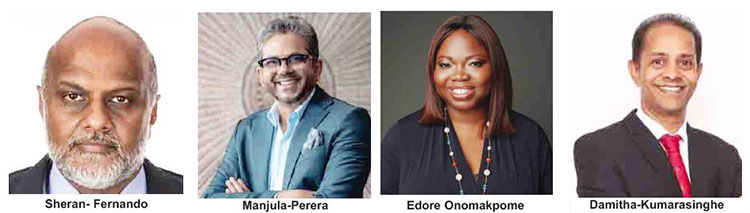
Reliable and affordable energy is essential to Sri Lanka’s economic growth, industrial development and competitiveness. As the country seeks to strengthen energy security while reducing its dependence on fossil fuels, the energy sector will be a key area of discussion at the Sri Lanka Economic & Investment Summit 2026, organised by The Ceylon Chamber of Commerce on 12-13 October 2026.
The session, “Beyond Fossil Dependence: Balancing Security, Sustainability, and Growth,” will examine how Sri Lanka can diversify its energy sources, accelerate renewable energy adoption and attract investment while ensuring a reliable energy supply for businesses and households. Discussions will also consider the infrastructure and policy frameworks needed to support the country’s transition towards a modern and competitive energy system.
Ms. Edore Onomakpome – Regional Infrastructure Industry Manager – Bangladesh, Sri Lanka and Nepal, at the International Finance Corporation will keynote the session, and join the panel discussion featuring G.M.R.D. Aponsu – Secretary to the Ministry of Energy, Damitha Kumarasinghe – Director General (Chief Executive Officer), Public Utilities Commission of Sri Lanka, and Manjula Perera – Managing Director, WindForce PLC. The discussion will be moderated by Sheran Fernando – Senior Advisor, Plus94.
The session will also explore the role of public-private collaboration in developing new energy solutions, encouraging investment and creating opportunities within Sri Lanka’s evolving energy sector. It will consider how energy policy and investment decisions can support both economic expansion and the country’s longer-term sustainability objectives.
The Sri Lanka Economic & Investment Summit 2026 is supported by its valued sponsors and partners. Platinum Sponsor – Standard Chartered Bank Sri Lanka, Gold Sponsor – VISA Worldwide (Pvt) Ltd., Bronze Sponsor – South Asia Gateway Terminals (Pvt) Ltd., Strategic Development Partner – Asian Development Bank, Telecommunication Partner – Dialog Telecommunication, Television Partner – Dialog Television, Session Sponsors – David Pieris Motor Company (Pvt) Ltd., Hemas Holdings PLC, Sunshine Holdings PLC, International Construction Consortium (Pvt) Ltd., Official Logistics Partner – Hayleys Advantis Limited, Official Airline – SriLankan Airlines Ltd., Official Hospitality Partner – Shangri-La Colombo, Airline Partner – China Eastern Air Holding Co. Ltd.
Registrations are now open at https://sleis.chamber.lk/. For more information, contact Alikie on 011 558 8805 (alikie@chamber.lk) or Shanuka on 0701082541 (events.division@chamber.lk).
Business
A fresh chapter for the George Keyt Foundation: A renewed commitment to the Sri Lankan art ecosystem

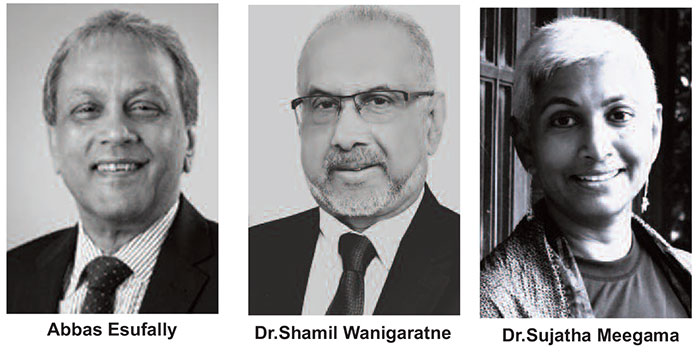
The George Keyt Foundation (GKF), dedicated to preserving the legacy of modernist painter George Keyt and fostering local art, has announced strategic appointments to its leadership team, bringing together a mix of global academic expertise, corporate leadership, and artistic passion. These enhancements aim to inject fresh expertise and academic depth into the Foundation’s long-term vision.
Establishment of the New Advisory Committee
To broaden its operational reach and deepen its engagement with the global art market, the George Keyt Foundation has established an Advisory Committee. The newly appointed committee members include:
• Dr Sujatha Meegama is a Senior Lecturer in Buddhist Art History at the Courtauld. She is an acclaimed art historian, author and academic, bringing specialised knowledge in South Asian art history to guide the foundation’s curatorial and educational directives.
• Dr Shamil Wanigaratne: A clinical psychologist, author, and avid art historian, Shamil will lend his unique perspective to help the foundation design meaningful public outreach and cultural preservation strategies.
• Abbas Esufally: A veteran corporate leader and patron of the arts, Abbas is transitioning from his role as a GKF Trustee to this advisory position, where he will continue to offer his sharp business acumen and extensive network.
New Trustee Appointment
Leesha Captain has been appointed to the Board of Trustees. Inspired by Sri Lankan artists, Leesha is a recognised supporter of the local art scene. Leesha’s hands-on perspective will strengthen the foundation’s core team as they develop and design new art programs.
A Vision for the Future
“These new appointments mark an exciting chapter for us as we build on our decades-long history of promoting Sri Lankan artists,” says Malaka Talwatte, Chairman of the Foundation. “The combination of Leesha on the board, alongside the diverse expertise of our new Advisory Committee, will significantly amplify our efforts in curating high-profile exhibitions and expanding local and international partnerships”.

Sun Siyam Pasikudah, part of the Privé Collection under Maldivian-owned Sun Siyam Resorts, will mark World Tourism Day on 27 September 2026 with a full day programme celebrating the culture, cuisine and natural beauty of Sri Lanka’s east coast, paired with community focused sustainability activities.
The celebrations open with a special buffet of authentic Sri Lankan cuisine, followed by a street food festival showcasing regional snacks and traditional sweets rarely found on resort menus. A signature World Tourism Day mocktail and cocktail, created for the occasion, will be served through the day, while traditional Sri Lankan cultural dance performances bring the island’s heritage to life for guests.
Beyond the festivities, the resort has planned a tree planting activity with guests and a beach or park clean up campaign, both reflecting Sun Siyam Pasikudah’s ongoing commitment to responsible tourism along Sri Lanka’s northeast coast.

Thileepan rembered on 39th death anniversary

Landslide Early Warnings issued to the districts of Colombo, Galle, Gampaha, Hambanthota, Kalutara, Kandy, Kegalle, Kurunegala, Matara, Nuwara Eliya and Ratnapura

Showers in the Western, Uva and Sabaragamuwa provinces and in Galle, Matara, Kandy, Nuwara-Eliya, Batticaloa and Ampara districts.

22A, Judicature Amendment Bills passed with 2/3 majority

TIN mandatory for key transactions from Nov. 1

Navy brings 25 Indonesian fishermen ashore after trawler capsizes

‘Dates have the highest sugar content to fight Coronavirus’

Sunday Island 27 December – Headlines

#SundayIsland 17th December – Headlines

Sunday Island – 28th March

Sunday Island Headlines – 21 March

Sunday Island – 21st February – Headlines
-

 News7 days ago
Namal Rajapaksa Buddhist gambit fails, bail denied
-

 Features7 days ago
Why the spelling Sri Lankan names in English vary
-

 Features7 days ago
Three bands, a new identity: Sri Lankan wolf snake recognised as distinct species
-
 Business7 days ago
SLIIT holds largest-ever convocation
-

 News7 days ago
Vehicle prices drop by up to Rs. 1 mn, says importers’ body
-

 News7 days ago
Govt monitors reported Saudi death sentence – Foreign Ministry
-

 Business7 days ago
Lanka’s famed beach shack battles demolition
-

 Business7 days ago
All-new Bolero MaXX Pik-Up unveiled in Lanka