
Sports
The return of the educated rugby player

By A Special Sports Correspondent
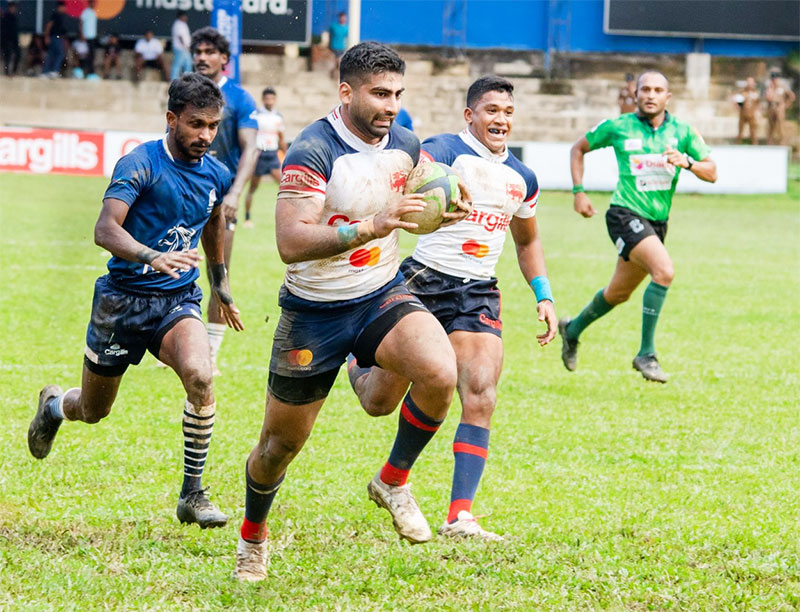
Kandy Sports Club dominated a third week of rugby in the domestic inter-club league tournament and what made the club even more proud was the stellar performance produced by centre Tharinda Ratwatte.
Kandy SC got the better of Police SC (33-19) in a game where Tharinda dazzled and also stood in the way of the ‘cops’ causing any form of an upset. He knew the length and breadth of the field and applied pressure on the right occasions to keep the policemen in check. We have to keep using his first name in this column because there is another Ratwatte (Nigel) playing in the same Kandy SC team. Nigel plays as fly half.
He scored twice in the game; the second was a beauty where he smothered a kick, collected and scored to stun the police team. Tharinda has a package to offer during a game where his amazing running skills are complemented by his defence work and accurate place kicking. Opposite teams have no clue what combinations he’ll produce during any given match day and it makes it even harder for the opposition because there are other hungry team members wearing the Kandy SC jersey and raring to go. Still Tharinda has been a cut above the rest thus far this season.
We have to look at what has gone into producing this player. He was educated at Trinity College Kandy and is the son of Trinity ‘Lion’ Ashan Ratwatte, who captained the school’s rugby team in 1983. Tharinda captained Trinity at rugby in 2014. And the great accomplishment by him is that unlike his father the son has always been in Bradby Shield winning sides. Ashan was once quoted making this statement in a newspaper about his son, “I thought I was a great player, but my son is better than I in every sphere. He has never lost a Bradby in his life”. Now that’s quite a statement made by a father whose name is written in the annals of ‘Trinity rugby’ as a player to remember.
The Ratwattes have deep roots running in the sport of rugby. From Dennis (Ashan’s father who also played the game) Ashan also saw his bothers Sheran, Roshan and Dilkshan also playing the game at top level. Interestingly Tharinda and Nigel are cousins, but the latter couldn’t play for Trinity’s First XV side because he left school prematurely to continue his education in South Africa.
Then there is this atmosphere at Trinity where the sport of rugby just makes you fall in love with the vibe that it creates. This is experienced by even the students who don’t play the game. The rugby culture at Trinity embeds in you that the school team can have bad days in rugby, but it cannot lose the Bradby; which is played against Royal College Colombo.
One wonders how it was for Tharinda to cope with pressure because it is not easy to play your game when everyone watching you from friends and relations to family members know the game inside out. But still he finished his school career on a high and won a ‘Lion’ for himself.
After leaving school he joined Ceylonese Rugby & Football Club (CR&FC) and had four seasons with the Red Shirts. While playing competitive rugby he completed his law degree and is an Attorney-at-Law at present.
He is 28 years old at present and when he looks back at the decision to crossover to Kandy SC it serves both the Nittawela club and himself; the latter from the perspective of doing national duty. When Tharinda was appointed as captain of the Sri Lanka representative side to contest the ‘rugby sevens’ event at Asian Games he grabbed the reins of the side quite boldly. This was a time when Sri Lanka Rugby was serving a ban and uncertainty engulfed the minds of the players in the island nation; where rugby is equally popular as cricket. The national team was forced to compete under the Olympic Council of Asia flag, but still the team went to China with high spirits to perform at their best. The results produced were not convincing, but the cream of the island’s rugby players were not left out of the Asian Games and that’s what must be applauded. Tharinda’s presence in the national squad as a player from Kandy SC is also encouraging because we’ve had a history of the players from the Nittawela Club making themselves unavailable for national duty on many occasions. He has made a couple of tours with the national side and had a proud moment when he got to score a try against New Zealand in ‘sevens rugby’ at the 2022 Commonwealth Games. He also got to captain the national under 19 team at the Asian Rugby Championships.
Coming back to Kandy SC the side saw the exit of key players like Fazil Marija, Gayan Weeraratne, Damith Dissanayake, Roshan Weeraratne and Vishwamithra Jayasinghe who retired from the game. This sees the side playing rugby with just a handful of quality players. This side needs a hero and if Kandy SC is searching for one that search has ended. Tharinda has the potential to marshal the players even though he is not the skipper. He is also earmarked as one of the future captains of Kandy SC. There is something inspiring about him when he is on the field. If he ‘sneezes’ something positive on the field he is certain that what he discharges can be very infectious.
This rugby season is all exciting with teams like Police and bottom seed CH&FC showing vast improvements in the first three weeks of rugby. Kandy SC plays against Air Force SC on Saturday (December 30) at Ratmalana. Kandy should be at full strength for this game and much is expected of Tharinda who is in fine form.






The Bangladesh Cricket Board has removed Nazmul Islam as chairman of the board’s finance committee, following the CWAB’s player boycott of cricket in country until he resigns from his position.
“The Bangladesh Cricket Board (BCB) wishes to inform that, following a review of recent developments and in the best interest of the organisation, the BCB President has decided to release Mr. Najmul Islam from his responsibilities as Chairman of the Finance Committee with immediate effect,” the BCB said in a statement.
“The decision has been taken in accordance with the authority vested in the BCB President under Article 31 of the BCB Constitution and is aimed at ensuring the continued smooth and effective functioning of the Board’s affairs. Until further notice, the BCB President will assume the role of Acting Chairman of the Finance Committee.
“The BCB reiterates that the interests of the cricketers remain its highest priority. The Board remains fully committed to upholding the honour and dignity of all players under its jurisdiction.
“In this regard, the BCB hopes that all cricketers will continue to display the highest standards of professionalism and dedication to the betterment of Bangladesh cricket during what is a challenging period for the game, and will do their utmost to ensure continued participation in the Bangladesh Premier League (BPL).”
Both BPL matches on Thursday – the first between Chattogram Royals and Noakhali Express, and the second between Rajshahi Warriors and Sylhet Titans – have been postponed due to the player boycott.
Even though there seemed to be movement on the issues – the BCB agreed to the player body CWAB’s demands and removed Nazmul Islam from his position as head of the board’s finance committee – but it came too late in the day for the matches to go ahead as scheduled. There was no confirmation yet whether the boycott would be called off or not, and whether the BPL matches on Friday would also be impacted.
[Cricinfo]
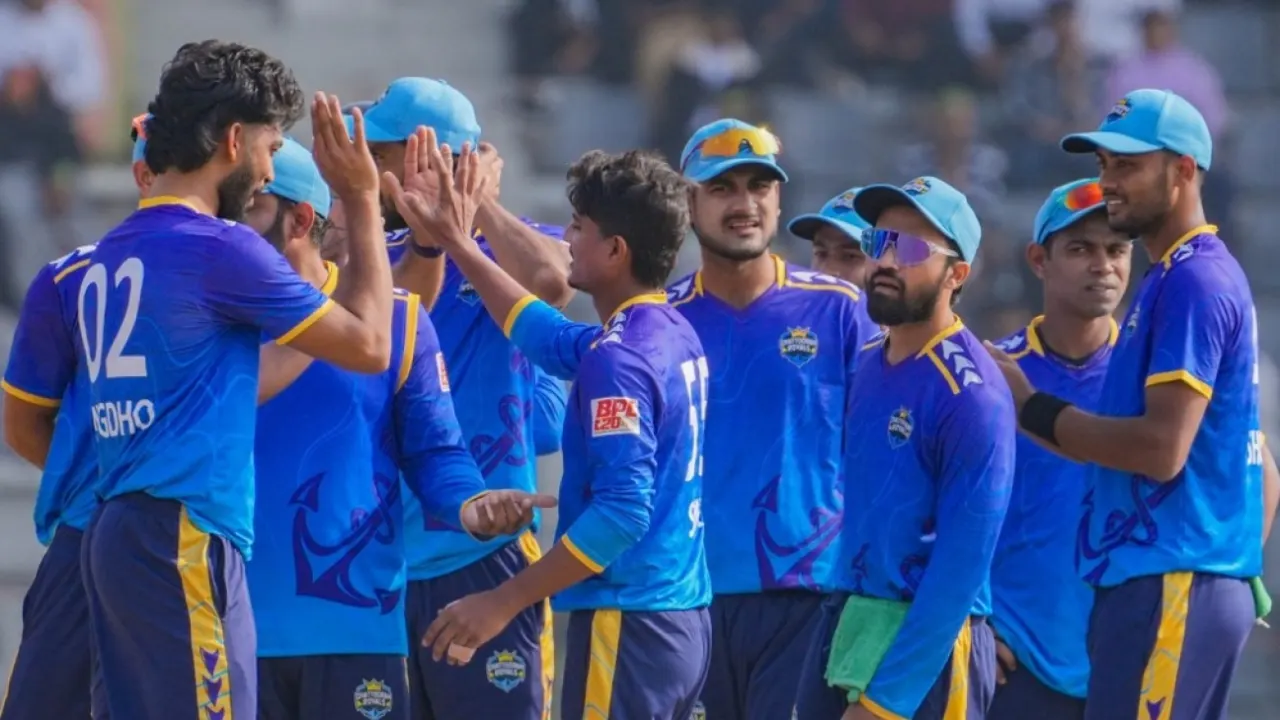
The Bangladesh Cricket Board has issued a show cause notice to its director M Nazmul Islam over his “objectionable comments” in public against the country’s cricketers on Wednesday.
The notice came a couple of hours before the scheduled start of the BPL matches for the day, though the players’ body CWAB has called for a nationwide boycott on all forms of cricket unless Islam tenders his resignation.
The four first-division matches in the Dhaka Cricket League scheduled for the day didn’t start on Thursday morning, which caused serious concern in the BCB. ESPNcricinfo has learned that the Chattogram Royals and Noakhali Express players, who were supposed to play the first BPL match on Thursday, are sticking to the boycott.
“The board has already initiated formal disciplinary proceedings against the board member concerned,” the BCB statement read. “A show cause letter has been issued, and the individual has been instructed to submit a written response within 48 hours. The matter will be dealt with through due process and appropriate action will be taken based on the outcome of the proceedings.”
ESPNcricinfo understands that some board directors contacted the CWAB president Mohammad Mithun late on Wednesday night, offering that they would make Nazmul stand down from his role as the finance committee chairman. But Mithun said the cricketers’ call for the boycott remained in place.
The toss of the first BPL match on Thursday is at 12.30 pm local time. Once the start time for the match has passed, the CWAB leaders are supposed to hold a press conference, where they will present the BCB with their demands, including the resignation of the director.
[Cricinfo]

Sadio Mane fired Senegal into the final of the Africa Cup of Nations with a 1-0 victory over seven-time winners Egypt.
The two-time African Footballer of the Year broke the deadlock in the 78th minute on Wednesday when he let fly from just outside the penalty area inside the bottom left corner after Lamine Camara’s initial effort was blocked.
It sparked joy and relief among the Teranga Lions’ fans in Tangier, where the 2021 champions – after beating Egypt in the final – had taken the initiative but struggled to create clear chances against the Pharaohs’ stubborn defence.
Senegal captain Kalidou Koulibaly will miss the title match – against either host Morocco or Nigeria, who were to play in Rabat later on Wednesday – after picking up a yellow card that meant a suspension and then going off injured in the 23rd minute.
Koulibaly was booked in the 17th for a tactical foul on Omar Marmoush. The captain was also sent off in the group-stage win over Benin and consequently missed the win over Sudan. His tournament was effectively ended when he had to be replaced by Mamadou Sarr because of injury.
Nicolas Jackson had fired over just before Senegal displayed more attacking intent. Habib Diarra and Pape Gueye also had efforts saved.
Tensions boiled over when Mohamed Salah fouled his former Liverpool teammate Mane, but Senegal coach Pape Thiaw and Egypt counterpart Hossam Hassan managed to cool tempers.
Senegal’s Habib Diarra was booked for arguing, however, meaning he will miss the final, too.
[Aljazeera]

BCB removes Nazmul Islam as head of finance committee

Another crane collapses in Thailand, killing two, after 32 die previous day

India shuts Kashmir medical college – after Muslims earned most admissions

Singapore’s opposition leader stripped of title after conviction for lying

BCB issues show cause notice to Nazmul Islam but Bangladesh players firm on boycott

From behind bars, Aung San Suu Kyi casts a long shadow over Myanmar

‘Dates have the highest sugar content to fight Coronavirus’

Sunday Island 27 December – Headlines

#SundayIsland 17th December – Headlines

Sunday Island – 28th March

Sunday Island Headlines – 21 March

Sunday Island – 21st February – Headlines
-

 Business5 days ago
Dialog and UnionPay International Join Forces to Elevate Sri Lanka’s Digital Payment Landscape
-

 Business17 hours ago
Koaloo.Fi and Stredge forge strategic partnership to offer businesses sustainable supply chain solutions
-
 News5 days ago
Sajith: Ashoka Chakra replaces Dharmachakra in Buddhism textbook
-

 Features5 days ago
The Paradox of Trump Power: Contested Authoritarian at Home, Uncontested Bully Abroad
-

 Features5 days ago
Subject:Whatever happened to (my) three million dollars?
-

 News5 days ago
Level I landslide early warnings issued to the Districts of Badulla, Kandy, Matale and Nuwara-Eliya extended
-

 Business2 days ago
New policy framework for stock market deposits seen as a boon for companies
-

 Opinion7 days ago
The minstrel monk and Rafiki, the old mandrill in The Lion King – II