“Auditor General’s reports a matter for Legislature not the Executive”
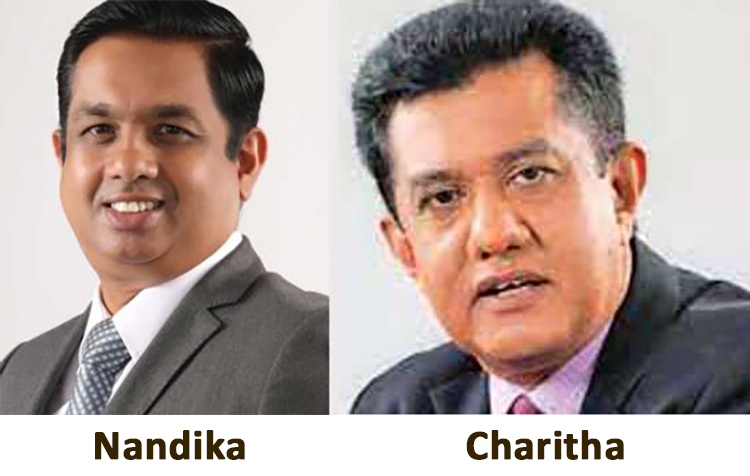
Former Chairman of the Committee on Public Enterprises (COPE) Charitha Herath has said it is the COPE, and not the Secretary to the President, that should have asked the CID to probe irregularities in the procurement of coal for the Lakvijaya power plant.
Dr. Nandika Sanath Kumanayake, who is the Secretary to the President, lodged a complaint with the CID last week seeking an investigation into coal procurement.
No previous Secretary to a President had done so, the former parliamentarian and the Samagi Jana Balawegaya (SJB) Working Committee member said. Herath said so responding to The Island query regarding Kumanayake calling for a probe into coal procurement, since 2009, following the National Audit Office (NAO) report on the controversial procurement process for the 2025/2-26 period.
Herath emphasised that COPE, taking into consideration the growing discontent over coal procurement, especially after the NAO exposed serious irregularities, should have initiated action. Herath cited the National System Operator’s (NSO) seeking an additional electricity tariff increase of 15%, in addition to 10% increase announced on 01 April, for the second quarter, to cover-up Rs 16 bn deficit in power generation, as a matter of grave concern. NSO has cited the prevailing dry weather, the continuing crisis in West Asia, and the low-grade coal that had been procured as primary reasons for the unanticipated shortfall in electricity generation.
Herath said that as the Secretary to the Ministry concerned was the Chief Accounting Officer, the actions of the Secretary to the President caused a technical issue. Prof. Udayanga Hemapala, now under a cloud over the violation of procurement procedures, as confirmed by the NAO, is the Secretary to the Energy Ministry. Herath emphasised the importance of the procedure adopted in appointing a Secretary to a Ministry. “President issues one letter making the appointment. Secretary to the Finance Ministry issues a second letter underscoring the responsibilities of a Ministry Secretary as the Chief Accounting Officer of a particular Ministry,” Herath said.
The second letter emphasised the accountability on the part of the Ministry Secretary regarding public finance and his direct answerability to Parliament.
The ex-COPE Chief pointed out that the Secretary to the President was part of the executive. He was not part of the legislature. If there had been a directive from COPE, that should have been issued to the Secretary to the Energy Ministry, Herath said, emphasising the entire process had to be led by the legislature not the executive. In this instance to make matters worse the finger is also pointed at the executive for being part of the alleged cover up.
The Auditor General, who heads the NAO, is answerable to Parliament, Herath said, pointing out that the AG never sent reports to the Secretary to the President, who, too, comes under the purview of the NAO. The intervention made by the Secretary to the President could set a very bad precedent and it was unfortunate that the NPP, having campaigned on an anti-corruption platform at national elections in 2024 was now struggling to cope up with the major post-Aragalaya coal scandal.
The NAO undertook the examination of the 2025/2-26 coal procurement on a request made by Dr. Nishantha Samaraweera, Galle District lawmaker, representing the ruling NPP.
Lakvijaya, the country’s sole coal power plant, situated at Norochcholai, requires approximately 2.25 mt million annually and is credited with generating 30% to 40% of the overall national electricity requirement.
According to the NAO report, the Energy Ministry had awarded the term tender for the supply of coal to India’s Trident Chemphar Ltd., though it wasn’t properly registered. The NAO also pointed out the failure on the part of the supplier to follow proper procedure in respect of loading and unloading at respective ports.
Herath said that intentionally, or inadvertently, the NPP had erred in handling the investigation. He said after receiving the NAO’s report, COPE could have averted unnecessary controversy by following the laid down procedures. The COPE Chairman could direct the Energy Secretary to inquire into the coal procurement within seven days and submit a report to Parliament. In addition, if there had been any wrongdoing on the part of officials, relevant documents/files should be sent to the CIABOC or the CID.
The COPE, in consultation with the Speaker, could also take up in Parliament as an urgent/emergency issue at the onset of the proceedings, Herath said, adding that an interim report could be presented. On the basis of that report, in terms of the Standing Orders the Parliament could immediately decide to send it to the CID.
In addition to the above mentioned procedures, the COPE could on its own initiate a fresh inquiry and submit a report to Parliament and the country, Herath said. Pointing out that the coal company comes under the purview of the executive and not the legislature, Herath said that actions of the executive could be investigated. Herath explained how the British and the US responded to such situations. Unfortunately, here in Sri Lanka apparently the COPE was being used to clear the Minister concerned while holding the officials responsible for the coal scandal.
In the wake of the NAO report signed by Auditor General Samudrika Jayarathne, the defeat of the no-confidence motion moved against Energy Minister Kumara Jayakody couldn’t be considered a victory for the government, the ex-MP said. In fact, the coal scam has challenged the NPP’s much propagated anti-corruption stance, Herath said, adding that the issue couldn’t be examined without discussing the Energy Minister being indicted over corruption by the Colombo High Court recently.
By Shamindra Ferdinando