
Editorial
The Pope who changed the Church


When conservative Pope Benedict XVI stepped down in 2013, citing frailty of body, the Catholic world braced for a like-minded successor. All eyes were on Italian Cardinal Angelo Scola, then 71, a theological twin of Benedict and the bookmakers’ favourite. But as the age-old adage in Rome goes, “He who enters the conclave as pope, exits as cardinal.”
When white smoke emerged from Sistine Chapel, the bells of St. Peter’s rang and the words “Habemus Papam” echoed across Vatican, it wasn’t Scola who emerged on the balcony, but the football loving cardinal from Argentina – Jorge Mario Bergoglio. Unknown to most beyond Buenos Aires, the man from the ends of the earth would soon become the beating heart of the Catholic Church.
From the outset, it was clear that this would be no ordinary pontificate. Instead of donning the grand papal clothes, the new Pope stepped out in a plain white cassock, as if to say, “let me walk with you, not above you.” And in a moment of breathtaking humility, before blessing the faithful, he knelt down, bowed his head and asked them to bless him. The world witnessed not a showman cloaked in ritual, but a shepherd clothed in grace.
He chose the name Francis – after the saint of Assisi, who embraced poverty and loved nature. No Pope before him had borne the name. It was not a name picked randomly, but a vow to the poor, to peace, and to simplicity. For 12 years, Francis lived what he preached, endearing himself to millions and became the most beloved pontiff overtaking John Paul II.
As head of the Jesuits in Argentina and later as Archbishop of Buenos Aires, he was known to travel by train, mingling with commuters, rubbing shoulders with the working class. Upon assuming the Chair of St. Peter, he left behind the opulence of the Apostolic Palace and took up residence in a modest guesthouse room. The bulletproof papal limousine was also replaced with an ordinary car. It was a reminder to the world and the Church, that one cannot preach the Gospel from a golden throne while the flock is lost in the wilderness.
Even in death, he remained true to form, requesting a simple funeral, free of pomp and circumstance, in stark contrast to centuries-old Vatican tradition.
Pope Francis lifted his voice for the voiceless. He was the trumpet for the immigrant, the refugee and the outcast. In meeting halls of power – from the White House to the United Nations – he urged leaders to show compassion. His message found a receptive ear in Joe Biden, the first Catholic President of the United States since John F. Kennedy. But when Donald Trump took a hard-line stance on deportations, the Pope was quick to pen a sharply worded appeal, reminding the world that every soul is sacred, every migrant a child of God.
Within the Church, Francis was a reformer unafraid to rock the boat. He opened the doors of communion to divorced Catholics, ruffling feathers among traditionalists. He declared that homosexuality is not a sin, echoing Christ’s own words, “Judge not, that you be not judged.”
He gave women greater roles within the Church’s hierarchy – appointing them to senior positions within the Vatican and amending Cannon Law to allow them to serve as lectors and distribute Holy Communion. When asked about the shift, the Pope, with his trademark wit, quipped, “They certainly manage the finances better than men.”
In his quest to decentralize power, Francis broke the mold of predictable cardinal appointments. No longer was it a given that bishops of major European dioceses would receive the red hat. Instead, he elevated humble, pastoral leaders from far-flung corners of the world – Papua New Guinea, Tonga, and Haiti – redefining what it meant to be a Prince of the Church.
He also took bold steps to clean the Vatican’s tarnished image. When Cardinal Giovanni Angelo Becciu was embroiled in a financial scandal involving a failed London real estate deal, Francis asked for his resignation. Becciu would go on to become the first cardinal ever convicted by a criminal court. It was a clear sign that accountability had found a home within the hallowed halls of the Vatican.
Francis was not just a pontiff in name. He was a shepherd after God’s own heart. Like the Good Samaritan, he tended to the broken. Like the prodigal’s father, he welcomed the lost. And like Christ Himself, he did not shy away from overturning the tables when righteousness demanded it.
As he returns to his Creator, the College of Cardinals will gather to elect a new successor. Of those 135 Cardinals, 108 were appointed by Francis himself. While papal predictions are a fool’s errand, the writing on the wall suggests that his successor will carry the torch of humility, justice, and mercy.
The curtain falls not on an era of power and pageantry, but on one of pastoral care and prophetic courage. Pope Francis may be gone, but the seeds he sowed in the vineyard of the Lord will continue to bear fruit in due season.



Monday 2nd March, 2026
We are witnessing a new world order that is anything but rules-based. The US has once again demonstrated that might is right. Big powers have placed themselves above international law and reduced the UN to a mere spectator.
US President Donald Trump has graduated from abductions to assassinations in dealing for foreign leaders he considers hostile. The US and Israel seem to think they have succeeded in engineering a regime collapse in Iran by assassinating Supreme Iranian Leader Ayatollah Ali Khamenei and scores of others in a series of air strikes on Saturday. Those killings must be condemned unreservedly. President Trump has audaciously claimed in a social media post that a wicked man was eliminated. The question is whether those who ordered Saturday’s air strikes, killing many Iranian civilians, including schoolgirls, can consider themselves any less wicked.
If history is anything to go by, air strikes alone cannot bring down long-established systems, and there is no guarantee that the toppling of a repressive regime always yields positive results and helps bring order out of chaos. Iraq and Libya may serve as examples. They remain fragmented and are in a far worse situation than they were under Saddam Hussain and Muammar Gadhafi respectively. The US and its allies plunged those two countries into anarchy in the name of eliminating repressive regimes.
The US and Israel are accused of waging a diversionary war for the benefit of President Trump and Israeli Prime Minister Benjamin Netanyahu. Both of them are facing scandals at home. Trump is troubled by a renewed scrutiny of the Epstein files and a Supreme Court judgment preventing him from imposing tariffs according to his whims and fancies. Netanyahu is facing bribery and fraud charges, and will be in serious trouble if voted out of power. He has to cling on to power at any cost. Fighting wars purportedly to save Israel seems to be the only way he thinks he can keep his political enemies at bay at home.
Iran has threatened to destroy Israel and the US, but its military capabilities are limited, as is known to military experts. It would never have taken on the US militarily or done anything fraught with the danger of triggering disproportionate military retaliation. It has been nowhere near developing nuclear weapons. The casus belli that Trump and Netanyahu used to attack Iran reminds us of the falsified intelligence dossiers President George W. Bush and British Prime Minister Tony Blair unashamedly produced in a bid to justify the invasion of Iraq. They said Saddam Hussain had stockpiled weapons of mass destruction, but they could not trace any.
The current Iranian regime, whose crackdown on protesters claimed thousands of lives, has weakened international opposition to US aggression significantly. However, some prominent Democrats have already condemned Trump’s bombing spree. U.S. Senator Tammy Baldwin has pointed out that Trump’s military action is illegal in that according to the US Constitution, if the President wants to start a war, the Congress, elected by the people, needs to sign off on it. He has said the Senate needs to come back immediately to vote on Trump’s senseless and illegal bombings. The Republicans have defended Trump’s military aggression, claiming that it is in the interests of the Iranian people.
One can only hope that the US Congress and judiciary will make Trump act with restraint.
****
Adopt QR remedy
The escalation of the Middle East conflict has triggered panic buying of fuel in Sri Lanka. Long lines of vehicles could be seen near fuel stations in various parts of the country at the time of going to press. The Ceylon Petroleum Corporation (CPC) had to step up fuel supply yesterday while claiming to have fuel stocks sufficient for more than one month and urging the public not to panic. The raging conflict is bound to affect the global fuel supply, and this is why Sri Lankans have panicked.
There is no reason to doubt the veracity of the CPC’s claim that it has sufficient fuel stocks, but panic buyers are impervious to reason. Unless hoarders are kept at bay, the CPC will run out of its stocks soon. One may recall that during the 2022 economic crisis, pumps ran dry at most filling stations mainly due to excessive hoarding. Rationing helped bring the situation under control.
The only way to stem the current wave of panic buying of fuel is to activate the QR-based fuel issuance system. Unless the government adopts that method forthwith and arrests panic buying, hoarders will have a field day and create a fuel shortage.
Arumahandi Janith Madushanka de Silva alias Podi Lassi, a dangerous underworld character, who was arrested in India, was brought back to Sri Lanka yesterday. On watching his arrival at the BIA, Citizen Perera must have uttered the same words as Mr. Bumble in Oliver Twist: “The law is an ass”. Criminals are caught, released and caught again. Arresting an underworld figure is no walk in the park. It takes months of meticulous planning to nab powerful criminals protected by private armies. The crime busters who risk life and limb to track down criminals are demoralised when the suspects they arrest get bail and flee the country.
Podi Lasi was arrested in 2020 and detained in the Boossa high-security prison, together with some other dangerous criminals. He secured bail in 2024. It was obvious that he would flee the country. He played the victim card, claiming that the STF was planning to kill him. His lawyers even demanded that he be given protection. He disappeared soon afterwards, and no one was surprised.
Many an eyebrow was raised when Podi Lassi was enlarged on bail, for he had even issued death threats to the then President and the Defence Secretary. In 2020, while in detention, Podi Lasi and two other underworld characters known as Kosgoda Tharaka and Pitigala Keuma threatened to harm the then President Gotabaya Rajapaksa, Defence Secretary General Kamal Gunaratne, and some senior prison officers. Podi Lassi bragged that his hit squads were capable of taking any target. Those who are charged with less serious offences than drug smuggling and underworld activities are denied bail in this country to prevent them from intimidating witnesses and fleeing overseas.
One may recall that a notorious drug dealer named Mohommad Najim Mohommad Imran alias Kanjipani Imran obtained bail in 2022. Everybody knew that he would flee the country, and he did so a couple of weeks later. The then Public Security Minister Tiran Alles claimed that some unscrupulous lawyers had facilitated Imran’s escape and that of another criminal called Ganemulle Sanjeewa. Imran had been arrested in Dubai together with Sri Lanka’s Napoleon of Crime, Samarasinghe Arachchige Madush Lakshitha alias Makandure Madush in 2019, and brought back to Colombo. Madush perished allegedly in a crossfire between the police and an underworld gang while in custody. Imran has been running his crime syndicate here from overseas. He is believed to have masterminded the murder of Wasantha Perera or Club Wasantha in 2024. Ganemulle Sanjeewa was gunned down inside a courtroom in Colombo in 2025.
Some underworld kingpins have turned this country into a narcotic hub, for all intents and purposes, if the sheer amounts of dangerous drugs frequently taken into custody are any indication. They are capable of killing anyone anywhere. A lawyer and his wife were gunned down near the defence headquarters complex, Akuregoda, recently.
It is public knowledge that whenever a drug czar is netted, a well-coordinated operation gets underway to secure his release, with lawyers, politicians, and some rogue elements in the police and other state institutions such as the Government Analyst’s Department springing into action. In September 2023, Nadun Chinthaka Wickremaratne alias Harak Kata almost escaped from the CID headquarters where he was detained and interrogated. If not for some vigilant STF personnel, his crime syndicate would have been able to launch a spectacular operation with the help of some commandos and spring him free. Salindu Malshitha alias Kudu Salindu, arrested with Harak Kata in Madagascar, and extradited to Sri Lanka in 2023 also fled the country after obtaining bail.
Sri Lanka’s anti-narcotic laws are characterised by glaring inadequacies that allow clever lawyers appearing for wealthy drug lords to drive a coach and horses through them. They have done so on numerous occasions much to the dismay of the police and the public. The need for laws with stronger teeth to deal with drug lords and other such criminals firmly and make this country safe for the ordinary citizens cannot be overemphasised.

Saturday 28th February, 2026
The JVP-NPP government is practising the very antithesis of what it promised workers during its election campaigns. Pledging to look after workers’ interests, the JVP/NPP leaders said there would be no need for labour struggles under an NPP government. But they are now emulating their predecessors who mismanaged labour issues and suppressed trade unions.
The government has locked horns with the GMOA (Government Medical Officers’ Association). They are engaged in a contest of attrition, which is not likely to end any time soon, given the intransigence of both sides. The government is determined to wear down the GMOA, and vice versa. The warring doctors have withdrawn from health camps and outreach programmes and threatened to intensify their trade union action. One wonders whether the medical professionals in the NPP parliamentary group have sought to settle old scores with the GMOA, which they are not well disposed towards; instead of making a serious attempt to resolve the ongoing trade union dispute amicably, they keep on provoking the protesting doctors.
The GMOA has put forth several demands, including the establishment of a special service category called the “Sri Lanka Medical Service,” for all doctors, updating the Disturbance, Availability and Transport (DAT) allowance, resolving transportation issues in line with Circular 22/99, converting the additional duty allowance into a fixed allowance, resolving issues related to research allowances, addressing concerns of doctors engaged in postgraduate studies, updating the approved cadre of doctors in the health sector and initiating time-bound discussions with the Ministry of Finance on the doctors’ demands.
What is up the government’s sleeve is not difficult to guess. The JVP/NPP is all out to tame the trade union sector, which is strong enough to act as a countervailing force against it. The GMOA is one of the most powerful trade unions, and the government’s battle plan seems to be suppressing it in a bid to intimidate all others into submission. The JVP/NPP leaders have apparently learnt from how the LSSP, as a constituent of the SLFP-led United Front government, broke the bank employees’ strike in 1972. The J. R. Jayewardene government crushed a general strike in a brutal manner in July 1980 by sacking tens of thousands of strikers, and thereby effectively neutralised the trade union sector. All governments with steamroller majorities succumb to the arrogance of power, which drives them to ride roughshod over trade unions and professional associations that refuse to obey their dictates.
Opinion may be divided on the GMOA’s demands, and in fact it may not be possible to meet some of them for pecuniary reasons, but it defies comprehension why the government refuses to listen to the protesting doctors, and adopt a compromise formula. Political muscle flexing will only make an already bad situation far worse in the health sector. The government should not dupe itself into believing that tactics such as astroturfing and social media attacks will help tame trade unions.
Labour disputes tend to snowball and cause hardships to the public. Hence the need for swift action to resolve them. It behoves the government, which came to power, promising to look after the interests of workers, to invite the GMOA to the negotiating table and try to prevent the escalation of the ongoing dispute.

War photographer Paul Conroy dies as tributes paid

Allies of US in the Gulf bear brunt of Iran attacks

Dry weather will prevail in most parts of the island

Israel resumes attacks as Iran vows to avenge supreme leader’s death

CPC has enough fuel stocks

Lanka, Pakistan strengthen ties at 13th JEC

‘Dates have the highest sugar content to fight Coronavirus’

Sunday Island 27 December – Headlines

#SundayIsland 17th December – Headlines

Sunday Island – 28th March

Sunday Island Headlines – 21 March

Sunday Island – 21st February – Headlines
-
 News7 days ago
Prime Minister Attends the 40th Anniversary of the Sri Lanka Nippon Educational and Cultural Centre
-

 Opinion3 days ago
Jamming and re-setting the world: What is the role of Donald Trump?
-
 Sports7 days ago
Dottin out obstructing the field as Sri Lanka clinch series
-
 Features3 days ago
An innocent bystander or a passive onlooker?
-
 Features5 days ago
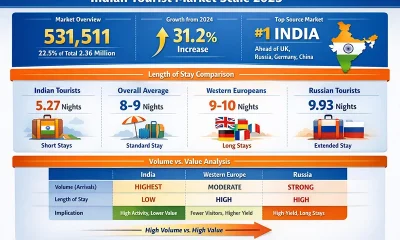
Building on Sand: The Indian market trap
-
 Opinion5 days ago
Future must be won
-
 Features4 days ago
Ratmalana Airport: The Truth, The Whole Truth, And Nothing But The Truth
-
 Business4 days ago
IRCSL transforms Sri Lanka’s insurance industry with first-ever Centralized Insurance Data Repository