
Features
The musings of ‘Kothu’ as National brand


by B. Nimal Veerasingham
A YouTube parody song that I watched recently, captures the conversation between the Mission Control and the two astronauts just landed on Mars.
Mission Control:
Have you safely landed?
Astronauts: Yes – No worries – we have brought the packed lunch as well.
Mission Control:
What??
Astronauts:
Yes – in case you want to know – its ‘Pittu’ in banana leaf, with mutton curry, Liver fry, a day-old fish curry, brinjal moju, Katta sambal and omelette.
The people in the Mission Control nod in unison, figuring more gastronomy than astronomy.
At the present times of intense globalization and interdependence of borderless goods and services, where demarcation lines are in unknown territory, the question of ‘National foods’ have become very much muddled. The glory days of TV cooking shows place the presenters and chefs into celebrity status drawing millions of viewers into trying the same in their own kitchens. The TV celebrity Chefs dominate the culinary experiments, fusing regional and ethnic flavours into altogether new food cultures, behaviour, preparation, procurement, and consumption; questioning the authenticity, both sides of the realms. Quite logically, food adventuring leads to new cultures and lands, the print and visual media conjoins culinary tourism with this new ‘unknown’, ‘exotic’ and ‘authentic’ experiment into spinning an industry of its own, infusing center of tourism with novelty food adventuring.
Food Culture
The popularity of food culture, both in the East and the West, bring to light the food adventurer’s accomplishment at having discovered the ‘hidden’, to their own enrichment and pleasure. Jamie Oliver’s ‘American Road Trip’ or Anthony Bourdain’s ‘No Reservation’ or Andrew Zimmern’s ‘Bizarre World’ accomplishes this effort of loosely commodifying, while the original gatekeepers and their lived histories quite often overlooked as to how ownership is identified.
The so-called food patriotism in aligning or claiming to be the rightful owners of a particular food always created an uncomfortable dilemma; sort of bad taste in the mouth, when tracing the origins with impartiality. Italians lead the pack as being the undisputed Global foodies, holding the rightful ownership for pasta to spaghetti and pizza to cannoli, and anything in between numbering more than 100s if not 1000s of delicacies. In the 50’s, Author Prezzolini questioned as to ‘What is the glory of Dante compared to spaghetti?’, continuing, ‘the spaghetti has entered many American homes where the name Dante is never pronounced’. It is very interesting that Dante who is one of the greatest philosophers, theologian and considered as the father of the Italian Language is being compared to mundane palatal taste that is rightfully at times overcomes fine liturgies of human worthiness. The culinary identity to the DNA is so strong that simply dressing like pizza or wearing a chef hat would propagate Italian identity in the Global stage, as witnessed in the recently held Euro Cup.
Pasta and Chicken Tikka Masala
But claiming authenticity is not a straightforward process, but a complicated one. The origins of pasta, as not simply having Asian origins, but born out of Mediterranean melting pot, would certainly bring back protesting gladiators in the streets of Rome. Long before Marco Polo, the so-called pioneer of East-West exchange brought forward the spectrum of pollination regarding starchy pasta versions, there were pioneers from variety of convergences, who made it even harder for the so-called authenticity to carry the day. Arab geographer Muhammad al-Idrisi (10th Century), a member of the Norman King Roger ll’s court in Palermo (Southern Italy) identified pasta as ‘Itriyya’. Interestingly a Jewish Doctor’s medical text in an Arabic journal appeared for the same, two centuries earlier where we now call ‘Tunisia’.
Chicken Tikka-Masala as the national food of UK is another episode of 360° split jump on a gymnastic beam, in this meringue of food spasms. Chicken Tikka Masala, not being a mainstay of continental India, introduced by Bengali chefs in the likes of Shakespearean era Fleet Street Pubs, where culinary tastes are vigorously tested before placed in podium. The past U.K Foreign Secretary’s proclamation on Chicken Tikka Masala as being the National food of the U.K, clearly surpasses the arguments of colonised and colonizer, indigenous or imported.
Chilli’s crowning moment
Chilli-pepper is another mother of all decorum that hits home curry base harder. Who would ever accept that chilli-pepper (capsicum annuum) that matches native peppercorn in heat units, is native to South America and the Portuguese introduced it to the Indian sub-continent in 15th century to create a pungent heat to their profitability? The world’s raw green chili pepper production stands roughly around 40 million tons today, half of which produced in China.
Food pervades a wide spectrum of social, political, and economic discourse, and at times questions the ‘genuine’ or ‘authentic’ labelling by the faithful, while retaining a fundamental relativity and background, many times evolutionary. Anthropologists argue that food is a moral thought, sponsors human contact and permeates nationalist barriers society tries to impose. There is good reason on the merit of the Hindustani saying, ‘Every two miles the water (taste) changes; and every four, the language’.
Wheat loyalists
The influence of wheat in Asian culinary consumption, though second to rice, is phenomenal. Though China and India lead in the production, their populations consume most, as such the West has found a niche export market through their advanced productive methodologies. Imported wheat, though contains less nutrients than rice, has the advantage of providing instant carbohydrate energy with longer shelf life. It provides greater flexibility and exceptional creative maneuverability through its high gluten content.
The use of advanced technology in agriculture production of the West has allowed Wheat to be stored for longer period, to fend off shipping time to far away destinations. Bleaching is a process that greatly enhances this prorogue, which critics points that nutrients are shelved out and put back artificially, a practice banned by regulators in EU.
Sri Lankan timeline
Wheat, also called ‘American flour’ or ‘Godamba’, on the street and households, is so popular though not produced but imported mostly from the West. The first encounter with Europeans at the shores of the Island, records what will become the country’s eventual obsession. The ‘Rajawali’ thus describes, ‘and now it came to pass, in the month of April, in the Christian year 1552, that a ship from Portugal in the Jambu-dwipa arrived…. For their food, they eat Budhu gal (a sort of white stone), and they drank blood (meaning unleavened bread and port wine).
From that accidental encounter with the group led by the son of Governor of Goa Francisco D’Almeida, the obsession for the gluttonous white wheat flour grew beyond the established guidelines of hereditary cuisines. The diversity and influence propagated by the three colonisers on the inhabitants gave birth to experimental fusion of many culinary delights.
The romance with white or bleached ‘American’ wheat is not simply a page marker for the scribes. it could be measured, where the small Island ranked as the 16th largest purchaser from the US markets in the 80s. Along with sprung variety of short-eats or street food, not to mention as an alternative to anything and everything the native rice flour could call shots.
That brings about the invention of the most popular street food of all times – ‘Kothu Roti’ or ‘Kothu’ in short. The glory of ‘Kothu’ (Meaning chop in Tamil) and it’s burst into variations and reinventions as a highly acclaimed food fusion, wholly, or being a side dining enhancer, has mostly resulted with the spread of Diaspora to all corners of the Globe within the last five decades.
Kothu’s humble beginnings
In the 70’s, one of the grand culinary experience the streets of Colombo could offer is the grandiose ‘Biryani’ – mutton, beef, or chicken of your choice, specialised by the Muslim eateries. The experience is though compact and not on quantity, was a delicious burst of contrasting gustatory sensations – fluffy steaming, sometimes intermittently coloured rice, fried chicken, boiled egg, green chili\onion\cilantro sambol, pickle, cucumber salad. It did safely transition above a notch, outside the everyday home experience.
But something else was brewing in the 70’s in the East, initially as an experiment, most likely through the influence on the exposure and convulsion of fine gastronomical creativity. Or maybe an accidental decoction of natural elements already found in the days’ cooking. ‘Veechu Roti’ (Veechu means ‘throwing/stretching in Tamil) is made from the ‘Godamba’ or ‘American flour’ is a great puller by itself without any chopping. Freshly made thin and stretchy ‘Veechu Roti’ with thickened mutton/beef gravy is a transitional experience by its own then. So, its natural that someone decided to mix both factors together, to make it as an alternate to ‘Biryani’ to snare the taste buds. The brightly lit, flat hot iron plate or griddle where the ‘veechu roti’ was made, has multifunctional dimensions; first to divide the massaged glutenous flour ball into equal portions with generous amount of oil, stretch to the limits and toast it in folded flat square shape.
The American flour’s highly glutinous content allows the stretching to paper thin size. Then use the same flat base griddle to mix the diced roti with egg, onions, green chilli, spices, curry leaves, choice of available vegetables and of course generous amount of mutton/beef/chicken curry, with plenty of gravy. The melodious sound bite, at times at the discretional musical personality of the ‘Kothu Chef’, arising from the banging or chopping of the metal cleavers over the griddle, evenly flip the semi soggy mixture. The sound bites also served as a marketing tool inviting the passersby. It also served as a barometer to the larger neighborhood, as to how young or dead the night is, to have a late snack or a forum with friends.
In the 70s, any youngster living at Batticaloa would scrap the last cent out of his pocket to have the ‘Kothu’ delight at ‘Rasheediya’s’, ‘Hadjiars’, Hotel de Paris or many other in the suburbs, without a blink. The richness of Batticaloa ‘Kothu’ then, was derived from the aromatic explosion of the mutton/beef curry, deeply seeped, and thickened in array of spices. Only the richness of the curry will carry the ‘Kothu’, and nothing else. Literally there was no unsaturated pieces of roti, but fully soaked in aromatic gravy. On top of it, you will be given an extra small dish of gravy to soak it further. To enjoy it with full senses, it must be eaten by hand to say the least, because a fork won’t hold that swampy mixer on the first place.
‘Kothu’ became the choice of meal while travelling on the Batticaloa night train to Colombo during the same period. At a time when travelling by bus with accommodative dinner stops to Colombo is unheard of, a 10-hour train journey starting at 8.00PM needed fuel for the commuter. The ‘buffet’ compartment is hardly reachable due to the absolute crowding, besides it had mostly bread and tea on the top list. As a result, quite logically, Night mail train as it was called then, provided another experience of smelling the aromatics arising from the ‘Kothu’ parcels consumed everywhere from compartment corridors and floor. Those who studied or worked in Colombo during that time, searched in vain to experience a similar feast of the senses in the Capital city, until they are back home by the Batti ‘Kothu’ labs.
Kothu in the world stage
Today the humble ‘Kothu’ has exploded into creative culinary variations with fine dining experience, mostly where the diaspora has expanded its roots, due to the availability of diverse sources for the base-curry. Iddiyapa Kothu, Pittu Kothu, ‘Kudal Kothu’ (Intestine), Liver Kothu, Seafood Kothu, Dolphin Kothu, Chilli-chicken Kothu, Tandoori Kothu, Poutine Kothu, Calamari kothu, Shawarma Kothu, just to name a few. Literally the choice and richness of the curry dominates the outcome and satisfaction of the consumer. Roti at this stage only functions as an enhancer of the experience.
There are many commentators, critiques, restaurants, and eateries highlight the ‘Kothu’ as a Sri Lankan street food in the Global culinary scene, everywhere from Europe, North America, Australia to Asia. The Indian observers sometimes compares this to South Indian ‘Kothu Parota’, though varies mostly on the richness and fiery intensity of the Sri Lankan curry base.
From its meagre beginning, the growth of ‘Kothu’ in some ways compensates the decline of Tea from its glory days as the national showcase, though not in anyway directly compared. The times of the boomers are getting out of steam, while the affluent generation ‘X’rs, ‘Y’rs, and millennials are in full force, willing to adventure newer creations to upsurge exotic experiences from culinary realms. The servings of ‘Kothu’ at Wedding receptions to 5-star hotel buffet menus, trade exhibitions to summer picnic tables, reiterates its earned place, tested by fire, of course. This is not in any way interrelating territorial dimension with handed down traditions. As a commodity of sensory delight in the global culinary theatre, ‘Kothu’ highlights the elevation of Sri Lankan unique food experience. Like the Italian spaghetti and the UK’s Chicken Tikka Masala, its evolution from the fusion of imported ‘American flour’, with its own rich and fiery curry brand has created a symbol easily associated with and traced to Sri Lanka. Thanks to the pioneers who wouldn’t have dreamt or envisioned, but the ‘Kothu’ has become the national brand of Sri Lanka in the world stage.

Features
‘There are no private universities in Sri Lanka’ – some considerations for higher education reform

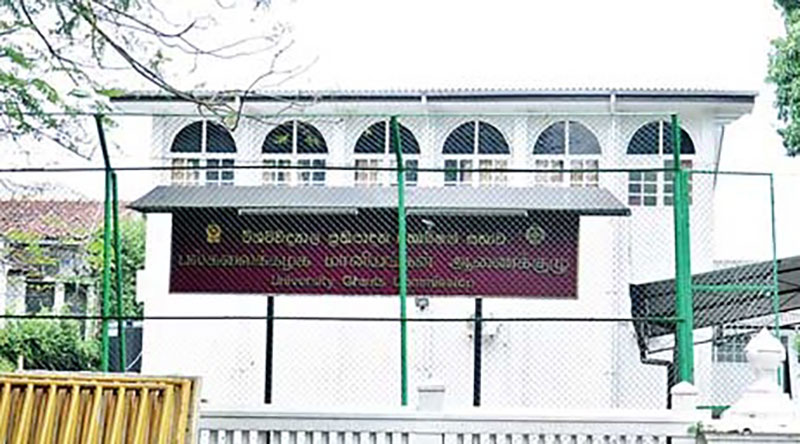
 Academics involved in education policy like to say that there is no such thing as a private university in Sri Lanka. The only ‘universities’ in the country are state universities; anything else offering degrees is a private higher education institution (HEI). This position is technically accurate. Yet, in the discourse and imagination of the public, private universities are very real – people teach in them, students register in them, families pay fees, and such degree holders enter job markets in Sri Lanka and outside.
For decades, activists concerned for public higher education have ignored or resisted looking at private HEIs, as if such scrutiny would taint them. Others have worked in both types of institutions, carrying practices from each to the other. The apex body governing state universities, the UGC, has, meanwhile, ignored the concept of conflict of interest and appointed individuals in private higher education in committees and leadership positions. It is unsurprising then that some of the ideologies informing private higher education appear in reform agendas in the state sector.
This is a good time then to consider the varying types of private HEIs around us, and to take a look at some of the issues within them in the hope that higher education reform agendas will include private, as well as state higher education.
What is a ‘private university’?
First, some clarifications. In the public imaginary, a ‘private university’ is typically an institution that provides a foreign or local degree for which the student makes a payment. But this broad classification encompasses a host of diverse institutions and types of degrees which I detail below.
The Non-State Higher Education Division (NSHE) of the Ministry of Education has recognised 295 degrees by 32 institutions. Most of these are private companies and include a handful of established, well-known private HEIs that are ‘university like’. The degrees are local degrees conferred by the institutions accredited by the NSHE Division. While private HEIs conferring local degrees must be accredited by the NSHE Division, there appears to be no legal consequence for not doing so. In addition, there are several permutations of the private degree that miss the net of this Division and the Standing Committee on Accreditation and Quality Assurance (SCAQA) that assists this Division.
For one, degrees conferred by foreign universities offered, via these same private HEIs, are not vetted by the NSHE Division. Secondly, there is a growing plethora of private HEIs which have either no physical presence locally or only a dubious presence. The University Grants Commission has notified the public, through their website, that foreign universities listed in the Commonwealth Universities Yearbook and the World Higher Education Database are recognised, but refrained from giving any other details – which degrees? Offered by what modes? These details are not known. Some of the foreign universities in the lists may be legitimate entities in their own land but the degrees conferred locally, in their name, may not adhere to curriculum or teaching specifications of the NSHE Division or the UGC.
Another troubling phenomenon is the ‘top up degree’, which appears to work on the same principle as that of a pre-paid mobile connection: if I have a Diploma or an HND of a sort, I am eligible to complete a course of study which provides me with a degree, usually from a foreign university. The idea that someone who does not initially qualify for a degree programme should be able to work their way towards one is a progressive notion. This is the concept that open and distance learning (ODL) was based on initially, but which is now sadly exploited. ODL models are expected to provide opportunity for learning for those who may be excluded from traditional learning institutions. In Sri Lanka, however, we have seen ODL become a marketplace offering easy to obtain, for-fee qualifications by institutions with little commitment to superior teaching and learning.
Finally, a perusal of the many types of private HEIs and their varied degrees bring to mind another question – how should the private degrees, provided by state institutions (that are not educational institutions), be regulated? Who should do so?
All of these create a host of problems for the public – for hopeful students and parents and trusting employers. For the higher education sector, recruitment of academic staff, too, has become difficult due to this plethora of ambiguous higher education qualifications, as I discussed in a previous Kuppi article (‘Recruiting academics to state universities’).
Some issues in private HEIs – a bellwether for change in state universities
In this second part of this article, I will discuss some aspects of work in private HEIs – albeit the more established institutions – given that such issues may appear in reform agendas in future.
Across state universities, all permanent staff of a specific category are paid according to the same criteria. The picture is not so clear when it comes to private HEIs since they are different entities legally, typically companies. Private HEIs have salary scales and financial incentives that are different to each other. The more established private HEIs reportedly have attractive renumeration packages, possibly a reason for academics of state universities migrating eagerly to such institutions during sabbatical years and on retirement. This may not of course be the case with other less established, or improperly registered HEIs of which we know little. Academic staff of these more accepted private HEIs seem to value the high financial remuneration they receive (in comparison to state universities) as something that makes their work rewarding.
Attractive remuneration is important to sustain the good life and is at times seen as the institution’s way of encouraging good work. Yet, this has implications for the future of the institution: to continue to deliver on promised financial packages, institutions must continue to have large profit margins. One strategy has been to enroll multiple cohorts of students per year, even up to three or four intakes per year. This can result in exploitative work conditions, since staff must cater to all these cohorts in that same year. If there is inadequate staff, employees are further burdened. On the other hand, if there is a sudden drop in enrolments (degrees can go out of fashion) unexpected layoffs occur. Similar to other sectors that employ short-term contract staff – including state universities – in private HEIs, too, individual teachers, who are on short term contracts that need regular renewal, can feel pressured to work under difficult or exploitative conditions.
At the same time, even in the more established private HEIs, work norms differ from those of state universities in that they include promotional work that keeps the institution’s name in the eye of the public. The Marketing (or similarly named) unit comes up in conversations as one of the most important departments. It appears to weigh in on decision-making related to the number of staff, the amount of re-sits per exams, and other pedagogically important matters. This is a worrying example of how financial rationales interfere with pedagogically or academically sound processes, resulting in problematic results in the classroom. On the plus side, junior colleagues, who had experience in both state and private HEIs, also felt that they faced less harassment in private HEIs – primarily due to the private HEIs ability to take swift action in reported cases of harassment. This is a real indictment on state institutions and their reluctance to address chronic issues of harassment in our universities.
Yet, while we hear much about problems in state universities, we hardly hear of problems that staff in private HEIs face. One rationale for a lack of public expressions by staff is that expressions of discontent might lead to trouble given the importance of reputation for private HEIs. The worry about reputational damage is a growing concern in state universities, too, as evidenced by social media policies and internal conversations on reputational damage, consequent to negative publicity. Institutional worries of reputational damage are harmful in the long run since these impact not only freedom of expression by student and staff, but also research that is possible in and about the education sector.
Some thoughts at the end…
A close look at the private higher education sector is important given its strong presence in the country. Impending reform needs to regulate this diverse array of higher education offerings in the private sector, as well as the state institutions that offer privately-funded options of higher education (a topic for a separate Kuppi on its own). It is time we carefully considered how to build a whole system of higher education out of this broken mess.
Kaushalya Perera is a senior lecturer at the University of Colombo.
Kuppi is a politics and pedagogy happening on the margins of the lecture hall that parodies, subverts, and simultaneously reaffirms social hierarchies.

Singer Nish Peiris is set to take the next big step in her music journey.
The talented vocalist, who has been seen and heard in the scene here for a short while, and was also featured with the now-defunct band, Inner Vision, has announced that she will be fully committing to her solo career, after completing her degree this year.
“I’m finishing my degree this year, and after that I’ll be fully committing to my solo music career,” Nish told The Island.
“I’ve already got a few tours lined up for next year, so I’m really excited for what’s ahead.”
Fans, no doubt, will remember Nish for her smooth voice and stage presence, and the good news is that she is now ready to chart her own path and bring new music to audiences at home and abroad.
With tours already planned for 2027, the year 2026 promises to be an exciting year for the young artiste as she steps into the spotlight on her own.
We wish Nish every success in this new chapter!

 While Sri Lankan music lovers, in Dubai, are eagerly looking forward to being a part of the action on Saturday, 25th July, with Rajiv Sebastian in the limelight, Sri Lankans, in Toronto, Canada, are equally excited and are anxiously awaiting the arrival of Sri Lanka’s famous singer/entertainer Sohan Weerasinghe.
Having done the needful with The X-Periments, the legendary performer has now embarked on an exciting new chapter – a solo career – and Toronto, Canada, will see him do the needful, on Friday, 31st July, 2026, from 8.00 pm to 12.00 am, at the Angus Glen Golf Club.

Sohan Weerasinghe: In Canada, and ready to do the needful on 31st July
Reports indicate that it’s a ‘sold out’ event – naturally with Sohan in the spotlight.

Gamini Hemalal: Creating all the excitement for Sri Lankans in Toronto
Having built his reputation through years of unforgettable performances, and hits that became part of our musical fabric, Sohan is ready to bring his own vision, sound, and stories directly to the audience, in Toronto, Canada, backed by the phenomenal Toronto Ceymphony Live Band.
Says Gamini Hemalal, who has been instrumental in reviving the Sri Lankan entertainment scene, in that part of the world:
“The countdown begins for the most exclusive musical event of the summer! Join us for a premium night of incredible music, elite hospitality, and a lavish buffet as the legendary Sohan Weerasinghe takes the stage live in Toronto!
“This is a high-end event, designed for those who appreciate exceptional entertainment and great food.”
Gamini, who is also a member of the Toronto Ceymphony Live Band, mentioned that it’s going to be an intimate musical evening with the celebrated Sohan Weerasinghe.
From packed auditoriums to intimate shows, Sohan continues to prove why he remains one of Sri Lanka’s most beloved entertainers.
For decades, Sohan Weerasinghe has been a household name in Sri Lankan entertainment.
Known for his captivating smooth voice and charismatic stage presence, Canada will experience it all on Friday, 31st July.
Next on the list of events, Gamini Hemal is working on, is Halloween night and he says “what we plan to do will be very interesting and unique … with a surprise guest star, as well!”

Trump slaps 50% tariffs on Canada and Carney vows to ‘intensify’ trade talks

Showers will occur in the Western, Sabaragamuwa and North-western provinces and in Kandy, Nuwara-Eliya, Galle and Matara districts

Move to extend judges’ retirement ages could damage Sri Lanka’s global image, warns Prof. Peiris

Dengue surge infects 76,000, claims about 53 lives

SC dismisses challenge to gender change procedures

BASL urges Justice Minister not to amend Constitution to increase retirement ages of superior court judges

‘Dates have the highest sugar content to fight Coronavirus’

Sunday Island 27 December – Headlines

#SundayIsland 17th December – Headlines

Sunday Island – 28th March

Sunday Island Headlines – 21 March

Sunday Island – 21st February – Headlines
-

 Business2 days ago
‘Giving up was never an option’: The fisherman who fought back after losing millions in SL
-
 Features2 days ago
Two memorable excerpts from a former SLAF commander’s memoir
-

 Latest News3 days ago
Davis cup Asia/Oceania Group IV 2026 to be held in Colombo from 20th to 25th July
-

 Features2 days ago
Erdoğan’s New Republic
-

 Life style2 days ago
Taste of the Swiss Alps comes to Colombo
-
 Features6 days ago
Dirty Money
-
 News3 days ago
Dengue outbreak gallops ahead: Infections surpasses 73,455, leaving 50 dead
-
 News3 days ago
Evidence recorded in money laundering case against Yoshitha Rajapaksa