
Sports
The mighty All Blacks are falling

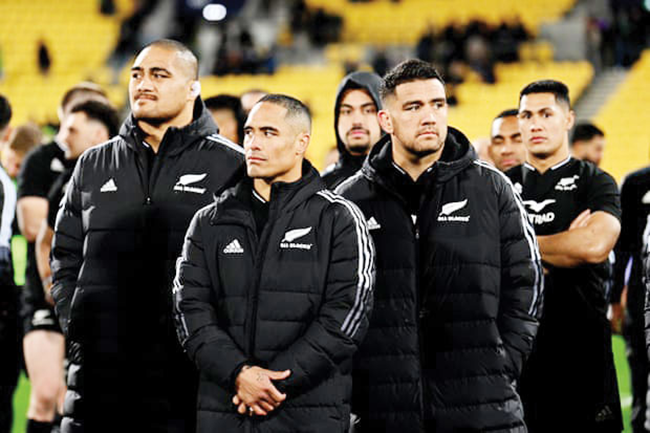
New Zealand rugby’s tipping point appears nigh. Alarmist? Maybe. Yet as the fissures deepen while the All Blacks embark on a defining South African tour, New Zealand grows increasingly impatient for signs of resuscitation of its revered rugby tradition.Two weeks ago the All Blacks ignited mass venting after losing against Ireland in Wellington – a result that consigned Ian Foster’s widely derided All Blacks to their first home series defeat in 27 years, their first ever against the Irish, and their fourth defeat in five Tests.
Cue outrage. Such a sharp plateau cuts through New Zealand’s societal and political divides to form unified condemnation.Six days of silence followed as the All Blacks and New Zealand Rugby held high-powered meetings behind closed doors. The information vacuum sparked wild speculation, with calls for everyone from the coach to the captain to be sacked.Ian Foster, the coach has survived, for now at least, despite a 66.7% win record which ranks him the worst All Blacks coach in the professional era.
In a defiant, emotional address last week Foster attempted to counterpunch the mounting red mist. Yet only by delivering an immediate transformation in two brutal Tests on the South African highveld can he secure his future.Casualties have emerged in the form of All Blacks forwards coach John Plumtree and attack mentor Brad Mooar – both shown the door a matter of months after re-signing through to the 2023 World Cup.Sacking coaches mid-tenure is a cut-throat notion far more aligned to European football than uber-conservative New Zealand rugby, reflecting the relentless public pressure and sustained demand for change.
While rugby’s rankings require Pythagoras’s theorem to fathom, the All Blacks dropping to fourth for the first time aptly depicts their struggles.For the vocal disaffected, the circumstances surrounding Foster’s accession to the All Blacks throne – on the continuity ticket after eight years as Steve Hansen’s assistant – and the team’s subsequent malaise, create one clear cause for the demise.A challenging Covid landscape has been unkind to Foster’s troubled tenure, but the now-evident erosion of the All Blacks, and that of their fear factor, can be traced back to the drawn 2017 British and Irish Lions series and the crushing World Cup semi-final defeat to England two years later.
Like climate change deniers, many New Zealand rugby fans refuse to accept a changing of the guard is possible or that deeper issues than the coach are at play.While New Zealand rugby boasts a legacy of success, the unrealistic expectations that the All Blacks win every Test were ingrained by the dominance of the near untouchable 2012-2016 team that lost twice in five years.
The All Blacks of that time mount a compelling argument for New Zealand’s best-ever team. Only now, in times of extreme frustration and calls for coaching cleanouts, are their feats truly appreciated. Their like will probably never be seen again.Further coaching changes may help improve the All Blacks’ fortunes, but that theory is too dismissive of the northern nations’ significant improvement since 2015, with France and Ireland now leading the charge.The gap at the top has closed – and there is every reason to believe it will stay that way.
From a New Zealand perspective, a total reset could be required. Projected quick fix solutions such as ushering in six-time Super Rugby-winning Crusaders coach Scott Robertson may not provide an instant cure.Written off and under siege as they confront rugby’s toughest assignment, the All Blacks could silence their doubters by pulling off upset victories against the world champion Springboks in the coming weeks.But even in that utopian scenario, New Zealand rugby’s deeper issues will not be addressed. Scratch the surface and a litany of challenges emerge.
This week Hansen launched a scathing attack that placed responsibility for a series of failures squarely at the New Zealand Rugby board’s feet, saying the relationship between the board and players was “probably the worst it’s ever been”.
Other issues include the number of teenage boys playing rugby falling at alarming rates for the past eight years – down 17% to 2018, at a time when basketball’s popularity grew 41%. This can partly be attributed to the professionalisation of schoolboy rugby, and the lack of focus on those below the elite first XVs. In Auckland alone the number of secondary school rugby teams fell from 225 to 181 between 2013 and 2018.
The decimated grassroots scene, where many clubs have folded and amalgamated, continues to have a profound effect on participation and engagement, too, while crowds and ratings for the elite game are declining.New Zealand’s talent development, particularly that of the once dominant under-20s team, has declined since 2017, before a sudden revival this season.
In the professional realm this year’s remodelled 12-team Super Rugby competition exposed a dearth of contrasting, confrontational styles. The absence of South Africa and, to a lesser extent, Argentina, leave largely homogenised contests that do not best prepare New Zealand’s players for the combative, suffocating Test arena. And while the recently signed $200m deal with US private investment firm Silver Lake offers financial security, the potential long-term pressure points of that arrangement remain unclear.As Blues coach Leon MacDonald noted earlier this year dwindling depth is another pressing concern. From America’s Major League Rugby to Japan and Europe, New Zealand’s stocks remain among the most popular to pillage.
“It is an issue,” MacDonald said. “The depth of our players is getting less and less and less. That’s something we’ve noticed it’s becoming harder and harder for us to find the players we need.”
A golden All Blacks era masked creaks that have evolved into cracks. But as the treasured pyramid head now threatens to topple, the Shaky Isles rumbles on the precipice of a reckoning with their national game.



A total of 146 players will be competing for 27 available slots in the WPL 2027 mini auction on October 28 in Kochi. Of these, England batter Sophia Dunkley and Australia captain Sophie Molineux are the only two players who have listed themselves at the maximum base price of INR 50 lakh.
The auction pool has 119 Indian players, including 22 capped and 97 uncapped players, with 20 slots available for Indian players. The overseas pool has 27 players – 14 capped and 13 uncapped – including six from Associate teams, with seven slots available.
G Kamalini (released by Mumbai Indians), Kiran Navigre (released by U P Warriorz), Heather Graham and Jess Jonassen have registered at the second-highest base price of INR 40 lakh, while a total of 30 players have registered at INR 30 lakh.
Among the notable absentees are West Indies allrounder Deandra Dottin, who was released by UPW, and Australia legspinner Alana King, who was released by Delhi Capitals. Lizelle Lee, who was DC’s highest run-scorer last season, has also not listed herself after being released by the franchise.
What the teams look like going into the auction
Only two English players – Dunkley and Kira Chathli (INR 10 lakh) – have registered for the auction, with several others, including Danni Wyatt-Hodge, Alice Capsey, Dani Gibson, Lauren Filer and Linsey Smith opting to skip the WPL next year.
Cricinfo has learned that England are likely to play three T20Is in Sri Lanka in early February, which will clash with the final week of the WPL. While the ECB is likely to allow players to stay in India to complete the tournament, most players have instead chosen to prioritise their international commitments ahead of the Champions Trophy later that month.
The relatively low salaries on offer at the WPL are also understood to be a factor in many English players deciding not to register, with most internationals earning significantly more to play in the Hundred (up to £190,000 last year) than the highest permitted base price in the WPL of INR 50 lakh (£40,000 approx).
Molineux was part of the Royal Challengers Bengaluru [RCB] title-winning squad in 2024, and had bagged 12 wickets in ten games at an economy rate of 7.31. She was retained by RCB for the 2025 season but a knee injury ruled her out of the season. Dunkley, meanwhile, played for Gujarat Giants [GT] in 2023 before opting not to register for the 2024 season. She went unsold in the 2025 auction.
Among the premier internationals who have listed themselves for INR 30 lakh are Australia allrounder Grace Harris (released by RCB), Sri Lanka captain Chamari Athapaththu, South Africa left-arm spinner Nonkululeko Mlaba and South Africa allrounder Chloe Tryon.
UPW, who released nine players, will go into the auction with the biggest purse of INR 3.75 crore.
[Cricinfo]

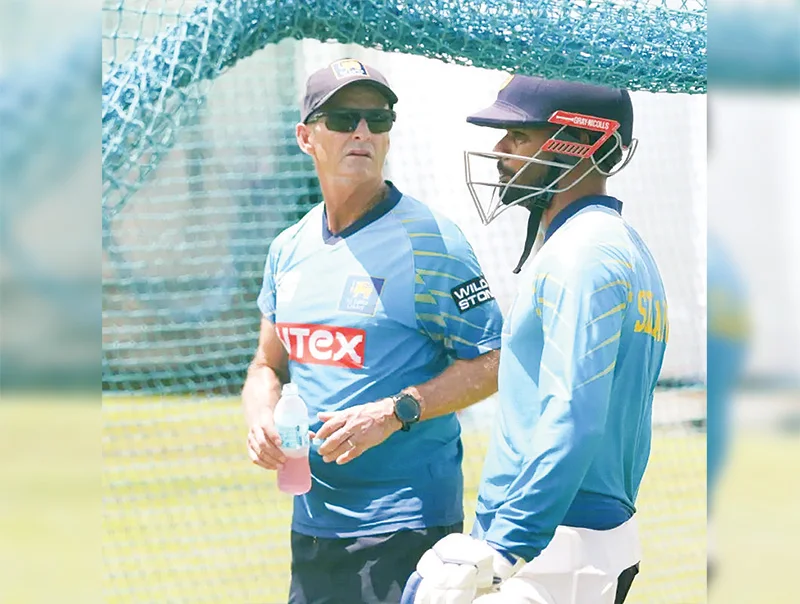
by Rex Clementine
The curtain raiser of the tri-nation series in Pakistan went down to the wire and although Sri Lanka were into their tail, hopes of pulling off an unlikely victory remained alive as Dasun Shanaka threatened to produce something special on his return to ODI cricket.
Finding the boundary with remarkable ease, Shanaka had raced to 28 off just 18 balls when he gave charge to Pakistan captain Shaheen Afridi, only to perish in his attempt to clear the ropes. As the wicket fell, Head Coach Gary Kirsten made no attempt to conceal his frustration. His disappointment was there for all to see. In simple terms, he was pleading with his senior most player to use his head.
Afridi was bowling his final over. Had Shanaka resisted the temptation to take him on and simply seen him off, Sri Lanka would have been in a far better position.
Kirsten is a good man. Beyond coaching the team, he has made a genuine effort to instil the values that earned him enormous respect from team mates and opponents alike during his playing days.
Watching his side squander one golden opportunity after another must be driving the South African up the wall. For Sri Lankan cricket fans, however, this is familiar territory. They have seen this movie far too many times and the ending rarely changes.
Kirsten is known to be meticulous in his preparation, leaving no stone unturned when it comes to homework. He would be well advised to devote some of that diligence to studying the characters in his dressing room. If he intends to learn about them the hard way, he is in for a particularly painful education.
First came the Niroshan Dickwella episode. Few would quarrel with Kirsten’s assessment that Dickwella is the finest gloveman in the country. But wicketkeeping ability was never the issue. It was the baggage and distractions that came with him. Three years ago, Sri Lankan cricket drew a line in the sand and decided enough was enough. Bringing him back was a step in the wrong direction.
The same argument applies to Dasun Shanaka. On Sunday, he returned to ODI cricket after an absence of two years and nine months. Like Dickwella, Shanaka had done precious little of significance to warrant a recall. And, as with Dickwella, his return appears to have come at the Head Coach’s insistence. He seems to be placing a lot of emphasis on experience. These are decisions Kirsten may live to regret.
Players blessed with cricketing intelligence and common sense seem to be an increasingly endangered species in our part of the world. Too many modern day cricketers are reluctant to push their boundaries, challenge themselves or venture beyond their comfort zones.
Kirsten’s efforts to reform a deeply entrenched and often incorrigible system deserve both appreciation and wholehearted support. But even the finest coach cannot make bricks without straw. He must choose his personnel wisely.
All too often in Sri Lankan cricket, coaches and selectors end up at loggerheads, each pointing the finger at the other when results go south. This time, encouragingly, there appears to be genuine cooperation. Both parties are pulling in the same direction, determined to achieve something worthwhile.
That makes it all the more important that they do their homework on the players they choose to back.
Shanaka could prove a costly gamble, just as Dickwella did. Their problems are different, of course. Shanaka is not associated with the sort of drug related controversy that engulfed Dickwella. His weakness lies elsewhere: a reluctance to accept responsibility for his own shortcomings and a tendency to look for someone else to blame.
That, too, can become an enormous distraction in a dressing room.
Kirsten has taken on the admirable challenge of changing Sri Lankan cricket’s culture. But before he can change the system, he must make sure he is backing the right people. Otherwise, the very players he hopes to reform may end up undermining the good work he has set out to do.

The staggering sums Sri Lanka Cricket (SLC) reportedly splashed out on its former President Shammi Silva have raised eyebrows among stakeholders, with revelations suggesting that the former cricket chief and several members of his Executive Committee enjoyed the high life while Sri Lankan cricket struggled to keep its head above water.
The spotlight has fallen firmly on Shammi Silva, whose expenses during his six year reign make for some eye watering reading.
During that period, SLC reportedly forked out more than Rs. 43 million on his airfares alone. As if that were not enough, Shammi Silva also claimed USD 145,000 in per diems, equivalent to more than Rs. 45 million. That takes the combined bill for air travel and daily allowances beyond Rs. 88 million.
And that is before accommodation and other expenses enter the equation. Clearly, travelling on cricket business was no exercise in austerity.
Under his watch, Sri Lankan cricket went into a tailspin. Humiliating defeats became increasingly familiar, the national team was reduced to playing qualifying tournaments to secure places at major ICC events and Sri Lanka even failed to qualify for the 2025 Champions Trophy.
But while the team’s fortunes were heading south, there was apparently no shortage of funds to keep the President travelling in style.
Sri Lankan cricket may have been struggling to make ends meet on the field, but its President seemingly had no such worries off it. The results were forgettable, the expenses unforgettable.
While the team struggled to deliver the goods, the man at the helm appeared to be living in the fast lane, spending like a drunken sailor on shore leave.
The cricket may have been economy class, but the President certainly wasn’t.

Heavy showers about 100 mm are likely at some places in the Northern, North-central, Central, Eastern, North-western and Uva provinces

Molineux, Dunkley enter WPL 2027 auction with top base price of INR 50 lakh

Ranawaka accuses govt. of using JVP cadres and police to suppress political opponents

Six killed as speeding bulker crashes into vehicles, shop in Akurana

Prof. Peiris, summoned by CIABOC, appeals for Ven. Gnanasara’s release

Tusker Agbo found safe and in good health

‘Dates have the highest sugar content to fight Coronavirus’

Sunday Island 27 December – Headlines

#SundayIsland 17th December – Headlines

Sunday Island – 28th March

Sunday Island Headlines – 21 March

Sunday Island – 21st February – Headlines
-

 Latest News7 days ago
Nissanka’s return headlines Sri Lanka’s Test squad against Pakistan
-

 News6 days ago
Sri Lanka, India caught in US-Iran ship crisis
-

 Features2 days ago
Kotahena:A Small Enclave, An Extraordinary Legacy
-
 Latest News7 days ago
Imran Khan’s PTI braces to fight federal takeover of Khyber Pakhtunkhwa
-
 News3 days ago
Asgiri Mahanayake calls for immediate release of Gnanasara Thera
-

 Latest News6 days ago
Missiles intercepted near Riyadh after Saudi coalition hits Yemen fuel depot
-
 Latest News6 days ago
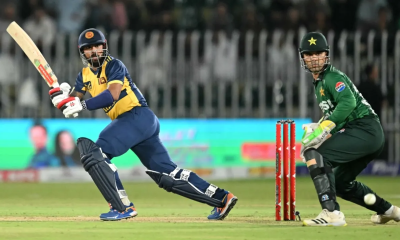
Kusal Mendis’ unbeaten 87 hands Sri Lanka consolation win
-

 Latest News7 days ago
Former Zimbabwe player and umpire Sarah Dambanevana dies aged 36