
Features
The Legacy of Sam Wijesinha on His 100th Birth Anniversary

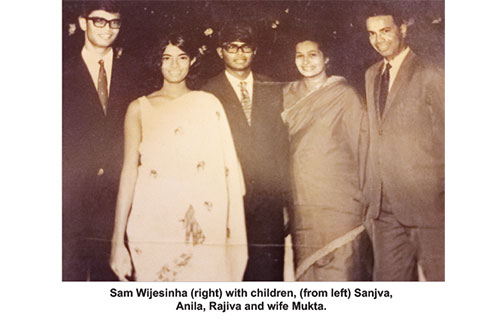
by Anila Dias Bandaranaike, Ph.D.
(nee Wijesinha),
One of the best influences in my life was my father, Sam Wijesinha. He was among the most perceptive, intelligent, humane and non-judgemental human beings I have ever known. Throughout his life, Sam used the gifts he was endowed with to help others. He passed away in 2014, at the age of 93, his mind razor sharp to the end.
Sam’s Life
Born to a privileged, land-owning family in Getamanne, Sam, the youngest of six children, had three sisters and two brothers, each sibling four years older than the next. Letters to him from his oldest nieces, demanding particular items and books to be delivered to their school hostels, conveyed how comfortable was their relationship with their young uncle.
Throughout his life, he loved children unconditionally. He was as happy giving a three-year-old a “horsey horsey” ride seated in his “haansi putuwa”, as getting a promising child from a non-elite home into a good school, or coaching a deserving student for a scholarship or job interview. Until his death, he was never lonely, because so many sought his company. His four grandchildren adored him and he, them.
My grandfather died when Sam was still a student. But my Uncle Eddie, his oldest brother, ensured that his youngest brother continued with his education. The love and esteem in which my father held Uncle Eddie touchingly conveyed his gratitude.
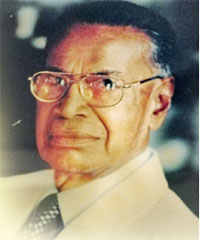 Sam brought distinction to his family and Getamanne. He went from Rahula, Matara, to Ananda and then, to St. Thomas’, Mt. Lavinia. There, he completed his school career with distinction, as a leader, team player, scholar and sportsman. He qualified as a lawyer, collected a University Degree, joined the Attorney General’s Department, collected a master’s degree in Canada, served as Secretary General of Parliament for almost 20 years and as the first Parliamentary Commissioner for Administration (Ombudsman) for 10 years. In retirement, he served several institutions until he died.
Sam never forgot his roots. Living in Colombo, he used his contacts and resources to provide opportunities for promising youth from his village to achieve their potential. He had great faith in education as a means to betterment. He was proud of the many village families whose children qualified as professionals during his lifetime. His outreach was not limited to Getamanne or relatives. He never witheld the support he could give to any promising young person, of whatever social, ethnic or religious background, whom he spotted or who came to him for help – finding schools, scholarships, jobs or funds.
Sam came from a traditional Sinhala, Buddhist family in the rural South. My mother, Mukta, came from a Christian, English-speaking family in Colombo. Her father, Cyril Wickremesinghe, was a leading Civil Servant of the time. The much loved and admired young Mukta had her pick of several eligible suitors, but she was perceptive enough to choose Sam. So, he met, wooed and married Mukta, and then lived happily ever after in her home, Lakmahal, together with Mukta’s mother Esme, until she died on June 27, 1994. My father used to say that he had a perfect relationship with his mother-in-law, until she chose to die on his birthday!
Sam’s Philosophy of Life
Mukta and Sam were global citizens, never limited by thoughts of race, religion, political affiliation, colour, social status or wealth. Their home, presided over by Esme, was open to all. Growing up in Lakmahal, my two brothers and I never knew how many or who would sit for a meal round the table –relatives, friends and friends of friends from around Sri Lanka and overseas.
It was the same with spare rooms and beds. Luckily, Lakmahal was a large house. Some stayed for days, others for months or indefinitely. A few, who lost their homes to the race riots of July 1983 and terrorists, lived at Lakmahal for years. We were privileged to engage with so many diverse people, from paupers to kings, with the same ease, because of my parents’ generosity of spirit and philosophy of life.
When my mother died in 1997, Sam was shattered. Yet, he pulled himself together to live a productive life for another 17 years, helping more people along the way. There was never a moment when he did not miss her, but he soldiered on, fiercely independent, doing things “My Way”.
Years after his death, from letters he kept, we keep learning even more of his unfailing kindness – of how, as a student, he had helped his friend’s widowed mother pay rent; of his support for a great love affair; of his room as a haven to which troubled souls came for solace.
Lesson on Harmony
: Mukta and Sam taught by example, that the richness of our culture is unity in diversity. My parents readily agreed to host weddings of relatives, friends and neighbours – Sinhala, Tamil, Buddhist, Hindu, Muslim and Christian at Lakmahal. My father believed that ethnic tensions could be eased if citizens could talk with each other, by learning all three languages in schools. He gave his three children Tamil lessons.
Sam and Mukta donated school prizes for excellence in Tamil for Sinhalese children and Sinhala for Tamil children. As Secretary General of Parliament, he had approached Badiuddin Mahmud, Minister of Education in the 1970s, and asked “Why don’t you have a policy to teach Sinhala children Tamil and Tamil children Sinhala in all schools?” If the Minister had listened to my father, perhaps we could have avoided decades of ethnic strife.
Lessons from Parliament
: My father would tell us that very few MPs used the Parliament Library. One rare exception was Ranasinghe Premadasa. As a very junior MP, he would use the library extensively and come to Sam to learn about issues he did not understand, which my father taught gladly. Sam would also decry paper waste, as most MPs did not even read relevant material. He decided to sell Parliament waste paper and use the proceeds for an education fund for the children of Parliament staff. How happy my father was when clerical and support staff would proudly tell him of a child who had graduated from university or qualified as a professional with help from that fund.
My father supported the pension scheme for parliamentarians, thinking that it would discourage them from making money elsewhere for their retirement. He also believed that improving the calibre of the country’s legislators through better education would help the country. He therefore recommended that being a member of Parliament be recognised as an eligibility criterion to enter Law College. Mahinda Rajapaksa was a beneficiary of this policy. Judging from the allegations against our present-day parliamentarians, it appears that on both counts my father’s logic failed.
Having dealt with parliamentarians under several governments, my father believed that those who lost power needed friends more than those in power. So, when Sirima Bandaranaike lost her civic rights in a dubious manner under the J.R. Jayewardene government, and could not contest elections for years, Sam always found time to visit her. Today, we see those in power isolated from reality by many false “friends” and those without power with no friends.
Lessons from Relationships
: My father moved closely with many political leaders. Ranil Wickremesinghe was his nephew by marriage. Sam knew D.A. Rajapaksa and his family very well. Even as President, Mahinda Rajapaksa would visit my father unannounced, late evening with no entourage, climb upstairs and chat in my father’s bedroom. I was at the Central Bank when he was President.
Once, I visited Lakmahal after work and ranted to my father about a ludicrous policy decision saying, “Tell Mahinda ….!”. My father waited until I finished and said to me calmly, “I never give advice unless I am asked. What if I give him advice and he does not take it? Where would that leave us both?” He never gave unsolicited advice to my cousin Ranil either.
It was only later, that I understood the wisdom of his answer. If you give unsolicited advice to someone who is close to you and they do not take it, they know that they can never ask you for advice again and you know that you can never give them advice again. His wisdom left his door open.
Legacy
On his 100th birth anniversary, I think of how my father used his advantages of birth and brains to help others. I reflect on the legacy of tolerance, kindness, humanity, professionalism and able leadership that he left behind. I see the paucity of those characteristics today and how far humanity has fallen. Perhaps, Sam is sitting somewhere, wondering what else he could have done to make things better on this, his 100th birth anniversary.

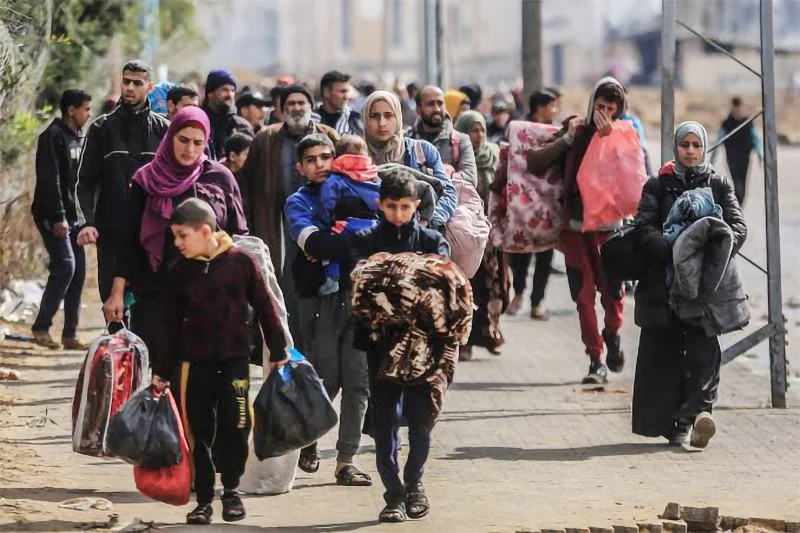
 Despite some sections of the Trump administration persisting with the view that the possibility could not be entirely ruled out of there being a diplomatic solution to the current US-Iran hostilities in West Asia, the skeptic could not be blamed for thinking otherwise. The intensity, scale and frequency of the tit-for-tat strikes by the antagonists over the past few days against selected military targets and civilian infrastructure in particular in West Asia make the adoption of this stance excusable.
The continuing hostilities render the mentioning of the MOU signed between the warring parties in mid-June a laughable matter. While it could very well be that the foes are wishing privately for a cessation of hostilities before long, what seems to be uppermost on their minds right now is to negotiate with each other from a position of strength. This strategy compels them to incapacitate each other militarily to the extent possible, lest they have to concede too much to each other during negotiations. Hence the stepped-up hostilities.
However, even on the question of there being a negotiated political settlement in the West Asian theatre in the longer term, the skeptic could come to be seen as scoring over the optimist. Developments on the ground account for this.
At the time of writing Israel’s Netanyahu government is going ahead in fairly care-free fashion with the establishment of more Jewish settlements in the Gaza and the West Bank, and it’s all happening under the apparently complacent gaze of the US. In fact, some quarters estimate that Israel is in control of some 65% of the Gaza Strip. Ethnic cleansing, that is, is being drastically stepped-up.
Accordingly, in terms of the power relations of West Asia, the world is almost back to the status quo of the late forties of the last century when the state of Israel was established and the Palestinians were reduced to a microscopic minority in the land they came to inhabit. Therefore, even the impartial observer would be compelled to ask: ‘Will a negotiated peace be ever possible in the Middle East?’
The humanist in the observer would prefer to answer this question in the affirmative and it is indeed the ideal stance to adopt considering the staggering human and material costs of the conflict. But the way ahead to peace could be expected to be highly hazardous and arduous. Among other odds, it would also prove an uphill endeavour to win minds and hearts.
The US’ Trump administration would need to be counted out in this pursuit. This is on account of the fact that it has been far too wayward in its management of West Asian affairs in particular over the past couple of years. Given its unpredictable character it is a matter for conjecture whether it could be counted on to live up to its commitments.
Moreover, Israel could be expected to ‘go it alone’ in the Middle East regardless of whether US help is coming or otherwise. It has indicated as much in recent times and Israel could be doubted on this score only at the doubter’s peril. Because time and again Israel has demonstrated that it could steadfastly defend its interests even single-handedly in the Middle East. History bears this out.
However, a durable alliance with the US would stand Israel in good stead. On the matter of military and intelligence assistance, for example, the US’s help proved invaluable for Israel in the past and going forward this is bound to be so as well. Moreover, it is unlikely that the Trump administration would give up on Israel, considering that a strong Israel is crucial for the furtherance of the US’ strategic and economic interests in West Asia.
But whether the above factors would have a considerable bearing on the question of working out a durable solution to the West Asian tangle is an entirely different matter. Israel, as in the case of the Palestinian enclaves, is acutely security conscious and would need to satisfy itself fully that it could live in a security environment that would guarantee its complete safety, going forward.
The Middle East is badly in need of another peace effort on the lines of the Oslo Accords of the mid-nineties that brought the key actors together and helped hammer out a solution that addressed some of their notable concerns. To be sure, that process did not prove to be the ideal answer to the tangle, but it yielded some respite to the region and drove home that one-time sworn foes could indeed negotiate with a degree of success. The West Bank authority, although falling short of fulfilling some key Palestinian aspirations, is testimony that a degree of success is possible if the intent is right.
Given the current realities of West Asia, peace-making is bound to be an uphill challenge. The violence faced in recent times by the Palestinian community, in particular, has been nothing less than mind-numbing. Merciless has been the violence visited on them by the Israeli side. In such circumstances, durable peace in the region could smack of an idealist’s dream.
Nevertheless, there needs to be urgently, a meeting of minds over the divides. The US would need to be counted out as an honest broker in bringing the sides together but the rest of the West would do well to step up to the challenge.
In this exercise the onus would be on the world’s democracies to take the initiative and doggedly stay the course. An acceptable combination would be the EU and the UN. Given their credentials, the main sides in West Asia ought to find them the least controversial.
Even if the relevant institutional and political arrangements could be shored up to take a reconciliation process forward, winning hearts and minds for the peace drive would prove a grueling challenge. Over the past few years in particular tens of thousands of hearts and minds on both sides of the divide have been bruised badly in the runaway murderous violence that has come to define the Middle East.
These badly scarred personalities would need to experience healing without much delay. It is therefore a multi-faceted challenge that is at hand. Since wide-ranging expertise would be needed in the healing process, people’s participation in peace-making, ranging over the divides, would need to be made a durable reality. It will be a time for enthroning humanity and ensuring the rejection of all forms of violence and coercion.
 For many Sri Lankans, Thailand is the go-to holiday — beaches, temples, food, and that famous warm hospitality.
In fact, I’ve been to Amazing Thailand 24 times myself, and was honoured with the Friends of Thailand International Media Award by the Tourism Authority of Thailand for promoting Thai tourism.
The good news I have for you today is that you don’t even need a passport to get a taste of Amazing Thailand.
The Royal Thai Embassy, in Colombo, is bringing a vibrant slice of Thailand, to the city of Colombo, with Thai Festival 2026 — a cultural experience like never before.
Whether you are an avid enthusiast of Thai culture, a total novice, or simply just interested in exploring foreign cultures, Thai Festival 2026 is going to be the perfect opportunity for you to get more than just a glimpse into one of the most celebrated cultural heritages in South East Asia. And ENTRANCE IS FREE.
The festival will be held on the 1st and 2nd of August, 2026, at Siam Nivasa, 43, C.W.W. Kannangara Mawatha, Colombo 7, and the East Parking Area, of the Colombo Municipal Council, from 11:00am to 5:00pm.
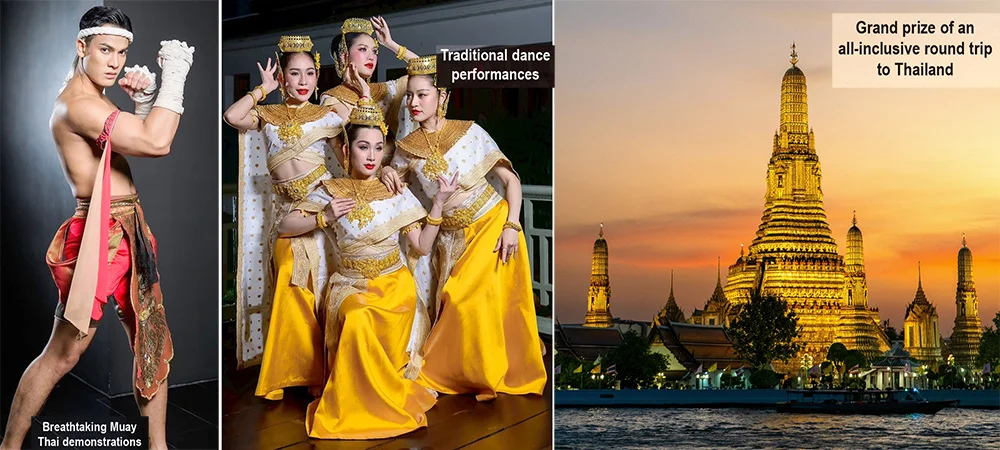
Both days will be full of live entertainment, and dispersed throughout with Thai cultural displays, including exhilarating traditional dance performances and breathtaking Muay Thai demonstrations.
Exploring art and craft specific to Thailand, tasting irresistible authentic Thai cuisine, and playing arcade games, are just a few more fun-filled events available for visitors at the festival premises.
An array of Thai products will also be available for purchase.
While at the festival, you will find Sri Lankan Alumni from Thai universities sharing their experiences with you and willing to answer any questions you might have, related to studying abroad in Thailand.
You can also register for the Muay Thai workshop that will be happening on the 7th and 8th of August, 2026, in Colombo.

Irresistible authentic Thai cuisine
Visitors can also stand a chance to win traditional Thai souvenirs, get exclusive photo opportunities, and, the big one — to enter the raffle draw, at the end of each day, for the grand prize of an all-inclusive round trip to Thailand.
Be sure to avail yourself of this exceptional opportunity and add a cultural spin to your weekend.
To keep up with the latest updates on Thai Festival 2026, head over to the Thai Festival official social media pages.
The Royal Thai Embassy in Colombo official webpage:
https://colombo.thaiembassy.org
Official social media:
Facebook: @RTEColombo
Instagram: @thaiembassysrilanka
Thai Festival official social media:
Facebook: Thai Festival in Colombo
Instagram: @thaifestival_colombo
TikTok: @thaifestival.incolombo
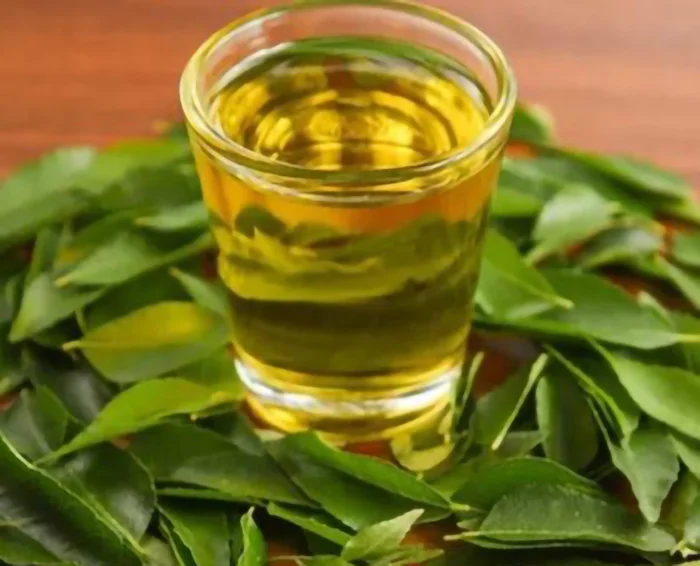
 Hair fall, in this heat, can be so frustrating, and noticing a thin patch is even more worrying. The good news is … yes, with a little care and kitchen ingredients, you can nourish your scalp and support healthy regrowth.
Try these four easy home remedies … even our grandmothers trusted:
* Coconut Oil and Curry Leaves Tonic:
Warm 04 tablespoons of coconut oil, with a handful of curry leaves, till the leaves turn black. Cool, strain, and massage into scalp 02-03 times a week. Leave for 01 hour, or overnight.
Why:
Coconut oil deeply nourishes, while curry leaves help strengthen roots and add shine.
* Onion Juice for Spot Treatment:
With cotton, dab the juice of 01 small onion, directly on the thin/bald patches. Leave for 20-30 minutes, and then wash with a mild shampoo. Use twice a week.
Why:
Rich in sulfur, onion juice helps boost blood circulation to the scalp.
* Aloe Vera and Castor Oil Mask:
Mix 02 tablespoons of fresh aloe vera gel and 01 tablespoon castor oil and apply to the scalp, focusing on thinning areas. Leave for 45 minutes, and then rinse with cool water.
Why:
Aloe vera soothes the scalp, while castor oil coats hair to make it look thicker.
* Fenugreek and Curd Strengthening Pack:
You will need 02 tablespoons fenugreek seeds, soaked overnight, and 02 tablespoons plain curd.
Grind to a paste, apply to scalp for 30 minutes, and then wash.
Why:
Fenugreek strengthens strands and reduces breakage.
Extra Tips for Healthy Hair:
Avoid tight hairstyles that pull on the scalp.
Eat iron and protein rich foods: greens, dhal, eggs, fish.
Use lukewarm water, not hot.
Be gentle when brushing and drying.
Manage stress — it plays a big role in hair fall.
Important: If bald patches are growing, or there is itching/redness, please consult a dermatologist.
Home remedies support hair health, but a doctor can find the exact cause.
Remember, healthy hair starts with a healthy, happy you.

Dambulla Sixers hand Galle Gallants first defeat in LPL 2026

Jaffna Kings beat Colombo Kaps by five runs

Showers will occur in the Western and North-western provinces and Galle, Batticaloa, Ampara and Monaragala districts

United Opposition moves to halt interference with judicial independence

PM labels seven Presidential Houses white elephants ; govt. to make them commercially viable

Gen. Sallay’s writ application against arrest: PC questions validity of Moulana’s statement

‘Dates have the highest sugar content to fight Coronavirus’

Sunday Island 27 December – Headlines

#SundayIsland 17th December – Headlines

Sunday Island – 28th March

Sunday Island Headlines – 21 March

Sunday Island – 21st February – Headlines
-
 Features4 days ago
Two memorable excerpts from a former SLAF commander’s memoir
-
 Business4 days ago
‘Giving up was never an option’: The fisherman who fought back after losing millions in SL
-
 Latest News5 days ago
Davis cup Asia/Oceania Group IV 2026 to be held in Colombo from 20th to 25th July
-
 Features4 days ago
Erdoğan’s New Republic
-
 Life style4 days ago
Taste of the Swiss Alps comes to Colombo
-
 News5 days ago
Evidence recorded in money laundering case against Yoshitha Rajapaksa
-
 News5 days ago
Dengue outbreak gallops ahead: Infections surpasses 73,455, leaving 50 dead
-
 Midweek Review1 day ago
Three high-profile alleged suicides shaping key investigations