
Features
The Last Cocktail PartyTerry Jonklaas and the Making of Modern Ceylonese Interiors

From the Pathfinder Collection:
By Jennifer Moragoda
Made by Terry
In the 1950s and early 1960s, Terry Jonklaas was Ceylon’s most fashionable and sought-after interior designer. To own a piece of furniture “made by Terry” was to signal modern taste, affluence and social standing. Affluent families commissioned him to furnish the home of a newly married daughter; others acquired a single piece of furniture or a decorative object from his Galle Face Court showroom. Commercially astute, he offered different points of entry while preserving the exclusivity of his name, translating his personality into objects, interiors and a distinctive way of living. Yet this once-famous designer has largely disappeared from Sri Lanka’s history of modern design, even as many of his objects—and the forms he helped popularize, widely imitated from the outset—remain hidden in plain sight.
The Decorators and Furnishers, which Jonklaas headed at No. 1 Galle Face Court, became synonymous with innovative design, fine materials, exceptional workmanship and high prices. Its furniture and imported European glassware and tableware carried considerable social cachet. One grandson recalls his grandmother, whose residence Jonklaas had custom-furnished, becoming anxious whenever he and his brother did their homework at her dining table, fearing they might scratch its teak surface. In another family, a son remembered how unfamiliar Jonklaas’s designs seemed beside the traditional furniture his mother had inherited. After purchasing a modern living-room ensemble, she would proudly inform visitors that the settee on which they were about to sit was a Terry Jonklaas creation.
-
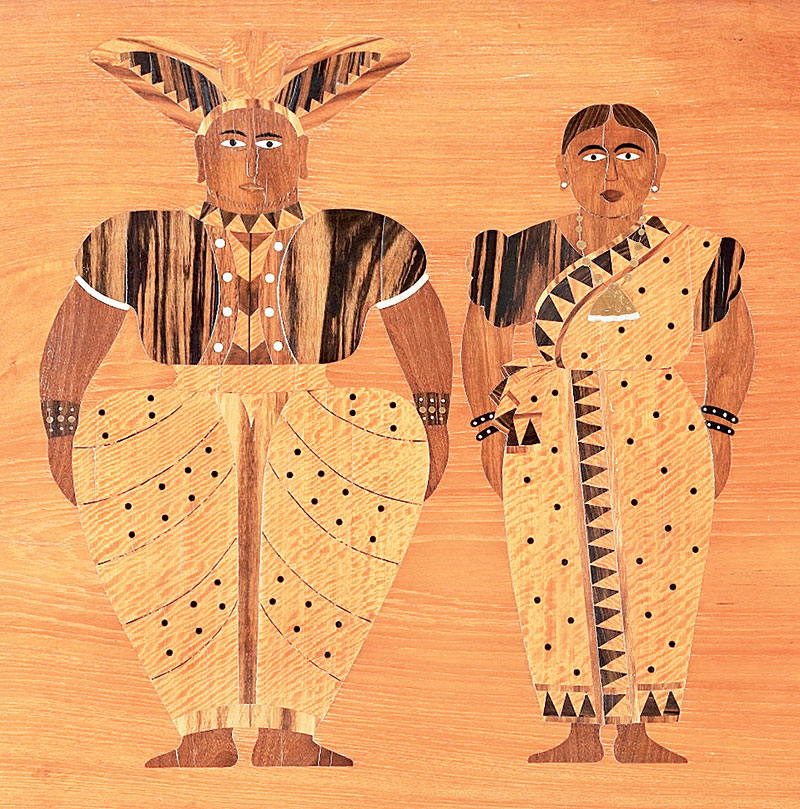
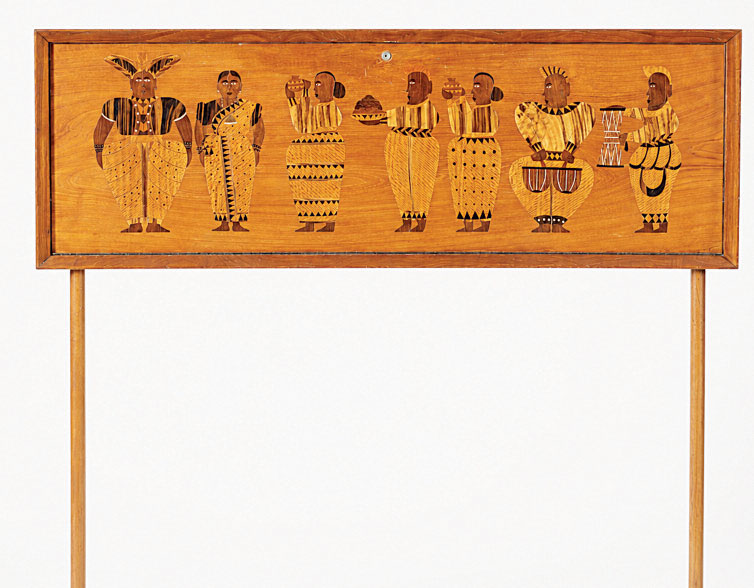
- Jonklaas bar cabinet, its figures rendered in tropical-wood marquetry. c. 1960, N. U. Jayawardena residence (Photo: Luxshmanan Nadaraja)
-

- A contemporary Kandy Road version of the butterfly chair, once known locally as the “Jonklaas chair.” (Photo: Jennifer Moragoda)
-
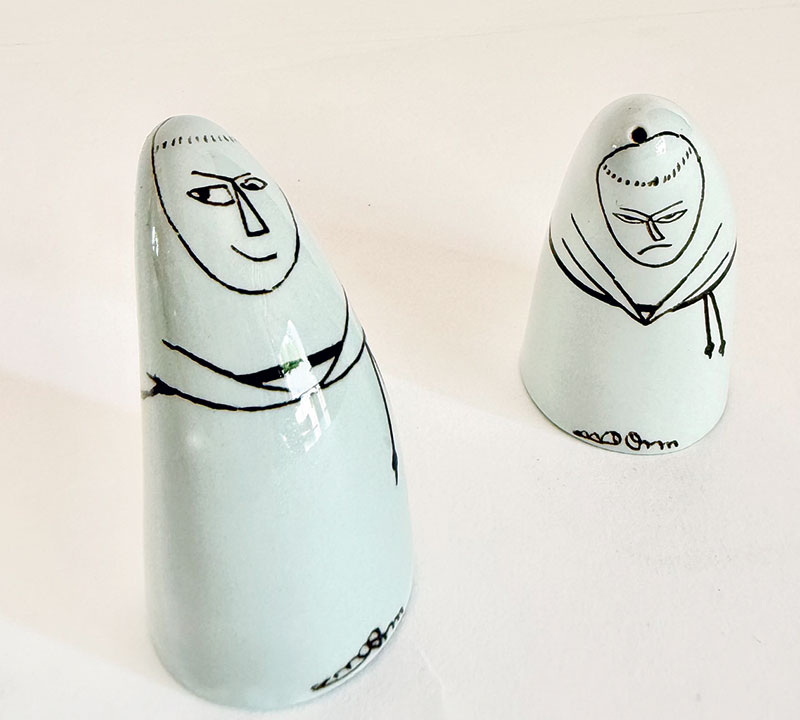
- Salt-and-pepper shakers designed by Jonklaas for the Danish company A/S Rafa and sold under the Nymølle brand. (Photo: Jennifer Moragoda)
The world he inherited
Terence Powell “Terry” Jonklaas was born in Kandy in 1919 and boarded at St. Thomas’ College, Mt. Lavinia, from the age of nine. He excelled at English, swimming and diving, though he “disliked school intensely,” calling it “a journey to another planet.” The youngest of six brothers, ten years younger than the next eldest, he developed a playful, irreverent streak.
Terry Jonklaas belonged to the tenth generation of an established Dutch Burgher family that could trace its ancestry in Ceylon to the earliest Dutch arrivals in the seventeenth century. His family had been based in Kandy for at least two generations and was firmly embedded in the colonial establishment; its members included eminent lawyers, civil servants and planters. This background matters less as genealogy than as an indication of the social position he inherited and the cultural assumptions it fostered. His secure place within this established milieu contrasts with the more hybrid identities of Minette de Silva and Geoffrey Bawa, for whom questions of cultural belonging became more explicit professional concerns.
His maternal cousin George Keyt, a founding member of the ’43 Group, was likewise raised in Kandy and was about ten years older. Between 1946 and 1949, Jonklaas was invited to exhibit with the ’43 Group as a guest artist in four exhibitions, receiving mixed but sometimes revealing notices. One critic detected “a definite bias for the macabre and a certain cynicism,” while another described his technique as “bold and carefree.”
A large oil painting by Jonklaas of a male and female nude still hangs above the bar he designed for his close friend Sir John Kotelawala at Kandawala. It may be The Lovers, listed in the catalogue of the 1946 exhibition.
The catalogue for the ’43 Group’s 1947 exhibition also contains the earliest reference so far located to The Decorators and Furnishers, listing “WOOD CARVINGS by Decorators and Furnishers.” Jonklaas later placed prominent advertisements in ’43 Group exhibition catalogues and in the catalogue for Aubrey Collette’s 1955 Faces exhibition.
After a short stint at the Times of Ceylon as a cub reporter, he joined the Ceylon Tobacco Company, which sent him to Central Java, where he remained until war appeared imminent. He later spent two years at Edwards, Reid & Begg, although the nature of his training there remains unclear.

A pleated Le Klint lampshade at Lunuganga. The Danish firm’s lighting was sold by The Decorators and Furnishers from 1957. (Photo: Jennifer Moragoda)
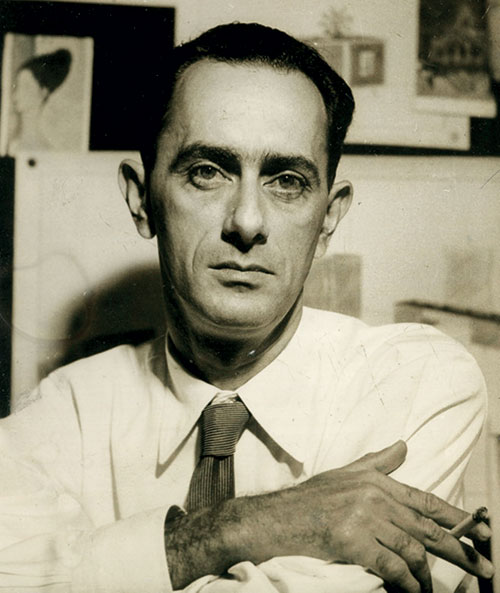
Terry Jonklaas, MBE, interior designer, at work, 1950. (Courtesy of The Observer)
By at least 1947, Jonklaas had established a considerable reputation. Thilo Hoffmann recalled that, after his marriage, he and his wife moved into their first home, a small flat in the Baurs building. It was barely furnished, apart from a few pieces designed by Jonklaas, whom Hoffmann described as “a then leading designer.” By 1951, Jonklaas had been admitted as a Member of the Society of Industrial Artists (SIA), Britain’s first professional body for designers. In 1956, aged thirty-six, he was appointed a Member of the Order of the British Empire (MBE) for his work in interior design.
The business of modern living
Jonklaas served as managing director of The Decorators and Furnishers, founded in 1947. He was its creative engine and public face—in effect, the brand itself. His partners provided the financial backing, connections and social imprimatur needed to sustain the enterprise. Sir Chittampalam Gardiner was chairman, while R. P. Senanayake, N. Sellamuttu, S. Sellamuttu, Sellamuttu Somasunderam and Kurban Adamally served as directors. Notably, the company was the only Ceylonese design firm to be a member of the Design and Industries Association of Great Britain.
Jonklaas travelled regularly to European design exhibitions, including the Milan Triennale, where he cultivated relationships, secured sole agency agreements with prestigious firms and kept abreast of new products, forms and materials.
Many remember visiting the showroom at No. 1 Galle Face Court, whose broad frontage displayed Jonklaas’s furniture alongside contemporary European lighting, glass, tableware and gifts. Modernity could be viewed through the window before it was purchased for the home. Manik de Silva recalled furniture unlike anything he had seen, while Shanth Fernando remembered a black metal vase lacquered orange inside, Clancy glass, Lalique, Steuben and Jonklaas chairs with brass-tipped legs; his mother once had one of the designer’s cane chairs copied.
For contemporary readers, Jonklaas’s influence might be compared—despite differences in period and design vision—to that of Shanth Fernando and Paradise Road. Each changed the visual culture of domestic life in Sri Lanka, making a new form of contemporary living desirable and recognizable. Jonklaas gave material form to the relaxed sociability emerging around Independence: a pre-air-conditioned world of home bars, dining rooms, verandahs and gardens, clubs, race meetings and entertaining, where growing informality coexisted with rituals of dress, status and display.
The Decorators and Furnishers became a destination for prestigious wedding gifts and introduced Ceylonese buyers to European lighting, glass, ceramics and tableware. At a time when interior design was only beginning to emerge as a distinct profession, Jonklaas designed furniture, lighting and furnishings; worked with timber, cane, metal, glass and new industrial materials such as rexine, plastics and Formica; and undertook commissions for offices, exhibitions, kitchens and entire houses. His customized pieces and recurring design flourishes were tailored to the personalities and social lives of his clients.
-

- Advertisement in the catalogue for Aubrey Collette’s 1955 Faces exhibition, with Jonklaas’s name prominently displayed. (Courtesy of Cresside Collette)
-
- Terry Jonklaas as Citizen Perrra and Aubrey Collette as Mandrake the Magician at Havelock Golf Club. (Courtesy of Cresside Collette)
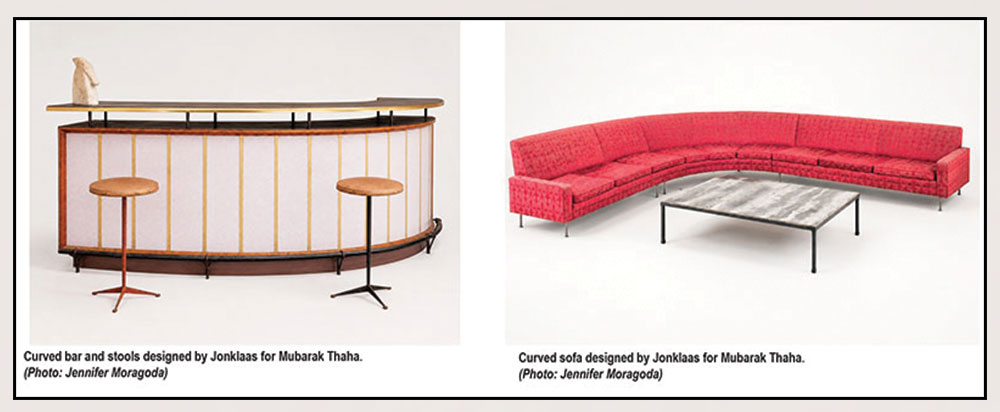
The interiors he designed for Mubarak Thaha offer a vivid example. Thaha was a well-known figure with interests in Colombo clubs and horse-race betting. The eight-foot-long bar occupied the space beneath a staircase. Nearby stood elongated swivel chairs with moulded high backs, upholstered in saffron-yellow corduroy and supported on cast-iron pedestal bases, alongside locally made interpretations of the Barcelona chair. The imposing curved bar was faced with panels of speckled Formica edged in brass; a brass foot rail ran along its base, while the countertop, raised on recessed iron supports, appeared to float above the structure. The bartender’s side was as carefully resolved as the public face, with finely finished solid-teak carpentry. As a final flourish tailored to the owner, Jonklaas designed a plaster-of-Paris horse’s head for the counter-top.
The commission shows how he combined materials, function and character to create an interior suited to the life of the room and the personality of its owner. His advertising was equally integral to the enterprise: in newspapers and exhibition catalogues, Jonklaas’s name received billing equal to that of the firm.
The Jonklaas idiom
Jonklaas’s furniture belonged confidently to international post-war modernism, part of a wider shift away from ornately carved antique furniture that evoked walauwa living and claims to pedigree, status and tradition.
He introduced a lighter, more informal sensibility in which form, proportion and material took precedence over applied ornament. Wall-mounted construction, slender recessed legs, metal stems, splayed supports, rounded corners, cantilevered tops and thin profiles made many pieces appear to float. Sideboards, cabinets, tables and upholstered furniture shed visual weight, allowing space to flow beneath and around them. Curves softened their volumes, while meticulous finishes and the grain of Burma teak, naedun, tamarind, jak, satinwood and ebony provided richness and distinction.
His work drew more strongly on an international modernist vocabulary than on recognizably traditional Ceylonese forms. Yet this break with traditional form did not mean a break with traditional skill. His designs depended upon Ceylonese carpenters, furniture makers, cane-workers, brass workers and ironsmiths, who translated modern ideas into finely finished workshop-made objects.
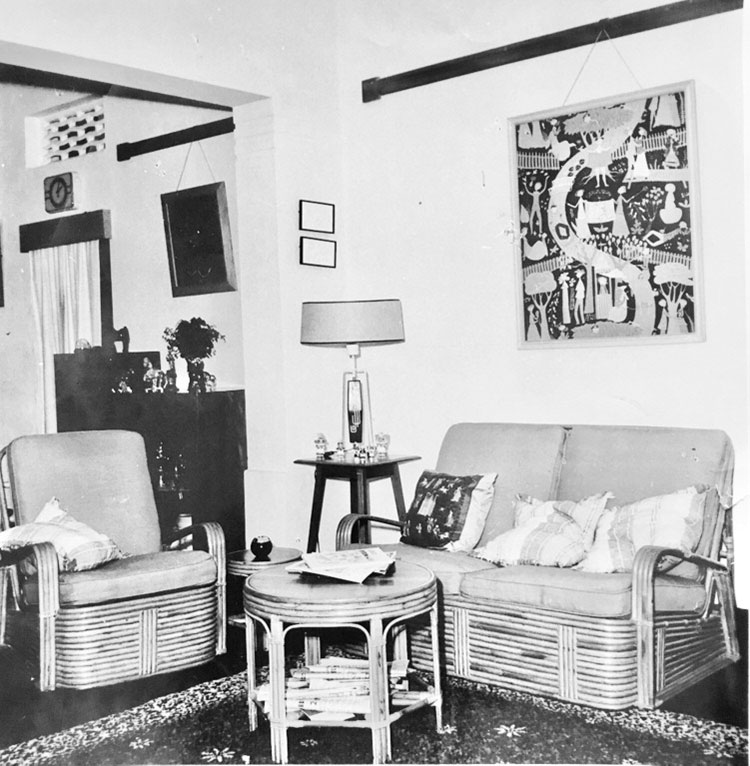
Cane ensemble designed by Jonklaas for Aubrey Collette in the 1950s. (Courtesy of Cresside Collette)
His originality lay in how he made post-war modernism his own: through combinations of local and imported materials, exceptional craftsmanship, practical ingenuity and humour. Machine-made brass-plated edging and industrial fittings became decorative details, while his trademark brass “socks,” capping conical legs, were widely copied. Formica faced bars and sideboards; coloured glass slag was used in garden lanterns; tiles enlivened table surfaces; and imported glass shades became complete lighting designs through locally made fittings.
The limitations of available materials and small workshops often encouraged invention. Jonklaas substituted cast iron for industrially produced chrome and steel, and repurposed ordinary metal washers as feet beneath splayed chair and table legs. Swivel chairs were created by mounting the seat on a central rod inserted into a hollow base.
A teak dressing cabinet designed for N. U. Jayawardena’s Cambridge Place house demonstrates Jonklaas’s fine finishes and playful ingenuity. Closed, its sleek fluted facade and elongated brass handles form a solid floating block. Opened, mirror-faced doors frame a central mirror and reveal a working surface with drawers and a concealed compartment below. The compartment revolves through 180 degrees, bringing its contents within reach before returning them neatly out of sight. A small round stool on castors can be parked beneath the cabinet. Like much of Jonklaas’s best work, it is playful and beautiful, yet governed by function and economy of space.
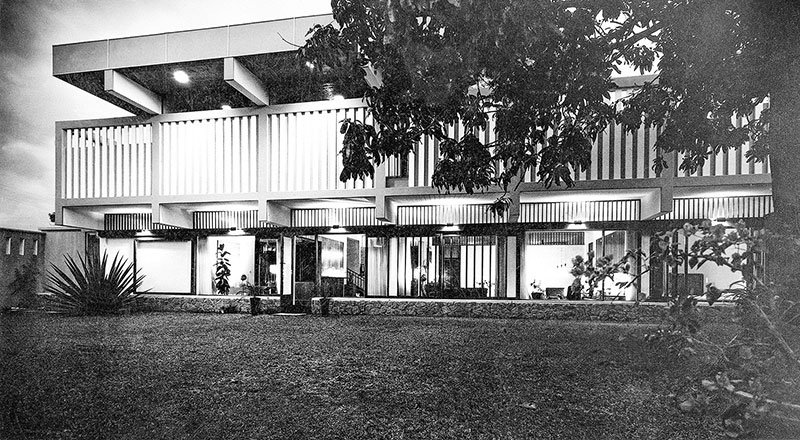
N. U. Jayawardena’s Cambridge Place house, designed by Ulrik Plesner, 1959–60. (Courtesy of Ismeth Raheem)
His irreverent, slightly perverse humour is captured in a pair of ceramic salt-and-pepper shakers from a series he designed for the Danish company A/S Rafa and sold under its Nymølle brand. Two complementary conical forms become hooded monks in cassocks, their toes peeking from beneath their robes. Their shapes allow them to be arranged in different configurations: seen in profile, they appear to proceed solemnly to Mass; only when turned to face the viewer are their true characters revealed. One hunches forward with clasped hands and a disapproving frown; the other, with shifty eyes, sniggers. The joke continues in their use: each figure must be grasped by the neck, inverted and shaken to dispense the salt or pepper.
Modernism at ease
Cane and rattan, comparatively affordable materials, offered another expression of relaxed living and entertaining. Jonklaas helped make cane furniture respectable enough to move from the verandah into the drawing room. The ensemble he designed for his friend Aubrey Collette in the 1950s is a particularly elegant example: thick bands of rattan wrap around the settee and armchairs, forming their bases in place of conventional legs.
The now-ubiquitous leather-and-cast-iron butterfly chair offers another example of Jonklaas’s role in popularizing modern designs. Sharya Scharenguivel, daughter of his client and close friend Chloé de Soysa, recalled that within their circle it was known as the “Jonklaas chair.” Created in Buenos Aires in 1938 and copied worldwide, it became associated in Sri Lanka with Geoffrey Bawa and Ulrik Plesner through published photographs of their interiors. Jonklaas’s possible role in its local circulation is less known. Today, inexpensive versions are sold along the Kandy Road, their popularity owing to their comfort and ease of fabrication.
Furniture finds its architecture
Jonklaas’s furniture found perhaps its most perfect architectural setting in N. U. Jayawardena’s Cambridge Place house, built in 1959–60. Designed by the Danish architect Ulrik Plesner, it was radically modern for Colombo: a rectilinear, strongly horizontal structure with grass-covered roof terraces at a time when pitched roofs were still the norm. The upper storey appeared almost to float above a transparent ground floor, where a broad bank of teak-framed sliding glass doors opened directly onto the garden, revealing the carefully integrated interiors.
The commission brought Jonklaas into contact with an architect who possessed an unusually intimate understanding of furniture and craftsmanship. Plesner had apprenticed in carpentry during his education in Copenhagen and was the stepson of Kaare Klint, a foundational figure in modern Danish furniture design.
During the same period, Jonklaas also designed most of the furniture ensembles for Aelian Kannangara’s residence, designed by Geoffrey Bawa. Its architecture bears striking affinities with the Cambridge Place house.
Hidden in plain sight
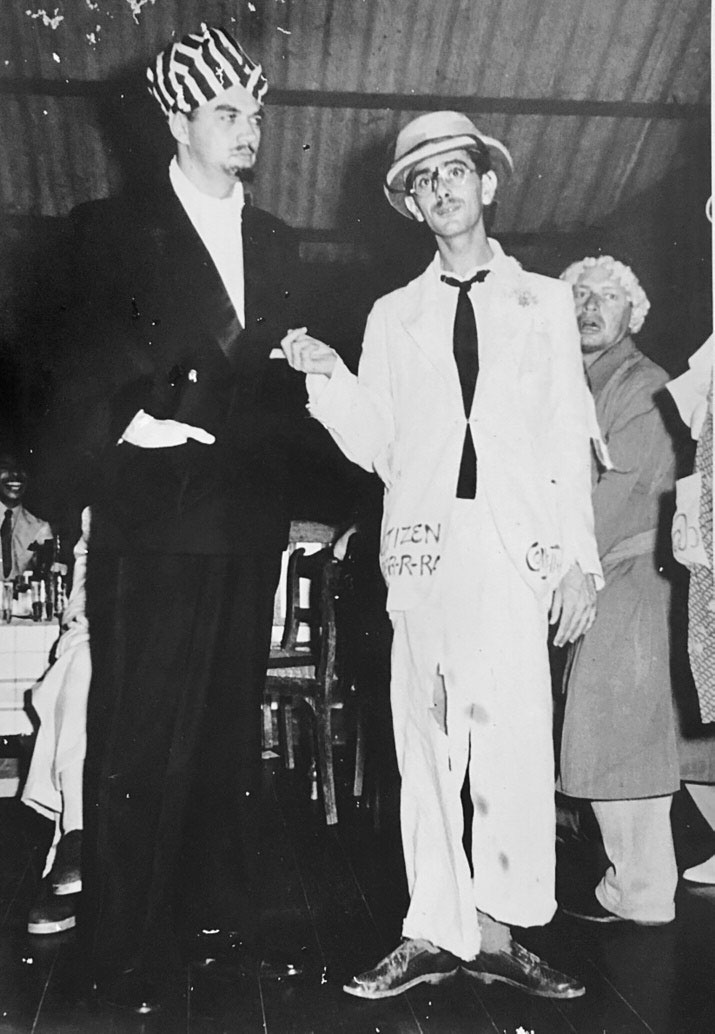
Terry Jonklaas as Citizen Perrra and Aubrey Collette as Mandrake the Magician at Havelock Golf Club. (Courtesy of Cresside Collette)
Jonklaas’s Ceylonese career lasted barely 16 years, from about 1947 to 1963. His interiors and furniture were seldom systematically documented, while ensembles in private houses were divided among descendants or dispersed through auction, often losing their provenance. Yet the simple silhouettes, teak and rattan, and relaxed informality he helped make acceptable have returned to fashion. His pieces blend seamlessly into contemporary settings even as their authorship remains largely unrecognized.
The last cocktail party
The loss of Jonklaas’s name followed the dispersal of the social world that had sustained it.
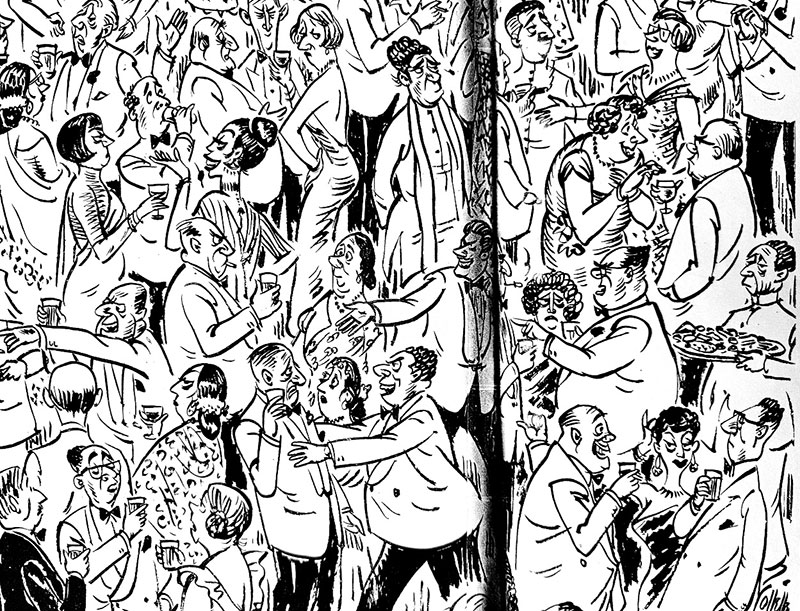
Aubrey Collette, My Very Last Cocktail Party, c. 1961. (From The Times of Ceylon)
He was remembered as gregarious, approachable and mischievous. Very tall and fair, he was an immediately recognizable presence. He bonded with clients over gardens, entertaining, travel and antique hunting, and many were or became close friends. Friends recalled his practical jokes, including an occasion when he scattered vegetables just inside the entrance gate of Cecil and Chloé de Soysa’s home; the family immediately knew who was responsible. He moved easily among prominent Burgher, Sinhalese, Tamil and Bohra families.
These networks were essential to an interior designer whose work depended upon trust and the willingness of clients to admit him into the intimate process of making a home. Access to them, however, was often restricted by class, ancestry and family standing.
One of his closest friends was Aubrey Collette, Ceylon’s best-known political cartoonist and caricaturist. In a photograph taken at a fancy-dress party, Jonklaas appears in a shabby white suit bearing the name “Citizen Perrra,” while Collette is dressed as Mandrake the Magician—both characters from Collette’s cartoons. Jonklaas’s pose captures his position within society: a carefree participant, performer and amused observer.
Collette recognized, as did many around him, that this confident social world was nearing its end. In My Very Last Cocktail Party (c. 1960), he turned Colombo’s fashionable social set into a densely packed satire: British residents and members of the Ceylonese elite mingle as jaded, self-satisfied or faintly condescending figures, while a man in national dress stands visually apart. The old order, shaped by colonial privilege and sustained by narrow networks of class, language and family, could no longer assume its permanence.
This world should not be recalled only through nostalgia. Its intimacy, ease and cultural sophistication coexisted with exclusions and inequalities long ignored by those whom the system served. Political change widened access to power and altered the composition of social and professional networks, although it did not eliminate the importance of personal connections.
Collette left Ceylon in 1961. Jonklaas followed with his family in 1963 and continued working as a designer in Australia. For them, as for many Burghers of their generation, Australia offered another future as the assumptions governing their place in Ceylon began to change.
The last cocktail party was over. The friends dispersed, the houses passed to new owners, and the carefully assembled interiors were divided and sold. The name that had once guaranteed excitement, prestige and modernity gradually faded.
Yet the objects remain: a bar cabinet with intricate marquetry, a teak table floating above an iron frame, a brass-capped leg, a revolving drawer, a cane settee or a pair of mischievous monks. Through them, Jonklaas’s interiors—and Terry Jonklaas himself, once a household name—can begin to be seen again.


 by Prof. C. A. Saliya
(The fourth instalment in a five-part series on
the business of gambling, legal and illegal)
Here’s a puzzle worth thinking about. For well over a century, Sri Lankan law has treated a village card game as a criminal offence, punishable by fine or imprisonment. In that same period, it has treated betting on horse racing as a perfectly legitimate, taxable business, one the state has actively collected revenue from for generations, under a Horse Racing Betting Ordinance older than most of the country’s other gambling law. Same basic activity, risking money on an uncertain outcome, one version illegal since 1889, the other legal the entire time.
Why? Follow the money, and the class lines, back to the colonial era. Horse racing arrived in Ceylon as a pastime of the British administrative and planter class, a “sport,” played and watched at clubs and racecourses, with betting bolted on as a respectable, even sophisticated, accompaniment. Card games played by ordinary people in villages, on the other hand, were exactly the kind of activity the same colonial authorities were eager to label a vice and criminalise. It’s the same pattern we saw with casinos in Part 2: gambling done by the wealthy tends to get called a sport, a tradition, or an investment. Gambling done by everyone else tends to get called a crime.
That history matters, but the economics of horse racing betting matter just as much, because once you understand how a bookmaker actually prices a race, you understand something that applies to almost every form of sports betting on Earth, from a Colombo racecourse to a global football sportsbook.
How a bookmaker guarantees a profit
Imagine a simple race with only two horses running, and imagine, just for the sake of the maths, that both horses genuinely have an exactly 50-50 chance of winning. A perfectly fair bookmaker, offering perfectly fair odds, would price both horses at even money: bet 100 rupees, win 100 rupees plus your stake back, on either horse.
No real bookmaker does this. Instead, they’ll price both horses slightly below their true odds, say, offering odds that imply each horse has a 55 percent chance of winning, even though the true chance is only 50 percent. Add those two implied percentages together and you get 110 percent, not 100. That extra 10 percent is called the “overround,” or sometimes the “vig” (short for vigorish), and it is the bookmaker’s guaranteed margin, built directly into the prices on the board before a single horse leaves the starting gate. It doesn’t matter which horse wins. The bookmaker’s overround wins regardless, on every single race, all day, every day.
There’s a second, subtler effect that decades of studying racing data has confirmed again and again, all over the world: bettors as a group are slightly too generous to favourites and slightly too generous to long-shots. Favourites tend to win a bit more often than their odds suggest they should, meaning betting on the favourite loses you money slightly more slowly than average over the long run, while betting on the rank outsider, the 50-to-1 shot that everyone secretly dreams will come in, loses you money considerably faster than average, because the public consistently overpays for that lottery-ticket dream. Bookmakers know this. It’s baked into their pricing, and it has a name: the favourite-longshot bias.
It’s not just horses anymore
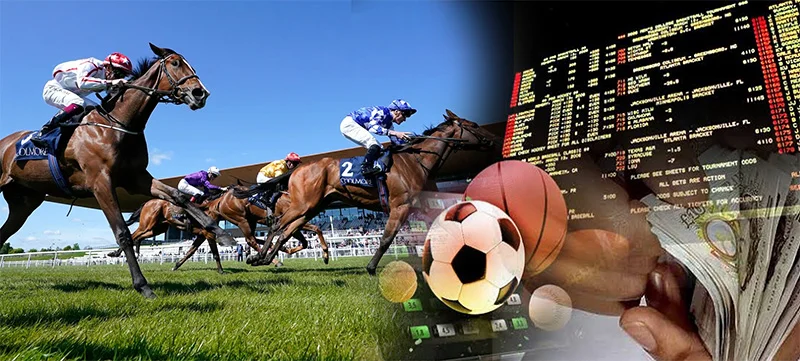
Horse racing used to be the flagship product of the entire betting industry. It still matters enormously, including here in Sri Lanka, where it remains one of the very few genuinely legal betting products, but globally, its share of the total betting market has shrunk as sports betting on football, cricket, tennis and everything else has exploded, especially since a landmark 2018 United States Supreme Court ruling opened the door to state-by-state legal sports betting across America.
The newest and, frankly, most dangerous evolution of all this is “in-play” or “live” betting, placing bets not before a match starts, but continuously, in real time, on what happens in the next five minutes: the next corner, the next wicket, the next point. Regulators studying gambling harm consistently find that in-play betting produces worse outcomes fo bettors than traditional pre-match betting, precisely because there are so many more moments to place a bet, so much less time to think between decisions, and so much more opportunity to chase a loss five minutes after you made it.
Where the skill actually is, and isn’t
 Now, a confession from this column, which has spent plenty of ink over the years analysing racecards: professional handicapping, studying trainer and jockey form, course and distance records, the draw, the going, the weight a horse is carrying, is a genuinely real skill, and it can meaningfully improve your chances of picking a winner compared to a random guess. That’s not a myth. Good handicapping works, in the narrow sense that it improves your odds of identifying the horse most likely to win any given race.
But “improving your odds of picking a winner” and “beating the house edge” are two completely different things, and this is the single most important distinction in this entire series. Even the sharpest, most statistically literate handicapper in the country is still betting into odds that already have the bookmaker’s overround baked in. Skill can narrow the gap. It essentially never closes it completely over the long run, for the simple reason that the house built the gap on purpose, and prices every race to make sure it stays open.
When the “form” is fake: Virtual meetings
One genuinely strange wrinkle worth flagging here: some betting products dress themselves up in the full costume of horse racing, trainer names, jockey silks, past form lines, even fake race commentary, while actually being nothing more than a random number generator behind the scenes, deciding the winner with no horses, no trainers, and no real race involved at all; just a computer simulation.
These “virtual racing” products exist specifically to borrow the credibility that real handicapping has earned over more than a century, and apply it to something that has no skill element whatsoever, chance and chance alone. It’s worth knowing the difference, because the two products look almost identical on a betting slip, and only one of them rewards the kind of analysis this column has always tried to teach.
Are manipulations possible?
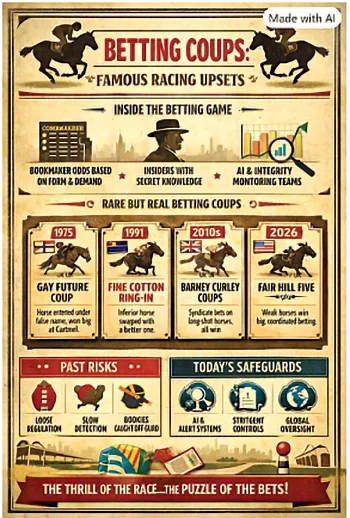
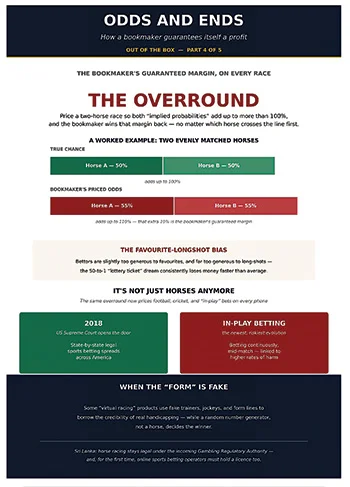 Bookmakers don’t secretly insert horses into races to beat favorites instead they simply publish odds based on form and betting demand. The real risk comes from insiders with knowledge, such as trainers or syndicates, who can exploit undervalued horses to stage betting coups. These events are rare but welldocumented, leaving a lasting mark on regulation. In the past, bookmakers were reactive, allowing coups to succeed before odds adjusted. Today, they are far more proactive, using AI systems and integrity units to detect anomalies quickly. Even so, insider coups still occur, though they are rarer and swiftly investigated. The balance has shifted: bookmakers now lose less often, but punters continue to chase “value” in overlooked horses, keeping the contest alive between house margins and human ingenuity.
Betting Coups: When the Odds Tilt
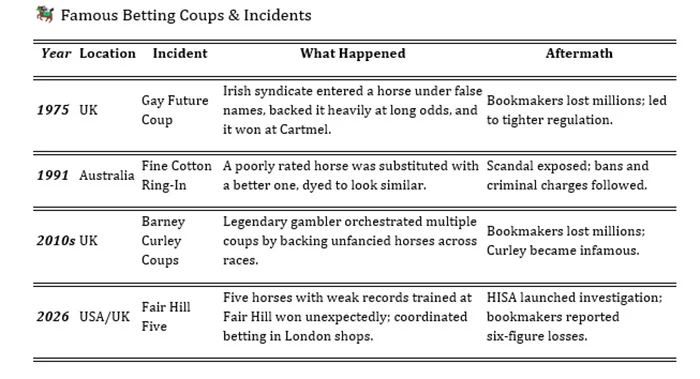
Horse racing has always carried a mystique of glamour and risk, but behind the silks and starting gates lies a business model designed to ensure bookmakers never lose. As explained earlier, the “overround”, that invisible margin built into every price, guarantees profit before the first horse even breaks stride. Yet history shows that punters, syndicates, and insiders have occasionally turned the tables, staging coups that shook the industry and exposed its vulnerabilities. Timeline of such incidents are shown in the Table.
These stories remind us that while bookmakers build their margins into every race, the human element, ambition, deception, or sheer audacity, can still disrupt the system. Today’s safeguards, from AIdriven monitoring to integrity units, make coups rarer, but not impossible. And that tension between certainty and surprise is precisely what keeps the public fascinated. Horse racing is not just about speed and stamina; it is about the eternal contest between the house edge and human ingenuity.
The road ahead for racing in Sri Lanka
Horse racing’s legal status in Sri Lanka looks set to remain intact under the new Gambling Regulatory Authority, folded alongside casinos and licensed online sports betting operators. What’s new is that offshore online platforms, which have long taken bets from Sri Lankan customers without local approval, are now—at least on paper—being brought under the same regulatory umbrella as the racecourse. Whether this shift results in genuine oversight or simply adds a licence requirement that foreign operators quietly ignore remains an open question, one to be explored in the final instalment of this series as we assess what fair, joinedup gambling regulation would truly require.
Next week:
Part 5, the final instalment, Closing the Book, on what real gambling reform would look like, and whether Sri Lanka’s new law gets us there.
(Prof. C. A. Saliya, is a charted accountant, academic, researcher and former banker. He is the author of SAMAJA GAVESHAKAYA and Springer Publication DOING SOCIAL RESEARCH. He can be contacted at saliya.ca@gmail.com. The views expressed in this article are his own and do not necessarily represent those of the organisations with which he is affiliated.)
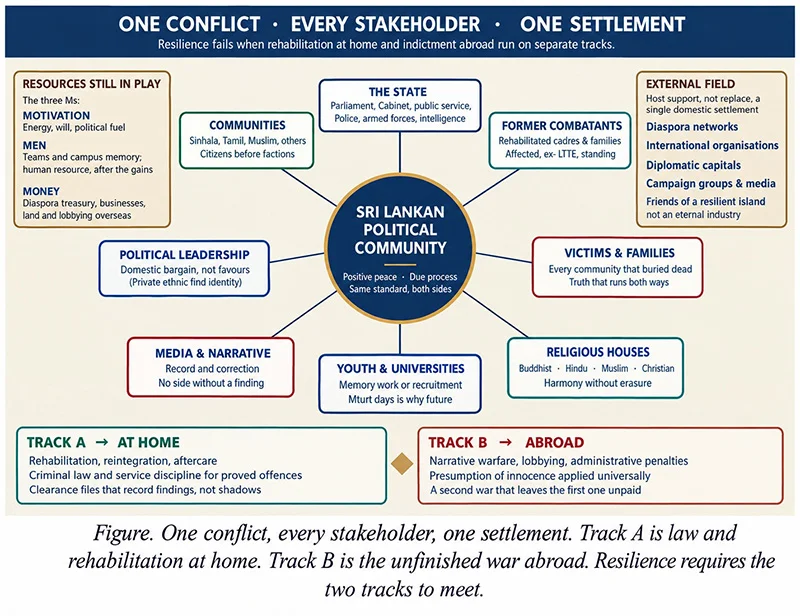
An unhealthy politics still rents the finished war — and that is why society stays divided
by Mahil Dole
Senior Superintendent of
Police (Retd.)
True national stability requires a transition this country has postponed for seventeen years: from a military victory to civic reforms that penalise divisive actors and build a unified identity. Last week showed, with unusual clarity, why that transition keeps failing. It was not a failure of slogans. It was a failure of consistency. Democracy, in the narrow sense of ballots and benches, is still standing. What is unhealthy is the use to which those ballots and benches are put. An unhealthy politics does not close a war. It rents it.
Three scenes, one week
In Chavakachcheri, President Anura Kumara Dissanayake told a housing gathering that racism would not be tolerated in any form, against Sinhalese, Tamils or Muslims, in the North, South or East. He named the old kindling: heritage sites and religious places still used to ignite tension. He spoke of houses for the displaced and a stadium for children in Jaffna. Those are the right words for a head of State. A country that meant them would be doing the unglamorous work of peace: making the next generation less useful to anyone who needs a quarrel.
In Anuradhapura, on an SLPP stage, a different performance was under way. Jaffna Member of Parliament Archchuna Ramanathan referred to himself as a “Tiger” and to the elected President as a “fox”. The name of a proscribed organisation was spoken in a town that carries the memory of the sacred-city attack. Party figures who have spent years treating any mention of the LTTE as contamination were reported to have cheered. By Monday a civil-society group styling itself the “Joint Opposition” had taken a complaint to the CID. The Police confirmed receipt. Opposition voices had already raised the alarm on Sunday.
Let the record be exact, because the rumour was not. The complaint now on the CID file is that remarks on an SLPP stage, and the cheer that met them, crossed from political insult toward promotion of a banned group. The government, for its part, has said there is no room for LTTE promotion and that remembrance of the dead is another matter. Those are two different files. Mixing them is itself a kind of politics.
A third voice belonged to the same week. Professor Savitri Goonesekere spoke with the clarity that public law, when it is still a discipline and not a campaign colour, can still produce: thoughtful, articulate, addressed to the country rather than to a faction. The speech deserves the praise it has received. The caution it invites is as important as the praise. Worthy slogans, unity, an end to racism, one law for all, are easily hijacked. They are most easily hijacked by those whose own conduct is under scrutiny, and who need the language of virtue more than they need the discipline of it. A speech of that quality raises the standard. It does not lower the duty to watch who picks the slogan up next.
What an unhealthy democracy does
People vote. Governments change. Parliament sits. That is not a failed democracy in the textbook sense. It is also not a healthy one. A healthy system converts a military victory into civic rules that bind the winners as well as the defeated, and that make division expensive. An unhealthy system keeps the war useful. It farms fear. It treats identity as a turnout machine. It issues a guarantee against racism in one district and applauds a banned name in another. That practice is not a lapse of taste. It is a structural reason society remains split.
Duplicity is the method. The same platform that built a career on the defeat of terrorism can, when the arithmetic of a rally requires it, tolerate the self-description of a Tiger. The same voices that demand a ban on LTTE propaganda can discover, the following week, that a rival’s meeting is the real offence. The same guarantee against racism can be issued in the North on one day and left unenforced in the South on the next. Two standards, again — not between Colombo and an overseas capital this time, but between the microphone and the statute book.
The LTTE remains a proscribed organisation. That is law, not a mood. Remembrance of the dead is a human act and must be protected as such. Glorification of the organisation that killed them is not remembrance. A serious State draws that line once, publishes it, and applies it without regard to who is speaking and which party owns the stage. Selective outrage is not law enforcement. It is campaigning.
The same is true of the word “racism”. No President can abolish it by declaring that he will not tolerate it. The declaration is necessary. It is not sufficient. Racism in this country has rarely been only a private vice. It has been a public business model: a way to harvest fear, postpone reform, and keep a constituency enlisted after the guns fell silent. Heritage sites and religious places become kindling because someone lights them. Universities become martyr theatres because someone books the hall. A Member of Parliament can call himself a Tiger on a southern stage because someone calculated that the cheer would be louder than the cost.
Why this divides a people
Division is not produced only by the last war and not only by those who live outside the island. It is produced, week by week, by a politics that cannot address a crowd except through Sinhala, Tamil or Muslim injury. A politics of that kind is not representing a community. It is farming one. The young, who have no memory of the last bunker, inherit the quarrel instead of a country. Serving officers watch the treatment of their predecessors and the theatre of their politicians and draw a rational conclusion about what the country values. Families who lost their own to the LTTE hear “Tiger” cheered and conclude that their dead have been repriced. Families who lost their own to the State hear a pledge against racism and wait to see whether the pledge runs south as well as north.
That is how an interval is mistaken for peace. The guns are silent. The inventory is not. “Tiger” and “traitor”, “racist” and “patriot”, remain stock in trade. So long as those words pay, in applause, in airtime, in a complaint that wounds an opponent, someone will keep them in circulation. Professor Goonesekere’s warning sits exactly there. Leadership means going beyond rhetoric. The law is not written for those who already respect it. It is written for those who violate it. When violation carries no cost, the slogan itself becomes a form of impunity.
What civic reform would actually look like
The work is unglamorous, which is why it is avoided. First, equal enforcement. If the organisation is proscribed, the prohibition travels with the speaker. An SLPP stage in Anuradhapura and a commemoration in the North are not two legal systems. The CID complaint now on the file should be treated as a test of that rule, not as a trophy for whoever lodged it.
Second, an end to ethnic first-identity as an electoral method. A civic identity, Sri Lankan first, faith and language held without being turned into a passport, will not appear by exhortation. It appears when the dividend for division falls and the dividend for competence rises.
Third, a cost for lighting kindling. Heritage sites and religious places are not campaign props. Universities are not martyr calendars. Media that carry a charge must carry the correction. Records that hold an untested allegation must not shadow a working life after the allegation has failed.
Fourth, one standard for those who served the State and those who fought it. Wrongdoers on every side belong in a court, not in a diplomatic weather system and not in a rally chant. Collective punishment of a profession is not accountability. A cheer for a banned name is not unity. A slogan against racism is not a policy until it binds the speaker’s own side.
None of this requires a new brand of commission. It requires a State that stops allowing division to be a career. South Africa’s imperfect bargain at least tried to bind both sides inside one process. Colombia wrote one jurisdiction for guerrillas, paramilitaries and State forces. We have preferred two international ledgers and a third, domestic one on which the war is rented out by the evening. Last week’s scenes, a guarantee in Chavakachcheri, a cheer in Anuradhapura, a serious speech that must not be stolen, are not opposites. They are the same unfinished settlement, spoken in three registers.
The President’s sentence should be kept, and then made expensive to break. Professor Goonesekere’s standard should be kept, and then applied to those who clap for it. Racism will not be defeated by a rally, and a proscribed organisation will not be dissolved by a complaint. They will be reduced only when the State, and the parties that live off the State, stop treating the finished war as inventory. True national stability is not the memory of a victory. It is the construction of a civic order that no longer needs that victory to be refought, in Anuradhapura or in Geneva, in order for someone to remain relevant.
The writer is a retired Senior Superintendent of Police who served in intelligence and counter-terrorism. He is the author of Security Beyond Enforcement: Practical Approaches for a Safer Nation. This column is a stand-alone extension of an earlier argument on two standards in one conflict. Views expressed are his own.

by Jehan Perera
International Peace Day was observed on 21 September. It finds Sri Lanka with a genuine achievement to record and a demanding test to meet. The UN’s theme this year was “Invest in Peace: For Everyone, Everywhere, Every Day.” It also honoured the “everyday architects of peace”—people driving local action and building a lasting peace from the ground up. In the 2026 Global Peace Index, Sri Lanka rose 30 places, from 97th to 67th among 163 countries. Over the same period, global peacefulness declined for the twelfth consecutive year to its lowest level since the index began, and South Asia suffered the sharpest regional deterioration. The test is whether the government will protect the civic space in which those architects of peace work.
Sri Lanka’s improvement is real and deserves acknowledgement. In this year’s review, issued a few weeks ago, the UN High Commissioner for Human Rights acknowledged progress in the form of action against corruption, arrests and investigations linked to political killings, enforced disappearances and the 2019 Easter Sunday attacks, and continued official denunciation of racism. A ranking, however, records conditions at a particular moment. It does not guarantee that they will last. Sustainable peace will depend on three factors. These are whether the government addresses the unresolved causes of conflict, whether it strengthens accountability for past and present abuses, and whether it protects the civic space in which peace is built from below. On the first two the record is incomplete. On the third, the draft NGO law threatens to weaken the very organisations that press for the other two.
What holds Sri Lanka back from a higher place are the same things that fed the war at home and also feed international conflict that rages elsewhere in the world. These are racism or ethnic nationalism that is narrow-focused, corruption and lawlessness. Equality, accountability and the rule of law are their remedies. The present government has committed itself to these, and is a significant improvement over governments of the recent past. But these pillars are not held up by governments alone. Peace is made in villages, workplaces and university campuses. It is made by families who insist on the truth about their disappeared, by journalists and lawyers who expose abuse, and by community organisations that bring Tamils, Muslims and Sinhalese into practical cooperation.
Unfinished Work
The UN High Commissioner’s report to the current Human Rights Council session, covering October 2025 to July 2026, shows how much remains to be done. The Prevention of Terrorism Act is still being applied, producing arbitrary arrests and long detention without charge. The report calls for a moratorium pending repeal and for the release of long-term detainees. Military-occupied land has not been released, memorialisation lacks support, and tensions over land and religious sites persist. The Batticaloa district illustrates how such problems endure. In the past three years, two Presidents, Ranil Wickremesinghe and Anura Kumara Dissanayake, have visited and instructed that the dispute over grazing land in Mailaththamadu and Mathavanai be resolved. It is a dispute between Tamil cattle farmers and outside Sinhala cultivators, and it has not been resolved. When two Presidents issue instructions and nothing changes, the fault lies in the machinery of State. An unresolved dispute does not stand still. It hardens into the next grievance.
Accountability shows the same pattern. The report documents torture and deaths in custody, and surveillance and intimidation of activists, journalists and civil society. Serious cases remain stalled for years, among them the killing of seventeen aid workers of Action Contre la Faim in Muttur two decades ago. Sharper still is the case of the Eastern University refugee camp at Vantharamoolai, where in 1990 the army took away 158 persons in a single day. They were never seen again. The camp’s officer-in-charge, Dr T. Jayasingam, later Vice Chancellor of the university, identified the officers responsible. More than three decades on, those officers have not been questioned. These cases are still remembered because families, survivors and independent witnesses have refused to let them be forgotten. Meanwhile several commissions of inquiry have completed their investigations but nothing further has happened.
What South Africa, Argentina and other post-conflict societies have found indispensable are four pillars of what is called “Transitional Justice” which are truth, accountability, reparations and non-recurrence. In Sri Lanka’s circumstances, truth means credible, independent investigation of what happened to the disappeared, and support for memorialisation. Accountability means prosecuting Muttur, Vantharamoolai and comparable cases, and removing credibly accused persons from senior office. Reparations mean compensation for victims and the return of military-held land. Non-recurrence means repealing the Prevention of Terrorism Act, releasing those held under it in the meantime, and resolving local disputes such as Mailaththamadu before delay hardens them. A country that buries its past does not escape it. The past returns in the next generation.
Civil Society
It is against this background that the draft NGO law is most troubling. The proposed legislation contains sweeping provisions for State oversight and control of civil society organisations. Among these are enforcing a licensing requirement on NGOs, which is to be renewed every three years, and severe penalties for not submitting reports on time, or for spending on emergency flood relief (for instance) when the NGOs mandate is peacebuilding (as an example) with possible sanctions including deregistration and having to shut down. Civil society groups have warned that it would confer excessive discretion over their registration and operations. Officials in Sri Lanka have abused such powers in the past. Additional power without effective checks invites further abuse. Sound regulation would have clear criteria for registration, an independent registrar and a right of appeal to the courts. What cannot be justified is a regime in which registration becomes a licence to be withheld from organisations that scrutinise policy, expose abuses or advocate for the rights of citizens.
Democracy is based on checks and balances. Those who press for accountability are part of those checks. The contradiction is plain. A government that has pledged accountability, equality and the rule of law ought not to be preparing to weaken the very organisations that press for their fulfilment. The organisations most exposed are those working on disappearances, land, memorialisation and reconciliation in the North and East, where the State’s record is weakest and the need for independent witnesses greatest. Silencing them would not remove the grievances they document. It would remove the channel through which those grievances are addressed peacefully. The government appears to be relenting, which is welcome, but a pause is not a withdrawal. The bill should be withdrawn and any replacement drafted in genuine consultation with those it would govern.
Investment in peace as called for by the UN in its International Peace Day theme implies commitment over time, with returns that come slowly. Sri Lanka’s 30-place rise on the Global Peace Index is a first dividend and nothing more. It can be built upon only if the government matches its commitments with action: withdrawing or fundamentally redrafting the NGO law, repealing or suspending the Prevention of Terrorism Act, and bringing Muttur, Vantharamoolai and Mailaththamadu to resolution. A higher place in a global index is not a certificate of success. Sri Lanka’s higher ranking is an encouraging start, but it will endure only if the space in which citizens speak, question and organise is protected. Peace is built from below, and a government that is serious about it will treat civil society as a partner rather than a threat.

Niroshan Dickwella in Sri Lanka’s T20I squad for the first time since 2021

ICC’s agenda for 2027-31: more T20Is, fewer bilateral ODIs

CIF, the world’s favorite multi-surface cleaning brand, arrives in Sri Lanka

A Joint Regional Initiative to Ensure the Digital Safety of Children

PM meets with IMF delegation

Ms. P. M. Jayadeera (Engineer) appointed Director General of Irrigation

‘Dates have the highest sugar content to fight Coronavirus’

Sunday Island 27 December – Headlines

#SundayIsland 17th December – Headlines

Sunday Island – 28th March

Sunday Island Headlines – 21 March

Sunday Island – 21st February – Headlines
-

 News7 days ago
US embassy won’t comment on IGP’s probe into joint drug raid
-

 News5 days ago
Shanakiyan urges urgent action over reported death sentence for Lankan in Saudi Arabia
-

 News6 days ago
Bid for Basil’s extradition nears final stage: Police
-

 News4 days ago
Namal Rajapaksa Buddhist gambit fails, bail denied
-

 Business7 days ago
All-new Bolero MaXX unveiled in Sri Lanka
-
 Opinion7 days ago
A journalist who wrote across the divide
-
 Features4 days ago
Why the spelling Sri Lankan names in English vary
-

 Features4 days ago
Three bands, a new identity: Sri Lankan wolf snake recognised as distinct species