
Features
The Island: ‘A Marketplace of Ideas’


by Dr. Siri Galhenage
Psychiatrist [Retired]
[sirigalhenage@gmail.com]
John Stuart Mill [1806-73], English philosopher, political economist and parliamentarian, extrapolated the concept of market competition to a theory of free speech which opposed censorship in favour of free flow of ideas. He used the phrase ‘marketplace of ideas’ as a metaphor for freedom of expression. Asserting that no one could claim ownership of the truth, he said that ideas left unchallenged will lead to dogma and authoritarianism. He claimed that free expression is the best way to separate falsehood from fact and for the advancement of truth, a valued commodity in a democracy. [On Liberty 1859]
Living in an era of social, political and economic upheaval, both nationally and internationally, there is a great demand for information and its impact on our lives. Along with the intense public interest for such information, there is an equal degree of scrutiny of its coverage by media outlets in arriving at the truth.
Judging by its readership, The Island has gained recognition as a valued medium of free expression. It is more than a news outlet. Over a period of four decades it has established itself as a marketplace of ideas offering a plurality of themes. Amongst those who use the journal as a platform for free discourse of ideas are historians, educationists, economists, scientists, administrative officers, aviators, social critics, political analysts, literary critics, environmentalists, artists, religious leaders, lawyers, engineers and medical colleagues – many of whom of high standing in the community. The list is not meant to be exhaustive. The ability of The Island to lure the above contributors is a measure of the high esteem the paper is held by the English-speaking readership.
There is a daily offering of ideas and concerns expressed through the Opinion columns, the subject matter determined by the social and political atmosphere of the day, and energised by the emotional attitude of the writer. The contributors to the Features columns, The Midweek Review and Satmag are motivated by such matters as aesthetic enthusiasm, historical impulse and political purpose; in other words, a desire to share an experience considered valuable or beautiful; to draw out an episode from the past with a view to storing it up for posterity; or to express a vision for a kind of society that we should strive for.
The editorial takes centre stage as the pace setter for the free flow of ideas. It captures the emotional tone of the nation, and supports the community in holding the government of the day to account, no matter its political persuasion or the pickle they have got into. It continues to expose corrupt practices and secret deals, decisions made without public scrutiny, resists any attempt at censorship. The editor gives voice to a range of concerns [which many of us can only ruminate on] with his distinctive turn of phrase, at times satirical and spiced up, with a local adage or a Shakespearean quote that is appealing to many a reader.
Lest I forget Jeffrey, who gives expression to the plight of the down-trodden with his caricature of the common man carrying his tattered and bottomless shopping bag. In a recent timely cartoon, he stands at the edge of a precipice, escorted by the leaders of both sides of politics, soon to be thrown into the abyss – leaving the fate of all three gentlemen to the imagination of the reader!
It is regrettable that over the past few decades there has been a decline in printed media due to the rise of the internet, the problem exacerbated by the pandemic. Digitally communicating information through social media costs less, is fast, and may be more appealing to the advertisers who bring in revenue. But there is a downside. Social media provides only a narrow range of opinions and the information provided may not always be credible; it may not cover important topics, and may be driven by pressure groups of a particular ideology. Furthermore, people may tend to adjust their online experience to suit their viewpoints. Corporate ownership is geared towards maximising profits; it lowers the quality of true journalism and community service. It does not encourage respectful discourse of ideas essential for democracy to function optimally.
The decline of literacy and its concomitant effects in our society has struck a deep vein of public feeling at the present time – the word literacy used here not only to mean the ability to read and write, but to cover the wider concept of social competence – an essential component of education.
At the heart of the poverty and emptiness of our society today lies the decline of the printed word. We have lost our romance with the written word and hence to the eclipse of aesthetic, moral and ethical sensibility, and our social conscience. It is a sad indictment on a nation that took pride in an ancient literary heritage that formed the very foundation of our civilisation. We have failed to heed the advice of the Vadan Kavi Potha: ‘elmen acuru uganivu idri veda thaka’. [Learn your letters with love, for future good].
It is my honour to pay this brief tribute to The Island on reaching its 40th birthday. The journal is a social asset. My hope is that with a wider circulation, both in printed and digital form, it will become more acquiescent to the rural folk and the young in the coming decade, but that’s only a dream in a nation that has procrastinated in rectifying the inequity in English education. A quality newspaper can play an educative role during the formative years of a child.
Sadly, at the present time, The Island has ‘slimmed down’, afflicted by the pandemic. The expectation of the loyal readership of this esteemed journal is to revitalize itself. At 40, life is still beginning! If I may end with a plea to its administration and the editor: keep the light burning and continue to pursue the Truth; darkness is fast approaching!
In the words of Leo Tolstoy, one of the great novelists of all time [if not the greatest], and a former war correspondent in the Crimean War: “the hero of my tale, whom I love with all the strength of my soul, whom I have tried to set forth in all his beauty, and who has been, is, and always will be most beautiful is – The Truth.” [Sevastopol Sketches]

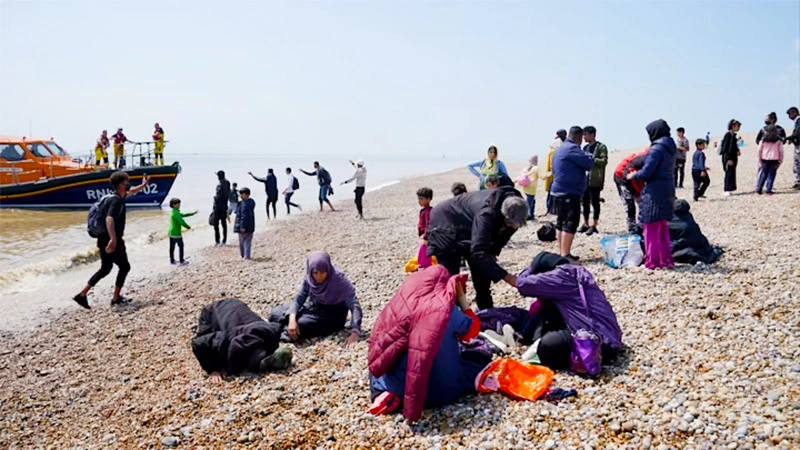
 The announcement by the US authorities of an anti-migrant stance during a recent commemoration in France of the epochal D-Day Landings of June 6, 1944, ought to strike impartial observers as a supreme irony. Whereas what should have been expected was a vibrant celebration of the beginning of the process of Western Europe freeing itself decisively from Nazi or fascist control during the crucial stages of World War Two, this was not to be.
What the world heard instead was a call to contemporary Western Europe to arm itself against a seemingly rising and threatening migrant presence in the region. In other words, the migrant must be despised and ‘shown the door’.
Instead of a commemoration that rejoiced in the flourishing of liberal democracy and its values what one got was a strong affirmation of fascism and racial chauvinism. US Defense Secretary Pete Hegseth vented his spleen against the migrant or foreigner presence in Europe reportedly thus: ‘Sadly today different European beaches are stormed by different dangerous ideologies.’ To ‘beaches in Spain and Italy and Greece and Bulgaria, boats and men arrive. When will European capitals do something about that invasion?’
While at the outbreak of World War Two it was Nazi Germany that was doing the invading and bringing some principal European countries under its suzerainty, this time around we are being given to understand that it’s migrants to the West who are seeking to colonize the latter. It goes without saying that such inflammatory rhetoric would have the deleterious effect of keeping racial tensions alive in the West and jeopardize all possibilities of the countries concerned cementing and maintaining social stability.
The Trump administration gives the impression of taking a leaf from the politically underdeveloped regions of the South to keep the US polity stable and united. In South Asia, for instance, we are not short of ambitious demagogues who use what is referred to as the ‘race card’ to gather unto themselves a following and thereby further their political fortunes. By seeking to stir and sustain anti-migrant hysteria, the Trump administration is also essentially replicating Nazi Germany’s policy of anti-Semitism. That is, fascism is very much alive in the US under President Trump.
Such efforts at churning racial hysteria at this juncture in the US should not come as a surprise. For all intents and purposes, the Trump administration is nowhere near achieving its aims in West Asia, for instance, in the short term. It has failed to bring Iran down to its knees, as it hoped to do, but is adopting the expedient of keeping the world guessing and confused on what it is doing in the region, since it cannot withdraw from the theatre in a hurry without losing face.
While perhaps working out an escape strategy the Trump administration it seems, is hoping to maintain its following at home intact and silent by playing on their racial biases and insecurities. Hence, the anti-foreigner campaign.
Simultaneously, the Trump administration will need to keep a close eye on how economic pressures on the domestic front are panning out. Anti-administration sentiments first break to the surface at meal tables. On this score, the news cannot be good because the average US family’s spending power ought to be shrinking on account of rising energy and oil prices. Consequently, it would not be a bad idea to keep the attention of the US consumer diverted by adeptly playing ‘the race card’; once again, lessons from intellectually bankrupt Southern politicians are coming in handy.
To be sure such comparisons many politicians in vibrantly democratic countries would find quite unflattering. But the stark truth is that racism cannot be tolerated in civilized societies and those politicians who resort to it risk being branded as racists of the first degree. In fact they could be seen as being on par with the likes of German dictator Adolph Hitler and his close collaborators.
However, on the question of migrant policy the Trump administration would likely be at polar opposites with the most vibrant of liberal democracies of the West. This will be the case with the UK, France and Italy for instance. The latter continue to keep their doors open to legal migrants and they are likely to view a virtual blanket ban on migrants as reprehensible.
Moreover, in the foremost democracies of the West debates are vibrantly ongoing on the need to keep racism or any hint of it completely outlawed in the public plane. There is the case of the UK, for instance, where the authorities continue to emphatically pinpoint their adherence to the principle of anti-racism in the conduct of public affairs.
One proof of the above was the parliamentary debate relating to the killing of 18-year-old Henry Nowak in Southampton. Police handling of the victim came in for sharp scrutiny by particularly the opposition in the House of Commons but there seemed to be a consensus over the main political divide that the matter should not be politicized.
Moreover, the UK authorities stressed in the House the government’s strict adherence to the policy of non-racism. It was also pointed out that British institutions set up to manage racism at the national, county and neighbourhood levels, for example, were very much intact. In fact, Sri Lanka could gain considerably by studying and implementing locally, legislation modeled on the relevant UK laws if it is in earnest when it speaks of ‘reconciliation’.
Accordingly, it is highly unlikely that Western Europe would ‘cave in’, so to speak, to US pressure on issues related to migration. The liberal democracies of Western Europe in particular would remain for the foreseeable future migrant-welcoming, multi-ethnic and plural democracies.
Nor is it likely that Western Europe would be passively receptive to US demands that it drastically increases its defense spending to meet the latter’s aims. Within the Western fold the EU is remaining committed to backing Ukraine, for instance, in its ongoing armed resistance to the Russian invasion and it is not giving any indication of being deferent to US pressure.
However, although tensions would continue to bristle within US-Western Europe relations on the above and numerous other matters of contention it would be far too premature to announce a parting of company between the two sections of the West. In that sense, the post-World War Two order remains essentially intact. There are still many things in common between the two, particular on the economic plane, that will ensure the continuance of the partnership.
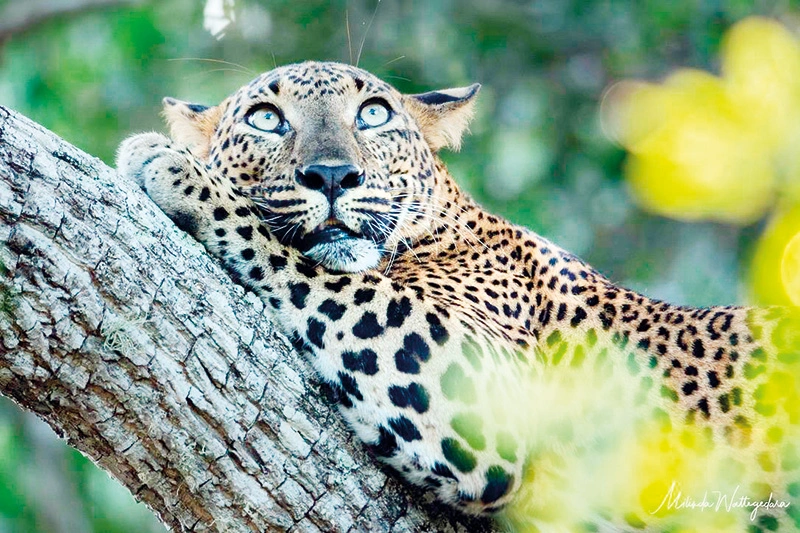
The first rays of dawn creep over the ancient rocks of Yala. The Indian Ocean glimmers in the distance, and the wilderness slowly awakens. Somewhere amid the scrub jungle, a pair of amber eyes scans the landscape.
For wildlife conservationist and leopard researcher Milinda Wattegedara, moments such as these have defined more than a decade of dedication to one of Sri Lanka’s most iconic creatures—the Sri Lankan leopard.
What began as fascination evolved into a remarkable conservation journey that has transformed the understanding of Yala’s leopard population and placed Sri Lanka firmly on the global wildlife research map.
“Long before I ever lifted a camera, leopards had already captured my imagination,” says Wattegedara. “What fascinated me was not merely their beauty but the complexity of their lives—their hunting strategies, movements, reproductive behaviour and their remarkable ability to adapt to changing environments.”
That fascination led to the birth of the Yala Leopard Diary in 2013, an ambitious long-term project dedicated to documenting individual leopards and unraveling the mysteries surrounding their lives.
For many visitors, a leopard sighting is a fleeting thrill. For Wattegedara and his team, every encounter is a chapter in an ongoing scientific story.
“Each photograph was never the end of an encounter,” he explains. “It was the beginning of deeper questions. How did a particular leopard use the landscape? How did its behaviour change with the seasons? What environmental pressures shaped its decisions?”
These questions drove years of meticulous fieldwork. Every sighting was carefully recorded with details including location, habitat, behaviour, date and time. Photographs were analysed to identify individual animals through unique spot patterns, allowing researchers to distinguish one leopard from another with remarkable accuracy.
What followed was groundbreaking.
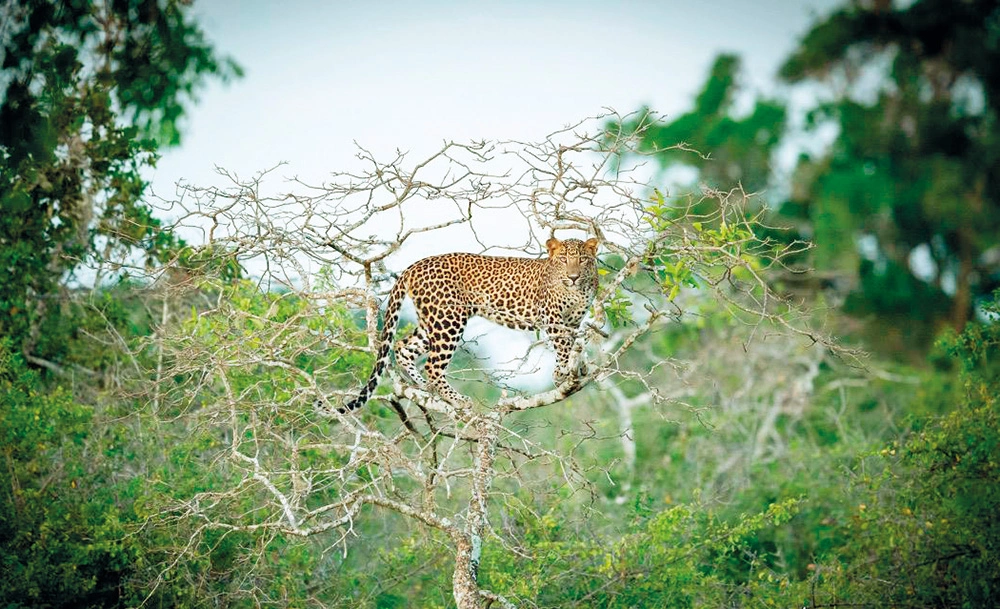
YF77 “Shelly” pauses in quiet observation, embodying the alertness
and grace that define Yala’s leopard population.
From 2013 to 2026, the Yala Leopard Diary identified an astonishing 189 individual leopards within the Yala Block 1. The research revealed a leopard density of approximately 0.524 leopards per square kilometre, making Yala one of the highest leopard-density landscapes ever recorded anywhere in the world.
Such findings have elevated Yala’s status among global wildlife researchers.
Nestled between the Indian Ocean and a mosaic of habitats, ranging from rocky outcrops to dense scrub forests, Yala offers an ecological stage unlike any other.
Here, leopards are photographed silhouetted against ocean horizons, perched atop ancient granite formations, resting on tree branches and stalking prey across sunlit grasslands.
The images tell stories of extraordinary lives.
There is Haminee, a devoted mother navigating the challenges of raising cubs in a competitive landscape. There is Lucas, one of Yala’s most frequently documented males, striding confidently across the Gonalabba Plains with the vast ocean forming an unforgettable backdrop.
There is Ruki demonstrating the species’ incredible strength by hoisting prey onto branches, and Shelly, quietly surveying her surroundings in a moment of feline vigilance.
Together, these individuals have become familiar characters in a living wilderness drama.
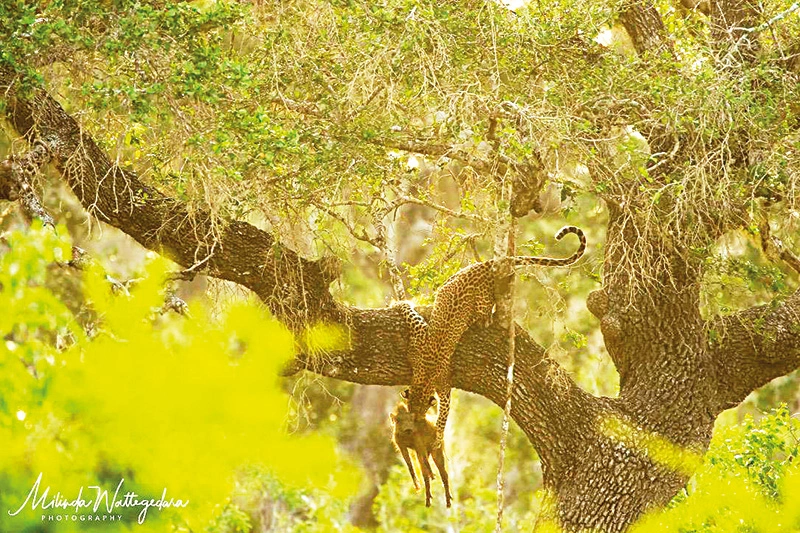
YM31 “Ruki” secures prey on a branch, illustrating the remarkable strength and coordination of the Sri Lankan leopard.
Recognising the immense value of long-term documentation, Wattegedara joined forces with fellow researchers Dushyantha Silva, Raveendra Siriwardana and Mevan Piyasena to establish the Yala Leopard Centre in 2020.
Located at the Palatupana entrance to the Yala National Park, the centre is believed to be the world’s first information facility dedicated exclusively to leopards.
“The centre serves as a repository of knowledge, accumulated through years of observation and research,” Wattegedara says. “Our goal is to connect visitors with the science behind conservation and foster a deeper appreciation of these magnificent animals.”
The project’s impact extends far beyond Sri Lanka’s borders.
Research arising from the Yala Leopard Diary has been published in internationally recognised scientific journals. One study introduced an innovative framework for identifying individual leopards, while another documented an extraordinary and previously unrecorded case of a leopard cub being consecutively adopted by two different adult females—first a relative and later an unrelated leopardess.
The discovery attracted international scientific attention and highlighted the complexity of leopard social behaviour.
Yet for Wattegedara, the most important lesson remains one of humility.
“One conclusion has become increasingly clear,” he reflects. “Our understanding of these leopards remains far from complete. We are only beginning to understand how they live, adapt and persist in one of Sri Lanka’s most dynamic protected landscapes.”
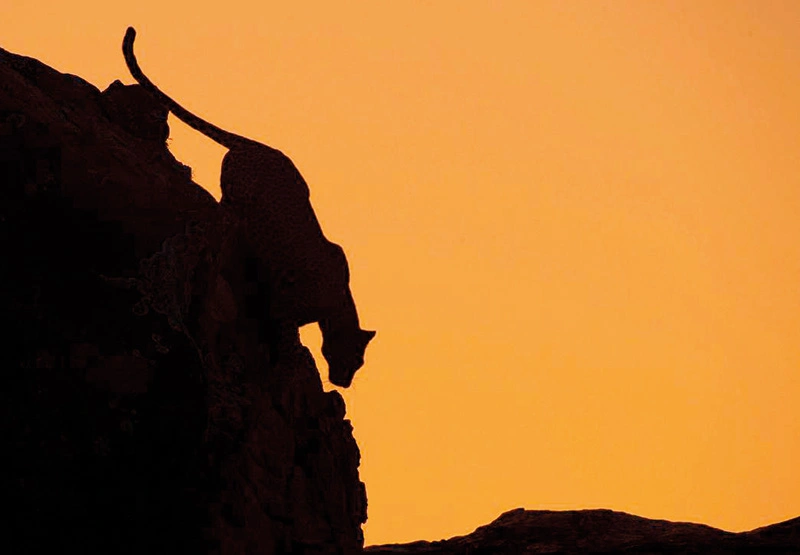
YF15 “Hope” descends Rukvila Rock at dawn, showcasing the agility and adaptability of Yala’s leopards.
His words underscore an essential conservation truth: the more we learn about nature, the more mysteries emerge.
As Sri Lanka navigates growing environmental challenges, the Yala Leopard Diary stands as a shining example of what sustained observation, scientific curiosity and public engagement can achieve.
Beyond the stunning photographs and remarkable sightings lies something even more valuable—a growing body of knowledge capable of informing future conservation decisions and ensuring that future generations inherit a wilderness where leopards continue to roam free.
For more than a decade, Wattegedara and his colleagues have followed the tracks of Yala’s elusive predators through dust, rain and scorching heat.
Their work has revealed that every leopard has a story, every sighting has significance and every photograph can contribute to conservation.
And perhaps, most importantly, it has reminded us that the golden ghosts of Yala still have many secrets left to share.
By Ifham Nizam

 Sri Lankans are quite active, all around the globe.
News has just come my way, from Glasgow, in Scotland, where the glamour of masks, music, dancing, and community spirit, came together, in spectacular fashion, at Masquerade Night, bringing together members of the Sri Lankan community for an evening filled with music, fashion, food and entertainment.
Organised by Mahesh Balaaratchi (DJ Mowgli) together with Sulochana Asmone, Hiroshini, Prasad, Ashi, and Shawn, the evening provided guests with an opportunity to socialise, enjoy live entertainment, and celebrate in a unique and elegant setting.
Guests arrived from 6:00 pm, dressed in formal attire and decorative masks, creating a colourful and vibrant atmosphere throughout the venue.

DJ Mowgli: The main
organiser of
Masquerade Night
There was a delicious selection of Sri Lankan cuisine and street food, which proved popular throughout the evening.
The buffet offered a variety of traditional favourites, giving attendees a taste of home while adding to the festive atmosphere.
Entertainment was provided by DJ Mowgli, whose performance kept the audience engaged throughout the night. His playlist featured a mixture of popular favourites, dance classics, and cultural music, remixed for a younger generation.
One of the highlights of the evening was the Baila session, which brought a distinctly Sri Lankan flavour to the event.
The Baila segment highlighted the importance of preserving and celebrating cultural traditions, while bringing people together through music and dance.
As familiar rhythms filled the room, guests enthusiastically took to the dance floor, creating one of the most memorable moments of the night.
 The crowd was described as lively, energetic, and welcoming, with attendees embracing the spirit of the masquerade theme while enjoying the opportunity to reconnect with friends and meet new people. The family-friendly atmosphere ensured that guests of all ages could take part in the celebrations.
The festivities continued until midnight and included a range of competitions and entertainment.
Children and adults alike participated in fashion shows, while guests competed for awards in several ‘Best Dressed’ categories.
The creativity and effort displayed in both costumes and formal wear added an extra layer of excitement to the evening.
As the final songs played and guests prepared to leave, many were already looking forward to the next Event Night.
The evening’s proceedings were handled by Sam, Mahela and Isuru.
Their enthusiasm reflected the growing popularity of these gatherings and their increasing importance, within the local community calendar.
A series of community events has continued to grow in popularity among the Sri Lankans in Glasgow, with Halloween Night coming up on 31st October.

India-born Nikhil Chaudhary called into Australia T20I squad

Men’s ODI World Cup 2027 set to run from October 4 to November 21

UN Humanitarian Priorities Plan (HPP) for Cyclone Ditwah successfully concluded

President chairs discussion on potential El Niño impacts and institutional preparedness

New Sasakawa Memorial Sri Lanka–Japan Cultural Centre reflects enduring friendship between Sri Lanka and Japan – PM

Ja’Kobe Tharp breaks world 110m hurdles record in Eugene

‘Dates have the highest sugar content to fight Coronavirus’

Sunday Island 27 December – Headlines

#SundayIsland 17th December – Headlines

Sunday Island – 28th March

Sunday Island Headlines – 21 March

Sunday Island – 21st February – Headlines
-
 Features7 days ago
Power crept into the Sangha and is now tearing it apart
-

 Features7 days ago
Kondachchi wind farm and battery storage project to boost energy security, says Power Ministry Secretary
-

 News4 days ago
Women’s T20 World Cup 2026 warm-up: Chamari Athapaththu’s 94 helps Sri Lanka beat Pakistan
-

 Features7 days ago
Saudi Arabia sets new benchmark in Hajj management as 1.7 million pilgrims complete sacred journey
-

 News6 days ago
Asst. Manager, security officer arrested over Rs 30 mn snatch at Horana PB branch
-

 Editorial4 days ago
Probe Sallay’s complaint
-

 News5 days ago
Lankan-Canadian inducted to Toronto Sports Hall of Fame
-
 News2 days ago
Local firms move millions of dollars overseas for phantom imports: Govt.