
Business
The importance of protecting migrant workers


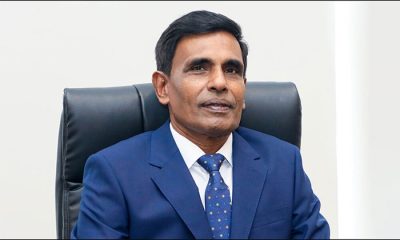
Speeph by Piyankara Jayaratne, State Minister of Foreign Employment Promotion and Market Diversification,
Sri Lanka at the Abu Dhabi Dialogue Sixth Ministerial Consultation, 26th October 2021 in Dubai as Troika Chair.
Allow me to address you all in the opening session of the 6th Ministerial Consultation of the Abu Dhabi Dialogue. I’m talking here with great honour and pleasure in this pleasant morning as the Troika member in this hybrid meeting, in the first physical gathering in the post-covid new normal.
First of all, I would like to appreciate and congratulate the Government of United Arab Emirates, the current chair of ADD, for organizing this hybrid event for 6th ministerial consultation while we all are combating against the Global Pandemic of COVID-19. I am happy to be in person here and too see you all gathered here together for this important consultation.
As we are aware, Migration today, as it has always been, is a function of the search for greater opportunities. It is of course, related to the economic development through trade and labour migration while ensuring rights of the people and national and regional security.
On one way, labour migration provides an opportunity for the migrants to find fruitful employment and improve their socio-economic status. On the other hand, this allows growing nations to seek out the required expertise and talent from rest of the world. However, it poses risks such as those encountered during recruitment, in the workplace and throughout the migration process in the country of origin, transit and destination.
Development gains of labour migration depends upon the degree, to which migrant workers are protected and empowered, by the country of origin as well as the country of destination.
Therefore, migration today is a multi-dimensional process, countries of origin and destination has the potential for both benefits and challenges. In light of the COVID 19 pandemic, it has resulted in many socio-economic challenges for migrant workers. In order to address these challenges, we as Country of Origin and Country of Destination have to consult each other for the successful and sustainable solutions.
Sri Lankan Government was able to take several measures that contributed to the national Covid 19 response plan for migrant workers. I believe that all other countries have their own plans. However, I would like to highlight that ADD platform is an excellent opportunity for all of us to share our experiences, best practices especially in areas that are important for migrant workers. This would enable us, to have a good understanding as to which areas we need to improve and strengthen in the future.
We, as member states of ADD, have just completed twelve years in the journey since the inception in 2008 and therefore, I strongly believe that it is high time to review and evaluate our collaborative efforts how we act in the current pandemic period and in future. This will certainly help all member states to develop future plans of ADD more meaningfully. I know that ADD can Play a vital role in bringing together labour sending and receiving countries and fostering the dialogue and trust that is central to the governance of Migration. Further, I’d like to highlight the need for regional corporation to enhance the resilience of safe labour migration in future to meet global event like that of Covid-19 pandemic.
Further, Migrant workers face various challenges in accessing quality training and decent employment opportunities, and lack of information and exploitation of low-skilled workers. To reap the benefits of migration, countries thus need to ensure that migration is demand-oriented, while migrant workers’ rights are protected. The access to education and training with right information and employment opportunities would enable proper integration of workers with the labour market and society. Certification and Joint Recognition of skills is another important factor that we have to be discussed.
We are all aware, there are three pillars of effective governance guides that are initiated by the ADD.
1) Ensuring the protection of migrant workers;
2) empowering workers to fulfil their goals and aspirations; and
3) affording workers the opportunity to benefit equitably from the outcomes of temporary labour migration.
Under this, the four thematic areas were designed and outlined during the last Senior Officials Meeting with these principles in mind. Namely,
Anticipated changes in the employment landscape in the GCC and their impact on labour supply and demand in ADD corridors
Leveraging advanced technology to improve labour mobility governance
Pre deployment testing of workers in Asia GCC Corridors
Global Governance of Migration
At this juncture, as ADD member countries, I would like to request you to continue our efforts with collaborative actions, because, I believe that productive, safe and harmonious migration can only be achieved if there is wider and deeper inter-state co-operation among the sending and receiving countries. It is the key to a better functioning of International Labour Migration Process. It will provide us with more positive results through a voluntary and cooperative efforts based on shared recognition of the benefits while enhancing the resilience.
On behalf the Government of Sri Lanka and as a Troika Member, would like to express our sincere gratitude to Abu Dhabi Dialogue Secretariat for their trust that kept with Government of Sri Lanka to initiate consultations among Abu Dhabi Dialogue Member States of Labour Origin and to identify a consensus candidate to chair the next cycle of the ADD.
I am happy that we were be able achieve that task diplomatically. Thank you very much for Government of Nepal and Pakistan. I take this opportunity to congratulate Government of Pakistan as the upcoming chair of Abu Dhabi Dialogue for the next two years. In this juncture, I also would like to extend my thanks to Government of United Arab Emirates for the esteemed corporation given during their period of chairmanship despite the challenges brought by COVID 19 pandemic.
Finally, I request active participation of the member countries for this 6th Ministerial consultation and in future in order to strengthen the migration management, both in labour origin and destination countries through this excellent platform of ADD.
We will have a collective voice together for the betterment of Migrant workers and the Countries of Origin and Destination as a whole.
I hope and believe we would have a very productive consultation toward enhancing the resilience of safe labour migration.


Sri Lanka is not quite ready to join the Regional Comprehensive Economic Partnership (RCEP), since it is lacking sufficient development, Trade Ministry Secretary K.A. Vimalenthirarajah said.
‘At present the Trade Ministry is establishing Sri Lanka’s readiness to join RCEP, which consists of 15 countries, through several channels, Vimalenthirarajah said at a recent round table discussion titled, ‘Sri Lanka’s Pathway to RCEP and the Emerging Global Trading Order’, organized by the Pathfinder Foundation and held at the Colombo Club, Taj Samudra.
‘Sri Lanka is actively accelerating its compliance efforts to join the 15-nation RCEP having submitted its required accession questionnaire in early 2026, he explained.
Vimalenthirarajah added: ‘The Cabinet has established a high-level policy and working committee and also obtained some technical assistance from multilateral partners because complying with RCEP requirements is challenging. Subsequently, this body responded to the follow-up questions that came up and had discussions with RCEP representatives and it expects more follow-up questions with regard to Sri Lanka’s readiness to join RCEP.
‘Sri Lanka has also secured political and diplomatic support from current RCEP members, including Australia, New Zealand, and Indonesia, to facilitate its entry process.’
Meanwhile, state officials, including Industries and Entrepreneurship Development Deputy Minister Chathuranga Abeysinghe, are implementing key economic structural reforms, a new tariff policy, and transparent investment criteria required by the bloc. Because formal accession protocols for RCEP are still being finalized, Sri Lanka is also simultaneously negotiating bilateral trade and investment agreements with regional members to accelerate integration.
Abeysinghe, participating virtually in the event said that Sri Lanka cannot achieve sustained export growth and attract large-scale investment by relying solely on its domestic market. ‘As a small economy, the country’s future lies in deeper integration with regional and global value chains. RCEP connects 15 economies, including Japan, South Korea, Australia, New Zealand, China and ASEAN member states, collectively accounting for nearly 30% of global trade, he explained.
Abeysinghe added: ‘Access to such a market would create new opportunities for Sri Lankan businesses, particularly the country’s Small and Medium Enterprises (SMEs), which currently contribute only around 10 percent to national exports.
‘However, Sri Lanka is at least a decade behind in implementing many of the reforms required to fully participate in modern global trade. Recognizing this challenge, the government is now moving forward with several critical reforms: A new tariff policy to improve competitiveness and eliminate barriers to trade, transparent and predictable investment criteria, investment facilitation reforms to improve the ease of doing business, new legislation including the Public-Private Partnership (PPP) Act and SOE reforms to strengthen investor confidence and measures to improve investment protection and unlock new sources of capital, including venture capital and angel investment funds.
‘Sri Lanka’s exports currently stand at approximately US$ 17 billion and have grown only gradually over the years. Expanding market access through bilateral and multilateral agreements, while continuing domestic reforms, is essential if the country is to achieve its long-term economic ambitions.’
By Hiran H Senewiratne

In a landmark development for Sri Lanka’s organic spice sector, Pussalla Agri Ventures has been awarded both EU Organic and USDA Organic certifications for its premium Ceylon cinnamon products. The certifications were officially conferred at Control Union Sri Lanka, signaling a major milestone in the company’s strategic transformation toward fully certified organic operations.
The recognition strengthens Pussalla Agri Ventures’ position as an emerging exporter of certified organic products, with its flagship offering, organic Ceylon cinnamon (Cinnamomum verum, also known as Cinnamomum zeylanicum), cultivated in Sri Lanka’s traditional cinnamon-growing regions.
Notably, the dual certification opens doors to some of the world’s most lucrative and compliance-driven organic markets, including the European Union and the United States.
Pussalla Agri Ventures began its structured transition into organic cinnamon cultivation several years ago, building a fully integrated system covering cultivation, processing, and value addition. The company currently manages extensive cinnamon cultivation lands and operates under strict organic agricultural principles, ensuring compliance with global certification standards.
These certifications, issued through Control Union Sri Lanka, validate that the company’s farming and processing systems meet rigorous international requirements, including restrictions on synthetic chemicals, comprehensive traceability controls, and environmental sustainability practices. These certifications add to an existing portfolio that already includes SL GAP, Food GMP, and Cosmetic GMP certifications.
Company representatives described the achievement as a “milestone” in the Pussalla organic journey, one that paves the way for expanded access to premium export markets in Europe and the United States. According to them, the certifications are expected to enhance buyer confidence, particularly among health-conscious consumers and clean-label food brands.
Pussalla Agri Ventures emphasised that its organic cinnamon is sourced entirely from its own cultivated estates.
“This estate-to-exporter integration ensures full control over quality, traceability, and processing integrity. The company’s model allows cinnamon to be harvested, processed, and packed under continuously monitored conditions, maintaining strict alignment with international organic standards,” they noted.
Speaking further they said:
“Sri Lanka supplies the majority of the world’s True Ceylon Cinnamon, a spice prized for its delicate aroma, low coumarin levels, and reputed medicinal properties. The growing global demand for certified organic spices has created new opportunities for local producers who meet international compliance standards. Pussalla Agri Ventures’ certification achievement places it among a select group of Sri Lankan exporters adopting globally recognised organic systems, thereby enhancing the country’s reputation in high-value spice markets.”
“As organic food sales continue to rise in North America and Europe, certifications such as these are becoming essential rather than optional. For Pussalla Agri Ventures, the journey from conventional to certified organic is not merely a compliance exercise but a strategic repositioning aimed at long-term sustainability and premium pricing power.”
By Sanath Nanayakkare

The National Chamber of Commerce of Sri Lanka (NCCSL) will host a timely and insightful seminar titled “Data Protection & Privacy: Safeguarding Businesses in the Digital Era” on 18th June 2026, from 9.00 a.m. to 12.30 p.m., at the National Chamber of Commerce Auditorium, Colombo 10 with the objective of enhancing awareness among businesses on emerging cyber risks, data protection requirements, and digital security best practices.
As organizations increasingly rely on digital platforms, online transactions, cloud-based systems, and data-driven operations, protecting sensitive information and ensuring privacy compliance have become critical priorities for organizations of all sizes. The seminar aims to provide practical knowledge and strategic guidance to help businesses strengthen resilience against cyber threats while fostering trust and confidence among customers and stakeholders.
Interested parties are encouraged to register by contacting Udula – 0714034775/ 0114741788 | udula.nccsl@gmail.com or Nishanthi – 0762555707 | nishanthi@nationalchamber.lk

‘Spider-Man of Yemen’ dies falling into volcanic crater

Norwegian crown princess’s son found guilty of two counts of rape

Trump says deal to end war with Iran already signed and details to be released ‘pretty soon’

Showers will occur in the Western, Sabaragamuwa and North-western provinces and in Galle, Matara, Kandy and Nuwara-Eliya districts

Easter Sunday carnage: WR asks AG to question Dappula on ‘grand conspiracy’ claim

Beijing Capital Airlines to resume flights to Colombo signalling boost to tourism

‘Dates have the highest sugar content to fight Coronavirus’

Sunday Island 27 December – Headlines

#SundayIsland 17th December – Headlines

Sunday Island – 28th March

Sunday Island Headlines – 21 March

Sunday Island – 21st February – Headlines
-

 News4 days ago
CIABOC summons Yoshitha over his participation in British Navy training programme
-
 News6 days ago
Local firms move millions of dollars overseas for phantom imports: Govt.
-

 Midweek Review6 days ago
July 09: An inexcusable overall security failure and exceptional contingency plan
-

 News6 days ago
AI raises concerns over arrest of Sallay and rapper under PTA
-

 News3 days ago
Commonwealth lawyers urge Lanka to uphold rule of law
-

 Features2 days ago
Politics of protected species
-

 Sports1 day ago
Tharanga set for high-profile javelin clash in Ostrava
-

 News4 days ago
Justice Minister responds to social media claims he represented Easter Sunday ringleader