
Features
The Great Pope Francis: A Personal Reflection


The resignation of Pope Benedict XVI in February 2013 sent shockwaves through the global community, breaking an eight-century precedent of papal tenure ending only with death. This extraordinary departure from tradition invites reflection on the remarkable evolution of the Catholic Church’s highest office during the modern era.
Following the contentious pontificate of Pope Pius XII (1939-1958) during World War II, the College of Cardinals elected the elderly Cardinal Giovanni Roncalli as Pope John XXIII (1958-1963). Many anticipated a caretaker papacy of minimal consequence. Instead, this supposedly transitional figure stunned the world by convening the Second Vatican Council, which gathered religious leaders from across the Catholic world in an unprecedented assembly. Vatican II catalyzed a sweeping liberalization of Church practices, fostering interfaith dialogue, emphasizing social justice, and revolutionizing liturgical traditions in ways previously unimaginable.
After John XXIII’s death, Pope Paul VI (1963-1978) inherited and completed the Council’s ambitious agenda. More significantly, he transformed the papacy’s global presence by becoming the first pontiff to embrace air travel, embarking on international journeys that redefined papal engagement with the faithful worldwide. His successor, Pope John Paul I, seemed poised to continue this progressive trajectory before his unexpected death just 33 days into his pontificate. The subsequent election of Karol Wojtyla as Pope John Paul II in 1978 marked another watershed moment. This charismatic Polish pontiff became a formidable geopolitical figure who helped precipitate Communism’s collapse while energizing Catholic youth movements globally.
When John Paul II’s trusted advisor Cardinal Ratzinger ascended as Pope Benedict XVI, this conservative restoration continued, culminating in his historic resignation—a final, unexpected transformation of an office that had repeatedly defied expectations throughout the modern era.

Jude Senewiratne, the writer’s father being blessed by the Pope on a Srilankan airline’s flight
In 2013, the Church faced an evident need for renewal. Following Pope Benedict’s unprecedented resignation, the election of Argentinian Cardinal Jorge Mario Bergoglio proved equally astonishing. His selection of the regnal name “Francis,” honoring the humble saint of Assisi, signaled forthcoming departures from convention. The new pontiff immediately distinguished himself when, before offering his first papal blessing to the multitudes gathered in St. Peter’s Square, he requested their prayers—an inversion of protocol without precedent in papal history. This gesture heralded the emergence of a pontiff characterized by joy, humility, and intellectual openness, who demonstrated resolute determination to reform ecclesiastical traditions incongruous with contemporary realities. Remarkably, until his death on April 22, 2025, Pope Francis maintained this distinctive pastoral approach throughout his twelve-year pontificate, preserving the refreshing ecclesiastical vision that defined his papal identity from its inception.
I was a teenager, when Pope Francis was made Pope. Like most youth, I followed his progress via Rome Reports, as well as the Pope’s own Social Media accounts. Throughout his papacy, Pope Francis maintained unwavering advocacy for social justice, consistently centering marginalized communities in Church priorities. His rhetoric and policies regarding refugees, migrants, and victims of economic inequality represented a profound recommitment to Catholic social teaching. This emphasis manifested through personal example—washing refugees’ feet, visiting impoverished communities, and challenging political leaders to create more equitable systems.
The pontiff’s dedication to ecumenical and inter-religious dialogue yielded unprecedented diplomatic breakthroughs. His historical meetings with Orthodox patriarchs, Anglican leaders, and representatives from Judaism, Islam, Buddhism, and Hinduism fostered mutual understanding that transcended centuries of religious division. These initiatives reflected Francis’s conviction that peaceful co-existence demanded respectful engagement across faith traditions.
Internal Vatican reforms under Francis’s leadership were equally significant. He restructured Church governance to enhance transparency, appointed unprecedented numbers of women and laypeople to positions of authority, and decentralized decision-making processes. His introduction of synodality—encouraging collective discernment through broader consultation with clergy and laity alike—represented a fundamental shift toward a more participatory ecclesiastical model.

Francis confronted the Church’s darkest crisis with unprecedented candor, acknowledging clerical abuse through formal apologies to survivors and implementing institutional safeguards to prevent future abuses. His global diplomatic engagement extended Catholic influence into conflict zones such as Ukraine-Russian war and Gaza, and international policy discussions, where he consistently advocated for peaceful resolution and humanitarian priorities. Perhaps, one of the greatest’s contributions of Pope Francis was his strong commitment for the environment and its conservation. His monumental encyclical Laudato Si advocates for the urgent action for the environment and addresses ecological and social issues stressing on sustainable lifestyle as well as responsible economic development.
Perhaps most distinctively, Francis’s pontificate was characterized by profound personal humility. His rejection of papal palatial quarters, preference for modest transportation, and spontaneous interactions with ordinary faithful dismantled barriers between the papacy and the people. This accessibility, combined with his vision of “a poor Church for the poor,” reoriented Catholic priorities toward servant leadership. His enduring legacy lies in having renewed the Church’s prophetic voice on contemporary issues while maintaining its foundational spiritual mission.
The accomplishments outlined above represent only a fraction of the many significant undertakings during the twelve-year pontificate of Pope Francis. Among these, one personal account merits documentation, both as a testament to the Pope’s spiritual influence and for the benefit of the public record. When Pope Francis announced his intention to visit Sri Lanka in early 2015, the news was met with widespread enthusiasm and joy, not only among Catholics but also among individuals of other faiths.
At the time, I had just completed my Ordinary Level examinations and was enjoying a well-earned break. Nationally, the political landscape had undergone a major transformation, with the conclusion of the decade-long regime of President Mahinda Rajapaksa and the election of President Maithripala Sirisena under the banner of the newly formed Yahapalana government. This period was marked by a renewed sense of hope and optimism across the country, making it a particularly poignant moment for a Papal visit to our island nation.
The principal purpose of Pope Francis’ visit was the canonization of St. Joseph Vaz, Sri Lanka’s first saint, as well as a pilgrimage to the Shrine of Our Lady of Madhu in the northern region of the country. Although I was still a teenager, I had already developed a keen interest in both history and ecclesiastical affairs. Motivated by this interest, I authored a short article for The Messenger, focusing on the history of Papal visits to Sri Lanka, with particular emphasis on the visits of Pope Paul VI in 1970 and Pope John Paul II in 1995. I also shared reflections on Pope Francis and the potential impact his visit might have on Sri Lanka. This article was published on January 11, 2015.

Article in the Messenger, written by the author, as a 15-year-old, and autographed by the Pope
When Pope Francis arrived at Katunayake on January 13, 2015, he was received with a brief but dignified welcoming ceremony attended by the newly elected President Sirisena. Following the formalities, the Pope commenced his journey along the Negombo Road aboard the Popemobile, proceeding at a deliberate pace while warmly acknowledging the thousands of faithful who had gathered on either side of the route to greet him. Despite the heat and humidity of that sunny morning, the 78-year-old Pontiff displayed remarkable vitality and endurance throughout this physically demanding procession. I, along with a few relatives, made our way to Wattala to witness this historic moment. To our great fortune, we were able to catch a clear and close view of the Holy Father and even managed to capture a photograph of him—an image that remains a treasured memento of that day. The following day marked the canonization of Fr. Joseph Vaz, held at Galle Face Green. In anticipation of the event, most roads in Colombo were closed, underscoring the magnitude of the occasion.
My entire family and I were among the vast congregation—estimated to be at least half a million strong—that gathered for the solemn and joyous celebration. A beautifully constructed altar had been erected for the occasion, and following the canonization, the Pope once again traversed the grounds, offering his greetings to the faithful in attendance. As a teenager firmly rooted in my Christian faith, witnessing the canonization and experiencing the presence of the Pope was a profoundly meaningful and formative moment. Though Pope Francis delivered his homily in English—a language in which he is not fluent—his words were nonetheless deeply moving and spiritually resonant.
When we returned home, my father received a phone call from his office. My father’s immediate response was that it was perhaps the best call he had ever received. Since the early 90s he had been working for SriLankan Airlines and was by then a Leading Cabin Crew Member. His superiors had selected him along with a few of his colleagues to accompany the Pope to Manila, Philippines in the SriLankan Airlines flight on January 15, 2015, as the Pope planned a 3-day visit there after Sri Lanka. This was an honour only a few would receive in their lifetimes, to closely travel and serve the Pope for nearly ten straight hours. As my father planned for this flight, the silly young me asked him to take my newspaper cutting of the Pope’s article so he could read it. My father did not refuse but asked me not to expect anything!
On the following day, Pope Francis departed for Manila, boarding the papal aircraft after a solemn and dignified farewell ceremony at the airport. My father, who was among those present, recalled that the Holy Father, even in the privacy of that setting, remained remarkably affable, serene, and gracious. After a simple meal, he warmly greeted and engaged in conversation with both the crew members and the pilots, offering each a moment of personal connection. In a fleeting yet unforgettable moment, my father too was granted an audience with the Pope—a brief exchange immortalized not by a personal photograph, which was not permitted, but by the official papal photographer. Hours into the journey, my father remembered the “small request.” Approaching the Pope’s secretary—who was seated beside the Pontiff—my father offered the article, enclosed within a folio. As is often the case with protocol, the secretary politely but firmly responded, “Unfortunately, the Holy Father is busy.” However, in a moment that revealed the Pope’s extraordinary attentiveness and humility, he overheard the exchange and requested the folio be handed to him.
Though the article was written by a teenager and, in hindsight, may seem rather unrefined, Pope Francis read it in its entirety. With a gentle smile, he turned to my father and inquired whether he might acknowledge the piece. Then, in a gesture as graceful as it was unexpected, the Pope removed his black ink pen and signed the article in his native Spanish: Franciscus, 15.1.2015.Before returning the folio, he also offered several gifts—tokens of affection and goodwill. Among them were a rosary, a commemorative medal, and a signed photograph inscribed with a simple yet moving directive: “Give this to your son.” When my father returned home and handed me these cherished items, I was overcome with awe and gratitude. The Pope, by no means obligated to engage with such a small request, had instead transformed it into a moment of lasting grace. I kept this remarkable testimony to myself for ten years, but now when the world reflects on the glorious years of Pope Francis, I thought this may be worth recording,
I am certain there are countless other narratives like mine—testimonies of kindness, humility, and quiet greatness that define Pope Francis. But for me, this singular act of thoughtfulness stands as an enduring emblem of his extraordinary humanity and spiritual generosity. I never saw or heard anything very personal of the Pope again. However, for the next ten years, I followed his work, especially his stance on Global issues. Not for one moment did he differ to his principles and style. Thus, when his death on Easter Morning was announced over the news, I too felt his loss terribly. Pope Francis’s legacy is one of luminous compassion, courageous reform, and unwavering fidelity to the Gospel’s call for justice and mercy. In an age of cynicism and division, he embodied the Church’s tender heart. His was a pontificate not of grandeur, but of grace—marked by simplicity, humility, and a love that embraced the whole world.
by Avishka Mario Senewiratne
Editor, The Ceylon Journal



In the immediate aftermath of Cyclone Ditwah, the government has moved swiftly to establish a Presidential Task Force for Rebuilding Sri Lanka with a core committee to assess requirements, set priorities, allocate resources and raise and disburse funds. Public reaction, however, has focused on the committee’s problematic composition. All eleven committee members are men, and all non-government seats are held by business personalities with no known expertise in complex national development projects, disaster management and addressing the needs of vulnerable populations. They belong to the top echelon of Sri Lanka’s private sector which has been making extraordinary profits. The government has been urged by civil society groups to reconsider the role and purpose of this task force and reconstitute it to be more representative of the country and its multiple needs.
The group of high-powered businessmen initially appointed might greatly help mobilise funds from corporates and international donors, but this group may be ill equipped to determine priorities and oversee disbursement and spending. It would be necessary to separate fundraising, fund oversight and spending prioritisation, given the different capabilities and considerations required for each. International experience in post disaster recovery shows that inclusive and representative structures are more likely to produce outcomes that are equitable, efficient and publicly accepted. Civil society, for instance, brings knowledge rooted in communities, experience in working with vulnerable groups and a capacity to question assumptions that may otherwise go unchallenged.
A positive and important development is that the government has been responsive to these criticisms and has invited at least one civil society representative to join the Rebuilding Sri Lanka committee. This decision deserves to be taken seriously and responded to positively by civil society which needs to call for more representation rather than a single representative. Such a demand would reflect an understanding that rebuilding after a national disaster cannot be undertaken by the state and the business community alone. The inclusion of civil society will strengthen transparency and public confidence, particularly at a moment when trust in institutions remains fragile. While one appointment does not in itself ensure inclusive governance, it opens the door to a more participatory approach that needs to be expanded and institutionalised.
Costly Exclusions
Going down the road of history, the absence of inclusion in government policymaking has cost the country dearly. The exclusion of others, not of one’s own community or political party, started at the very dawn of Independence in 1948. The Father of the Nation, D S Senanayake, led his government to exclude the Malaiyaha Tamil community by depriving them of their citizenship rights. Eight years later, in 1956, the Oxford educated S W R D Bandaranaike effectively excluded the Tamil speaking people from the government by making Sinhala the sole official language. These early decisions normalised exclusion as a tool of governance rather than accommodation and paved the way for seven decades of political conflict and three decades of internal war.
Exclusion has also taken place virulently on a political party basis. Both of Sri Lanka’s post Independence constitutions were decided on by the government alone. The opposition political parties voted against the new constitutions of 1972 and 1977 because they had been excluded from participating in their design. The proposals they had made were not accepted. The basic law of the country was never forged by consensus. This legacy continues to shape adversarial politics and institutional fragility. The exclusion of other communities and political parties from decision making has led to frequent reversals of government policy. Whether in education or economic regulation or foreign policy, what one government has done the successor government has undone.
Sri Lanka’s poor performance in securing the foreign investment necessary for rapid economic growth can be attributed to this factor in the main. Policy instability is not simply an economic problem but a political one rooted in narrow ownership of power. In 2022, when the people went on to the streets to protest against the government and caused it to fall, they demanded system change in which their primary focus was corruption, which had reached very high levels both literally and figuratively. The focus on corruption, as being done by the government at present, has two beneficial impacts for the government. The first is that it ensures that a minimum of resources will be wasted so that the maximum may be used for the people’s welfare.
Second Benefit
The second benefit is that by focusing on the crime of corruption, the government can disable many leaders in the opposition. The more opposition leaders who are behind bars on charges of corruption, the less competition the government faces. Yet these gains do not substitute for the deeper requirement of inclusive governance. The present government seems to have identified corruption as the problem it will emphasise. However, reducing or eliminating corruption by itself is not going to lead to rapid economic development. Corruption is not the sole reason for the absence of economic growth. The most important factor in rapid economic growth is to have government policies that are not reversed every time a new government comes to power.
For Sri Lanka to make the transition to self-sustaining and rapid economic development, it is necessary that the economic policies followed today are not reversed tomorrow. The best way to ensure continuity of policy is to be inclusive in governance. Instead of excluding those in the opposition, the mainstream opposition in particular needs to be included. In terms of system change, the government has scored high with regard to corruption. There is a general feeling that corruption in the country is much reduced compared to the past. However, with regard to inclusion the government needs to demonstrate more commitment. This was evident in the initial choice of cabinet ministers, who were nearly all men from the majority ethnic community. Important committees it formed, including the Presidential Task Force for a Clean Sri Lanka and the Rebuilding Sri Lanka Task Force, also failed at first to reflect the diversity of the country.
In a multi ethnic and multi religious society like Sri Lanka, inclusivity is not merely symbolic. It is essential for addressing diverse perspectives and fostering mutual understanding. It is important to have members of the Tamil, Muslim and other minority communities, and women who are 52 percent of the population, appointed to important decision making bodies, especially those tasked with national recovery. Without such representation, the risk is that the very communities most affected by the crisis will remain unheard, and old grievances will be reproduced in new forms. The invitation extended to civil society to participate in the Rebuilding Sri Lanka Task Force is an important beginning. Whether it becomes a turning point will depend on whether the government chooses to make inclusion a principle of governance rather than treat it as a show of concession made under pressure.
by Jehan Perera

Former Director General of Irrigation, G.T. Dharmasena, in an article, titled “Revival of Innovative systems for reservoir operation and flood forecasting” in The Island of 17 December, 2025, starts out by stating:
“Most reservoirs in Sri Lanka are agriculture and hydropower dominated. Reservoir operators are often unwilling to acknowledge the flood detention capability of major reservoirs during the onset of monsoons. Deviating from the traditional priority for food production and hydropower development, it is time to reorient the operational approach of major reservoirs operators under extreme events, where flood control becomes a vital function. While admitting that total elimination of flood impacts is not technically feasible, the impacts can be reduced by efficient operation of reservoirs and effective early warning systems”.
Addressing the question often raised by the public as to “Why is flooding more prominent downstream of reservoirs compared to the period before they were built,” Mr. Dharmasena cites the following instances: “For instance, why do (sic) Magama in Tissamaharama face floods threats after the construction of the massive Kirindi Oya reservoir? Similarly, why does Ambalantota flood after the construction of Udawalawe Reservoir? Furthermore, why is Molkawa, in the Kalutara District area, getting flooded so often after the construction of Kukule reservoir”?
“These situations exist in several other river basins, too. Engineers must, therefore, be mindful of the need to strictly control the operation of the reservoir gates by their field staff. (Since) “The actual field situation can sometimes deviate significantly from the theoretical technology… it is necessary to examine whether gate operators are strictly adhering to the operational guidelines, as gate operation currently relies too much on the discretion of the operator at the site”.
COMMENT
For Mr. Dharmasena to bring to the attention of the public that “gate operation currently relies too much on the discretion of the operator at the site”, is being disingenuous, after accepting flooding as a way of life for ALL major reservoirs for decades and not doing much about it. As far as the public is concerned, their expectation is that the Institution responsible for Reservoir Management should, not only develop the necessary guidelines to address flooding but also ensure that they are strictly administered by those responsible, without leaving it to the arbitrary discretion of field staff. This exercise should be reviewed annually after each monsoon, if lives are to be saved and livelihoods are to be sustained.
IMPACT of GATE OPERATION on FLOODING
According to Mr. Dhamasena, “Major reservoir spillways are designed for very high return periods… If the spillway gates are opened fully when reservoir is at full capacity, this can produce an artificial flood of a very large magnitude… Therefore, reservoir operators must be mindful in this regard to avoid any artificial flood creation” (Ibid). Continuing, he states: “In reality reservoir spillways are often designed for the sole safety of the reservoir structure, often compromising the safety of the downstream population. This design concept was promoted by foreign agencies in recent times to safeguard their investment for dams. Consequently, the discharge capacities of these spill gates significantly exceed the natural carrying capacity of river(s) downstream” (Ibid).
COMMENT
The design concept where priority is given to the “sole safety of the structure” that causes the discharge capacity of spill gates to “significantly exceed” the carrying capacity of the river is not limited to foreign agencies. Such concepts are also adopted by local designers as well, judging from the fact that flooding is accepted as an inevitable feature of reservoirs. Since design concepts in their current form lack concern for serious destructive consequences downstream and, therefore, unacceptable, it is imperative that the Government mandates that current design criteria are revisited as a critical part of the restoration programme.
CONNECTIVITY BETWEEN GATE OPENINGS and SAFETY MEASURES
It is only after the devastation of historic proportions left behind by Cyclone Ditwah that the Public is aware that major reservoirs are designed with spill gate openings to protect the safety of the structure without factoring in the consequences downstream, such as the safety of the population is an unacceptable proposition. The Institution or Institutions associated with the design have a responsibility not only to inform but also work together with Institutions such as Disaster Management and any others responsible for the consequences downstream, so that they could prepare for what is to follow.
Without working in isolation and without limiting it only to, informing related Institutions, the need is for Institutions that design reservoirs to work as a team with Forecasting and Disaster Management and develop operational frameworks that should be institutionalised and approved by the Cabinet of Ministers. The need is to recognize that without connectivity between spill gate openings and safety measures downstream, catastrophes downstream are bound to recur.
Therefore, the mandate for dam designers and those responsible for disaster management and forecasting should be for them to jointly establish guidelines relating to what safety measures are to be adopted for varying degrees of spill gate openings. For instance, the carrying capacity of the river should relate with a specific openinig of the spill gate. Another specific opening is required when the population should be compelled to move to high ground. The process should continue until the spill gate opening is such that it warrants the population to be evacuated. This relationship could also be established by relating the spill gate openings to the width of the river downstream.
The measures recommended above should be backed up by the judicious use of the land within the flood plain of reservoirs for “DRY DAMS” with sufficient capacity to intercept part of the spill gate discharge from which excess water could be released within the carrying capacity of the river. By relating the capacity of the DRY DAM to the spill gate opening, a degree of safety could be established. However, since the practice of demarcating flood plains is not taken seriously by the Institution concerned, the Government should introduce a Bill that such demarcations are made mandatory as part of State Land in the design and operation of reservoirs. Adopting such a practice would not only contribute significantly to control flooding, but also save lives by not permitting settlement but permitting agricultural activities only within these zones. Furthermore, the creation of an intermediate zone to contain excess flood waters would not tax the safety measures to the extent it would in the absence of such a safety net.
CONCLUSION
Perhaps, the towns of Kotmale and Gampola suffered severe flooding and loss of life because the opening of spill gates to release the unprecedented volumes of water from Cyclone Ditwah, was warranted by the need to ensure the safety of Kotmale and Upper Kotmale Dams.
This and other similar disasters bring into focus the connectivity that exists between forecasting, operation of spill gates, flooding and disaster management. Therefore, it is imperative that the government introduce the much-needed legislative and executive measures to ensure that the agencies associated with these disciplines develop a common operational framework to mitigate flooding and its destructive consequences. A critical feature of such a framework should be the demarcation of the flood plain, and decree that land within the flood plain is a zone set aside for DRY DAMS, planted with trees and free of human settlements, other than for agricultural purposes. In addition, the mandate of such a framework should establish for each river basin the relationship between the degree to which spill gates are opened with levels of flooding and appropriate safety measures.
The government should insist that associated Agencies identify and conduct a pilot project to ascertain the efficacy of the recommendations cited above and if need be, modify it accordingly, so that downstream physical features that are unique to each river basin are taken into account and made an integral feature of reservoir design. Even if such restrictions downstream limit the capacities to store spill gate discharges, it has to be appreciated that providing such facilities within the flood plain to any degree would mitigate the destructive consequences of the flooding.
By Neville Ladduwahetty

The ocean rarely raises its voice. Instead, it leaves behind signs — subtle, intricate and enduring — for those willing to observe closely. Along Sri Lanka’s shores, these signs often appear in the form of seashells: spiralled, ridged, polished by waves, carrying within them the quiet history of marine life. For Marine Naturalist Dr. Malik Fernando, these shells are not souvenirs of the sea but storytellers, bearing witness to ecological change, resilience and loss.
“Seashells are among the most eloquent narrators of the ocean’s condition,” Dr. Fernando told The Island. “They are biological archives. If you know how to read them, they reveal the story of our seas, past and present.”
A long-standing marine conservationist and a member of the Marine Subcommittee of the Wildlife & Nature Protection Society (WNPS), Dr. Fernando has dedicated much of his life to understanding and protecting Sri Lanka’s marine ecosystems. While charismatic megafauna often dominate conservation discourse, he has consistently drawn attention to less celebrated but equally vital marine organisms — particularly molluscs, whose shells are integral to coastal and reef ecosystems.
“Shells are often admired for their beauty, but rarely for their function,” he said. “They are homes, shields and structural components of marine habitats. When shell-bearing organisms decline, it destabilises entire food webs.”
Sri Lanka’s geographical identity as an island nation, Dr. Fernando says, is paradoxically underrepresented in national conservation priorities. “We speak passionately about forests and wildlife on land, but our relationship with the ocean remains largely extractive,” he noted. “We fish, mine sand, build along the coast and pollute, yet fail to pause and ask how much the sea can endure.”
Through his work with the WNPS Marine Subcommittee, Dr. Fernando has been at the forefront of advocating for science-led marine policy and integrated coastal management. He stressed that fragmented governance and weak enforcement continue to undermine marine protection efforts. “The ocean does not recognise administrative boundaries,” he said. “But unfortunately, our policies often do.”
He believes that one of the greatest challenges facing marine conservation in Sri Lanka is invisibility. “What happens underwater is out of sight, and therefore out of mind,” he said. “Coral bleaching, mollusc depletion, habitat destruction — these crises unfold silently. By the time the impacts reach the shore, it is often too late.”
 Seashells, in this context, become messengers. Changes in shell thickness, size and abundance, Dr. Fernando explained, can signal shifts in ocean chemistry, rising temperatures and increasing acidity — all linked to climate change. “Ocean acidification weakens shells,” he said. “It is a chemical reality with biological consequences. When shells grow thinner, organisms become more vulnerable, and ecosystems less stable.”
Climate change, he warned, is no longer a distant threat but an active force reshaping Sri Lanka’s marine environment. “We are already witnessing altered breeding cycles, migration patterns and species distribution,” he said. “Marine life is responding rapidly. The question is whether humans will respond wisely.”
Despite the gravity of these challenges, Dr. Fernando remains an advocate of hope rooted in knowledge. He believes public awareness and education are essential to reversing marine degradation. “You cannot expect people to protect what they do not understand,” he said. “Marine literacy must begin early — in schools, communities and through public storytelling.”
It is this belief that has driven his involvement in initiatives that use visual narratives to communicate marine science to broader audiences. According to Dr. Fernando, imagery, art and heritage-based storytelling can evoke emotional connections that data alone cannot. “A well-composed image of a shell can inspire curiosity,” he said. “Curiosity leads to respect, and respect to protection.”
Shells, he added, also hold cultural and historical significance in Sri Lanka, having been used for ornamentation, ritual objects and trade for centuries. “They connect nature and culture,” he said. “By celebrating shells, we are also honouring coastal communities whose lives have long been intertwined with the sea.”
However, Dr. Fernando cautioned against romanticising the ocean without acknowledging responsibility. “Celebration must go hand in hand with conservation,” he said. “Otherwise, we risk turning heritage into exploitation.”
He was particularly critical of unregulated shell collection and commercialisation. “What seems harmless — picking up shells — can have cumulative impacts,” he said. “When multiplied across thousands of visitors, it becomes extraction.”
As Sri Lanka continues to promote coastal tourism, Dr. Fernando emphasised the need for sustainability frameworks that prioritise ecosystem health. “Tourism must not come at the cost of the very environments it depends on,” he said. “Marine conservation is not anti-development; it is pro-future.”

Dr. Malik Fernando
Reflecting on his decades-long engagement with the sea, Dr. Fernando described marine conservation as both a scientific pursuit and a moral obligation. “The ocean has given us food, livelihoods, climate regulation and beauty,” he said. “Protecting it is not an act of charity; it is an act of responsibility.”
He called for stronger collaboration between scientists, policymakers, civil society and the private sector. “No single entity can safeguard the ocean alone,” he said. “Conservation requires collective stewardship.”
Yet, amid concern, Dr. Fernando expressed cautious optimism. “Sri Lanka still has immense marine wealth,” he said. “Our reefs, seagrass beds and coastal waters are resilient, if given a chance.”
Standing at the edge of the sea, shells scattered along the sand, one is reminded that the ocean does not shout its warnings. It leaves behind clues — delicate, enduring, easily overlooked. For Dr. Malik Fernando, those clues demand attention.
“The sea is constantly communicating,” he said. “In shells, in currents, in changing patterns of life. The real question is whether we, as a society, are finally prepared to listen — and to act before silence replaces the story.”
By Ifham Nizam

Bangladesh’s first female prime minister Khaleda Zia dies aged 80

Ukraine denies drone attack on Putin’s residence

Showers expected at times in the Northern, Eastern, Central, North-central and Uva provinces

Dr. Bellana: “I was removed as NHSL Deputy Director for exposing Rs. 900 mn fraud”

BIA unions demand bonuses equal to five months’ basic salaries

People warned of rising water levels at Kotmale reservoir

‘Dates have the highest sugar content to fight Coronavirus’

Sunday Island 27 December – Headlines

#SundayIsland 17th December – Headlines

Sunday Island – 28th March

Sunday Island Headlines – 21 March

Sunday Island – 21st February – Headlines
-

 News5 days ago
British MP calls on Foreign Secretary to expand sanction package against ‘Sri Lankan war criminals’
-
 Sports5 days ago
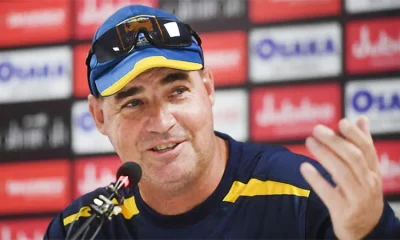
Chief selector’s remarks disappointing says Mickey Arthur
-
 News4 days ago
Street vendors banned from Kandy City
-

 News6 days ago
Sri Lanka’s coastline faces unfolding catastrophe: Expert
-

 Opinion5 days ago
Disasters do not destroy nations; the refusal to change does
-

 News4 days ago
Lankan aircrew fly daring UN Medevac in hostile conditions in Africa
-
 Midweek Review6 days ago
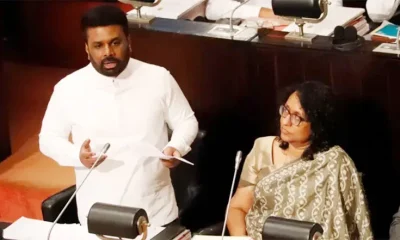
Year ends with the NPP govt. on the back foot
-
 Sports6 days ago
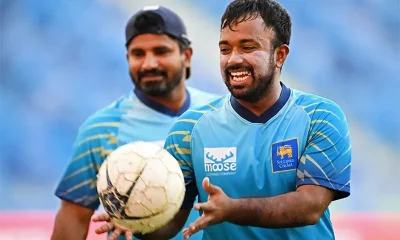
Life after the armband for Asalanka