
News
“The Government plays a crucial role in supporting and advancing scientific education and research in Sri Lanka”. – Prime Minister

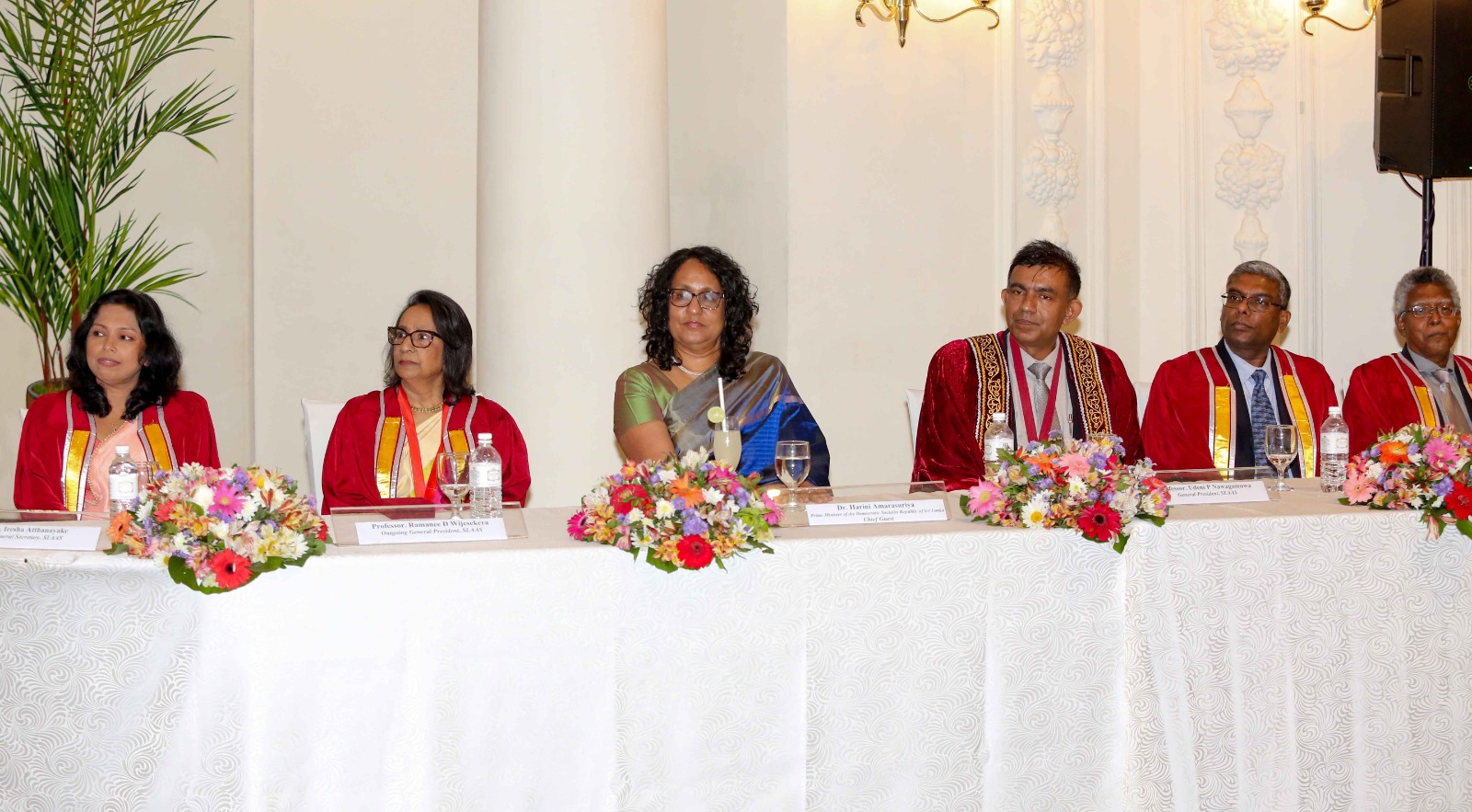
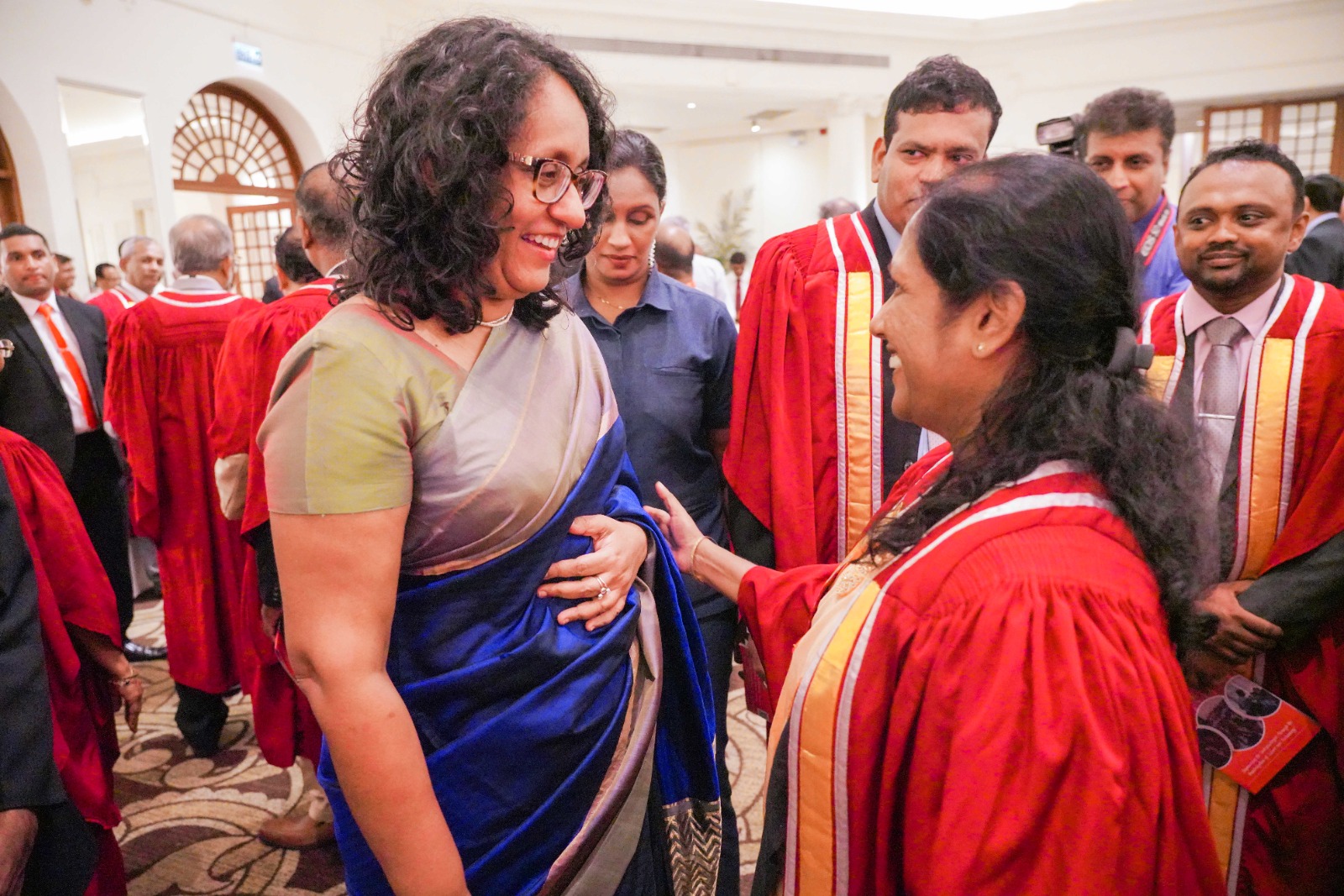
Prime Minister Dr. Harini Amarasuriya was the Chief Guest at the Ceremonial Induction of the Sri Lanka Association for the Advancement of Science [SLAAS] held at the Galle Face Hotel in Colombo on Tuesday [7th].
Prof. Udeni P. Nawagamuwa was appointed as the President for the year 2025 of SLAAS,
The Prime Minister in her address stated that,”As Sri Lanka’s foremost scientific body, SLAAS represents a diverse and dynamic community with over 5,000 members spanning various disciplines. SLAAS is a true testament to the richness and breadth of Sri Lanka’s scientific landscape. SLAAS consistently fosters the growth of science and technology, equipping future generations of scientists with the tools and knowledge to address both local and global challenges. As we celebrate this accomplishment, we must also recognize our challenges and focus on areas for development. A vibrant intellectual community, strong research and development infrastructure, and opportunities and mentoring for younger researchers are essential for a country’s development.
However, if we reflect on our own situation, we must acknowledge that we cannot be happy with our current status quo. Our research culture doesn’t really reward innovation and creativity. Our researchers become too instrumental, often focusing on promotion schemes rather than the love of knowledge and curiosity about the world around us. Science becomes an essential part of every child’s education. Science education and research must, while ensuring theoretical and methodological rigor, also make sure that it’s impactful. This is vital for our country.
The Government plays a crucial role in supporting and advancing scientific education and research in Sri Lanka. We cannot be satisfied with the role we are currently playing. Our government has articulated a comprehensive approach to advancing science and technology in Sri Lanka. Our policy framework, titled Quantum Leap, emphasizes the government’s pivotal role in leading science and technology initiatives.
This structure aims to ensure that Sri Lanka remains or becomes a hub of scientific discovery and technological progress. Additionally, our government has unveiled a science and technology policy framework, underscoring our dedication to prioritizing science and research as essential drivers of economic recovery and national development.”

[Prime Minister’s Media Division]

Latest News
Cabinet approves relief meaures to persons affected due to the War situation in the Middle East

Approval has been granted at the Cabinet Meeting held on 30-03-2026 to provide relief by granting up to rupees 20/- per litre of 92 Octane Petrol, and up to rupees 100/- per litre of Auto Diesel utilized for public transport to minimize the impact on the day today life of the people and the entire economy as a result of escalation of fuel prices due to the war situation in the Middle East region.
Apart from that, the Cabinet of Ministers approved the resolution furnished by the President in his capacity as the Minister of Finance, Planning and Economic Development to grant the following relief for low – income generators, electricity consumers, farmers, fisheries community, and small tea planters who have been exposed to the direct impact of the energy price hike:
(i) Provision of an additional special allowance for April 2026 to low-income generating categories registered under the ‘Aswesuma’ Programme, irrespective of family size: • Providing rupees 7,500/- to a family in the extremely poor category
Providing rupees 5,000/- to a family in the poor category
Providing rupees 2,500/- to a family in the transitional category
(ii) Instead of transferring the additional cost borne for engaging thermal power plants for generating electricity due to the fuel price hike and prevailing dry weather circumstances to the electricity consumers, the additional cost is to be borne by the Government for a period of 03 months so that a relief can be provided to the electricity consumers utilizing below 90 units.
(iii) Increasing the fertilizer subsidiary of rupees 25,000/- per hectare given at present up to rupees 30,000/- per hectare for the Yala season and increasing the fertilizer subsidiary of rupees 15,000/- per hectare given for additional crops that are cultivated in the paddy fields up to rupees 18,000/- per hectare for the Yala season.
(iv) Provide a 50 kg sack of Urea required for the Yala season at a fixed price of Rupees 10,200/- for farmers through Agrarian Services Centres.
(v) Provide a subsidiary of Rupees 50/- per liter for up to 25 liters per day per single-day fishing vessel, for a maximum of 25 days per month, for a period of three (3) months.
(vi) Provide a one-time payment of Rupees 150,000/- per multi-day fishing vessel engaged in fishing activities during the next three (3) months.
(vii) Provide an additional one-time fertilizer allowance of Rs. 5,000 per 50 kg bag of fertilizer to small tea cultivators, in addition to the existing Rs. 4,000 fertilizer subsidy provided by the Sri Lanka Tea Board.

Under the Finance Act No. 35 of 2018 a tax has been imposed on the telecommunication towers and accordingly an annual tax amount of Rs. 200,000/- is levied from mobile network operators who possess telecommunication towers. However, it has been proposed in the Budget for 2026 that the said tax shall not be levied for a period of five (5) years in respect of telecommunication towers newly erected on or after 2026-01-01.
Accordingly, the Legal Draftsman has formulated a draft bill to amend the Finance Act No. 35 of 2018 including the provisions for taking necessary action, and the Attorney General has granted the clearance in the regard.
Hence, the Cabinet of Ministers approved the resolution furnished by the President in his capacity as the Minister of Finance, Planning and Economic Development to publish the said draft bill in the Government Gazette Notification and thereafter submit the same to the Parliament for its concurrence.

The cabinet of Ministers has approved the resolution furnished by the President in his capacity as the Minister of Finance, Planning, and Economic Development to publish the Value Added Tax (Amendment) Bill in the Government Gazette and thereafter submit it for the concurrence of the Parliament.

Cabinet approves relief meaures to persons affected due to the War situation in the Middle East

Amendments to the Finance Act No. 35 of 2018 to be Gazetted

Value Added Tax (Amendment) Bill to be Gazetted

H.M.J.M.Herath appointed Commissioner General of Registration of Persons

Water Resources Board Act, No. 29 of 1964, to be amended

Securing public sector employment opportunities for Athletes demonstrating National-Level sporting excellence

‘Dates have the highest sugar content to fight Coronavirus’

Sunday Island 27 December – Headlines

#SundayIsland 17th December – Headlines

Sunday Island – 28th March

Sunday Island Headlines – 21 March

Sunday Island – 21st February – Headlines
-

 Features3 days ago
Ranjith Siyambalapitiya turns custodian of a rare living collection
-

 News6 days ago
2025 GCE AL: 62% qualify for Uni entrance; results of 111 suspended
-

 News3 days ago
Global ‘Walk for Peace’ to be held in Lanka
-

 Business7 days ago
Hour of reckoning comes for SL’s power sector
-

 Editorial6 days ago
Search for Easter Sunday terror mastermind
-

 Opinion5 days ago
Hidden truth of Sri Lanka’s debt story: The untold narrative behind the report
-
Editorial7 days ago
Ideological confusion and identity crisis
-

 Opinion6 days ago
Is there hope for Palestine?