
Business
The Friedrich Naumann Foundation to Host an Online Dialogue on Tea


Representing Ceylon Tea, Dilmah CEO to address on ideas and actions for the tea industry
Bringing to light the challenges faced by tea producers in India and Sri Lanka, the South Asia office of the Friedrich Naumann Foundation (FNF) has organised an Online Business Dialogue under the topic: RESTART ASIAN ECONOMIES: Ideas and Actions for the Tea Industry on 15th March 2021.
Tea is the most consumed beverage in the world, second only to water. With such large-scale use, the production of tea is dominated by a few countries. South Asia as a region is fortunate to produce high quality tea. India, Sri Lanka are among the top 5 exporters of tea in the world. There are thousands of varieties of tea and scientists believe that drinking tea has health benefits attached to it. This perception has also been a factor giving rise to tea consumption in certain parts of the world. Clinical benefits that tea can enhance immunity which can help to fight diseases.
India has produced approx. 1.2 million tonnes of tea, Sri Lanka has produced approx. 300,000 tonnes of tea.
In the year 2020, India saw a decline of 18% in its tea exports. The primary reason behind India’s shortfall in the exports was the strict lockdown which led to skiffing off of overgrown leaves across tea estates. “It resulted in an average year-on-year crop loss of 10% which, in turn, affected exports of good quality tea by around 18%” according to Mr Atul Asthana, MD and CEO, Goodricke Group. This has resulted in India losing its market in countries like Iran, Russia and even Pakistan. Pakistan is the largest importer of tea, importing tea worth over 570 million US $. In 2020, Kenya has become the main exporter of tea to Pakistan.
In Sri Lanka, the tea exports showed a decline of approx. 16% in 2020 when comparing this with 2019 for the period Jan-Jun. However, exports to China increased in 2019, with the youth in China taking a liking for Sri Lankan black tea and this trend continued in 2020. Sri Lanka also introduced the online auctions to tea in 2020.
Distinguished resource persons from the tea industry will discuss solutions and ideas to RESTART their economies and their own personal experiences of how they addressed the challenges posed by COVID-19. This interaction will allow for exchange of ideas, challenges faced by the entrepreneurs and their solutions as well as the role of the government during these trying times.
Tea has become synonymous with South Asians and with abundant tea production, South Asia is both a producer and a consumer of tea. It produces high quality tea and exports its tea across the globe. Whereby countries like India, Sri Lanka and Bangladesh are among the top producers of tea in the world, tea production in Nepal has not been scaled up to realise its potential.
The programme will discuss the challenges and opportunities faced by entrepreneurs in the tea industry especially during COVID and solutions. What are the lessons learnt during COVID. The programme will also discuss future prospects of the tea industry in a changing global environment.
The panelists for the programme are eminent entrepreneurs, not just from the tea industy but also actively engaged in social enterprise. Rudra Chatterjee, from India, Rudra Chatterjee is the Managing Director of Luxmi Tea, founded in 1912, is one of the world’s finest producers of tea, making 30 million kg of tea from 25 estates in India and in Rwanda. Makaibari, acquired by Luxmi in 2013, produces some of the most famous teas in the world. Rudra is an adjunct faculty at IMI and is a guest faculty in IIM Calcutta. He writes op-ed columns for The Statesman and is a guest columnist for The Telegraph. He is a TEDx speaker and was awarded the young entrepreneur award by Chief Minister of West Bengal in 2018.
Rudra served as the President of Indian Chamber of Commerce (2018-19), and is currently serving as the Chairman-Eastern Region of FICCI.
Dilhan C. Fernando, the CEO of Dilmah Tea, is also the Director of the Dilmah School of Tea – the first international school of tea. Driving innovation in tea, Dilhan has taken tea beyond a cup with Dilmah in tea mixology and gastronomy; from pioneering tea inspired dining concepts to hosting global competitions such as, the “Tea Inspiration for the 21st Century” culinary competition, he has challenged Tea Aficionados from around the world to reimagine tea as an ingredient for morning, afternoon and evening. In addition, he also manages the humanitarian and environmental outcomes of Dilmah and is the Chairman of the United Nations Global Compact in Sri Lanka, a corporate sustainability initiative by the UN.
Dilhan currently chairs the Biodiversity Sri Lanka Platform which was pioneered by Dilmah Conservation together with the Ceylon Chamber of Commerce and IUCN (International Union for Conservation of Nature).





Business
Lanka’s largest solar park set to transform energy landscape and local economy in Hambantota

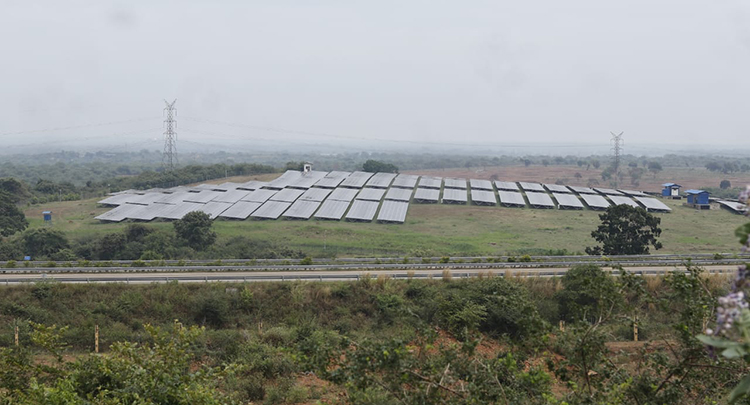
A new era in Sri Lanka’s renewable energy is unfolding in the Gonnoruwa Division of Hambantota District, where construction has begun on the country’s largest solar power park. Spanning 450 acres and designed to generate 150 megawatts (MW) of electricity, the US$150 million private-sector-led project is poised to become a cornerstone of the nation’s sustainable energy ambitions.
Officials say the solar park, guided by the Sustainable Energy Authority and the Mahaweli Authority, will make its first contribution to the national grid by the end of this year, with full capacity expected by 2026. Once completed, the facility will rank among Sri Lanka’s largest renewable energy installations, second only to the 210 MW Victoria Dam and the 150 MW Upper Kotmale hydropower project.
The initiative is being framed as a strategic response to recurring power cuts in the Southern Province during annual drought periods. With a projected 20% contribution to the country’s daytime electricity demand, the solar park is expected to significantly stabilize the grid, reduce reliance on fossil fuels, and contribute to the country’s renewable energy targets.
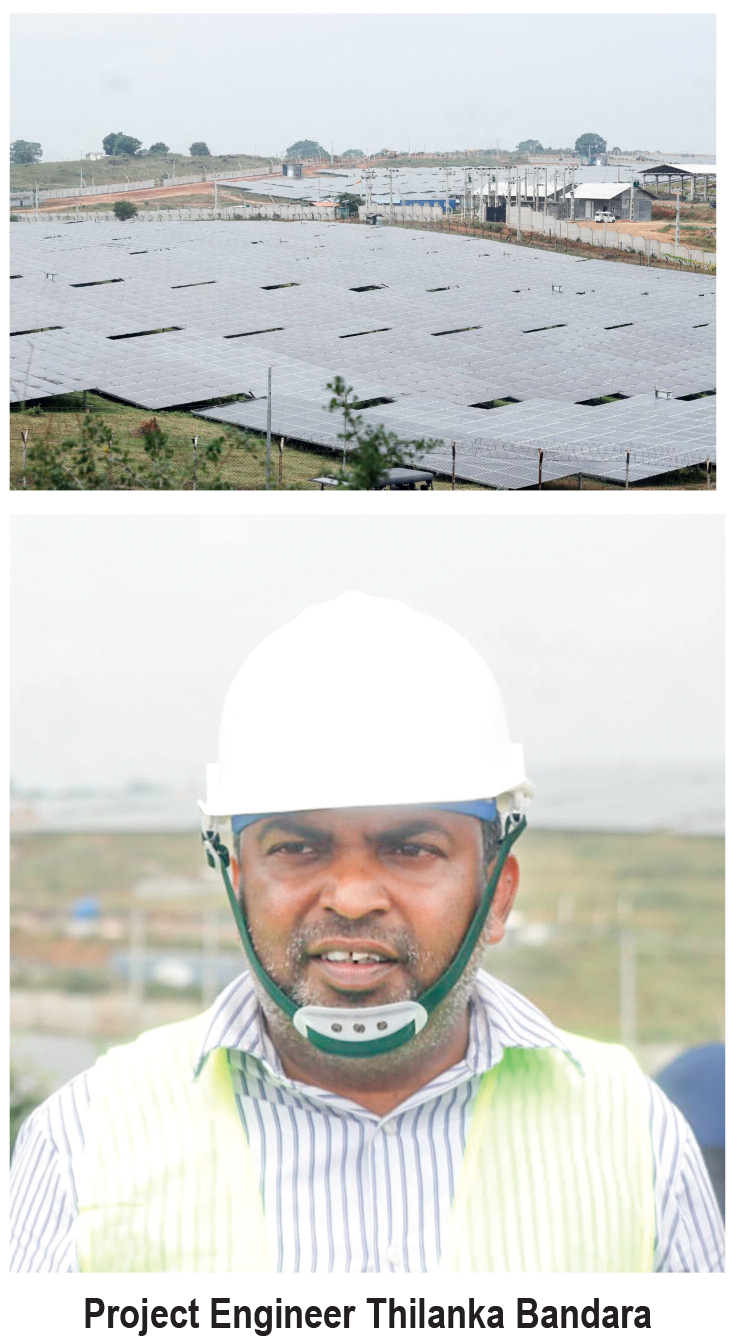
Project Engineer Thilanka Bandara confirmed that preliminary land preparation and boundary works have been completed, with 50 MW already feeding into the national grid. The investment, fully funded through foreign direct investment, local bank loans, and equity capital, requires no government funding. Two private firms are sharing the development, contributing 70 MW and 80 MW respectively.
Bandara highlighted a unique feature of the project: the transmission infrastructure, estimated at US$16 million, is entirely financed by the investors, marking a departure from conventional grid-connected projects. The park will also employ state-of-the-art ground-mounted solar technology, considered the most advanced currently deployed in Sri Lanka.
In a first for Sri Lanka, the solar panels will be installed five feet above the ground, allowing partial-shade crops to be cultivated underneath. Technical Officer Sithmina Bandara explained that this setup will enable the cultivation of food plants such as mushrooms, which thrive in shaded conditions, creating a model for integrated solar-agriculture systems. Agricultural experts have already provided guidance on implementing this initiative, which combines energy production with local food security.
The project is expected to generate 750 to 1,000 direct and indirect jobs, with 400–500 already employed in the initial phase. Long-term maintenance work will provide further employment opportunities, offering a substantial economic boost to the Hambantota region. Environmental management measures are also in place to prevent elephants from entering nearby villages, ensuring harmony between development and wildlife.
All necessary approvals and permits were obtained by February 2025, aligning the project with the Ceylon Electricity Board’s national generation plan. Officials confirmed that upon completion, the total output of the Solar Energy Park will rise to 200 MW, combining existing installations with the new 150 MW facility.
Experts say the Hambantota solar park represents more than just a power generation project. Its innovative design, private-sector financing, and integrated agricultural approach position it as a template for future renewable energy projects in Sri Lanka, reflecting a new model of sustainable development that balances energy, economy, and environment.
By Sirimanta Ratnasekera
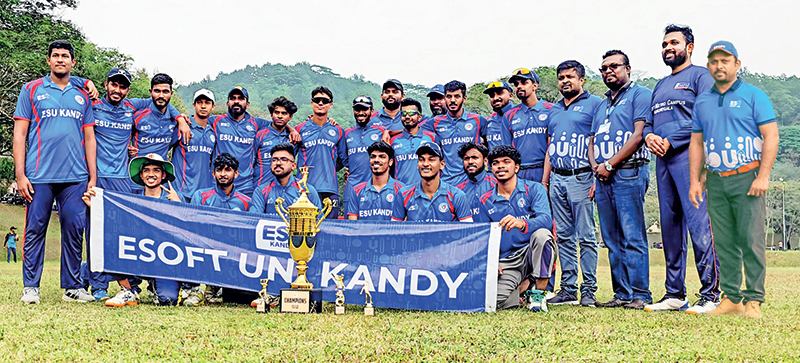
The Battle of Esoftians, an annual cricket encounter organized by ESOFT Uni Kandy, concluded with a spectacular display of cricketing prowess as the Kandy team secured a massive 245-run victory over ESOFT Metro Campus, Kurunegala. The match was held on the 15th at the University of Peradeniya Grounds.
Winning the toss and electing to bat first, the ESOFT Uni Kandy batsmen dominated the field from the outset. They showcased an explosive batting performance, posting a formidable total of 280 runs for the loss of 5 wickets in their allotted 20 overs.
In response, the Kurunegala ESOFT Metro team struggled against a disciplined bowling attack. The Kandy bowlers dismantled the opposition’s batting lineup, bowling them all out for a mere 35 runs, sealing a historic win for the Kandy campus.
The event was graced by the presence of key officials from the ESOFT management: Amila Bandara – Chief Operating Officer (ESOFT Uni), Dimuthu Thammitage – General Manager (Central Region), Lakpriya Weerasinghe – Deputy General Manager, ?Lahiru Diyalagoda
Centre Manager-Degree Division, ESOFT Metro Campus Kurunegala and Dushantha Sandaruwan – Master in Charge (ESU Kandy Cricket Club)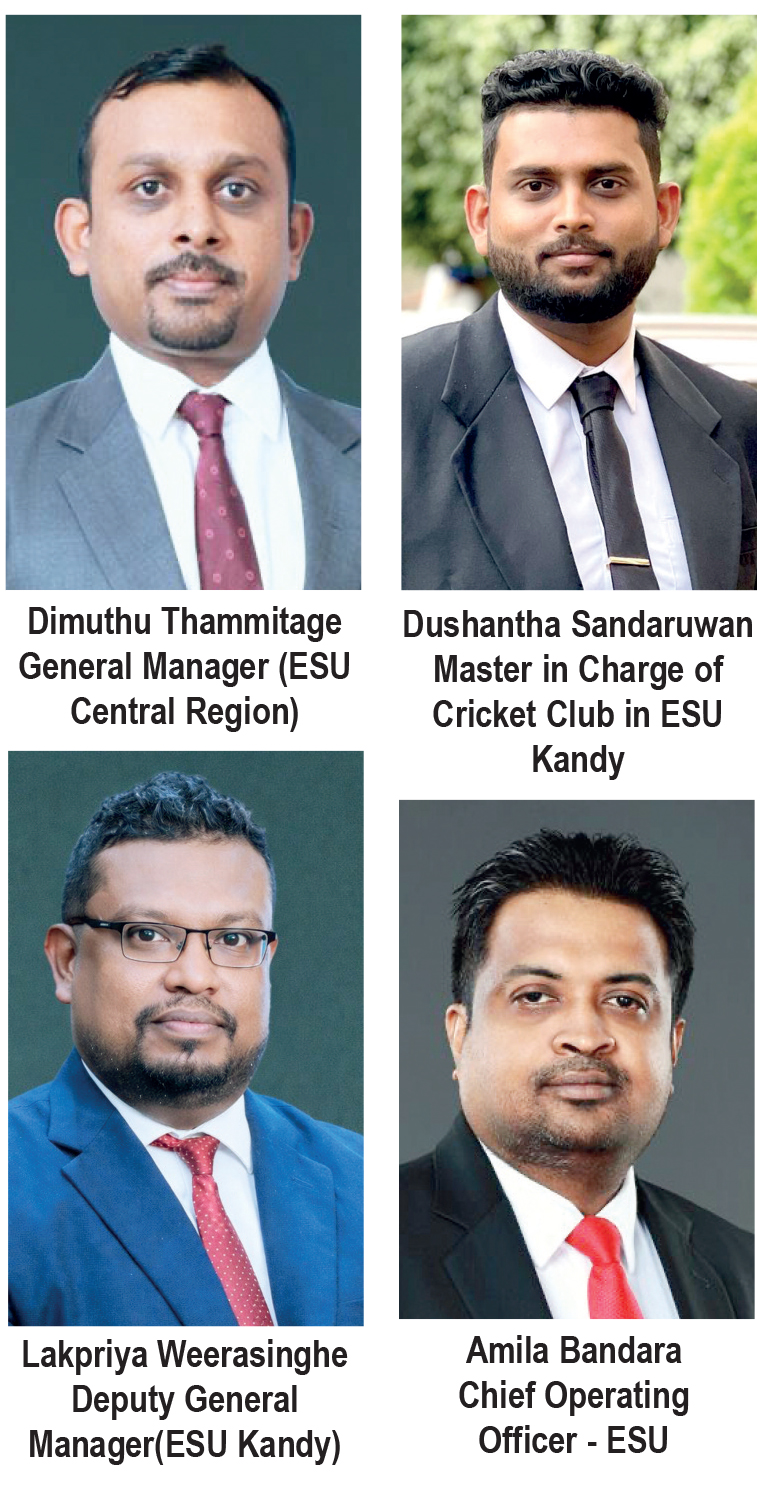
Team Lineups
ESOFT Uni Kandy (Winners)
Chamath Ekanayake (Captain), Dinuka Tennakoon (Vice Captain), Dushantha Sandaruwan (MIC), Chalitha Rathnayake, Pulasthi Bandara, Isuru Dehigama, Kesara Nuragoda, Aadhil Sherif, Isuru Pannala, Achintha Medawatta, Ahamed Shukri, Gowtham Hari Dharshan, Danushka Sahan, Eranda Bandara, and Damith Dissanayake.
ESOFT Metro Campus Kurunegala (Runners-up)
Adeesha Samarasekara, Savishan Madusha, Lahiru Diyalagoda, Hirun Damayantha, Naveen Madushanka, Daham Pothuwewa, Senuda Thewnaka, M.R. Abdulla, Arunodya Dasun, Mohamad Afri, Desith Perera, Lasitha Ranawaka, Anton Dilon, Shenuka Thirantha, and Kavindu Bandara.
Text and Pix By S.K. Samaranayake

HNB PLC, Sri Lanka’s leading private sector bank, has joined as the Official Banking Partner for the 147th edition of the historic “Battle of the Blues,” the Royal–Thomian cricket encounter between Royal College, Colombo, and S. Thomas’ College, Mt. Lavinia. Commenting on the partnership, HNB’s Managing Director/CEO Damith Pallewatte highlighted the bank’s long-standing connection with cricket, including sponsorship of Sri Lanka’s first Test match against England in 1982, and emphasized HNB’s commitment to nurturing young talent and promoting school cricket. The three-day clash for the Rt. Hon. D. S. Senanayake Memorial Shield will take place from March 12–14 at the SSC Grounds, with the Mustangs Trophy one-day match following on March 28 under lights. HNB’s inaugural involvement marks a milestone in the bank’s sports marketing journey, strengthening its role in the school cricket ecosystem. The bank will enhance the spectator experience by introducing digital and cashless banking solutions, modernizing the event while preserving its rich heritage and sporting tradition.

England limp to 146-9 against Sri Lanka

Advisory for Heavy Rain issued for the Central, Uva, Sabaragamuwa, Eastern and North-central provinces and in Galle and Matara districts

Sri Lanka opt to chase against England in Pallekele

More than 1,500 Venezuelan political prisoners apply for amnesty

Six races, six golds – Klaebo’s historic Olympics

India, South Africa meet in the final before the final

‘Dates have the highest sugar content to fight Coronavirus’

Sunday Island 27 December – Headlines

#SundayIsland 17th December – Headlines

Sunday Island – 28th March

Sunday Island Headlines – 21 March

Sunday Island – 21st February – Headlines
-

 Business6 days ago
Ministry of Brands to launch Sri Lanka’s first off-price retail destination
-
 Features12 hours ago
Why does the state threaten Its people with yet another anti-terror law?
-

 Latest News2 days ago
New Zealand meet familiar opponents Pakistan at spin-friendly Premadasa
-

 Latest News2 days ago
Tariffs ruling is major blow to Trump’s second-term agenda
-

 Latest News2 days ago
ECB push back at Pakistan ‘shadow-ban’ reports ahead of Hundred auction
-
 Features6 days ago
Giants in our backyard: Why Sri Lanka’s Blue Whales matter to the world
-
 Sports3 days ago
Old and new at the SSC, just like Pakistan
-

 News2 days ago
Construction begins on country’s largest solar power project in Hambantota