
Features
The flamboyant tycoon

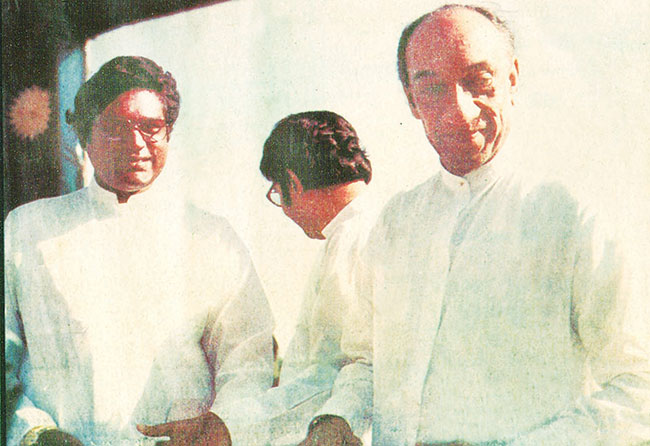
Some personal recollections
BY NANDA GODAGE
I returned to Sri Lanka in 1979 from a tour of duty in the Philippines and reassumed duties at the Foreign Ministry. One morning shortly afterwards President J.R. Jayewardene summoned me. I had never met the President and was quite curious as to how he knew of my existence. Minutes after I met him and after the customary exchange of pleasantries, that mystery was solved when the President complimented me on a ‘political report’ on the 1978 elections in the Philippines, which I had sent to Secretary/Foreign Affairs. I also sent a copy to my friend, Minister Athulathmudali, who had found it interesting and he had shared it with the President.
As for the reason for his having summoned me, that too was explained. The President very quickly came to the point. He wanted me to assume duties as Secretary-General of the precursor to the present Board of Investment, the Greater Colombo Economic Commission, as it was then known. Perhaps some reports on the functioning of the Batan export Processing Zone in the Philippines and on Investment Promotion in the Philippines, which I had sent my minister friend had also been shared with the President.
And that was how I found I myself being appointed as SG of the institution which the President often described as his pet project for which he took personal responsibility.
It was a presidential order and as such I had no option. The Katunayake ‘Free Trade Zone’ had been established through an Act of Parliament, which gave it wide-ranging powers—it was not only a Board of Investment but also the local authority for an area larger than Singapore. Even before 1 joined the institution I was aware that it was the pet hate of the Communists and their newspaper — the Aththa — the ‘Free Trade Zone’ — (I don’t know why they called it that instead of calling it the Export Processing Zone—which it was) referred to it as the Wahal Kalapaya or the slave zone, not giving credit to the fact that the ‘Zone was to be the source of employment to thousand who would otherwise have been unemployed and further, in their hatred for private enterprise, not realizing, as President JR himself said to me, “workers have their dignity and they are also voters. I created the Zone to give employment and give the people a better life not to lose votes”. On one occasion when the Aththa carried a headline report of how workers of a garment factory were put out of their lunch room to make way for sewing machines the President ordered me to close the factory and send the manager who had learned ‘bad ways’ in the Philippines out of the country. His words still echo, “The workers are our people. I will not let them to be exploited”.
Upali who was out of the country at the time endorsed the words of the President and gave instruction to the Senior Manager Industrial Relations to ensure that no worker in the Zone was exploited; this was also a matter which was wholly supported by the politician on the Board – the able and formidable Deputy Director General Mr. Paul Perera.
The newspapers at the time were also full of reports about differences between the flamboyant Chairman/Director General Upali Wijewardene and a particular colleague of his. The ‘tabloids’ also referred to the Prime Minister and the Finance Minister also ‘gunning’ for the chairman, whom they viewed as someone who could cheat them of their ambitions; in the circumstances one would understand my own reluctance to accept the appointment, but I was curtly informed that President Jayewardene had in fact made an order and that I had no option.
When I assumed duties, Upali Wijewardene was away from the country. We had met socially once or twice before, but I did not in fact really know him. When he returned from his overseas tour he sent for me-we shook hand and his first words were “you know I was never consulted about your appointment.” My response was “neither was I and had I half a chance I would not have come to the Sarpa Kalapya.” He laughed loud and long (he shook all over when he had a good belly laugh) and a friendship was made.
We worked out of the same floor – I was not only the Executive Secretary but he considered me to be his senior executive. Whenever he came to office after a break—(he came in only when he was in the country – he traveled extensively, but kept in touch on the phone) he called me in for a briefing’ On one of those occasions he asked me the following question: ‘What is the grade a student receives if he makes twenty five mistakes out of one hundred in an examination?’
The answer was of course obvious – “disto” (distinction) I replied. Upali responded with a “quite, so don’t worry, take decisions, they would come to attention only if you make mistakes of 25% and over.” He had the strength to delegate, He also had the ability to spot talent and was never afraid to give responsibility. I recall the case of a young man who looked
so boyish that I thought him to be a fourth former, whereas he was a graduate of good US University. Upali wanted to post him to an important overseas office and some of us had reservations because of the age and the fact that the young man was just out of University. But he said ‘no, lets try him out’ The recruit certainly delivered. He is presently with the UN holding a responsible position.
Upali, was by some; considered aloof and arrogant, but those of us who worked with him, found him to be quite a genial person fond of relating anecdotes. He seemed to always want an audience. I recall a particular anecdote, he had applied to Levers for a single post of management trainee. After many interviews only two applicants survived and he was one of them.
The CEO of Levers, a foreigner, had invited them to lunch at the Galle Face Hotel (according to Upali to test their table manners) The soup had been served and his competitor had tilted the soup plate towards himself to gather the last spoonfuls. Upali ended the story. ‘1 knew then that the job was mine’.
Upali never forgot his beginning as a businessman -he would often recall that he did not have the capital to make his dream of becoming a dollar millionaire at 30-years of age, come true. He would refer to the purchase of a ‘thachchi’ toffee business and remember those who had helped him. One story bears relating. There were four or five persons around the table and someone made a derogatory reference to the late Mr. TB Ilangaratne. That was the first time I saw Upali angry. He almost assaulted the man saying that Mr. Ilangaratne was eking out a bare existence. If he had made money in the manner that his political enemies made out, he would not have to depend on the charity of friends to survive. Upali; the capitalist had many socialist friends—one of whom was Sarath Navana of the LSSP, who edited the LSSP Party paper the Janadina’,
Upali was of course quite ambitious and often made his ambitions known to his ‘audience.’This I believe was the cause of his undoing. He made more enemies than friends, and his enemies were very powerful persons. The High Posts Committee of the House had not cleared the members of the Commission even by the end of 1979 (they had been appointed in 1978). When the hearing finally came around, rivalries within the Commission were not as bitter as they had once been. Old wounds had been healed and we expected the Commission to have easy clearance
That was not to be. Prime Minister Premadasa hated the very sight of Upali and. it was said by those present, tore into Upali from the word ‘go’ and had at one point referred to his ‘retinue: The SUN newspaper had reported a story of how Upali’s helicopter had been used to take supporters to Kamburupitiya. Upali, who had no respect for Premadasa had snapped back’yes of course. we look after those who work for us and this is in the best feudal tradition – something which you will not know anything about’.
The High Posts Committee headed by Premadasa found Upali unsuitable for the job of Chairman/Director General of the GCEC. It was quite ironical that this Committee which found a draftsman who had only ‘relative merit, (he was an immediate relative of Premadasa), eminently suitable to be our Ambassador in Sweden, found Sri Lanka’s forenost industrialist and venture capitalist, unsuitable to be head of the GCEC and not because they perceived any conflict of interest.
What had indeed become a huge joke did not end there. The findings of the High Posts Committee created by President Jayewardene had absolutely no effect on the president. Jayewardene had told Upali that it was he who had appointed him and therefore there was no need to step down! And he didn’t. And nothing happened. Those were the days!
JRJ, though he stood by his kinsman on that occasion let him down badly on another. The Kamburupitiya seat in Parliament had fallen vacant and Upali, who hailed from Kamburupitiya staked a claim. He considered himself as the obvious choice for the UNP ticket.
President Jayewardene had confirmed that he would be nominated. Upali summoned a special meeting of the board and farewell but he was in for an absolute shock, God only knows who could have held a. gun at JR.1’s head. but he changed his mind and gave the ticket to a nonentity from Galle whose name is now forgotten even by the people of Kamburupitiya. He was said to have been Mr. Premadasas nominee.
Despite his other obligations as Chairman of the ever expanding ‘Upali Group’ with big business interests in Malaysia, Singapore and the UK, he devoted much time to the GCEC. His style of management to which I have referred to earlier, in another context, was quite simple dorit bring problems to me. You are paid to take decisions. If you wish to consult me on solutions, bringyour solutions across and we can discuss them’
Investment promotion was an area in which he quite naturally revelled. I recall that our Senior Manager Investment Promotion then was the able and dynamic Rohan Weerasinghe, now a Director at Bartleets. Rohan did the legwork and the result had to be of the highest professional standards. Upali never compromised on standards when it came to work and never entertained excuses.
The promotion team led by Upali travelled to the US, the UK and Australia forpresenGations. Incidentally the Chairman did not charge the government travelling expenses, though he travelled first class and stayed in suites in five star hotels. On a number of occasions questions were asked in Parliament, on the instigation of his enemies, about the amounts spent on business trips. The answers always cited expenditure incurred on account of the rest of us—and it resulted in the matter being brought to the attention oft lie President who put an end to the witch-hunt.
It was Upali who brought Motorola Semi Conductors and Harris Semi Conductors to this country. Unfortunately they packed up and left after they incidents of Black July stating that the country was not stable Upali had the GCEC treat every prospective investors as a VIP. They were looked after from the time arrival till they left.
One happening in the US on one of our trips, bears recalling. We were making our presentation (to a major US’ Corporation) when the President of the Corporation dropped in to spend a few minutes with us and apologize for his inability to he present throughout the presentation. He glanced I I Trough the CV of Upali, and perhaps noting that Upali had big business interests in South East Asia, told him that their subsidiaries in South East Asia were having problems. He asked Upali a few questions and what happened next was quite amazing.
The company president called in a number of his senior management teams to discus his company’s problems and when it was pointed out that we had a plane to catch to another destination that afternoon, the he insisted that we be his guests at an exclusive club for dinner that night and fly out to our next destination on his executive jet the following morning.
I recall another interesting incident in Australia in 1981. We had planned investment promotion meetings in Sydney and Melbourne. I had gone ahead of the others to Sydney when Upali arrived the day before the workshop, I told him of a big horse race that was scheduled for that Saturday and suggested that we stay a day longer and watch it and move on to our next destination.
‘Not just watch it’ lie said. “I may have a horse running in it”. He wanted to buy a horse and enter it for the race. I thought was a joke. But two days later when I was having breakfast he walked in to the dining room with his entourage. I inquired as to where they had all been so early He replied, “we went to buy a horse”. He had indeed bought a horse,’My Lord Avon’, was its name. When I casually inquired as to the price paid his answer made me drop my cutlery At JD 149,000! He certainly did things in style!
Upali was the only Sri Lankan known in international business circles. His reputation was high in East Asia. He had been featured in many well known magazines including Business Week but when the prestigious Fortune magazine featured him, that certainly meant that he had arrived.
But his success was also his downfall. Perhaps I should not insult the other ethnic groups in Sri Lanka by lumping them with us Sinhalese in this regard Sadly, the Sinhalese often hate to see another of their race succeed.
Upali had more than his fair share of enemies and he indeed made his own contribution to building a hate bank.
I shall conclude with a story told to me by the late Mervyn de Silva.
He had interviewed Upali for a story he intended to send to a foreign magazine. Mervyn had completed his interview and was in the process of gathering up his papers when he had casually inquired as to whether he had a sort of hero. Upalfs answer had shocked him. He had put down his papers and sat down to do new article for his own magazine, the Lanka Guardian.
Upali had said that his hero on the Sri Lanka political scene was SWRD Bandaranaike! Mervyn carried the story in the December 1991 issue of the Lanka Guardian and Upali was asked to resign days afterwards by his cousin the President, Mr.JR Jayewardene! Perhaps had he said that his hero was JR he probably would have ended up in Parliament and who knows where afterwards.
(The writer served as Executive Secretary of the Greater Colombo Economic Commission when Upali Wijewardene was Chairman/Director General. This article first appeared on Sunday Island anniversary issue of Oct 01, 2006)

Reminiscences:
I was appointed Managing Director of the Ceylon Petroleum Corporation (CPC) and Chairman of the Trincomalee Petroleum Terminals Ltd (TPTL – Indian Oil Company/ Petroleum Corporation of Sri Lanka joint venture), in February 2023, by President Ranil Wickremesinghe. I served as TPTL Chairman voluntarily. TPTL controls the world-renowned oil tank farm in Trincomalee, abandoned after World War II. Several programmes were launched to repair tanks and buildings there. I enjoyed travelling to Trincomalee, staying at Navy House and monitoring the progress of the projects. Trincomalee is a beautiful place where I spent most of my time during my naval career.
My main task as MD, CPC, was to ensure an uninterrupted supply of petroleum products to the public.
With the great initiative of the then CPC Chairman, young and energetic Uvis Mohammed, and equally capable CPC staff, we were able to do our job diligently, and all problems related to petroleum products were overcome. My team and I were able to ensure that enough stocks were always available for any contingency.
The CPC made huge profits when we imported crude oil and processed it at our only refinery in Sapugaskanda, which could produce more than 50,000 barrels of refined fuel in one stream working day! (One barrel is equal to 210 litres). This huge facility encompassing about 65 acres has more than 1,200 employees and 65 storage tanks.
A huge loss the CPC was incurring due to wrong calculation of “out turn loss” when importing crude oil by ships and pumping it through Single Point Mooring Buoy (SPMB) at sea and transferring it through underwater fuel transfer lines to service tanks was detected and corrected immediately. That helped increase the CPC’s profits.
By August 2023, the CPC made a net profit of 74,000 million rupees (74 billion rupees)! The President was happy, the government was happy, the CPC Management was happy and the hard-working CPC staff were happy. I became a Managing Director of a very happy and successful State-Owned Enterprise (SOE). That was my first experience in working outside military/Foreign service.
I will be failing in my duty if I do not mention Sagala Rathnayake, then Chief of Staff to the President, for recommending me for the post of MD, CPC.
The only grievance they had was that we were not able to pay their 2023 Sinhala/Tamil New Year bonus due to a government circular. After working at CPC for six months and steering it out of trouble, I was ready to move out of CPC.
I was offered a new job as the Sri Lanka High Commissioner to Pakistan. I was delighted and my wife and son were happy. Our association with Pakistan, especially with the Pakistan Military, is very long. My son started schooling in Karachi in 1995, when I was doing the Naval War Course there. My wife Yamuna has many good friends in Pakistan. I am the first Military officer to graduate from the Karachi University in 1996 (BSc Honours in War Studies) and have a long association with the Pakistan Navy and their Special Forces. I was awarded the Nishan-e-Imtiaz (Military) medal—the highest National award by the Pakistan Presidentm in 2019m when I was Chief of Defence Staff. I am the only Sri Lankan to have been awarded this prestigious medal so far. I knew my son and myself would be able to play a quiet game of golf every morning at the picturesque Margalla Golf Club, owned by the Pakistan Navy, at the foot of Margalla hills, at Islamabad. The golf club is just a walking distance from the High Commissioner’s residence.
When I took over as Sri Lanka High Commissioner at Islamabad on 06 December 2023, I realised that a number of former Service Commanders had held that position earlier. The first Ceylonese High Commissioner to Pakistan, with a military background, was the first Army Commander General Anton Muthukumaru. He was concurrently Ambassador to Iran. Then distinguished Service Commanders, like General H W G Wijayakoon, General Gerry Silva, General Srilal Weerasooriya, Air Chief Marshal Jayalath Weerakkody, served as High Commissioners to Islamabad. I took over from Vice Admiral Mohan Wijewickrama (former Chief of Staff of Navy and Governor Eastern Province).
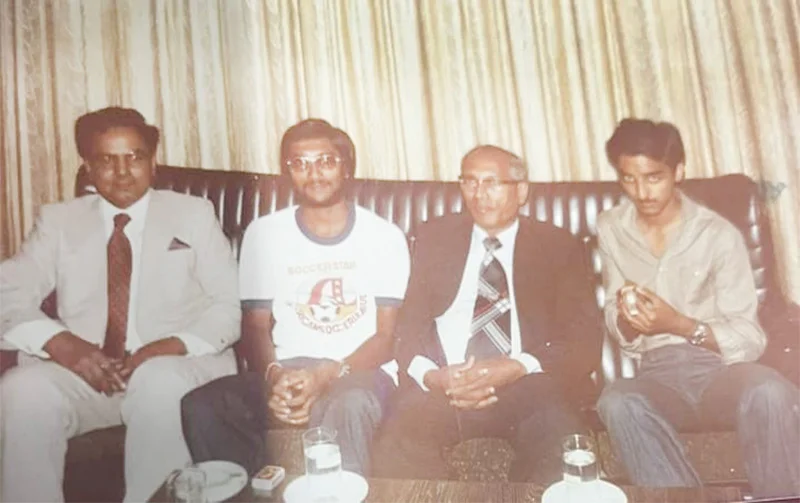
A photograph of Dr. Silva (second from right) in Brigadier
(Dr) Waquar Muzaffar’s album
One of the first visitors I received was Kawaja Hamza, a prominent Defence Correspondent in Islamabad. His request had nothing to do with Defence matters. He wanted to bring his 84-year-old father to see me; his father had his eyesight restored with corneas donated by a Sri Lankan in 1972! His eyesight is still good, but he did not know the Sri Lankan donor who gave him this most precious gift. He wanted to pay gratitude to the new Sri Lankan High Commissioner and to tell him that as a devoted Muslim, he prayed for the unknown donor every day! That reminded me of what my guru in Foreign Service, the late Foreign Minister Lakshman Kadirgamar told me when I was First Secretary/ Defence Advisor, Sri Lanka High Commission in New Delhi. That is “best diplomacy is people-to-people contacts.” This incident prompted me to research more into “Pakistan-Sri Lanka Eye Diplomacy” and what I learnt was fascinating!
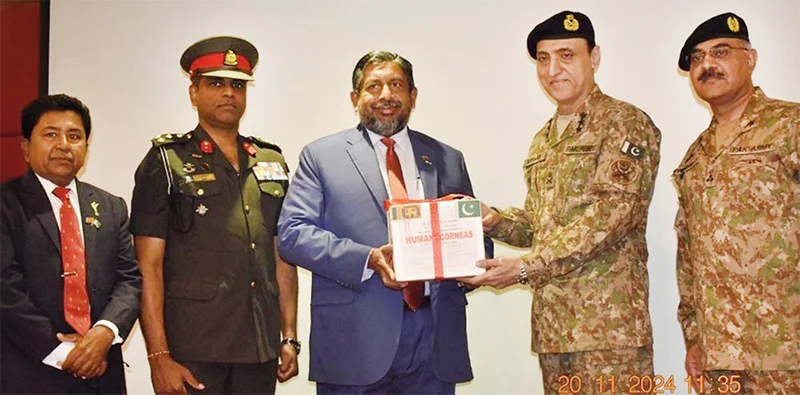
Do you know the Sri Lanka Eye Donation Society has donated more than 26,000 corneas to Pakistan, since 1964 to date! That means more than 26,000 Pakistani people see the world with SRI LANKAN EYES! The Sri Lankan Eye Donation Society has provided 100,000 eye corneas to foreign countries FREE! To be exact 101,483 eye corneas during the last 65 years! More than one fourth of these donations was to one single country- Pakistan. Recent donations (in November 2024) were made to the Pakistan Military at Armed Forces Institute of Ophthalmology (AFIO), Rawalpindi, to restore the sight of Pakistan Army personnel who suffered eye injuries due to Improvised Explosive Devices (IED) blasts. This donation was done on the 75th Anniversary of the Sri Lanka Army.
Deshabandu Dr. F. G. Hudson Silva, a distinguished old boy of Nalanda College, Colombo, started collecting eye corneas as a medical student in 1958. His first set of corneas were collected from a deceased person and were stored at his home refrigerator at Wijerama Mawatha, Colombo 7. With his wife Iranganie De Silva (nee Kularatne), he started the Sri Lanka Eye Donation Society in 1961. They persuaded Buddhists to donate their eyes upon death. This drive was hugely successful.
Their son (now in the US) was a contemporary of mine at Royal College. I pledged to donate (of course with my parents’ permission) my eyes upon my death when I was a student at Royal college in 1972 on a Poson Full Moon Poya Day. Thousands have done so.
On Vesak Full Moon Poya Day in 1964, the first eye corneas were carried in a thermos flask filled with Ice, to Singapore, by Dr Hudson Silva and his wife and a successful eye transplant surgery was performed. From that day, our eye corneas were sent to 62 different countries.
Pakistan Lions Clubs, which supported this noble gesture, built a beautiful Eye Hospital for humble people at Gulberg, Lahore, where eye surgeries are performed, and named it Dr Hudson Silva Lions Eye Hospital.
The good work has continued even after the demise of Dr Hudson Silva in 1999.
So many people have donated their eyes upon their death, including President J. R. Jayewardene, whose eye corneas were used to restore the eyesight of one Japanese and one Sri Lankan. Dr Hudson Silva became a great hero in Pakistan and he was treated with dignity and respect whenever he visited Pakistan. My friend, Brigadier (Dr) Waquar Muzaffar, the Commandant of AFIO, was able to dig into his old photographs and send me a precious photo taken in 1980, 46 years ago (when he was a medical student), with Dr Hudson Silva.
We will remember Dr and Mrs Hudson Silva with gratitude.
Bravo Zulu to Sri Lanka Eye Donation Society!
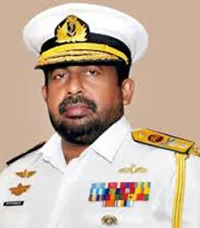 by Admiral Ravindra C Wijegunaratne
WV, RWP and Bar, RSP, VSV, USP, NI (M) (Pakistan), ndc, psn, Bsc
(Hons) (War Studies) (Karachi) MPhil (Madras)
Former Navy Commander and Former Chief of Defense Staff
Former Chairman, Trincomalee Petroleum Terminals Ltd
Former Managing Director Ceylon Petroleum Corporation
Former High Commissioner to Pakistan
Problems and solutions in plural societies like Sri Lanka’s which have deep rooted ethnic, religious and linguistic cleavages require a consciously inclusive approach. A major challenge for any government in Sri Lanka is to correctly identify the problems faced by different groups with strong identities and find solutions to them. The durability of democratic systems in divided societies depends less on electoral victories than on institutionalised inclusion, consultation, and negotiated compromise. When problems are defined only through the lens of a single political formation, even one that enjoys a large electoral mandate, such as obtained by the NPP government, the policy prescriptions derived from that diagnosis will likely overlook the experiences of communities that may remain outside the ruling party. The result could end up being resistance to those policies, uneven implementation and eventual political backlash.
A recent survey done by the National Peace Council (NPC), in Jaffna, in the North, at a focus group discussion for young people on citizen perception in the electoral process, revealed interesting developments. The results of the NPC micro survey support the findings of the national survey by Verite Research that found that government approval rating stood at 65 percent in early February 2026. A majority of the respondents in Jaffna affirm that they feel safer and more fairly treated than in the past. There is a clear improving trend to be seen in some areas, but not in all. This survey of predominantly young and educated respondents shows 78 percent saying livelihood has improved and an equal percentage feeling safe in daily life. 75 percent express satisfaction with the new government and 64 percent believe the state treats their language and culture fairly. These are not insignificant gains in a region that bore the brunt of three decades of war.
Yet the same survey reveals deep reservations that temper this optimism. Only 25 percent are satisfied with the handling of past issues. An equal percentage see no change in land and military related concerns. Most strikingly, almost 90 percent are worried about land being taken without consent for religious purposes. A significant number are uncertain whether the future will be better. These negative sentiments cannot be brushed aside as marginal. They point to unresolved structural questions relating to land rights, demilitarisation, accountability and the locus of political power. If these issues are not addressed sooner rather than later, the current stability may prove fragile. This suggests the need to build consensus with other parties to ensure long-term stability and legitimacy, and the need for partnership to address national issues.
NPP Absence
National or local level problems solving is unlikely to be successful in the longer term if it only proceeds from the thinking of one group of people even if they are the most enlightened. Problem solving requires the engagement of those from different ethno-religious, caste and political backgrounds to get a diversity of ideas and possible solutions. It does not mean getting corrupted or having to give up the good for the worse. It means testing ideas in the public sphere. Legitimacy flows not merely from winning elections but from the quality of public reasoning that precedes decision-making. The experience of successful post-conflict societies shows that long term peace and development are built through dialogue platforms where civil society organisations, political actors, business communities, and local representatives jointly define problems before negotiating policy responses.
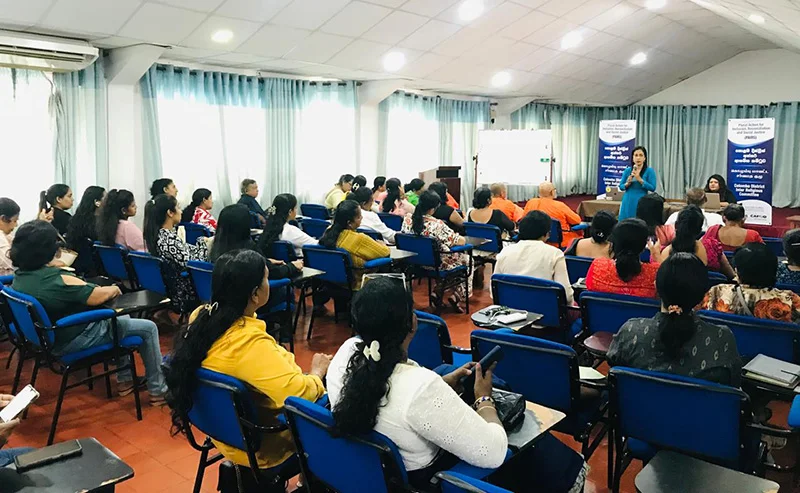
As a civil society organisation, the National Peace Council engages in a variety of public activities that focus on awareness and relationship building across communities. Participants in those activities include community leaders, religious clergy, local level government officials and grassroots political party representatives. However, along with other civil society organisations, NPC has been finding it difficult to get the participation of members of the NPP at those events. The excuse given for the absence of ruling party members is that they are too busy as they are involved in a plenitude of activities. The question is whether the ruling party members have too much on their plate or whether it is due to a reluctance to work with others.
The general belief is that those from the ruling party need to get special permission from the party hierarchy for activities organised by groups not under their control. The reluctance of the ruling party to permit its members to join the activities of other organisations may be the concern that they will get ideas that are different from those held by the party leadership. The concern may be that these different ideas will either corrupt the ruling party members or cause dissent within the ranks of the ruling party. But lasting reform in a plural society requires precisely this exposure. If 90 percent of surveyed youth in Jaffna are worried about land issues, then engaging them, rather than shielding party representatives from uncomfortable conversations, is essential for accurate problem identification.
North Star
The Leader of the Lanka Sama Samaja Party (LSSP), Prof Tissa Vitarana, who passed away last week, gave the example for national level problem solving. As a government minister he took on the challenge the protracted ethnic conflict that led to three decades of war. He set his mind on the solution and engaged with all but never veered from his conviction about what the solution would be. This was the North Star to him, said his son to me at his funeral, the direction to which the Compass (Malimawa) pointed at all times. Prof Vitarana held the view that in a diverse and plural society there was a need to devolve power and share power in a structured way between the majority community and minority communities. His example illustrates that engagement does not require ideological capitulation. It requires clarity of purpose combined with openness to dialogue.
The ethnic and religious peace that prevails today owes much to the efforts of people like Prof Vitarana and other like-minded persons and groups which, for many years, engaged as underdogs with those who were more powerful. The commitment to equality of citizenship, non-racism, non-extremism and non-discrimination, upheld by the present government, comes from this foundation. But the NPC survey suggests that symbolic recognition and improved daily safety are not enough. Respondents prioritise personal safety, truth regarding missing persons, return of land, language use and reduction of military involvement. They are also asking for jobs after graduation, local economic opportunity, protection of property rights, and tangible improvements that allow them to remain in Jaffna rather than migrate.
If solutions are to be lasting they cannot be unilaterally imposed by one party on the others. Lasting solutions cannot be unilateral solutions. They must emerge from a shared diagnosis of the country’s deepest problems and from a willingness to address the negative sentiments that persist beneath the surface of cautious optimism. Only then can progress be secured against reversal and anchored in the consent of the wider polity. Engaging with the opposition can help mitigate the hyper-confrontational and divisive political culture of the past. This means that the ruling party needs to consider not only how to protect its existing members by cloistering them from those who think differently but also expand its vision and membership by convincing others to join them in problem solving at multiple levels. This requires engagement and not avoidance or withdrawal.
by Jehan Perera
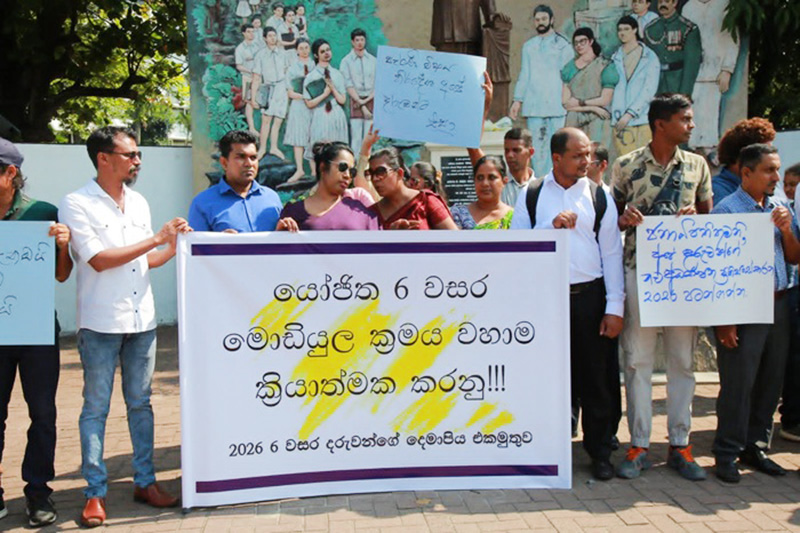
 As the debate on educational reforms rages, I find it useful to pay as much attention to the reactions they have excited as we do to the content of the reforms. Such reactions are a reflection of how education is understood in our society, and this understanding – along with the priorities it gives rise to – must necessarily be taken into account in education policy, including and especially reform. My aim in this piece, however, is to couple this public engagement with critical reflection on the historical-structural realities that structure our possibilities in the global market, and briefly discuss the role of academics in this endeavour.
Two broad reactions
The reactions to the proposed reforms can be broadly categorised into ‘pro’ and ‘anti’. I will discuss the latter first. Most of the backlash against the reforms seems to be directed at the issue of a gay dating site, accidentally being linked to the Grade 6 English module. While the importance of rigour cannot be overstated in such a process, the sheer volume of the energies concentrated on this is also indicative of how hopelessly homophobic our society is, especially its educators, including those in trade unions. These dispositions are a crucial part of the reason why educational reforms are needed in the first place. If only there was a fraction of the interest in ‘keeping up with the rest of the world’ in terms of IT, skills, and so on, in this area as well!
Then there is the opposition mounted by teachers’ trade unions and others about the process of the reforms not being very democratic, which I (and many others in higher education, as evidenced by a recent statement, available at https://island.lk/general-educational-reforms-to-what-purpose-a-statement-by-state-university-teachers/ ) fully agree with. But I earnestly hope the conversation is not usurped by those wanting to promote heteronormativity, further entrenching bigotry only education itself can save us from. With this important qualification, I, too, believe the government should open up the reform process to the public, rather than just ‘informing’ them of it.
It is unclear both as to why the process had to be behind closed doors, as well as why the government seems to be in a hurry to push the reforms through. Considering other recent developments, like the continued extension of emergency rule, tabling of the Protection of the State from Terrorism Act (PSTA), and proposing a new Authority for the protection of the Central Highlands (as is famously known, Authorities directly come under the Executive, and, therefore, further strengthen the Presidency; a reasonable question would be as to why the existing apparatus cannot be strengthened for this purpose), this appears especially suspect.
Further, according to the Secretary to the MOE Nalaka Kaluwewa: “The full framework for the [education] reforms was already in place [when the Dissanayake government took office]” (https://www.wsws.org/en/articles/2025/08/12/wxua-a12.html, citing The Morning, July 29). Given the ideological inclinations of the former Wickremesinghe government and the IMF negotiations taking place at the time, the continuation of education reforms, initiated in such a context with very little modification, leaves little doubt as to their intent: to facilitate the churning out of cheap labour for the global market (with very little cushioning from external shocks and reproducing global inequalities), while raising enough revenue in the process to service debt.
This process privileges STEM subjects, which are “considered to contribute to higher levels of ‘employability’ among their graduates … With their emphasis on transferable skills and demonstrable competency levels, STEM subjects provide tools that are well suited for the abstraction of labour required by capitalism, particularly at the global level where comparability across a wide array of labour markets matters more than ever before” (my own previous piece in this column on 29 October 2024). Humanities and Social Sciences (HSS) subjects are deprioritised as a result. However, the wisdom of an education policy that is solely focused on responding to the global market has been questioned in this column and elsewhere, both because the global market has no reason to prioritise our needs as well as because such an orientation comes at the cost of a strategy for improving the conditions within Sri Lanka, in all sectors. This is why we need a more emancipatory vision for education geared towards building a fairer society domestically where the fruits of prosperity are enjoyed by all.
The second broad reaction to the reforms is to earnestly embrace them. The reasons behind this need to be taken seriously, although it echoes the mantra of the global market. According to one parent participating in a protest against the halting of the reform process: “The world is moving forward with new inventions and technology, but here in Sri Lanka, our children are still burdened with outdated methods. Opposition politicians send their children to international schools or abroad, while ours depend on free education. Stopping these reforms is the lowest act I’ve seen as a mother” (https://www.newsfirst.lk/2026/01/17/pro-educational-reforms-protests-spread-across-sri-lanka). While it is worth mentioning that it is not only the opposition, nor in fact only politicians, who send their children to international schools and abroad, the point holds. Updating the curriculum to reflect the changing needs of a society will invariably strengthen the case for free education. However, as mentioned before, if not combined with a vision for harnessing education’s emancipatory potential for the country, such a move would simply translate into one of integrating Sri Lanka to the world market to produce cheap labour for the colonial and neocolonial masters.
According to another parent in a similar protest: “Our children were excited about lighter schoolbags and a better future. Now they are left in despair” (https://www.newsfirst.lk/2026/01/17/pro-educational-reforms-protests-spread-across-sri-lanka). Again, a valid concern, but one that seems to be completely buying into the rhetoric of the government. As many pieces in this column have already shown, even though the structure of assessments will shift from exam-heavy to more interim forms of assessment (which is very welcome), the number of modules/subjects will actually increase, pushing a greater, not lesser, workload on students.
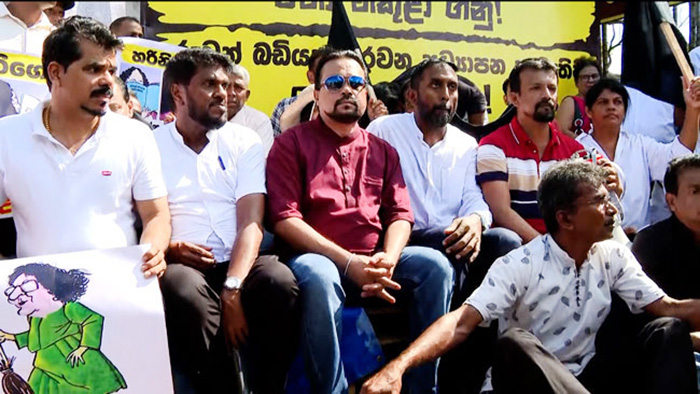
A file photo of a satyagraha against education reforms
What kind of education?
The ‘pro’ reactions outlined above stem from valid concerns, and, therefore, need to be taken seriously. Relatedly, we have to keep in mind that opening the process up to public engagement will not necessarily result in some of the outcomes, those particularly in the HSS academic community, would like to see, such as increasing the HSS component in the syllabus, changing weightages assigned to such subjects, reintroducing them to the basket of mandatory subjects, etc., because of the increasing traction of STEM subjects as a surer way to lock in a good future income.
Academics do have a role to play here, though: 1) actively engage with various groups of people to understand their rationales behind supporting or opposing the reforms; 2) reflect on how such preferences are constituted, and what they in turn contribute towards constituting (including the global and local patterns of accumulation and structures of oppression they perpetuate); 3) bring these reflections back into further conversations, enabling a mutually conditioning exchange; 4) collectively work out a plan for reforming education based on the above, preferably in an arrangement that directly informs policy. A reform process informed by such a dialectical exchange, and a system of education based on the results of these reflections, will have greater substantive value while also responding to the changing times.
Two important prerequisites for this kind of endeavour to succeed are that first, academics participate, irrespective of whether they publicly endorsed this government or not, and second, that the government responds with humility and accountability, without denial and shifting the blame on to individuals. While we cannot help the second, we can start with the first.
Conclusion
For a government that came into power riding the wave of ‘system change’, it is perhaps more important than for any other government that these reforms are done for the right reasons, not to mention following the right methods (of consultation and deliberation). For instance, developing soft skills or incorporating vocational education to the curriculum could be done either in a way that reproduces Sri Lanka’s marginality in the global economic order (which is ‘system preservation’), or lays the groundwork to develop a workforce first and foremost for the country, limited as this approach may be. An inextricable concern is what is denoted by ‘the country’ here: a few affluent groups, a majority ethno-religious category, or everyone living here? How we define ‘the country’ will centrally influence how education policy (among others) will be formulated, just as much as the quality of education influences how we – students, teachers, parents, policymakers, bureaucrats, ‘experts’ – think about such categories. That is precisely why more thought should go to education policymaking than perhaps any other sector.
(Hasini Lecamwasam is attached to the Department of Political Science, University of Peradeniya).
Kuppi is a politics and pedagogy happening on the margins of the lecture hall that parodies, subverts, and simultaneously reaffirms social hierarchies.

Pakistan into Super Eight after Farhan ton sinks Namibia

Muscular South Africa stroll into Super Eight with all-win record

Pakistan bat first, drop Shaheen Afridi in must-win encounter against Namibia

New Bangladesh sports minister wants to fast track cases against Shakib and Mortaza

Climber on trial for leaving girlfriend to die on Austria’s highest mountain

IMF MD commends government’s efforts in stabilizing the country’s economy

‘Dates have the highest sugar content to fight Coronavirus’

Sunday Island 27 December – Headlines

#SundayIsland 17th December – Headlines

Sunday Island – 28th March

Sunday Island Headlines – 21 March

Sunday Island – 21st February – Headlines
-
 Life style4 days ago
Marriot new GM Suranga
-

 Business3 days ago
Ministry of Brands to launch Sri Lanka’s first off-price retail destination
-
 Features4 days ago
Monks’ march, in America and Sri Lanka
-
 Opinion7 days ago
Will computers ever be intelligent?
-
 Features4 days ago
The Rise of Takaichi
-
 Features4 days ago
Wetlands of Sri Lanka:
-
 News4 days ago
Thailand to recruit 10,000 Lankans under new labour pact
-
 News4 days ago
Massive Sangha confab to address alleged injustices against monks