
Life style
The first ever social club in ceylon and the life of H.A Marshall-its builder

Whist bungalow
by Hugh Karunanayake
When the Portuguese and Dutch occupied the maritime provinces of Ceylon from the 16 th Century to the end of the 18th century, it was more or less a military occupation with the ever present danger of the coastal government being overrun by the monarch who ruled the Kandyan Kingdom. That imminent possibility was mitigated to some degree with the annexation of the maritime provinces by the British East India Co; which occurred during the wars of the French revolution. When the Netherlands came under French control the British made its move to oust the Dutch from Ceylon. The Dutch surrendered the island(or more precisely its maritime areas) to the British in 1796 after some half hearted resistance. In 1802 Ceylon was made a crown colony and it was clear that the British were here to stay. In 1815 the Kandyan Kingdom capitulated to the British through a combination of intrigue, and disaffection in the King’s court rather than military engagement. The doors of the country were now open for British settlement and to exploit the nation’s resources to the advantage of the Metropolitan power.
With Ceylon functioning as a British colony, the stage was set for its administration through a Governor appointed by the monarch in Britain. The administration was done through a Civil Service established by the government and by a legal system largely based on Roman Dutch Law supplemented by laws and customs of the local population. Governor Frederick North arrived in the island on 12 October 1798 accompanied by 9 officials who were to administer the island. Among them were three “officers” Sylvester Gordon, Robert Barry, and George Lusignan, each of them just thirteen years of age!! ( Gives some indication of the confidence of the Brits who thought that even teenagers could keep the”natives” in check) There was also in the group,Henry Augustus Marshall who was appointed First Clerk of the Civil Department which was the precursor to the Treasury. Marshall educated at Charterhouse and Oxford was reputed to be the best classics scholar in the island during his stay. He married the daughter of Colonel Robert Brooke Governor of the Island of St Helena. Mrs Marshall was apparently a wealthy woman as suggested by Governor North commenting on Marshall as “married comfortably”.Mr and Mrs Marshall are said to have been very popular socially and JP Lewis the colonial recorder and historian believed that she was the guardian of the tree referred to on the inscription on the stone tablet seen to this day next to the Wellawatte Bridge on Galle Road. Others have suugested that the Sophia referred to in the inscription is none other than Lady Brownrigg.
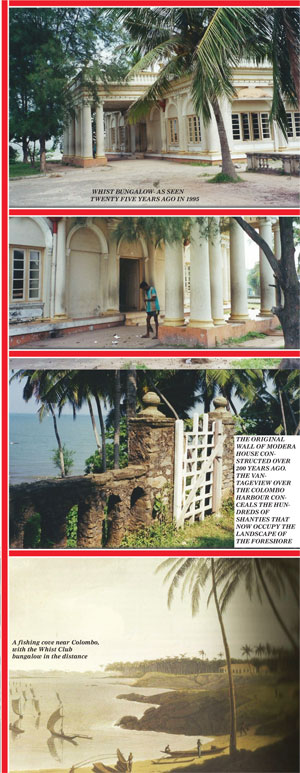 At the time of British rule of the maritime provinces of Ceylon during late 18 th Century, it was the Galle Harbour that was the main point of entry to the island. The Colombo harbour was a tranquil bay used by fishing craft. The areas overlooking the bay of Colombo in the Mutwal area soon became elite residential areas, replacing the Fort and Pettah areas populated by the Dutch. The early British administrators were quick to acquire choice sites for their homes, the best of them overlooking the bay of Colombo. Many stately homes were constructed in the Mutwal, Modera areas. They included the Whist Bungalow, Modera House, Uplands, Elie House, Rock House, all of them located on vantage points overlooking the bay of Colombo. Three of the stately homes, Rock House, Whist Bungalow, and Modera House were built by Henry Augustus Marshall, the Civil Servant, in his private capacity.
Rev James Cordiner was appointed Chaplain to the 51 st Foot Regiment in Ceylon at the request of Governor Norh. A man of learning and of perceptive observation Rev Cordiner did a tour round the Island in 1800, which led him to publishing in 1807 one of the earliest English descriptions of the island in a two volume publication titled “A description of Ceylon, with narratives of aTour round the Island in 1800, the expedition to Kandy in 1803, and a visit to Ramessaram in 1804”.
Cordiner observed that “The English society at Colombo is uncommonly pleasant; and an assemblage of so many excellent characters is, certainly rarely to be found. The men at the head of the civil and military departments are particularly amiable: and all ranks live together in a mutual exchange of the most friendly and familiar intercourse….” And “Two weekly clubs which have been established at Colombo for several years past, contribute eminently to the promotion of social pleasures in the settlement. The elder is the Cocoa-nut, or Whist Club, at which the principal amusement is cards. The bungaloe where it is held, is beautifully situated, about four miles north east of Colombo.at the mouth of the Calany-ganga, which there receives the name of Mootwal. The club consists of twelve members, chosen from among the most respectable inhabitants of the place. They give dinners in rotation, and generally invite twelve strangers. Some of the members whose characters are celebrated for extensive hospitality, assemble a still greater number of guests. The entertainment is always liberal, and the assembly never fails to be animated with the highest share of convivial delight.The company repair to the villa about one o’clock in the afternoon, and play cards, read or otherwise enjoy the country, until four when dinner is announced. At half past five, or six o’clock, they rise from the table, make a circuit in their carriages or on horseback, and reach their respective homes before dark.”
What a glorious life the British pioneers would have lived. Little wonder that the aspiring”natives” modelled themselves on the social features of the life of the Brits. The creation of the Whist Club underscored the need for expatriate personnel to engage in social interaction. There were many other venerable institutions to follow in later years like the Colombo Club, Kandy Club, Hill Club all of which offered residential facilities. They were however not open to the local population, who not to be outdone formed their own Orient Club (a natives only residential club). Ethno specific sports clubs followed, and are there to this day eschewing some of the rigid ethno specific admission rules insisted upon at the beginning. Clubs were the order of the day during the nineteenth and twentieth centuries, and the more exclusive the membership the higher the social status that exclusivity conferred! The rise of the new breed of hostelry “the Five Star Hotel” seems to have put paid to all those status symbols and hallmarks of privilege.!
While it is on record that Marshall constructed Whist Bungalow, Modera House, and Rock House there is no evidence to suggest that he ever lived in any of them. The history of occupancy of Whist Bungalow is on the public record. On the closure of the Coca- nut Club, Whist Bungalow was acquired by Sir Richard Morgan, Supreme Court Judge. It was inherited by his son who died suddenly and it was then under the ownership of Mr Louis Peiris and his wife Selina who lived there for many years. The house was featured in the encylopaedic “Twentieth Century Impressions of Ceylon” published in 1907, when it was occupied by the Pieris family. The Famed German Naturalist Ernet Haeckel who visited Ceylon in the 1880s resided in Whist Bungalow and wrote wistfully about his life there in his book “A visit to Ceylon”. The ownership of the house appeared to have changed several times, once even used as a tea store!. The house is presently managed by the National Housing Development authority as a community hall.
The first ever socia…
Members of CSA would be interested to know that the forbears of two senior membesr of the Society once owned Whist Bungalow. Maureen Henricus nee Morgan is a direct descendant of Sir Richard Morgan, while Chandra Senaratne’s maternal grandmother was Mrs Selina Peiris!
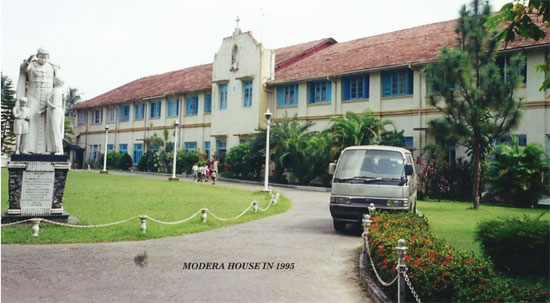
Modera House the other creation of Marshall was occupied by the Armitage family, the leading coffee exporters from Ceylon in the nineteenth century. The coffee crash seriously affected the fortunes of the Armitages who sold Modera House to the De La Salle Brothers in the 1880s and moved to Alexandra House, Alexandra Place. The house was later the premises of Alexandra College. Modera House was the location of the film “Elephant Walk” a classic movie of the 1950s. It is now a school run by the De La Salle brothers. “Rock House” built by Marshall was acquired by the government and is Army property for the past over fifty years.
Mr and Mrs Marshall were a popular couple socially. Lieut -Col Campbell in his two volume book “Excursions, adventures, and Field sports in Ceylon” published in 1843 had this to say of the Marshalls ” A gentleman and his lady upon whose hospitality and friendship I had little or no claim, most kindly received me into their charming abode, situated on the sea shore about three miles from Colombo, and it is to the care and attention of Mr and Mrs Marshall that I attribute my temporary recovery.” Famed colonial recorder and writer J Penry Lewis believed that the Marshalls lived near the old toll gate which was in existence at Wellawatte near the bridge over the canal. There was a large banian tree under which a stone tablet was installed praising the virtues of a lady named Sophia. While Mrs Marshall carried her first name as Sophia, it has been suggested that there was another Sophia- viz Lady Sophia Brownrigg the Governor’s wife.
While that riddle remains to be solved, we have to this day the stone tablet with the inscription. It was lying near the entrance to the bicycle shed of the Savoy Cinema, but since has been erected upright near the bridge. Our former President of the Colombo Chapter Somasiri Devendra published a well researched article in his usual scholarly style, which appeared under the title “Wellawatte Inscriptions” in The Ceylankan #9 of Feb 2000. The “younger” club that existed during Marshall’s time, the “Quoit Club” was according to Cordiner situated in an opposite direction to Whist Bungalow, about two miles south of Colombo on the road leading to Point De Galle. Is it possible that Marshall built the Quoit Club as well and also resided there? Could Cordiner have misjudged the distance from Colombo of the Quoit Club ? If such is the case there is more certainty to the speculation that the Wellawatte tablet refers to none other than Sophia Marshall. We are still however lingering in the realm of conjecture !
Henry Augustus Marshall died on 23 January 1841 in his 64 th year and was buried in the old Galle Face Cemetery. A tablet was erected in St Peter’s Church,Fort by his widow and two son “in memory of an elegant classical scholar and a sincere Christian.
Colombo of the eighteenth century was a tranquil place, rich in vegetation, and serene in outlook. It was James Cordiner who observed that: “Nothing about Colombo is more apt to excite admiration than the flourishing state of the vegetable world. So much beauty and variety are in few countries equalled, and nowhere excelled”. Is it a forlorn wish to hope for a revival of Colombo’s lost beauty ? Only time will tell !!



By Ifham Nizam
Sri Lanka’s wildlife story has long been told through its giants — the stealth of the Sri Lankan leopard, the quiet power of the Asian elephant, and the ocean drama of the blue whale.
These icons have shaped the island’s global image, drawing travellers from across the world.
But as the sun slips below the horizon and the last safari jeeps return to camp, another Sri Lanka awakens — one that is far less known, yet just as extraordinary.
In the half-light of wetlands, along bunds of ancient irrigation tanks, and at the edges of village paddy fields, three elusive felines begin their nightly rounds. The Fishing Cat, the Jungle Cat, and the Rusty-spotted Cat — small, secretive, and largely overlooked — are now emerging as the island’s most intriguing untold wildlife story.
Fishing Cat
And according to researchers, their time in the spotlight may have finally come.
A Hidden World, Ready to Be Seen
“These cats have always been here — living quietly alongside us,” says Chaminda Jayasekara, a researcher and conservationist who has spent years studying Sri Lanka’s lesser-known carnivores.
“What is changing now is not the cats, but our awareness. We are beginning to understand that these species are not rare in the sense of being absent — they are rare because we have not been looking for them in the right way,” he said.
Jayasekara notes that all three species are distributed across wide swathes of the island — from the dry zone landscapes of the Cultural Triangle to the wetter lowlands and even human-dominated environments.
“The remarkable thing about the Fishing Cat and the Jungle Cat in particular is their adaptability. They are not confined to deep water. They use wetlands, paddy fields, scrublands — habitats that exist right next to where people live,” he explained.
-

- Jungle cat

-
- Rusty-spotted cat

-

- Chaminda with wife Thilini Sandamali
Three Cats, Three Remarkable Stories
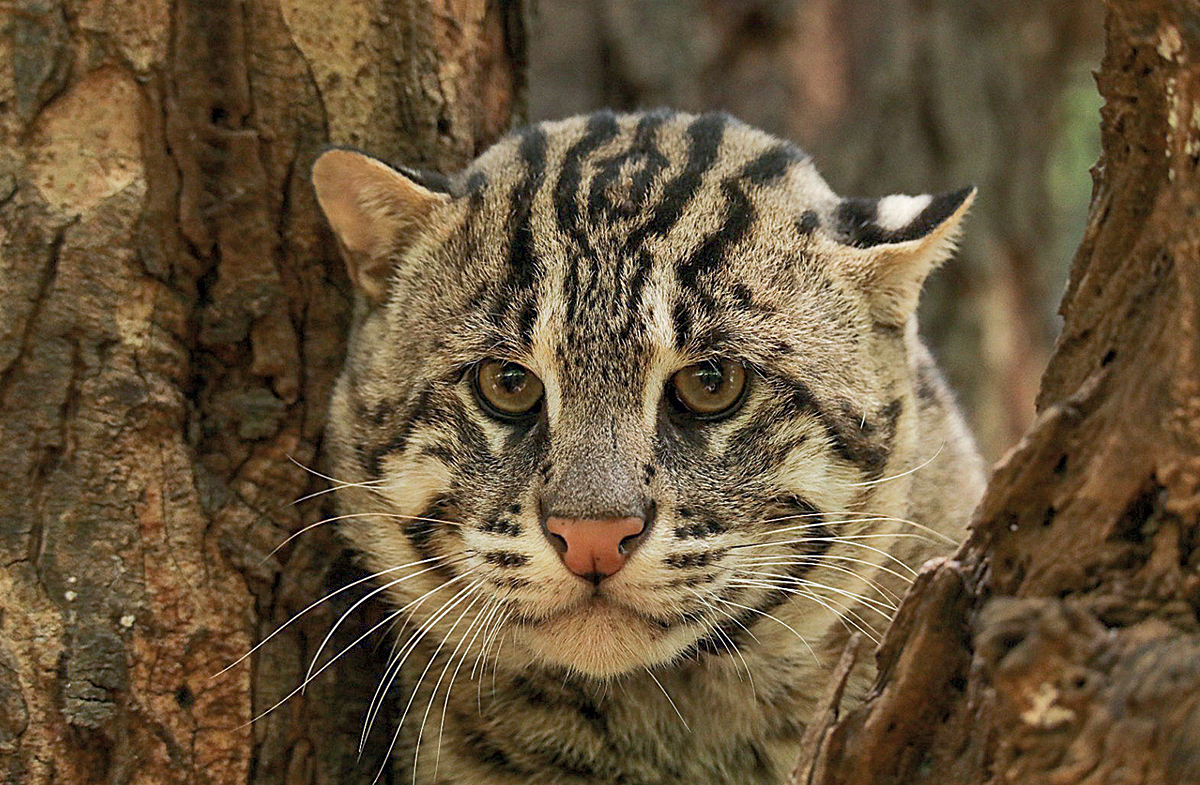
The largest of the trio, the Fishing Cat, is a wetland specialist — a muscular, spotted predator with partially webbed paws built for hunting in water. Across Sri Lanka’s vast network of tanks, marshes, and mangroves, it stalks fish with silent precision.
Globally listed as Vulnerable and considered endangered nationally, the species faces mounting pressure from wetland loss and pollution. Yet paradoxically, it is often found within sight of human settlements.
“Seeing a Fishing Cat hunting along a village tank is one of the most powerful wildlife experiences Sri Lanka can offer,” Jayasekara said. “It challenges everything people think they know about where wildlife belongs.”
The Jungle Cat, by contrast, is a creature of grass and scrub — long-legged, alert, and often active at dusk. It thrives in the margins where farmland meets wilderness, preying on rodents, birds, and reptiles.
Though not currently endangered, its habitat is steadily shrinking.
“These are landscapes we often dismiss as ‘empty’ or ‘degraded,’” Jayasekara noted. “But for the Jungle Cat, they are essential. Losing them means losing an entire ecological story.”
And then there is the smallest of them all — the
Rusty-spotted Cat.
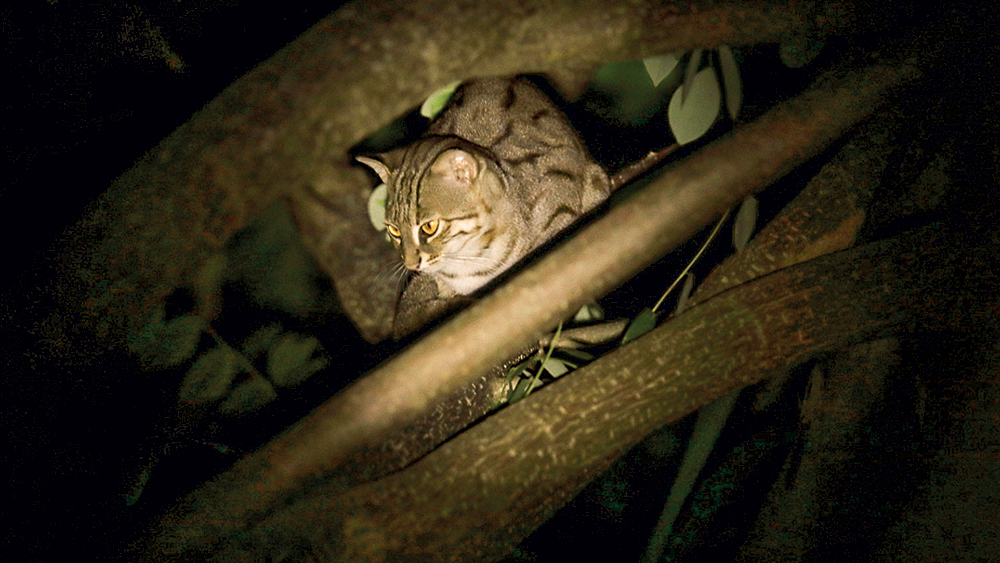
Weighing little more than a kilogram, this tiny feline — found only in Sri Lanka, India, and Nepal — holds the distinction of being the world’s smallest wild cat. With its soft, rust-coloured coat and disproportionately large eyes adapted for night vision, it appears almost unreal in the wild.
“To encounter a Rusty-spotted Cat is something very few people in the world have experienced,” Jayasekara said. “It is not just a sighting — it is a moment of disbelief.”
A Tourism Opportunity After Dark
What makes these cats especially compelling is not just their rarity, but their accessibility.
Unlike the island’s larger, more famous wildlife, sightings do not always require long hours inside national parks. Instead, they can occur in carefully managed landscapes — wetlands, forest edges, and even within the grounds of eco-sensitive hotels.
One such example is Jetwing Vil Uyana, a property that has quietly demonstrated what is possible.
Located in the heart of the Cultural Triangle, the hotel sits within a restored wetland ecosystem where all three cat species have been recorded. Over more than a decade, guided night walks conducted by trained naturalists have offered guests rare glimpses into this hidden world.
“These experiences must be done with extreme care,” Jayasekara emphasised. “Low-impact lighting, small groups, and knowledgeable guides are critical. If done incorrectly, we risk disturbing the very species we are trying to protect.”
A Changing Global Audience
Sri Lanka’s tourism narrative has long revolved around its “big five” — elephants, leopards, sloth bears, blue whales and sperm whales. But global travel trends are shifting.
Today’s wildlife traveller is increasingly seeking intimate, lesser-known experiences — encounters that feel personal, rare, and authentic.
“For a visitor from Europe, where wild cats are virtually absent, the idea of seeing even one species is exciting,” Jayasekara said. “To potentially see three — in one country, in one journey — is extraordinary.”
He believes Sri Lanka is uniquely positioned to capitalise on this niche.
“This is not about replacing what we already have. It is about expanding the story — showing that Sri Lanka is not just about large animals, but also about the small, the secretive, and the scientifically fascinating.”
Conservation Through Experience
Beyond tourism, the implications are deeper.
The Fishing Cat continues to decline due to habitat destruction and human conflict. The Rusty-spotted Cat remains poorly studied, with significant gaps in scientific knowledge. Even the adaptable Jungle Cat is losing ground as grasslands disappear.
Jayasekara argues that responsible tourism can play a vital role in reversing these trends.
“When communities begin to see value in these animals — not as threats, but as assets — attitudes change,” he said. “A Fishing Cat alive in a wetland can generate far more long-term benefit than a wetland converted for short-term gain.”
Tourists, too, become part of the conservation chain.
“A single meaningful encounter can transform how a person sees the natural world. They go back, they share the story, and suddenly these small cats are no longer invisible.”
The Night Belongs to Sri Lanka
Across the island, as darkness settles over ancient reservoirs and forest edges, this quiet transformation is already underway.
A ripple disturbs the surface of a tank — a Fishing Cat at work. In the tall grass, a Jungle Cat pauses, ears alert. And somewhere in the shadows, almost impossibly small, a Rusty-spotted Cat watches with luminous eyes.
These are not distant, unreachable moments. They are unfolding now — in landscapes that millions pass every day.
Sri Lanka has long been celebrated for what it shows the world in daylight. But, as researchers and conservationists now suggest, its future may also lie in what it chooses to reveal after dark.
“The story is already here,” Jayasekara said. “We just need to tell it — carefully, responsibly, and with the respect these animals deserve.”

A destination wedding in Sri Lanka is not just an event,it is an experience that unfolds over days, sometimes even a week. From the golden shores of Bentota to the colonial charm of Galle Fort, and the cool romantic highlands of Nuwara Eliya, Sri Lanka offers a stunning diversity of settings for exotic weddings. Destination weddings are more than romantic celebrations, they are a dynamic driver of tourism, drawing high spending travellers, global attention, and long stay visitors. In Sri Lanka, these weddings seamlessly blend scenic beauty, culture and luxury promoting Sri Lanka on the world stage.
Sri Lanka is one of the most diverse destination wedding hubs in Asia – drawing couples from India, Europe and even Pakistan who are looking for something beyond the ordinary.
What makes Sri Lanka irrestible is its rare ability to offer multiple wedding backdrops within a few hours – from sun kissed beaches, misty mountains, colonial charm, and lush tropical landscapes, all seamlessly woven into one unforgettable celebration.
For many couples the dream begins by the sea. Along the southern and western coastlines, Sri Lanka offers a perfect beach wedding, with golden sunsets, and endless horizons.
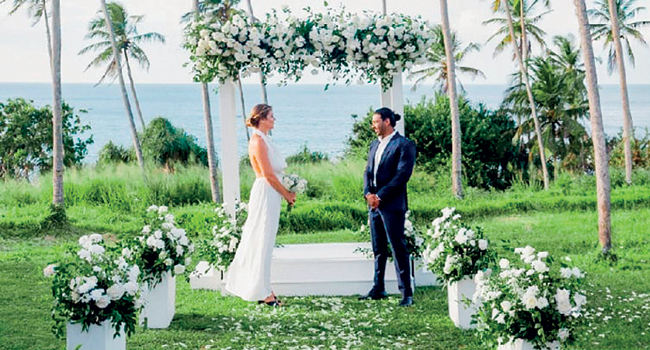
Celebration of love in an elegant setting
For many Indian couples, in particular, Sri Lanka presents the perfect blend of proximity and exotic appeal. While the couples seeking cooler climes and a dramatic scenery, Sri Lanka’s hill country offers a dreamlike alternative. Nuwara Eliya, often called Little England, is loved by European couples. With its colonial bungalows, rose gardens and cool climate, it lends itself perfectly to elegant garden weddings, reminiscent of an English country affair.
What sets Sri Lanka apart is not just the beauty of these locations but how seamlessly everything comes together – food, culture and locations.
From décor and catering to cultural performances and legal formalities – ensure couples and their families to focus solely on the celebration itself without hassles.
-

- An ancient symbol of grace at a modern wedding
It is also the versatility that attracts a global clientale, Indian weddings find space for grandeur and tradition while European couples discover intimacy and charm. Some European couples are drawn to Sri Lanka’s tropical allure, heritage architecture, and a promise of a wedding that feels both intimate and extraordinary. Hotels and resorts across the island have elevated destination weddings into an art form.
Some of the hotels, such as Shangri-La Hambantota, Cinnamon Bentota Beach, Sheraton Kosgoda and Weligama offer bespoke wedding packages that go for beyond décor and dining.
Wedding planners curate menus, from floral themes, cultural performance to dining, ensuring each celebration reflects the couples story. Guests, too, are not left out, they find themselves embarking on wildlife safaris or indulge in Ayurvedic wellness retreats along the southern coast. Weddings becomes rich with memory making moments. Unlike Bali or Phuket, Sri Lanka offers five star venues, world class cuisine to the island’s ability to offer something deeply personal yet effortlessly luxurious.
In Sri Lanka, couples will never confined to a single venue. A beach ceremony can be followed by a hill country honeymoon or a cultural
celebration near Sigiriya can transition into a coastal after party and personalised service at a fraction of the cost, allowing couples to enjoy their ceremonies at a low cost. Culturally the island offers depths and colour. Kandyan dancers, traditional drummers, Poruwa ceremonies and vibrant local rituals add authencity and character.
The island’s year round tropical climate further enhances its appeal. Couples can host outdoor ceremonies under open skies. The exotic landscapes lend themselves beautifully to photography. Above all this, Sri Lanka offers warmth and the hospitality is genuine and deeply personal.
Sri Lanka stands out in a world where destination weddings are becoming increasingly extravagant.
Sri Lanka is a place where love is celebrated against a backdrop of nature, culture and timeless beauty. And perhaps that is why so many couples choose Sri Lanka to say ‘I do’ and to began their journey in a place that feels like home.
By Zanita Careem

at Cinnamon Grand
This Avurudu season, Cinnamon Grand Colombo invited guests to embrace the warmth, joy, and timeless traditions of the Sinhala and Tamil New Year with a thoughtfully curated series of festive experiences for the whole family.
Blending authentic Sri Lankan heritage with the hotel’s signature hospitality, the celebrations promise a memorable April filled with traditional flavours, lively entertainment, and meaningful moments of togetherness.
The festivities began with the Avurudu themed tea buffet, at the tea lounge, where guests savoured a delightful spread of seasonal sweets, festive treats, and local favourites inspired by Avurudu traditions.
During the season, Nuga Gama came alive with Happy Avurudu, featuring a charming traditional sweet table followed by an authentic Sri Lankan lunch buffet. Guests immersed themselves in the festive spirit with traditional Avurudu games, cultural celebrations, and special seasonal activities, recreating the joy of a classic Sri Lankan New Year gathering.
-

- Behind every celebration is a team of culinary artists

Swinging into elegance and unforgettable memories
As the celebrations continued into the evening, Nuga Gama presented the Sri Lankan New Year Dinner on 14th April, an indulgent dinner buffet showcasing cherished festive recipes and beloved Sri Lankan flavours.
The guests enjoyed a host of seasonal experiences across the hotel. Coffee Stop featured the Avurudu Kavili Pop up, offering an irresistible selection of traditional New Year sweets, while palms of beautifully curated festive hampers perfect for gifting family, friends, and colleagues.
Adding to the vibrant atmosphere, the Avurudu feast at the lobby brought the traditions of the season to life with live raban performances by traditional Sri Lankan ladies and live cooking stations serving freshly prepared local sweet treats, creating an immersive festive experience for guests and visitors alike.
For those looking to extend the celebrations, Cinnamon Grand Colombo also introduced a festive Avurudu stay, inviting guests to enjoy the season with an exclusive city escape. Guests booking with the promo code CGA26 enjoyed special benefits, including 15% off on all food and beverage, 10% off spa treatments, and a complimentary stay for one child, valid for stays until 30th April 2026. Reservations can be made via cinnamonhotels.com.
The celebrations continue later in the month with Baila Night at Nuga Gama on 24th April, featuring a lively performance by Sri Band SL, followed by a delicious dinner buffet in a festive village style setting.
Celebrate Avurudu season with unforgettable flavours, cherished traditions, and heartfelt hospitality at Cinnamon Grand Colombo, where every experience is designed to capture the true spirit of the season.

Abhishek’s 135 not out blows Delhi Capitals away

Trump announces Iran ceasefire extension but says blockade remains

Showers above 75 mm are likely at some places in the Western, Sabaragamuwa, Central, Uva and Southern provinces and in Ampara and Kurunegala districts

Cardinal: Presidents, IGPs and AG sabotaged Easter carnage probes before 2024 regime change

CIABOC asks Parliament not to transfer witness in case against Deputy Secy General

UN wants Sri Lanka to deliver concrete results in Easter Sunday bombing probe

‘Dates have the highest sugar content to fight Coronavirus’

Sunday Island 27 December – Headlines

#SundayIsland 17th December – Headlines

Sunday Island – 28th March

Sunday Island Headlines – 21 March

Sunday Island – 21st February – Headlines
-

 News1 day ago
Rs 13 bn NDB fraud: Int’l forensic audit ordered
-

 Business4 days ago
Harnessing nature’s wisdom: Experts highlight “Resist–Align” path to resilience
-

 News7 days ago
PNS TAIMUR & ASLAT set sail from Colombo
-

 News4 days ago
Gratiaen Trust announces longlist for the 33rd Annual Gratiaen Prize
-

 News3 days ago
From Nuwara Eliya to Dubai: Isha Holdings markets Agri products abroad
-

 Opinion2 days ago
Shutting roof top solar panels – a crime
-

 News4 days ago
Heroin haul transported on 50-million-rupee contract
-
 Latest News6 days ago
Singapore Zoo’s first Sri Lankan leopard cubs make their public debut