
Features
The Easter Sunday Attack:‘A Grand Political Plot’

By Kingsley Wickremasuriya, PhD
E-mail: kingsley.wickremasuriya@gmail.com
Introduction
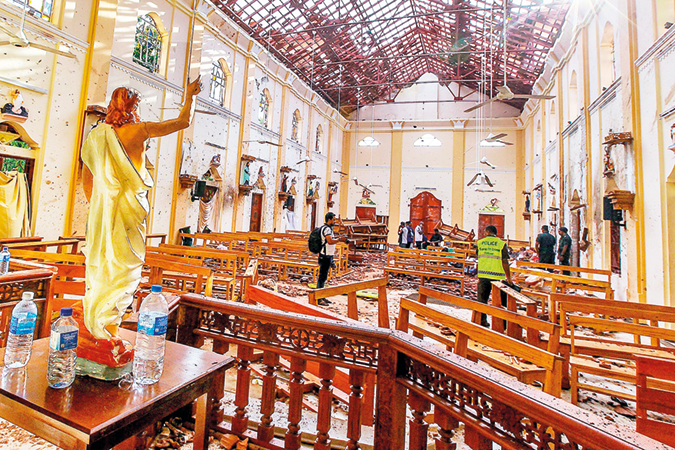
April this year marked the fourt anniversary of the Easter Sunday bomb attack which rocked and shocked Sri Lanka and the world. In retrospect, on the morning of that fateful Easter Sunday, April 21, 2019 suicide bombers targeted three plush hotels and three churches in Colombo, Negombo, and Batticaloa; over 260 were killed and over 500 injured in the well-coordinated near-simultaneous attacks by a group of Islamic extremists called the National Thawheek Jamaat allegedly subscribing to Islamic ideology of JIHAD associated with group with suspected foreign links, that has previously targeted and
Two of the three churches attacked were Catholic churches. One was St. Anthony’s Church in Kochchikade, Colombo, and the other was St. Sebastian’s Church in Katuwapitiya, Negombo. The third church under attack was the Protestant evangelical Zion Church in Batticaloa. The attacks affected the Catholic Church in Sri Lanka directly as many of the victims were Catholics.
The three hotels targeted were the Shangri-La, Kingsbury, and Cinnamon Grand in Colombo. Several of the victims were foreign nationals. Two other persons connected to the Islamic Jihad Movement were killed in two separate explosions in Dehiwala and Dematagoda. Most of the innocents killed, maimed, and injured were people engaged in morning worship at the churches or guests having breakfast in the hotels.
Shortly afterward, , a propaganda outlet for the Islamic State of Iraq and the Levant (ISIL), claimed that ISIL inspired the attacks. It released a photo and a video showing eight suicide bombers pledging allegiance to ISIL leader . Zahran Hashim of the NTJ was identified as their leader.
On April 6, Public Security Minister Sarath Weerasekara stated at a press conference that the Intelligence Services had identified Naufer Moulavi as the mastermind behind the attacks. The Minister also said that he was then in remand custody. Making a special statement in Parliament on April 10, he confirmed his statement to the press that Naufer Moulavi was the main person behind the Easter Sunday terror attacks. Following these disclosures, the national and international media went to town with the revelation that the Sri Lankan Government Minister had identified Naufer Moulavi as the mastermind behind the attack.
State Defense Minister , however, had said earlier, that initial investigations have revealed that Islamic extremists “carried out the attacks in retaliation for the ,’’ a place far removed from the scene of the explosion here. This has been questioned by New Zealand’s Prime Minister and by other experts, who saw the Easter attacks as planned before the Christchurch incident. Further, the New Zealand security expert Paul Buchanan stated that “Christchurch seems to be a convenient justification for something that was being planned before March 15”.
The Amaq news agency’s statements emphasized that the attacks were against Christians who were at war with the organization but none of them referenced the Christchurch incident. But Sri Lanka was not part of the anti-ISIL coalition and the overwhelming majority of those killed in the bombings were Sri Lankan citizen. Further, according to the Criminal Investigation Department, there was no evidence of ISIL’s direct involvement. It was evident that Tawheed Jamaat has been stockpiling explosives since January 2019. Even though it was claimed that the incident was inspired by ISIL, the available evidence was to the contrary.
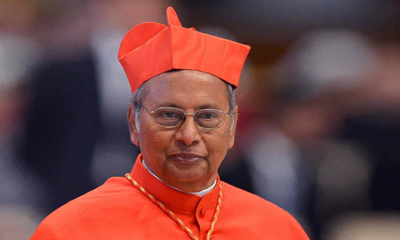
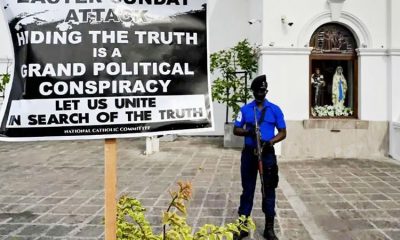
Meanwhile, Malcolm Cardinal , the head of Sri Lanka’s Catholic Church, alleged that the massacre wasn’t purely the work of a few Islamic extremists but was part of a grand political plot, and that the attacks were conducted intentionally to win votes. He further alleged that the culprits are still holding high positions in the police and Military Intelligence and that the government has been covering up the investigations to protect the real culprits. Expressing dissatisfaction with the progress of the investigation and alleging intimidation of those who clamor for justice, the cardinal called on the UN to investigate the bombings. Even some prominent Buddhist monks contributed to this theory and alleged that “selfish politicians directed the blind rage of religious extremists to achieve political ends”.
Quoting from the report of the President’s Commission on the attack, chapter and verse, in support of his allegation, His Eminence pointed the finger at the former chief of intelligence, and other top-level officials including the Police, for their failure to prevent the attacks. ‘They knew beforehand from the information they had gathered and also from warnings given by the Indian intelligence services, but they did nothing. The Government seems to have done its best to prevent the arrest of the attackers. There are indications that the authorities wanted the attacks to be carried out, he alleged.
Quoting further excerpts from the Presidential Commission Report and other authentic sources, he said that the available evidence indicates that the Government may have been motivated by electoral gain. While Cardinal was making these allegations, Rev. Father Cyril Gamini, spokesman for the Committee of Catholics pointed out several issues regarding some serious lapses in the investigations in a telecast over ‘You Tube’. He also based his arguments on authentic sources like the proceedings of the Presidential Commission and the Parliamentary Select Committee.
These arguments were buttressed by the Opposition in the Parliament during a parliamentary debate on the appointment of a Select Committee on the attack suggesting that it was the work of a Special Operation of an Intelligence Service. Besides, the fact that the former Attorney – General is on record having said that there is a conspiracy behind the incident goes to add further weight against those who the allegations have been made against.
Call for justice
It is against this backdrop that the Cardinal has been repeatedly demanding justice for the victims and their families for a long time. In March this year, he issued what was termed by the media as an ultimatum to the government. The news story stated that the ‘Archbishop of Colombo Malcolm Cardinal Ranjith yesterday warned that countrywide protests would be held if the Government failed to produce before Courts by April 21, those behind the Easter Sunday attacks. “We urge the Government to investigate the attacks impartially and transparently. At least take action against those named in the Presidential Commission on Easter Sunday attacks before April 21. Otherwise, we will hold a continuous protest,” the Cardinal warned. Going by the turn of events, the Cardinal is not likely to rest until the ‘true masterminds’ behind the carnage are identified and penalized.
Conclusions
The incident reveals serious criminal offenses committed against the State putting its security in jeopardy. The offenses of this nature are punishable under the ‘offences against the state’ specified in chapter VI of the Penal Code. It covers a range of offenses relevant to the incident, including conspiracy, abetting and concealment. These offenses carry punishments from death, or imprisonment of either description, which may be extended to 20 years, and the forfeiture of the offender’s property.
But one has to admit that the offenders can be brought to justice only after a fair and impartial criminal investigation and thereafter arraignment before a court of law after a fair trial in keeping with the Rule of Law. That is what the aggrieved parties have been clamoring for. However, from the material exposed so far it appears that the criminal investigations have been obstructed at several points down the line.
Names of several high-ranking officers in the Police and State Intelligence Services have transpired during the course of the Presidential Commission, Select Committee proceedings, debates in Parliament and elsewhere in the Press and Media. Allegations have been made against them by the Church authorities and the aggrieved parties. But these accusations or allegations have not been processed through the criminal justice system. As far as the country is concerned, they have broken the sacred trust the country placed in them.
Presidential Commissions or Select Committees, will not help to clear the air. They will, whatever the picture their sponsors might try to paint to exculpate them, therefore, remain ’guilty’ in the national conscience. As such if they continue to hold those high positions without being cleared through the criminal justice system their credibility will be at stake. They will be watched by the Nation at every move they make with suspicion that will make them vulnerable in their own commands.
Moreover, the attack has all the characteristics of a Special Operation conducted by an Intelligence organization. But without a proper investigation one cannot prove, who is responsible; whether it is the work of a foreign intelligence service or our own or a combination of both.
It has been said that among the growing arsenals across the world, intelligence is an essential weapon, perhaps the most important, and that intelligence is necessary for democracies to avoid disaster and possibly destruction. In other words, ‘Intelligence Organizations are an inevitable part of modern states as armies, telephones, and postal services or a system of collecting taxes’.
Intelligence Organizations have now come to play an ever-increasingly important role. They are a part of the defense forces of a country. Their task is the defense of the realm as a whole from external and internal threats arising from attempts at espionage and sabotage or from actions of persons and organizations whether directed from within or without the country that may be considered subversive of the state’s security. They not only act as the eyes and ears of governments but also as their policy instruments.
One must therefore, accept that intelligence organizations are a reality in modern National and International life in a world that is no longer ruled by ‘negotiation between gentlemen, but rather by plots, revolutions, conspiracies, assassinations, coups d’états, and general mayhem. As such there is an inherent danger within the system itself.
Firstly, intelligence organizations can misinform their governments by providing false information, because the information has been planted on them by a hostile service through a double agent; a sycophantic Intelligence Organization believes that it should provide information that its Masters want to hear; that it has become a representative of a vested interest; and that the Service is thoroughly incompetent that it invents its information and create a non-existent source to cover up its failure. This danger is increased substantially where the Intelligence Organizations control paramilitary forces. They can be real dangers to their states because they represent or can represent conspiratorial power points
Intelligence services are specially trained to carry out covert operations while on the other hand the main task of the Police is the prevention of crimes and offenses. Therefore, it is unimaginable to find any State Intelligence Service or the Police working in concert with subversives against the grain of their basic responsibilities under the very nose of the State. This is why it is doubly important not to have any doubts left as to who was responsible for the attack and who the mastermind behind was.
The trade of intelligence, therefore, is not everyone’s cup of tea.
Intelligence Organizations, should be highly professional and their management should, be in the hands of men of first-rate ability, imagination, and integrity. In the last analysis, however, the truth is that the intelligence organizations are as competent or incompetent as the governments who control them.






Professor Mohamed Maheesh’s inquiry into reducing fuel waste amidst a failing public transport system and chronic congestion he discussed in a YouTube on Facebook (https://www.facebook.com/reel/892342193673092) strikes a chord because it addresses a structural crisis with a call for individual agency. While the lack of a robust transit network often makes private vehicle use feel like a forced choice, rather than a luxury, the ‘unnecessary’ waste, he mentions, is often fuelled by a combination of outdated driving habits and a lack of collaborative transit solutions. In a country where idling in gridlock is a daily tax on both the wallet and the environment, the response must be a tactical shift toward high-occupancy behaviour—such as organised carpooling—and a conscious adoption of ‘smooth’ driving techniques that minimise the fuel-heavy cycles of rapid acceleration and braking. Ultimately, while we wait for the systemic overhaul of our railways and bus lanes, the most immediate way to curb waste is to decouple our movement from peak-hour bottlenecks through better route planning and, where possible, advocating for decentralised work models that remove the need for the commute entirely.
Reducing fuel waste
The question raised by Prof Mohamed Maheesh, regarding the feasibility of reducing fuel waste in a country plagued by gridlock and a weak public transport system, is a modern dilemma with deep historical irony. For a nation currently tethered to expensive, imported fossil fuels, the ‘unnecessary consumption’ mentioned by Prof Mohamed Maheesh is not just a personal inconvenience but a macroeconomic burden. While individual driving habits and the adoption of carpooling are immediate sticking points for reform, the core of the issue lies in the structural abandonment of high-capacity, electrified transit—a system that Sri Lanka actually pioneered over a century ago. Between 1892 and 1900, Colombo transitioned from a horse-drawn era to a modern electrical one. Following the call for tenders by the Colombo Municipal Council, the Colombo Electric Tramway was established, with the first lines—the Grandpass and Borella routes—opening on January 11, 1900. This was a period where the city’s movement was decoupled from the price of oil, powered, instead, by a dedicated station in Pettah. At its zenith, the system operated 52 tram cars, providing a reliable, fixed-rail alternative that kept the city’s arteries clear of the chaotic private vehicle growth we see today.
However, the decline of this ‘strong public transport’ began not with a lack of demand, but through labor and management friction. The historic Tramcar Strike of January 23, 1929, led by A.E. Goonesinha, marked a shift in the operational viability of the private firm, Boustead Brothers. Although the Municipal Council took over operations on August 31, 1944, the post-war global trend toward ‘flexible’ rubber-tired vehicles led to the system’s eventual demise. The last tramcar ran on June 30, 1960, and by 1964, even the electric trolley buses, that replaced them, were scrapped.
Importance of railway
This historical trajectory confirms Prof. Maheesh’s underlying point: the current waste is a result of moving away from a system that once worked. To reduce fuel consumption today, we are effectively trying to ‘tech’ our way out of a problem that was solved in 1900. Until we reintegrate the efficiency of rail-based or electrified mass transit, the ‘unnecessary’ waste of fuel in traffic remains an inevitable tax on a society that traded its electric tracks for a congested, oil-dependent future.
The modern Light Rail Transit (LRT) proposals for Colombo, primarily the Japan-funded project that reached advanced stages before its cancellation in 2020, represent a massive technological and spatial leap from the original 1900 tram system. While the original Colombo Electric Tramway operated at street level on narrow 12 km routes like the Grandpass and Borella lines, modern LRT plans envision a 75 km network across seven main lines, utilising elevated tracks to entirely bypass the ‘unnecessary traffic’ Prof. Mohamed Maheesh describes. Unlike the streetcars of the past, which were often accused of causing road congestion and operated among pedestrians and horse-drawn carriages, the proposed LRT is designed for high-speed, high-capacity movement—capable of carrying over 30,000 passengers per hour in a single direction, compared to the 52 modest tram cars that served a much smaller, slower-moving Colombo.
Despite these advancements, the two systems share a core philosophy: the electrification of public transport to reduce reliance on fossil fuels. The original trams were powered by a dedicated station in Pettah, a localised energy model that modern LRT would mirror on a much larger scale to insulate the city’s transport costs from global oil prices. However, the modern project has faced significant political and financial hurdles that the British-era system avoided during its first few decades. As of early 2026, although the Sri Lankan government has attempted to revive the project, the Japan International Cooperation Agency (JICA) has maintained that approval depends on the successful completion of ongoing multimodal transport hubs. This delay leaves a century-old gap in Colombo’s infrastructure: we have moved from an era of functional electric tracks to one of aspirational elevated rails, while the daily reality remains the fuel-wasting gridlock Prof. Maheesh highlights.
A mirror of values
A transport system is more than a set of roads, buses, and trains. It is a mirror of how a society values its people—their time, their safety, their dignity, and their ability to participate fully in national life. In Sri Lanka, mobility is a daily struggle for millions, yet it is also the foundation upon which economic opportunity, social inclusion, and national cohesion depend. If we are to imagine a more humane and efficient future, we must begin by rethinking transport, not as a technical sector, but as a social contract.
Sri Lanka’s current transport landscape is a paradox. The country possesses a long-established railway network, an extensive road system, and a vibrant culture of movement that keeps even remote communities connected. Yet the lived experience of travel is often stressful, unpredictable, and unsafe. Congestion in urban areas has reached unsustainable levels. Public transport, though essential, suffers from fragmentation, poor coordination, and declining quality. Pedestrians navigate hostile streets, and vulnerable groups—women, elders, children, and disabled people—face daily risks that should be unacceptable in a modern society. A peoplefriendly transport system must, therefore, address not only infrastructure but the deeper structural and cultural issues that shape mobility.
Fundamental requirement
Safety is the most fundamental requirement of a humane transport system. Sri Lanka’s road fatality rates remain among the highest in the region, and these tragedies are not random misfortunes; they are the predictable outcomes of systemic neglect. Treating road safety as a public health priority rather than a policing matter is essential. This means designing roads that slow vehicles where people walk and live, enforcing speed limits consistently, improving driver training, and ensuring that vehicles meet basic safety standards. It also means recognising that certain groups—children walking to school, elders crossing busy roads, women travelling at night—face disproportionate risks. A society that protects its most vulnerable road users creates a safer environment for everyone.
Yet safety alone does not create dignity. A peoplefriendly system must also guarantee accessibility. In Sri Lanka, mobility is often shaped by inequality: urban residents enjoy more options than rural villagers, men feel safer travelling at night than women, and those with private vehicles enjoy privileges that public transport users do not. A humane system ensures that all citizens, regardless of income, gender, age, or physical ability, can travel with dignity. This requires lowfloor buses that elders can board without struggle, stations with ramps and handrails, clear signage for those with visual impairments, and reliable services that do not force women to choose between harassment and immobility. Accessibility is not an optional feature; it is a measure of a society’s moral maturity.
Public transport remains the backbone of mobility for the majority of Sri Lankans. Buses and trains carry millions of passengers daily, yet the system is undermined by fragmentation and outdated operational models. Private buses compete aggressively for passengers, SLTB struggles with limited resources, and rail serv
ices are hampered by ageing infrastructure. A peoplefriendly system requires a shift from competition to coordination. Instead of treating each bus owner as an independent entrepreneur, Sri Lanka must adopt a unified service model in which routes, schedules, and standards are centrally planned. Operators should be paid for service quality rather than passenger volume, eliminating the reckless race for passengers and ensuring that socially necessary routes are maintained even if they are not profitable.
Railway underutilised
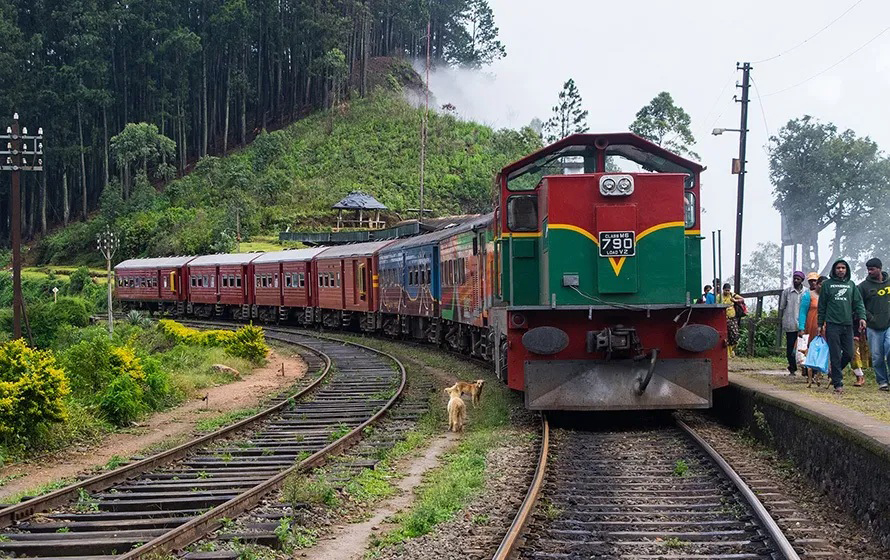
The railway system, though historically significant, remains underutilised. Modernising key commuter corridors, upgrading signalling, improving rolling stock, and integrating bus services with rail stations can transform the railway into a reliable, highcapacity alternative to private vehicles. When trains run frequently, on time, and in coordination with buses, they become not only a mode of transport but a catalyst for economic development and urban regeneration. The potential is enormous; what is lacking is a coherent strategy and sustained investment.
A peoplefriendly system must also begin at the most basic level: the street. Walking is the most fundamental mode of transport, yet Sri Lanka’s urban and semiurban areas often treat pedestrians as afterthoughts. Sidewalks are narrow, broken, or non-existent. Crossings are dangerous. Shade is scarce. A humane transport system must reclaim the street as a shared space where pedestrians are respected. Continuous, wellmaintained sidewalks, safe crossings near schools and hospitals, shaded walkways, and trafficcalmed residential zones are essential. When walking becomes safe and pleasant, it reduces the need for short vehicle trips, eases congestion, and improves public health.
Cycling in mobility ecosystem
Cycling, too, deserves a place in the mobility ecosystem. Although not everyone will cycle, those who do reduce pressure on roads and public transport. In cities like Colombo, Kandy, Galle, and Jaffna, even a modest network of protected cycling lanes can encourage more people to choose bicycles for short trips. Cycling infrastructure is relatively inexpensive compared to road widening or flyovers, yet its social and environmental benefits are substantial. A peoplefriendly system recognises that mobility is not only about speed but about choice, and cycling expands the range of choices available to citizens.
Governance is perhaps the most overlooked dimension of transport reform. Sri Lanka’s current system is characterised by institutional fragmentation: the national ministry, provincial councils, local authorities, the police, SLTB, private operators, and various regulatory bodies all play roles, often without coordination. A peoplefriendly system requires a single, empowered regional transport authority for major urban areas—especially the Western Province—that can plan, regulate, contract, and monitor all modes of transport. Such an authority must be insulated from political interference, guided by data, and accountable to the public. Without coherent governance, even the best-designed policies will fail.
Technology can support this transformation, but it must serve people rather than dictate their behaviour. Integrated ticketing systems that allow passengers to use a single card or QR code across buses and trains reduce friction and make transfers seamless. Realtime information through apps, SMS, and digital displays reduces uncertainty and improves the perceived quality of service. Open data policies allow universities, startups, and civil society to analyse performance and propose improvements. Technology should not be a shiny distraction but a tool that enhances reliability, transparency, and user experience.
Cultural change is equally important. Sri Lanka’s transport culture is shaped by impatience, competition, and a sense of individual survival on the road. Changing this culture requires education, enforcement, and the redesign of physical spaces to encourage cooperation rather than conflict. When roads are designed to slow vehicles, when public transport is reliable, when pedestrians are protected, and when drivers are trained and held accountable, behaviour begins to change. Culture follows structure; people behave differently when the environment supports different behaviours.
Economic sustainability
Economic sustainability is another essential pillar. Public transport cannot rely solely on fare revenue; it requires stable, predictable funding. This can come from a mix of government budgets, modest fuel or parking charges, and land value capture around major stations. When public transport improves, land values rise; capturing a portion of this increase allows the system to fund itself sustainably. A peoplefriendly system is therefore not only socially just but economically rational.
Transforming Sri Lanka’s transport system will require a phased, realistic approach. Quick improvements—such as enforcing speed limits, repairing sidewalks near schools, improving lighting at stations, and piloting unified bus contracts—can build public trust. Mediumterm reforms—such as establishing regional transport authorities, modernising rail corridors, and implementing integrated ticketing—create structural change. Longterm goals—such as nationwide integration, transitoriented development, and sustained reductions in road deaths—require patience and political commitment. A peoplefriendly system is not built overnight; it is built through consistent, incremental progress guided by a clear vision.
Ultimately, the question of transport is a question of what kind of society Sri Lanka aspires to be. A society that values human dignity will design systems that protect and empower people. A society that values time will create reliable, efficient services. A society that values equality will ensure that mobility is not a privilege but a right. A peoplefriendly transport system is, therefore, not merely an engineering project but a moral project. It reflects a belief that every person—whether a schoolchild in Monaragala, a garment worker in Katunayake, an elder in Kurunegala, or a commuter in Colombo—deserves to move through the country safely, comfortably, and with dignity.
SL at a crossroads
Sri Lanka stands at a crossroads. The old model of endless road widening, unregulated competition, and privatevehicle dominance has reached its limits. Congestion grows, pollution worsens, and the social costs of unsafe roads continue to mount. The alternative is not a utopian dream, but a practical, achievable vision grounded in global best practices and local realities. It is a vision in which buses and trains form an integrated network; in which walking and cycling are safe and pleasant; in which women and children travel without fear; in which rural communities remain connected; and in which the daily journey becomes not a burden but a reflection of a society that values its people.
We urge the Minister of Transport to give urgent attention to the insights shared here and the historical precedents of Colombo’s transit system. It is vital that the Ministry recognises the transition from a once-functional electrified network to our current oil-dependent gridlock as a call to action. By prioritising the revitalisation of high-capacity, integrated, sustainable public transport, the government can directly address the unnecessary fuel waste and economic drain that currently burden the nation, and make the system a passenger friendly system.
by Professor M.W. Amarasiri de Silva
The ownership of Trincomalee port was highly contested by the Dutch, French and British as Gateway to Bay of Bengal in 1700s and 1800s. The famous seafarer Vice Admiral Horatio Nelson, as a fleet Midshipman (trainee Naval officer) on board HMS Seahorse, in 1775, wrote in his journal “Trincomalee is the Finest Natural Harbour in the World”.
What Lord Nelson realised as a Midshipman was the immense Strategic, Natural and Commercial value of the port, considered as one of the deepest natural Harbours in the World.
Vice Admiral Sir Edward Hughes (British Royal Navy) and Vice Admiral Bailli De Suffern (French Navy) had sea battles to take control of Trincomalee from 25th August to 3rd September 1782.
French Forces attempted to capture Trincomalee on 30th August 1782, for supremacy in India and Ceylon (Sri Lanka) Eastern Coast, which prompted the Royal Navy to come into action. Even though both fleets had heavy casualties (British – 51 killed, 283 wounded. French – 82 killed, 255 Wounded), but no ships were lost.
The British captured Trincomalee on 31st August 1795 from the Dutch after taking over Fort Ostenburg.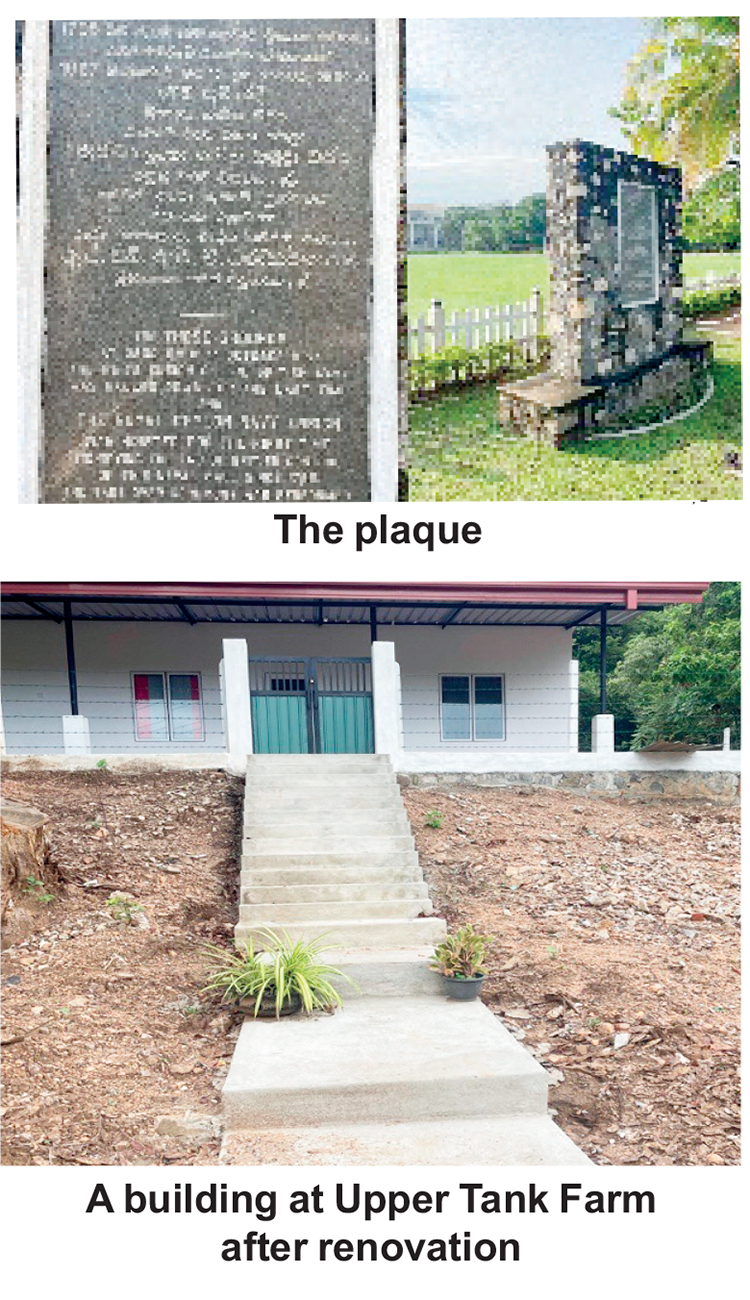
It is interesting to note Famous Admiral Lord Nelson and Trincomalee have a special connection. One of the Ships built after the death of Admiral Nelson in 1805 was named HMS Trincomalee; it was built in 1812. HMS Trincomalee is still active; it was restored and is now the National Museum of the Royal Navy at Hartlepool, England.
The US National Anthem “The Star- spangled Banner “was written by Francis Scott Key on 14th September 1814, onboard a truce ship at Baltimore harbour, Maryland, USA! It is pertinent to note that Sri Lanka Navy’s latest addition, ex-US Coast Guard Ship DECISIVE (P 628) started her 14,775 nautical miles journey, longest journey by a Sri Lanka Navy Ship, was from Baltimore to Colombo/ Trincomalee, as explained in my previous article.
Trincomalee was under British rule for a very long time. Their fleet was stationed in Trincomalee and the British developed Trincomalee into a major ship repair and logistical facility for their ships. Larger War ships, like Aircraft Carriers, Destroyers and Frigates, were stationed at Trincomalee.
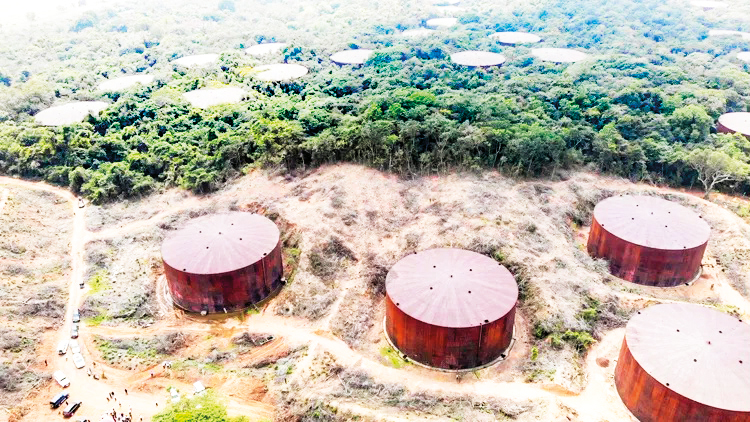
During the 1930s, the British realised that there should be an Energy Storage facility between Oil fields of Saudi Arabia/ Arabian Gulf and Far East Asia, and designed and built a huge Oil Storage Facility at Trincomalee. The word HUGE is appropriate; as they built 100 tanks, each tank can contain ten thousand (10,000) MT of oil. So, an oil tank farm with a capacity of one million metric tons (one BILLION LITERS) was commissioned by 1935. As per their estimates at that time, the strategic oil stocks in Trincomalee were sufficient for their fleet for more than six months! Every country has Strategic Oil reserves except Sri Lanka! Even India stored part of their Strategic Oil Reserve at Trincomalee with the Indian Oil Company.
Building of tanks was a major engineering project; it was an ENGINEERING MARVEL in the 1930s!
IOC tanks on lower tank farm
Four-inch thick best quality Manchester Steel was used to build these tanks. Each plate is hand-riveted. They were built in such a way that if one tank caught fire, the fire would not spread to others. Pipe lines are connecting all tanks, which could be isolated or interconnected. The “TANK FARM “IS IN TWO SECTIONS – Lower tanks (numbering 39) closer to sea and Jetty (known as Oiling jetty) and Upper tanks on the hillock numbering 61 tanks. The Lower tank farm tanks, closer to the sea, were covered with thick concrete walls, to avoid attack by enemy small raid groups.
Huge Pump house, with very powerful pumps, was installed to pump oil to Upper tanks.All this happened almost 100 years ago!
As advancement of Imperial Japanese Army on the Asian Front and German Forces advancement on the Western Front was stopped by Allied forces in 1944/45 and World War Two ended earlier than anticipated due to US Atomic bombing of Japan. Trinco tanks were not fully utilised.
However, the British knew the importance of the Trincomalee harbour.
When we got Independence in 1948, we signed a Defence Pact with the British so that they could retain control of Trincomalee harbour, the oil tank farm and the China bay airfield.
It was on 15 October 1957, the British handed over the Trincomalee port. The then Prime Minister S W R D Bandaranaike was the Chief Guest at the event and the Royal Ceylon Navy Guard of Honour, commanded by Lieutenant Basil Gunasekara, proudly presented the salute to the Prime Minister. After a long time, the the Royal Navy Ensign (flag) was lowered at Trincomalee Naval Base and the Royal Ceylon Navy flag was hoisted. A plaque, erected near the Trincomalee Naval, has information about this historic occasion. The British ultimately left our shores almost after 162 years – (1795 to 1957).
In the 1987 Indo- Sri Lanka Accord, we agreed to develop the Trincomalee Oil Tank farm jointly with the Indian government. Later on, in the Lower tank farm, we gave 14 tanks to Indian Oil Company (IOC) and 24 tanks to the Ceylon Petroleum Company (CPC).
In January 2022, the remaining 61 tanks in the Upper tank farm were allocated for a CPC- IOC joint venture (51:49 shares) and the Managing Director of CPC was appointed the Chairman of this joint venture and CEO of Lanka IOC as Managing Director of the new company. Initially, Rs 100 million (51 million from CPC and 49 million from IOC) was allocated for renovation and development of these 61 tanks on the Upper tank farm. Feasibility study was done by a renowned international company. 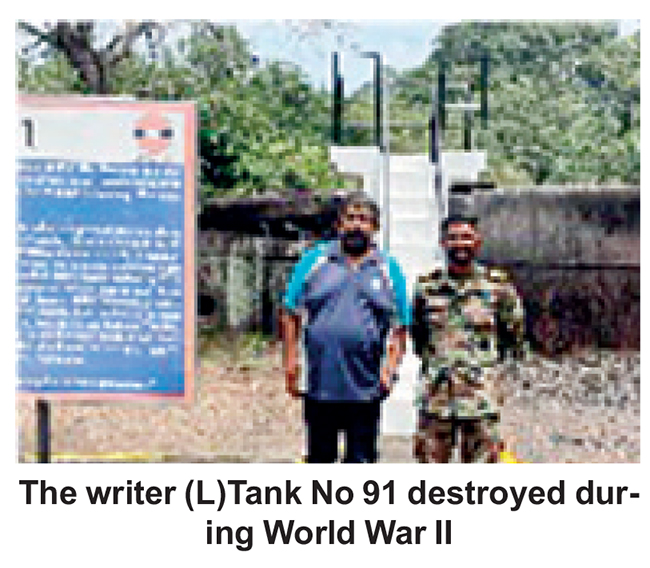
I worked voluntarily as the Chairman of Trincomalee Petroleum Terminals Ltd., (TPTL) for six months in 2023. It was fascinating to work in Trincomalee, where I spent most of my Naval career.
The present situation in the World has proved what the British thought almost 100 years ago is even valid today!
As per my information, Lanka IOC uses all its tanks to store fuel and sometimes do offshore bunkering of ships also. It built TWO MORE NEW TANKS and they have 16 tanks now. All are operational.
The CPC tanks remain unused except three leased to Prima Flour Mills Ltd., for storing fresh water.
The Upper tank farm is being renovated at a very slow pace. Out of 61 tanks on the Upper tank farm, tank No 91 was destroyed during World War II due to Japanese aircraft bombing. There is no tank number 99! (The British also thought 99 was a bad number?). Instead, we have number 101! Tank number 102 is partly built at the top of the hillock! So, that means the British had ideas of expanding tank farms BEYOND 100 TANKS!
The Election Manifesto of the National People’s Front, led by President Anura Kumara Dissanayake, clearly stated that “Trincomalee Oil Tank Farm will be renovated with support of a friendly Foreign County”.
At least now, we should start it without further delay. As a former Chief of Naval Staff of India told me “Ravi, you are sitting on a GOLD MINE at the Trincomalee Naval Base; without realising the value of it”! How true!
By Admiral Ravindra C Wijegunaratne
WV, RWP and Bar, RSP, VSV, USP, NI (M) (Pakistan), ndc, psn, Bsc
(Hons) (War Studies) (Karachi) MPhil (Madras)
Former Navy Commander and Former Chief of Defence Staff
Former Chairman, Trincomalee Petroleum Terminals Ltd
Former Managing Director Ceylon Petroleum Corporation
Former High Commissioner to Pakistan

Dr Asha de Vos PhD: A Sri Lankan voice that reshaped Global Marine Science
Specialist Consultant Paediatrician and Honorary Senior Fellow, Postgraduate Institute of Medicine, University of Colombo, Sri Lanka.
At a recent United Nations (UN) event marking International Women’s Day, a striking portrait of a Sri Lankan lady scientist appeared on the screen, alongside a simple but powerful declaration: “They told me I was not capable – so I made a discovery that changed the world.”
The scientist was Dr Asha de Vos. For many Sri Lankans, this moment passed with little notice, confined to a brief news item in the newspapers. Yet for all that, in that global forum, her presence represented something far greater than personal recognition. It marked the arrival of a Sri Lankan scientist on the world stage, not as a participant, but as a pioneer.
A Discovery that Challenged a Conventional Precept
For decades, marine biology held a well-settled view: blue whales, the largest of mammals, in fact, the largest animals ever to have lived, are migratory. This assumption was repeated in textbooks, scientific articles, and accepted without question.
Dr Asha de Vos challenged it. Working in the waters off Sri Lanka, often with limited resources and without the extensive institutional backing available in more developed research environments, she identified a population of blue whales that does not migrate. These whales remain in Sri Lankan waters throughout the year.
This finding was not just an accident, a chance occurrence, nor an incidental observation. It was a carefully orchestrated scientific expedition that overturned a fundamental assumption about one of the most studied animal species on Earth. In doing so, it reminded the scientific world of an essential truth: that knowledge is never complete, and that even the largest creatures in the oceans can still hold secrets. It showed that such secrets of behaviour that were detected can have a profound impact on the aftermath, as far as the world is concerned.
Global Consequences of a Local Discovery
The implications of this work extended far beyond academic debate. A non-migratory population of blue whales is inherently vulnerable. Concentrated in a relatively small geographic area, these animals face risks that migratory populations can avoid.
The waters off Sri Lanka are among the busiest shipping routes in the world. Large vessels pass through areas that coincide with whale habitats, creating a significant risk of fatal collisions. Dr de Vos’s research brought international attention to this issue. It contributed to changes in shipping practices, including the adjustment of routes and the introduction of measures aimed at reducing whale-ship strikes of blue whales. In this way, her work moved beyond theory to influence real-world policy and conservation efforts.
Science Rooted in Sri Lanka
Equally significant is the context in which this work was carried out. Dr de Vos has consistently advocated for the leadership of local scientists in studying local ecosystems. Her position challenged the long-standing pattern where research in developing regions is often led by external actors. Quite appropriately and most beautifully, she describes the phenomenon as “parachute science”, the practice of Western Scientists collecting data in developing countries and then leaving without training or investing in the locals or the region.
To address this imbalance, she founded Oceanswell, Sri Lanka’s first marine conservation research and education organisation. Through this initiative, she has worked to build local capacity, inspire young researchers, and promote a deeper understanding of marine ecosystems. Her work has demonstrated that world-class science can emerge from a little country like Sri Lanka, not as an extension of external efforts, but as an independent and authoritative effort.
A Journey of Determination
Those widely quoted words attributed to Dr Asha de Vos are not mere rhetoric. They reflect the reality of a journey marked by doubt, resistance, and the challenge of pursuing an unconventional path. Marine biology was not an established field in Sri Lanka when she began her career. Opportunities were limited, and the path was uncertain. Yet, through persistence and conviction, she transformed these limitations into magnificent opportunities.
Dr de Vos has always dreamed of being an “adventure-scientist”. Her achievements include being the first and only Sri Lankan to obtain a PhD in marine mammal research, a distinction that underscores both her pioneering role and the barriers she has overcome. Today, Dr. de Vos is recognised internationally as a leading voice in marine conservation. Her work is cited in scientific literature, her insights are sought in policy discussions, and her presence is felt in global forums. The recognition she received at the United Nations is just one reflection of this standing.
However, her significance to Sri Lanka extends beyond her scientific contributions. She graphically represents the potential of Sri Lankan scholarship. She illustrates what can be achieved through determination and intellectual rigour. The lady serves as an inspiration to a new generation of scientists who may choose to follow paths that are not yet well defined.
A Moment That Should Not Pass Unnoticed
That such an achievement received only limited attention locally is a matter for reflection. Nations are often judged not only by the accomplishments of their citizens, but by the ability of those very same nations to recognise and celebrate them.
Dr Asha de Vos’s work has altered global understanding, influenced international policy, and established a new field of scientific inquiry within Sri Lanka. These are not minor achievements of limited consequence. They are contributions of lasting, immense, and seminal significance.
The image displayed at the United Nations, accompanied by a single sentence, captured a story of perseverance and discovery. It spoke of a brilliant scientist who refused to accept limitations imposed by others. It told of a discovery that reshaped certain types of scientific understanding. It brought to light a voice that, though once doubted, is now heard across the world. It is a voice that our beautiful Pearl of the Indian Ocean would do ever so well to listen to.
This author has not had the honour or the privilege of even meeting Dr Asha de Vos, but is so very pleased to declare that all of us should be so proud of a Sri Lankan Lady Scientist who is recognised, acknowledged and celebrated by the entire scientific world.
We salute you, Madam, for all of your splendid achievements!
Dr B. J. C. Perera

Trump says he is postponing strikes on Iran power plants after ‘productive’ talks on ending war

Asia stocks slide as US and Iran threaten to escalate war

Heat Index at Caution Level in the Western, Sabaragamuwa, Southern and North-western provinces and in Anuradhapura, Mannar and Vavuniya districts

Showers may occur at several places in the Western and Sabaragamuwa provinces and in Galle, Matara and Nuwara-Eliya districts after 2.00 pm.

Fuel price hikes trigger transport disruptions and calls for fare increases

Prof. Peiris honoured by International Institute of Rehabilitation

‘Dates have the highest sugar content to fight Coronavirus’

Sunday Island 27 December – Headlines

#SundayIsland 17th December – Headlines

Sunday Island – 28th March

Sunday Island Headlines – 21 March

Sunday Island – 21st February – Headlines
-

 News6 days ago
CIABOC questions Ex-President GR on house for CJ’s maid
-

 News7 days ago
Sri Lankan marine scientist Asha de Vos honoured at UNGA opening
-

 News7 days ago
Australian HC debunks misleading travel risk claims for Sri Lanka
-

 News5 days ago
Bailey Bridge inaugurated at Chilaw
-

 Latest News7 days ago
Wednesdays declared a government holiday with effect from 18th March
-

 News5 days ago
Pay hike demand: CEB workers climb down from 40 % to 15–20%
-

 News4 days ago
CIABOC tells court Kapila gave Rs 60 mn to MR and Rs. 20 mn to Priyankara
-

 Editorial6 days ago
Couple QR-based quota with odd-even rationing