
News
The Easter attacks and the struggles for justice in Lanka

By Ruki Fernando
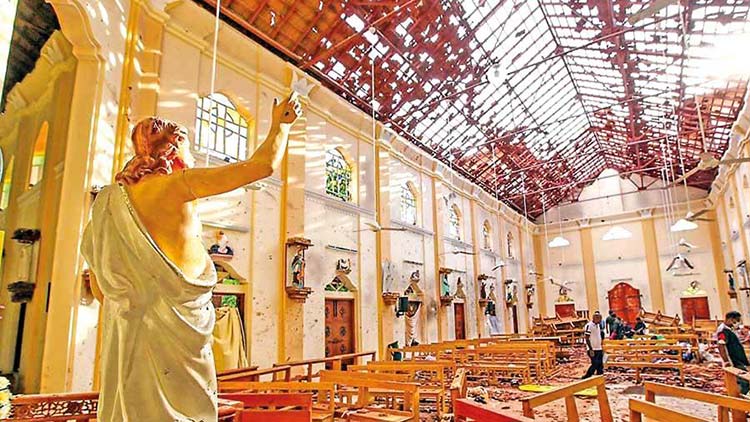
(UCAN)April 21 this year will mark five years since the deadly 2019 Easter Sunday bombings in Sri Lanka. The targets included two Catholic churches in the Archdiocese of Colombo, Zion church in the Eastern province, and three high-end hotels in Colombo.
Around 315 people, including about 40 foreigners and 45 children, were reported to have been killed, making it the biggest post-civil war massacre in Sri Lanka.
The damaged churches and hotels were quickly rebuilt. However, many survivors and families of victims still need medical, emotional, and financial support. Their tears, grief, and pain indicate their lives are far from being rebuilt.
The attacks were by Islamic militants and the aftermath of the attacks saw at least one Muslim man being killed and many Muslim shops and houses destroyed and damaged. Many Muslims were detained unjustly for months and years after the attacks, including women with children.
Among the cases that drew national and international attention was of young Muslim poet and teacher Ahnaf Jazeem, whose poetry had stinging critiques of Muslims responsible for the attacks and moving expressions of solidarity with survivors and victims’ families.
Another was of Muslim lawyer and activist Hejaaz Hizbullah, who had also publicly condemned the Easter attacks.
Asylum seekers and refugees from countries such as Pakistan and Afghanistan who had come here seeking temporary refuge due to persecution in their countries were perceived as Muslims and evicted, re-displaced, and became homeless days after the attacks.
Justice for the Easter attacks must also include justice for them and other forgotten and often ignored victims.
For five years, the Sri Lankan criminal justice system, including investigators, prosecutors, and the judiciary, has not been able to hold those responsible for the attacks accountable. The former secretary to the Ministry of Defense and former Inspector General of Police (IGP) were acquitted in cases filed against them without evidence being called from the defense.
Other criminal cases filed by the attorney-general are still ongoing. Fundamental rights cases filed by some concerned citizens led to the Supreme Court holding the former president and senior officials responsible for not preventing the attacks and ordering them to pay compensation.
The amounts were small compared to previous amounts awarded by the Supreme Court to torture victims and there was no directive to hold anyone criminally responsible.
Fifteen months later, the full amounts ordered by the Supreme Court are yet to be paid. The court had ruled to remove the then-prime minister and current president, Ranil Wickremesinghe, from the case before the judgment, citing presidential immunity.
The Supreme Court had recommended disciplinary action for negligence against Nilantha Jayawardana, the former director of the State Intelligence Services (SIS), but this is yet to happen.
There is no response to the April 2022 police complaint and the May 2022 letter to the police chief demanding his arrest.
A private complaint filed in September 2022 against former president Maithripala Sirisena in the Fort Magistrate Court, alleging that he had failed to discharge his duties as the defense minister is still pending.
Deshabandu Tennakoon, a deputy IGP at that time, was found to have been negligent in preventing the attacks by a Presidential Commission of Inquiry. But instead of holding him accountable, he has been appointed the police chief.
The former attorney-general who initially oversaw investigations had told the media in May 2021 that there was a “grand conspiracy” concerning the Easter attacks.
In March 2022, Cardinal Malcolm Ranjith, the Catholic archbishop of Colombo, told the United Nations Human Rights Council in Geneva that the investigations indicate the massacre was part of a grand political plot.
The UN High Commissioner for Human Rights called for an independent and transparent investigation with international assistance.
A case filed in the United States against three suspects concerning the attacks on charges linked to supporting ISIS remains suspended. As far as I know, no other country has initiated criminal prosecutions although it is the largest massacre of foreign nationals in Sri Lanka during or after the war.
Those seeking truth and justice have faced reprisals.
Last year, police in Negombo tried to stop a protest march and rally demanding justice by seeking a court order, which the acting magistrate refused.
On Easter Sunday last year, police banned the use of banners, black flags, and loudspeakers during a vehicle parade from St. Nicholas Church in Bopitiya to St. Sebastian’s Church in Katuwapitiya (the church most affected by the attacks) demanding truth and justice.
A media report accused three prominent Catholic priests advocating for truth and justice of conspiring against the Catholic archbishop of Colombo.
Shehan Malaka, an outspoken youth activist who publicly made an allegation of political conspiracy, was arrested and although he was released on bail, a case has been filed against him in the Colombo High Court.
Before the Easter attacks, many churches in war-ravaged Jaffna and Mannar Catholic dioceses had been attacked by the armed forces such as Navaly, Gurunagar, Allaipiddy and Pesalei, killing and injuring hundreds of Tamil civilians.
There has been no criminal accountability and adequate compensation for these and many other serious crimes during the three-decade-long war, including the tens of thousands of extrajudicial executions and enforced disappearances.
Amongst the victims are Tamil Catholic priests, such as Father Mary Bastian alleged to have been killed by the army in 1985, Father Jim Brown who disappeared after being last seen at a checkpoint entering a navy-controlled area in 2006, and Father Francis Joseph, who disappeared alongside many others after being seen surrendering to the army at the end of the war in 2009.
During the war, mosques and Buddhist temples were also attacked by the LTTE, leading to hundreds of deaths.
Since the war, Evangelical Christians and people of Islamic and Hindu faiths have also faced persecution in Sri Lanka and there is rarely any accountability.
In the 11 Sundays preceding Easter Sunday in 2019, there were disruptions at Christian church services and at least 13 churches were affected in nine districts. About 35 incidents and about 70 violations against Christians were reported in 2019 before the Easter Sunday attacks.
There are two key challenges in pursuing justice in Sri Lanka. One is to have holistic justice, and the other is to forge a united front in the struggle for justice, both domestically and internationally.
Holistic justice should include truth-seeking and criminal accountability, especially regarding the masterminds. Both are crucial to prevent future such incidents. Justice must also include long-term and adequate reparations, ensuring rights to mental and physical healthcare, education, livelihood, etc., including compensation.
Successive governments and the international community have failed on both fronts. Advocacy of Church leaders and civil society has focused on truth and criminal accountability and less on reparations, despite many survivors and victim families being desperate for them.
The other challenge for Sri Lankans, including the Catholic Church, is to join hands to pursue justice for all survivors and families of victims beyond ethnic, religious, geographical, and other divides.
Advocacy for justice by Tamils has mostly focused on wartime atrocities, and the Sinhalese largely focused on the Easter attacks, economic crimes, and the rule of law.
Around 2012, Cardinal Ranjith opposed international involvement at a time when the then-Catholic bishop of Mannar and Tamil Catholic clergy and others were demanding international involvement in seeking justice for tens of thousands of killings, disappearances, and other crimes during and after the war.
He was quoted as saying, “Such efforts are an insult to the intelligence of the people of Sri Lanka.” But in the last two years, the cardinal has been at the forefront of demanding international involvement in seeking justice for the Easter attacks.
It is now five years since the Easter attacks, 15 years since the end of the war, and two years since the economic crisis prompted massive people protests that ended the corrupt, authoritarian and racist Rajapaksha family’s rule in Sri Lanka.
Presidential and parliamentary elections are due this year and next year, and long overdue local and provincial elections may also be held soon.
A crucial UN Human Rights Council session in Geneva later this year will consider renewing a Sri Lankan accountability project that focuses on evidence gathering.It is time to forge stronger and more united struggles for holistic justice for all Sri Lankans.



Latest News
Heat Index at Caution Level in the Western, Sabaragamuwa, Southern, Eastern, North-western, Northern and North-central provinces and in Monaragala district


Warm Weather Advisory
Issued by the Natural Hazards Early Warning Centre
Issued at 3.30 p.m. on 31 March 2026, valid for 01 April 2026.
The Heat index, the temperature felt on human body is likely to increase up to ‘Caution level’ at some places in the Western, Sabaragamuwa, Southern, Eastern, North-western, Northern and North-central provinces and in Monaragala district.
The Heat Index Forecast is calculated by using relative humidity and maximum temperature and this is the condition that is felt on your body. This is not the forecast of maximum temperature. It is generated by the Department of Meteorology for the next day period and prepared by using global numerical weather prediction model data.

Effect of the heat index on human body is mentioned in the above table and it is prepared on the advice of the Ministry of Health and Indigenous Medical Services.
ACTION REQUIRED
Job sites: Stay hydrated and takes breaks in the shade as often as possible.
Indoors: Check up on the elderly and the sick.
Vehicles: Never leave children unattended.
Outdoors: Limit strenuous outdoor activities, find shade and stay hydrated.
Dress: Wear lightweight and white or light-colored clothing.
Note:
In addition, please refer to advisories issued by the Disaster Preparedness & Response Division, Ministry of Health in this regard as well. For further clarifications please contact 011-7446491.


Govt. rations stocks as imports falter
By Ifham Nizam
The government faces a looming fertiliser crisis ahead of the 2026 Yala season, with a sharp shortfall in urea threatening paddy yields and food security.
Experts have warned that the fertiliser shortage will take its toll on the yala harvest.
With just over 100,000 tonnes of fertiliser in stock by early March—barely enough for paddy cultivation alone—and more than half of expected imports either cancelled or delayed, the government has moved to ration supplies through Agrarian Service Centres, based on last year’s consumption.
Leading crop scientist Professor Buddhi Marambe has warned that while rationing is unavoidable, it will reduce productivity. “Even last season we applied below recommended levels. This year, the gap will be worse,” he said.
Authorities are prioritising paddy, followed by maize and tea, as limited stocks are stretched across crops.
However, experts estimate yields could fall by 15–20% if nutrient shortages persist—raising the risk of higher food prices in the months ahead.
The crisis has been worsened by global disruptions, including Gulf conflict affecting fertiliser shipments and precautionary export restrictions by key suppliers, such as China.
Although the Government is pursuing deals with countries like Russia, supplies remain uncertain.
With global urea prices surging and production costs rising, smallholder farmers are expected to be the hardest hit.
“This is a wake-up call,” Prof. Marambe said, urging urgent steps to build buffer stocks and strengthen Sri Lanka’s long-term food security strategy.
By Shamindra Ferdinando
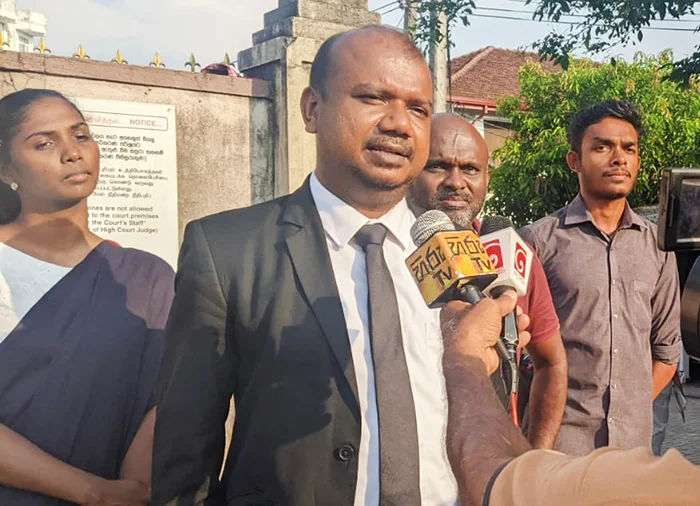
Frontline Socialist Party (FSP) spokesman Pubudu Jayagoda says the Gampaha Magistrate’s Court order that the ruling JVP hand back the FSP’s Kirindiwela office, grabbed by a group of JVP politicians on 02 September, 2025, has shown that the government cannot undermine the law.
Jayagoda said that the FSP had been compelled to move the court against the JVP as the Gampaha police refused to intervene due to political pressure. “They probably thought we were going to give up that office. Perhaps, the ruling party felt they could forcibly occupy other FSP offices,” Jayagoda said.
FSP’s Administrative Secretary Chamira Koswatta and trade unions, which operated from the Salmal Garden office, sought the court intervention to confirm the ownership of that building in the FSP. The court initially transferred the building to the police and issued a directive to law enforcement authorities to remove the JVP/NPP from that building.
Among the 20 respondents was Tilvin Silva, General Secretary of the JVP. Those now identified themselves as FSP quit the JVP in 2011 and later formed their own party.
Gampaha Additional Magistrate Shilani Perera on Monday ruled that the legitimate owner was the FSP. The Magistrate ruled that the FSPers had been forced out of that office, illegally.
Jayagoda said that the FSP considered the court ruling a victory for democracy and a devastating blow to the increasingly authoritarian JVP/NPP rule.

Amelia Kerr hits 139-ball 179* as New Zealand pull off record chase to level series

Punjab Kings fined for slow over-rate

Ice-cool Connolly leads nervy Punjab Kings home on IPL debut

Showers expected in the Western, Sabaragamuwa and Southern provinces in the evening or night

Heat Index at Caution Level in the Western, Sabaragamuwa, Southern, Eastern, North-western, Northern and North-central provinces and in Monaragala district

Urea shortage threatens Yala harvest: Experts

‘Dates have the highest sugar content to fight Coronavirus’

Sunday Island 27 December – Headlines

#SundayIsland 17th December – Headlines

Sunday Island – 28th March

Sunday Island Headlines – 21 March

Sunday Island – 21st February – Headlines
-

 Features4 days ago
A World Order in Crisis: War, Power, and Resistance
-

 News5 days ago
Energy Minister indicted on corruption charges ahead of no-faith motion against him
-

 News6 days ago
US dodges question on AKD’s claim SL denied permission for military aircraft to land
-

 Business6 days ago
Dialog Unveils Dialog Play Mini with Netflix and Apple TV
-

 Sports6 days ago
SLC to hold EGM in April
-

 Opinion5 days ago
When elephants fight, it is the grass that suffers
-
 Latest News6 days ago
A strong Technical and Vocational Education and Training (TVET) system equips individuals with practical, relevant, and future-oriented skills helping to innovate responsibly towards a greener and sustainable future – PM
-
 Features5 days ago
Lest we forget