
Editorial
The Duminda verdict


Last week’s unanimous decision of a three-judge bench of the Supreme Court, quashing former President Gotabaya Rajapaksa’s Special Presidential Pardon to Duminda Silva, former parliamentarian and supervising MP of the Defence Ministry serving a life term for the murder of another former MP, Bharatha Lakshman Premachandra, has been widely approved by public opinion. We say welcomed by the public because there is a deep rooted perception that some are more equal than others in this Socialist Democratic Republic of ours with wealthy and politically connected persons better treated than the less endowed.
Silva was one of five accused sentenced to death by the Colombo High Court in September 2016 after conviction by a divided verdict of a three-judge trial-at-bar with one judge dissenting. We are told the latest decision is final although some Supreme Court decisions of the past have been reviewed by fuller benches, such a possibility does not exist in the current situation. The case in the original court dragged on for nearly nine months and the judge who delivered the determination – the presiding judge dissented – said that a report of the Judicial Medical Officer had held that Silva was under the influence of alcohol at the time of the shooting and that the four victims including Premachandra had been shot with same firearm.
The Duminda Silva determination comes soon after the earlier decision of November 2023 of a five-judge bench of the Supreme Court holding the three Rajapaksa brothers, Gotabaya, Mahinda and Basil – the latter two held the finance ministry – of driving the country to bankruptcy. That judgment also held former Central Bank Governors Ajith Nivard Cabraal and W.D. Lakshman as well as former Treasury Secretary S.R Attygalle and former Presidential Secretary P.B. Jayasundera culpable. No damages or penalties were imposed in this instance as none had been sought.
Earlier in the Easter Sunday case in January last year former President Maithripala Sirisena was held partly responsible for the massive security failure for the carnage and ordered to pay Rs. 100 million to a special fund controlled by the Attorney General to compensate the victims. Senior police officers, including then IGP Pujith Jayasundera and Senior DIG Nilantha Jayawardena were ordered to pay Rs. 75 million each while Defence Secretary Hemasiri Fernando must pay Rs. 50 million and then Chief of National Intelligence Sisira Mendis, Rs. 10 million. As is well known, the Easter bombing occurred despite warning from Indian intelligence that a terrorist strike was very much in the offing.
These judicial decisions coming hard on the heels or each other have given Sri Lankans accustomed to the rulers getting off scot-free for their many acts of omission and commission have undoubtedly given the people fresh heart that the judiciary at least will enforce accountability. Calling the Duminda Silva pardon and many others “executive madness,” our stablemate, The Island on Friday editorially drew attention to several such instances of presidential pardons granted in the past. The rot began with President J.R. Jayewardene granting a notorious rapist, politically connected Gonawela Sunil, imprisoned for attacking a teenage girl, a pardon and releasing him from jail.
The tradition continued with President Maithripala Sirisena pardoning Galabodaatte Gnanasara who we would describe as a person in yellow robes rather than a Buddhist monk, held guilty of a most flagrant act of contempt of court. Then there was President Mahinda Rajapaksa pardoning the wife of a minister sentenced to death for murdering a woman described as the minister’s mistress. GR not only pardoned Amadoru Lawrence Romelo Duminda Silva, to give Duminda’s full name. He had earlier pardoned a soldier, Sergeant Sunil Ratnayake held in death row for murdering eight Tamil civilians.
Let us not forget the Royal Park murder case of 2005 when 19-year old Yvonne Jonsson, the daughter of a Swedish father and a Lankan mother was beaten and fatally strangled at the Royal Park Condominium complex in Rajagiriya. A wealthy young man, educated at an International School in Colombo and then went to Australia for higher studies, Jude Shramantha Anthony Jayamaha was convicted in this case of culpable homicide not amounting to murder and received a 12-year sentence of imprisonment. But he received a controversial presidential pardon from President Maithripala Sirisena a few days before Sirisena’s term ended in 2019. Jayamaha wrote a letter of remorse after receiving his pardon and is reported to have left the country.
Perhaps Duminda Silva who was appointed chairman of the National Housing Development Authority after his release from jail might have done well to have left the country after his release as Jayamaha did. Whether he had visions of returning to parliament we do not know. Though we do know that many undesirables have crawled out of the woodwork since the impact of the Aragalaya waned and are heard both in parliament and election platforms. Hirunika Premachandra, Bharatha Lakshman’s daughter who was elected both to the western provincial council and parliament is no longer an MP but remains politically active with the SJB. It was her fundamental rights action that triggered last weeks judgment.
Latest reports say that Duminda is hospitalized at Sri Jayawardenapura. He was taken to custody when leave to appeal was granted for Hirunika’s fundamental rights action. Whether he will remain at SJH as his doctors recommend or be transferred to the prisons hospital is yet an open question. People still remember that former minister and present MP S.B. Dissanayake, jailed for contempt of court, spent much of his sentence in the merchant’s ward of the Colombo National Hospital.


Wednesday 30th September, 2026
Underworld death squads are in overdrive, eliminating their rivals. On Sunday, a gunman armed with an assault rifle opened fire on a trishaw, killing its driver and a woman in Baddegama. Another woman, injured in the attack, died in hospital. A video of the attack shows the assassin, who arrives in a car, using controlled, individual shots rather than a burst. Such killings carried out by professional hitmen remind us of Hollywood blockbusters depicting street violence in Chicago of the 1920s. Close on the heels of Sunday’s killings, a man suffered serious injury in a shooting incident at Rathgama. The police have attributed these attacks to underworld rivalries.
About 25 people have perished in 35 shooting incidents so far this year. Two children were killed in a grenade attack in Dehiwala about three weeks ago. The increasing number of underworld attacks shows that criminal gangs remain strong despite the ongoing operations against the underworld. Several hardcore criminals have been arrested and remanded, but their gangs are still operating, making one doubt the effectiveness of the much-advertised offensives against the netherworld of crime and drugs.
Crime syndicates have emerged so powerful that they do not spare even holy shrines. One of the women killed in Baddegama on Sunday is believed to have aided and abetted the killing of a trustee of a famous devale in the Ambalangoda area, where another shrine reportedly cannot hold its annual procession due to underworld threats.
In July, Kanjipani Imran, a drug dealer operating from overseas, threated to attack the historic Devinuwara Devale perahera unless the shrine lifted a ban on a kavadi dance group sponsored by him. The police asked the shrine to hold the procession without the kavadi segment, accusing kavadi dancers of improper conduct. But the government intervened, directing the shrine to allow all kavadi groups, (including the one supported by Kanjipani Imran), to participate in the perahera. Thus, the political authority, devale officials and the police danced to Kanjipani Imran’s tune, as it were.
The underworld is often described as a criminal subculture separated from mainstream society, but criminologists point out that criminal networks are rooted in mainstream society and can have links with business and political elites. This may explain why the underworld has become so powerful in this country.
When Kanjipani Imran was arrested in Dubai and brought back in 2019, it was widely thought that he would not be able to secure bail because Sri Lanka police and their UAE counterparts had worked tirelessly for months to arrest him and Makandure Madush, another notorious criminal, who was also extradited. Madush was shot dead while in police custody, and the then government claimed that he had been caught in the crossfire between police and an underworld gang while being taken to a place where a haul of narcotics was believed to have been buried. But Kanjipani Imran obtained bail in 2024 and fled the country. Janith Madushanka de Silva (Podi Lasi), another drug dealer, also escaped to India after being released on bail in 2024.
Kavadi
dancers are not the only ones who have benefited from the largesse of drug dealers and other criminals. Following the assassination of High Court Judge Sarath Ambepitiya, this newspaper revealed that Kudu Nauffer, the drug dealer who ordered the killing, had sponsored food and beverages at a judicial officers’ function through a front. The police could not arrest Kudu Lal, the main supplier of heroin in Colombo, because of his political connections. In 2010, he left for London, with the help of a Cabinet minister in the UPFA government. Strangely, this incident has gone uninvestigated. There is a pressing need to monitor campaign funds of politicians and political parties closely.
It is hoped that the government and the police will stop bellowing rhetoric and step up their crime-busting operations to neutralise the underworld once and for all. Otherwise, the day may not be far off when powerful criminal gangs run a parallel government.
Tuesday 29th September, 2026
The government is busy concocting various theories in a bid to justify the manner in which the 22nd constitutional amendment (22A) was enacted. Its leaders claim that even in India, the retirement ages of judges have been increased recently, but there have been no protests. Their reference is to an order of the Indian Supreme Court in All India Judges Association v. Union of India case, directing seven states to raise the retirement age of district judicial officers from 60 to 62, subject to an assessment of their suitability and performance by the concerned High Court at the age of 60.
What the Indian Supreme Court order envisages and what 22A seeks to achieve are as different as chalk and cheese. The judges of the Indian Supreme Court did not seek to increase their own retirement age, which is constitutionally fixed at 65 years. The JVP-NPP politicians are therefore comparing apples and oranges. What drew criticism here was basically the arbitrary manner in which the government increased the constitutionally set retirement ages of the incumbent judges of the Supreme Court and the Court of Appeal; it did so even without any stakeholder consultation.
22A bears comparison only with a 2021 constitutional amendment that raised the retirement ages of the serving judges in Zimbabwe. As we pointed out in a previous editorial comment, President Emmerson Mnangagwa’s government hurriedly secured the passage of a constitutional amendment Bill to raise the retirement ages of judges, provoking a debate over whether it was proper to amend the Constitution to increase judicial tenure just in time to keep an incumbent Chief Justice in office. That amendment was obviously not part of a wider judicial reform initiative; it immediately opened the way for the then Chief Justice Luke Malaba to remain in office for another five years. Sri Lanka now finds itself in the exalted company of Zimbabwe.
Now that a precedent has been created, what guarantee is there that the JVP-NPP government will not seek to increase the mandatory retirement ages of the superior court judges again? A future government with a two-thirds majority will also be able to amend the Constitution and extend the retirement ages of the Supreme Court and the Court of Appeal judges.
The JVP-NPP politicians are asking the Opposition to stop protesting and come to terms with 22A, which has become law. Curiously, former Minister Vasudeva Nanayakkara is ‘rooting for’ the government. He has fully backed 22A, insisting that there is nothing wrong with increasing the retirement ages of the superior court judges. Addressing the media, yesterday, Nanayakkara claimed that it was an exercise in futility to keep on protesting against 22A, and the Opposition should face reality. He is entitled to his opinion, but the question is why he has led so many protests against the current Constitution and the Executive Presidency, since 1978, instead of coming to terms with them.
Government leaders are also asking the Opposition and the Bar Association of Sri Lanka to abandon their protests as 22A, reviewed by the Supreme Court and passed by Parliament with a special majority, is now part of the Constitution. Will they explain why they took up arms in the late 1980s in a bid to scuttle the 13th Amendment (13A), the establishment of the Provincial Councils (PCs) and the first PC elections? 13A also passed muster with the Supreme Court and was passed by Parliament with a two-thirds majority. Had the JVP leaders done at that time what they are now urging the Opposition to do, there would have been no bloodbath. They also campaigned hard against the 18th and 20th Amendments, and rightly so. Why didn’t they stop protesting after the enactment of those bad constitutional amendments?
One may argue that 22A differs from 13A, 18A and 20A in many respects, but that does not make it any less inimical to democracy. One may recall that the SC in its determination on the Inland Revenue (Amendment) Bill in 2022 held that a constitutional amendment affecting the retirement age or the period of office of the incumbent judges of the superior courts would impinge on judicial independence and therefore require approval at a referendum.
No amount of rhetoric and propaganda will help the government silence the critics of 22A, and their protests are bound to intensify.

Monday 28th September, 2026
All low-enrolment schools across the country are being assessed for restructuring, according to media reports. While many of them are facing the prospect of amalgamation or closure, the performance of one such school has strengthened the argument against a blanket approach to low-enrolment schools.
Students of Panahetagala Primary School, located in the backwaters of the Ratnapura District, have demonstrated their ability to overcome challenges and achieve academic excellence. They have proved what rural students are capable of, when properly guided. Four of the eight Panahetagala Primary School students who sat this year’s Grade Five Scholarship Examination (GFSE), have scored above the Ratnapura District cut-off mark of 135; three others obtained 100 marks out of 200. The remaining candidate scored 81 marks. The school has 22 students on its roll, and five teachers including the principal. None of the GFSE candidates had the benefit of private coaching, and the credit for preparing them for the highly competitive examination should therefore go to their dedicated teachers.
One may argue that the success story of Panahetagala Primary School is the exception that proves the rule, but the challenge before the JVP-NPP government, which flaunts what its describes as a pro-poor agenda, is to devise a strategy to make the exception the rule by developing the low-enrolment schools and making them attractive to more students.
The Ceylon Teachers Union has accused the government of trying to close down low-enrolment schools across the country, and redeploy teachers currently working in them to fill vacancies elsewhere. There are 10,146 state-run schools in Sri Lanka. Of them 9,750 are under Provincial Councils and 396 are national schools. About 800 rural schools have already been closed down during the past several decades, and it is feared that many more will face the same fate in the near future.
President Anura Kumara Dissanayake, speaking in Parliament in July 2025, said 3,144 government schools had fewer than 100 students. He said some schools would have to be permanently closed, while others would have to be amalgamated. According to teachers’ trade unions and organisations dedicated to protecting universal free education, most of these low-enrolment schools are situated in rural and remote areas. This situation has been attributed to several factors, including improved public transport, which has enhanced students’ mobility and reduced their dependence on rural schools that have suffered from neglect.
The NPP’s 2024 manifesto, A Thriving Nation, A Beautiful Life, promises “a government school system for primary education within 3 km of one’s home or parents’ place of work.” One can argue that the school merger programme, which is said to be on the cards, is not inherently contrary to the NPP manifesto, which envisages a more rationalised school network. But the NPP has not sought a mandate to close down any school. Most of all, will the government be able to fulfil its three-km access commitment if it opts to close down rural low-enrolment schools?
During its second uprising in the late 1980s, the JVP coined many pithy slogans to mobilise the disadvantaged rural folk, particularly the youth, by highlighting the glaring urban bias in state resource allocation. One of them was ‘Kolombata kiri, gamata kekiri’ (‘milk for Colombo, melon for the village’). However, villages have been left with no alternative but to settle for kekiri even under the current government led by the JVP.
Students and teachers have to walk long distances, with some of them even using a makeshift ferry to cross a river, to reach Panahetagala Primary School. Buses have stopped operating on the road that leads to Panahetagala due to its dilapidated condition. Shouldn’t the incumbent government, which is spending billions of rupees on developing the metro bus service in Colombo, allocate some funds to repair the road that links Panahetagala with the main road?
President Dissanayake, in his parliamentary speech under discussion, revealed that the number of children leaving school prematurely had risen from 16,673 in 2019 to 20,759 in 2022, before virtually plateauing at 20,755 in 2024. Everything possible must be done to bring the number of school dropouts down in the shortest possible time.
A high number of school dropouts is much more than a mere statistic; it is a symptom of wider social problems. As we have pointed out in a previous comment, the state has a strong justification for bearing the cost of operating low-enrolment schools to make education easily accessible to rural children, for such expenditure helps reduce dropouts, promote educational equity, prevent social problems and build human capital across the country. The government must handle this sensitive issue with great care.

Waste management and recycling to receive priority in the 2027 Budget – PM

Rain stays away as India and Sri Lanka look for fair contest to enter final

Gold winner Tharanga gets brand-new Honda Vezel from SLAAJ

Showers above 50 mm are likely at some places inthe Uva, Eastern and Central provinces and in Polonnaruwa and Mullaittivu districts after 1.00 p.m.

Civil society activist accuses govt. of favouring Ven. Gnanasara

More cops than cones

‘Dates have the highest sugar content to fight Coronavirus’

Sunday Island 27 December – Headlines

#SundayIsland 17th December – Headlines

Sunday Island – 28th March

Sunday Island Headlines – 21 March

Sunday Island – 21st February – Headlines
-
 Latest News6 days ago
Showers above 100 mm are likely at some places in the Western, Sabaragamuwa, Central and North-western provinces and in Galle and Matara Districts
-

 Editorial7 days ago
Crimes punished and unpunished
-

 Features6 days ago
Beyond traditional jobs: Why Sri Lanka needs to facilitate the gig economy
-

 Editorial5 days ago
Birth of a bad law
-

 News2 days ago
Police remove Thileepan statue in Jaffna
-
 Latest News6 days ago
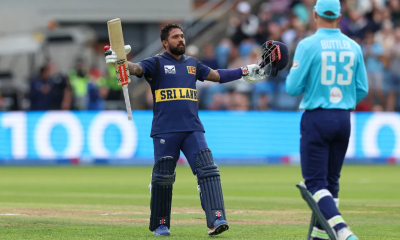
Kusal, Wellalage star as Sri Lanka defend 322 in Headingley thriller
-

 News4 days ago
TIN mandatory for key transactions from Nov. 1
-

 News6 days ago
IMF: Sri Lanka on course for 2027 market return