
Sat Mag
The Demise Of Air Ceylon – The Queen Of The Skies

By D. L. Sirimanne
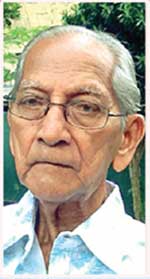
A 100-year-old Veteran Aviator
Going back in time, 1945 World War II ended suddenly with a big bang after Japanese cities Hiroshima and Nagasaki were wiped out in an instant by America dropping two atom bombs on them. Ceylon was still under British Rule. The Sinhalese, Tamils, Muslims, Burgher and the Borah communities lived in harmony. The world was once more an enormous beautiful and wonderful place to live in. Aviation progressed in leaps and bounds, and one could travel to any country without, travel restrictions, by land, sea or air. It was a pleasure to go to embassies and obtain visas which were immediately issued over the counter courteously.
The international flight passing through Ceylon was BOAC, with converted propeller driven war surplus bombers, such as the Avro Lancaster, Avro York and troop carriers DC3, DC4, etc. Aviation expanded at a tremendous rate, aircraft were built to carry hundreds of passengers with turbo prop engines followed by pure jets that fly enormous distances at almost the speed of sound and at great altitudes, up to 40,000 feet or more.
 At that time, intercity flights in India were operated by TATA AIRLINES and a few other private owners such as DECCAN AIRWAYS with Douglas DC3s and Wickers Viscounts. Tata Airlines operated a schedule between Bombay and Ratmalana. Later, when India gained Independence, the domestic airlines combined and formed AIR INDIA for their interstate operations and AIR INDIA INTERNATIONAL for international operations. America, Britain, Australia and a few affluent European countries commenced again, operating their international airlines such as PANAM, BOAC, KLM, AIR FRANCE, etc.
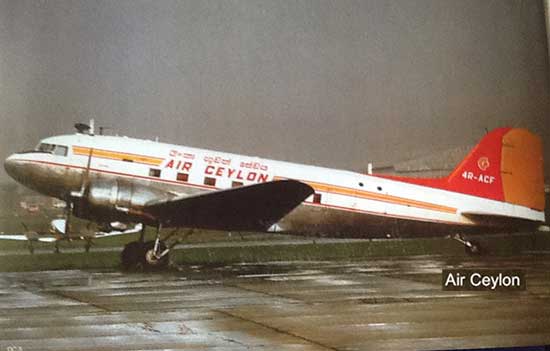
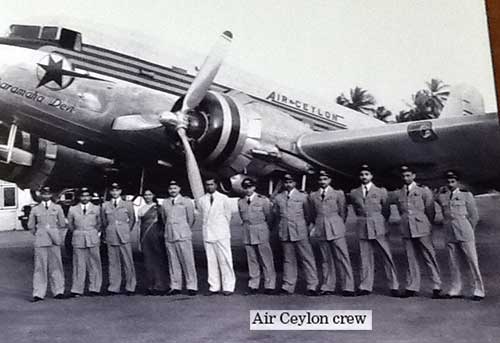
Air Ceylon inaugurated its regional flight on 10th December 1947 with a fleet of three refurbished Douglas DC3 aircraft with Ceylonese crew. It operated daily flights to Jaffna, Madras, Trichy and a weekly flight to Karachi via Bombay. During that time, neither Pakistan International Airlines (PIA) nor Singapore International Airlines (SIA) existed. Tribute should be paid to the pioneers of Commercial Aviation in Sri Lanka; Air Ceylon commenced operations with its three Douglas DC3 aircraft VIHARA MAHA DEVI, SUNETHRA DEVI and SITA DEVI being names of ancient Sinhalese Queens.
The Ceylonese Pioneers of Civil Aviation in the late 1940s were:
Sir John Kotalawala – Minister of Public Works
Mr. L .S. B. Perera – 1st Director of Aviation.
The flight Crews were:
Captains: Peter Fernando, Capt. David Peiris, M.R. de Silva, Emil Jayawardena, Ken Joachim, .
Co-pilots: P. B. Mawalagedera, George Ferdinand, Noël Peiris, Simon Rasiah, Rajarayan. They later became Captains.
Radio Officers: J. Vethavanam, D. L. Sirimanne, A. Massalamany, Hector Fernando and Jeff Fruitneit.
Air Hostesses: Cynthia Philips, Olga Rupesinghe, Olga de Silva, Ranee Ranawaka, Dharma Canagasabai, Mavis Wijeyeratne.
Station Managers: Mr. Reggie Santhiapillai in Jaffna, Mr. V. J. M. Perera in Madras.
Later many young trainee pilots, who received their training at the Colombo Flying Club by Ex-RAF Flight Lieut. Duncunson, got their PPL and CPL joined Air Ceylon and became Captains, such as Rakitha Wickremanayake, Sus Jayasekera, Anil Rambukwella Dudley Ranabahu, Dinham Souud, Simon Rasiah, Nadarajah, Ossie Jayawardena, Shelton Goonawardena etc.
In 1950, IATA (International Air Transport Association) granted Air Ceylon route rights to operate to London and Singapore. Australian National Airlines (ANA) which operated DC4s on the Melbourne/Singapore route had to terminate their flights at Singapore as they had no route rights to operate to Europe. They signed an Agreement with Air Ceylon to use Air Ceylon’s route rights to enable them to continue flight to London. Thus, ANA and Air Ceylon’s first international flights with the Air Ceylon logo on DC4s operated between Singapore and London via Colombo.
The domestic and regional flights commenced with DC3s and Ceylonese air crew. Since the ex-RAF pilots were not familiar with the International Civil Aviation Organization (ICAO) Regulations, ANA lent Capt. Gibbs, an amiable Australian, who was ANA Operations Manager to organized flight operations and run a proper and safe airline. Capt Gibbs took over pilot training, Instrument Flying, night landing practice, schedule flight operations and adhere to exact departure and landing times to the minute. He introduced preflight checks and cockpit drills with a checklist. Unfortunately, with change of government the contract with ANA terminated after four years of smooth faultless operations.
 Subsequently, in 1955 Air Ceylon teamed up with K.L. M. Royal Dutch Airlines on a Contract to operate the international service with Lockheed Constellation L749 and later Super Constellations L1049 with a new eye-catching bright yellow and red logo painted on the rudder and across the fuselage AIR CEYLON, beautifully advertising the airline. Mr. J. L. M Fernando was the Chairman of Air Ceylon. That was the time of Air Ceylon’s peak performance and a golden era. It was a treat to see an Air Ceylon Super Constellation majestically parked side by side with other giant airlines at international airports en route to London and Amsterdam. Cockpit crews consisted of KLM captains, Sri Lankan Co-Captains, Radio Officers and Flight Engineers. The cabin crews were Sri Lankan pursers and stewards in smart dark blue uniforms and the stewardesses in beautiful light blue sari with a dark blue border. Later, the Lockheed Electra L-188 with four turboprop engines was introduced as they were better equipped to fly much faster and at higher altitudes. After five years, sadly that contract too terminated in 1961.
In 1962, the next agreement was signed with BOAC. Air Ceylon International was flown with a Comet 4 and later with Vickers VC10 and VC1011 aircraft with British crews. It was disheartening that no cockpit crews were employed.
In the meantime, Air Ceylon domestic and regional flights were operated with three Douglas DC3 and two superb twin jet engine Hawker Siddeley Avro 748 aircraft, which need little maintenance and did regular flights to Jaffna, Madras, Trichy and the Maldives. In 1969, an expensive aircraft the Trident 1E was added to the fleet, one of the sleekest and fastest medium range jet passenger aircraft at that time. British Airways recommended this aircraft for regional operations, as PIA which operated a fleet of Tridents would assist in the supply of spare parts, Major Inspections and overhauls. Unfortunately, soon after Air Ceylon took delivery of the Trident, PIA sold their fleet of Tridents. That left Air Ceylon high and dry and in an awkward situation. Moreover, there was no other airline flying Tridents in the region and spare parts had to be flown from England. The Trident with Sri Lankan crew operated to Singapore, Colombo, Dubai, Sarjah and Muscat, etc. Due to inadvertent delays in obtaining spares from London the Trident operation suffered setbacks and sometimes cancellations gave Air Ceylon a bad name.
In 1972, a socialist-oriented government was elected and the BOAC Agreement terminated. Aa fresh Agreement to operate the international service was signed with French Union de Transports Aeriens (UTA) with DC8s and Sri Lankan cabin crews. The Minister of Aviation was Leslie Gunawardena, a staunch Socialist, and Mr. Sam de Silva was appointed Chairman of Air Ceylon. On the domestic and regional operations, the leader of the powerful labour union had direct contact with the Minister much to the annoyance of the management.
On the International operations UTA used Air Ceylon’s route rights but no markings of Air Ceylon logo displayed on the aircraft. Only cabin crews were taken as stewards and stewardesses. With the change of government, the contract with UTA ended in 1977 and the international operations ceased without any further foreign intervention.
In 1977, UNP government, Prime Minister J.R. Jayawardena appointed Mr. Glennie Peiris as Chairman. Since inception, Air Ceylon was financed by the Treasury for prestige and domestic and regional air travel. Unfortunately, the operation of an airline became a heavy burden on the country’s finances.
Unnecessary expenses were curtailed. Even toilet paper rationed and the flight stewardesses had to collect what was left before landing. It came to a sad dismal state and President J. R. Jayewardene ordered Air Ceylon to close down. On 31st December 1979 Air Ceylon terminated its operations and went into liquidation.
Air Ceylon’s Trident did its last flight on 31st August 1979 from Singapore to BIA piloted by Capt. George Ferdinand. It circled the airfield, dipped its wings in adieu and did a graceful landing never to fly again leaving all the staff in tears.
I wrote the following epitaph, a farewell to Air Ceylon, which appeared in the Newspapers:
WHEN AIR CEYLON DIPPED HER WINGS IN ADIEU
Created for fame, to carry the good name,
Of this Paradise Isle so green,
An airline was born, with trumpet and song,
And christened AIR CEYLON, the queen.
Across the great oceans, knew her reputation,
As the safest airline to fly,
Nymph of the skies, Sri Lanka’s great pride,
Her fame has spread far and wide.
On a BBC quiz, once a question was this:
‘What’s the safest airline to fly,
That carried loving souls, for thirty odd years,
Without any loss of life?’
KLM, PANAM, BOAC they hollered,
“Oh no! Oh no!! the compeer refuted.
In the silence that followed, a little child whispered,
‘AIR CEYLON, THE QUEEN OF THE SKIES.’
Thunderous applause from the audience arose,
To the beautiful sprite of the skies,
Long live her reputation in the annals of aviation
The safest airline to fly.
Alas, they who controlled her destiny blundered.
A Commission was appointed by the President to find out,
And Lo and behold, O’God, Oh my God,
Why was she sentenced to death?
When a nymph of the skies, do fly in the night,
As one hears a soft drone in the sky,
Do whisper a prayer and entrust to God’s care,
All souls that are cradled inside.
In 1980 President J. R. Jayewardene authorized International operations to continue as a semi-government corporation. Out of the ashes of Air Ceylon, AIR LANKA rose like Phoenix with a new logo with Capt. Rakitha Wickremanayake as Chairman and a fleet of Tri Stars. In 1998, it went into partnership with Emirates and change its logo to SRILANKAN AIRLINES. It had a very successful career, when the partnership was rescinded in 2008 due to President Mahinda Rajapaksa’s intervention. He cancelled the partnership and took over the Airline, which was operating as a profitable venture. But now heavily in debt, it is on a nose dive unable to recover unless a foreign airline takes control of it.
In 1960, when Air Ceylon was still in partnership with KLM, an Air Ceylon Electra, captained by a KLM Swedish Captain Stoltenberg, Co-Captain P. B. Mawalagedera, Navro D. L. Sirimanne and Flight Engineers W. A. Sugathadasa and Quintus Goonesekera, flew some Civil Aviation and Diplomatic Officials to Canton, now known as Guangzhou, penetrating the so-called ‘Bamboo Curtain’ of Communist China, which prohibited foreigners to enter China, to sign a bilateral agreement to operate a service to Canton. Unfortunately, it did not materialize. Now that China is friendly and willing to help Sri Lanka, there would be a remote possibility of China and Sri Lanka agreeing to a partnership to assist SriLankan Airlines to recover from its steep dive. Who knows? It might work.

Sat Mag
October 13 at the Women’s T20 World Cup: Injury concerns for Australia ahead of blockbuster game vs India

Australia vs India
Sharjah, 6pm local time
Australia have major injury concerns heading into the crucial clash. Just four balls into the match against Pakistan, Tayla Vlaeminck was out with a right shoulder dislocation. To make things worse, captain Alyssa Healy suffered an acute right foot injury while batting on 37 as she hobbled off the field with Australia needing 14 runs to win. Both players went for scans on Saturday.
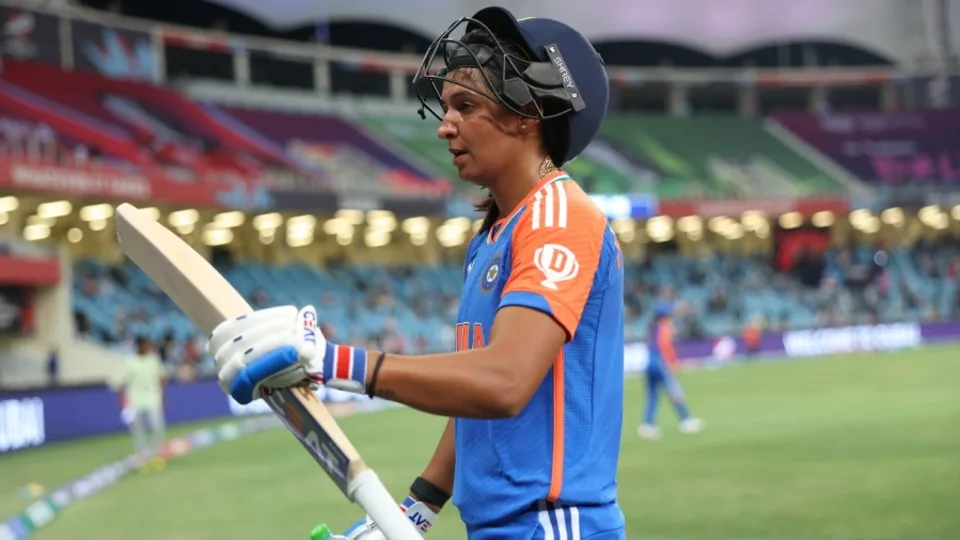
India captain Harmanpreet Kaur who had hurt her neck in the match against Pakistan, turned up with a pain-relief patch on the right side of her neck during the Sri Lanka match. She also didn’t take the field during the chase. Fast bowler Pooja Vastrakar bowled full-tilt before the Sri Lanka game but didn’t play.
India will want a big win against Australia. If they win by more than 61 runs, they will move ahead of Australia, thereby automatically qualifying for the semi-final. In a case where India win by fewer than 60 runs, they will hope New Zealand win by a very small margin against Pakistan on Monday. For instance, if India make 150 against Australia and win by exactly 10 runs, New Zealand need to beat Pakistan by 28 runs defending 150 to go ahead of India’s NRR. If India lose to Australia by more than 17 runs while chasing a target of 151, then New Zealand’s NRR will be ahead of India, even if Pakistan beat New Zealand by just 1 run while defending 150.
Overall, India have won just eight out of 34 T20Is they’ve played against Australia. Two of those wins came in the group-stage games of previous T20 World Cups, in 2018 and 2020.
Australia squad:
Alyssa Healy (capt & wk), Darcie Brown, Ashleigh Gardner, Kim Garth, Grace Harris, Alana King, Phoebe Litchfield, Tahlia McGrath, Sophie Molineux, Beth Mooney, Ellyse Perry, Megan Schutt, Annabel Sutherland, Tayla Vlaeminck, Georgia Wareham
India squad:
Harmanpreet Kaur (capt), Smriti Mandhana (vice-capt), Yastika Bhatia (wk), Shafali Verma, Deepti Sharma, Jemimah Rodrigues, Richa Ghosh (wk), Pooja Vastrakar, Arundhati Reddy, Renuka Singh, D Hemalatha, Asha Sobhana, Radha Yadav, Shreyanka Patil, S Sajana
Tournament form guide:
Australia have three wins in three matches and are coming into this contest having comprehensively beaten Pakistan. With that win, they also all but sealed a semi-final spot thanks to their net run rate of 2.786. India have two wins in three games. In their previous match, they posted the highest total of the tournament so far – 172 for 3 and in return bundled Sri Lanka out for 90 to post their biggest win by runs at the T20 World Cup.
Players to watch:
Two of their best batters finding their form bodes well for India heading into the big game. Harmanpreet and Mandhana’s collaborative effort against Pakistan boosted India’s NRR with the semi-final race heating up. Mandhana, after a cautious start to her innings, changed gears and took on Sri Lanka’s spinners to make 50 off 38 balls. Harmanpreet, continuing from where she’d left against Pakistan, played a classic, hitting eight fours and a six on her way to a 27-ball 52. It was just what India needed to reinvigorate their T20 World Cup campaign.
[Cricinfo]


By Eng. Thushara Dissanayake
The primitive man lived in caves to get shelter from the weather. With the progression of human civilization, people wanted more sophisticated buildings to fulfill many other needs and were able to accomplish them with the help of advanced technologies. Security, privacy, storage, and living with comfort are the common requirements people expect today from residential buildings. In addition, different types of buildings are designed and constructed as public, commercial, industrial, and even cultural or religious with many advanced features and facilities to suit different requirements.
We are facing many environmental challenges today. The most severe of those is global warming which results in many negative impacts, like floods, droughts, strong winds, heatwaves, and sea level rise due to the melting of glaciers. We are experiencing many of those in addition to some local issues like environmental pollution. According to estimates buildings account for nearly 40% of all greenhouse gas emissions. In light of these issues, we have two options; we change or wait till the change comes to us. Waiting till the change come to us means that we do not care about our environment and as a result we would have to face disastrous consequences. Then how can we change in terms of building construction?
Before the green concept and green building practices come into play majority of buildings in Sri Lanka were designed and constructed just focusing on their intended functional requirements. Hence, it was much likely that the whole process of design, construction, and operation could have gone against nature unless done following specific regulations that would minimize negative environmental effects.
We can no longer proceed with the way we design our buildings which consumes a huge amount of material and non-renewable energy. We are very concerned about the food we eat and the things we consume. But we are not worrying about what is a building made of. If buildings are to become a part of our environment we have to design, build and operate them based on the same principles that govern the natural world. Eventually, it is not about the existence of the buildings, it is about us. In other words, our buildings should be a part of our natural environment.
The living building challenge is a remarkable design philosophy developed by American architect Jason F. McLennan the founder of the International Living Future Institute (ILFI). The International Living Future Institute is an environmental NGO committed to catalyzing the transformation toward communities that are socially just, culturally rich, and ecologically restorative. Accordingly, a living building must meet seven strict requirements, rather certifications, which are called the seven “petals” of the living building. They are Place, Water, Energy, Equity, Materials, Beauty, and Health & Happiness. Presently there are about 390 projects around the world that are being implemented according to Living Building certification guidelines. Let us see what these seven petals are.
Place
This is mainly about using the location wisely. Ample space is allocated to grow food. The location is easily accessible for pedestrians and those who use bicycles. The building maintains a healthy relationship with nature. The objective is to move away from commercial developments to eco-friendly developments where people can interact with nature.
Water
It is recommended to use potable water wisely, and manage stormwater and drainage. Hence, all the water needs are captured from precipitation or within the same system, where grey and black waters are purified on-site and reused.
Energy
Living buildings are energy efficient and produce renewable energy. They operate in a pollution-free manner without carbon emissions. They rely only on solar energy or any other renewable energy and hence there will be no energy bills.
Equity
What if a building can adhere to social values like equity and inclusiveness benefiting a wider community? Yes indeed, living buildings serve that end as well. The property blocks neither fresh air nor sunlight to other adjacent properties. In addition, the building does not block any natural water path and emits nothing harmful to its neighbors. On the human scale, the equity petal recognizes that developments should foster an equitable community regardless of an individual’s background, age, class, race, gender, or sexual orientation.
Materials
Materials are used without harming their sustainability. They are non-toxic and waste is minimized during the construction process. The hazardous materials traditionally used in building components like asbestos, PVC, cadmium, lead, mercury, and many others are avoided. In general, the living buildings will not consist of materials that could negatively impact human or ecological health.
Beauty
Our physical environments are not that friendly to us and sometimes seem to be inhumane. In contrast, a living building is biophilic (inspired by nature) with aesthetical designs that beautify the surrounding neighborhood. The beauty of nature is used to motivate people to protect and care for our environment by connecting people and nature.
Health & Happiness
The building has a good indoor and outdoor connection. It promotes the occupants’ physical and psychological health while causing no harm to the health issues of its neighbors. It consists of inviting stairways and is equipped with operable windows that provide ample natural daylight and ventilation. Indoor air quality is maintained at a satisfactory level and kitchen, bathrooms, and janitorial areas are provided with exhaust systems. Further, mechanisms placed in entrances prevent any materials carried inside from shoes.
The Bullitt Center building
Bullitt Center located in the middle of Seattle in the USA, is renowned as the world’s greenest commercial building and the first office building to earn Living Building certification. It is a six-story building with an area of 50,000 square feet. The area existed as a forest before the city was built. Hence, the Bullitt Center building has been designed to mimic the functions of a forest.
The energy needs of the building are purely powered by the solar system on the rooftop. Even though Seattle is relatively a cloudy city the Bullitt Center has been able to produce more energy than it needed becoming one of the “net positive” solar energy buildings in the world. The important point is that if a building is energy efficient only the area of the roof is sufficient to generate solar power to meet its energy requirement.
It is equipped with an automated window system that is able to control the inside temperature according to external weather conditions. In addition, a geothermal heat exchange system is available as the source of heating and cooling for the building. Heat pumps convey heat stored in the ground to warm the building in the winter. Similarly, heat from the building is conveyed into the ground during the summer.
The potable water needs of the building are achieved by treating rainwater. The grey water produced from the building is treated and re-used to feed rooftop gardens on the third floor. The black water doesn’t need a sewer connection as it is treated to a desirable level and sent to a nearby wetland while human biosolid is diverted to a composting system. Further, nearly two third of the rainwater collected from the roof is fed into the groundwater and the process resembles the hydrologic function of a forest.
It is encouraging to see that most of our large-scale buildings are designed and constructed incorporating green building concepts, which are mainly based on environmental sustainability. The living building challenge can be considered an extension of the green building concept. Amanda Sturgeon, the former CEO of the ILFI, has this to say in this regard. “Before we start a project trying to cram in every sustainable solution, why not take a step outside and just ask the question; what would nature do”?
By Uditha Devapriya
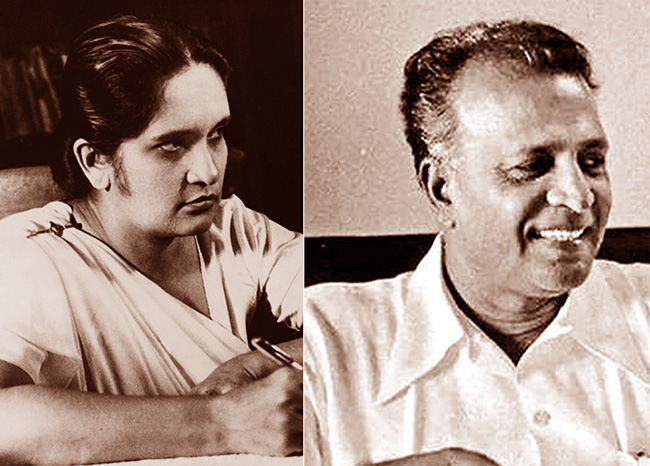
On June 7, 1964, the Central Committee of the Lanka Sama Samaja Party convened a special conference at which three resolutions were presented. The first, moved by N. M. Perera, called for a coalition with the SLFP, inclusive of any ministerial portfolios. The second, led by the likes of Colvin R. de Silva, Leslie Goonewardena, and Bernard Soysa, advocated a line of critical support for the SLFP, but without entering into a coalition. The third, supported by the likes of Edmund Samarakkody and Bala Tampoe, rejected any form of compromise with the SLFP and argued that the LSSP should remain an independent party.
The conference was held a year after three parties – the LSSP, the Communist Party, and Philip Gunawardena’s Mahajana Eksath Peramuna – had founded a United Left Front. The ULF’s formation came in the wake of a spate of strikes against the Sirimavo Bandaranaike government. The previous year, the Ceylon Transport Board had waged a 17-day strike, and the harbour unions a 60-day strike. In 1963 a group of working-class organisations, calling itself the Joint Committee of Trade Unions, began mobilising itself. It soon came up with a common programme, and presented a list of 21 radical demands.
In response to these demands, Bandaranaike eventually supported a coalition arrangement with the left. In this she was opposed, not merely by the right-wing of her party, led by C. P. de Silva, but also those in left parties opposed to such an agreement, including Bala Tampoe and Edmund Samarakkody. Until then these parties had never seen the SLFP as a force to reckon with: Leslie Goonewardena, for instance, had characterised it as “a Centre Party with a programme of moderate reforms”, while Colvin R. de Silva had described it as “capitalist”, no different to the UNP and by default as bourgeois as the latter.
The LSSP’s decision to partner with the government had a great deal to do with its changing opinions about the SLFP. This, in turn, was influenced by developments abroad. In 1944, the Fourth International, which the LSSP had affiliated itself with in 1940 following its split with the Stalinist faction, appointed Michel Pablo as its International Secretary. After the end of the war, Pablo oversaw a shift in the Fourth International’s attitude to the Soviet states in Eastern Europe. More controversially, he began advocating a strategy of cooperation with mass organisations, regardless of their working-class or radical credentials.
Pablo argued that from an objective perspective, tensions between the US and the Soviet Union would lead to a “global civil war”, in which the Soviet Union would serve as a midwife for world socialist revolution. In such a situation the Fourth International would have to take sides. Here he advocated a strategy of entryism vis-à-vis Stalinist parties: since the conflict was between Stalinist and capitalist regimes, he reasoned, it made sense to see the former as allies. Such a strategy would, in his opinion, lead to “integration” into a mass movement, enabling the latter to rise to the level of a revolutionary movement.

Though controversial, Pablo’s line is best seen in the context of his times. The resurgence of capitalism after the war, and the boom in commodity prices, had a profound impact on the course of socialist politics in the Third World. The stunted nature of the bourgeoisie in these societies had forced left parties to look for alternatives. For a while, Trotsky had been their guide: in colonial and semi-colonial societies, he had noted, only the working class could be expected to see through a revolution. This entailed the establishment of workers’ states, but only those arising from a proletarian revolution: a proposition which, logically, excluded any compromise with non-radical “alternatives” to the bourgeoisie.
To be sure, the Pabloites did not waver in their support for workers’ states. However, they questioned whether such states could arise only from a proletarian revolution. For obvious reasons, their reasoning had great relevance for Trotskyite parties in the Third World. The LSSP’s response to them showed this well: while rejecting any alliance with Stalinist parties, the LSSP sympathised with the Pabloites’ advocacy of entryism, which involved a strategic orientation towards “reformist politics.” For the world’s oldest Trotskyite party, then going through a series of convulsions, ruptures, and splits, the prospect of entering the reformist path without abandoning its radical roots proved to be welcoming.
Writing in the left-wing journal Community in 1962, Hector Abhayavardhana noted some of the key concerns that the party had tried to resolve upon its formation. Abhayavardhana traced the LSSP’s origins to three developments: international communism, the freedom struggle in India, and local imperatives. The latter had dictated the LSSP’s manifesto in 1936, which included such demands as free school books and the use of Sinhala and Tamil in the law courts. Abhayavardhana suggested, correctly, that once these imperatives changed, so would the party’s focus, though within a revolutionary framework. These changes would be contingent on two important factors: the establishment of universal franchise in 1931, and the transfer of power to the local bourgeoisie in 1948.
Paradoxical as it may seem, the LSSP had entered the arena of radical politics through the ballot box. While leading the struggle outside parliament, it waged a struggle inside it also. This dual strategy collapsed when the colonial government proscribed the party and the D. S. Senanayake government disenfranchised plantation Tamils. Suffering two defeats in a row, the LSSP was forced to think of alternatives. That meant rethinking categories such as class, and grounding them in the concrete realities of the country.
This was more or less informed by the irrelevance of classical and orthodox Marxian analysis to the situation in Sri Lanka, specifically to its rural society: with a “vast amorphous mass of village inhabitants”, Abhayavardhana observed, there was no real basis in the country for a struggle “between rich owners and the rural poor.” To complicate matters further, reforms like the franchise and free education, which had aimed at the emancipation of the poor, had in fact driven them away from “revolutionary inclinations.” The result was the flowering of a powerful rural middle-class, which the LSSP, to its discomfort, found it could not mobilise as much as it had the urban workers and plantation Tamils.
Where else could the left turn to? The obvious answer was the rural peasantry. But the rural peasantry was in itself incapable of revolution, as Hector Abhayavardhana has noted only too clearly. While opposing the UNP’s Westernised veneer, it did not necessarily oppose the UNP’s overtures to Sinhalese nationalism. As historians like K. M. de Silva have observed, the leaders of the UNP did not see their Westernised ethos as an impediment to obtaining support from the rural masses. That, in part at least, was what motivated the Senanayake government to deprive Indian estate workers of their most fundamental rights, despite the existence of pro-minority legal safeguards in the Soulbury Constitution.
To say this is not to overlook the unique character of the Sri Lankan rural peasantry and petty bourgeoisie. Orthodox Marxists, not unjustifiably, characterise the latter as socially and politically conservative, tilting more often than not to the right. In Sri Lanka, this has frequently been the case: they voted for the UNP in 1948 and 1952, and voted en masse against the SLFP in 1977. Yet during these years they also tilted to the left, if not the centre-left: it was the petty bourgeoisie, after all, which rallied around the SLFP, and supported its more important reforms, such as the nationalisation of transport services.
One must, of course, be wary of pasting the radical tag on these measures and the classes that ostensibly stood for them. But if the Trotskyite critique of the bourgeoisie – that they were incapable of reform, even less revolution – holds valid, which it does, then the left in the former colonies of the Third World had no alternative but to look elsewhere and to be, as Abhayavardhana noted, “practical men” with regard to electoral politics. The limits within which they had to work in Sri Lanka meant that, in the face of changing dynamics, especially among the country’s middle-classes, they had to change their tactics too.
Meanwhile, in 1953, the Trotskyite critique of Pabloism culminated with the publication of an Open Letter by James Cannon, of the US Socialist Workers’ Party. Cannon criticised the Pabloite line, arguing that it advocated a policy of “complete submission.” The publication of the letter led to the withdrawal of the International Committee of the Fourth International from the International Secretariat. The latter, led by Pablo, continued to influence socialist parties in the Third World, advocating temporary alliances with petty bourgeois and centrist formations in the guise of opposing capitalist governments.
For the LSSP, this was a much-needed opening. Even as late as 1954, three years after S. W. R. D. Bandaranaike formed the SLFP, the LSSP continued to characterise the latter as the alternative bourgeois party in Ceylon. Yet this did not deter it from striking up no contest pacts with Bandaranaike at the 1956 election, a strategy that went back to November 1951, when the party requested the SLFP to hold a discussion about the possibility of eliminating contests in the following year’s elections. Though it extended critical support to the MEP government in 1956, the LSSP opposed the latter once it enacted emergency measures in 1957, mobilising trade union action for a period of three years.
At the 1960 election the LSSP contested separately, with the slogan “N. M. for P.M.” Though Sinhala nationalism no longer held sway as it had in 1956, the LSSP found itself reduced to a paltry 10 seats. It was against this backdrop that it began rethinking its strategy vis-à-vis the ruling party. At the throne speech in April 1960, Perera openly declared that his party would not stabilise the SLFP. But a month later, in May, he called a special conference, where he moved a resolution for a coalition with the party. As T. Perera has noted in his biography of Edmund Samarakkody, the response to the resolution unearthed two tendencies within the oppositionist camp: the “hardliners” who opposed any compromise with the SLFP, including Samarakkody, and the “waverers”, including Leslie Goonewardena.
These tendencies expressed themselves more clearly at the 1964 conference. While the first resolution by Perera called for a complete coalition, inclusive of Ministries, and the second rejected a coalition while extending critical support, the third rejected both tactics. The outcome of the conference showed which way these tendencies had blown since they first manifested four years earlier: Perera’s resolution obtained more than 500 votes, the second 75 votes, the third 25. What the anti-coalitionists saw as the “Great Betrayal” of the LSSP began here: in a volte-face from its earlier position, the LSSP now held the SLFP as a party of a radical petty bourgeoisie, capable of reform.
History has not been kind to the LSSP’s decision. From 1970 to 1977, a period of less than a decade, these strategies enabled it, as well as the Communist Party, to obtain a number of Ministries, as partners of a petty bourgeois establishment. This arrangement collapsed the moment the SLFP turned to the right and expelled the left from its ranks in 1975, in a move which culminated with the SLFP’s own dissolution two years later.
As the likes of Samarakkody and Meryl Fernando have noted, the SLFP needed the LSSP and Communist Party, rather than the other way around. In the face of mass protests and strikes in 1962, the SLFP had been on the verge of complete collapse. The anti-coalitionists in the LSSP, having established themselves as the LSSP-R, contended later on that the LSSP could have made use of this opportunity to topple the government.
Whether or not the LSSP could have done this, one can’t really tell. However, regardless of what the LSSP chose to do, it must be pointed out that these decades saw the formation of several regimes in the Third World which posed as alternatives to Stalinism and capitalism. Moreover, the LSSP’s decision enabled it to see through certain important reforms. These included Workers’ Councils. Critics of these measures can point out, as they have, that they could have been implemented by any other regime. But they weren’t. And therein lies the rub: for all its failings, and for a brief period at least, the LSSP-CP-SLFP coalition which won elections in 1970 saw through something of a revolution in the country.
The writer is an international relations analyst, researcher, and columnist based in Sri Lanka who can be reached at udakdev1@gmail.com

US seizes two ‘shadow fleet’ tankers linked to Venezuelan oil

Showers above 100 mm are likely at some places in the Eastern and Uva provinces and showers about 50-75 mm in other areas

Easter Sunday attacks: Govt. says wife of Katuwapitiya Church bomber alive

Indian Army Chief here

Kelaniya Duruthu Perahera

Govt. not controlled by ‘Power Mafias’; electricity prices will fall further – Jayakody

‘Dates have the highest sugar content to fight Coronavirus’

Sunday Island 27 December – Headlines

#SundayIsland 17th December – Headlines

Sunday Island – 28th March

Sunday Island Headlines – 21 March

Sunday Island – 21st February – Headlines
-

 News2 days ago
Interception of SL fishing craft by Seychelles: Trawler owners demand international investigation
-
 News2 days ago
Broad support emerges for Faiszer’s sweeping proposals on long- delayed divorce and personal law reforms
-

 News3 days ago
Private airline crew member nabbed with contraband gold
-

 News1 day ago
Prez seeks Harsha’s help to address CC’s concerns over appointment of AG
-

 News1 day ago
Govt. exploring possibility of converting EPF benefits into private sector pensions
-

 News5 days ago
Health Minister sends letter of demand for one billion rupees in damages
-

 Features2 days ago
Educational reforms under the NPP government
-

 Features3 days ago
Pharmaceuticals, deaths, and work ethics