
News
“The criminal justice system in South Asia is discriminatory and violent”: Ambika Satkunanathan

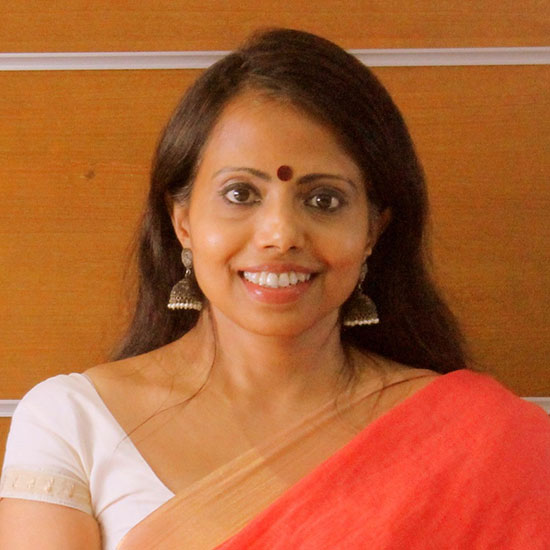
As a lawyer and human-rights champion who led the first-ever national study of prisons in Sri Lanka last year, Ambika Satkunanathan is vocal against the violence that is an endemic part of prison systems, and the ‘retributive’ and ‘vengeful’ nature of state justice that creates worse problems in society and creates criminals rather than rehabilitating them.
“Violence is used to maintain order, which robs the person in prison of dignity and agency from the moment they enter prison until they leave. Violence and discrimination are normalised in the system,” says Ambika, who was commissioner of the Human Rights Commission of Sri Lanka from 2015 to 2020.
“This penchant for violent forms of punishment is a result of societies being wedded to the punitive and carceral approach to dealing with what are essentially social problems,” she adds. “We believe that locking someone up and throwing away the key solves the issue, but it only compounds it.”
Regardless, she says, societies in the Subcontinent continue with this deeply flawed approach because it is easier than addressing the root causes of what is defined as ‘crime’.
The question of what constitutes crime has become increasingly blurred in the recent past in South Asia as more and more human-rights activists and even journalists in the region are being targeted by their own governments, and imprisoned on the basis of draconian colonial-era laws, and kept confined as ‘undertrials’ for years until the case begins. In these instances, prisons are being used not to deter crime but to deter dissent, and to threaten those who speak up against governments, even ‘democratic’ ones.
She shares her observation that South Asian societies are more skewed towards punishing individuals over corporations, and the underprivileged over the privileged. “A large multinational corporation will be able to use technicalities and the immense resources at their disposal to escape accountability for environmental degradation, while someone with a few grams of marijuana will be imprisoned. Therefore, your social position, power and privilege impact how you are treated by the criminal justice system, which is not neutral or objective but is discriminatory and violent,” asserts Ambika, who did her BA and LLB from Monash University in Australia, and LLM from the University of Nottingham.
Women even more vulnerable. “In Sri Lanka, women suffer structural violence in many ways. For instance, they don’t have access to even sanitary napkins, have no access to reproductive health care, and there is inadequate access to pre and postnatal care,” she says, describing a scenario that could apply to a number of rural areas anywhere in the Subcontinent.
Apart from facilities and infrastructure, women also bear the brunt of carrying the ‘honour’ of the family, or loss of reputation, which is more severe for them than for men. “When women are imprisoned, they often lose the support of families or partners / husbands and hence find it difficult to retain legal representation. It prolongs their imprisonment,” says Ambika, who has been a Chevening scholar and currently serves as the chairperson of the Neelan Tiruchelvam Trust, the only indigenous grant-maker in Sri Lanka, combining human-rights and peacebuilding initiatives.
Further, she says, women are more stigmatised and find it challenging to rebuild their lives following release from prison. This in turn pushes them into exploitative situations that leads to them being imprisoned again. “The vicious cycle continues,” she explains.
Women are also vulnerable to the gendered aspect of violence to which they might be subjected – another staple in South Asian societies. For women activists from minority communities in Sri Lanka, the challenges are progressively worse.
“If you are a Tamil woman activist working in the Northern Province, you will face additional challenges, such as surveillance, constant visits by the security agencies to your house to make inquiries about your activities, and phone calls prior to events or demonstrations to intimidate you from participating,” she shares.
Ambika’s own journey from a lawyer to a human-rights champion has been shaped by her identity as a Tamil woman in Sri Lanka – particularly the discrimination she faced. The violence and fear of violence that Tamils have experienced in Sri Lanka cast a shadow that hung over her life as long as she can remember.
“This is what drove me to study law and work to further the protection of human rights. The personal became the political because the political impacted every aspect of my personal life, like that of most Tamils in Sri Lanka,” she says.
She looks back with pride at her work at the Human Rights Commission of Sri Lanka where, despite structural and systemic impediments, she managed to strengthen connections between the Commission and civil society and survivors of human-rights violations. “It helped create an environment of trust whereby they felt they could approach the Commission for remedies,” she says.
At a webinar organised by South Asia Peace Action Network last month on the topic ‘Rights of the incarcerated in South Asia’, Ambika stressed on the importance of civil society organisations in South Asia coming together to share experiences, especially strategies, used to counter similar challenges.
“Other South Asian countries have seen authoritarian regimes similar to the current one in Sri Lanka, and are aware of or have experienced state efforts to stifle dissent and intimidate and harass human-rights activists. Similarly, patriarchy, misogyny, and sexism are not particularly unique to Sri Lanka. Since the problems are similar, so are the solutions. We must learn from each other rather than reinventing the wheel,” she says.
Ambika believes the solution lies with civil society who can help activists who are imprisoned or targeted by the powerful. “The most important way is to openly voice solidarity with the activists. Other means include mounting legal challenges to these state acts as well as engaging in advocacy, both nationally and internationally,” she says.
Providing support to the families of the activists, whether material or otherwise, is often understated, but goes a long way too, she adds. “Often the psychological aspect of incarceration is ignored. Therefore, offering moral support to the families is imperative,” she says, suggesting that supporters can visit imprisoned activists, taking them books or food to show they are not forgotten. “It reminds them that there are people who continue to fight for their release.”
While envisioning a unified and socially just South Asia, Ambika believes there’s a lot more that needs change than just laws. “Before we speak of laws, let’s speak of values. In South Asia, majoritarian and ethno-nationalist politics have taken hold and discrimination against minorities is common,” she says.
Giving examples of how religious minorities face constant threat – the Tamils and Muslims in Sri Lanka; Muslims and Dalits in India; and Sikhs, Shias and Christians in Pakistan – she believes South Asian countries are moving further away from secularism “if not in law, then certainly in deed.”
She has a special bone to pick with the death penalty. Citing both the legal and historical point of view, she refers to the South Asian cultural perspective that leans heavily towards the Hindu and Buddhist principles of the supremacy of all forms of life: “Abolish, abolish, abolish the death penalty! The death penalty is a cruel and inhumane punishment which, as research has shown over and over again, does not in any way prevent crime but instead causes great harm,” she asserts.
As a society, Ambika says, we need to introspect how much we all are responsible in perpetuating crime: “When we address the root causes of social problems, address the deep inequalities within society, we will not have to expend energy formulating humane punishments.” (Money Control)



First comprehensive review of EPF, ETF launched, says Deputy Minister
The Government has launched the first comprehensive review of the Employees’ Provident Fund (EPF) and Employees’ Trust Fund (ETF) since their establishment, Deputy Minister of Labour Mahinda Jayasinghe told Parliament on Friday.
He said the review was aimed at improving the efficiency of the two retirement benefit schemes and enhancing services provided to millions of members.
Addressing Parliament, Jayasinghe said the Labour Department had already introduced several measures to modernise the administration of the funds, including digitalisation initiatives and improved mechanisms to recover outstanding contributions from defaulting employers.
According to the latest figures, the EPF has 22.9 million registered members and beneficiaries, of whom 3.1 million active accounts receive monthly contributions. The ETF has around three million registered members.
The Deputy Minister said the EPF’s total assets had reached Rs. 4.9 trillion by the end of 2025, while the ETF’s assets stood at Rs. 637.5 billion. He added that there were 101,000 active employers in 2025, including 376 semi-government institutions.
Jayasinghe said no government had undertaken such a systematic review of the two funds since their establishment, with the EPF being introduced in 1958 and the ETF in 1980.
He said the Labour Department had accelerated the recovery of unpaid EPF contributions from private and semi-government institutions, with Rs. 3.4 billion allocated through the 2026 Budget to settle outstanding contributions of semi-government institutions.
He added that steps had also been taken to reactivate stalled court cases and execute pending warrants related to contribution defaults.
The Deputy Minister said a new software system was being developed by integrating the data systems of the Labour Department and the Central Bank of Sri Lanka (CBSL) to create a unified platform.
He further noted that the Digital EPF facility, launched last December, enables employees to register and access a range of EPF-related services online. These reforms, he said, would eventually allow members to obtain EPF and ETF services through a single-window system.
The Sri Lanka Press Institute (SLPI), and its constituent partners, the Newspaper Society of Sri Lanka (NSSL), The Editors’Guild of Sri Lanka (TEGOSL), the Free Media Movement (FMM), the Sri Lanka Working Journalists Association (SLWJA) together with its affiliated organizations, the Muslim Media Forum (MMF), the Tamil Media Alliance (TMA), The Federation of Media Employees Trade Union (FMETU), the South Asia Free Media Association – SL Chapter (SAFMA) object the proposed Chartered Institute of Media Professionals of Sri Lanka (CIMP) Bill.
“Our primary objection stems from the government-led nature of this initiative. History shows that robust professional bodies, such as the Institute of Engineers and the Sri Lanka Institute of Architects, were founded and drafted by the professionals themselves before being incorporated by Parliament. In contrast, the CIMP is a state-driven project ordered to be published by the Minister of Health and Mass Media despite objections raised by media’s professional bodies.
We view this as an attempt to impose a state-managed regulatory framework upon a profession that must remain independent of government inteference to function effectively,” an SLPI news release said.
“The SLPI, its constituents and affiliated organizations maintain that professional media standards must be self-regulated in principle and led by the media community, not mandated by law under ministerial oversight. The SLPI has presented an alternative mechanism, viz., the Sri Lanka Media Commission (SLMC), based on co-regulatory and self-regulatory principles, which improves professionalism. In addition, the Sri Lanka College of Journalism, which is recognised by the media industry for training journalists for more than two decades, could also be an alternative way of building relevant journalism standards with government financial support if it intends to genuinely promote media professionalism. We call upon the government to withdraw this Bill and engage in a genuine dialogue with stakeholders that respects the autonomy and freedom of the media in a democracy.”
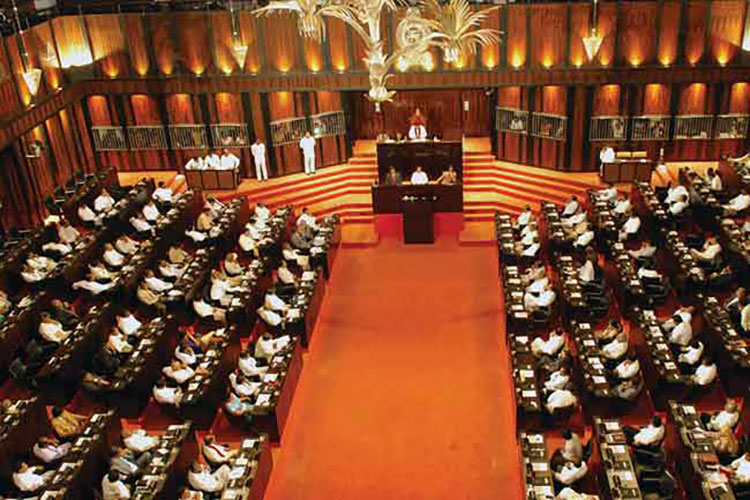
More than Rs. 332 million in public funds has been spent on maintaining Provincial Council chairpersons and their staff despite the dissolution of Provincial Councils, Deputy Minister of Provincial Councils and Local Government Ruwan Senarath told Parliament on Friday.
The Deputy Minister disclosed this in response to a question raised by NPP Gampaha District MP Ruwan Nishantha Mapalagama.
According to Senarath, a total of Rs. 332.9 million had been incurred during the relevant period for the upkeep of Provincial Council chairpersons and their administrative staff, although the respective councils had ceased functioning after completing their terms.
He explained that the expenditure had continued due to provisions in the Constitution and existing legal framework, under which the positions of Provincial Council chairpersons remain valid even after the expiry of the councils’ official terms.
Senarath said the legal provisions governing Provincial Councils had resulted in chairpersons and their staff continuing to receive related facilities despite the councils themselves no longer being operational.
The disclosure came amid concerns over public expenditure incurred on maintaining institutions that remain inactive due to the absence of Provincial Council elections.

Typhoon Noul makes landfall in China, with hundreds of thousands evacuated

Colombo Kaps down Dambulla Sixers by 21 runs

Kandy Royals win by 11 runs
Showers will occur in the Western, Sabaragamuwa and North-western provinces and in Galle, Matara, Kandy and Nuwara-Eliya districts

Govt. launches EPF, ETF shake-up

SLPI concerned over the proposed Chartered Institute of Media Professionals of Sri Lanka

‘Dates have the highest sugar content to fight Coronavirus’

Sunday Island 27 December – Headlines

#SundayIsland 17th December – Headlines

Sunday Island – 28th March

Sunday Island Headlines – 21 March

Sunday Island – 21st February – Headlines
-
 Midweek Review5 days ago
Three high-profile alleged suicides shaping key investigations
-

 News2 days ago
Fort Magistrate orders arrest of MP Archchuna
-

 Editorial2 days ago
An indictment of all parties
-

 News5 days ago
Customs asked to resume probe or face legal action
-
Editorial6 days ago
Welcome bid to tackle rolling death traps
-

 Opinion3 days ago
Ukraine’s power struggle spills on to the streets
-

 News2 days ago
National-level cybersecurity facility Lab established
-

 News7 days ago
Merchant Shipping Secretariat probes bribery scandal