
News
The country requires a strong Executive Presidency to navigate the Post-Covid world says Milinda Moragoda

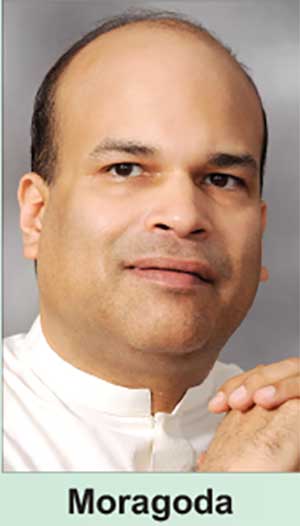
Milinda Moragoda, former Cabinet Minister and founder of the Pathfinder Foundation spoke about the need for Sri Lanka to be fast and agile in order to face the economic, social and international challenges of the Post-Covid environment.
He stated that: ‘there is no disputing the fact that the country benefited from having strong executive decision-making during the early stages of the pandemic. And as a result, many lives were saved.
Disappointingly, no major political party has yet put forward a coherent governance and governing structure for the nation in their policy platforms.
‘Each has been predictably very chameleon-like when addressing issues related to constitutional and governance-structure related matters in their manifestos. This is especially unfortunate in light of the dysfunctional relationship that now exists between the Executive and the Legislature and the proven potential for gridlock, both a result of the enactment of the 19th Amendment.’
Against this backdrop, without any coherent or credible proposals thus far having been presented by any major political party, Moragoda proposes that all thoughtful Sri Lankans take up the following points for their consideration, discussion and if appropriate advocacy :
A. The establishment of a strong Executive Presidency that can act decisively and yet be ultimately accountable to Parliament. After all, the presidency is the only office elected by all Sri Lankan voters. Thus, the individual occupying this post will be implicitly accountable to all citizens, be they from Kankesanturai or Dewinuwara.
B. An independent legislature that will promulgate legislation and act as a responsible check and balance to Executive excess. This legislature should be elected on a first-past-the-post basis with a small percentage of members being chosen through a proportional representation system.
This change should lead to a stable parliament where most members are directly accountable to their constituencies and citizens. The preference vote system which has only created chaos and in-fighting should be dispensed with.
C. The Provincial Councils should be abolished and empowered local councils set up to address the day-to-day issues of the citizenry.
D. An empowered Senate should be created to represent minority and regional interests.
Moragoda further pointed out that ‘Forty-two years have passed since the establishment of Sri Lanka’s Executive Presidency and that all those who criticize this form of government have still not been able to convince Sri Lankans of any better option. Notably, when the opportunity for abolishing the presidential system presented itself in 2015, the then government was unable or unwilling to conduct a referendum to abolish the presidency. And, as we are now on the verge of facing the most challenging period in our post-Independence history, the need of the hour is a strong executive.’
To lend further context to his point he noted that: ‘The first conception of a Presidential system was forged in the late 18th century after the American war of Independence against the British. Extensive debates surrounding the extent of the powers of an Executive Presidency took place during the drafting of the American Constitution. One of the founding fathers and authors of the US Constitution, Alexander Hamilton, argued for a strong Executive leader making the point that:
” ‘A feeble Executive implies a feeble execution of the government. A feeble execution is but another phrase for a bad execution, and a government ill-executed, whatever it may be in theory, must be, in practice, a bad government.’”
‘In the final analysis Sri Lanka cannot afford to have a crippled government especially at this critical juncture where a large number of lives and livelihoods are at stake.

Latest News
Payment of Compensation to the people who have lost their cultivable lands in implementing the Uma Oya Multipurpose Development Project

Approval has been granted at the Cabinet meeting held on 27-06-2012 to provide cultivable agricultural lands from the lower Uma Oya valley to 276 farming families in Hali-Ela, Walimada, and Uva Paranagama Divisional Secretariat Divisions who have lost their cultivable lands due to the acquisition of lands for the
Uma Oya Multipurpose Development Project.
However, the aforementioned proposal could not be implemented due to the encroachment of a large portion of the identified lands by unauthorized persons, heavy forest cover, the threats posed by wild elephants, remoteness from their original settlements, and difficulties in adapting to other environmental conditions and social anomalies.
Accordingly, the Cabinet of Ministers has approved the resolution furnished by the Minister of Agriculture, Livestock, Land, and Irrigation to pay an estimated compensation of Rs. 12 lakhs for each of these 276 farming families, based on the
recommendations submitted by the Cabinet Sub-Committee appointed to provide solutions for the issues arising in the implementation of the Uma Oya Multipurpose Development Project.
Policy approval was granted at the Cabinet meeting held on 07.04.2025 to prepare a draft bill to establish the Chartered Institute of Media Professionals of Sri Lanka in order to accomplish the requirement of a training institution to carry out studies in order to create chartered media professionals and mould intelligent media personalities with skills in order to enhance the quality and standard of the media society.
Clearance of the Attorney General has been received for the final draft prepared by the Legal Draftsman for the purpose.
Accordingly, the Cabinet of Ministers granted approval to the resolution furnished by the Minister of Health and Mass Media to publish the draft bill of Chartered Institute of Media Professionals of Sri Lanka in the Government Gazette Notification and thereafter submit the same for the concurrence of the House.
The Telecommunication Levy Act No. 21 of 2011 has enabled provisions to impose telecommunication levy. The budget 2026 has proposed to introduce amendments for the act including changes imposed from time to time regarding the telecommunication levy.
Accordingly, the Legal Draftsman has formulated a draft bill for
amending the Telecommunication Levy Act No. 21 of 2011 including provisions to extend applicable to envisage all the tax amounts applicable from the year 2015 along with the telecommunication levy existing at present, applicable of taxes on unrecovered revenue (bad debts) and to extend the provisions of that act to cater the telecommunication suppliers.
The Cabinet of Ministers approved the resolution furnished by the President in his capacity as the Minister of Finance, Planning and Economic Development to publish the said draft bill in the Government Gazette Notification and subsequently to submit the same for the concurrence of the House.

Payment of Compensation to the people who have lost their cultivable lands in implementing the Uma Oya Multipurpose Development Project
Draft Bill of the Chartered Institute of Media Professionals of Sri Lanka to be Gazzated
Telecommunication Levy Act No. 21 of 2011 to be amended
Management of State Expenditure during the Energy Crisis
Vesak week from 27 May to 02 June
Free Tourist Visas for Passport Holders of 39 Countries

‘Dates have the highest sugar content to fight Coronavirus’

Sunday Island 27 December – Headlines

#SundayIsland 17th December – Headlines

Sunday Island – 28th March

Sunday Island Headlines – 21 March

Sunday Island – 21st February – Headlines
-

 News7 days ago
Senior citizens above 70 years to receive March allowances on Thursday (26)
-

 Features4 days ago
A World Order in Crisis: War, Power, and Resistance
-

 News5 days ago
Energy Minister indicted on corruption charges ahead of no-faith motion against him
-

 News6 days ago
US dodges question on AKD’s claim SL denied permission for military aircraft to land
-

 Business6 days ago
Dialog Unveils Dialog Play Mini with Netflix and Apple TV
-

 News7 days ago
CEB Engineers warn public to be prepared for power cuts after New Year
-

 Sports5 days ago
SLC to hold EGM in April
-
 Latest News5 days ago
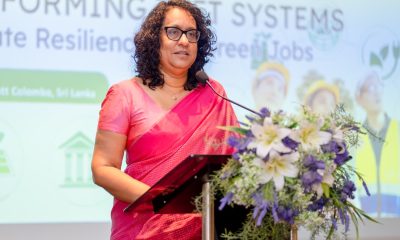
A strong Technical and Vocational Education and Training (TVET) system equips individuals with practical, relevant, and future-oriented skills helping to innovate responsibly towards a greener and sustainable future – PM