
Sports
The Colombo Oval and I


by S. Skandakumar
The majestic Oval scoreboard clock showed ten minutes to three on a Sunday afternoon when our final wicket fell. We had conceded first innings points by a small margin to Moors in a P. Sara Trophy encounter.
The year was 1973 and it was my first game for the club. The many Moors supporters hugged each other and left the venue to return to Braybrook Place to celebrate. With just half an hour left to tea, and two hours thereafter to the end of the game, their optimism was justified.
In our dressing room our skipper Benedictine Tony Appathurai had other ideas. “I want five by tea,” he thundered as he briskly led us back on to the field for that half an hour. I admired his arrogance!
We came back for tea with Moors tottering at 11 for 4! Johnian Sooriakumar and Josephian Viji Johnpillai produced an inspired opening spell.
Immediately after the tea break Tony handed the ball to me whispering ‘finish them off’.
Forty five minutes later, the final Moors wicket fell with their total at 19, and I had the flattering figures of five overs three maidens two runs four wickets!
We knocked off the required thirty odd runs for the loss of one wicket. Tony insisted that I went in at three to make the winning hit. We were home by nine wickets with time to spare and so began my memorable forty seven year association with the finest sporting and social club in Colombo!
Appreciation
Having watched International cricket at the Oval as a schoolboy from the Gandhi stands, queuing up from 4 am to get a ticket, the experience of playing on that hallowed turf was magical.
Prior to that, it was twice in successive years (1965 and 66) in the Royal -Thomian and once in the Gopalan Trophy, (1970) and yet now I was there with an identity. Yes I belonged to that great venue!
More than four decades later my heart still warms to that genial gentleman, and outstanding administrator cum sportsman P. Saravanamuttu whose vision for sport in general for the country and cricket in particular gave birth to that awesome cricket ground and stadium that came to be known as the ‘Colombo Oval’ in 1940.
The only venue in Sri Lanka which for over three decades provided facilities for Public Schools Athletics Meets, National and International Hockey Tournaments, Schools ‘big matches’ and International Cricket.
A selfless act of the Tamil Union in the best interests of National Sport. I felt a surge of pride to be a member!
Personal Challenges
In 1976, at my peak as an off-spinner cum batsman I went down with a virulent attack of Hepatitis that put paid to my chances of playing for Sri Lanka.
I followed medical advice to the letter to stay away from strenuous physical activity for three years and in 1979 made my way back cautiously into the club’s cricket scene at Division 3 level under the evergreen Josephian stalwart Felix Perumal (currently Club Patron) as skipper of the ‘Daily News’ Trophy team.
We emerged runners-up and during that period, initiated by Benedictine Selva Perumal, we pioneered the influx of talented young cricketers from the south to the club and to competitive cricket in Colombo.
The lads were understandably shy and unsure of themselves at first in an English- speaking environment as the Tamil Union then was. It was refreshing to see how the Colombo schoolboys at the nets rallied round to help them overcome this initial handicap and soon we saw the emergence of a cohesive, confident and strong combination of players.
Yes, the club’s unwritten rule for equal opportunity led to many young cricketers from modest backgrounds achieving their full potential, while the exceptional among them reached stardom!
Sadly the pool of talent in the north was beginning to dry up at this time as painful events began to take hold of that otherwise tranquil area and its gentle, affectionate people.
Progress
After a season at Division 3, I felt ready to move up and found a place in Josephian Rajiv Benedict’s Division 2 team vying for the “Donovan Andree” trophy in 1981.
Rajiv was a revelation on the playing field. Fiercely competitive, he bemused many a batsman with his very late in swing and amused the genial umpires of that vintage with his aggressive show of exasperation whenever an appeal of his for a wicket was turned down.
The season, needless to say, was most enjoyable and if my memory serves me right we clinched the trophy that year.
With Royalist Rohan Jayasekera, the P. Sara team captain migrating to Canada mid -season in 1981, I was yanked out of Rajiv’s team and placed in charge of a very young and talented Division 1 team.
The players showed their approval of my appointment in my very first match as captain against the Police at the Park, when our openers Josephian Wayne Jansz and Mahindian Athula Samarasekera broke a long standing record for the first wicket held by Moors’ Makeen Salih and Herbie Felsingher of 352 runs! A remarkable achievement indeed for two youngsters barely out of school!
At age 35, the following year 82/83 was my only full season as captain and player, and was memorable for more reasons than one.
The team and squad comprised of boys from Royal, S. Thomas’, St. Joseph’s, Ananda, Isipathana, D.S Senanayake, Thurstan, St. Peter’s, Prince of Wales, and Mahinda.
The atmosphere in the dressing room throughout the season was one of amazing cordiality and good humour while on the field it was serious endeavour.
‘ P. Sara’ had given way to the ‘Lakspray Trophy’ that year as the game needed sponsorship modest though it may have been. As it was the inaugural year for that trophy, we were eager to win it and repeat history to match our peers who annexed the P. Sara Trophy in its initial year.
We lost it to Bloomfield on a scorer’s lapse by a margin as infinitely small as 0.15 points when scorebooks were unprecedentedly opened after the tournament was concluded. That lapse made in the very first match of the final round in recording penalties for slow over rates went undetected throughout the rest of the season!
However, each of us who played in that team will forever look back on that season and say with pride that ‘we won that trophy on the playing field and conceded it off it to uphold the spirit of the game’
Headlines such as ‘Tamil Union’s Mathematical Magic’; ‘Tamils do the Impossible’ and ‘Tamils Worthy Champions’ told their own story of how that final game in the tournament was planned and executed!
Exhausted mentally and physically at the end of that memorable season, I then turned my attention to tennis at the club which in the ensuing years became almost a daily ritual inspired by competition of an enjoyable nature from like minded fellow members.
Recognition of the Club
In 1981, Sri Lanka’s admission as a full member of the International Cricket Council as a ‘Test playing nation’ was very much on the cards and was conditional upon the availability of an appropriate venue.
The Oval was the only venue that met the standards stipulated by the ICC when the application was tabled in London at Lord’s that year.
Appropriately the first ever Test match versus England was played at the Oval in February 1982, opening a new and exciting chapter in the nation’s cricket history. Happily three years later the first ever Test win was also registered at the same venue when India were humbled.
The blessed turf for decades was nursed with motherly care by the only grounds women the world had known at that time, Mari Amma (Mary) and her daughter Innasi Amma. In later years, Amaravathy and her sister Saroja continued the excellent work under the supervision of Head Groundsman H.D Jayasena.I was privileged to be Hony Ground Secretary when the ‘Inaugural Test’ was played in 1982.
The Setback
A year and half later, the events of ‘July ‘83’ had a devastating impact on the club and its premises. The main pavilion suffered extensive damage and valuable records and photos were irretrievably destroyed. A contribution from the Colombo Cricket Club was the only gesture of financial goodwill the club received at that time.
The then Cricket Board’s silence was deafening! A monumental tragedy for a club that provided so much for cricket in particular and sport in general for the country.
Gifts of cricket equipment were received from the High Commissions of England and Australia.
The Revival
In the club’s centenary year in 1999-2000, which coincided with the new millennium, a re-development programme was pursued in earnest.
As club President in that period, I was fortunate to have office bearers as dedicated as the players I had in 1982/83 when I led the club’s Division 1 cricket team. The general committee provided excellent support to me to put into effect the programme of activity aimed at the resuscitation of the club. Well wishers both in Sri Lanka and overseas contributed generously to swell the Development Fund. Donations from overseas- based members and well wishers from the US, UK, Emirates, Botswana, Zambia, Australia and New Zealand were proof, if indeed proof were needed, of their appreciation of the service that the venue had provided for the cause of sport over the decades.
A quote from a letter from the then CEO of the England and Wales Cricket Board Tim Lamb merits recording.
His letter reads:
“We recall with sadness the events of 1983 and their impact on your stadium because I know that the ‘OVAL’ to Sri Lanka Cricket was in many ways what Lord‘s is to us today. I have no doubt that you will receive the fullest support in your efforts to restore the stadium to its former glory “
The initiatives to re-vitalise the club in 1999/2000, were taken to greater heights by succeeding Presidents and their committees.
What we have today is a tribute to their perseverance, commitment and generosity in terms of their time and resources as also that of our sponsors and well wishers over the years. The Cricket Board’s support merits special mention.
The contribution of our sportsmen in the centenary year also merits mention.
Our cricketers annexed the championship of three of the four tournaments conducted by the Cricket Board (Premier Limited Overs, Under 23, and Div 2 Donovan Andree while ending runners-up in the fourth viz the Premier Division 1 League)
Our Tennis stalwarts not to be outdone annexed the Veterans All Island over 55 singles and doubles titles rounding off a unique year for sport at the club.
To the incoming members and those who have joined in recent years, I say acquaint yourselves with the proud history of this great institution which has stood unwaveringly for all that is fair, just and equal in its every endeavour. When it is your turn to take office remember what has gone before you, and never forget the responsibility you have to maintain its rich traditions and above all its cherished reputation.
“Today is what it is, and tomorrow what it might be, simply because of all the yesterdays.” For me, the forty seven year association with the Oval, has indeed been “A Rewarding and Emotional Affair to Remember”



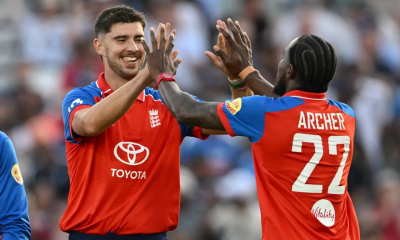


India’s slump in T20 form gathered pace in startling fashion at Trent Bridge as they hurtled to a record-breaking defeat in the third T20I. Set a target of 202 after Phil Salt’s gritty 44-ball 70, India barely managed to score as many between them – 76 their second-lowest total in T20Is – as England’s 90mph new-ball pairing of Jofra Archer and Josh Tongue shared seven wickets
The margin of defeat, a fourth in a row for the two-time reigning T20 world champions, was by far India’s heaviest in the format. Having arrived in Ireland 10 days ago with a record of 16 T20I series/tournaments in a row unbeaten, they must now win the next two games against England to avoid making it two consecutive series losses.
The evening had started positively. Shreyas Iyer again won the choice at the toss and this time opted for a chase – but the move backfired even more spectacularly than in Manchester. England patched together a total of 202 despite Salt rarely looking fluent and India puncturing their progress with regular wickets; Prince Yadav impressed with his variations and temperament to pick up 2 for 32, with the highest partnership of the innings 47 between Salt and Sam Curran, who ran hard for 41 off 24.
But any thought that India might be in the game was exploded in the first few overs as they collapsed to 52 for 5. The end was swift, as none of their batters managed to score more than 13, and the innings lasted barely half of the allotted overs.
While England had – in relative terms – opted to come out of the blocks like Aesop’s tortoise, India were intent on haring after their target. But they only succeeded in running into trouble. Vaibhav Sooryavanshi slashed his second ball over the head of deep third and then struck his third into the crowd at deep midwicket, either side of Abhishek Sharma carving a Tongue full toss over cover. India had hit three sixes in the first nine balls of the innings; England at the same point had scored a single.
But the risk inherent in playing such shots against the pace of Archer and Tongue soon became apparent. Abhishek spooned a top edge to point – giving Tongue his maiden T20I wicket – then Sooryavanshi was hurried by an Archer bouncer and gloved his fifth ball behind. Ishan Kishan struck the fourth six of the innings in the next over – England didn’t hit as many until the 15th – but then pulled straight to deep backward square leg; one ball later, Shreya Iyer picked out the same fielder with a flick from the other end.
Axar Patel, up the order at No. 5, then went dot, four, six, out – nicked off for Archer’s third – to leave India five down after five overs and as good as out of the contest.
So well were things rolling for England that even when they executed poorly – such as Jos Buttler’s stumping of Tilak Varma – the outcome was still favourable. Varma was beaten in the flight by Will Jacks, but it seemed Buttler had dropped the ball in the process of breaking the bails. Replays, however, showed that he just managed to hold it in his fingertips long enough for the dismissal to count.
In their panic India had thrown Harshit Rana up the order, too, and left Shivam Dube down at No. 8. Dube only lasted four ball, as Tongue returned to beat him for pace with another short one to make it 63 for 7. He added the wicket of Harshit, too, thanks a flying catch at backward point from Tom Banton, giving Tongue his best figures (4 for 28) in T20s. Remarkably, despite being a Notts player, this was Tongue’s home “debut” Trent Bridge. He’ll doubtless be looking forward to his next outing.
England scored their first run from the ninth ball of the innings, with Salt initially playing out a maiden from Arshdeep. They were 7 for 0 off two before Buttler finally kickstarted things, crunching six boundaries from his next 14 balls to suggest this was a typically true Trent Bridge surface after all. Buttler didn’t make it out of the powerplay, but 36 off 22 represented his best return in 11 T20I knocks.
England were 49 for 1 after six, with Salt still single-figures. Their momentum was checked by Prince’s second intervention in the ninth, Harry Brook miscuing a pull, and Salt had puttered along to 17 off 19 by the end of the over. Then he began to open up, pulling a Varun Chakravarthy half-tracker over the ropes and adding back-to-back fours – though Prince really should have prevented the second, indicative of a scruffy all-round effort in the field by India.
Two wickets in two balls from Harshit meant England were increasingly reliant on Salt taking his innings deep. A partnership of 47 off 26 with Curran ensued, featuring plenty of hard running as Salt moved to a 36-ball half-century – his joint-second slowest in T20Is. Arshdeep was then flicked into the crowd at deep backward square, before Salt dumped Axar over long-on for a third six. But he was gone next ball, just as he hoped to cash in on his hard work: Axar taking pace off to induce a top edge to point.
Back in the side for Ravi Bishnoi as India’s one change from Old Trafford, and playing only his second T20I, Prince immediately proved himself to the manor born. Asked to close out the powerplay, he served up the perfect leg-stump yorker first ball to dispatch Buttler; in his second over, he struck second ball, following up a slower delivery that Brook had pumped over cover with a short one with extra mayo that caught the splice of the bat. His third was a little more expensive, featuring boundaries from Salt and Curran, but he returned to produce a brilliant 19th over, conceding just seven runs – though he missed out on a third wicket when Harshit put down a straightforward chance at deep midwicket.
Scores:
England 201 for 7 in 20 overs (Phil Salt 70, Jos Buttler 36, Harry Brook 16, Jacob Bethell 13, Sam Curran 41*, Will Jacks 14; Harshit Rana 2-40, Axar Patel 1-49, Prince Yadav 2-32) beat India 76 in 11.4 overs (Abhishek Sharma 10, Vaibhav Sooriyavanshi 13, Ishan kishan 13, Axar Patel 10; Josh Tongue 4-28, Jofra Archer 3-29, Will Jacks 1-05, Adil Rashid 2-14) by 125 runs
[Cricinfo]
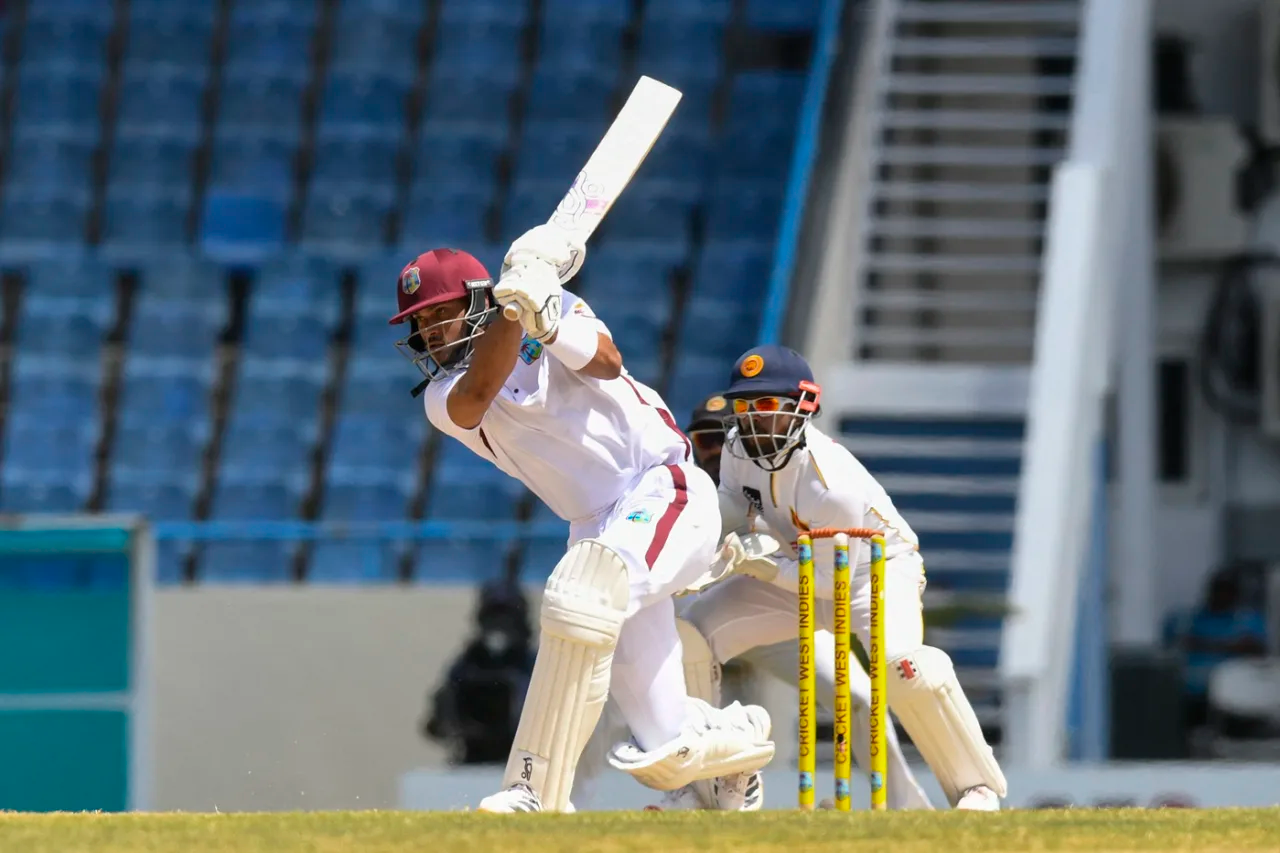
After 1408 runs and 28 wickets, and even some rain delays over five days, the result that had long been telegraphed finally came to pass as Sri Lanka and West Indies played out a draw in the second and final Test in North Sound. The stalemate means it was a first Test series victory in 11 attempts for West Indies, their last coming in 2023 and for their last home Test series win you would have to go back to June 2022.
And it was perhaps the significance – and rarity – of this achievement that informed the hosts’ approach over the course of this Test, which is also the first in 2026 to end in a draw. Following Sri Lanka’s imposing first-innings effort, West Indies’ response – on a good batting surface – never really appeared to be in search of a victory.
Set a target of 302, John Campbell and Brandon King never threatened to take it on, but even so both scoring fifties – Campbell for the second time this Test – will have given the pair and the West Indian dressing room cause for optimism after their recent batting travails in the longest format.
Moreover, with World Test Championship points of less importance, having already been eliminated from contention for a final berth, the series win was all that mattered to the hosts. And in that context, it was incumbent on Sri Lanka to do the most of the running, though on a true surface that scarcely deteriorated over the course of the Test, the visiting bowlers were always facing an uphill challenge in picking up 20 wickets to win the game and level the series.
Even so, they came out on the final morning with a belief – however implausible – that they might be able to manifest a miracle. The first part of the plan was quick runs, and in that they excelled. Dinesh Chandimal and Kamindu Mendis were the overnight pair, and it was clear from the outset that they would look to take on the bowling.
West Indies, however, weren’t in any mood to make it easy, as they stuck to defensive fields and lines – stacking a 2-7 field to the seamers, while the spinners lived on leg-stump lines. Despite this, Sri Lanka galloped along at a scoring rate of 5.79 in the session, one where they struck 139 runs in 24 overs.
The risks they were forced to take also meant that six wickets fell in the first two hours of play – comfortably the most to fall in a single session all Test. But a closer look at each and it was clear why Sri Lanka were not totally at ease with a lunch-time declaration.
Kamindu spliced a top edge looking to crash an off-side length ball from Seales, Dhananjaya de Silva holed out to long-off, while both Dinesh Chandimal and Kusal Mendis carved chances straight to gully. Sonal Dinusha, meanwhile, was run out courtesy a direct hit from deep point as he strained to make it back for an ambitious second run, while Isitha Wijesundara missed a wild heave.
After days of obdurate Test cricket, this period resembled the later overs of an ODI, as Sri Lanka scrambled desperately for every run on offer, but it was more batter errors than any demons in the surface.
At lunch, the lead had swelled to 281 and many speculated an imminent declaration, but Sri Lanka made the surprise call to continue batting. The target, it seems, was a lead of at least 300, and this was achieved in three overs after lunch, after which the declaration was promptly signalled.
Considering the relative ease with which Campbell and King proceeded for the remainder of the session – and the day – there was perhaps merit in padding the target – and in turn eating into roughly 25 minutes of play in the second session that would otherwise have been afforded West Indies to chase.
Despite some variable bounce around, Sri Lanka’s seamers – and Prabath Jayasuriya – were unable to cause much discomfort to the West Indies openers, who seemed in no hurry, moving to 65 after 23 overs at tea.
The closest Sri Lanka came to a breakthrough in this period was when Jayasuriya had King trapped lbw after the right-hander missed a sweep, only for DRS to show the ball bouncing over the top of middle stump. An over later, Jayasuriya pinged King on the pads once again, but this time umpire Ahsan Raza was unmoved. King survived after the ball-tracking showed umpire’s call on hitting the stumps.
The inevitable draw was seemingly hastened by a tea-time shower, but it was of the passing variety and so play continued after a ten-minute delay. After the break, Jayasuriya continued to cause King trouble, threatening his outside edge and the stumps, but to no avail. Another rain break looked to have ended proceedings decisively, but good work from the ground staff ensured that there was a little more game time to get through.
Handshakes were offered and taken after the 40th over, as West Indies had moved to 109 for no loss, a fitting end to a game dominated by the bat.
Scores:
Sri Lanka 549 for 9 dec 139.3 overs (Lahiru Udara 188, Kamindu Mendis 84, Kusal Mendis 69, Dinusha 92; Jayden Seales 2-98, Shamar Joseph 2-98) and 251 for 9 dec in 49 overs (Dinesh Chandimal 71, Kamindu Mendis 44; Alzarri Joseph 2-44) drew with West Indies 499 in 165.5overs (John Campbell 72, Shai Hope 112, Justin Greaves 180; Asitha Fernando 5-130, Prabath Jayasuriya 3-131) and 109 for 0 in 40 overs (John Campbell 51*, Brandon King 51*)
[Cricinfo]
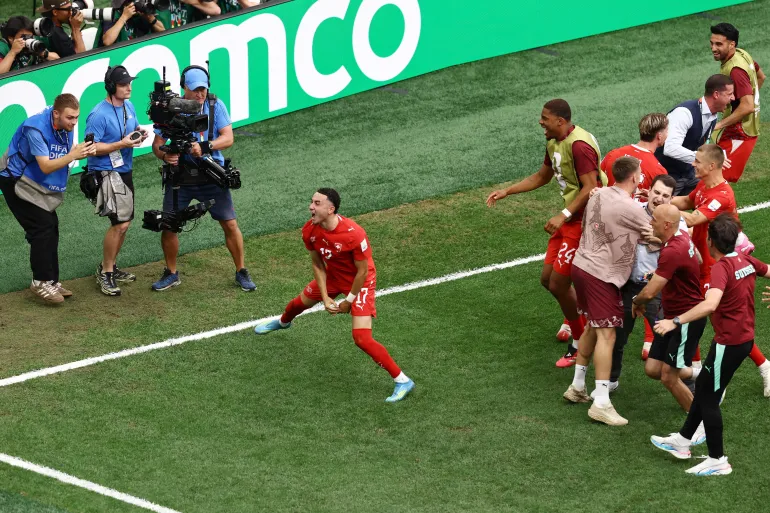
Switzerland beat Colombia 4-3 on penalties after a goalless draw to set up a quarterfinal with defending champions Argentina.
The two teams cancelled each other out on Tuesday in the final game of the last 16 – the last match to be played at the 2026 tournament outside the United States.
Both teams missed spot-kicks before Switzerland goalkeeper Gregor Kobel brilliantly saved Cucho Hernandez’s effort and Ruben Vargas scored the decisive penalty.
Colombia, once again backed by thousands of passionate fans in Vancouver, had conceded just once in their four games before Tuesday’s match and the Swiss had also proved difficult to break down.
The first action of note came in the 21st minute when Kobel was forced into a flying save to keep out Gustavo Puerta’s curling effort from the edge of the penalty area.
The Swiss stepped up a gear immediately after the first hydration break, with Camilo Vargas beating away a shot from Fabian Rieder before denying Dan Ndoye.
But the match was goalless at half-time, with two well-matched teams struggling for inspiration.
Switzerland started the second half on the front foot, but Colombia also had their moments, with Luis Suarez lashing wastefully wide.
Both coaches made multiple changes in the second half but again struggled to create meaningful openings, with Colombia’s star winger Luis Diaz kept quiet.
Ndoye flashed a shot across goal in stoppage time, but nobody was able to get on the end of it, and the match was 0-0 at the end of normal time.
The game belatedly burst into life in the first period of extra time.
Colombia defender Jhon Lucumi headed against the bar from a corner in the ninth minute, and Kobel kept out a fierce effort from Jaminton Campaz as the South Americans upped the tempo.
At the other end, Vargas dived to his left to beat away an effort from substitute Zeki Amdouni.
Campaz missed a glorious chance to win the game with five minutes of time left on the clock.
With nothing to separate the teams, the game went to penalties.
Switzerland will face Argentina in Kansas City on Saturday after Lionel Messi’s team earlier beat Egypt 3-2 in Atlanta.
Switzerland last reached the quarterfinals when they hosted the World Cup in 1954.
(Aljazeera)

Pakistan searches for Boeing cargo plane missing over Arabian Sea

President chairs 2027 Pre-Budget talks on Agriculture Ministry

Committee Appointed to investigate unrest at Negombo Prison

Archer, Tongue hand India their biggest T20I defeat

“Badhu Shakthi 2026” National Tax Week begins

Renovated Narahenpita Railway Station reopens to the public under the ‘Dream Destination’ initiative

‘Dates have the highest sugar content to fight Coronavirus’

Sunday Island 27 December – Headlines

#SundayIsland 17th December – Headlines

Sunday Island – 28th March

Sunday Island Headlines – 21 March

Sunday Island – 21st February – Headlines
-

 News4 days ago
Singapore-based Buddhist monk marks nearly four decades of humanitarian service
-

 News5 days ago
Freedom 250: US Embassy celebrates America’s 250th Independence Day through magic of American cinema
-

 News6 days ago
CIABOC to question Harak Kata on Rs. 200 mn bribery allegation
-
 News6 days ago
SLAF conducts successful rescue mission under UN command in Central African Republic
-

 News3 days ago
AI concerned over proposed SL military deployment in Haiti
-
 News6 days ago
UNEP support pledged to strengthen Sri Lanka’s Environmental Priorities
-

 Business6 days ago
‘Dialog Air Fibre powers a new era of Ultra Fast Home WiFi’
-

 Features4 days ago
The NPP’s New Challenge: Balancing Easter Lawfare and Economic Welfare