
Sports
The Colombo Oval and I


by S. Skandakumar
The majestic Oval scoreboard clock showed ten minutes to three on a Sunday afternoon when our final wicket fell. We had conceded first innings points by a small margin to Moors in a P. Sara Trophy encounter.
The year was 1973 and it was my first game for the club. The many Moors supporters hugged each other and left the venue to return to Braybrook Place to celebrate. With just half an hour left to tea, and two hours thereafter to the end of the game, their optimism was justified.
In our dressing room our skipper Benedictine Tony Appathurai had other ideas. “I want five by tea,” he thundered as he briskly led us back on to the field for that half an hour. I admired his arrogance!
We came back for tea with Moors tottering at 11 for 4! Johnian Sooriakumar and Josephian Viji Johnpillai produced an inspired opening spell.
Immediately after the tea break Tony handed the ball to me whispering ‘finish them off’.
Forty five minutes later, the final Moors wicket fell with their total at 19, and I had the flattering figures of five overs three maidens two runs four wickets!
We knocked off the required thirty odd runs for the loss of one wicket. Tony insisted that I went in at three to make the winning hit. We were home by nine wickets with time to spare and so began my memorable forty seven year association with the finest sporting and social club in Colombo!
Appreciation
Having watched International cricket at the Oval as a schoolboy from the Gandhi stands, queuing up from 4 am to get a ticket, the experience of playing on that hallowed turf was magical.
Prior to that, it was twice in successive years (1965 and 66) in the Royal -Thomian and once in the Gopalan Trophy, (1970) and yet now I was there with an identity. Yes I belonged to that great venue!
More than four decades later my heart still warms to that genial gentleman, and outstanding administrator cum sportsman P. Saravanamuttu whose vision for sport in general for the country and cricket in particular gave birth to that awesome cricket ground and stadium that came to be known as the ‘Colombo Oval’ in 1940.
The only venue in Sri Lanka which for over three decades provided facilities for Public Schools Athletics Meets, National and International Hockey Tournaments, Schools ‘big matches’ and International Cricket.
A selfless act of the Tamil Union in the best interests of National Sport. I felt a surge of pride to be a member!
Personal Challenges
In 1976, at my peak as an off-spinner cum batsman I went down with a virulent attack of Hepatitis that put paid to my chances of playing for Sri Lanka.
I followed medical advice to the letter to stay away from strenuous physical activity for three years and in 1979 made my way back cautiously into the club’s cricket scene at Division 3 level under the evergreen Josephian stalwart Felix Perumal (currently Club Patron) as skipper of the ‘Daily News’ Trophy team.
We emerged runners-up and during that period, initiated by Benedictine Selva Perumal, we pioneered the influx of talented young cricketers from the south to the club and to competitive cricket in Colombo.
The lads were understandably shy and unsure of themselves at first in an English- speaking environment as the Tamil Union then was. It was refreshing to see how the Colombo schoolboys at the nets rallied round to help them overcome this initial handicap and soon we saw the emergence of a cohesive, confident and strong combination of players.
Yes, the club’s unwritten rule for equal opportunity led to many young cricketers from modest backgrounds achieving their full potential, while the exceptional among them reached stardom!
Sadly the pool of talent in the north was beginning to dry up at this time as painful events began to take hold of that otherwise tranquil area and its gentle, affectionate people.
Progress
After a season at Division 3, I felt ready to move up and found a place in Josephian Rajiv Benedict’s Division 2 team vying for the “Donovan Andree” trophy in 1981.
Rajiv was a revelation on the playing field. Fiercely competitive, he bemused many a batsman with his very late in swing and amused the genial umpires of that vintage with his aggressive show of exasperation whenever an appeal of his for a wicket was turned down.
The season, needless to say, was most enjoyable and if my memory serves me right we clinched the trophy that year.
With Royalist Rohan Jayasekera, the P. Sara team captain migrating to Canada mid -season in 1981, I was yanked out of Rajiv’s team and placed in charge of a very young and talented Division 1 team.
The players showed their approval of my appointment in my very first match as captain against the Police at the Park, when our openers Josephian Wayne Jansz and Mahindian Athula Samarasekera broke a long standing record for the first wicket held by Moors’ Makeen Salih and Herbie Felsingher of 352 runs! A remarkable achievement indeed for two youngsters barely out of school!
At age 35, the following year 82/83 was my only full season as captain and player, and was memorable for more reasons than one.
The team and squad comprised of boys from Royal, S. Thomas’, St. Joseph’s, Ananda, Isipathana, D.S Senanayake, Thurstan, St. Peter’s, Prince of Wales, and Mahinda.
The atmosphere in the dressing room throughout the season was one of amazing cordiality and good humour while on the field it was serious endeavour.
‘ P. Sara’ had given way to the ‘Lakspray Trophy’ that year as the game needed sponsorship modest though it may have been. As it was the inaugural year for that trophy, we were eager to win it and repeat history to match our peers who annexed the P. Sara Trophy in its initial year.
We lost it to Bloomfield on a scorer’s lapse by a margin as infinitely small as 0.15 points when scorebooks were unprecedentedly opened after the tournament was concluded. That lapse made in the very first match of the final round in recording penalties for slow over rates went undetected throughout the rest of the season!
However, each of us who played in that team will forever look back on that season and say with pride that ‘we won that trophy on the playing field and conceded it off it to uphold the spirit of the game’
Headlines such as ‘Tamil Union’s Mathematical Magic’; ‘Tamils do the Impossible’ and ‘Tamils Worthy Champions’ told their own story of how that final game in the tournament was planned and executed!
Exhausted mentally and physically at the end of that memorable season, I then turned my attention to tennis at the club which in the ensuing years became almost a daily ritual inspired by competition of an enjoyable nature from like minded fellow members.
Recognition of the Club
In 1981, Sri Lanka’s admission as a full member of the International Cricket Council as a ‘Test playing nation’ was very much on the cards and was conditional upon the availability of an appropriate venue.
The Oval was the only venue that met the standards stipulated by the ICC when the application was tabled in London at Lord’s that year.
Appropriately the first ever Test match versus England was played at the Oval in February 1982, opening a new and exciting chapter in the nation’s cricket history. Happily three years later the first ever Test win was also registered at the same venue when India were humbled.
The blessed turf for decades was nursed with motherly care by the only grounds women the world had known at that time, Mari Amma (Mary) and her daughter Innasi Amma. In later years, Amaravathy and her sister Saroja continued the excellent work under the supervision of Head Groundsman H.D Jayasena.I was privileged to be Hony Ground Secretary when the ‘Inaugural Test’ was played in 1982.
The Setback
A year and half later, the events of ‘July ‘83’ had a devastating impact on the club and its premises. The main pavilion suffered extensive damage and valuable records and photos were irretrievably destroyed. A contribution from the Colombo Cricket Club was the only gesture of financial goodwill the club received at that time.
The then Cricket Board’s silence was deafening! A monumental tragedy for a club that provided so much for cricket in particular and sport in general for the country.
Gifts of cricket equipment were received from the High Commissions of England and Australia.
The Revival
In the club’s centenary year in 1999-2000, which coincided with the new millennium, a re-development programme was pursued in earnest.
As club President in that period, I was fortunate to have office bearers as dedicated as the players I had in 1982/83 when I led the club’s Division 1 cricket team. The general committee provided excellent support to me to put into effect the programme of activity aimed at the resuscitation of the club. Well wishers both in Sri Lanka and overseas contributed generously to swell the Development Fund. Donations from overseas- based members and well wishers from the US, UK, Emirates, Botswana, Zambia, Australia and New Zealand were proof, if indeed proof were needed, of their appreciation of the service that the venue had provided for the cause of sport over the decades.
A quote from a letter from the then CEO of the England and Wales Cricket Board Tim Lamb merits recording.
His letter reads:
“We recall with sadness the events of 1983 and their impact on your stadium because I know that the ‘OVAL’ to Sri Lanka Cricket was in many ways what Lord‘s is to us today. I have no doubt that you will receive the fullest support in your efforts to restore the stadium to its former glory “
The initiatives to re-vitalise the club in 1999/2000, were taken to greater heights by succeeding Presidents and their committees.
What we have today is a tribute to their perseverance, commitment and generosity in terms of their time and resources as also that of our sponsors and well wishers over the years. The Cricket Board’s support merits special mention.
The contribution of our sportsmen in the centenary year also merits mention.
Our cricketers annexed the championship of three of the four tournaments conducted by the Cricket Board (Premier Limited Overs, Under 23, and Div 2 Donovan Andree while ending runners-up in the fourth viz the Premier Division 1 League)
Our Tennis stalwarts not to be outdone annexed the Veterans All Island over 55 singles and doubles titles rounding off a unique year for sport at the club.
To the incoming members and those who have joined in recent years, I say acquaint yourselves with the proud history of this great institution which has stood unwaveringly for all that is fair, just and equal in its every endeavour. When it is your turn to take office remember what has gone before you, and never forget the responsibility you have to maintain its rich traditions and above all its cherished reputation.
“Today is what it is, and tomorrow what it might be, simply because of all the yesterdays.” For me, the forty seven year association with the Oval, has indeed been “A Rewarding and Emotional Affair to Remember”



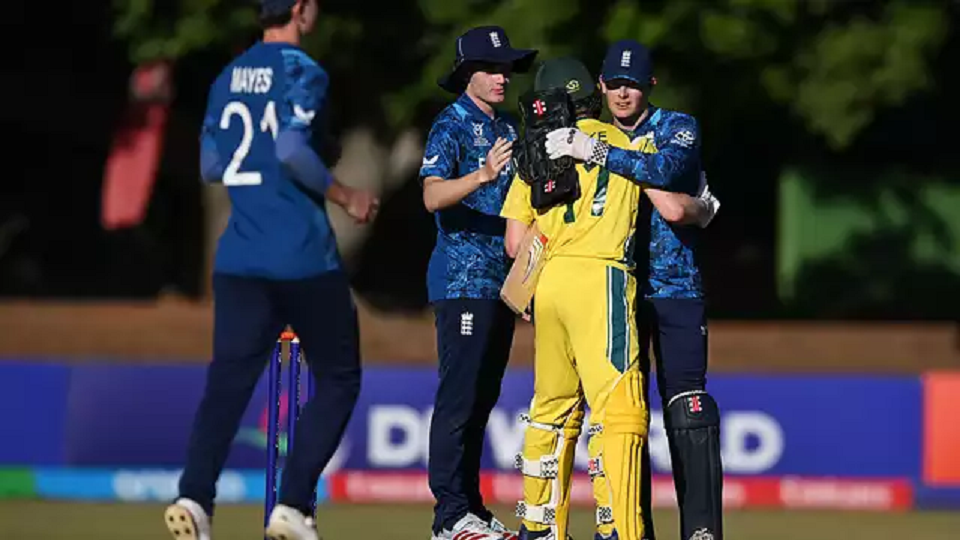
England 277/7 in 50 overs (Thomas Rew 110, Caleb Falconer 40; Hayden Schiller 2-31) beat Australia 250 in 47.3 overs (Oliver Peake 100; James Minto 2-30, Sebastian Morgan 2-33) by 27 runs.
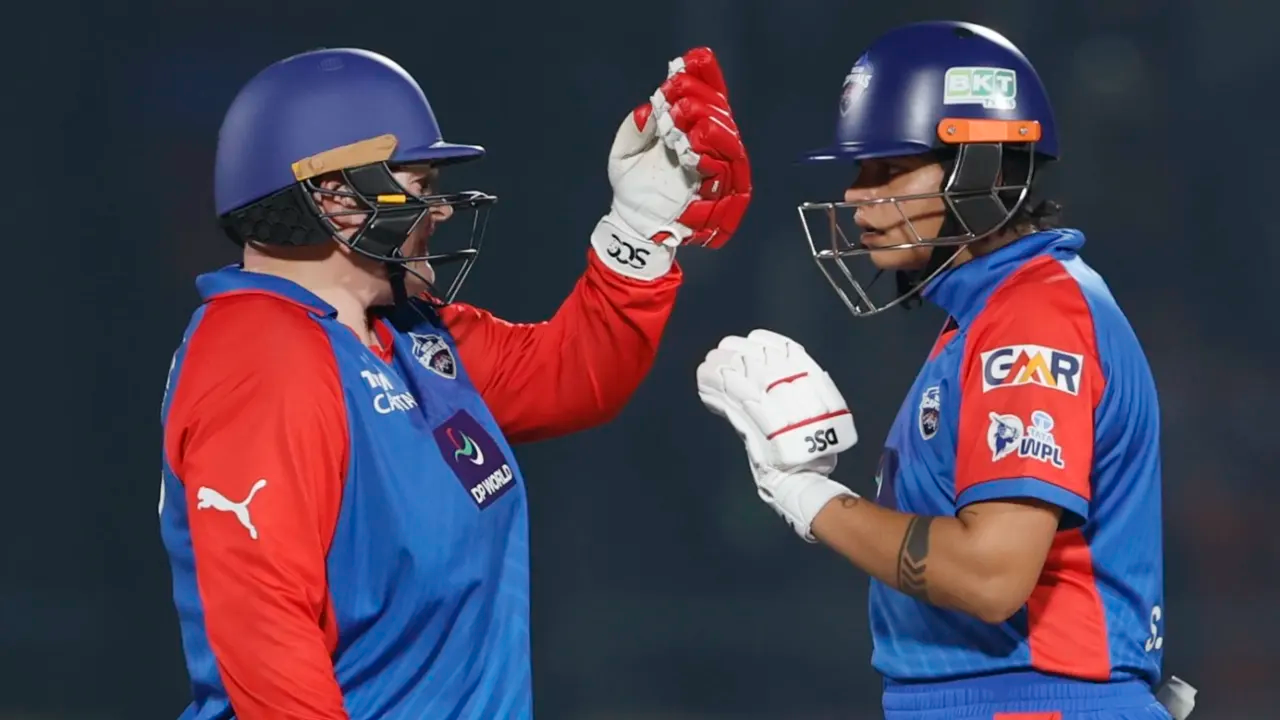
An explosive opening stand from Lizelle Lee and Shafali Verma combined with an excellent bowling effort from Chinelle Henry propelled Delhi Capitals (DC) past Gujarat Giants (GG) in the Eliminator, securing their fourth straight WPL final. DC will now face Royal Challengers Bengaluru in the final in Vadodara on February 5.
In the 169 chase, Lee and Shafali laid the platform, clearing off more than half the target with an 89-run opening stand. Jemimah Rodrigues and Laura Wolvaardt then combined for a 68-run partnership, as DC completed the chase with 26 balls remaining.
Put in to bat, GG had historically thrived in this scenario, winning all their five games this season batting first. But their innings never got off the ground., starting with Sophie Devine, their most impactful player this season, departing in the second over. After being squared up by a Henry delivery that curved away late, Devine went for a big shot against a back-of-a-length ball outside off, only to edge it to Lee, who took a sensational one-handed catch to her right.
Nandani Sharma then inflicted more damage, removing Anushka Sharma and Ashleigh Gardner off back-to-back deliveries in the sixth over. With that, Nandani went past Saika Ishaque for most wickets by an Indian in a WPL edition. She now has 16 wickets, just one shy of Devine’s 17, the most this season. Minnu Mani then struck to leave GG tottering at 59 for 4.
GG found their footing despite the early damage with Beth Mooney, who had been a spectator as wickets tumbled at the other end, taking control. After GG went 33 balls without a single boundary, she broke free by hitting N Shree Charani for a four.
Georgia Wareham offered timely support, rotating the strike and picking off the occasional boundary, before providing a momentum boost by striking the first six of the match, a crisp flick over mid-off, again off Charani. The pair carried GG’s total past 100 and brought up a 50-run partnership. But Henry returned to bowl the 17th over and Wareham sliced her straight to Wolvaardt at deep cover, and Bharti Fulmali was then bowled for a duck.
Mooney, though, batted on, and alongside Kashvee Gautam, struck six boundaries in the final three overs to lift GG to 168. Her 62 not out off 51 balls, spanning from first ball to last, once again underlined her value under pressure.
DC’s opening pair of Lee and Shafali had fired in isolation this season, but in the Eliminator, they clicked in tandem. Giants thought they had Lee caught behind in the second over and burned a review, only for UltraEdge to show a flat line as the ball passed the bat. Within the first three overs, the duo had clattered four boundaries.
Shafali then capitalised on a chaotic over from Devine, which swung the momentum DC’s way. After swinging and missing at a full delivery that raced away for four byes, Devine then sprayed one down the leg side to concede five wides. Shafali made them pay soon after, first easing a slot ball through the covers, and then, driving another over mid-off. Then followed a 21-run over, with Shafali and Lee hitting a combined five boundaries off Renuka Singh. They took DC to 64 in five overs – a stark contrast to Giants’ 64 for 4 at the 10-over mark.
Lee kept the tempo high, taking Rajeshwari Gayakwad for a four and a six, as DC surged to 75 in the powerplay. The openers continued to find the fence, until Wareham struck in the eighth over, removing both in quick succession to finally halt Giants’ momentum.
Wolvaardt and Rodrigues then made sure there were no more hiccups. Wolvaardt got going immediately, with a fluent drive through the covers, as the duo played one classy shot after the other, getting DC’s equation down to less than run-a-ball.
When Gardner served one right into the slot outside off, Rodrigues unfurled her arms and sent it over mid-off for a massive six. Wolvaardt also joined in on the fun, producing a moment of pure elegance against Gayakwad, skipping down the track to a flighted delivery and swinging cleanly to send it over long-on for a six.
By the time Rodrigues got out, after scoring 41 off 23, DC needed just nine runs off 31 balls. Marizanne Kapp finished it off in the 16th over, launching Wareham back over her head for four to send Capitals into yet another final.
Brief scores:
Delhi Capitals Women 169 for 3 in 15.4 overs (Lizelle Lee 43, Jemimah Rodrigues 41, Laura Wolvaardt 32*, Shafali Verma 31; Rajeshwari Gayakwad 1-33 Georgia Wareham 2-28) beat Gujarat Giants Women 168 for 7 in 20 overs (Beth Mooney 62, Anushka Sharma 16, Georgia Wareham 35, Kashvee Gautam 18; Chinelle Henry 3-35, Nandani Sharma 2-44, Minu Mani 1-23) by seven wickets
[Cricinfo]
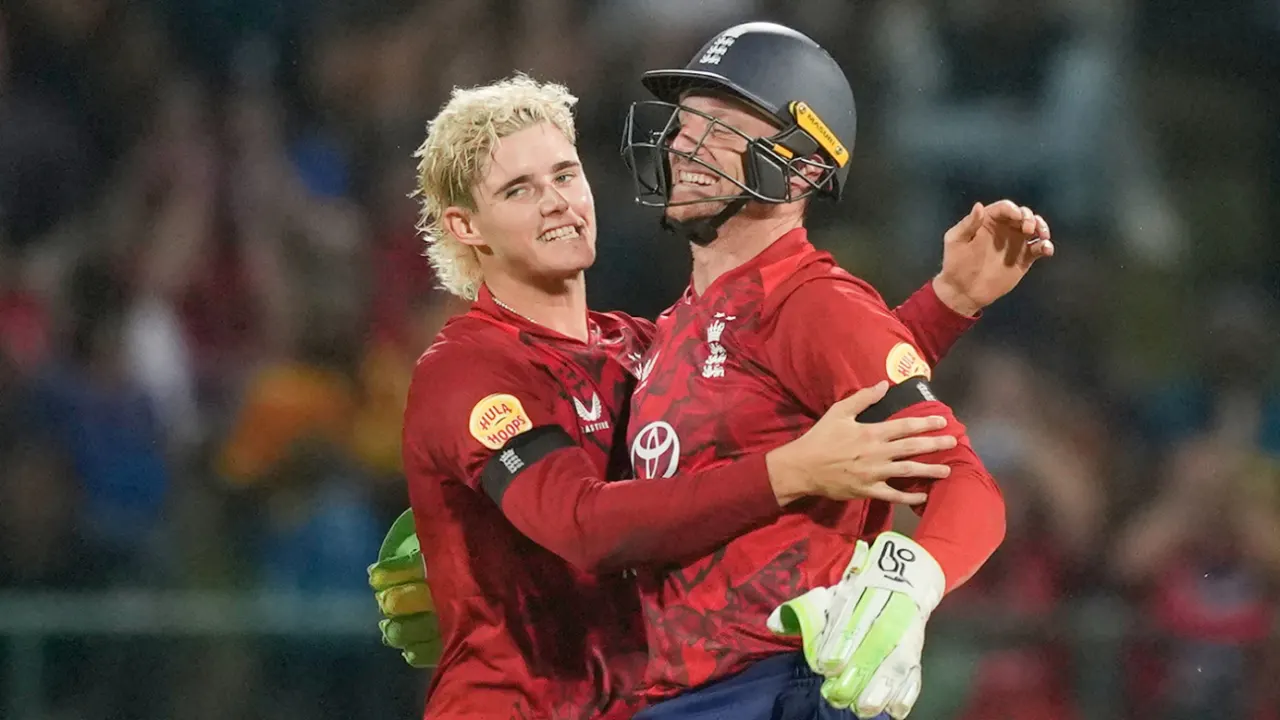
Will Jacks led the way before Jacob Bethell sealed the deal with a career-best haul of 4 for 11, as England closed out a 3-0 series win over Sri Lanka with a remarkable spin strangle on a turning track at Pallekele.
Their defence of a sub-par target of 129 was their lowest in T20I history, and in the end they did it with room to spare, as Bethell rounded up the tail with all four of his wickets coming from his final eight balls, including the winning moment – a skied slog from Maheesh Theekshana to Liam Dawson at short third.
The performance, and the hard-fought nature of it, confirmed that England will head to next week’s T20 World Cup with confidence high, after a three-match series that has drawn on all facets of their game, with bat and ball alike.
On this occasion, they were indebted to a battling half-century from Sam Curran, whose nous at the back-end of the innings revived a performance that had been flat-lining at 60 for 6 in the 11th over. Dushmantha Chameera was the main man of Sri Lanka’s bowling display, with his own career-best figures of 5 for 24, but Curran’s 58 from 48 balls proved the ultimate difference between the teams.
England started their day on the back foot when Phil Salt succumbed to a back spasm while warming up. Though Ben Duckett is, on the face of it, a like-for-like replacement at the top of the order, his form of late has been far removed from the buccaneer who began last year as a first-choice pick across formats. After missing much of the tour with a finger injury, he fell for a first-ball lbw, as Chameera pinned him on the back foot and extracted three reds on review (2 for 1).
Bethell is another whose poise with the bat has been lacking a touch on this trip, certainly compared to that magnificent Ashes hundred at Sydney. He failed to pick Matheesha Pathirana’s slower ball, and snicked a wild drive to the keeper for 3, before Tom Banton was done all ends up by Dunith Wellalage. Though he’s probably still done enough to earn a World Cup starting berth after his matchwinning fifty on Sunday, Banton was this time lured into a huge wipe through the line, only for the ball to dip and grip, and clip the top of his leg bail for a run-a-ball 7.
England were a ropey 28 for 3 after five overs when their captain arrived at the crease. Harry Brook knows only one response to adversity, and it doesn’t involve him backing down to rebuild. When it works, it’s magnificent; this, on the other hand, was somewhat predictable. Pathirana returned for a second over, and once again that sticky slower ball came up trumps. Brook was through his shot twice over before the ball arrived, and Janith Liyanage in the covers collected the simplest of lobbed slogs.
Jos Buttler endured through the chaos, though his own stay could hardly be described as serene. He so nearly lost his leg stump while inside-edging England’s first boundary (in the third over) off Pathirana, and the same bowler then skinned his off stump for good measure with the final ball of the powerplay. Buttler shrugged off that indignity to club Wellalage over extra cover for England’s first six, but then Theekshana bowled him through the gate for 25.
Pace off the ball was clearly the way to go, as Jacks discovered before England could pull out of their nosedive. Chameera’s second over induced a flimsy plink to midwicket, with the batter once again too far through his stroke, and at 60 for 6 in the 11th over, it was time for England’s fabled depth to come to the party.
In a measure of his lack of opportunity at this level, Curran’s 58 from 48 balls was his highest T20I score, and only his second fifty. However, anyone who witnessed his play-off-sealing half-century for Sydney Sixers last month, let alone his title-winning 74 not out for Desert Vipers in the ILT20 can vouch for his current form with the bat.
His response to England’s adversity was a pugnacious rearguard, studded with six fours and a six over long-on. He found a doughty ally in Dawson, who held up his end for 14 from 20 balls, and as they pieced together a 47-run stand in seven overs, England briefly harboured hopes of a 140-plus total.
Chameera, however, had other ideas. Dawson slapped another slower ball to long-on, before Jamie Overton was outfoxed by a trio of legcutters – his second was caught at long-on but had to be parried back into play by Wellalage, but the third did the needful, via a slog to point.
And, with Curran in his sights for the final over of the innings, he landed his wide yorkers with conviction, inducing a slice to deep third to seal his career-best figures, and keep England to their lowest total in T20Is against Sri Lanka.
Luke Wood made his presence felt in his first outing of the series. He prised out Kamil Mishara for a duck in his first over and so nearly made it two in two when Pathum Nissanka swatted him to deep square leg, only for Bethell’s attempted relay catch to end up on the wrong side of the ropes.
That let-off was the cue for a brief explosion from Nissanka – he struck two more sixes in his next four balls, but when he skewed a leading edge off Dawson to cover for 23 from 11, the stage was set for Adil Rashid entered the attack with his familiar ragging turn.
Pavan Rathnayake had no response to a wonderful googly that did him in flight to rip into his leg stump, and one ball later, Kusal Mendis top-edged Jacks straight to short backward square to depart for a run-a-ball 26.
At 62 for 4 in the 10th, Sri Lanka were now in a scrap. Though Dawson’s third over was picked off for a boundary apiece, Jacks’ leaping offbreaks proved the perfect foil to Rashid’s habitual class. After pinning Kamindu Mendis on the back leg for 14, Jacks should have made it two lbws in his third over, but England opted not to review an appeal against Wellalage that would have been hitting leg.
In the end, it didn’t matter. With 32 runs to defend from 30 balls, Jacks closed out a fine spell of 3 for 14 with the crucial scalp of Liyanage, whose slog-sweep picked out Bethell at deep midwicket. And then, after nudging a priceless boundary down through deep third, Wellalage launched into a slog-sweep off Bethell, under-edged into his leg, and Buttler scrambled round from behind the stumps to cling onto a brilliant, opportunistic catch.
It was the moment for England to move in for the kill. Bethell claimed his second in three balls as Chameera poked nervously to cover for a duck, then effectively sealed the contest with his third in the over – a beauty that dipped and straightened from round the wicket to leave Dasun Shanaka stranded as Buttler whipped off the bails. He returned with 14 to defend in his final over, and by then it was no longer in doubt.
Brief scores:
England 128 for 9 in 20 overs (Joss Buttler 25, Sam Curran 58, Liam Dawson 14; Dushmantha Chameera 5-24, Matheesha Pathirana 2-27,Dunith Wellalage 1-28, Maheesh Theekshana 1-16) beat Sri Lanka 116 in 19.3 overs (Pathum Nissanka 23, Kusal Mendis 26, Pavan Rathnayake 13, Kamindu Mendis 14, Janith Liyanage 17; Luke Wood 1-13, Liam Dawson 1-25, Adil Rashid 1-25, Jacob Bethell 4-11, Will Jacks 3-14) by 12 runs
[Cricinfo]

Seven million cancers a year are preventable, says report

Spain announces plans to ban social media for under-16s

Join hands in unity, determination and brotherhood to build the beautiful shared dream of ‘A Thriving Nation – A Beautiful Life’ – President

Stand united with renewed confidence and determination, and to join in the shared task of shaping a new era of national renewal – PM

Rew ton trumps Peake’s as England reach U19 World Cup final

Lee, Shafali and Rodrigues fire Delhi Capitals into their fourth straight final

‘Dates have the highest sugar content to fight Coronavirus’

Sunday Island 27 December – Headlines

#SundayIsland 17th December – Headlines

Sunday Island – 28th March

Sunday Island Headlines – 21 March

Sunday Island – 21st February – Headlines
-
 Opinion5 days ago
Sri Lanka, the Stars,and statesmen
-
 Business6 days ago
Climate risks, poverty, and recovery financing in focus at CEPA policy panel
-

 Business4 days ago
Hayleys Mobility ushering in a new era of premium sustainable mobility
-

 Business23 hours ago
SLIM-Kantar People’s Awards 2026 to recognise Sri Lanka’s most trusted brands and personalities
-
 Business4 days ago
Advice Lab unveils new 13,000+ sqft office, marking major expansion in financial services BPO to Australia
-
 Business4 days ago
Arpico NextGen Mattress gains recognition for innovation
-

 Business3 days ago
Altair issues over 100+ title deeds post ownership change
-

 Business3 days ago
Sri Lanka opens first country pavilion at London exhibition