
Features
The Beginning of “LIFE” in the universe and formation of “THE MIND”


From The Book titled ‘The Electric Field Theory of the Mind That Triggers Life’ –
by Shantha Athulathmudali
shanthaathulathmudali@outlook.com
The Introduction:
The latest theory that explains how life originated ‘on Earth’, based on microfossils discovered on extraterrestrial debris, hypothesizes the transmission of microscopic living organisms, ‘seeds of life’, from extra-terrestrial bodies on board meteoroids, asteroids, comets and other cosmic debris which after reaching the earth surface began evolution. The theory does not explain how ‘life’ forms from the beginning.
Chemical and Physical interactions for example follow a fixed set of rules determined by the action of electricity and resultant physical equilibrium form different combinations of material and energy with varying properties which are in stark contrast with the materials that combine to produce them.
For example sodium, a highly reactive metal combines with chlorine, a toxic gas to form the compound known chemically as sodium chloride, which is table salt.
What causes the change in the substances is the exchange of electricity among the participant substances sodium and chlorine. Sodium and Potassium are essentially present in the form of ions in living cells to maintain the electrolytic balance in the cell. This gives the idea, perhaps a glimpse, of the extent of the role played by electricity in a living cell. Similarly, electricity plays the major and the initiative role in the formation of ‘life’ and its subsequent evolution.
How in fact does life begin?
“Life begins with an Electric Field” in Association with Water & Botanical Material Life forms as a result of interactions of electric and magnetic field forces associating water, reacting with other external forces in a magnetic environment such as that of the earth’s magnetic field* and other energy fields and mechanical forces such as atmospheric pressure, surface tension of water and gravity. The resultant force ever competes for equilibrium with the combination and participation of other contributory physical exogenous botanical material such as moss and ‘this process’ leads to formation of ‘life’ and subsequent evolution as detailed below.
* The external magnetic field is a vital requirement for formation and evolution of life.
The Dielectric Theory
The electric field that forms ‘life’ requires a medium with the properties for generating and holding a steady electric field for a considerable duration of time. The medium must not be hostile to other exogenous material, in that its chemical content should not breakdown the chemical structure of the other materials, but contribute to originate ‘life’ at protozoan stage being conducive to formation of the required environment for generating and sustaining ‘life’ at every stage of its development as the developing ‘life’ gets chemically and physically more complex.Acidic or highly saline media for instance are hostile environments and the Dead Sea is an example of hostility to life of salinity.
Of paramount importance in the process of forming life is a medium capable of providing a dielectric, i.e. an area of space enveloped in an electric field, with amicable properties such as those of temperature, atmospheric pressure etc. The dielectric, as the second condition paramount, must contain exogenous material amiable, in contributing to formation and sustenance of ‘life’ i.e. botanic material to provide the required physicochemical environment to develop and evolution of life.The only compound which is capable of forming a dielectric comprising the required properties is WATER.
The unique role of ‘WATER’,
What does water do in originating life at the most basic form of taxonomical classification of the phylum, i.e. protozoans?
The answer lies in the ‘Electric Field’ that sets up in natural water due to self-ionization, and the associated ‘Magnetic Field’ set up by the variations of the electric field, in the earth’s magnetic field environment, contributing together to accumulate information from the other energy fields in the environment and effect changes in the exogenous material in the dielectric to gradually originate the unit that responds to light, heat, sound, physical movements and touch and to evolve into more advanced and complex forms of chemical and physical constitutions, over long periods of time to finally reach the human structure.
Molecular arrangement of pure water
Molecules in pure water, interlinked through constant exchange of electricity, about twenty billion (2 x 10¹³) times per second, are electrically balanced and therefore free of ions. Water, if free of exogenous material will remain electrically 3 neutral. Whereas in ordinary water, ionization takes place due to the interruption of exchange of electrons caused by exogenous material.
Two water molecules going through automatic ionization form a ‘hydroxide’ (OH-) anion, carrying a negative charge, and a ‘hydroxonium’ cation (H3O+), carrying a positive charge and the electric potential sets up an electric environment. i.e. ‘The Dielectric’.
With its high ‘relative permittivity’, called dielectric constant, varying from 88 at 00 to 55 at 1000 of centigrade, water offers the ideal condition for electro static bonds to transmit a steady electric field that hardly changes its electrical properties within the amicable temperature range.
The Dielectric Effect – Transformation by the Electric Field
A steady electric-field formed in a stagnant pool of water harboured from hazardous turbulences, so remains undisturbed, or an environment constantly wet as a rock surface by the sea moistened by the spray, a ravine, a nook constantly wet for examples are locations where undisturbed electric-fields set up. Exogenous material may consist of such chemicals as amino acids and other elements that may form due to the electrical activity in the dielectric or from the atmosphere as produced during lightening.
Ionised water molecules wrap round tiny particles of exogenous material from the dielectric and form millions of microscopic packs in its entirety. Every pack individually possesses its own electric-field termed here as ‘THE MESH’ electric-field and links to the millions of other similar packs through the dielectric electric-field.The dielectric constantly goes through changes in the environment and the resulting fluctuations working on ‘THE MESH’ electric-field constantly change its constitution and generates electric and magnetic field forces, which in association with external forces maintains equilibrium of the microscopic pack. All forces in nature strive to achieve equilibrium and settle at equilibrium.
Continuous delivery of energy on to the packs registers electric messages in the packs and the messages intensify in terms of the electric charge and maintain equilibrium with any necessary internal adjustments by the magnetic field should the supply of energy remains uninterrupted.
The packs will gradually establish a system of records corresponding the electrical changes and generate forces within the packs, in the most basic form, and maintain equilibrium.
A ‘cell’ in formation, i.e. a microscopic pack modulated with the message as explained above, when the charge it carries becomes sufficiently intense, begins responding to changes in the environment.
The system will reach a condition of being able to react to variations in energy levels by way of ‘electric signals’ in response. Subsequent energy level variations disturb the present equilibrium that will in turn disturb the electrical balance and therefore the magnetic field. Then the resulting magnetic field variations will resist because of the external magnetic force such as earth’s magnetic field, which earlier provided stability. Therefore, the external magnetic field plays a vital role in influencing the changes in the internal set up and formation of life.
Equal and opposite action of forces will constantly strive to force the system back to its earlier equilibrium. This constant effort to correct by the internal magnetic field will create a new message pertaining to the effort and be recorded in the message base. If the system does not revert to its original equilibrium, then over time, the necessary physical and or chemical changes within the cell will take place to rectify the condition i.e. to eliminate the disequilibrium. Instrumented by the electric field forces of the message records, such gradual changes are effected by the resultant changes in the magnetic field forces. In this process, demanded by the prevailing conditions, to meet the requirements of energy, a devices to intake material to internally breakdown the compound to maintain equilibrium and locomotion will develop.
Healing effects and animals such as birds and fish using magnetic fields for navigation, for instance, are facts known of magnetism. Same properties and mechanical forces created by magnetic fields come into play when there are disturbances in the cell equilibrium.This is the process, over long periods of time that brings about changes or new development in the setup of ‘life’ so as to maintain continuity of the unit with a solution to the problem, as it were, and be known as Evolution.
While this process works to develop new organs, chemical and physical constitutions etc. for equilibrium, as required by the changing conditions it also works to remove any part which earlier worked to serve the ‘life’ but is no longer required due to a change in the conditions of the environment. Vermiform appendix which is now vestigial in man due to the removal process of the unwanted by the magnetic field action is an example.
The Advancement
The process of advancement begins when the protozoans, the most basic units with characteristics of life i.e. intake of material as food for producing energy within, possessing mobility and propagation, pass down a little more complex electrical message to the generation that follows.As the electric field is modulated with more information at every generation down the line, the resulting magnetic field, strives to effect changes in the physical structure of the creature to suit which results in a more advanced creature to the previous generation making the electrical message too little more complex.
The advancement registered in the electric field in terms of the message modulated into it and transmitted down the line may not immediately be visible in the form of a corresponding physical change in immediately the next generation. The change may appear several generations hence with the intensification of the message and when an advancement in the physical structure is the inevitable solution i.e. fixing the problem by the magnetic field.
Protozoans that form in locations far apart, which may be alike at the beginning, will develop into different creatures due to variations of the influence from the environment.At a more advanced stage of the life system, with the aid of the magnetic field, an information processor and a message storage system develops.
The system thereafter acquires the ability to store electrical information by way of electrical charges in physical locations, as in a computer system, process and react to the environmental changes of light, heat, infra-red radiations, sound, tastes, smells, touch and many other forms of energy signals in the environment. The ‘organs of sense’ i.e. the devices to intake information from the environment develop simultaneously due to the magnetic field action. Read about eyespots on planariansAs the system of ‘life’ develops in this way, as a result of the advancement of the electric and magnetic fields of the developing ‘life systems’, its environment will in turn be influenced by the demands of ‘life’ to change too.
This occurs due to the ‘life system’ information being transferred on to the external magnetic field, which effects the corresponding changes in the environment such as developing new material as food or increase the present supply for example.
The environment will transform gradually to cater to its newly developed needs of the ‘life system’ feeding the propagation and existence of ‘life’, and as always the case with nature, maintaining the equilibrium. Having established equilibrium one system will exert demands on the other for its continuity and vice versa.
Should an imbalance occur due to an adverse effect on the life systems by the environment, as in the case of some of the lives being destroyed, for example by flood, and the environmental condition reoccurs regularly then this condition registers in the information storage system. The information registered burdens the magnetic field of the life system with the task of finding a solution to loss of ‘lives’.
The magnetic field establishes the balance by developing a method to propagating millions of ‘life units’ so that they will spread far and wide so that in case of a hazard, ‘life’ that remains in unaffected areas will continue to propagate. The magnetic field will develop other methods of protection of life as the life system advances in complexity.

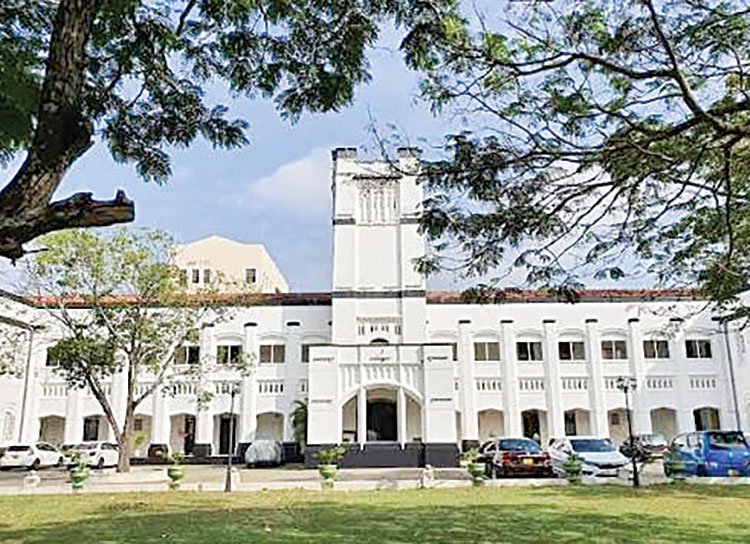
Little breathing space between papers at the final exam and my mind goes blank answering Sinhala paper
(Excerpted from The Art of Governance, autobiography of MDD Pieris)
Then came the final blow. When the time table for the final examination was out, I discovered that I would have to answer all my nine papers, of three hours each at one continuous stretch without even a half days break! I was due to answer the European history paper one afternoon; then go on next morning to British history; afternoon to Ceylon history; the next morning to English Poetry; afternoon to English drama; the following morning to English prose; and that same afternoon to suddenly switch from thinking and writing in English to thinking and writing in Sinhala, answering the first of the three papers in Sinhala, with the other two coming morning and afternoon the following day! Several of my friends urged me to go and speak to the university administration about a change, but at the same time, others who had had difficulties and sought recourse reported that they were rather rudely treated by the officers concerned.
This deterred me from going. I was a polite person by nature and just as in the case of Mr. Athulathmudali about whose insistence on politeness I have already written about, I too resented the prospect of being treated rudely. Therefore, I decided, quite foolishly no doubt, and come what may to go through and sit for the nine papers in four and half continuous days. Thus began the most difficult and harrowing period of my life, a period even worse than the experience at the university entrance examination.
In that instance, there was certainly disappointment and frustration but since I was attempting a near impossibility, there was less stress because mentally I was prepared for failure. This was reflected in a reasonably good appetite, and the ability to sleep. This time, at the final examinations, I lost both. Normal eating was impossible. My stomach was in knots. I just went through the motions and nibbled something and basically sustained myself with a combination of powdered milk and Ovaltine. Sleep became disturbed. After six hours of strenuous concentration a day answering question papers, there was little the mind could absorb by way of preparation for the next day.
During the day, nothing was possible since the morning’s paper was over at noon, and by the time you walked back from the Arts block to Marrs Hall just to look at the food and freshen up and then walk back to the examination hall to be there about 10 minutes before the 2 p.m. start of the next paper, there was neither time nor inclination to look at or absorb anything. I did try to look through whatever I could for the next days two papers during the night whilst keeping in mind the necessity to get some rest and sleep. Therefore, I did try to get six hours of sleep in the night. But it turned out to be an unhealthy and disturbed sleep leaving you not fresh, but jaded in the morning.
The mind was overactive. By this time, the numbers in the hall had dwindled due to the vacation. Only the few sitting for their final examination were in residence, and they were busy with their studies. There was therefore also a sense of loneliness and isolation prevailing. Added to all this was the horrible thought of failing and having to repeat all nine papers the following year. One had very much to try to find some degree of good cheer from within one’s own resources. Given my predicament I had precious little of that.
In these almost nightmarish conditions, I struggled through eight of the nine papers. The last paper during the final afternoon was the third paper in Sinhala literature, which was on prose. I still have a vivid memory of that afternoon. Rain clouds were building up and as we got down to answering the paper, it was getting quite dark. The lights shone brightly in the examination hall. There were five questions to be answered and I had just finished answering one, and had barely started on the next, when my mind went completely blank. I have never experienced such a thing before or since. The thinking processes suddenly stopped as if a plug had been pulled out from an electricity supply. I was in the middle of a sentence, I found impossible to complete. It was total disconnection.
There was just nothing I could do except to lay down my pen and gaze out of the window. There were two things in my favour at this critical moment. I possessed a temperament that didn’t panic easily or once embarked on a course, give up easily. I therefore calmly decided to stop trying to struggle, and relax. I was aware that precious minutes were ticking by. But I knew that what could not be cured must be endured, and that any attempt at force and struggle would only serve to aggravate the situation. That part of my mind was clear and rational. I spent almost 20 precious minutes doing nothing. Then gradually I found that I was able to focus once again.
I cautiously and with a degree of fear took up my pen and leaving room to complete the question I had begun to write on, started on a new question. The ideas flowed once again. I had however to be careful. There was no guarantee that everything would not come to a stop once again. I had already lost valuable time. Any further problem now would be the end of the paper and the end of perhaps the whole examination. I therefore deliberately slowed down my pace of writing and wrote slowly and steadily not pushing myself.
When the time came for the papers to be collected I had been able to answer only three out of the five questions in full. For the balance two, I was only just able to write down a few points. Answers in continuous prose were not possible. Up to this time, I had hope of at least passing the whole examination and obtaining my degree. Now, I was not so sure. There was a distinct possibility, I would fail the last Sinhala paper.
The next day I went home to Colombo, utterly drained. It appeared that my father’s prediction after reading my horoscope was not only accurate but frighteningly so. I too believed with him that there could not possibly be a worse period in the future. Starting from the stress of suddenly having to change schools in mid university entrance course to the end of my participation in school cricket through contracting measles, to the enormous trials and tribulations of the university entrance, to the disappointment of not being able to read for English “honours,” and now this situation at the final examination was almost too much for one person to take.
I was in a state which perhaps verged on a nervous breakdown, For a good two weeks at home, I was listless, unable to concentrate on anything. I could not read anything. Even the newspapers repelled me. The sound of music was irritating, and sleep desultory. I was taken to see the doctor, who advised complete rest. He did not give medicine. It was clear that I had severely overtaxed the system, and time would be the healer, as indeed was so gradually much to the great relief of my parents and myself. The newspaper once again began to interest me, and gradually books. Even then, I could not read for long periods for some time. I used to lose concentration and the mind began to wander.
In due course, I received a letter from the university, inviting me to teach an English course to the new batch of students about to enter the university. This was the vacation course in English for them. But I was just in no mood to teach. I was now back to normal, but did not wish to take upon myself the responsibilities of a teaching assignment. Therefore, I wrote back politely declining. But the letter from the university was a boost to my confidence. I knew that I would not have been called unless I had fared reasonably well, at least in my English papers, and got at a minimum a “B.” But what of the rest? I was still apprehensive. What came to mind was the unfinished Sinhala paper, and its possible impact on the whole examination.
Assistant Librarian Vidyodaya University
When the results came in due course, to my great relief I had passed. There was no question of a class. Nor was I expecting one. What I dreaded was sitting for the whole examination once again. I could now get this episode of my life out of the way and decide how to proceed. By this time the new Vidyodaya University had just begun to function. My father was a member of the Governing Council of the Vidyodaya Pirivena, the Vidyadhara Sabha and for long an associate and a friend of the renowned scholar Ven. Weliwitiye Soratha, the head of the Pirivena, who was the first Vice Chancellor of the new university.
Our family had many connections with Vidyodaya, including my maternal grandfather Mr. C. Don Bastian Jayaweera Bandara, himself a renowned scholar, writer, publisher and social worker, having had his higher education there. I for my part, for a period studied Sinhala under Ven. Soratha. Busy as he was, he found the time to teach me because of these family connections. I must have been a good student in his opinion, because he very graciously presented me a two volume set of his monumental work of the Sinhala dictionary, a task which he undertook and completed all by himself, a set which is one of my valued possessions even today.
When it became known that I had passed out, Vidyodaya was keen to have me and my father was equally keen that I should help out in whatever capacity. Finally, I was appointed as an Assistant Librarian and along with others, plunged into the task of setting up a proper library for the new university. At this time, the university functioned in the premises of the Vidyodaya Pirivena at Maligakande and it was rapidly becoming apparent that space was becoming a serious problem.
One of the most important tasks of a librarian is to classify knowledge accurately and correctly and this had to be carefully done. The system of classification adopted at the time was the Dewey Decimal System, and I spent much time at home poring over the volumes containing the system, so that during the working day classification and the typing of the card indexes, etc., could proceed with speed. Accuracy and speed were both necessary, accuracy, because a misclassified book is a lost book, speed because hundreds of books were lying on the floors, in cartons, in crates, on windowsills and all over the place.
I found the wide reading that I had done whilst at Peradeniya now of great assistance. With a quick perusal I was able to determine the classifications and sub-classifications. This was important. For instance, if one took up a book on European history, one had to determine whether it should be classified and appear on the shelves as general history; a history of a period; diplomatic history; economic history; social and cultural history; military history; a history of important treaties, and so on. This was so for all subjects and the wider your reading the easier it was.
But always at the end of the day was a general conference at which we took up for discussions amongst other matters, certain books which were exceedingly difficult to classify, partly because their contents approached the borders of many different subjects. Titles were frequently misleading. For instance, the book “Two eggs on my plate,” had nothing to do with cuisine. It was a tense memoir of certain military activities during World War II.
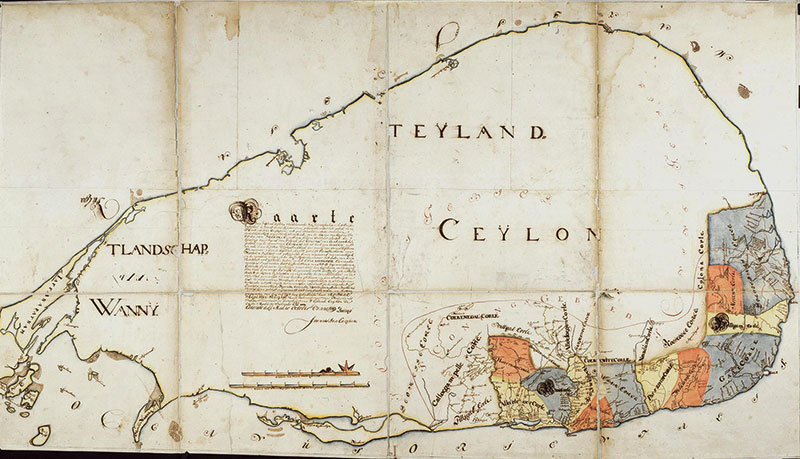
Three Maps of Ceylon Cinnamon
From the Pathfinder Collection
By Jennifer Moragoda
jennifermoragoda787@gmail.com
A remarkable Dutch map of Ceylon made in 1719 allows us to follow cinnamon through the country almost village by village.
Part of a series of thirty-six maps showing territories of the Dutch East India Company, it was drawn by Joannes van Campen and shows mainly the south-western portion of the island then under Company control. The twelve korales or provinces are distinguished by colour and extend, in the map’s description, from the river Caymelle to the Valave. Brohier notes that Caymelle was the Dutch name for the Maha Oya. A brown line marks the boundary of the Kandyan king’s territory. Within this political geography, a red line encloses what might otherwise be described simply as ‘Canelle Landen’: “the expanse of the luxuriant cinnamon bushes from the Chilaw river to the hook of Dondra.”
What makes the map extraordinary, however, is its detail. It marks the old administrative divisions through which the cinnamon country extended; villages and places associated with the seasonal work of the peelers; the forty-six numbered points along the annual route of the Cinnamon Captain; and the five coastal places to which the peeled bark was delivered.
Two further Dutch maps narrow the lens. A plan of Salpiti Korale maps cinnamon gardens and grounds among localities that are now part of greater Colombo and its suburbs. At an even more microscopic level, three drawings of a single chena near Hanwella represent individual trees by letters and colour and enumerate them.
Together they preserve an unusually detailed geography of Ceylon cinnamon and the enterprise built around it under the Dutch.
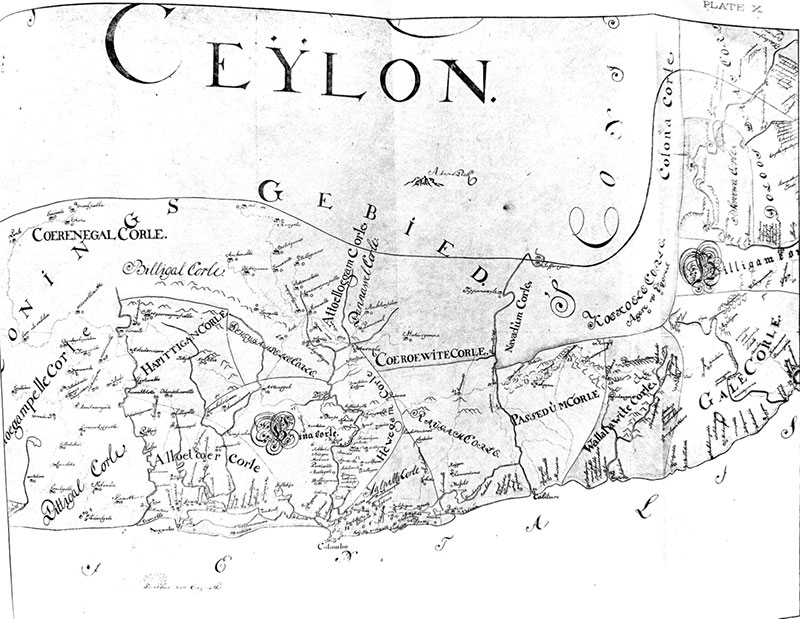
Van Campen’s map in facsimile M. F. N. Rotteveel’s 1901 facsimile of Van Campen’s 1719 map.
Much of that detail can be recovered today through the meticulous work of R. L. Brohier and J. H. O. Paulusz. Their descriptions and translations of Dutch maps and records provide the context that makes otherwise cryptic routes, symbols and localities intelligible.
A Circuit Through Cinnamon Country
Van Campen’s map immediately provides an overview of the country from which cinnamon was obtained. It is divided according to the old Sinhalese territorial and administrative divisions of korales and pattus. Many of their names, and the places associated with them, remain recognizable today, although their old boundaries are now less familiar. The map may surprise modern readers who are unaware that its cinnamon country extended as far north as the Chilaw River and south to Dondra.
The map also makes clear that the geography of cinnamon did not coincide neatly with political boundaries. It marks the limits of Dutch territory and the adjoining lands of the Kandyan king, while cinnamon also grew beyond Dutch-controlled territory. Access to cinnamon in Kandyan territory could therefore depend upon relations with the Kandyan court.
The most striking feature of the map is the minute detail with which this cinnamon geography is recorded. Forty-six numbered points trace the ordinary land route followed by the Cinnamon Captain, head of the Mahabadda or Cinnamon Department, on his annual general visitation at the commencement of the harvest. Starting from Colombo, his circuit took him north and then through a succession of korales to the south before he returned along the coast to Colombo.
The route recorded in Brohier and Paulusz runs through Negombo, Pittigal Korale, Hapitigam Korale, Sinna Korale, Rayigam Korale, Pasdun Korale, Wallalawiti Korale, Galle Korale, Beligama Korale, Morawa Korale and Dolosdas Korale, the latter embracing the Gangaboda and Welaboda Pattus of Matara and the eastern and western Giruwa Pattus of Hambantota.
On the map, the numbered stations allow that journey to be followed across the country. Even where individual names become difficult to decipher on a reduced reproduction, the extent of the circuit can be grasped.
But another set of small red circles gives the map an even more unusual human geography. In the words of its description, these indicate the villages and places “in which and near which” the cinnamon peelers commonly pitched their tents during the peeling season “in order to gather that costly bark.” These temporary encampments belonged to the older system of harvesting in which parties of peelers travelled through the cinnamon country, cutting suitable stems and bringing them back in bundles to be peeled and fashioned into quills.
The red circles are scattered through the cinnamon country densely enough that the map gives a visual impression of the scale of the seasonal harvest before one has deciphered every locality. J. H. O. Paulusz considered the map “of unusual value, indeed indispensable for studying the history of the Salagama community because it illustrates their manner of life, the districts in which they lived, and the hardships and dangers they endured.”
The Captain’s numbered route and the peelers’ encampments therefore record two related geographies. One is the official circuit of inspection. The other is the far more dispersed geography of the people actually gathering and preparing the cinnamon.
The map completes the picture by identifying five coastal delivery points—Negombo, Colombo, Beruwala, Galle and Matara—to which the peeled bark was “carried on their shoulders and transported with great labour.” Taken together, these details allow the old cinnamon enterprise to be visualized almost in motion: the Captain moving between his 46 stations; peelers establishing seasonal camps in and near particular villages; cinnamon being gathered and prepared in the surrounding country; and the finished bark moving towards five points on the coast.
The map also bears the letters A–H on a smaller circuit associated with Maradana, “where the best of that fragrant bark is peeled.” Brohier’s explanatory note identifies the area within this orbit as including Maradana, Wellicadde, Kirilepona and Bamblepitie—names recognizable today as Maradana, Welikada, Kirulapone and Bambalapitiya. These are now parts of a densely built city; on Van Campen’s map they belonged to the geography of cinnamon.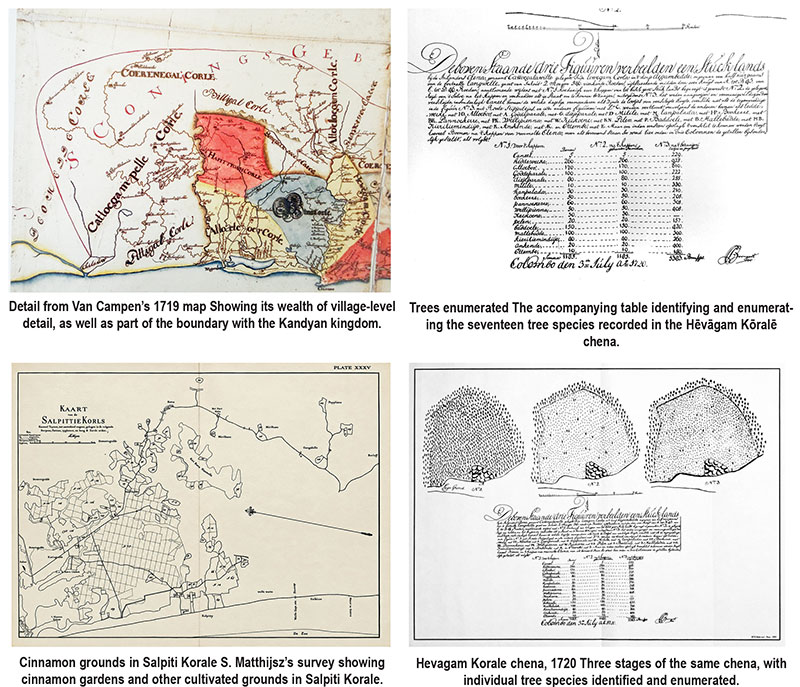
That juxtaposition is one of the pleasures of reading the old maps. Familiar names survive, but the landscapes attached to them have changed almost beyond recognition.
Salpiti Korale, Plot by Plot
A second map sharpens the focus further.
Where Van Campen’s map provides an overview of the geographical reach and movement of the cinnamon enterprise, the detailed plan of Salpiti Korale attaches cinnamon more closely to individual grounds and localities in and around what is now greater Colombo. Similar detailed plans were drawn for other korales and areas in which cinnamon grew.
The plate itself carries a striking collection of names familiar to a modern resident: Kotte, Mirihana, Welikada, Nawala, Pepiliyana, Kollupitiya, Wellawatte and Galkissa, or Mount Lavinia, among others. They appear beside or among numbered and outlined cinnamon grounds. The importance of the map is not that all of modern Colombo lay within Salpiti Korale—it did not—but that it allows particular 18th-century cinnamon localities around the expanding city and its eastern and southern approaches to be set against places we know today.
A related survey shows how closely Dutch mapping followed Colombo’s expansion. Brohier notes that, as settlement spread beyond the Fort and Pettah, a map made about 1766 by Lieutenant C. D. Wentzel surveyed the Colombo district for a radius of five miles in all directions from the Fort. Particular care was taken to mark the cinnamon-growing districts, partly for the information of the authorities and partly as a warning to inhabitants.
The records preserve some striking glimpses of areas we do not normally associate with cinnamon. A Dutch governor deplored the number of valuable bushes being “pitifully cut down for firewood especially near Liveramentu (Thimbirigasyaya-Narahenpita) where it grows luxuriantly.”
It is difficult now to associate Thimbirigasyaya and Narahenpita with luxuriant cinnamon, yet that is precisely why this cartographic detail matters. Pepiliyana, Nawala, Welikada, Wellawatte and other familiar names cease for a moment to be simply modern suburbs and become part of an older cinnamon geography.
In this sense, the Salpiti map performs a different task from Van Campen’s. The first shows the astonishing geographical reach of the cinnamon enterprise. Salpiti brings us down almost plot by plot.
Down to the Individual Tree
A third example reduces the scale to a single piece of ground. Three charts dated 1720 depict a chena called Katugalavila in the village of Degambedda in Hevagam Korale, about half an hour’s journey from the fort at Hanwella. The original survey was by L. Boomgart; the version reproduced by Brohier and Paulusz is an 1899 facsimile by M. F. N. Rotteveel.
The three drawings show the same ground before clearing, after cutting and burning, and after planting and regrowth. Seventeen kinds of tree are identified by letters, with their Sinhala names recorded in Dutch spelling. Before clearing, the plot contained five cinnamon trees; in the third stage it contained 229 cinnamon shoots and young trees. Brohier called the plan both “a picture of the ground” and a “working-plan,” and remarked on its striking representation of detail and use of colour.
This small survey is useful here chiefly because it shows just how far Dutch cartographic attention could descend: from an extensive cinnamon country, to individual grounds, and finally to individual trees.
The 1719 map shows the cinnamon country extending from the Chilaw River to Dondra. The Salpiti Korale map brings us into recognizable localities around Colombo and its suburbs. At Degambedda, near Hanwella, the cartographic lens descends to a single chena and finally to individual cinnamon trees.
Taken together, the three maps turn the broad designation Canelle Landen into something much more precise: a country of rivers, political boundaries and old administrative divisions; roads, villages and seasonal encampments; identifiable cinnamon grounds; and, finally, individual plants.
They also help explain the practical appeal of later attempts to concentrate cinnamon production in more accessible and systematically cultivated grounds. Van Campen’s map makes visible the enormous geographical reach of the older, dispersed system—the distances travelled, the seasonal encampments and the labour required to bring the prepared bark to the coast. The hardships of that system are less visible on the map itself, but they are amply recorded in the contemporary documentation. The later transformation of cinnamon cultivation is another chapter. These maps preserve the geography that preceded it.
Retracing the Circuit
There is a modern postscript to this story. In recent years, the Pekoe Trail, a long-distance walking route through the tea estates of the hill country, has offered a new way of experiencing Ceylon’s montane landscape and tea heritage. The Cinnamon Captain’s circuit suggests the possibility of a low-country counterpart.
It need not be a walking trail. Selected stages of the forty-six-point circuit could be retraced largely by road, linking surviving place names and old cinnamon localities with places where cinnamon is still cultivated today. The korales no longer function as administrative divisions, roads have changed and much of the old cinnamon country has been transformed or built over, but enough of the underlying geography survives to make the old route intelligible.
Three centuries ago the circuit was travelled at the commencement of the harvest by an official inspecting the cinnamon country. Retraced today, it could offer a way of rediscovering a geography that these extraordinary maps have preserved in remarkable detail.
Notes: This article draws extensively on Volume II of R. L. Brohier and J. H. O. Paulusz’s Land, Maps & Surveys: A Descriptive Catalogue of Historical Maps in the Surveyor General’s Office, whose detailed descriptions, annotations and translations of Dutch maps and records make it possible to reconstruct much of the geography discussed here.
Images 3–5 reproduced from R. L. Brohier and J. H. O. Paulusz, Land, Maps & Surveys, Vol. II (1951).
Features
From labyrinth to economic liberty: Transforming Sri Lanka’s future through National Business Facilitation Centre
“The secret of change is to focus all of your energy, not on fighting the old, but on building the new.” — Socrates
By Prof. Asoka S. Seneviratne
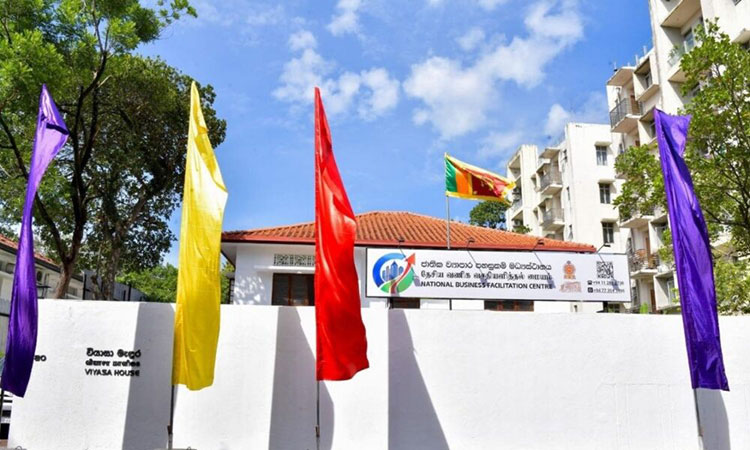
The inauguration of Sri Lanka’s National Business Facilitation Center (NBFC)—known locally as ViYASA—Visionary insight of President Anura Kumara Dissanayake marks a profound turning point in the nation’s economic history. For decades, the island nation has grappled with structural trade and fiscal imbalances, chronically spending more than its income and relying heavily on foreign debt to survive. Moving past the conceptual phase, this institution translates visionary reforms into ground-level execution, aligning public administration with private sector dynamism under a unified “single-window” model.
This article explores the trajectory of Sri Lanka’s economic evolution, drawing valuable lessons from successful institutional reforms across the Asia-Pacific region. By examining global best practices in trade facilitation, electronic single windows, and foreign exchange optimization, this piece outlines a strategic blueprint for how Sri Lanka can achieve sustainable growth, foster investor confidence, and permanently break free from historical debt cycles.
Translating Vision into Ground-Level Reality
The journey of economic reform is often paved with good intentions, but execution defines success. Having co-authored analyses on the establishment of the National Business Facilitation Center, witnessing its physical realization on the ground is a momentous milestone. Located at Hector Kobbekaduwa Mawatha in Colombo 07, the center is designed to cut through red tape, eliminate administrative bottlenecks, and harmonize regulatory frameworks across government agencies.
Yet, as the institutional doors open, the real test begins:
How do we optimize management and organization to ensure it yields the expected macroeconomic outcomes? The primary goal is not merely to make paperwork faster, but to fundamentally alter Sri Lanka’s foreign exchange equation—transitioning from a deficit economy dependent on foreign loans to a self-reliant, export-oriented powerhouse. In other words, Sri Lanka stands at a decisive economic crossroads, where modernizing administrative processes is only the surface of a much deeper and necessary structural transformation. Beyond mere paperwork, the true mandate is to rewrite our entire national financial ledger by permanently breaking free from a perpetual cycle of foreign debt dependency. By unleashing the full potential of our export sectors, we can systematically replace borrowed capital with hard-earned revenue and build a self-sustaining powerhouse. This is not just a policy adjustment, but an urgent economic imperative that redefines our trade balance and secures true national sovereignty. Ultimately, a self-reliant Sri Lanka is entirely within our reach if we boldly transition from managing a permanent deficit to commanding global markets on our own terms.
Escaping the Half-Century Trap: Moving Beyond Deficit Economics
For nearly five decades, Sri Lanka battled a persistent structural anomaly: living beyond its means by consistently spending more than its total national income. This historical shortfall forced successive governments into foreign borrowing, leaving the economy highly vulnerable to global shocks, culminating in the severe economic crisis of 2022.
As business leader and industrialist Eng. Lalith Kahatapitiya noted during the launch, the trauma of 2022 taught the nation a bitter lesson—when the macroeconomic fabric collapses, individual business profits and luxury assets cannot shield anyone from collective ruin. The establishment of the NBFC addresses this at its root by ensuring that business creation is no longer penalized by bureaucratic friction, thereby accelerating revenue generation, export diversification, and capital retention. In other words, for too long, the entrepreneurial spirit of Sri Lanka has been systematically stifled by a labyrinth of bureaucratic hurdles that treated business creation as a liability rather than an engine of growth. The establishment of the National Business Facilitation Centre (NBFC) shatters these legacy barriers at their foundation, ensuring that innovators and enterprises are no longer penalized by paralyzing red tape and administrative delays. By replacing archaic procedural obstacles with streamlined, digital-first efficiency, we actively unchain the private sector to accelerate rapid revenue generation and economic velocity. This frictionless ecosystem instantly stops the haemorrhage of local talent and capital, keeping vital resources anchored within our national borders to fuel sustainable expansion. Ultimately, by liberating commerce from the heavy chains of bureaucracy, we transform business creation into our greatest competitive advantage and power a truly self-reliant export economy.
The Architecture of the Single-Window Model: Lessons from Asia-Pacific
To secure robust results, Sri Lanka can look to successful precedents across the Asia-Pacific region, where modern trade and investment facilitation has transformed emerging economies.
Regional Blueprints and Best Practices
Singapore’s Networked Trade Platform (NTP): Singapore eliminated physical trade friction by integrating all regulatory and commercial documentation into a single digital ecosystem. Sri Lanka’s vision of allowing entrepreneurs to submit documents digitally without visiting offices mirrors this seamless approach.
Malaysia’s National Single Window (NSW)
: Managed through public-private collaboration, Malaysia streamlined customs, permits, and port clearances, significantly reducing transaction costs and turnaround times for investors.
Guangzhou Data Center Framework (China):
Utilizing advanced single-window frameworks linking dozens of regulatory agencies, regional hubs have accelerated industrial approvals and foreign direct investment (FDI) inflows.
By adopting these structural templates, the NBFC goes beyond a conventional “One-Stop Shop” by actively reshaping inter-ministerial systems and deploying real-time digital progress tracking. It is good to say that by fundamentally reshaping inter-ministerial systems, the NBFC dismantles the traditional silos that have long paralyzed government efficiency and fractured inter-agency communication. Rather than merely grouping services under one roof, it forces historically isolated departments into a synchronized, high-performance digital ecosystem. Deploying real-time digital progress tracking ensures total transparency and accountability, turning opaque bureaucratic delays into visible, actionable metrics. This dynamic infrastructure allows entrepreneurs and state officials alike to monitor approvals instantly, eradicating lost paperwork and backroom bottlenecks. Ultimately, this seamless integration replaces guesswork with absolute precision, proving that state machinery can operate with the speed, agility, and modern accountability demanded by a global economy.
Rebuilding Investor Confidence:
From Skepticism to Active Participation
For years, investors and entrepreneurs faced a maze of conflicting policies, delayed land clearances, and bureaucratic apathy. Today, the dialogue has shifted. Modern investors are generally prepared to pay taxes; their primary demand is predictability, transparency, and procedural efficiency.
The NBFC’s dual-stage operational strategy directly answers this call:
Stage One
: Resolving immediate day-to-day regulatory, legal, and policy hurdles for active businesses. This means Stage One acts as an immediate operational relief valve, cutting through the dense thicket of day-to-day regulations, legal roadblocks, and policy friction that currently paralyzes active businesses. Instead of forcing enterprises to navigate a chaotic maze of overlapping requirements just to keep their doors open, this phase establishes clear, direct pathways for compliance and daily execution. It systematically eliminates the redundant approvals, sudden legal bottlenecks, and conflicting agency mandates that waste countless productive hours and drain company resources. By instantly resolving these recurring friction points, established companies can redirect their energy away from defending themselves against red tape and toward core revenue-generating activities. Ultimately, this foundational stabilization ensures that operating a business in Sri Lanka stops feeling like a daily endurance test and starts functioning with predictable, reliable ease
Stage Two
: Providing end-to-end guidance for entrepreneurs with capital—organizing land, utility connections (water and electricity), and statutory permits under one roof. Indeed, Stage Two serves as the ultimate catalyst for high-impact investment, taking entrepreneurs who are ready to deploy capital and guiding them seamlessly through every complex phase of project establishment. Instead of forcing investors to coordinate fragmented, slow-moving agencies for land allocation, utility setups, and statutory clearances, this stage unifies every foundational requirement under a single, cohesive roof. It eliminates the gruelling, multi-year delays typically associated with securing industrial land plots, electricity grids, and water connections, ensuring shovel-ready projects break ground without obstruction. By streamlining every mandatory permit, license, and compliance check into a synchronized workflow, it provides absolute clarity and speed from concept to construction. Ultimately, this comprehensive hand-holding removes the traditional friction of scaling physical infrastructure, transforming committed capital into operational factories and commercial hubs at unprecedented speed.
Now that doing business is simpler and more structured, the onus rests on the private sector to step forward, innovate, and scale operations.
Safeguarding Foreign Exchange and Reversing the Balance of Payments (BOP) Deficit
A critical objective of streamlining the business environment is strengthening the Balance of Payments (BOP). For generations, capital outflows have outpaced inflows. To permanently reverse this:
Unlocking Untapped Sectors:
Beyond traditional exports, Sri Lanka must aggressively open up global revenue streams in IT services, high-value mineral resource policies, and international gem and jewelry trading.
Eliminating Foreign Debt Dependence:
The ultimate fear to conquer is the reliance on external loans to finance routine import and forex obligations. It must be emphasised that, for decades, the constant threat of foreign debt has cast a heavy shadow over our national stability, forcing consecutive governments to borrow merely to finance routine imports and essential forex obligations. This dangerous addiction to external loans traps our economy in a perpetual cycle of vulnerability, where every global shock or currency fluctuation pushes us closer to sovereign distress. Eliminating this dependence is not just an accounting objective; it is the ultimate battle for true national independence, ensuring that our hard-earned foreign exchange stays home rather than flowing straight out to service crushing international creditors. By fostering a self-reliant export economy, we replace borrowed lifelines with organic revenue, permanently closing the gap that makes external borrowing necessary in the first place. Ultimately, conquering this fear of deficit-driven survival liberates Sri Lanka’s future, proving that our economic destiny can and must be written by our own productive capacity.
Export-Led Foreign Reserves:
By empowering local industrialists and reducing bureaucratic lead times, export earnings can scale organically, stabilizing the Sri Lankan Rupee and ensuring sustainable macroeconomic health. Indeed, a stable currency is the bedrock of national economic confidence, yet for years the Sri Lankan Rupee has remained dangerously vulnerable to volatile trade deficits and depleted foreign reserves. By systematically removing bureaucratic bottlenecks and supercharging export earnings, we create a continuous, organic influx of foreign currency that acts as a natural defense against sudden depreciation. This reliable stream of hard currency eliminates the frantic, artificial interventions traditionally required to prop up the exchange rate, anchoring the Rupee in genuine economic productivity rather than borrowed capital. As import costs normalize and inflationary pressures recede, businesses and citizens alike enjoy a predictable financial environment where long-term planning and investment can finally thrive. Ultimately, this robust influx of export revenue secures absolute macroeconomic health, transforming our currency from a persistent source of national anxiety into a powerful symbol of sovereign economic strength.
Proactive Governance and Inter-Agency Coordination
Administrative delay has long been one of the greatest deterrents to national development. When state agencies treat investor requests as secondary to routine clerical duties, economic momentum stalls. This means that when state agencies allow investor requests and growth initiatives to languish behind a mountain of routine clerical duties, the entire rhythm of commerce grinds to a devastating halt. Instead of acting as proactive catalysts for progress, institutional machinery gets bogged down in stamping forms, filing redundant paperwork, and prioritizing archaic administrative checklists over national advancement. This misplaced focus treats vital capital investments as mere background noise, turning weeks of potential productivity into months of agonizing stagnation.
Consequently, economic momentum stalls completely as frustrated investors abandon promising ventures, taking their capital and confidence elsewhere. Ultimately, when bureaucratic complacency relegates game-changing projects to the bottom of an inbox, the nation pays the price through lost jobs, delayed infrastructure, and permanently stunted potential.
Under the guidance of the Presidential Secretariat and a high-level National Steering Committee composed of ministry secretaries and agency heads, the NBFC enforces institutional accountability. Continuous monitoring, performance reviews, and direct digital intervention ensure that bottlenecks are cleared before they escalate into systemic crises.
A New Era for Sri Lankan Enterprise
Along with the vision and insight of President Anura Kumara Dissanayake, the launch of the National Business Facilitation Center (ViYASA) is much more than opening a government office; it is a decisive declaration of economic self-determination that shatters decades of bureaucratic paralysis. By replacing archaic red tape and fragmented ministerial silos with a synchronized, digital-first ecosystem, we have fundamentally transformed how business is created, scaled, and sustained in Sri Lanka. As investors and industrialists receive seamless, end-to-end guidance from daily compliance to major capital deployment, the persistent fear of deficit-driven survival is replaced by organic growth. Powered by an unstoppable surge in export-led foreign reserves and a stabilized Rupee, our economy is finally breaking free from the suffocating trap of foreign debt dependency. The foundation of a sovereign, surplus-driven powerhouse has been firmly laid—now, fuelled by disciplined execution and relentless administrative agility, Sri Lanka strides confidently toward a profoundly prosperous future.
(The author served as the Special Adviser to the Office of the President of Namibia from 2006 to 2012 and was a senior consultant with the UNDP for 20 years, and a Senior Economist with the Central Bank of Sri Lanka (1972-1992). He can be reached at asoka.seneviratne@gmail.com)

Father’s horoscope reading on the worst time in my life seemed coming true

Lanka’s exports surpass US$12 Bn in first eight months of 2026

Brewing new opportunities: Australia’s MDF and Kahawatte Plantations partner to grow Sri Lanka’s specialty coffee sector

The Cinnamon Captain’s Circuit

Ceylinco Life agent among three global finalists for award

From labyrinth to economic liberty: Transforming Sri Lanka’s future through National Business Facilitation Centre

‘Dates have the highest sugar content to fight Coronavirus’

Sunday Island 27 December – Headlines

#SundayIsland 17th December – Headlines

Sunday Island – 28th March

Sunday Island Headlines – 21 March

Sunday Island – 21st February – Headlines
-

 News7 days ago
Namal Rajapaksa Buddhist gambit fails, bail denied
-

 News7 days ago
Vehicle prices drop by up to Rs. 1 mn, says importers’ body
-

 News7 days ago
Govt monitors reported Saudi death sentence – Foreign Ministry
-
 Business7 days ago
Lanka’s famed beach shack battles demolition
-

 News6 days ago
Hatton youth protest against reported death sentence for Lankan in Saudi Arabia
-

 News4 days ago
Mastermind Naufer Moulavi among 15 found guilty
-
 News5 days ago
Protest against setting up of cement factory in highly populated area near BIA
-
 News6 days ago
Mahaweli rises as heavy rain triggers flood, landslide fears