
Latest News
Tharman Shanmugaratnam: Singapore picks a president who could’ve been much more

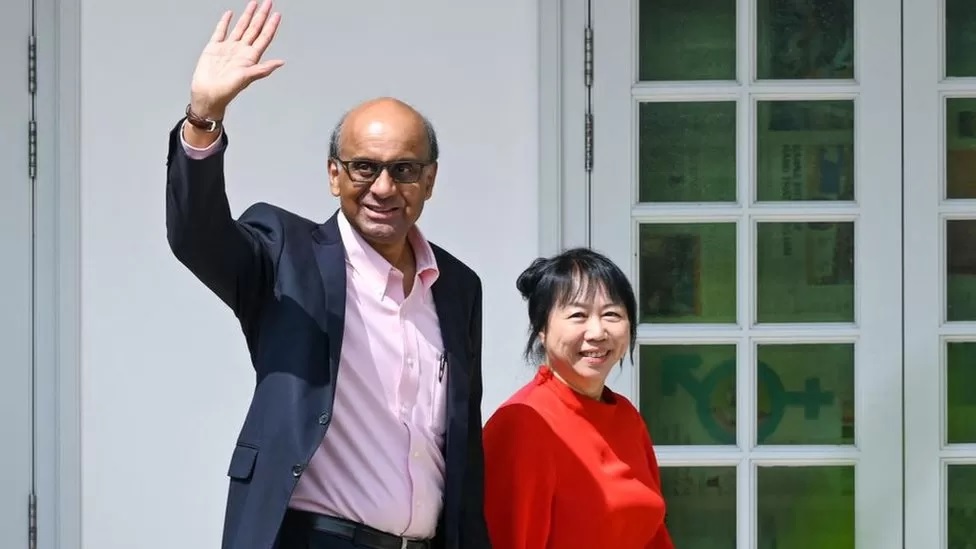
Singaporeans have chosen Tharman Shanmugaratnam as their next president – but many would have let out a small sigh of disappointment as they did so.
On Friday, the former top minister won a record 70.4% of the votes, comfortably beating two other candidates in the country’s first contested presidential election in more than a decade.
Tharman Shanmugaratnam was always the clear front-runner. Urbane, well-spoken and intelligent, he is highly regarded by Singaporeans and consistently polls as one of the island’s most popular politicians. Which was why, when he announced several months ago he was quitting the ruling People’s Action Party (PAP) to run for president, many Singaporeans were baffled by what they viewed as a waste of his potential.
The role of president is a largely ceremonial one that holds little power, apart from having some say on the use of Singapore’s sizeable financial reserves. It has even less say in public affairs – the government, which has the power to remove the president, has made it clear the president cannot speak too freely and has likened the role to the British monarch.
It is a figurehead role that many see suitable for a pleasant, uncontroversial person to inhabit, as has been the case with past presidents. But Tharman Shanmugaratnam is much more than that.
Besides helping to helm Singapore’s political leadership as finance minister and deputy prime minister, the former economist has also held top council positions at global institutions such as the United Nations and the International Monetary Fund (IMF). At one point, he was even tipped to head the IMF.
Some Singaporeans thought that if he ever left the PAP, he would go on to make his mark in the international arena. Even more hoped he could be prime minister. A survey some years ago saw him poll as the first choice to become PM after incumbent Lee Hsien Loong steps down. In general elections, Mr Tharman’s constituency often scores the highest after Mr Lee’s.
Part of this popularity stems from the fact that as a long-time deputy, Mr Tharman’s reputation has been shielded from the slings and arrows of public criticism which Mr Lee has had to bear.
But the 66-year-old has also cultivated a gentlemanly image, and has refrained from engaging in personal attacks unlike some other politicians. This has played well with an electorate that likes its leaders genteel and statesmanlike. Many felt he had the chops and stature to become that almost mythical creature – the first non-Chinese prime minister of Singapore – and break a glass ceiling that the government has long insisted is concrete. Famous for their racial realpolitik, PAP leaders often reiterate that Singapore, a Chinese-majority country, is not ready to accept a minority PM.
Mr Tharman kept mum on this topic until last week when he said he felt Singapore was ready, sharpening the sting of disappointment among his supporters. But Mr Tharman has also insisted he would not be good at being PM and with the PAP’s new leadership waiting in the wings, it could be said he was already on his way out. One theory is the PAP wanted him to run for president to help shepherd the next generation of leaders. And so, he chose to run for president instead. Although Singapore has had non-Chinese presidents in the past, Mr Tharman is the first one voted in by the public.
His supporters could claim his victory as a win for representation and a repudiation of racism. In the lead-up to the election, some social media posts insisted that Singapore must have Chinese leaders. Mr Tharman’s two competitors were both Chinese.
(BBC)


Latest News
Bangladesh and Nepal to host Women’s Under-19 T20 World Cup from January 21 to February 6

Four venues in Bangladesh and Nepal will host the 2027 Under-19 Women’s T20 World Cup, which is set to run from January 21 to February 6. Chattogram, Sylhet, Kirtipur and Mulpani are the four venues, with Chattogram set to host the two semi-finals on February 4 as well as the final on February 6.
The 16-team event will feature four groups of four teams each, with the group stage set to be followed by a two-group Super Six stage, and then the semi-finals and final.
This is the third edition of the tournament, with India having won the first two back-to-back in 2023 and 2025. The defending champions have been drawn in group A alongside Ireland, West Indies and Nepal. Group B has 2025 runners-up South Africa as well as New Zealand, Pakistan and Samoa.
Australia, Bangladesh, Nigeria and UAE make up Group C, while England, Sri Lanka, USA and Scotland have been drawn in Group D.
The tournament will kick off with four matches on January 21, with Sylhet hosting Bangladesh vs UAE and Australia vs Nigeria, and Mulpani hosting Sri Lanka vs Scotland and England vs USA. The other two venues and other eight teams will be involved on January 22: New Zealand vs Samoa and South Africa vs Pakistan in Chattogram, and Nepal vs Ireland and India vs West Indies in Kirtipur.
All 41 games of the tournament will be played during the day. Morning matches will begin at 9.30am local time, and afternoon games at 1.30pm local time.
“The ICC U19 World Cup is the stage that showcases the future of our sport and serves as the ultimate platform for young players to make the leap towards elite careers representing their countries,” ICC CEO Sanjog Gupta said. “These future stars representing 16 teams will garner the world’s attention and become relatable role models for many young girls playing the sport, serving inspiration for their continued cricket journeys.
“The choice of our hosts – Bangladesh and Nepal – is also reflective of the ICC’s belief and investment in the future of the cricket ecosystem. With deep passion for cricket and nearly 40% of the two countries’ populations below the age of 20, they serve as the ideal hosts for one of the world’s biggest youth sporting events.”
(Cricinfo)

President Anura Kumara Dissanayake today (20) paid his last respects to the remains of Most Venerable Kappetiyagoda Siri Wimala Thera, Anunayake of the Sri Lanka Ramanna Maha Nikaya and Chief Incumbent of the Rajopawanaramaya Temple in Gatambe, Kandy, who passed away.
The President visited the Rajopawanaramaya Temple in Gatambe, Kandy, where the remains of the Thera are lying, and paid his last respects. He subsequently expressed his deepest condolences to the Maha Sangha and the temple’s Dayaka Sabha, who are mourning the passing of the Thera.
Central Province Governor and Consultant Physician Dr Harsha Suranga Fernando, Kandy District Secretary Indika Udawatta and several others were present.
President’s Media Division (PMD)

India opener Shafali Verma has received an official reprimand and a demerit point for breaching Level 1 of the ICC Code of Conduct during the second T20I against Zimbabwe on Sunday.
Shafali, an ICC release said, breached Article 2.2 of the ICC Code of Conduct for Players and Player Support Personnel, which relates to “abuse of cricket equipment or clothing, ground equipment or fixtures and fittings during an International Match.”
It was Shafali’s first offence in a 24-month period.
The incident occurred in the 12th over of Zimbabwe’s innings when Shafali threw the ball into the ground in frustration after dropping a chance at mid-off offered by Chipo Mugeri-Tiripano off Sree Charani.
Shafali admitted the offence and accepted the sanction proposed by match referee GS Lakshmi, which meant there was no need for a formal hearing.
Level 1 breaches carry a minimum penalty of an official reprimand, a maximum penalty of 50% of a player’s match fee, and one or two demerit points.
India currently lead the three-match series 2-0 with the third game to be played on Tuesday evening. The T20Is will be followed by three ODIs in Vadodara from October 23.
(Cricinfo)

Senior England players to miss Sri Lanka T20Is for WPL 2027

Bangladesh and Nepal to host Women’s Under-19 T20 World Cup from January 21 to February 6

Showers above 100 mm are likely at some places in the Western, Sabaragamuwa, Central, North-western, Northern and Southern provinces and in Anuradhapura district.

Low-quality coal causes power cuts: Ex-LECO Chief

Power cuts continue

GL stresses importance of post-war Shangri-La investment after CIABOC questions him

‘Dates have the highest sugar content to fight Coronavirus’

Sunday Island 27 December – Headlines

#SundayIsland 17th December – Headlines

Sunday Island – 28th March

Sunday Island Headlines – 21 March

Sunday Island – 21st February – Headlines
-

 Features3 days ago
Kotahena:A Small Enclave, An Extraordinary Legacy
-
 News4 days ago
Asgiri Mahanayake calls for immediate release of Gnanasara Thera
-

 News3 days ago
Record 1,600 students take Russian Classical Ballet examination in Sri Lanka
-
 News6 days ago
AC President recuses himself from hearing prison attire case pertaining to Gnanasara Thera
-
 News5 days ago
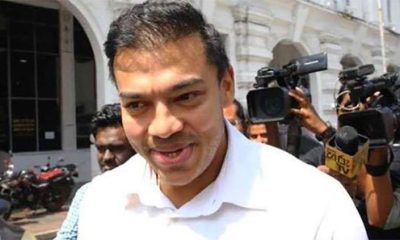
Naval officer testifies Yoshitha received Rs. 5.15 mn in salaries during SLN service
-
 News3 days ago
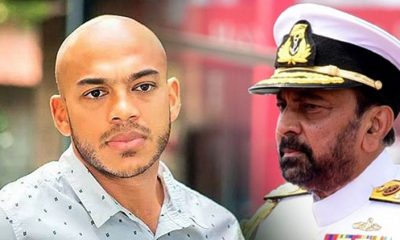
Karannagoda pushed for £24,536 for Yoshitha’s UK training, Court told
-

 Editorial5 days ago
Saving Anojan: Beyond Executioner’s Blade
-

 News6 days ago
CID informs Fort Magistrate’s Court investigation into money laundering case against Namal completed