
Opinion
Territorial mindset, a recipe for disaster!


By Chani Imbulgoda
I recall a documentary on animal life on a TV channel. Describing the behaviour of lions, a caretaker said, “These lions are from the Dehiwala zoo. They are vigilant of other lions entering their territory, if one crosses the boundary they fight to death. They won’t like other lions entering their territory.” The announcer remarked, “Just like humans!”
Exactly, just like us. In the animal kingdom the survival of the fittest is the norm and not crossing others’ territory is a rule of thumb. Since the beginning of human civilisation there have been tales of battles. The Trojan war, Alexander’s, Caesar’s, Napoleon’s wars degraded human values. Saddled with cynicism, hostility and jealousy, we humans, like beasts, are at war with ‘others’ who do not fit into our ideologies or our comfort zones. History is a storehouse of tales of human battles over territories in the guise of civilisation. So-called civilisation itself was won over battles. In the local context, the native ‘Yakkhas’ were massacred by Prince Vijaya to develop ‘Sinhale’. America, Canada, Australia inherit a dark history of looting territories of indigenous people in the name of civilisation. Portugal, Spain, Britain tasted the blood of their ‘colonial slaves’. Centuries later, we have not yet shed our primary animal instincts. We battle tooth and nail to protect our territories, our autonomy, values and interests all in the guise of civilised behaviour.
We rarely welcome outsiders into our territories. In the 40s and 50s, women were kept out of men’s territory. Late British Prime Minister aka Iron Lady, Margaret Thatcher, had to struggle many years to break through another of man’s territories, the Parliament. In the movie ‘Margaret Thatcher: The Long Walk to Finchley’, she sobs to her husband that contrary to what she previously believed, despite hard work she cannot win on merit and that dedication and passion are irrelevant. One-time Prime Minister, Edward Heath condemns Thatcher’s outspoken nature to force her out of politics. Heath says that the Parliament is akin to an orchestra made up of many musicians and Thatcher is a French horn more loud than appropriate, that threatens the orchestra’s harmony.
This is how men and also women of the same flock air their resentment towards outsiders, in their own words ‘intruders’ who are colourful and loud in action. Insult, indifference, suspicion, suppression, oppression are not uncommon experiences of pioneers in anything in history or at present. I once heard a senior Professor advising a young colleague attempting to change the system for the better, “Lady, look, do not swim upstream, people would not like it.” Yes, despite good intentions any novel act breaks the harmony…That is why the Buddha had many foes. That is why the notorious thief Barabbas was chosen by the crowd over Jesus.
I tried to uproot a tiny cinnamon sapling that grew through my interlock pavement blocks, failing which I crushed it. It made me realise that this is what happens, no matter how valuable you are. If you crop up in a place where you would not be accepted, every effort is made to root out, failing which, crush you, to ensure that you would not resurface. I suppose many of us had faced similar circumstances at work places, in politics or within social circles. Why does this happen, because of ego, envy, distrust or insecurity? Or because someone deemed a threat by another individual, a leader or a group enters their territory?
A pack of wolves has a leader; the protection of lions’ territory is the responsibility of the leader; the leader is the first to announce danger. No outsider can cross the boundary. We see certain lions, wolves and foxes as alphas. The mentality ‘I am the boss, I know everything’ blinds them. They live on ego, with a superiority complex, under the assumption that no one can challenge their power. If the newcomer is meek and sucks up to the leader, he or she survives and can slowly squirm their way into the pack.
I have heard parents complain about how difficult it is to enrol their kids into various sports clubs in schools. I have worked in private as well as public sector organisations, local and overseas. I have experienced antagonistic behaviour in these organisations. Driven by their insecurity, superior or inferior complexes, they would go to any lengths to harass the outsider and go to any extreme to protect his or her territory. They are myopic to the point of rejecting ideas foreign to them no matter how good they are, as they see ‘danger’ in ideas alien to them. Some group ideologies are thicker than blood. Certain professional groups rarely welcome females. They believe that women cannot meet challenges as men do and can be fiercely territorial. Many qualified and capable individuals are ostracised from organisations or industries or expelled from positions because of this territorial mindset.
A person with a territorial mindset is often overcome by thoughts of safeguarding or enhancing his or her power, control, influence and self-proclaimed status. These are primitive emotions. Taking ownership and defending what people believe belongs to them is a positive trait. But it is this mentality that subjects newcomers to agony when they grow too smart for their own good. They are stifled when the power of those with a territorial mindset is threatened. Many novel ideas and skills go to waste while some newcomers or ‘misfits’ are forced to leave their workplaces, others would continue the fight or be forced to conform.
We talk of harmony, reconciliation, tolerance and unity in diversity. Why cannot we synergize each other’s differences? A French horn would add glamour and at least amuse the audience. A garden consisting of a variety of flowers is more awe-inspiring than a garden of roses alone. Poet Khalil Gibran said that when a river enters the sea, the river is no more, it is diluted in salt water and one cannot trace the river in the sea, but the river grows larger and so does the sea. When we come out of our confining shells we are exposed to greater opportunities as well as benefits for both the newcomer and those already in that society.
(The writer holds a senior position in a state university and has an MBA from the Postgraduate Institute of Management [PIM], Sri Lanka and is currently reading for her PhD in Quality Assurance in the Higher Education Sector at PIM. She can be reached at cv5imbulgoda@gmail.com)


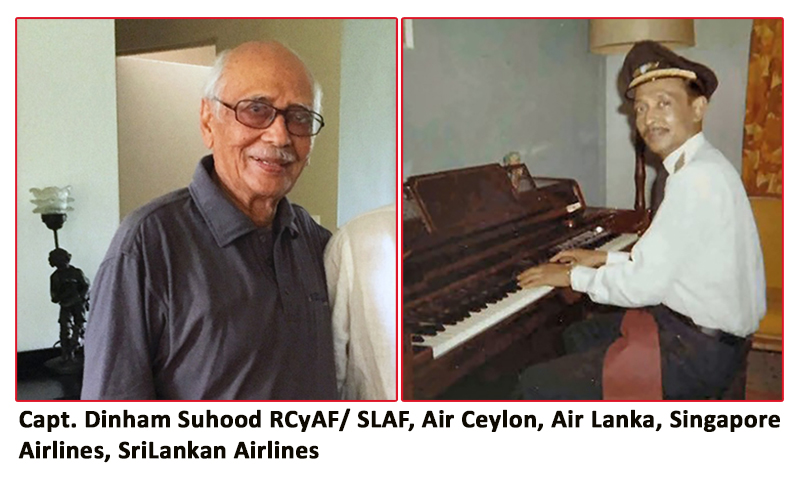
A few days ago, we heard the sad news of the passing on of Capt. Dinham Suhood. Born in 1929, he was the last surviving Air Ceylon Captain from the ‘old guard’.
He studied at St Joseph’s College, Colombo 10. He had his flying training in 1949 in Sydney, Australia and then joined Air Ceylon in late 1957. There he flew the DC3 (Dakota), HS748 (Avro), Nord 262 and the HS 121 (Trident).
I remember how he lent his large collection of ‘Airfix’ plastic aircraft models built to scale at S. Thomas’ College, exhibitions. That really inspired us schoolboys.
In 1971 he flew for a Singaporean Millionaire, a BAC One-Eleven and then later joined Air Siam where he flew Boeing B707 and the B747 before retiring and migrating to Australia in 1975.
Some of my captains had flown with him as First Officers. He was reputed to have been a true professional and always helpful to his colleagues.
He was an accomplished pianist and good dancer.
He passed on a few days short of his 97th birthday, after a brief illness.
May his soul rest in peace!
To fly west my friend is a test we must all take for a final check
Capt. Gihan A Fernando
RCyAF/ SLAF, Air Ceylon, Air Lanka, Singapore Airlines, SriLankan Airlines

The cause of global warming, they claim, is due to ever increasing levels of CO2. This is a by-product of burning fossil fuels like oil and gas, and of course coal. Environmentalists and other ‘green’ activists are worried about rising world atmospheric levels of CO2. Now they want to stop the whole world from burning fossil fuels, especially people who use cars powered by petrol and diesel oil, because burning petrol and oil are a major source of CO2 pollution. They are bringing forward the fateful day when oil and gas are scarce and can no longer be found and we have no choice but to travel by electricity-driven cars – or go by foot. They say we must save energy now, by walking and save the planet’s atmosphere.
THE DEMON COAL
But it is coal, above all, that is hated most by the ‘green’ lobby. It is coal that is first on their list for targeting above all the other fossil fuels. The eminently logical reason is that coal is the dirtiest polluter of all. In addition to adding CO2 to the atmosphere, it pollutes the air we breathe with fine particles of ash and poisonous chemicals which also make us ill. And some claim that coal-fired power stations produce more harmful radiation than an atomic reactor.
STOP THE COAL!
Halting the use of coal for generating electricity is a priority for them. It is an action high on the Green party list.
However, no-one talks of what we can use to fill the energy gap left by coal. Some experts publicly claim that unfortunately, energy from wind or solar panels, will not be enough and cannot satisfy our demand for instant power at all times of the day or night at a reasonable price.
THE ALTERNATIVES
It seems to be a taboo to talk about energy from nuclear power, but this is misguided. Going nuclear offers tried and tested alternatives to coal. The West has got generating energy from uranium down to a fine art, but it does involve some potentially dangerous problems, which are overcome by powerful engineering designs which then must be operated safely. But an additional factor when using URANIUM is that it produces long term radioactive waste. Relocating and storage of this waste is expensive and is a big problem.
Russia in November 2020, very kindly offered to help us with this continuous generating problem by offering standard Uranium modules for generating power. They offered to handle all aspects of the fuel cycle and its disposal. In hindsight this would have been an unbelievable bargain. It can be assumed that we could have also used Russian expertise in solving the power distribution flows throughout the grid.
THORIUM
But thankfully we are blessed with a second nuclear choice – that of the mildly radioactive THORIUM, a much cheaper and safer solution to our energy needs.
News last month (January 2026) told us of how China has built a container ship that can run on Thorium for ten years without refuelling. They must have solved the corrosion problem of the main fluoride mixing container walls. China has rare earths and can use AI computers to solve their metallurgical problems – fast!
Nevertheless, Russia can equally offer Sri Lanka Thorium- powered generating stations. Here the benefits are even more obviously evident. Thorium can be a quite cheap source of energy using locally mined material plus, so importantly, the radioactive waste remains dangerous for only a few hundred years, unlike uranium waste.
Because they are relatively small, only the size of a semi-detached house, such thorium generating stations can be located near the point of use, reducing the need for UNSIGHTLY towers and power grid distribution lines.
The design and supply of standard Thorium reactor machines may be more expensive but can be obtained from Russia itself, or China – our friends in our time of need.
Priyantha Hettige
The Island has recently published various articles on AI, and they are thought-provoking. This article is based on a paper I presented at a London University seminar, 22 years ago.
Will computers ever be intelligent? This question is controversial and crucial and, above all, difficult to answer. As a scientist and student of philosophy, how am I going to answer this question is a problem. In my opinion this cannot be purely a philosophical question. It involves science, especially the new branch of science called “The Artificial Intelligence”. I shall endeavour to answer this question cautiously.
Philosophers do not collect empirical evidence unlike scientists. They only use their own minds and try to figure out the way the world is. Empirical scientists collect data, repeat and predict the behaviour of matter and analyse them.
We can see that the question—”Will computers ever be intelligent?”—comes under the branch of philosophy known as Philosophy of Mind. Although philosophy of mind is a broad area, I am concentrating here mainly on the question of consciousness. Without consciousness there is no intelligence. While they often coincide in humans and animals, they can exist independently, especially in AI, which can be highly intelligent without being conscious.
AI and philosophers
It appears that Artificial Intelligence holds a special attraction for philosophers. I am not surprised about this as Al involves using computers to solve problems that seem to require human reasoning. Apart from solving complicated mathematical problems it can understand natural language. Computers do not “understand” human language in the human sense of comprehension; rather, they use Natural Language Processing (NLP) and machine learning to analyse patterns in data. Artificial Intelligence experts claim certain programmes can have the possibility of not only thinking like humans but also understanding concepts and becoming conscious.
The study of the possible intelligence of logical machines makes a wonderful test case for the debate between mind and brain. This debate has been going on for the last two and a half centuries. If material things, made up entirely of logical processes, can do exactly what the brain can, the question is whether the mind is material or immaterial.
Although the common belief is that philosophers think for the sake of thinking, it is not necessarily so. Early part of the 20th century brought about advances in logic and analytical philosophy in Britain. It was a philosopher (Ludwig Wittgenstein) who invented the truth table. This was a simple analytic tool useful in his early work. But this was absolutely essential to the conceptual basis of early computer science. Computer science and brain science have developed together and that is why the challenge of the thinking machine is so important for the philosophy of mind. My argument so far has been to justify how and why AI is important to philosophers and vice versa.
Looking at computers now, we can see that the more sophisticated the computer, the more it is able to emulate rather than stimulate our thought processes. Every time the neuroscientists discover the workings of the brain, they try to mimic brain activity with machines.
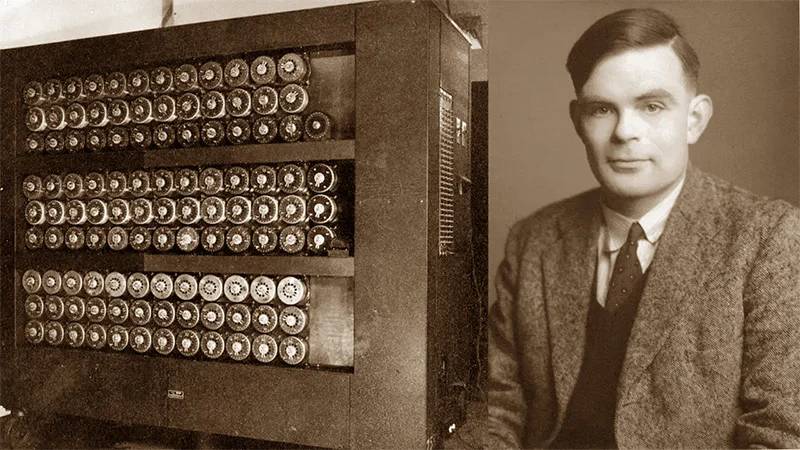
How can one tell if a computer is intelligent? We can ask it some questions or set a test and study its response and satisfy ourselves that there is some form of intelligence inside this box. Let us look at the famous Alan Turing Test. Imagine a person sitting at a terminal (A) typing questions. This terminal is connected to two other machines, (B) and (C). At terminal (B) sits another person (B) typing responses to the questions from person (A). (C) is not a human being, but a computer programmed to respond to the questions. If person (A) cannot tell the difference between person (B) and computer(C), then we can deduce that computer is as intelligent as person (B). Critics of this test think that there is nothing brilliant about it. As this is a pragmatic exercise and one need not have to define intelligence here. This must have amused the scientists and the philosophers in the early days of the computers. Nowadays, computers can do much more sophisticated work.
Chinese Room experiment
The other famous experiment is John Sealer’s Chinese room experiment. *He uses this experiment to debunk the idea that computers could be intelligent. For Searle, the mind and the brain are the same. But he warns us that we should not get carried away with the emulative success of the machines as mind contains an irreducible subjective quality. He claims that consciousness is a biological process. It is found in humans as well as in certain animals. It is interesting to note that he believes that the mind is entirely contained in the brain. And the empirical discovery of neural processes cannot be applied to outside the brain. He discards mind-body dualism and thinks that we cannot build a brain outside the body. More commonly, we believe the mind is totally in the brain, and all firing together and between, and what we call ‘thought’ comes from their multifarious collaboration.
Patricia and Paul Churchland are keen on neuroscientific methods rather than conventional psychology. They argue that the brain is really a processing machine in action. It is an amazing organ with a delicately organic structure. It is an example of a computer from the future and that at present we can only dream of approaching its processing speed. I think this is not something to be surprised about. The speed of the computer doubles every year and a half and in the distant future there will be machines computing faster than human beings. Further, the Churchlands’, strongly believe that through science one day we will replicate the human brain. To argue against this, I am putting forward the following true story.
I remember watching an Open University (London) education programme some years ago. A team of professors did an experiment on pavement hawkers in Bogota, Colombia. They were fruit sellers. The team bought a large number of miscellaneous items from these street vendors. This was repeated on a number of occasions. Within a few seconds, these vendors did mental calculations and came out with the amounts to be paid and the change was handed over equally fast. It was a success and repeatable and predictable. The team then took the sample population into a classroom situation and taught them basic arithmetic skills. After a few months of training they were given simple sums to do on selling fruit. Every one of them failed. These people had the brain structure that of ordinary human beings. They were skilled at their own jobs. But they could not be programmed to learn a set of rules. This poses the question whether we can create a perfect machine that will learn all the human transferable skills.
Computers and human brains excel at different tasks. For instance, a computer can remember things for an infinite amount of time. This is true as long as we don’t delete the computer files. Also, solving equations can be done in milliseconds. In my own experience when I was an undergraduate, I solved partial differential equations and it took me hours and a lot of paper. The present-day students have marvellous computer programmes for this. Let alone a mere student of mathematics, even a mathematical genius couldn’t rival computers in the above tasks. When it comes to languages, we can utter sentences of a completely foreign language after hearing it for the first time. Accents and slang can be decoded in our minds. Such algorithms, which we take for granted, will be very difficult for a computer.
I always maintain that there is more to intelligence than just being brilliant at quick thinking. A balanced human being to my mind is an intelligent person. An eccentric professor of Quantum Mechanics without feelings for life or people, cannot be considered an intelligent person. To people who may disagree with me, I shall give the benefit of the doubt and say most of the peoples’ intelligence is departmentalised. Intelligence is a total process.
Other limitations to AI
There are other limitations to artificial intelligence. The problems that existing computer programmes can handle are well-defined. There is a clear-cut way to decide whether a proposed solution is indeed the right one. In an algebraic equation, for example, the computer can check whether the variables and constants balance on both sides. But in contrast, many of the problems people face are ill-defined. As of yet, computer programmes do not define their own problems. It is not clear that computers will ever be able to do so in the way people do. Another crucial difference between humans and computers concerns “common sense”. An understanding of what is relevant and what is not. We possess it and computers don’t. The enormous amount of knowledge and experience about the world and its relevance to various problems computers are unlikely to have.
In this essay, I have attempted to discuss the merits and limitations of artificial intelligence, and by extension, computers. The evolution of the human brain has occurred over millennia, and creating a machine that truly matches human intelligence and is balanced in terms of emotions may be impossible or could take centuries
*The Chinese Room experiment, proposed by philosopher John Searle, challenges the idea that computers can truly “understand” language. Imagine a person locked in a room who does not know Chinese. They receive Chinese symbols through a slot and use an instruction manual to match them with other symbols to produce correct replies. To outsiders, it appears the person understands Chinese, but in reality, they are only following rules. Searle argues that similarly, a computer may process language convincingly without genuine understanding or consciousness.
by Sampath Anson Fernando

New Zealand and South Africa look ahead to Super Eights in low-pressure contest

Teacher recruitment examinations will be conducted in accordance with the relevant court decisions – PM

Low-pressure area is likely to form over the southeastern Bay of Bengal around 15th February

Kolkata the stage as England, Scotland resume auld rivalry

Showers will occur at times in the Central, Uva, Eastern, Northern and North-central provinces and in Hambantota district

Sajith points to irregularities in coal procurement deals

‘Dates have the highest sugar content to fight Coronavirus’

Sunday Island 27 December – Headlines

#SundayIsland 17th December – Headlines

Sunday Island – 28th March

Sunday Island Headlines – 21 March

Sunday Island – 21st February – Headlines
-

 Features6 days ago
My experience in turning around the Merchant Bank of Sri Lanka (MBSL) – Episode 3
-

 Business6 days ago
Remotely conducted Business Forum in Paris attracts reputed French companies
-

 Business6 days ago
Four runs, a thousand dreams: How a small-town school bowled its way into the record books
-

 Business6 days ago
ComBank and Hayleys Mobility redefine sustainable mobility with flexible leasing solutions
-

 Business3 days ago
Autodoc 360 relocates to reinforce commitment to premium auto care
-

 Midweek Review3 days ago
A question of national pride
-
 Opinion2 days ago
Will computers ever be intelligent?
-
 Midweek Review3 days ago
Theatre and Anthropocentrism in the age of Climate Emergency