
Latest News
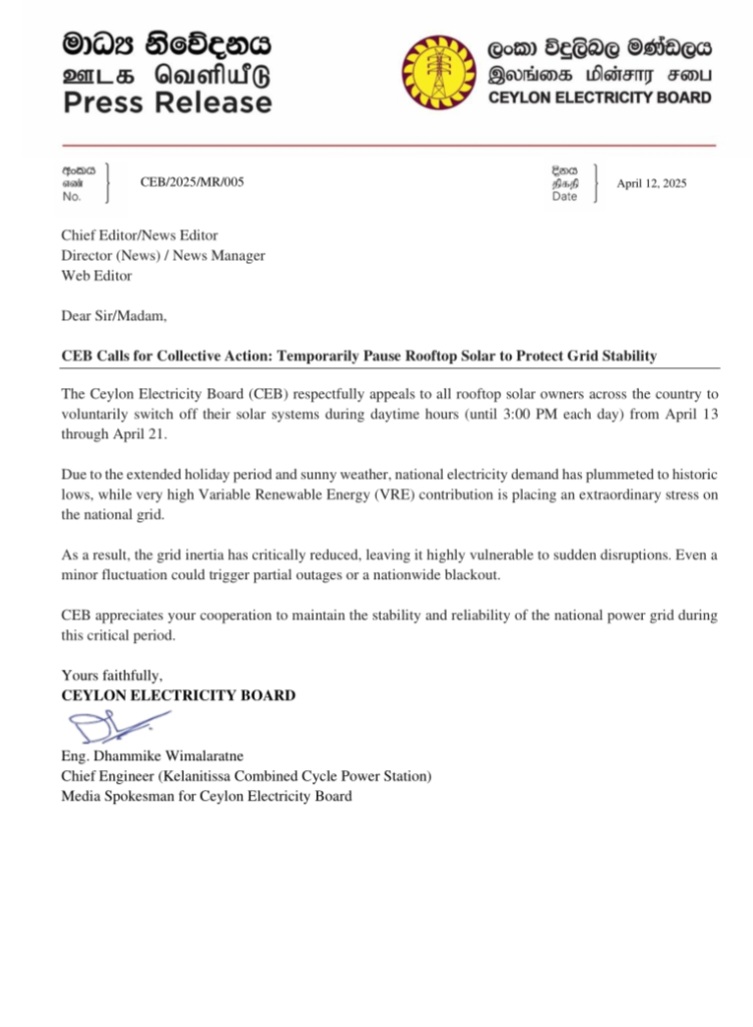
Temporally pause rooftop solar during day time from 13th to 21st April -CEB


The Ceylon Electricity Board has appealed to all rooftop solar owners across the country to voluntarily switch off their solar systems during day time hours (until 3pm each day) from April 13th to 21st to prevent partial power outages or nationwide blackouts which may occur.

Latest News
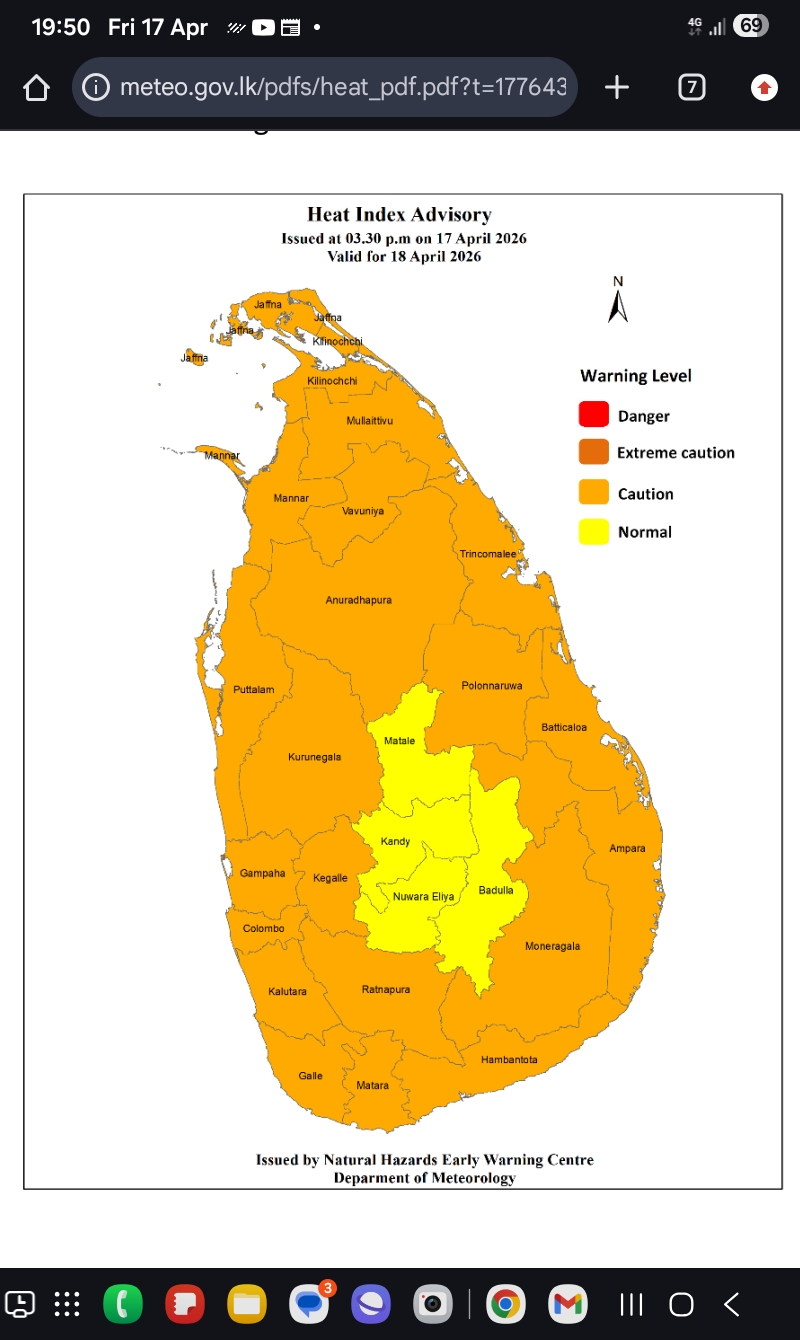
Heat Index at Caution Level in the Northern, North-central, North-western, Western, Sabaragamuwa, Eastern and Southern provinces and in Monaragala district
Warm Weather Advisory
Issued by the Natural Hazards Early Warning Centre
Issued at 3.30 p.m. on 17 April 2026, valid for 18 April 2026.
The Heat index, the temperature felt on human body is likely to increase up to ‘Caution level’ at some places in the Northern, North-central, North-western, Western, Sabaragamuwa, Eastern
and Southern provinces and in Monaragala district.
The Heat Index Forecast is calculated by using relative humidity and maximum temperature and this is the condition that is felt on your body. This is not the forecast of maximum temperature. It is generated by the Department of Meteorology for the next day period and prepared by using global numerical weather prediction model data.
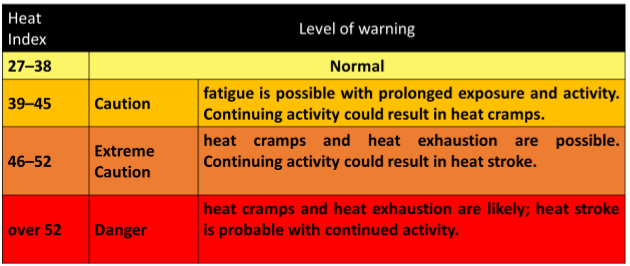
Effect of the heat index on human body is mentioned in the above table and it is prepared on the advice of the Ministry of Health and Indigenous Medical Services.
ACTION REQUIRED
Job sites: Stay hydrated and takes breaks in the shade as often as possible.
Indoors: Check up on the elderly and the sick.
Vehicles: Never leave children unattended.
Outdoors: Limit strenuous outdoor activities, find shade and stay hydrated.
Dress: Wear lightweight and white or light-colored clothing.
Note:
In addition, please refer to advisories issued by the Disaster Preparedness & Response Division, Ministry of Health in this regard as well. For further clarifications please contact 011-7446491.
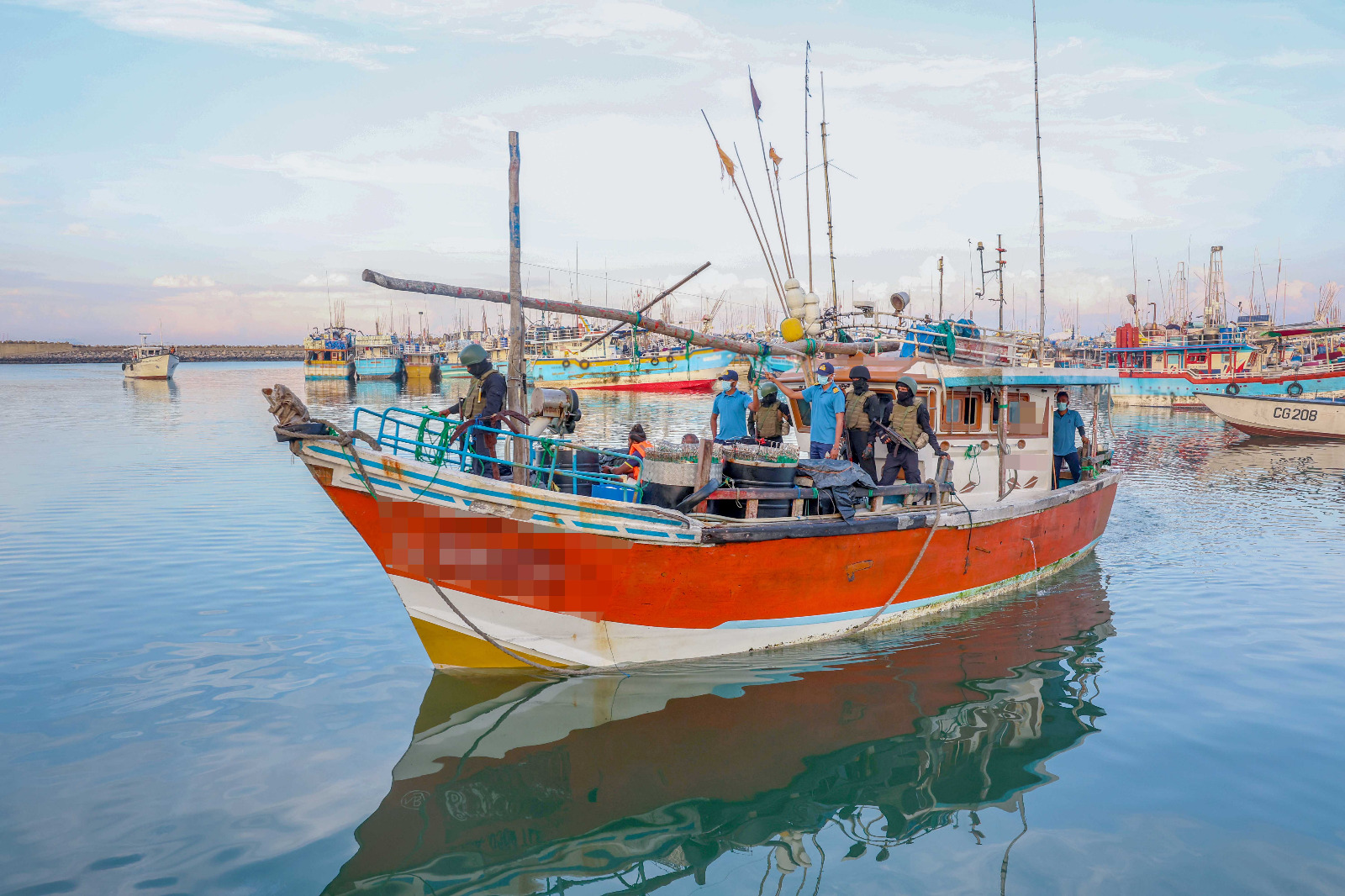
Being a key frontline stakeholder in the national mission, ‘A Nation United,’ the Navy continues to maintain a vigilant maritime shield to eradicate the drug menace from society.
During yet another successful operation on the high seas south of Sri Lanka, the Navy intercepted a local multi-day fishing trawler and apprehended four suspects in connection with the
smuggling of a stock of suspected narcotics.
The intercepted trawler, along with the suspects, was escorted to the Dikowita Fisheries Harbour today, (17 April 2026).
During a special inspection at the fisheries harbour, the Police Narcotic Bureau (PNB) confirmed the presence of over 161kg of heroin.
The Deputy Minister of Defence, Major General Aruna Jayasekera (Retd), and the Commander of the Navy, Vice Admiral Kanchana Banagoda, to inspect seized narcotics.
Addressing the media, the Deputy Minister emphasized that drug trafficking has long persisted as an organized and sophisticated criminal enterprise. He highlighted that under the current government’s national mission, ‘A Nation United,’ a robust state mechanism is now in motion, integrating the Tri-Forces, Police, Special Task Force, PNB, and international agencies to dismantle these networks.
Underscoring the Navy’s operational success, the Deputy Minister revealed that in 2025 alone, the Navy seized narcotics valued at over Rs. 75,000 million. In the first four months of 2026, the momentum has continued with nearly Rs. 50,000 million worth of drugs intercepted and produced for legal action.
During this short period, 14 local multi-day trawlers and 127 suspects have been apprehended. He issued a stern assurance that seized drugs would never find their way back into society, as they are systematically destroyed under strict protocols.
“Human capital is our nation’s most vital asset,” the Deputy Minister noted, adding that a healthy population leads to a quality workforce and a resilient economy. He further remarked that the vision of a “A Thriving Nation – A Beautiful Life”, extends beyond financial stability to include the dignity, discipline, and mindset of the citizenry.
“On the instructions of the President, new legislation is being drafted for Parliamentary approval to further empower this national mission and ensure a law-abiding, civilized society for future generations”, he stated.
Concluding the briefing, the Deputy Minister lauded the media for their role in drug prevention and urged continued responsible journalism to educate the public on the dangers of narcotics.
Meanwhile, the apprehended suspects, the multi-day trawler, and the 161kg heroin shipment were handed over to the Police Narcotic Bureau for onward investigation and legal proceedings.

Minister of Power and Energy Kumara Jayakody and Ministry Secretary Prof. Udayanga Hemapala have resigned from their respective positions today (17)

Showers expected in the Western, Sabaragamuwa and Southern provinces and in Nuwara-Eliya district after 1.00 pm.

Ex-lawmakers group calls for IPU’s intervention to check “irregularities” in Parliament

Power and Energy Minister, Ministry Secy resign over coal probe

President appoints Commission to probe irregularities in coal imports from inception of Norochcholai

Heroin haul transported on 50-million-rupee contract

Kongahage and another released on bail

‘Dates have the highest sugar content to fight Coronavirus’

Sunday Island 27 December – Headlines

#SundayIsland 17th December – Headlines

Sunday Island – 28th March

Sunday Island Headlines – 21 March

Sunday Island – 21st February – Headlines
-

 News6 days ago
CEB orders temporary shutdown of large rooftop solar systems
-
 Features6 days ago
From Royal College Platoon to National Cadet Corps: 145 years of discipline, leadership, and modern challenges
-
 Latest News6 days ago
PNS TAIMUR & ASLAT arrive in Colombo
-

 Features6 days ago
CIA’s hidden weapon in Iran
-
 Latest News5 days ago
Prasidh, Buttler set up comfortable win for Gujarat Titans
-

 News3 days ago
PNS TAIMUR & ASLAT set sail from Colombo
-

 Features6 days ago
A Fragile Ceasefire: Pakistan’s Glory and Israel’s Sabotage
-

 Latest News6 days ago
Heat index likely to increase up to ‘Caution level’ at some places in the Northern, North-central, North-western, Western, Sabaragamuwa, Southern and Eastern provinces and Monaragala district