
Sports
Team of the tournament: Mandhana, Wolvaardt, Gardner, Ecclestone and…?

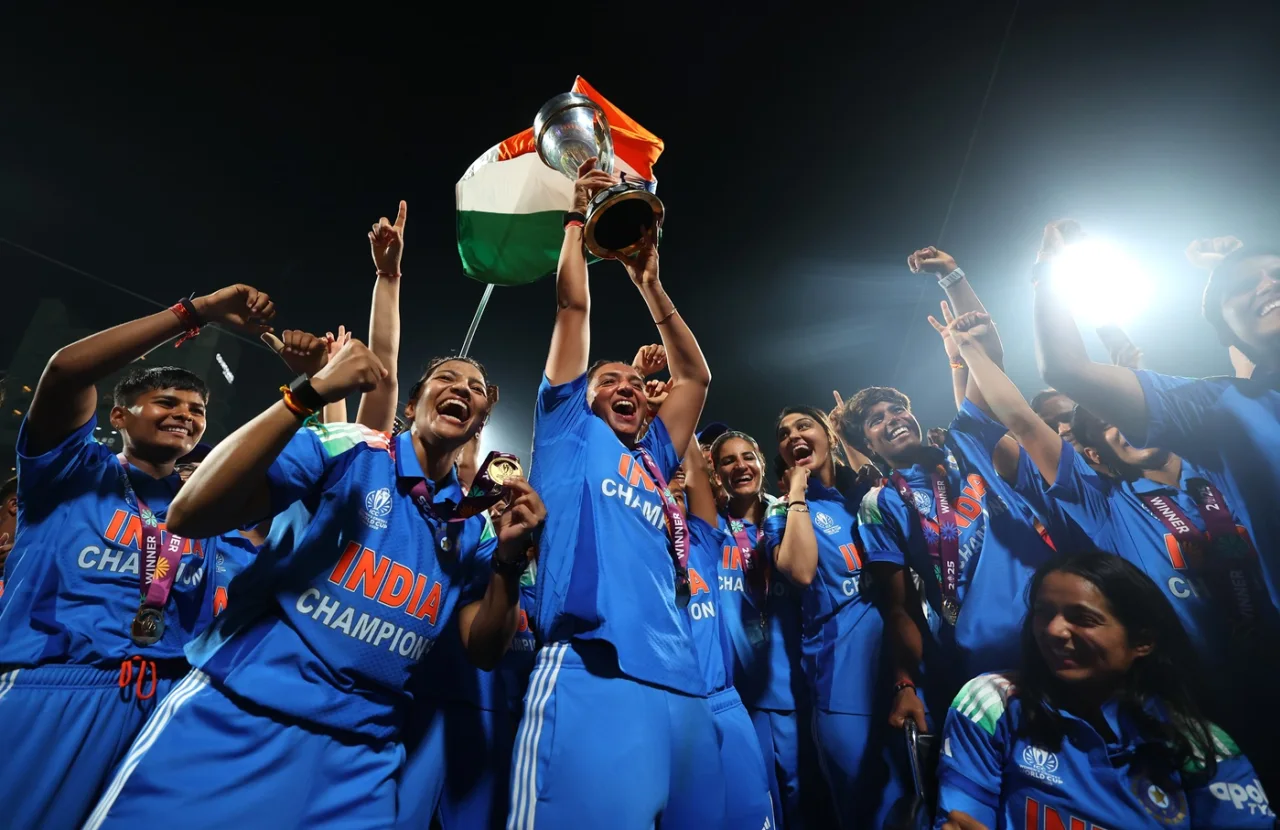
The Women’s World Cup 2025 drew to a close at the DY Patil Stadium in Navi Mumbai, where India upstaged South Africa to be crowned champions. This was one of the closest World Cups in recent times, and there were some tricky choices to make in ESPNcricinfo’s team of the tournament.
Runs 434 | Avg 54.25 | SR 99.08
So rich was Mandhana’s vein of form coming into the competition that a quiet start – 54 runs in the first three outings – had left viewers perplexed. But she dialled things up once the big games arrived: 80 versus Australia, 88 versus England, and 109 in the high-stakes clash against New Zealand. She added 45 in the final to finish with the highest tally for an Indian in a women’s World Cup.
Laura Wolvaardt (capt)
Runs 571 | Avg 71.37 | SR 98.78
Wolvaardt, too, had a slow start, but more than made up for lost time, scoring 30 or more in seven consecutive matches – including half-centuries in wins against India, Sri Lanka and Pakistan – and then hit centuries in both knockouts. Her 101 in the final versus India may have ended in a losing cause, but the 169 against England to take South Africa to their maiden ODI World Cup final will go down as one of the all-time great performances. Her tally is, by some distance, the highest at an edition of the ODI World Cup.
Jemimah Rodrigues
Runs 292 | Avg 58.40 | SR 101.03
Speaking of iffy beginnings… Rodrigues found herself on the bench three weeks into her maiden ODI World Cup, after two ducks and two 30s. She celebrated her return – and a promotion to No. 3 – with a sparkling 76 not out off 55 balls versus New Zealand, before the career-defining 127 not out to end Australia’s reign with a record chase in the semi-finals.
Marizanne Kapp
Runs 208 | SR 102.97 | Wickets 12 | ER 4.18
Continuing the trend of peaking at the right time was Kapp, whose first big contribution (aside from a chase-stabilising half-century against Bangladesh) came in the sixth game of the campaign: 68 not out off 43 balls followed by three new-ball wickets against Pakistan. She then demolished England’s hopes of chasing 320 in the semi-final with a double-strike in the first over, finishing with 5 for 20, having earlier chipped in with a 33-ball 42.
Annabel Sutherland
Runs 117 | SR 85.40 | Wickets 17 | ER 4.45
Sutherland’s consistent mastery at the death, fuelled by a lethal back-of-the-hand slower ball, meant she was the joint highest wicket taker before the final. She started with a three-for against New Zealand, triggered an Indian collapse with 5 for 40 in Visakhapatnam, and added another three versus England – a game where she also had her only significant outing with the bat.
Ashleigh Gardner
Runs 328 | SR 130.15 | Wickets 7 | ER 5.30
Prior to 2025, the World Cup had seen only three hundreds from batters coming in at No. 5 or lower; Gardner hit two in this edition, both stunning recovery acts. She turned 128 for 5 into 326 against New Zealand by smashing 115 off 83 balls, and then turned a tricky chase versus England into a cakewalk – Australia were 68 for 4 in pursuit of 245 – with 104* off 73. There was a fifty in the semis too, and she chipped in with the ball all along.
Richa Ghosh (wk)
Runs 235 | Avg 39.16 | SR 133.52 | Dismissals 4
Ghosh takes the wicketkeeping gloves in our team owing to her finishing prowess. She was the tournament’s fastest scorer as well as its highest six hitter. Her unbeaten 20-ball 35 pushed India closer to 250 against Pakistan in Colombo; she played cameos in both the games versus Australia, including a handy 16-ball 26 in the record semi-final chase; she added 34 off 24 in the title clash against South Africa, and her 94 off 77 against the same opponents was an early contender for the knock of the tournament…
Nadine de Klerk
Runs 208 | SR 131.64 | Wickets 9 | ER 5.30
… only to be upstaged by de Klerk later the same evening. De Klerk pulled off rescue acts twice in five days in Visakhapatnam: the 84* off 54 against India pulled off one of the tournament’s all-time great escapes, while the 37* off 29 versus Bangladesh averted one of the big upsets. De Klerk finished as this edition’s second-fastest scorer, and with the second-most sixes, while remaining a reliable presence with the ball, taking at least a wicket every time she was called on to bowl.
Deepti Sharma
Wickets 22 | ER 5.52 | Runs 215 | SR 90.33
Deepti’s tournament started with a fifty and a three-for, and ended with a fifty and a five-for – the first such achievement in any World Cup final, women’s or men’s. The leading wicket-taker of the tournament, Deepti became the first player to do the double of 200+ runs and 15+ wickets in an edition of the women’s ODI World Cup. The Player of the Tournament recipient also contributed a four-for and fifty in the loss to England, and injected vital momentum in the semi-final chase against Australia with a 17-ball 24.
Alana King
Wickets 13 | Avg 17.38 | ER 4.03
King delivered the spell of the tournament, claiming the first seven-for in World Cup history, to bamboozle South Africa in Indore. But don’t discount the rest of her tournament: two key wickets in the opener versus New Zealand, miserly returns against Bangladesh (2 for 18) and England (1 for 20), and the first fifty from a No. 10 in a women’s white-ball international to stitch a rescue act against Pakistan.
Sophie Ecclestone
Wickets 16 | Avg 14.25 | ER 4.05
Ecclestone began the tournament playing second fiddle to fellow slow left-arm spinner Linsey Smith’s hero act against South Africa, but finished as strongly as ever. She proved too strong for Bangladesh (3 for 24) and Sri Lanka (4 for 17), and despite tougher outings in Indore, and an injury scare ahead of the semi-final, she was England’s standout performer in the defeat to South Africa with 4 for 44.
12th: Sophie Devine
Runs 289 | Ave 57.80 | SR 85.25 | Wkts 4
In the final chapter of an illustrious ODI career, Devine was the lone star of New Zealand’s campaign, top-scoring in defeats to Australia (112) and South Africa (85), and scoring 63 in the win over Bangladesh. That meant Devine had 260 runs after three outings, but New Zealand didn’t bat for another two weeks, and Devine didn’t get a perfect swansong with low scores against India and England.
[Cricinfo]

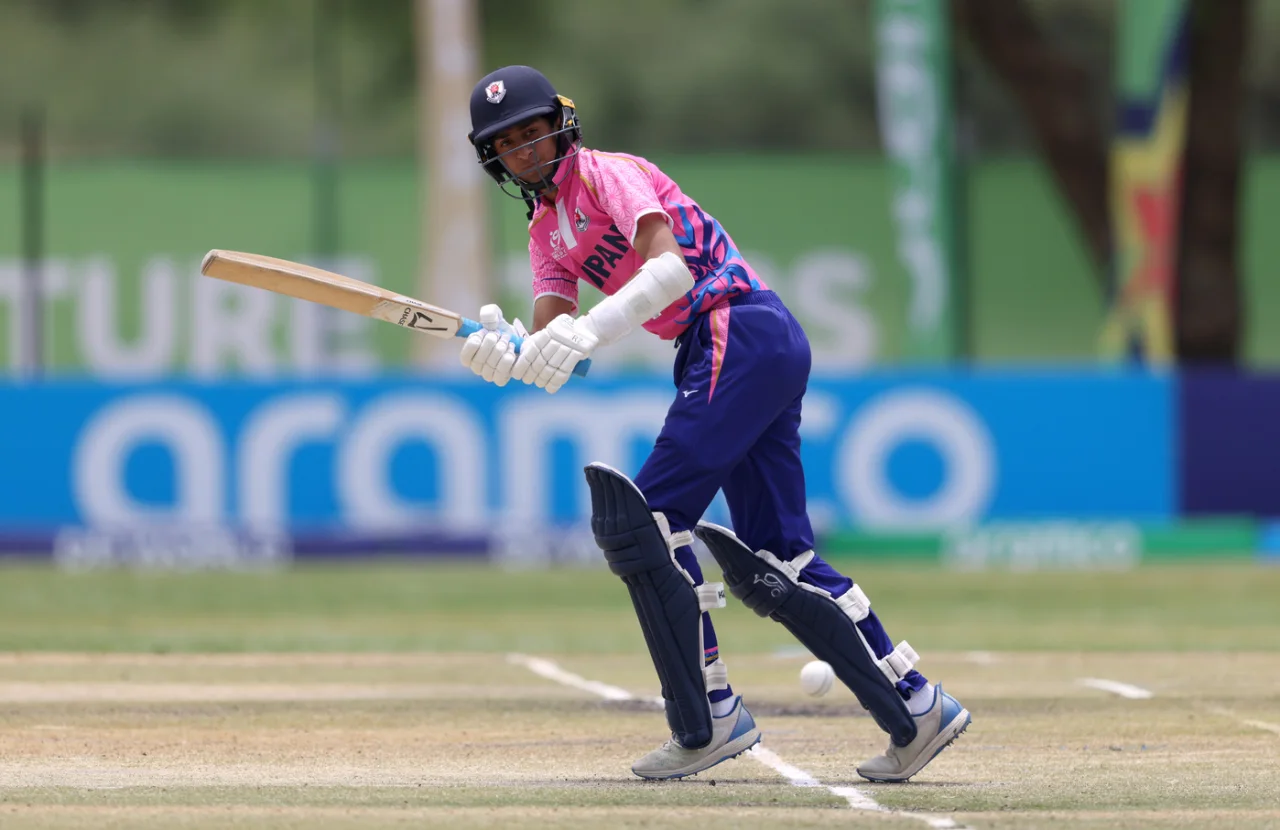
Tanzania 131 in 38.3 overs (Acrey Pascal 55; Nihar Parmar 4-30, Nikhil Pol 3-23) lost to Japan 136/1 in 28.2 overs (Nihar Parmar 53*, Taylor Waugh 47) by nine wickets
[Cricbuzz]
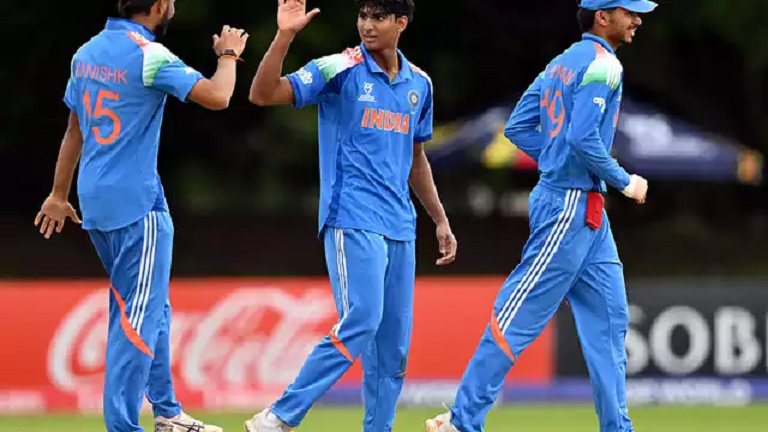
New Zealand 135 in 36.2 overs (RS Ambrish 4-29, Henil Patel 3-23) lost to India 130/3 in 13.3 overs (Vaibhav Suryavanshi 40, Ayush Mhatre 53) by 7 wickets [DLS Method]
[Cricbuzz]
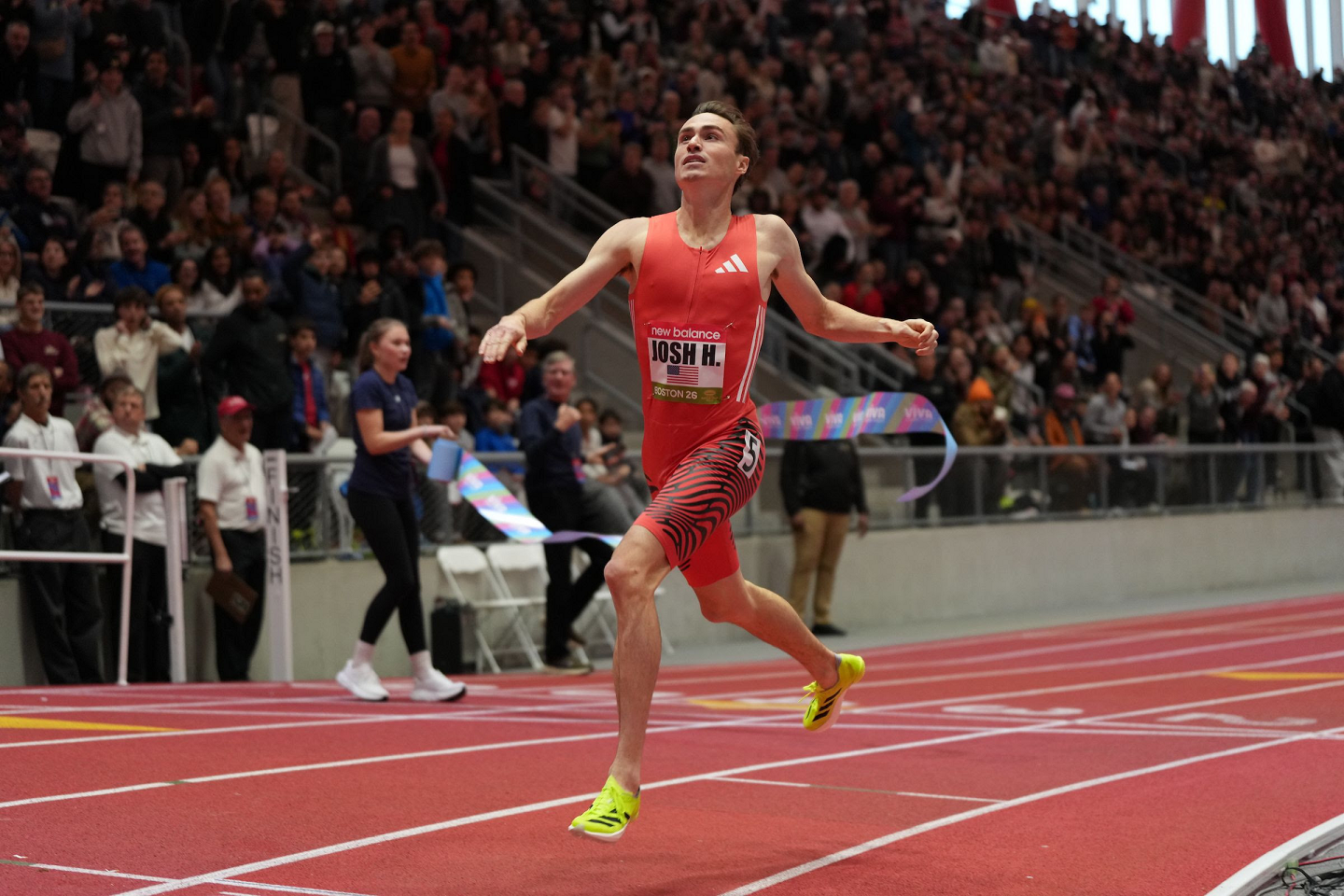
Josh Hoey had said he was excited to take a shot at the world 800m short track record in Boston and he was right on target as he clocked 1:42.50* to improve the 28-year-old mark at the New Balance Indoor Grand Prix – the first World Athletics Indoor Tour Gold meeting of the season – on Saturday (24).
Seven weeks on from setting a world 600m short track best, also in Boston, the US world indoor champion made more history as he took 0.17 off the world record of 1:42.67 set by Wilson Kipketer at the World Indoor Championships in Paris in 1997.
Hoey went into the race as the second-fastest indoor 800m runner of all time thanks to the North American record of 1:43.24 he ran at the US Indoor Championships in New York last year. But paced by his brother Jaxson, he leapt to the top of that all-time list, winning the race by more than two seconds.
Jaxson led his brother through the first 200m in 24.81 before 400m was reached in 50.21. Jaxson then stepped aside and Josh passed 600m in 1:16.19, holding on to cross the finish line in 1:42.50.
“We did a lot of pacing work,” said Josh, reflecting on his preparations for the race. “Just kind of kept steadily improving, taking it week by week, block by block, and we were able to make
this work.”
A world best had been set earlier in the programme, USA’s 2024 world indoor 1500m bronze medallist Hobbs Kessler clocking 4:48.79 to break the 2000m short track world best of 4:49.99 set by Kenenisa Bekele almost 19 years ago.
World short track 3000m record-holder Grant Fisher also dipped under the old world best, finishing second in 4:49.48.
[World Athletics]

Three arrested with narcotics valued at Rs123 million at BIA

Navy intercepts 02 narcotics-laden trawlers with 11 suspects in southern seas

Indonesian Naval Ship ‘KRI SULTAN ISKANDAR MUDA – 367’ departs island

U19 World Cup: Japan defeat Tanzania by nine wickets

U19 World Cup: Ambrish’s four-fer powers India to third straight win

Josh Hoey breaks world 800m short track record with 1:42.50 in Boston

‘Dates have the highest sugar content to fight Coronavirus’

Sunday Island 27 December – Headlines

#SundayIsland 17th December – Headlines

Sunday Island – 28th March

Sunday Island Headlines – 21 March

Sunday Island – 21st February – Headlines
-

 Features7 days ago
Extended mind thesis:A Buddhist perspective
-

 Opinion6 days ago
American rulers’ hatred for Venezuela and its leaders
-

 Business16 hours ago
ComBank advances ForwardTogether agenda with event on sustainable business transformation
-
 Business4 days ago
CORALL Conservation Trust Fund – a historic first for SL
-
 Opinion4 days ago
Remembering Cedric, who helped neutralise LTTE terrorism
-

 Opinion3 days ago
A puppet show?
-

 Opinion6 days ago
History of St. Sebastian’s National Shrine Kandana
-

 Features5 days ago
The middle-class money trap: Why looking rich keeps Sri Lankans poor