
Features
Tea Planter Turned Naturalist

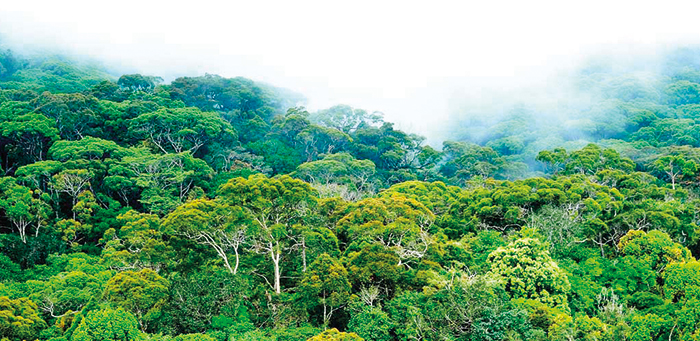
“The forest is a peculiar organism of unlimited kindness and benevolence that makes no demands for its sustenance and extend generously the products of its activity: it affords protection to all beings, offering shade even to the axeman who destroys it. “-Gautama Buddha-
Ever since reading these words as a boy and each time thereafter, the words meant more and more to me. Hence, I felt compelled to start reading Max Morgan Davies’ book From Ceylon to Sri Lanka-experiences of a naturalist tea planter. I started from the chapter titled “Sinharaja Rainforest” which is headed by the above quotation.
What I learnt from this reading greatly enhanced what I knew of this forest reserve from visits years ago. He wrote of some politicians in the 1970s who had commenced logging operation but was mercifully stopped in the nick of time by then Prime Minister J.R. Jayewardene (who became President by an amendment to the constitution in 1978) in 1977. Recent newspaper articles indicate that another set of these vandals destroyed this national treasure by constructing a five foot wide road and clearing a part of forest for tourist hotels.
Even Wilpattu has not been spared – a motorable road runs right through the reserve. These acts indicate the ignorance of these perpetrators of a national crime which calls for all persons in a position to do so “to play a role in the ongoing effort to save Sinharaja from new intrusions which threaten its existence as a unique biosphere area declared a World Heritage Site in 1984”. This was the situation in the mid 1970s.
What is equally disturbing is the loss of the country’s forest cover excluding the reserves. In 1992 it was 2,046,599 acres (A Guide to the National Parks of Sri Lanka – Department of Wildlife Conservation). By 2008, in just 16 years, it was decreased to 1,421,954 acres (Dept of Census and Statistics – obtained ever the telephone after a great deal of persuasion!). A 30% decease. If allowed to decline at this rate, by 2070 there will be no forest cover except in the sanctuaries and that too if allowed to exist undisturbed.
The book was lent my by a friend as he presumed I would have met the author who was a planter in the upcountry for about 10 years until he left for Tanganyika in 1959 to take up the position of assistant warden of a conservation area. Although I do not recall meeting him, his name came immediately to mind as every planter of a region, if he had not met another, knew him by name as the community was small and the Planters Clubs brought them together. I remember the author was an assistant in the Ury Group in the mid 1950s when I was in charge of the Tea Research Institute’s substation at Passara.
Morgan-Davies writes practically nothing about planting per se but writes briefly about his movement up the ladder professionally. Two things that drew my attention were that within three months of employment he was able to buy a BSA 350 motorbike and about three years later a Morris Minor Tourer. That was how salaries, particularly of mercantile executives, matched the costs of goods.
Today, or even earlier, an assistant superintendent in an estate, I guess, will have to save for almost a lifetime to buy a 1,500 cc Japanese car assuming that prices and salaries move as they do now. Shows how things have changed for the worse over the last 60 years in this country when our neighbors –India, Thailand, the Maldives, Malaysia, Singapore have progressed; India particularly with a population of over a billion.
I have digressed – carried away by a great sadness for all of us who could lead better lives and haven’t even hope of doing so, as things are, even though resources were and are available in plenty.
Although Morgan – Davies lived in this country for roughly 10 years and made visits in 2002, 2004, 2005, (periods of stay not indicated), he reveals an unmistakable love for the country, its jungles, and the simple people he associated with on his shoots by himself and hunting trips with others. During these outings he gathered a great deal about the customs, habits, history folk lore etc. Of wildlife he writes extensively and with authority.
There is an entire chapter on Sardiel’s fame/notoriety commencing with his birth in 1832 and death by hanging for murder on May 7, 1864. Of his schooling the author writes “and the so-called affluent class of village boys wearing shorts…..” If Sardiel was in school at five years of age in 1837, the British dress of short trousers would not have been adopted in remote Utuwankande in just about 22 years from the signing of the Kandyan convention in 1815. According to the author, Sardiel’s criminal record began with his stealing silverware from an army officer’s dining room in Colombo where he was employed as a young man. Even before, he was guilty of pilfering brinjals from a chena close to his home and was praised and encouraged by his mother for helping her. Hence petty crimes had grown to serious criminality as time went on.
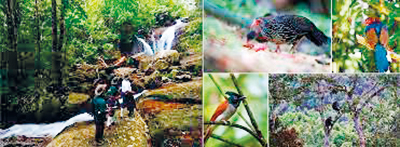
Of Ratnapura Morgan-Davies writes: “….The Kelani Valley was once not only lush tropical forest but home to extinct rhinoceros and hippopotamus and wild pig…..” Today thousands or millions of years later, Ratnapura has a New Town which looks like an abandoned town after the Law Courts finish for the day and the Old Town crowded with its architectural monstrosities of gem mudalalis’ houses and their shopping complexes.
The author writes about the Residency at Ratnapura which was until recently the official residence of the Government Agent of Sabaragamuwa and was occupied by Morgan-Davies senior in the 1940s. He mentions that the same premises were occupied by Ehelepola Maha Nilame during the rule of Sri Wickrama Rajasingha (1798-1815). My recollection of this sprawling bungalow and acres of lawn was when Mr. A.R. Ratnavale my teacher at Trinity, joined the then Ceylon Civil Service and was posted as GA, Sabaragamuwa Province. He held many other responsible positions and finally was our Ambassador to Germany.
Recollection – Law, Order, Discipline
In an advanced state of age one cannot often remember the name of a person whose face is very familiar or for that matter, sometimes, what was eaten at dinner the previous evening. A younger friend recently said that when asked for the registration number of his car, he had to take a look at it from his office window. Strangely however, some events, significant or not in school and thereafter going back decades, come readily to mind.
For instance Mr. P A Buultjens (a most outstanding cricketer in his day) claimed in his civics class in Form II in Trinity College that all man needs to live well were food, clothing and shelter. When then did education, health care, transport and other needs like security, human rights, entertainment come to be added to the list?
Some 40-odd years ago and before, parents could find places in schools of their choice for their children without scheming, planning teaching the little mites to lie before they could even pronounce their names properly. Every district had a government hospital, several government dispensaries and maternity homes. Every patient, whether rich or poor, was treated free of charge; quality medicines included.
If privacy was desired, hospital wards had cubicles and rooms with a variation in diet for which charges were levied. Plenty of medical practitioners were in the health service – competent, patient and caring. In those times there may have been just one or two private nursing homes in addition to such as the Joseph Frazer and Hatton Nursing Home, both managed by Trusts for the benefit of non-nationals living in the country.
The Ceylon Government Railway and many private bus companies provided the people’s needs of public transport. Hiring cars with distinguishing number plates of numerals in red catered to the richer passenger. In the eastern coastal areas and Jaffna, ferries conveyed passengers, vehicles and domestic animals across lagoons, rivers and shallows seas for nominal fees.
In Kandy the M Henry Bus Company operated within the town and its suburbs – Peradeniya, Katugastota, Ampitiya and Tennekumbura. The Silver Line Bus Company covered the Matale and Mahiyangana areas while the Madhyama Lanka Company served the upper Hill Country. These were well managed, buses ran to set timetables, passengers were issued tickets and given the correct change and treated like valued customers.
The Associated Newspapers of Ceylon Ltd transported its newspapers, with a limited number of passengers, in buses to the outstations leaving Lake House late at night carrying the day’s papers. The one and only incident connected with bus travel which I was subjected to and will never forget occurred in one of those buses to Kandy from Colombo. The bus was cruising at a steady 30 mph close to Nittambuwa, almost the whole road all to itself, hoodlights off, some passengers fast asleep, others dozing when suddenly a blood curdling yell came from a passenger in the middle of the bus.
The driver in his excitement or fear virtually stood on the brake pedal bringing the vehicle to a violent shuddering halt in the middle of the road throwing the half awake or sleeping passengers over their seats, under the seats and all over the narrow aisle. Some tried to squeeze themselves out when another full throated yell-Budhu Ammo, kava kava came from another direction. There was utter chaos with passengers searching frantically for physical injuries when at last the driver and conductor took charge of the situation bringing some order.
The two whose shouts caused all the mayhem were identified, questioned and the reptile they said bit them searched for. Soon a crab was found, then another and then a brown palm leaf bag with its mouth slightly open with crabs inside. The conductor, driver and bite victims and angry passengers were ready to draw blood and demanded the owner come forward. None did. Similar to the proceedings at an auction, the conductor called three times, but since no one was willing to face such a hostile crowd, he announced he would take the creatures home since his lamainge amma knew how to make a good crab curry to go with an arracku baage.
Barring such infrequent misadventures, bus and train travel in those days were uneventful with few complaints from passengers about overcrowding, delays, rudeness, being short-changed or pickpocketed. The situation now unfortunately is that almost daily we read of buses plunging down precipices due to mechanical failure in the bus or drunk driving; collisions with other vehicles or maiming or killing pedestrians; or if nothing else, work stoppages by bus crews when Traffic Police carry out their duties.
Accounts of train derailments, closure of whole sections of lines at short notice, ramming vehicles at unprotected level crossings for lack of even a bamboo across the road are common. Though rarely reported in newspapers, railway passengers complain of delays, dirty compartments, stench from toilets. Reading while travelling in a train is impractical due to severe jerks and conversation impossible due to the ear splitting noise of the running train- both due to years of neglect of tracks and trains.
Back to basics and attention to detail will correct these shortcomings which are comparatively inexpensive development projects which have far reaching benefits for almost everyone in the country who deserve better. We stretch out to tourists and build more and more accommodation for them. They too want a good public transport system to travel around at reasonable cost. A well coordinated road/rail service would be of immense benefit to locals and foreigners.
Why have standards of practically all services to the people of this country who contribute in one way or another to prop them up and pay their employees, declined so drastically over the last 50 odd years? I quote from a recent editorial in the Sunday Island to provide part of the answer. “By and large management of the state sector rather than the profit driven private sector proved less efficient and widened the field for political leadership to extend patronage to their supporters.
” Undoubtedly, private sector high-ups too did help their friends and relatives in companies they controlled but seldom at the expense of profit! It is well known that getting employment in the private sector was far easier than keeping the job. Efficiency, loyalty, excellent conduct were all a must if one was not to be the recipient of the dreaded pink slip.
To amplify that quote it could be added that discipline in its fullest sense in the national work force has broken down to alarming levels in the public sector and to a lesser degree in the private sector as well, in the last four or five decades. Those who should set examples are the large numbers of politicians we have. They could be the first to be placed in the dock. Many of these the country has produced since Independence are to be blamed, considering the influence on the people of this country they wield through their positions in society.
They fight tooth and nail, murder and injure their opponents and their supporters to ‘serve the people’ through Parliament, 18 Municipal Councils, 42 Urban Councils, 270 Pradeshiya Sabhas and the newer Provincial Councils. At the end of their period of office how many can truly claim to have made worthwhile contributions towards the improvement of any aspect of their voters lives.
In many instances of course, it is evident that they themselves acquired a great deal in terms of wealth in its many manifestations – girth around the middle being the most obvious and the absence of declarations of wealth or income tax returns. Reading a list of the obnoxious actions of some of these can spoil a good Sunday morning; hence suffice it say therefore they lack totally a sense of commitment and above all honour.
However, they carry on regardless and apparently thrive. So what better example for impressionable people, particularly the young? The shortest route to this kind of good life is first to tag onto a crooked politicians, then don a lily white national costume or the kapati kit, display a couple of gold rings, bracelets, an expensive mobile phone and talk with assumed authority on every conceivable topic – a lot of with promises thrown in which even they cannot dream of delivering.
A cabinet minister of several years ago, when the rot was being recognized and talked of said the cure was a little bit of totalitarian governance. Some agreed while others felt chills running down their spies. That government soon found itself in a sagrayak meda. Fortunately all is not finally lost. This country is blessed with decent, intelligent and sincere men and women in all walks of life and out of the political merry-go-round. They outnumber the scum but are as yet hardly audible and of course not listened to nor taken notice of by the swollen heads in power.



 Going forward, it is hoped that a reported ceasefire agreement between the US and Iran would provide a basis for a degree of stability in the Middle East and pave the way for substantive peace talks between the powers concerned. The world is compelled to fall back on hope because there is never knowing when President Donald Trump would change his mind and plans on matters of the first importance. So erratic has he been.
Yet, confusion abounds on who has agreed to what. The US President is on record that a number of conditions put forward by him to Iran to deescalate tensions have been accepted by the latter, whereas Iran is yet to state unambiguously that this is so. For instance, the US side claims that Iran has come clear on the point that it would not work towards acquiring a nuclear weapons capability, but there is no official confirmation by Iran that this is so. The same goes for the rest of the conditions.
Accordingly, the peace process between the US and Iran, if such a thing solidly exists, could be said to be mired in uncertainty. Nevertheless, the wider publics of the world are bound to welcome the prospects of some sort of ceasing of hostilities because it would have the effect of improving their economic and material well being which is today under a cloud.
However, questions of the first magnitude would continue to bedevil international politics and provide the breeding ground for continued tensions between East and West. Iran-US hostilities helped highlight some of these divisive issues and a deescalation of these tensions would not inevitably translate into even a temporary resolution of these questions. The world community would have no choice but to take them up and work towards comprehending them better and managing them more effectively.
For example, there are thorny questions arising from the Treaty on the Non-Proliferation of Nuclear Weapons (NPT). Essentially, this treaty bans the processing and use of nuclear weapons by states but some of the foremost powers are not signatories to it.
Moreover, the NPT does not provide for the destroying of nuclear arsenals by those signatory states which are already in possession of these WMDs. Consequently, there would be a glaring power imbalance between the latter nuclear-armed states and others which possess only conventional weapons.
Such a situation has grave implications for Iran’s security, for instance. The latter could argue, in view of the NPT restrictions, that the US poses a security threat to it but that it is debarred by the Treaty from developing a nuclear arms capability of its own to enable it to match the nuclear capability of the US. Moreover, its regional rival Israel is believed to possess a nuclear weapons capability.
Accordingly, a case could be made that the NPT is inherently unfair. The US would need to help resolve this vexatious matter going forward. But if it remains, US-Iran tensions would not prove easy to resolve. The same goes for Iran-Israeli tensions. Consequently, the Middle East would remain the proverbial ‘powder keg’.
Besides the above issues, the world has ample evidence that it could no longer speak in terms of a united NATO or West. Apparently, there could be no guarantee that US-NATO relations would remain untroubled in future, even if the current Iran-US standoff is peacefully resolved. US-NATO ties almost reached breaking point in the current crisis when the US President called on its NATO partners, particularly Britain, to help keep open the Hormuz Straits for easy navigation by commercial vessels, militarily, on seeing that such help was not forthcoming. Such questions are bound to remain sore points in intra-Western ties.
In other words, it would be imperative for the US’ NATO partners to help pull the US’ ‘chestnuts out of the fire’ going ahead. The question is, would NATO be willing to thus toe the US line even at the cost of its best interests.
For the West, these fractious issues are coming to the fore at a most unpropitious moment. The reality that could faze the West at present is the strong opposition shown to its efforts to bolster its power and influence by China and Russia. Right through the present crisis, the latter have stood by Iran, materially and morally. For instance, the most recent Security Council resolution spearheaded by the US which was strongly critical of Iran, was vetoed by China and Russia.
Accordingly, we have in the latter developments some marked polarities in international politics that could stand in the way of the West advancing its interests unchallenged. They point to progressively intensifying East-West tensions in international relations in the absence of consensuality.
It is only to be expected that given the substance of international politics that the West would be opposed by the East, read China and Russia, in any of the former’s efforts to advance its self interests unilaterally in ways that could be seen as illegitimate, but what is sorely needed at present is consensuality among the foremost powers if the world is to be ‘a less dangerous place to live in.’ Minus a focus on the latter, it would be a ‘no-win’ situation for all concerned.
It would be central to world stability for International Law to be upheld by all states and international actors. Military intervention by major powers in the internal affairs of other countries remains a principal cause of international mayhem. Both East and West are obliged to abide scrupulously with this principle.
From the latter viewpoint, not only did the West err in recent times, but the East did so as well. Iran, for instance, acted in gross violation of International Law when it attacked neighbouring Gulf states which are seen as US allies. Neither Iran nor the US-Israel combine have helped in advancing international law and order by thus taking the law into their own hands.
Unfortunately, the UN has been a passive spectator to these disruptive developments. It needs to play a more robust role in promoting world peace and in furthering consensual understanding among the principal powers in particular. The need is also urgent to advance UN reform and render the UN a vital instrument in furthering world peace. The East and West need to think alike and quickly on this urgent undertaking.
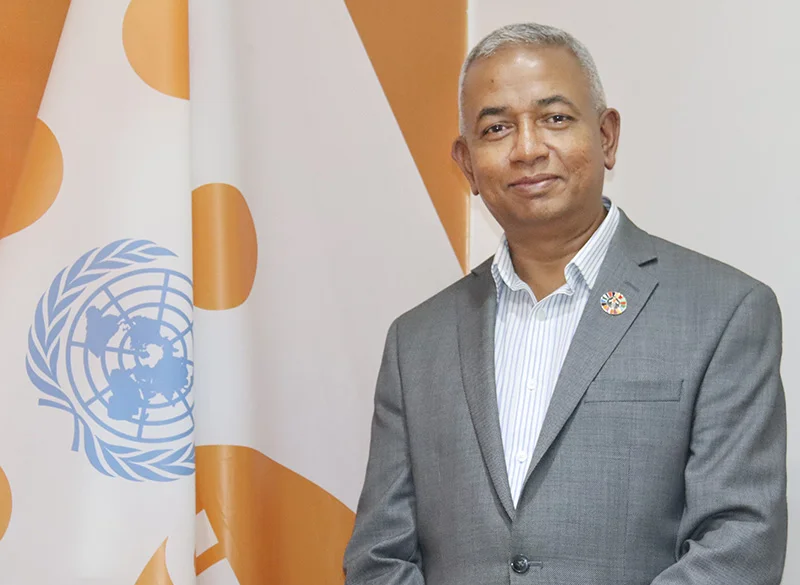
Marking World Health Day on April 7, health experts have called for a stronger commitment to science-based decision-making to address increasingly complex and evolving health challenges in Sri Lanka and beyond.
Dr. Dayanath Ranatunga, Assistant Representative of the United Nations Population Fund, stressed that health is no longer confined to hospitals or traditional medical systems, but is shaped by a broad spectrum of social, environmental, and technological factors.
“This year’s theme, ‘Together for Health. Stand with Science,’ reminds us that science is not only for laboratories or policymakers. It is a way of thinking and a tool that shapes everyday decisions,” he said.
Dr. Ranatunga noted that modern health challenges are increasingly interconnected, ranging from infectious diseases such as COVID-19 to climate-related risks, demographic shifts, and emerging forms of online violence.
He warned that maternal and newborn health continues to demand urgent attention despite progress. Globally, an estimated 260,000 women died from pregnancy and childbirth-related causes in 2023 alone—many of them preventable through timely, science-based interventions.
“In countries like Sri Lanka, where fertility rates are declining and survival rates improving, every pregnancy carries greater significance—not just for families, but for the future of communities and economies,” he said.
The UNFPA official also highlighted the growing threat of Technology Facilitated Gender-Based Violence (TFGBV), including cyber harassment and online abuse, noting that these forms of violence can have deep psychological consequences despite lacking visible physical harm.
He emphasised the need for multidisciplinary, science-informed approaches that integrate mental health, digital safety, and survivor-centered care.
Turning to demographic trends, Dr. Ranatunga pointed out that increasing life expectancy is bringing new challenges, particularly the rise of non-communicable diseases such as diabetes, cardiovascular illnesses, and cancers.
In Sri Lanka, nearly 13.9% of mothers develop diabetes during pregnancy, a trend attributed to obesity and unhealthy lifestyles, underscoring the urgent need for preventive healthcare strategies.
“Are we investing enough in prevention?” he asked, noting that early intervention and healthier lifestyles could significantly reduce long-term healthcare costs, especially in a country with a free public healthcare system.
He underscored the importance of data-driven policymaking, stating that scientific research and analytics enable governments to identify gaps, anticipate future needs, and allocate resources more effectively.
The UNFPA, he said, is already leveraging tools such as Geographic Information Systems (GIS) to improve access to maternal healthcare, including mapping travel times for pregnant women to reach health facilities.
Digital innovation is also transforming healthcare delivery, from telemedicine to real-time data systems, improving efficiency and ensuring continuity of care even during emergencies.
In Sri Lanka, partnerships between the government and development agencies are helping to modernise training institutions, including facilities in Batticaloa, equipping healthcare workers with both clinical and digital skills.
However, Dr. Ranatunga cautioned that technology alone is not a solution.
“It must be guided by evidence and grounded in equity,” he said, pointing out that women’s health remains significantly underfunded, with only about 7% of global healthcare research focusing on conditions specific to women.
He also drew attention to the growing health impacts of climate change, including extreme weather, food insecurity, and displacement, describing it as an emerging public health crisis.
“Health does not begin in hospitals. It is shaped by the environments we live in, the choices we make, and the systems we build,” he said.
Calling for renewed commitment, Dr. Ranatunga urged stakeholders to invest in prevention, embrace innovation, and ensure that science remains central to policy and practice.
“Science is not just about knowledge—it is about ensuring that everyone has the opportunity to live healthy, dignified lives, and that no one is left behind,” he added.
By Ifham Nizam

 Melantha Perera is well known as a very versatile musician.
He was involved with the band Mirage, as their keyboardist/vocalist, and was also seen in action with other outfits, as well, before embarking on a trip to Australia, as a solo artiste.
I now hear that he has plans to operate as a trio.
However, what has got many talking about Melantha, these days, is his awesome work with the visually impaired Bright Light Band.
They have worked out a special song for the Sinhala and Tamil New Year, aptly titled ‘Awurudu Kaale.’
Says Melantha: “This song has been created to celebrate the spirit of the Sinhala and Tamil New Year and to share the joy of the Awurudu season with all Sri Lankans”.
Yes, of course, Melantha composed the song, with the lyrics written collaboratively by Melantha, Badra, and the parents of the talented performers, whose creative input brought the song to life during moments of inspiration.
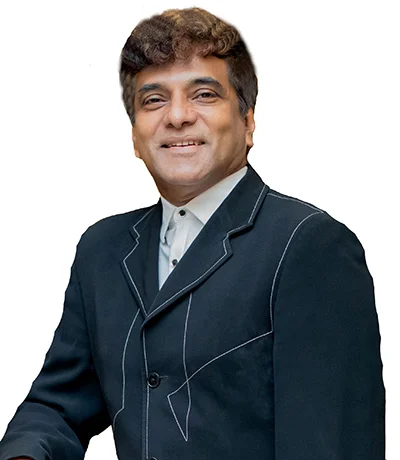
Melantha Perera: Awesome work with Bright Light Band
This meaningful collaboration reflects the strong community behind the Bright Light Band.
According to Melantha, accompaning the song is a vibrant video production that also features the involvement of the parents, highlighting unity, joy, and togetherness.
Beyond showcasing their musical talents, the visually impaired members of Bright Light Band deliver a powerful message, through this project, that their abilities extend beyond singing, as they also express themselves through movement and dance.
Melantha expressed his satisfaction with the outcome of the project and looks forward to sharing it with audiences across the country during this festive season.
He went on to say that Bright Light Band extends its sincere gratitude to Bcert Australia for their generous Mian sponsorship, the CEO of the company, Samath Fernando, for his continuous support in making such initiatives possible, and Rukshan Perera for his personal support and encouragement in bringing this project to completion.
The band also acknowledges Udara Fernando for his invaluable contribution, generously providing studio space and accommodating extended recording sessions to suit the children’s availability.
Appreciation is warmly extended to the parents, whose unwavering commitment from ensuring attendance at rehearsals to supporting the video production has been instrumental in the success of this project.
Through ‘Awurudu Kaale’, Bright Light Band hopes to spread festive cheer and inspire audiences, proving that passion and talent know no boundaries.

BCCI curbs movement of benched IPL players in latest rules

Prasidh trumps Miller in last-ball finish as Gujarat Titans clinch thriller

Greece to ban social media for under-15s from next year

Showers will occur at a few places in the Western, Sabaragamuwa and North-western provinces and in Galle, Matara, Kandy, Nuwara-Eliya and Mannar districts after 2.00 p.m.

Sun directly overhead Chilaw, Bingiriya, Halmillawewa, Panduwasnuwara, Gokarella, Kawudupelella, Koppaveli and Kirankulam about 12:12 noon. today (09)

Heat Index at Caution Level in the Western, Sabaragamuwa, Southern, Eastern, North-western, Northern and North-central provinces and in Monaragala district

‘Dates have the highest sugar content to fight Coronavirus’

Sunday Island 27 December – Headlines

#SundayIsland 17th December – Headlines

Sunday Island – 28th March

Sunday Island Headlines – 21 March

Sunday Island – 21st February – Headlines
-

 Features4 days ago
Ranjith Siyambalapitiya turns custodian of a rare living collection
-

 News4 days ago
Global ‘Walk for Peace’ to be held in Lanka
-

 News2 days ago
Lankan-origin actress Subashini found dead in India
-
 Opinion6 days ago
Hidden truth of Sri Lanka’s debt story: The untold narrative behind the report
-

 Features4 days ago
Beyond the Blue Skies: A Tribute to Captain Elmo Jayawardena
-

 Features4 days ago
Aspects of Ceylon/Sri Lanka Foreign Relations – 1948 to 1976
-
 Features6 days ago
The Ramadan War
-

 Editorial5 days ago
Brouhaha over a book