
News
Taking contradictory stand on 2015 Geneva Resolution


‘Govt. seeking credit for accountability mechanisms set up by previous administration’
UNHRC 48th sessions:
By Shamindra Ferdinando
Attorney-at-law Sudarshana Gunawardena has alleged that the government’s stand on accountability issues at the Geneva-based United Nations Human Rights Council is contradictory to its much publicised opposition to the Geneva Resolution 30/1 co-sponsored by the previous administration.
Sri Lanka co-sponsored 30/1, on Oct 1, 2015. The then Foreign Minister the late Mangala Samaraweera is on record as having said that the UNP-led government had President Maithripala Sirisena’s consent to go ahead with the co-sponsorship.
Former Prime Minister Ranil Wickremesinghe’s media spokesperson Gunawardena yesterday (17) pointed out that the government, at the ongoing 48th sessions of the UNHRC, has reiterated its commitment to key accountability mechanisms set up in terms of the Geneva Resolution.
Civil society activist Gunawardena, who also functioned as the Director General, Information Department during the previous administration said that the assurance given by Foreign Minister Prof. G.L. Peiris last Tuesday (14) should be examined against the backdrop of Sri Lanka’s withdrawal from 30/1 resolution.
Prof. Peiris’ predecessor, Dinesh Gunawardena announced Sri Lanka’s withdrawal at the Feb-March 2020 sessions.
The Sri Lanka Podujana Peramuna (SLPP) owed an explanation, Gunawardena stressed, urging the government to take the public into confidence. “Stop playing politics at the expense of our international relations,” Gunawardena said, underscoring the need for what he called a national consensus on the post-war reconciliation process.
Responding to another query, Gunawardena said that FM Prof. Peiris in his address to the Geneva sessions discussed the progress in what he described as a domestic process in respect of accountability issues. Reference was made to the Office on Missing Persons (OMP), the Office for Reparations (OR) and the Office for National Unity and Reconciliation (ONUR). However, the FM conveniently failed to acknowledge that the OMP, OR and ONUR had been established in keeping with the 2015 Geneva Resolution that covered broader understanding of transitional justice.
The SLPP, while taking credit for the ongoing transitional justice process, continued to publicly reject 30/1, the very basis of the solution, Gunawardena said. “In other words, the SLPP’s actions are very different from their pledges before the electorate in the run-up to presidential and parliamentary polls in 2019 and 2020, respectively.
Referring to the assurance given by Prof. Peiris at the UNHRC that Sri Lanka Human Rights Council was carrying on its mandate, Gunawardena challenged the government to prove its sincerity by allowing no holds barred investigation into SLPP lawmaker Lohan Ratwatte’s raids on Welikada and Anuradhapura prisons on Sept 6 and 12, respectively.
The announcement made by the HRCSL regarding its decision to initiate an inquiry of its own in the absence of police investigation received public attention and appreciation, Gunawardena said.
Commenting on the declaration that Sri Lanka was engaged in an integrated process to bring the Prevention of Terrorism Act (PTA) in line with international norms and best practices, lawyer Gunawardena urged the government to study the work done by the previous government in that regard. Referring to statements made by then Prime Minister Ranil Wickremesinghe in that regard, Gunawardena said that the then Joint
Opposition quite maliciously rejected the move. “They should be ashamed of theirconduct,” relevant ministers and the Attorney General Department couldn’t be unaware of the agreement on new anti-terrorism law.
Gunawardena said that the SLPP administration shouldn’t hesitate to appreciate the previous government’s achievements. “We are quite pleased that mechanisms accepted by the previous government continue to be in operation even though the progress seems slow. However, the SLPP cannot deprive the UNP-led administration of the credit it deserved,” lawyer Gunawardena said.
Gunawardena urged the government to examine the report of the Committee appointed by then Premier Wickremesinghe to develop what he called the policy and legal framework of the proposed Counter Terrorism Act of Sri Lanka. He said that a politically motivated campaign derailed that effort whereas the Opposition propagated the lie the yahapalana government intended to deprive Sri Lanka of anti-terrorism law.
Asked to comment on the revelation of the SLPP government having talks with a group of civil society activists to explore ways and means to strengthening the reconciliation process, Gunawardena said that a 13-page Foreign Ministry note dated Aug. 31, 2021 addressed to Colombo-based diplomatic missions acknowledged the pivotal role played by the civil society. Having always accused the civil society of being part of a Western strategy, the same lot exposed their duplicity by meeting a group of civil society activists.
Gunawardena was referring to President Gotabaya Rajapaksa and Ministers, Basil Rakapaksa, Prof. Peiris, Dinesh Gunawardena, Ali Sabry, PC, and Namal Rajapaksa having separate meetings with SLCC (Sri Lanka Collective for Consensus) in the run-up to the Geneva confab. SLCC comprises 16 individuals.
Gunawardena noted the Human Rights Commissioner Michelle Bachelet, too, in her hard-hitting Sept 13 statement on Sri Lanka referred to President Rajapaksa’s meeting with the SLCC.
Gunawardena said that in addition to the SLCC, another group styled itself as the Civil Society Platform (CSP) in a statement issued on Sept. 13 made its position clear on a range of accountability issues as well as stepped up pressure on the civil society. CSP consists of 30 organizations and 36 individuals.
Responding to declarations by FM Prof Peiris and Foreign Secretary Admiral Jayanath Colombage that external investigations wouldn’t be acceptable, lawyer Gunawardena said that instead of rejecting the investigation the government should furbish whatever information in its hands or had access to the new investigative mechanism. The government couldn’t ignore the fact that the UNHRC authorized the fresh investigative mechanism at the 46th session with an overwhelming majority with 22 countries voting for the resolution, 11 against and 14 missing the vote.
Gunawardena urged the government to take a realistic view as Sri Lanka didn’t have time and space to engage in silly maneuvers. The bottom line was that the March 2020 announcement that Sri Lanka withdrew from 30/1 was nothing but a farce, Gunawardena said.

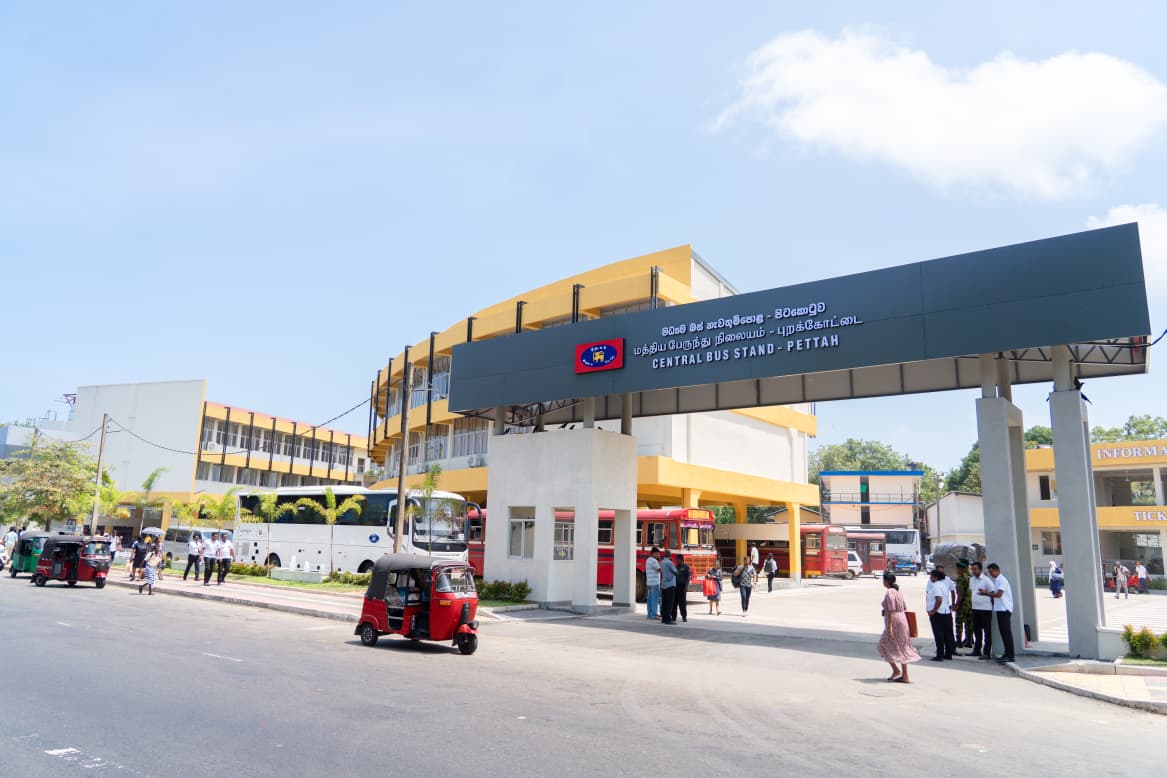
The Colombo Central Bus Stand, which has a history of over six decades and had remained without a proper maintenance for many years, has now been renovated under the current government’s development programme and vested to the public. Following that, the Prime Minister undertook an inspection tour of the newly renovated Colombo Central Bus Stand.
Originally constructed in 1964, the bus stand was refurbished with modern facilities to meet current needs and was officially reopened to the public on April 8. The primary objective of this initiative is to provide passengers with a higher-quality and more comfortable transportation service.
During the renovation process, special attention has been given to the comfort and safety of women, which was commended by the Prime Minister. In particular, a modern rest area designed to ensure privacy for nursing mothers travelling from distant areas received special praise.
The Prime Minister also reviewed the newly introduced passenger seat reservation system and information services established to assist commuters. In addition, the modern surveillance unit and other security measures installed within the premises to ensure passenger safety were also inspected.
During the visit, the Prime Minister engaged in conversations with passengers at the bus stand and inquired about their views on the newly renovated facilities and the quality of transport services.
It was emphasized that the government’s objective is to transform public transportation into a safe, technologically advanced service that can be used with convenience by all citizens.

(Prime Minister’s Media Division)
Latest News
Sun directly overhead Nagawilluwa, Galgamuwa, Sigiriya, Palugasdamana and Mankerni about 12:11 noon today (10)


On the apparent northward relative motion of the sun, it is going to be directly over the latitudes of Sri Lanka from the 05th to 15th of April in this year.
The nearest areas of Sri Lanka over which the sun is overhead today (10th) are Nagawilluwa, Galgamuwa, Sigiriya, Palugasdamana and Mankerni about 12:11 noon.

No-faith motion to be taken up today
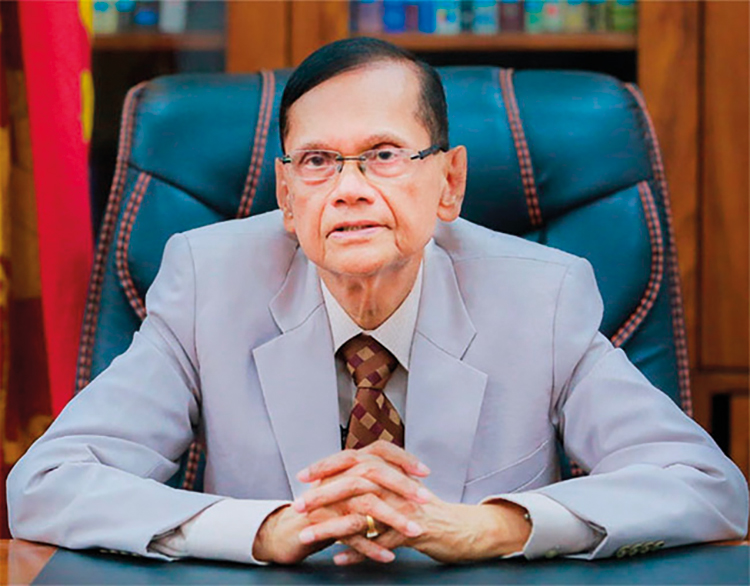
Former Foreign Minister Prof. G. L. Peiris yesterday (9) said that President Anura Kumara Dissanayake should remove Energy Minister Kumara Jayakody unless the minister stepped down on his own.Prof. Peiris, addressing a press conference called by the Opposition, said that Jayakody couldn’t under any circumstance continue to serve as a minister after the Commission to Investigate Allegations of Bribery or Corruption (CIABOC) moved the Colombo High Court against the government member over a previous financial scandal.
Pointing out that Minister Jayakody had been indicted of a corrupt deal struck during the yahapalana regime, Prof. Peiris said it was wrong for the NPP to retain him as a minister, claiming that the offence was not committed during his tenure as a Cabinet minister in the current government.
Prof. Peiris and several other Opposition members dealt with the No-Confidence Motion (NCM) against Jayakody that would be taken up today (10) with the academic calling the vote an acid test for the NPP. Having campaigned on an anti-corruption platform at presidential and parliamentary polls, the NPP couldn’t protect Jayakody though he was widely believed to be close to President Dissanayake.
As the Manager of the Procurement and Import Division of the Ceylon Fertilizer Company, Jayakody is alleged to have committed the offence of corruption, according to CIABOC.
Jayakody has been accused of causing a loss of Rs. 8,859,708 to the State by influencing and exploiting the procurement process.
Following the serving of indictments on 27 March, the judge ordered Jayakody’s release on two personal bail bonds of Rs. 1 million each. The court directed that the defendant’s fingerprints be obtained and a formal report be submitted. The case has been scheduled for a pre-trial conference on 6 May.
Prof. Peiris stressed that the CIABOC action against Jayakody is central to the NCM primarily moved over the irregularities ridden coal procurement process launched in 2025 that caused severe disruption to the power generation. Responding to The Island query after the media briefing, Prof Peiris expressed surprise that the JVP/NPP accommodated a person under investigation by the CIABOC. Having taken an utterly irresponsible decision, the JVP/NPP were now playing down the developing issue, prof. Peiris said.
The entire government parliamentary group faced the prospect of having its image tarnished by defending Jayakody, the former lawmaker said.
Prof. Peiris said that they intended to build a campaign around the issues involving the energy minister to expose the government. With yet another electricity tariff hike in the offing due to the growing demand for thermal generation as a result of coal-fired Lakvijaya power plant’s failure to meet the requirement[RA1] , the energy minister and ministry’s performances have to be examined, Prof. Peiris said.The timely release of the Auditor General’s report on controversial coal procurement should compel the government to decide on the energy minister’s fate or be prepared to face the fallout.
By Shamindra Ferdinando

Brazil bowler Laura Cardoso takes 9 Lesotho wickets in record-breaking T20 win

Zimbabwe Women set for maiden tour of Pakistan

Bangladesh advance match timings to save energy

PM on inspection tour of newly renovated Colombo Central Bus Stand

Israel to hold direct talks with Lebanon but no ceasefire, Netanyahu says

Sun directly overhead Nagawilluwa, Galgamuwa, Sigiriya, Palugasdamana and Mankerni about 12:11 noon today (10)

‘Dates have the highest sugar content to fight Coronavirus’

Sunday Island 27 December – Headlines

#SundayIsland 17th December – Headlines

Sunday Island – 28th March

Sunday Island Headlines – 21 March

Sunday Island – 21st February – Headlines
-

 Features6 days ago
Ranjith Siyambalapitiya turns custodian of a rare living collection
-

 News6 days ago
Global ‘Walk for Peace’ to be held in Lanka
-

 News4 days ago
Lankan-origin actress Subashini found dead in India
-

 News2 days ago
AG: Coal procurement full of irregularities
-

 Features6 days ago
Beyond the Blue Skies: A Tribute to Captain Elmo Jayawardena
-

 Features6 days ago
Aspects of Ceylon/Sri Lanka Foreign Relations – 1948 to 1976
-

 Business2 days ago
Hayleys Mobility introduces Premium OMODA C9 PHEV
-

 Sports2 days ago
DS to face St. Anthony’s in ‘Bridges of Brotherhood’ cricket encounter