
Business
Sustainable Development Council of Sri Lanka engages in current global discourses relating to Sustainable Development

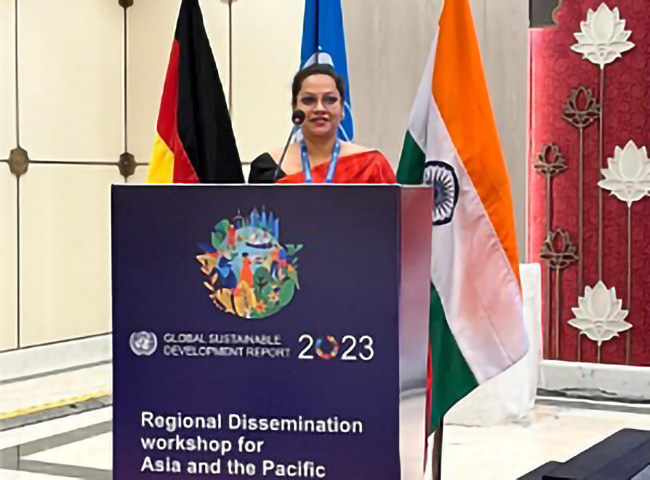
The 2023 Global Sustainable Development Report (GSDR 2023) – prepared by the Independent Group of Scientists (IGS) appointed by the United Nations Secretary General (representing both developed and developing countries) – arrived at the halfway point of the 2030 Agenda. It has reiterated that business-as-usual approaches to the Sustainable Development Goals (SDGs) must be replaced by transformative approaches operating at a systemic level that address multiple SDGs simultaneously.
The Report discusses essential transformations under six entry points to accelerate the progress on the SDGs. These are: 1) human well-being and capabilities, 2) sustainable and just economies, 3) food systems and healthy nutrition, 4) energy de-carbonization with universal access 5) urban and peri-urban development, and 6) the global environmental commons. The Report outlines the transformations required at each entry point at a country and regional level. It also identifies five levers that will drive transformation; 1) governance, 2) economy and finance, 3) science and technology, 4) individual and collective action, and 5) capacity building.
To complement the publication, the United Nations Department of Economic and Social Affairs (UNDESA), New York in partnership with the German Federal Ministry for the Environment, Nature Conservation, Nuclear Safety and Consumer Protection (BMUV) and the GIZ GmbH, convened a Regional Workshop for Asia and the Pacific in New Delhi. Held over 3 days from 22-24 October 2024, the workshop brought together policy makers, senior government officials and civil society to deepen knowledge of vital areas for sustainable development. The workshop was oriented around the 2023 GSDR Framework, its applicability to different contexts and to develop and platform national, local and regional sustainable development strategies.
Speaking during the High Level Closing of the Workshop, the Director General of the Sustainable Development Council (SDC), Chamindry Saparamadu, highlighted that while Sri Lanka has already commenced its transformative journey, the GSDR 2023 Framework is a useful resource to develop a greater capacity within Sri Lanka and strategically plan transformations underpinned by the vision of the SDGs. She noted that the SDC’s analysis of the government’s policy proposals found that 108 of 169 SDG targets are explicitly addressed in the policies outlined in the Policy Document titled “A Thriving Nation – A Beautiful Life”, while there are spillover effects on the other SDG targets. The Director General of SDC emphasized the importance of taking specific actions to breakdown, destabilize and phase out dominant unsustainable practices in parallel to specific actions taken to accelerate sustainable practices for transformative change. She also described the importance of proper assessments to monitor and evaluate the distributional effects of transformative actions on different social groups and communities.
Further, the 2024 Sustainable Development Transformation Forum (2024 SDTF) convened by the United Nations Office for Sustainable Development (UNOSD) from 29-31 October 2024 in Incheon, Korea focused on the application of the 2023 GSDR Framework for specific SDGs prioritized by the UN High Level Political Forum (HLPF) during 2025. These include SDG 3 (Good Health and Well-being), SDG 5 (Gender Equality), SDG 8 (Decent Work and Economic Growth), SDG 14 (Life Below Water), and SDG 17 (Partnerships for the Goals). The 2024 STDF facilitated peer learning through discussions on challenges, solutions, success stories, and lessons learned among a diverse group of participants, including policymakers, government officials, civil society representatives, local communities, youth, academia, and private sector leaders. This broad representation fostered inclusive dialogue and knowledge-sharing across sectors.
During the Roundtable Discussion on “Fuelling Future Green Growth – Competing Crises, the Demographic Dividend, and Decent Jobs,” Assistant Director of the Sustainable Development Council (SDC), Nadeeka Amarasinghe, highlighted key issues influencing Sri Lanka’s SDG progress. She discussed the implications of the demographic dividend, the role of women’s economic inclusion, the importance of creating decent jobs, and the impact of targeted investments on green growth and future well-being. Furthermore, the critical role of science and evidence-based policies in addressing these competing crises and mitigating future challenges was also emphasized.

Business
JAT Holdings celebrates the 6th Pintharu Abhiman Convocation, uplifting over 800 painters through NVQ certification

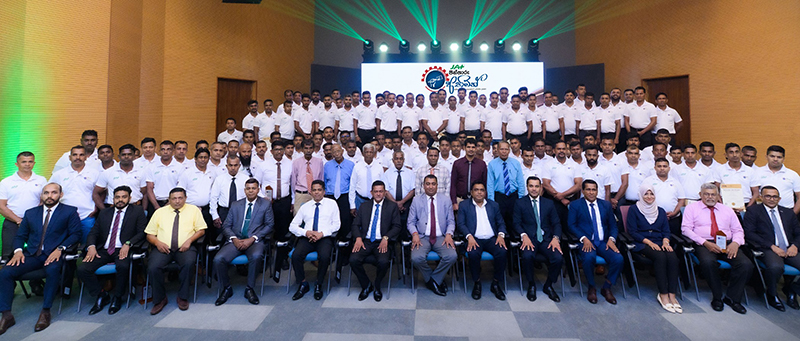
JAT Holdings PLC marked a significant milestone with the successful conclusion of the 6th JAT Pintharu Abhiman Convocation, recognising more than 800 painters who have earned their NVQ Level 3 qualification, an internationally recognised professional certification delivered in partnership with the National Apprentice and Industrial Training Authority (NAITA).
JAT Pintharu Abhiman was established to uplift Sri Lanka’s painter community through structured skills development, professional recognition and stronger earning potential. This year’s graduating cohort reflects the programme’s expanding reach and the tangible changes it continues to deliver for individuals, families and communities.JAT in collaboration with NAITA has streamlined the certification process such that what would traditionally take up to six months has been refined into an efficient and high-impact three-day assessment model. This approach ensures painters can obtain their qualification without sacrificing extended periods of work, while JAT fully absorbs the certification cost, removing financial barriers and enabling wider access to formal recognition.
Research conducted amongst NVQ qualified participants shows meaningful improvements in livelihoods, with 90 percent reporting increased personal confidence and 76 percent noting an improvement in their overall standard of living. This uplift demonstrates the long-term value of industry-aligned professional training.
A noteworthy moment at this year’s convocation was the recognition of four female painters who received their NVQ certifications. Their achievement marks an important step in broadening female participation in a field that has historically been male dominated, reinforcing JAT Holdings’ commitment to creating inclusive pathways for technical development and sustainable employment.
Speaking at the ceremony, Mr. Wasantha Gunaratne, Director Sales and Technical (South Asia) of JAT Holdings PLC, said:
“Pintharu Abhiman is fundamentally about development, giving painters the knowledge, structure and recognition they need to progress in their careers. By equipping over 800 painters with an internationally recognised NVQ qualification, we are not only strengthening the technical standards of the industry but also creating real pathways for entrepreneurship and financial independence. It is especially encouraging to see that one in five certified painters have already begun building their own businesses. These are the outcomes that matter because they show that when we invest in skills, we unlock opportunity. JAT remains committed to expanding these avenues so every painter has the chance to grow, lead and build a sustainable future.”
The 6th JAT Pintharu Abhiman Convocation underscores JAT’s continued dedication to uplifting the painter community, enhancing industry standards and supporting national skills development through accessible, professionally recognised qualifications.
The Ceylon Chamber of Commerce, together with the American Chamber of Commerce, Exporters Association of Sri Lanka, Federation of Renewable Energy Developers, Joint Apparel Association Forum, National Chamber of Commerce of Sri Lanka and Sri Lanka Association for Software and Services Companies, has submitted joint observations on the Draft National Electricity Policy, highlighting that several key issues have not been adequately addressed.
Whilst recognizing the need for reform in the electricity sector, the submission flags several gaps in the draft policy that require closer attention. Key areas such as affordability, decarbonisation commitments, incentives for renewable energy, competition, and the long-term financial health of the sector are either missing or not addressed in sufficient depth.
The proposed tariff revisions outlined in the draft energy policy raise concerns, particularly regarding the removal of cross-subsidies and the proposal to restrict subsidies exclusively to households consuming less than 30 kWh per month. Without detailed analysis, these measures could weaken access to sustainable and affordable energy and potentially lead to fiscal risks.
The provisions allowing uncompensated curtailment, removing feed-in tariffs, and imposing mandatory time-of-use tariffs on rooftop solar users could make renewable energy projects un-bankable for international lenders, thereby increasing the cost of capital for Sri Lanka.
Calling for a more future-focused approach, the submission stresses the need for a policy that reflects modern electricity systems, including planning for the energy transition, energy storage, market competition, cross-border electricity trading, and emerging technologies.
The Chambers and Associations request a comprehensive revision of the Draft National Electricity Policy, alignment with the Electricity Act, and resubmission following substantive consultation, and reiterate support to engage constructively with policymakers to shape a policy that supports affordability, investment confidence, and Sri Lanka’s long-term energy security.
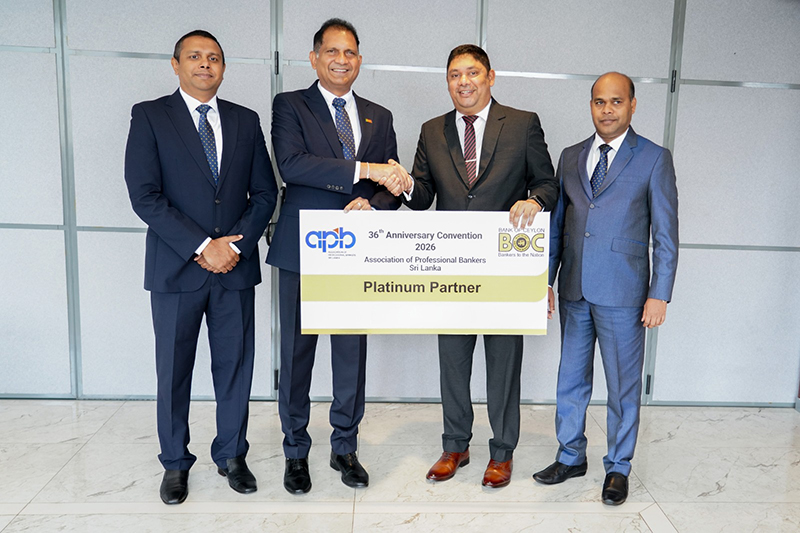
Bank of Ceylon (BOC) partnered with the 36th Annual Convention of the Association of Professional Bankers (APB) Sri Lanka, reaffirming its commitment to promoting professional excellence and knowledge sharing within the banking sector. The partnership was officially handed over by Sameera D. Liyanage, Chief Marketing Officer of Bank of Ceylon and M. R. N. Rohana Kumara, Deputy General Manager Business Revival Unit of Bank of Ceylon, reflecting BOC’s focus on empowering banking professionals and supporting the sustainable growth of Sri Lanka’s financial services industry.

National ThaiPongal Celebration held at Temple Trees.

U19 World Cup: Zimbabwe U-19 vs Scotland U-19: Match abandoned

U-19 World Cup: Francis, Bell, Andrew help West Indies thump Tanzania

U-19 World Cup: Henil, Kundu secure India’s first win

Deol, Tryon power Warriorz to first win of season

Fair weather will prevail in most parts of the island.

‘Dates have the highest sugar content to fight Coronavirus’

Sunday Island 27 December – Headlines

#SundayIsland 17th December – Headlines

Sunday Island – 28th March

Sunday Island Headlines – 21 March

Sunday Island – 21st February – Headlines
-

 Business1 day ago
Koaloo.Fi and Stredge forge strategic partnership to offer businesses sustainable supply chain solutions
-

 Business5 days ago
Dialog and UnionPay International Join Forces to Elevate Sri Lanka’s Digital Payment Landscape
-

 News5 days ago
Sajith: Ashoka Chakra replaces Dharmachakra in Buddhism textbook
-

 Features5 days ago
The Paradox of Trump Power: Contested Authoritarian at Home, Uncontested Bully Abroad
-

 Features5 days ago
Subject:Whatever happened to (my) three million dollars?
-
 Business1 day ago
SLT MOBITEL and Fintelex empower farmers with the launch of Yaya Agro App
-
 Business1 day ago
Hayleys Mobility unveils Premium Delivery Centre
-

 News5 days ago
Level I landslide early warnings issued to the Districts of Badulla, Kandy, Matale and Nuwara-Eliya extended