
Latest News
Suryakumar, Bumrah star in thrilling Mumbai Indians win

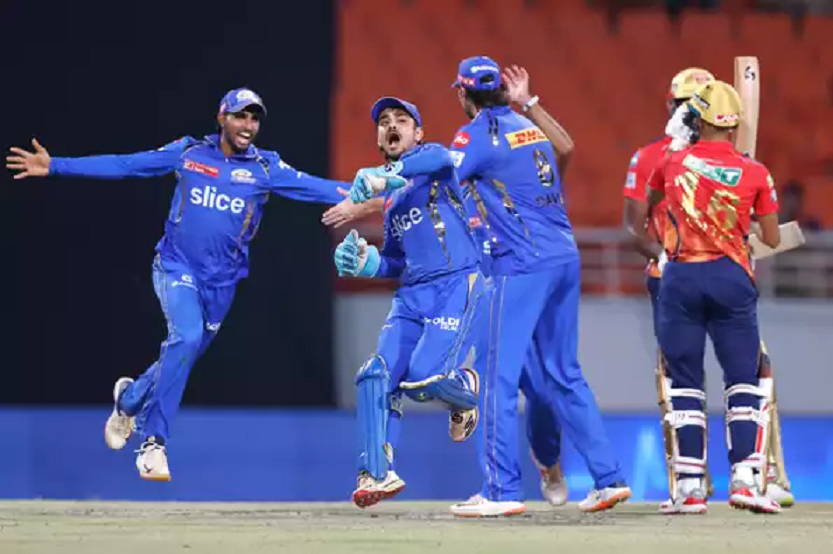
Punjab Kings fell on the wrong side of a third straight final-over thriller at their home ground in Mullanpur with Mumbai Indians edging home to a nine-run win for their third victory of the season to keep pace with the other playoffs chasers. The visitors appeared to be cruising to victory for large portions of the game before a sensational knock from Ashutosh Sharma (61 off 28) rocked their boat sidewards. But another impressive bowling performance from Jasprit Bumrah (3 for 21) enabled the visitors to hold their nerves and clinch victory, thereby ensuring Suryakumar Yadav’s excellent 78 off 53 didn’t go in vain.
That this was not a belter of a wicket, especially in the first innings, is ascertained by the fact that out of Suryakumar Yadav’s 17 scores of 75 or more in T20 cricket, this knock was the only one scored at a strike-rate under 160. But he was typically quick off the blocks after MI were put into bat, hitting Kagiso Rabada for two fours after coming out to play in the third over of the game. MI got to 54/1 at the end of the powerplay with Suryakumar reaching 22 off 15 balls.
At the halfway point of the innings, he was one short of a half-century having played three of his signature shots in the process: a whip behind the wicket for six off Rabada, a swept-four off Harpreet Brar that beat short-fine leg and deep square leg and an inside-out six over extra cover off Liam Livingstone. At the other end, after making a fast start, Rohit Sharma was starved off strike and made only 29 off his 20 balls at the 10-over mark.
Sam Curran, continuing to lead in Shikhar Dhawan’s absence, was proactive with his bowling changes and did not allow the MI batters to line up any one member of his attack. The PBKS skipper dismissed Rohit, who faced only 13 balls in the seven overs leading into the 12th, by getting the India captain to hit to point after a 25-ball 36. Curran, Rabada and Hapreet Brar also bowled three boundary-less overs before Tilak Varma ended a 22-ball drought with back-to-back boundaries off Arshdeep Singh. Suryakumar added a four of his own to make it a 15-run over and inject momentum back into the innings.
MI scored 62 runs off the final five overs against an older ball that didn’t always come on at an expected pace off the wicket. Eighteen of those 62 runs came in Rabada’s fourth over – the 16th of the innings – denting the South African’s figures after he had given away just 25 from his first three. In that over, Suryakumar overturned an LBW decision against him and then proceeded to hit the pacer for a four over extra cover before flicking a full-toss over fine-leg for six. Tilak rounded that over with a pulled six over mid-wicket.
Once Curran dismissed Suryakumar in the 17th over, Tilak took over the baton to give the team a finishing kick. He finished unbeaten on an 18-ball 34 while Tim David added 14 off 7 balls including two fours and a six off Curran’s final over. Harshal Patel produced an impressive final over, dismissing David and Romario Shepherd with slower into-the-wicket balls. Only eight runs came from that over and even though MI fell short of the 200-mark, the 192 they got was more than any team had managed at Mullanpur and it showed.
PBKS made the decision to drop the under-performing Jonny Bairstow and bring in big-money recruit Rilee Rossouw into their XI. It was a move that didn’t work as Bumrah quickly set the cat among the pigeons in the second innings. Curran opted to bring himself up to open the order but saw his partner, Prabhsimran Singh, fall attempting a pull off Gerald Coetzee but only managed to glove the ball to the ‘keeper.
That brought Rossouw to the middle and he was a recipient of an inswinging yorker from Bumrah that laid waste to his stumps. Bumrah added another wicket, via DRS, when he had the PBKS skipper tickle a leg-stump ball to the ‘keeper. PBKS lost a fourth wicket in the 13th ball of the innings when Liam Livingstone’s attempted pull to a pacy delivery from Coetzee popped right back to the bowler. At the end of six overs, PBKS were 40/4 and effectively out of the contest.
All hope seemed lost when Ashutosh joined Shashank Singh in the 10th over with the scoreboard reading 77/6. The pair added 34 runs in 3.5 overs but even so, Mumbai Indians seemed one wicket away from sealing the deal. Bumrah, brought back for one of his overs in the middle, struck with a wicked slower ball first up that Shashank was too early into and lofted a simple catch to mid-wicket. Ashuthosh, though, wasn’t done and made his intentions clear with an audacious sweep off an attempted Bumrah yorker for a six.
Ashutosh hit seven sixes in all, five of them in the region between deep square leg and fine-leg, effortlessly maneuvering balls directed towards his body in that quadrant of the field. It forced MI’s bowlers into panic mode as they packed their legside but a full toss still allowed Ashutosh to put the ball away.
With five overs to go, Punjab needed 52 to win and then the 16th over sent down by Akash Madhwal turned the game on its head. His round the wicket angle to Ashutosh didn’t work as the batter made room and lofted a six over long off. That it was a no-ball allowed Ashutosh to take another risk off the ensuing free-hit and this time he pulled out the reverse-scoop over third man for another six. The over ended with Harpreet Brar pumping another six straight down the ground to make it a 24-run over. That brought the equation down to a very gettable 28 off 24.
MI’s chances distilled down to what Bumrah could do in his final over. PBKS didn’t need to take any risks against him and casually got away by taking just three runs off the master bowler. Hardik Pandya, now front-loading his best bowlers, then bowled Coetzee. The South African struck the biggest blow of the night when he had Ashutosh hitting to the deep mid-wicket fielder towards the longer side of the ground. Ashutosh’s dismissal for a 28-ball 61 turned the pendulum once more in MI’s direction as Coetzee’s over produced just two runs. Hardik brought himself on to bowl the 19th over and gave away just four runs from his first four balls and added the wicket off Brar, but then No.11 Kagiso Rabada walked out and pulled the first ball for six to give PBKS 12 to chase off the final over.
Unfortunately for PBKS, Rabada’s attempts to run two at the start of the final over turned fateful as an accurate throw from the deep caught him short and left PBKS on the wrong side of yet another close game.
Punjab Kings will host the Gujarat Titans on Sunday in their last game of the season at Mullanpur. Mumbai Indians have the weekend off before they head to Jaipur and take on the table-toppers Rajasthan Royals on Monday.
Brief scores:
Mumbai Indians 192/7 in 20 overs (Suryakumar Yadav 78, Rohit Sharma 36; Harshal Patel 3-31) beat Punjab Kings 183 in 19.1 overs (Ashutosh Kumar 61, Shashank Singh 41; Jasprit Bumrah 3-21, Gerald Coetzee 3-32) by 9 runs.








Latest News
Showers above 100 mm are likely at some places in the Western, Sabaragamuwa, Central, Uva and Southern provinces and in Anuradhapura district

WEATHER FORECAST FOR 08 OCTOBER 2026
Issued at 05.30 a.m. on 08 October 2026 by the Department of Meteorology
Misty conditions can be expected at some places in the Western, Sabaragamuwa, Central and Uva provinces and in Galle and Matara districts during the early hours of the morning.
Showers or thundershowers will occur in the most part of the island after 1.00 p.m. Heavy showers above 100 mm are likely at some places in Western, Sabaragamuwa, Central, Uva and Southern provinces and in Anuradhapura district.
The general public is kindly requested to take adequate precautions to minimize damage caused by temporary localized strong winds and lightning during thundershowers.

Former first lady Shiranthi Rajapaksa, wife of former President Mahinda Rajapaksa was produced before the Hulftsdorp court, after being arrested by officers of the Commission to Investigate Allegations of Bribery or Corruption (CIABOC) and produce
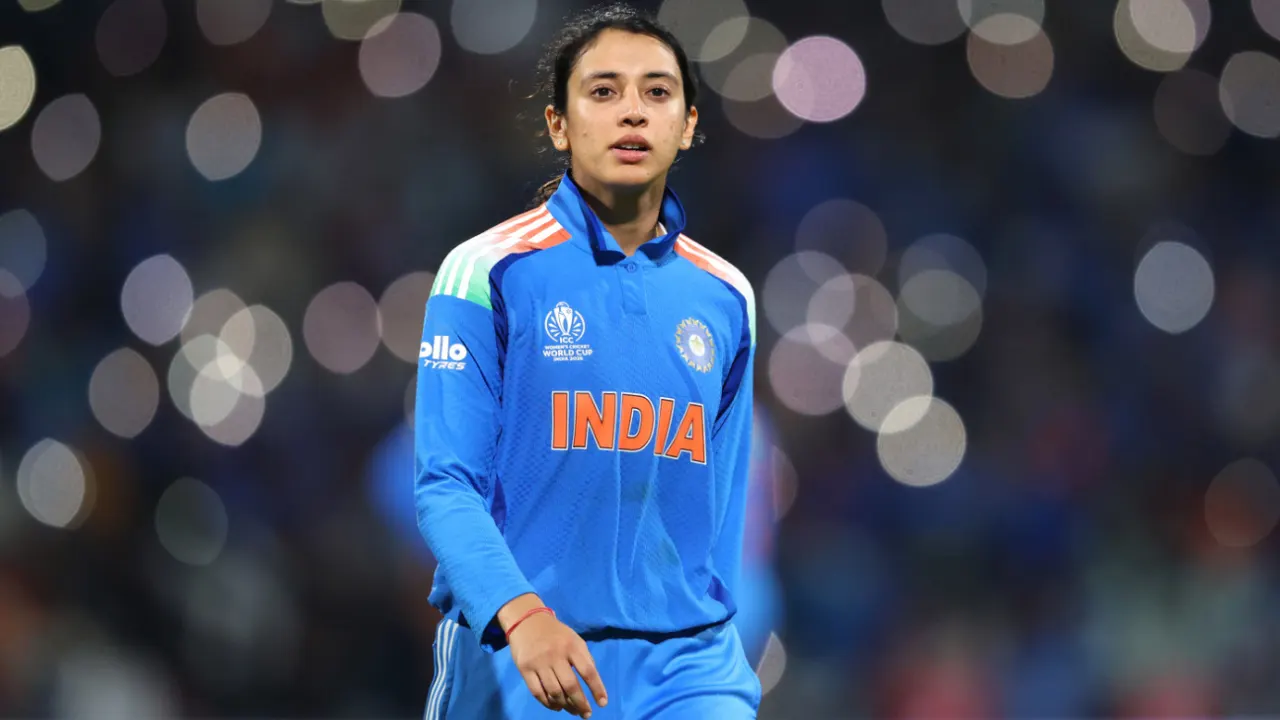
Smriti Mandhana has been named India’s all-format women’s captain on the same day Harmanpreet Kaur stepped down from the role after nearly a decade since she first took over.
Mandhana – vice-captain to Harmanpreet for much of this period – has previously led India in four ODIs and 18 T20Is, apart from captaining Maharashtra in domestic cricket and Royal Challengers Bengaluru in the Women’s Premier League.
Mandhana’s first assignment will be the limited-overs series against Zimbabwe beginning with the three T20Is in Raipur from October 16. On Tuesday, Mandhana was part of the selection meeting chaired by Amita Sharma to pick the squad for the tour.
Terming the appointment a “special honour”, Mandhana also acknowledged the contributions of her predecessor in her welcome note.
“I would also like to acknowledge Harmanpreet and the contribution she has made as captain over the years,” she was quoted as saying by the BCCI. “She has led the team with great commitment and has been an important part of our journey.
“I understand the responsibility that comes with this role and look forward to working with the team, learning along the way and giving my best to take Indian cricket forward.”
Mandhana’s appointment comes on the back of a review meeting held on Monday in Guwahati. Chaired by secretary Devajit Saikia, the meeting was also attended by Mandhana, Harmanpreet and head coach Amol Muzumdar to chart a roadmap forward, with an eye on next year’s inaugural Women’s Champions Trophy in February as well as the T20 World Cup and Los Angeles Olympics in 2028.
Mandhana, India’s best all-format batter, has been knocking on the doors for a while. Earlier this year, she led RCB to their second WPL title, in which she also top-scored in the final.
In September, she overtook Mithali Raj to become the leading run-scorer in women’s international across formats. Her 18 international hundreds are also the most in women’s cricket. She is also the first Indian woman to score centuries in all formats.
[Cricinfo]

USD 57.4m power investment opens new route for SME energy savings

COPE: Oil issue and ‘slippery’ answers

Montana Governor here to strengthen agricultural trade and security cooperation

Lankan on Saudi death row: AI throws its weight behind to secure Anojan’s release

Why Sri Lankan sports need science, sanity, and substance

R. S. (Siri) Palihawadana

‘Dates have the highest sugar content to fight Coronavirus’

Sunday Island 27 December – Headlines

#SundayIsland 17th December – Headlines

Sunday Island – 28th March

Sunday Island Headlines – 21 March

Sunday Island – 21st February – Headlines
-
 Editorial7 days ago
Colombo Port drug bust: The plot thickens
-

 Features5 days ago
The first woman in the foreign service or Ceylon Overseas Service it was then called
-

 Editorial6 days ago
Fuelling discontent and protest
-

 News4 days ago
Geneva takes up Sallay’s case and govt. ignores opportunity to answer accusations
-

 Foreign News6 days ago
Ten injured after car crashes into rugby supporters in Australia
-

 Latest News6 days ago
Tharindu Rathnayake, bowlers secure Asian Games Bronze for Sri Lanka
-

 News5 days ago
Nearly 20 Iranian tankers stranded off Lanka amid US sanctions
-

 Features4 days ago
Sri Lanka Cricket Bill: Governance reform is not yet a cricket strategy