
Features
Sumithra peries looking back in nostalgia

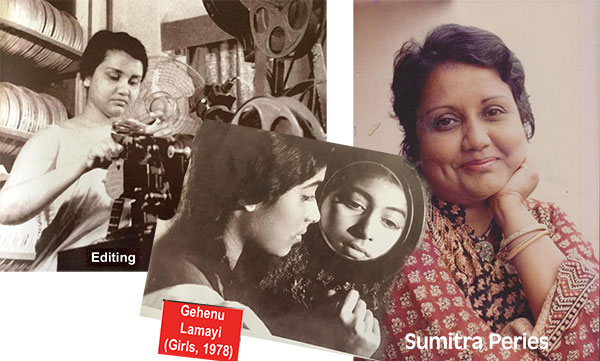
By Uditha Devapriya
Sri Lanka’s oldest living filmmaker, Sumitra Peries, stands shoulder to shoulder with South Asia’s pioneering woman artist-intellectuals, including her childhood heroine, Minnette de Silva. Yet, barring a comprehensive biography by Vilasnee Tampoe-Hautin, no writer has attempted to locate her life and work in the pantheon of South Asian cinema. A version of this article appeared in Himal Mag Southasia late last month.
The cinema of South Asia blows up in a riot of colour and spectacle, offering a melange of romance, action, and history. Despite its modest scale, this is one of the biggest film industries in the world, worth around 180 billion rupees (roughly 2.4 billion dollars) in India alone. Today, it has transformed into a category of its own, mixing different genres and, at least in India, earning the apt moniker “masala cinema.”
However, while many scholars have written on this industry, few among them seem to have noted its contribution in a rather unlikely front: women’s filmmaking.
Surprising as it may seem, several women made their mark as directors in South Asia. While attempting a chronology is difficult, the first such director is considered to be Fatma Begum. In 1926, when Lillian Gish considered ending her career with D. W. Griffith, and MGM was offering her a six-movie deal, Begum made her first film through her own production house, Fatma Films. Later, in Pakistan, Parveen Rizvi and Shamim Ara made their debuts as directors, while much later, in Bangladesh, Kohinoor Akhter followed suit.
What bound these women together was the way their careers developed. All of them had to transition from acting to directing. It was later, with the onset of a New Wave, in Indian cinema, in the 1980s, that a new generation of filmmakers, among them Mira Nair and Deepa Mehta, took centre stage. The only notable exception to this trend, who continues to stand out, is to be found outside India.
Long orientalised for its sandy beaches and mist-clad mountains, Sri Lanka boasts of an obscure but vibrant cinema. Though dominated by men, women, too, have made their mark in it, and not just in acting. Among them, one name stands out: Sumitra Peries, the country’s oldest living filmmaker.
 With 10 films to her name, Sumitra has emerged as one of the country’s foremost cultural icons. Her career offers a contrast to that of many of her contemporaries. For one thing, unlike most South Asian woman directors her age, such as Aparna Sen, she never took up acting: she began her career as an assistant director and an editor. Moreover, unlike them, she travelled extensively and studied cinema in Europe. It is this that makes her work, even her life, stand out.
Sumitra Peries was born Sumitra Gunawardena on March 24, 1935, in the village of Payagala, 40 miles from the island’s capital, Colombo. Her mother hailed from a wealthy family of arrack distillers, her father from a household of fervent political radicals.
While Sumitra’s paternal grandfather had participated in the resistance against colonial authorities, two of her uncles became leading socialist politicians in British Ceylon. One of them, Philip, whose association with Marxism had taken him to far-flung places, such as the Pyrenees during the Spanish Civil War, went on to dominate the political stage in the country.
By contrast her father, a Proctor, had not been as politically inclined: barring one unsuccessful attempt to get into the country’s State Council in 1936, his career was largely overshadowed by his brothers. Nevertheless, Sumitra recalls, “our home in Boralugoda was open to radical politicians. They made it their lunch stop and rest-house.”
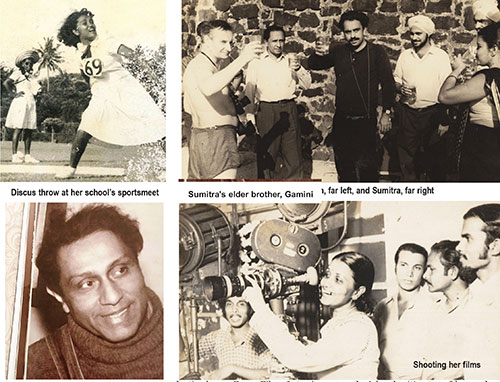
After she turned 13, in 1948, when Sri Lanka gained independence from the British, her family decided to move to Colombo. She transferred from a Catholic school, St Mary’s College, in her paternal village of Avissawella, to Visakha Vidyalaya, Sri Lanka’s leading Buddhist girls’ school. The first photograph of her in the press shows a girl throwing a discus at a sportsmeet at Visakha, exuding a youthful, defiant ardour.
Two years later, her mother passed away. Devastated by the loss, her elder brother, Gamini, left the country. Sumitra recalls how, a few years later, he asked her to join him in Europe. “I agreed at once. In 1956, I got aboard a P&O liner and set sail to the Mediterranean, all on my own.” She was not quite 21.
Arriving in Naples, Sumitra met Gamini and went to Malta. “He had a yacht docked there, and was leading a rather bohemian life with some friends.”
Over the next six months, Sumitra, Gamini, and their friends “sailed along the Italian and French coasts, savouring the Mediterranean.” At Saint-Tropez, she happened to see Brigitte Bardot and Roger Vadim making And God Created Woman. Her first sight of a movie set intrigued her greatly.
“I didn’t know what to do next. We decided on settling in Lausanne. My brother returned to Sri Lanka, leaving me behind in a world far from home.”
Lausanne failed to grow on her: “I longed to see France, on the other side.” A train and cab ride later, she was in Paris, “without a penny in my purse.”
On family instructions, she was soon boarded at the Ceylon Legation. There she met a man who was to change the course of the Sri Lankan cinema – with a significant, if underrated, contribution from her.
This was Lester James Peries, widely regarded as Sri Lanka’s pre-eminent filmmaker, and before long, her husband.
Lester proposed to Sumitra that she go to England. She agreed, enrolling at the London School of Film Technique. Founded in 1956, the LSFT was located in a suburb in Brixton. Less tempestuous than the Mediterranean, it offered Sumitra a more stable home.
Among her lecturers and peers at the School, she remembers Lindsay Anderson the most. Over time, the two of them got to know each other well. “He knew Lester long before he met me. The three of us became very good friends.”
Sumitra excelled in her studies, but finding a job in London was not easy for her. Only after knocking on the doors of Elizabeth Mai-Harris, one of Britain’s leading subtitling firms, was she offered work in the industry. “My fluency in French helped,” she remembers.
After a while, however, she longed to be back home. On Gamini’s advice, she returned to Sri Lanka, ending up as the only female crew member aboard Lester Peries’s second film, Sandesaya (The Message, 1960). Four years later they married, and remained together until Lester’s death in 2018.
In 1964, Sumitra began editing films. More than a decade later, in 1978, she ventured into directing with Gehenu Lamayi (Girls), following it up with eight more films, including her most recent, Vaishnavi (The Goddess), in 2018. She would go on to serve in other capacities as well, prominently as Ambassador Extraordinary and Plenipotentiary for France and Spain from 1995 to 1999.
The essential themes of Sumitra’s work are in Gehenu Lamayi: the innocence of childhood, the burdens of women in patriarchal society, the rift between rich and poor, the torments of adolescent love. Lacking the song-and-dance sequences of South Asian blockbusters, her films are sharp, often searing, in their critique of male chauvinism.
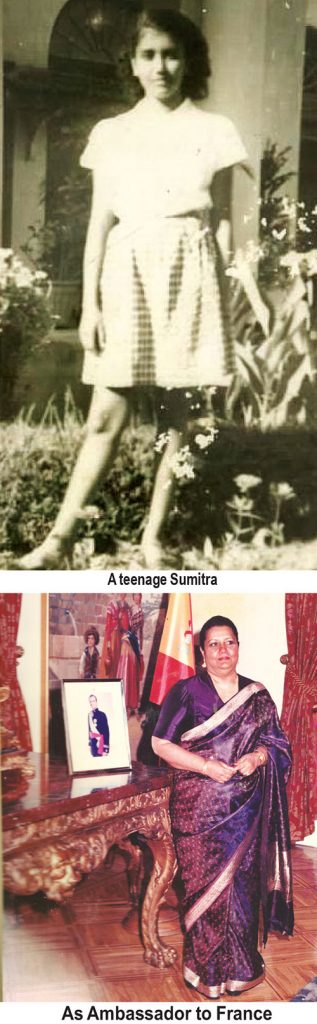 Most of her characters come from lower middle-class backgrounds, with a few, like Kusum from Gehenu Lamayi, hailing from the rural peasantry. Thwarted in their desires, they often resort to desperate measures: after discovering that her childhood lover has married someone else, for instance, Nirmala from Ganga Addara (By the Bank of the River, 1980) commits suicide. In Sagara Jalaya Madi Handuwa Oba Handa (Letter Written on the Sand, 1988), which many consider to be her finest work, the protagonist is a sensitive young boy whose mother toils hard for him after her husband, his father, falls off a tree and dies. The son writes an imaginary letter on the sand, imploring his uncle to take him away and employ him at his shop so that he can ease his mother’s burdens.
Sumitra’s aesthetic sensibility is distinct: according to British filmmaker Mark Cousins, “she uses zooms like Robert Altman, probing shyness and tentative love.” Sumitra herself seems to be aware of a certain quality of meticulousness in her work: “I often get an urge to recompose the mise-en-scène, even to prettify it. I think that shows in the final product.” For Cousins, that reveals “what a great visual thinker she is.”
By Sumitra’s own confession, her attitude to women was shaped by the women who figured in her life, including her mother. When asked about the films she likes, she at once mentions Carl Theodor Dreyer’s The Passion of Joan of Arc. “I remember seeing Renée Falconetti’s face and being enthralled by it. I could never forget that face. It came back to me, many times in fact, when I started directing films.”
Despite the high praise she has won, however, she has also received scathing criticism. Some critics have labelled her work as “feminine” and accused her of not being sufficiently “feminist”, because of the way in which her female characters succumb to their plight – such as when Kusum from Gehenu Lamayi bitterly accepts a life of loveless poverty as her “fate.” Thus, the authors of Profiling Sri Lankan Cinema conclude that she “has not gone far enough as a director with feminist intentions.”
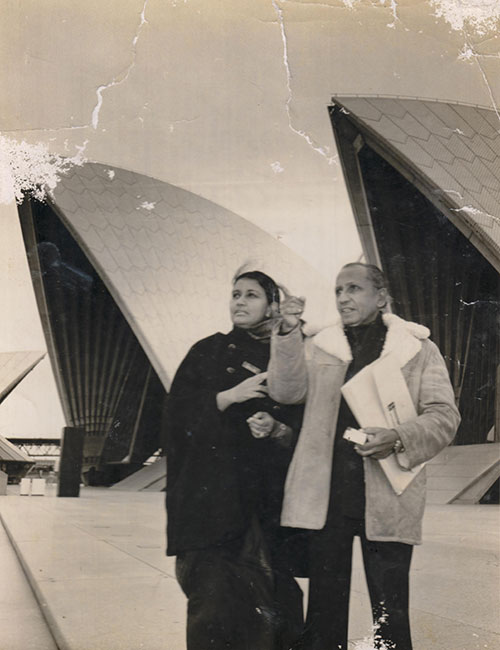 With Lester James Peries in Sydney
Sumitra’s response to these criticisms is that she can portray women “as someone other than who they are only by manipulating the story.” In the few instances when she in fact attempts this – as in Yahalu Yeheli (Boyfriends and Girlfriends, 1982), where the heroine disobeys her father, a landlord, and joins some villagers protesting his hold over them – one notices a tinge of artificiality. Overall, however, she sticks to a realist principle: “I prefer to depict women as they are, rather than who they should be.”
Today Sumitra resides in Mirihana, a quiet suburb located about six miles from the capital. She and her husband spent their married life in Colombo, in a house along a road that bears his name. Yet following his death, owing to certain unfortunate circumstances involving the legal title to their residence, she had to vacate her premises. She hasn’t come to regret the shift: “It’s much quieter here, in tune with my sensibility.”
Still active and working on her next project, at 87 Sumitra remains open to the possibilities of her medium. It goes without saying that her work stands out in the world of South Asian cinema. While being utterly modest about her achievements, she admitted one thing the last time I met her: “I rebelled against the idea of what a woman had to be in my society, as a girl and a director. In the end, despite those strictures, I prevailed.”
The writer can be reached at udakdev1@gmail.com


 It was a few years back that a former President of Sri Lanka took it on himself to pronounce SAARC ‘dead’. Since then there have been other sections of Sri Lankan opinion that have joined the critics of SAARC and taken the solemn stance that SAARC has indeed died what may be called a natural death.
Their fatalism is understandable. SAARC has failed to meet at heads of government or state level for the past several years to take the SAARC process notably forward. Regional cooperation has more or less been only an appealing idea. No substantive concrete projects have taken off to make the idea a hard reality. ‘Inner paralysis’ seems to be SAARC’s lot. Hence the fatalism in these circles.
However, being one of the worst cash-strapped regions of the world and a teemingly populated one with people virtually left to their devices, what choices do the ‘SAARC Eight’ have other than to try their best to band together and continue with their cooperation efforts, however small they may be?
There is no escaping the mounting debt trap for many of these countries and bankrupt Sri Lanka is a glaring example, but ‘throwing in the towel’ and abandoning themselves entirely to the diktats of the strongest economies and their agencies will prove a ‘living death’ for many countries in the SAARC fold.
The gains may be meagre but giving-up on SAARC cooperation in full would prove self-defeating for the organization and South Asia. Right now, the collective intention ought to be to salvage what the region could from the tenuous cooperative efforts. Moreover, such initiatives could go some distance to generate a degree of goodwill among the Eight and help in sustaining a dialogue process.
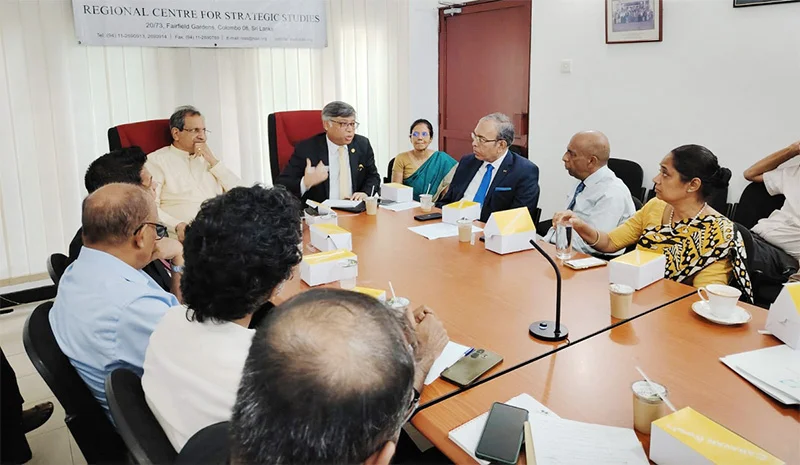
Given this backdrop it proved ‘a stich in time’ for the Regional Centre for Strategic Studies (RCSS), Colombo, to recently host the SAARC Secretary General Ambassador Md. Golam Sarwar to a round table discussion on the unifying potential of SAARC and its future possibilities, besides other related issue areas.
Held on June 24th and moderated by RCSS Executive Director and former ambassador Ravinatha Aryasinha, the forum brought together a vibrant, wide ranging audience comprising academicians, diplomats, senior public servants, civil society activists and many others. Following the presentation by Ambassador Golam Sarwar titled, ‘Reigniting SAARC: Achievements, Challenges and the Way Ahead’, a lively Q&A followed.
The above forum could be described as an act of lighting the proverbial ‘candle’ rather than ‘cursing the darkness.’ It surely is a ‘darkness’ that could be seen as daunting considering that the region’s pivotal powers, India and Pakistan, are failing to act in a spirit of accord but are engaged in bitter finger-pointing on a number of questions of vital importance to SAARC.
On the other hand, what is the rest of the region doing to bring the above sides together? It is disappointing that to date the rest of SAARC has failed to launch a major diplomatic drive to bring peace between the feuding regional heavyweights. It needs to act without delay and establish its earnestness and this effort would need to prove SAARC’s staying power in the unfolding months and even years.
In assessing SAARC’s seeming failure local opinion in particular has failed to factor in what could be described as weak leadership. Since Sheikh Mujibur Rahman of Bangladesh, the founding father of SAARC, the region has failed to produce a visionary leader who could advance the SAARC cause with charisma and drive.
Among other reasons, weak leadership accounts considerably for the faltering and stuttering status, as it were, of SAARC. Badly needed are leaders who could go the extra mile, think less of narrow national interests and work diligently towards the collective well being of the region but SAARC’s millions of ordinary people have been made to wait in vain for leaders of such stature. Instead, they have been burdened with politicians who seem to be relishing the apparently moribund state of SAARC.
Looking back, it could be said that it was the dynamic leadership factor that led to the launching of the Non-Aligned Movement and for its sustenance for a few decades. True, it could be seen in some quarters that NAM is no more, but as in the case of SAARC, the former too has been unfortunate to be burdened over the years with politicians who lack the vision and drive to unflaggingly advance the fortunes of the South. NAM and SAARC lack the dynamism and vision of leaders of the stature of Jawaharlal Nehru, for example, to give them the required guidance and intellectual depth.
The reasons are complex for there not being among us currently political leaders with the vision and the steadfast commitment to advance the legitimate interests of the South. However, it could be stated with conviction that the majority of Southern leaders have too easily caved in to the demands of the global North and its financial agencies.
These leaders have failed to see, for instance, that the largely market economy oriented Northern governments would not view with favour a centrist economic model that attaches priority to the interests of the dis-empowered publics of the South. This realization ought to have dawned on the current government in Sri Lanka, for instance, some while ago but it has no choice but to abide by IMF dictates since economic survival at present is unthinkable without the latter’s succour.
Accordingly for SAARC this should be the time for some soul-searching. Priority needs to be attached to ending the feuding between India and Pakistan since at present the material fortunes of the region hinge largely on these regional giants giving peaceful relations among them a try. This is no easy challenge to meet but some daring, visionary diplomacy needs to take hold among the rest of SAARC.
There is some sense in SAARC bringing the peoples of the region together through programs that address their best collective interests. A meeting of minds among SAARC nations could enable SAARC and its agencies to build a region-wide people’s movement for progressive political and economic change that could in turn lead to the region’s political leaders sensitizing themselves more to the neglected needs of their publics.
However, the time is ‘now’ for the initiation of these progressive changes and the voice of SAARC well wishers would need to drown out those of their critics.
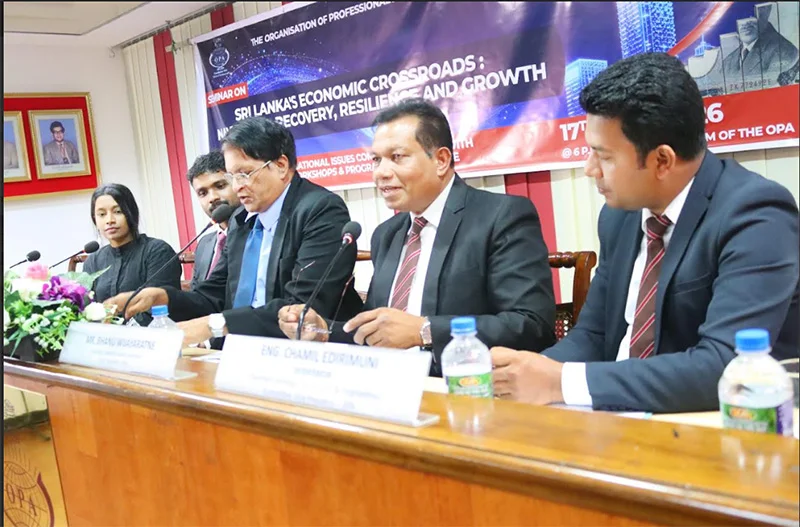
A seminar, “Sri Lanka’s Economic Crossroads: Navigating Recovery, Resilience and Growth” was recently held by the Organisation of Professional Associations of Sri Lanka (OPA) at the OPA Auditorium, bringing together economists, OPA members, and professionals from diverse fields for an insightful discussion on Sri Lanka’s economic recovery and future growth prospects.
The event was held under the patronage of Jayantha Gallehewa, President of the OPA, and was jointly organised by the National Issues Committee (NIC) and the Seminars, Workshops and Programmes Committee of the OPA. The event reaffirmed the organisation’s commitment to advancing professional excellence, fostering insightful intellectual engagement, facilitating interdisciplinary knowledge exchange and creating a constructive platform for informed dialogue on issues of national importance.
The panel of speakers comprised Dr. Harsha Aturupane, Lead Economist and Programme Leader for Human Development at the World Bank for Sri Lanka and the Maldives; Dr. Achinthya Koswatta, Senior Lecturer in Economics at the Open University of Sri Lanka, and Anushan Kapilan, Lead Economist at Verité Research.
In his welcome address, the President of the OPA emphasised that Sri Lanka was at a critical juncture in its economic recovery journey where sustained reforms, effective implementation, and collective national commitment are essential to achieving long-term stability, resilience and inclusive growth. He noted that the country had experienced one of the most severe economic crises in its history with the economy contracting by 7.8 percent in 2022 and a further 11.5 percent in 2023, resulting in significant economic and social challenges.
Delivering his introductory remarks Bhanu Wijeyaratne, Vice President of the OPA and Chairman of the National Issues Committee, underscored the need to move beyond short-term economic stabilisation towards a comprehensive agenda of structural transformation. He observed that the economic crisis had revealed deep-rooted weaknesses within the economy, including persistent fiscal pressures, rising public debt, foreign exchange limitations, and insufficient diversification of the export base. He stressed that addressing these challenges through strategic reforms, institutional strengthening and long-term economic planning would be essential to establishing a more resilient and competitive economy.
While acknowledging recent positive developments, including improved inflation management, tourism recovery and signs of economic stabilisation, Wijeyaratne stressed the need to advance reforms aimed at strengthening fiscal discipline, enhancing productivity, improving competitiveness, developing human capital and reinforcing governance and institutional effectiveness.
He further highlighted the important role of professionals, businesses, academia and other stakeholders in contributing to evidence-based dialogue and supporting Sri Lanka’s journey towards a resilient, inclusive and sustainable economic future.
Delivering the keynote presentation, Dr. Harsha Aturupane provided a comprehensive assessment of Sri Lanka’s economic prospects within the broader context of global economic transformation. He argued that Sri Lanka functioned as a small open economy whose performance is significantly influenced by developments in the global marketplace. External factors could not be controlled, and the country must strengthen its domestic capacity and resilience to respond effectively to international economic shifts, he noted.
Tracing the evolution of global economic systems, Dr. Aturupane highlighted the transition from ideological divisions between state-controlled and market-oriented economies towards increasingly pragmatic approaches focused on growth, competitiveness and development. He noted that Sri Lanka’s own economic journey reflects a similar evolution, with contemporary policy debates now centred on practical solutions for sustainable economic progress.
The presentation also examined the transformative impact of globalisation. Dr. Aturupane observed that global economic integration had enabled several East Asian economies, including South Korea, Singapore, Taiwan and Hong Kong, to achieve remarkable economic advancement through export-led growth strategies. Sri Lanka similarly benefited from this process through the expansion of its apparel industry and increased integration into global value chains.
Turning to Sri Lanka’s recovery programme, Dr. Aturupane emphasised that the ongoing stabilisation process should be viewed as a national programme supported by the International Monetary Fund rather than solely as an IMF initiative. He observed that strong worker remittances, improved tourism earnings, enhanced government revenue mobilisation and prudent import management have contributed significantly to economic stabilisation.
Despite this progress, he cautioned that rebuilding foreign exchange reserves and meeting future debt obligations remain major challenges. He underscored the need to strengthen export performance, attract investment and generate sustainable foreign exchange earnings to ensure long-term economic resilience.
The discussion also focused on monetary stability, inflation management and exchange-rate policy. Dr. Aturupane stressed that maintaining price stability was fundamental to sustainable growth and household welfare, while sound monetary policy remains essential for preserving economic confidence.
Looking beyond stabilisation, he argued that Sri Lanka must transition towards a broader economic transformation agenda. Sustainable growth, he noted, will depend on expanding productive capacity through investment, technological advancement, innovation, skills development and structural reforms.
Among the key constraints identified was the high cost of energy, which continues to affect competitiveness and investment attractiveness. Dr. Aturupane emphasised the importance of improving efficiency and affordability within the energy sector to enhance Sri Lanka’s business environment.
He further highlighted the social dimensions of the crisis, noting the rise in poverty and economic vulnerability among households. Strengthening social protection systems and ensuring inclusive growth, he argued, must remain central components of the national development agenda.
Another critical challenge identified was Sri Lanka’s demographic transition. With an ageing population, outward migration and evolving labour market dynamics, the country is increasingly confronting labour shortages in several sectors. Dr. Aturupane suggested that greater automation, increased labour-force participation and strategic workforce planning would be necessary to address these emerging realities.
Concluding his presentation, he emphasised the need to improve governance, strengthen institutions, enhance competitiveness and create an enabling environment for private sector investment. Sri Lanka’s future success, he noted, will depend on its ability to move decisively beyond crisis management towards a development model founded on resilience, innovation, productivity and inclusive growth.
Dr. Achinthya Koswatta reiterated the importance of policy consistency and predictability in fostering investment and industrial development. She observed that frequent policy changes create uncertainty and discourage long-term investment decisions, whereas stable and coherent policy frameworks build confidence and support sustainable economic transformation.
Meanwhile, Anushan Kapilan highlighted the substantial progress achieved in restoring macroeconomic stability following the recent crisis. He noted significant improvements in fiscal performance, including increased government revenue, reduced reliance on debt financing and a historically low fiscal deficit.
He further observed that public debt levels are declining faster than anticipated, economic growth has exceeded expectations and inflation has been brought under control more rapidly than forecast. Nevertheless, he cautioned that the recovery remains uneven, particularly within the industrial sector and that many households have yet to experience a meaningful improvement in living standards.
The seminar was expertly coordinated by Eng. Chamil Edirimuni, Vice President of the OPA and Chairman of the Seminars, Workshops and Programmes Committee, while the technical moderation and interactive discussion session were facilitated by Bhanu Wijeyaratne, Vice President of the OPA and Chairman of the National Issues Committee.
The event was attended by Tisara De Silva, President-Elect of the OPA, Eng. Ravi Rupasinghe, General Secretary, Past Presidents, members of the Executive Council, representatives of the General Forum and professionals representing a wide range of disciplines.
The seminar concluded with a vibrant exchange of ideas and perspectives, reaffirming the importance of evidence-based policy dialogue, institutional collaboration and collective national commitment in advancing Sri Lanka’s economic recovery, resilience and sustainable growth.

 Yes, for UK-based presenter and artiste Samantha Kay, home is where the heart – and the roots – are. And her roots run deep in Sri Lanka.
In an exclusive interview with The Island, Samantha says “I’m proud to be Sri Lankan. My mum is from Kandy and my dad is from Colombo, so Sri Lanka has always held a very special place in my heart.
“Whenever I visit Sri Lanka, I love spending time on the beautiful south coast, especially Hikkaduwa and Mirissa. It’s somewhere I always feel connected to my roots and completely at peace.”
Now living in Bournemouth, on the south coast of England, where, she says, she is lucky to be close to some of the UK’s most beautiful beaches, including the iconic Sandbanks, Samantha has built a career that refuses to fit into one box.
She is a radio presenter, podcast host, singer-songwriter, personal trainer and life coach.
“I genuinely love the variety because every role allows me to connect with people and, hopefully, make a positive difference in someone’s day.”
Of course, music has taken her far.
One of her proudest achievements, she says, was releasing a song with 90s music icon Angie Brown, which reached No. 9 in the UK Club Charts.
She also reached the final stages of The X Factor and performed at Wembley Stadium in front of thousands.
Beyond music, Samantha competed in bikini bodybuilding across the UK, winning several titles. “It taught me discipline, resilience and self-belief,” she recalls.
Today, her focus is on radio, podcasting and coaching women. Her podcast encourages people to live life on their own terms rather than feeling pressured to follow society’s expectations.
Says Samantha: “Whether someone is single, changing careers, travelling solo or simply trying to find their purpose, I want them to know that it’s never too late to create a life that feels authentic. If you’ve ever felt like you don’t fit into the box, maybe you were never meant to.”
Samantha Kay also spent a year in Dubai, performing at five-star hotels, including FIVE, and coaching at the iconic outdoor gym on Palm Jumeirah.
“I taught strength and conditioning classes, and hosted wellness retreats, combining my passion for music, health and inspiring others.”
However, with family matters calling her back to the UK, she made the choice to return. “Family comes first,” she says.
Looking ahead, Samantha plans to grow her radio and podcast work, release more music, and expand her wellness retreats.
“My biggest passion is helping people, especially women, build confidence and believe in themselves,” she says.
“Wherever my career takes me, I hope to continue inspiring others to live with courage, kindness and authenticity, while never forgetting my Sri Lankan roots.”

President chairs discussion on 2027 Budget Proposals for the Ministry of Industry and Entrepreneurship Development

Prime Minister meets the Amir of the State of Qatar and conveys condolences on the passing of the Father Emir

Current El Niño Status in Sri Lanka

A few showers may occur in the Western, Sabaragamuwa and North-western provinces and in Kandy, Nuwara-Eliya, Galle and Matara districts.

Argentina face fine for Falklands banner in semi-final win

US launches fresh strikes on Iran as Trump warns Tehran it ‘better behave’

‘Dates have the highest sugar content to fight Coronavirus’

Sunday Island 27 December – Headlines

#SundayIsland 17th December – Headlines

Sunday Island – 28th March

Sunday Island Headlines – 21 March

Sunday Island – 21st February – Headlines
-
 News7 days ago
Herath warns prospective migrant workers not to get fleeced by racketeers
-
 Features5 days ago
Prison riots and politics: NPP’s biggest challenge and Sri Lanka’s biggest opportunity
-

 Editorial6 days ago
What’s the world coming to?
-
 Foreign News7 days ago
Tensions erupt in Indian state after 11-year-old raped and murdered
-
 Features7 days ago
Devanesan Annan – in Memoriam
-
Editorial7 days ago
Punishment in hellholes
-
 Features2 days ago
Dirty Money
-
 News7 days ago
Representatives of the Organization of Professional Associations (OPA) of Sri Lanka meet the Prime Minister