
Life style
Subtle make-up to make you glow

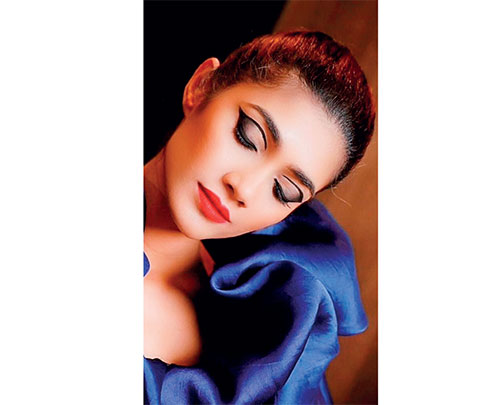
by Zanita Careem
Ramani Fernando, beautician and hairstylist has many experience in the beauty industry ,. juggling homelife while climbing up the corporate ladder. She is a lover of minimalism! on par with international beauticians: She creates signature styles that are one of a kind.You must be a marketeer of yourself in order to establish trust, respect and support amongst your clientele says Ra,ami .
A self possessed ‘beauty icon’ Ramani knows how to sell herself, with her charming demeanor, she offers the total package of beauty and brain.
What is beauty?
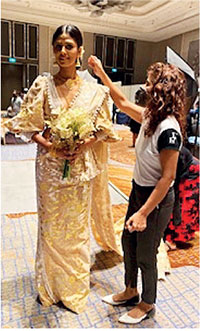 To me beauty is an energy, we all possess that comes from the soul and radiates through the skin and face. Beauty is personal but it is also universal. Beauty is everywhere and it inspires us all the time.
Make up is indefinite, it has many possibilities of making someone confident For me it took me sometime to step out of my comfort zone and use different colours on different people, but when I started there was no stopping, it was admired by many clients,Most importantly, when clients pay me compliments I am so happy. Beauty industry is challenging and this challenges honed my artistic skills.
Beauty comes from within and everyone has a way of portraying thier looks by colours. Makeup simply enhance s ‘ an individual’s existing features.
How would you describe your makeup style and what sets you apart from others What are your signature styles as an artist?
I am an individual and as an individual I have own creative styles to suit one’s facial looks and features. Nothing can beat the feeling of making someone feel and look beautiful.
What is your beauty philosophy?
I strongly believes in natural beauty. I believe that behind every face there is individuality, which becomes evident from client to client my style differs widely from others. I apply makeup to suit one facial feature and to fit their personality. My signature style is creating a flawless finish complemented with neutral colours on the eyes. It is simple, clean, sophisticated and elegant.
How do you keep up with all the new trends and styles?
Where do you find your inspiration for your makeup looks?
I always keep in mind to watch on TV international fashion shows and trends In my travels.I am inspired by all things around me
In your opinion. What are common mistakes you see women make on their makeup
?
The most common mistakes are bold dark lines on brows.The lipliner should not be too harsh.
What do make up artists do?
 Makeup Artists are professionals with artistic skills and they are experts in the use of colours to enhance the beauty and physical attributes.
How do you get your start in the industry?
After travelling to UK, I saw an opportunity to develop my skills, I started working as a junior stylist in a very popular salons in Harrow.
It was at this point that I discovered the potential in me. I came back to Sri Lanka with many innovative ideas. I soon became a trail blazer in the industry, new techniques and new innovative ideas used in my salon that were not available at the time. became the talk of the town.
What do you love most about makeup?
It’s a passion that I loved . I wanted to make people feel more confident with new styles and colours,
Does everyone look better with make up?
Personally, all women are beautiful with or without makeup. It really depends on the individual and their purpose of why they choose to wear makeup. I agree, makeup can completely change the appearance of a women. However, some people who have more blemishes on their faces, acne or any other skin issues usually benefit more from wearing extra pigmented creams and powders in order to lesson the effects of skin imperfections. A strict beauty regime is a must. A good foundation talks volumes about your beaty and looks
What do brides ask for in the post-covid era?
This entire pandemic has made everyone so cautious. It doesn’t change much for brides. When the bride/family decides to go through with the wedding, nothing changes for the bride. She still wants to look the best, she wants her makeup to last through all her functions, She wants to be free of stress and strains So, when it comes to what they’re asking, they aren’t asking for much or anything different
What are your safety measures?
At the end of the day, it’s about who you book as your artiste and how much about the safety in mind.
Do you offer trial makeup?
YES – I not only offer trial makeup, but I also emphasize it. Irrespective of whether they are busy or travelling or whatever may the reason be, it is important. For the simplest reason that if anything needs to be changed or needs to be figured out, it can be done in due time and not the day of the wedding. The best part about having a trial is you can experiment not only with one but with as many styles as you like and finalize what you like best so you know exactly what is happening and you are stress-free on the day of your wedding. It also gives you the opportunity to bond with your bride so she can trust you to deliver your best work on one of her most important day.
How have things changed for you in these times?
2020 has actually been quite a game-changer because it’s something that nobody had imagined could happen; for the whole world to come to a standstill. Like everyone was living through a fast-paced life and someone just hit the pause button. It has affected a lot of businesses because nobody wants to step out and take a chance or risk their health or that of their loved ones – which is the right thing to do right now as well. I think that is the major change this year.
What advice would you give brides that are planning to get married in 2020-21?
They should match their face mask with their bridal trousseau… ha-ha just kidding but on a serious note, the advice for brides planning to get married this year or in the coming year is that NOT let the pandemic dampen their spirits. It is still their day; they still deserve to look the best and feel the best on their wedding day. So, engage an artist they like but also someone who is high on safety standards.
What are the trends in bridal makeup/hairstyles are in right now?
Fashion, Styles, and Trends are indispensable. They don’t go away. What has been trending is the concept of natural beauty and people understand the meaning of natural beauty and they want to see themselves as more than just makeup and that is also the beauty of it. When you do Airbrush makeup or HD makeup, it’s about accentuating your natural beauty. That is what today’s trends are about. It is basically only playing with natural beauty and highlights and contours. Makeup has never been something that you just go in and do. It is about seeing the face and understanding the structure and then creating a look. You have to understand where exactly a contour stops and how much depth you need to give a face and what parts of the face need highlighting. That, I think is something artists know and a professional will understand and is what is trending right now.
What are brides asking for in the post-covid era?
This entire pandemic has made everyone so cautious. It doesn’t change much for brides. When the bride/family decides to go through with the wedding, nothing changes for the bride. She still wants to look the best, she wants her makeup to last through all her functions, she still wants to be treated like the bride and not have any stress.
At the end of the day, it’s about who you book as your artiste and how much you trust them to know they have your safety in mind.
Do you offer trial makeup?
YES – I not only offer trial makeup, but I also emphasize it. Irrespective of whether they are busy or travelling or whatever may the reason be, it is important. For the simplest reason that if anything needs to be changed or needs to be figured out, it can be done in due time and not the day of the wedding. The best part about having a trial is you can experiment not only with one but with as many styles as you like and finalize what you like best so you know exactly what is happening and you are stress-free on the day of your wedding. It also gives you the opportunity to bond with your bride so she can trust you to deliver your best work on one of her most important day.
How have things changed for you in these times?
2020 has actually been quite a game-changer because it’s something that nobody had imagined could happen; for the whole world to come to a standstill. Like everyone was living through a fast-paced life and someone just hit the pause button. It has affected a lot of businesses because nobody wants to step out and take a chance or risk their health or that of their loved ones – which is the right thing to do right now as well. I think that is the major change this year.
What advice would you give brides that are planning to get married in 2020-21?
They should match their face mask with their bridal trousseau… that is if possible. The advice for brides planning to get married this year or in the coming year is NOT let the pandemic dampen their spirits. It is still your day; they still deserve to look the best and feel the best on their wedding day. So, engage an artiste they like but also someone who is high on safety standards.


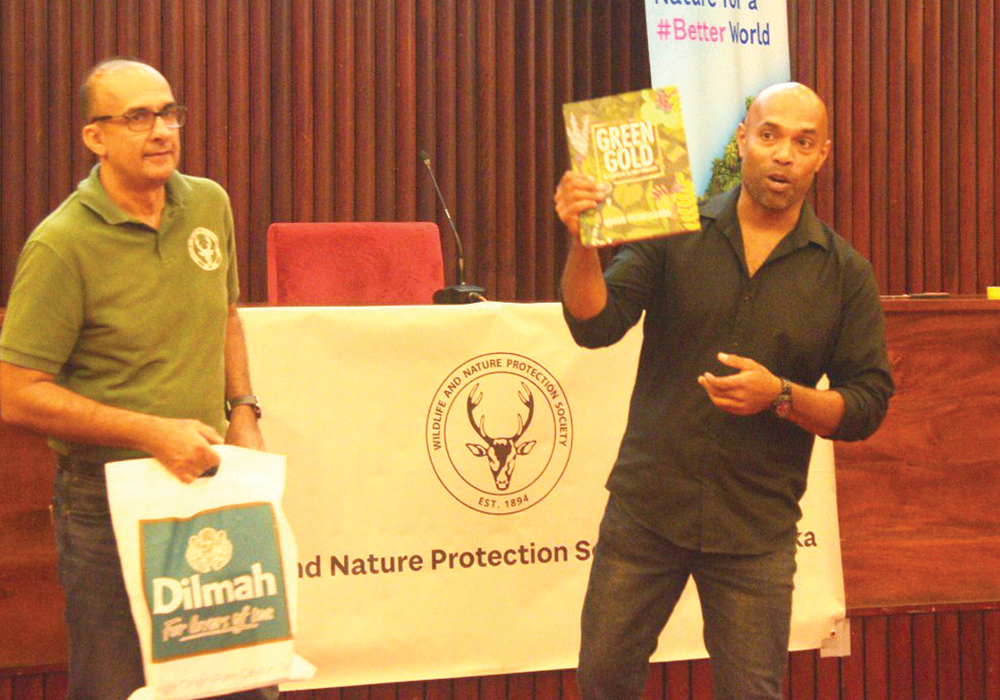
Dr. Ruchira Somaweera on Rethinking Conservation
What happens when one of the world’s richest marine biodiversity hotspots collapses almost overnight — and no one knows why?
That was the question facing Australian authorities in the early 2000s when Ashmore Reef, a remote marine reserve in the Timor Sea, suddenly lost what once made it globally unique: its extraordinary diversity and abundance of sea snakes.
“At one point, this place had more species of sea snakes and more individuals than anywhere else on Earth,” recalled Dr. Ruchira Somaweera, one of the world’s leading reptile biologists. “Then, within a few years, everything collapsed.”
Speaking at a packed Wildlife and Nature Protection Society (WNPS) Monthly Lecture, sponsored by Nations Trust Bank and held at the BMICH, Dr. Somaweera described how the mysterious disappearance triggered a major federal investigation.
“At the time, I was a federal government scientist,” he said. “We were sent to find out what went wrong — but it wasn’t obvious at all.”
Ashmore Reef, a protected area managed by Parks Australia, was still teeming with turtles, sharks and pelagic birds. Yet the sea snakes — once recorded at rates of up to 60 individuals per hour — had virtually vanished.
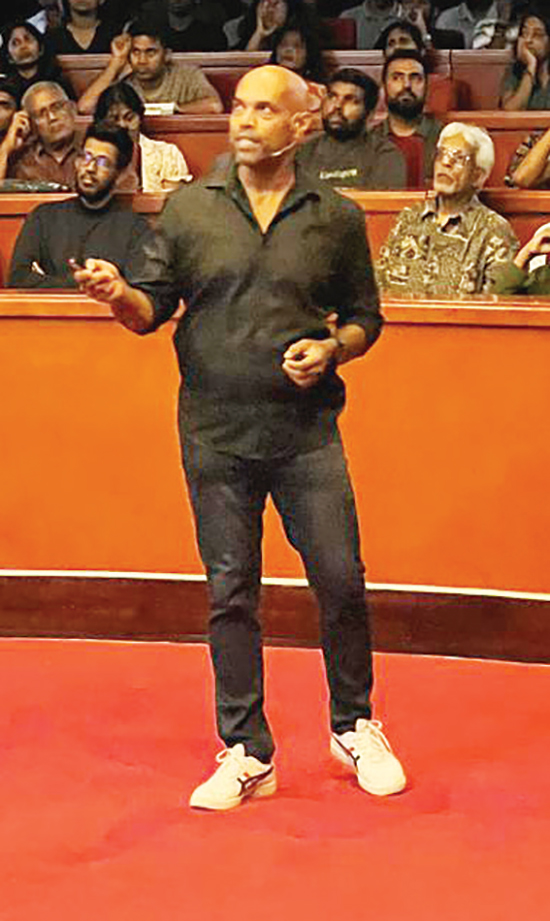
Ruchira making his presentation
The breakthrough came not from the water, but from policy.
For decades, traditional Indonesian fishers from Roti Island had been permitted to harvest sharks at Ashmore under a bilateral agreement. When Australia banned shark fishing around 2000, shark numbers rebounded rapidly.
“And sharks are the main predators of sea snakes,” Dr. Somaweera explained. “What we realised is that what we thought was ‘normal’ may actually have been an imbalance.”
In other words, sea snakes had flourished during an unusual window when their top predators were suppressed. Once sharks returned, the ecosystem corrected itself — with dramatic consequences.
“It was a powerful lesson,” he said. “Sometimes collapse isn’t caused by pollution or climate change, but by ecosystems returning to balance.”
The mystery didn’t end there. Some sea snake species once known only from Ashmore were now feared extinct. But instead of accepting that conclusion, Dr. Somaweera and colleagues took a different approach — one that combined science with local knowledge.
“Scientists often fail by not talking to the people who live with these animals,” he said. “Fishermen have decades of experience. That knowledge matters.”
Using museum records, fisher interviews and species distribution modelling, the team predicted where these snakes might still exist. The models suggested vast new areas — some the size of Sri Lanka — had never been properly surveyed.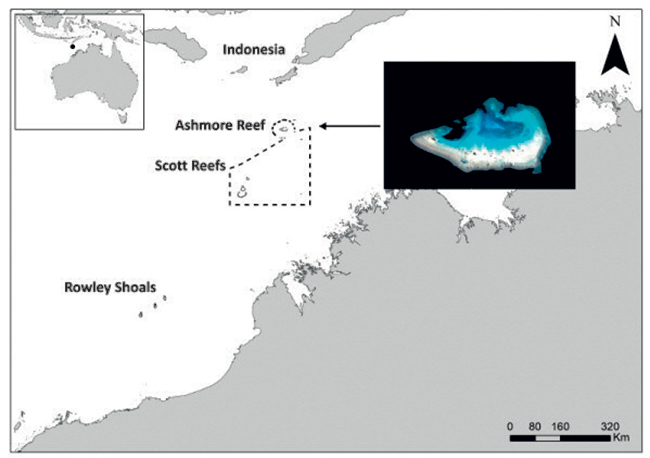
When researchers finally reached these sites, often involving helicopters, research vessels and enormous logistical costs, they made a startling discovery.
“We found populations of species we thought were gone,” he said. “They were there all along. We were just looking in the wrong place.”
Even more surprising was where they were found — far deeper than expected.
Traditional sea snake surveys rely on night-time spotlighting, assuming snakes surface to breathe and rest. But footage from deep-sea remotely operated vehicles (ROVs) revealed that many species live in the mesophotic zone, where light fades and surveys rarely reach.
“Some of these snakes are deep divers,” Dr. Somaweera said. “They don’t behave the way we assumed.”
That insight led to one of his most remarkable discoveries — coordinated, communal hunting in the Irabu sea krait off Indonesia.
“At 40 metres deep, on the slope of an extinct volcano, we found them hunting in groups,” he said. “They take turns flushing fish and feeding. That level of cooperation was never known in snakes.”
Beyond discovery, Dr. Somaweera’s work increasingly focuses on how conservation itself must evolve.
One of the most transformative tools, he said, is environmental DNA (eDNA) — the ability to detect species from genetic traces left in water, soil or even air.
“You no longer need to see the animal,” he explained. “A bottle of water can tell you what lives there.”
His team now uses eDNA to detect critically endangered snakes, turtles and sea snakes in some of Australia’s most remote regions. In one project, even children were able to collect samples.
“A 10-year-old can do it,” he said. “That’s how accessible this technology has become.”
The implications for countries like Sri Lanka are profound. From snakebite management to marine conservation, eDNA offers a low-impact, cost-effective way to monitor biodiversity — especially in hard-to-reach areas.
Dr. Somaweera ended his lecture with a message aimed squarely at young scientists.
“We already have a lot of data. What we lack is the next question,” he said. “So what? That’s the question that turns knowledge into action.”
After nearly two decades of research across continents, his message was clear: conservation cannot rely on assumptions, tradition or good intentions alone.
“It has to be evidence-based,” he said. “Because only action — informed by science — actually saves species.”
By Ifham Nizam ✍️
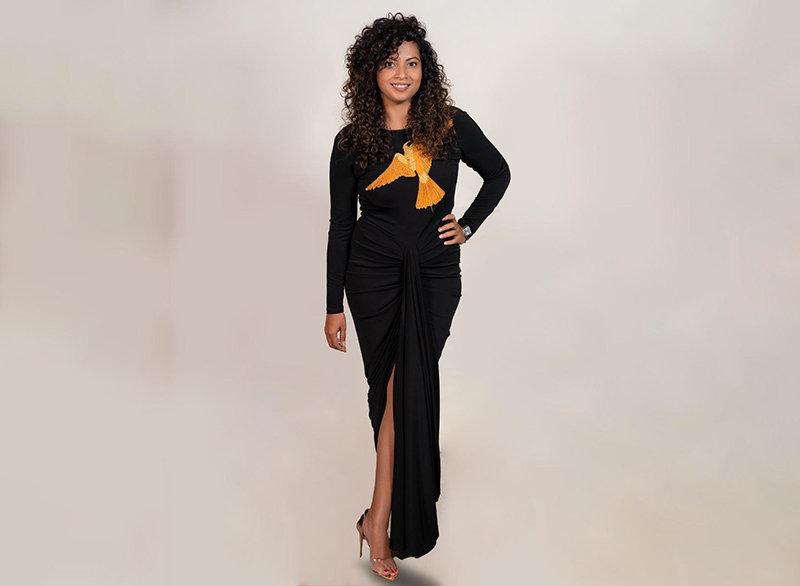
Fazeena Rajabdeen
 Fazeena Rajabdeen stands at the forefront of Sri Lanka’s fashion evolution as the Executive Director of Colombo Fashion Week.
With a visionary approach that bridges local talent with global opportunities, Fazeena has been instrumental in elevating Colombo Fashion Week into a sought-after platform for designers, buyers and industry innovators. In this interview, she shares insights on the growth of Sri Lanka’s fashion landscape, the challenges and triumphs of steering a major fashion event, and her aspirations for the future of the industry.
(Q) As Executive Director of Colombo Fashion Week, how do you define CFW’s role in shaping Sri Lanka’s fashion identity?
(A) CFW is fundamentally the backbone of Sri Lanka’s fashion industry. Over 23 years, we’ve built more than a platform, we’ve crafted an entire fashion ecosystem that didn’t exist before.
What I’m most proud of is that over 80% of the designers you see in Sri Lanka today have come through our development system. That’s not accidental, it’s the result of building infrastructure, including partnerships, brand development support, retail insights, and international networks. We’ve essentially created the conditions for a Sri Lankan fashion industry to emerge organically, rooted in our heritage but completely contemporary in its expression. This has resulted in the creation of few design education schools, fashion retailers, model academies.
CFW has given Sri Lankan fashion an identity that carries weight, one that speaks to craftsmanship, sustainability, and creative integrity. That’s the legacy we continue to build upon.
(Q) What has been your personal vision in steering Colombo Fashion Week over the years?
(A) My vision has always been about scale and sustainability, taking what was a seasonal event and building it into a year-round business ecosystem. My key focus was on developing the next generation through structured programs like emerging designers and CFW Accelerate, embedding responsibility into fashion through tools like the Responsible Meter, and expanding our reach with new editions and International partnerships.
We’ve moved from showcasing fashion to building the infrastructure that makes sustainable, commercially viable fashion careers possible in Sri Lanka. Another mission was to expand the platform so Sri Lankan designers aren’t just showing collections, they’re building brands that compete regionally, especially within South Asia.
(Q) Fashion Weeks globally are evolving. How has CFW adapted while staying true to its roots?
(A) The role of fashion platforms has evolved, as the development of fashion, the consumption of fashion and choices fashion consumers make has changed. At the core Fashion is an emotional choice hence engagement with fashion consumers remains high priority. CFW as a platform that leads the fashion industry, creates formats that effectively engage consumers with the fashion creators and with that open opportunities in Sri Lanka and internationally through BRICS, South Asia and Beyond. There are interesting new projects planned to push this forward.
(Q) How does CFW contribute to positioning Colombo as a regional fashion and lifestyle capital?
(A) CFW is known as a renowned South Asian Fashion Week and serves as a regional hub with its longstanding influence of 23 years in the region. That longevity alone has made us a reference point for South Asian fashion and we’ve become first-in-mind when people think of fashion here.
But it’s more than just presence. CFW has positioned the city with its synonymous brand name and interaction with influential people within the region as a lifestyle destination, not a peripheral market. That sustained visibility and the calibre of what we produce has put Colombo on the map as a regional capital where fashion, craft, and commerce intersect.
(Q) Sustainability and craftsmanship are growing conversations—How are those reflected in designer collections?
(A) Responsibility in fashion has been our cornerstone from the beginning. We’ve always championed Batik and traditional craft, and we’ve backed that with real resources through our craft funds.
What we’ve done differently is make sustainability measurable. The Responsible Meter we developed is a transparent scoring system that shows the environmental and social impact of each garment. Designers now build collections with accountability baked in from the start, not as an afterthought. This process is included in all emerging designer development processes.
(Q) Colombo Fashion Week has been a launch pad for many designers. What do you look for when curating talent?
(A) Above all—passion and drive. You can teach technique, refine a collection, connect someone to the right resources. But that hunger to build something, to push through the hard parts of turning creativity into a viable business That has to come from them.
We look for designers who understand that fashion is both art and commerce. They need a point of view, yes, but also the discipline to execute it consistently. The ones who succeed through CFW are the ones who see the platform as a starting point, not the finish line—they’re ready to put in the work to build a real brand, not just show a collection and continue with us in building that brand.
(Q) What role does CFW play in connecting Sri Lankan designers to global markets?
(A) CFW set out on a designer exchange programme through the BRICS International Fashion Federation, showcasing Sri Lankan talent at BRICS fashion weeks while welcoming international designers to Colombo. The platform positions Sri Lanka within the global fashion landscape while attracting international buyers and media. We have partnerships with the commonwealth countries and relevant fashion weeks. The interaction with global designers we invite during fashion week is primarily to focus on such interactions with Sri Lankan designers, opening doors for learnings and opportunities.
(Q) What can we expect from upcoming editions of CFW?
(A) Every edition has a unique focus to it and we work towards creating more expansion, more accessibility. We’re doubling down on our development programs, bringing in stronger international partnerships, deeper craft integration, and wider opportunities for designers at every stage.
We’re also looking at new formats and editions that create the Sri Lankan story in international markets.
We focus on being beyond a showcase; as the engine that drives Sri Lankan fashion forward regionally and globally. We’re building for scale and impact. The upcoming editions will reflect that ambition.
(Q) You have Co-founded the Ceylon Literary and Arts Festival, what inspired you to start and what was your original vision?
(A) It was a natural expansion, honestly. After years of building CFW and seeing the power of creative platforms, we realized there is space for the same thing for arts and literature, a space that celebrates Sri Lanka’s intellectual and cultural soft power.
The vision was simple: create a festival that puts Sri Lankan voices in conversation with regional and global thought leaders. Literature and the arts are incredible tools for cultural influence, and we weren’t leveraging that enough. Ceylon Literary and Arts Festival became that platform, a way to showcase our writers, artists, and thinkers while positioning Sri Lanka as a hub for meaningful cultural exchange.
It’s about soft power. Fashion opened doors, arts and literature deepened the conversation. Together, they tell a fuller story of who we are as a country.
(Q) What makes it unique in Sri Lanka’s cultural scene?
(A) It’s the ecosystem with its breadth and accessibility. We’ve built a festival that doesn’t silo creativity, it brings together literature, art, film, performing arts and music under one platform. That cross-pollination doesn’t really exist elsewhere in Sri Lanka at this scale.
What sets us apart is that we’ve made it deliberately accessible, students are free as our focus is the Youth. Projects and processes that empower the youth and foster creative talent from the grassroot.
(Q) What role does the festival play in promoting local writers, poets and literary talent?
(A) We platform both established names and emerging voices who haven’t had the visibility. The festival creates real dialogue and gives local talent stages they wouldn’t normally access.
We take the best of the world.
We’ve made it accessible, students get free entry, and we run a Children’s Festival for ages 5 to 11. It’s about building pathways early and giving Sri Lankan writers, poets, and creatives the exposure that launches careers.
Our winner of the first edition of the Future writers’ program, was recently awarded the acclaimed Gratiaen Award. We were happy we were able to mentor and pave the pathway for Savin and all future writers for the next generation.
(Q) What are the next dates to look out for?
(A) We have the HSBC Ceylon Literary and Arts Festival Edition 03 set to take place February 13th ,14th,15th 2026. This year’s Festival brings together creativity across all genres including the children’s festival, performing arts and Arts festival. We are proud to celebrate Sri Lankan and international Authors including the renowned author of the Bridgerton series Julia Quinn.
Following which the annual Summer edition of Colombo Fashion Week will take place in March 2026
This is for the start of 2026. looking forward to many exciting plans for the rest of the year.
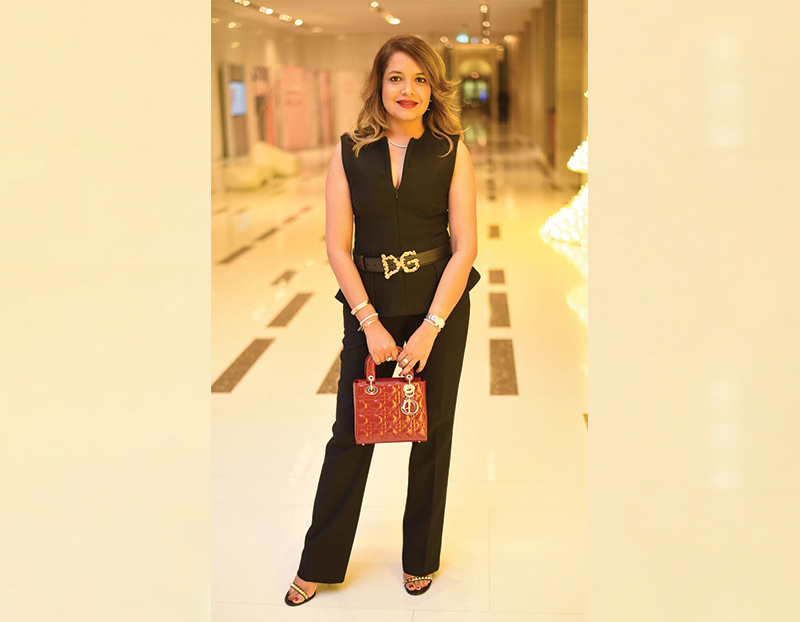
The HALO Trust, the world’s largest humanitarian landmine clearance organization, has appointed Rishini Weeraratne as its Ambassador for Sri Lanka. In her new role, she will support HALO’s global mission by raising awareness of mine action, strengthening advocacy efforts, and championing initiatives to protect communities impacted by landmines and unexploded ordnance, particularly in Sri Lanka. She will also play a key role in HALO’s international engagement and communications initiatives.
HALO began working in Afghanistan in 1988. Today HALO operates in more than 30 countries and territories across Africa, Asia, Europe and Caucasus, Latin America, and the Middle East. Its teams work daily to clear landmines, deliver risk education and restore land for agriculture, homes and infrastructure. HALO gained international recognition after Diana, Princess of Wales, visited its work in Angola in 1997 which helped accelerate support for the Mine Ban Treaty. Sri Lanka is one of HALO’s longest standing programmes. HALO has been operational in the island since 2002 and has cleared more than 300,000 mines and over one million explosive remnants of war, enabling thousands of families to return home safely. HALO is the second largest employer in the Northern Province, and its workforce is 99 percent locally recruited. Women make up 42 percent of the demining teams, reflecting HALO’s commitment to local empowerment and employment in post conflict communities.
Rishini Weeraratne, Ambassador for Sri Lanka, The HALO Trust:
“It is a privilege to support The HALO Trust’s mission. Although Sri Lanka is my home country and close to my heart, I am also committed to advocating for HALO’s work around the world. Millions of people live with the daily risk of landmines and unexploded ordnance. By raising awareness and amplifying the voices of affected communities, I hope to contribute to a safer future for families everywhere.”

Power sector overhaul targets losses, debt and tariffs

India, Sri Lanka speakers discuss technology-driven parliamentary innovation, including AI-enabled systems

Pakistan HC celebrates academic achievements of Lankan graduates

Tourist arrivals hit 2.3m in 2025, India tops source markets

Grade 6 English module controversy: NIE’s Deputy Director sent on compulsory leave

Ethnic-related problems need solutions now

‘Dates have the highest sugar content to fight Coronavirus’

Sunday Island 27 December – Headlines

#SundayIsland 17th December – Headlines

Sunday Island – 28th March

Sunday Island Headlines – 21 March

Sunday Island – 21st February – Headlines
-

 Editorial2 days ago
Illusory rule of law
-
 News3 days ago
UNDP’s assessment confirms widespread economic fallout from Cyclone Ditwah
-

 Business5 days ago
Koaloo.Fi and Stredge forge strategic partnership to offer businesses sustainable supply chain solutions
-

 Editorial3 days ago
Crime and cops
-

 Features2 days ago
Daydreams on a winter’s day
-

 Editorial4 days ago
The Chakka Clash
-
 Features2 days ago
Surprise move of both the Minister and myself from Agriculture to Education
-

 Features1 day ago
Extended mind thesis:A Buddhist perspective