
Editorial
Subsidised meals and police guards


There was a babble of righteous indignation when new MPs elected to the incumbent Parliament were told during an orientation session that meals served to them at the Diyawanna restaurant cost the taxpayer a cool three thousand bucks per meal though they paid only a relative pittance for what they ate. The figure, which seemed highly unlikely, was later corrected to say that a fish meal cost Rs. 950 to provide while a vegetarian meal cost Rs. 629 with MPs charged Rs. 200 per meal. In a previous comment on this subject, we said that the chances are that the entire food bill in the legislature appears to have been divided by 225 (the number of MPs) to reach the astronomical figure although it is not only the legislators who eat in Parliament. Numerous officials, policemen, the press and sundry others eat there as well knowing that they are being treated to a highly subsidized meal. Although the
Speaker promised to go into the matter and report back, nothing further was heard on the subject. So the people remain ignorant on the true situation and quite willing to believe the worst.
Now the question of the security offered to parliamentarians has cropped up with a couple of Samagi Jana Balavegaya MPs saying that two police guards assigned to them is insufficient. Former Speaker Chamal Rajapaksa, now charged with the responsibility Irrigation, Internal Security, Home Affairs and Disaster Management seems to have struck a responsive chord in the public mind saying that policemen will not be deployed “to carry files and bags of MPs.” He might have added “or answer telephones” because that is also a common chore falling on those cops assigned to security details of parliamentarians. From what the Minister said, the previous four policemen per MP has now been reduced to two and the government did not seem inclined, rightly we believe, to increase this. But there were no questions asked about numbers assigned to “special cases” including ministers, opposition personalities, and former presidents. The minister will surely be embarrassed to reveal the facts as well as the names of the privileged few.
Rajapaksa explained that it was necessary to substantially increase the protection granted to MPs, during the JVPs second adventure in the late eighties when several MPs and other political activists were literally bumped off in cold blood. There were so many of them including several MPs from both sides of the fence and others like Vijaya Kumaranatunga who might have become President as his widow, Chandrika Bandaranaike Kumaranatunga, did some years later, Apart from the MPs there were well known trade unionists like PD Wimalasena of the LSSP and LW Panditha of the CP. Other names that readily come to mind include Nandalal Fernando, General Secretary of the UNP and that party’s Chairman Harsha Abeywardene. Older readers might remember the grenade which did not explode flung at Dr. Colvin. R. de Silva through a verandah grill at his Kollupitiya home late in the night.
Then came the LTTE threat which was much more fearsome than its JVP predecessor with the Tigers responsible for the assassination of no less than Rajiv Gandhi, President Premadasa, Foreign Minister Lakshman Kadirgamar, Gamini Dissanayake, Lalith Athulathmudali, Ministers Jeyaraj Fernandopulle, CV Gooneratne, Ranjan Wijeratne and many more including a large number of Tamil MPs including TULF leaders like Messrs. A. Amirthalingam, M. Sivasithamparam and Tamil Congress Leader Kumar Ponnambalam. Naturally, as Minister Chamal Rajapaksa said, huge resources had to be thrown into protect national leaders and other vulnerable persons at that time. President Chandrika Kumaratunga lost an eye and barely escaped with her life in the last campaign rally she addressed prior to her re-election. An icy chill will run down the spines of all those who remember those terror-filled days. Both the JVP and LTTE terror resulted in an ever ballooning security apparatus like the Presidential, Prime Ministerial and Ministerial Security Divisions of the Police. There are necessarily special units also, like diplomatic protection. Thousands of policemen are assigned for such duties at the expense of regular law enforcement.
The extent of VIP security is usually based on threat perception. But even with such perception going sky high, as in the case of Mr. Lakshman Kadirgamar, and the massive resources deployed, it was not possible to save him from the LTTE sniper who put a bullet through his head having patiently bided his time for probably months. The assassin had been holed up in the unused upper floor of a neighboring residence whose occupants did not know what was going on in a part of their house they never visited. Kadirgamar, typically, did not wish his neighbors harassed in any way and that resulted in his personal security personnel not running a fine tooth comb as they well might have had they not been prevented from so doing.
We say all this in the context of the reality that electors generally react adversely to the perks heaped on representatives sent by them particularly to Parliament. Thus the media is able to raise a great hoo haa about what their MPs are able to eat in the House restaurant and at what price. People naturally rile against security squads, sometimes converted to virtual private armies during extraordinary times, and white-gloved soldiers in VIP motorcades shooing people off the roads to make way for the high and mighty to speed by. The JVP insurrection and the civil war naturally bloated the security apparatus but does it need to remain so for all time now that the threats are gone?



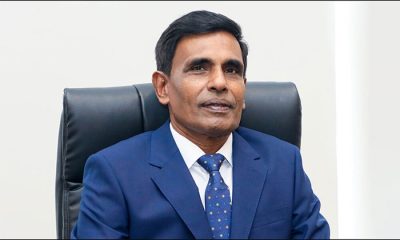
Public Security Minister Ananda Wijepala has informed Parliament of some root causes of the country’s foreign exchange woes. He told the House the other day that a mega fraud involving the transfer of millions of dollars overseas under the guise of payments for non-existent imports, had been uncovered by the police and the Customs. However, the racket of phantom imports is a common mechanism that facilitates capital flight and illicit financial outflows. It is not of recent origin.
Minister Wijepala informed Parliament that investigations by the Central Crime Investigation Bureau , the Financial Crimes Investigation Division and Sri Lanka Customs had revealed that large-scale foreign exchange transfers were being routed abroad for goods that were never imported, and they contributed to significant dollar outflows from the country.
Minister Wijepala told the House that the loopholes exploited for illicit capital flight had been created through the Foreign Exchange Act No. 12 of 2017 (FEA-2017) during the UNP-led Yahapalana government, which did away with some crucial provisions of the Prevention of Money Laundering Act, No. 5 of 2006, according to which foreign exchange offences were predicate offences for money laundering. One may recall that the JVP backed the UNP-led Yahapalana government, which repealed the Exchange Control Act, No 24 of 1953 (ECA-1953) for the sake of crooks among its cronies. The JVP was even represented on the National Executive Council of that UNP-led administration.
The ECA-1953 was the primary legislative framework governing foreign currency, gold, securities, and cross-border financial transactions in Sri Lanka. In 2017, the Yahapalana government replaced the ECA-1953 with the FEA-2017 on the pretext of liberalising the foreign exchange flow. As per the ECA-1953, violations of its provisions were non-bailable criminal offences and they led to the confiscation of offenders’ property. By the time of its repeal, there were 30 court cases against offenders who included cronies of the UNP and the SLPP. The Frontline Socialist Party has rightly pointed out that when a new Act is introduced, repealing the old one, mention is made of the procedure to be adopted for the cases pending before court over previous offence. The FEA–2017 converted criminal offences under the previous Act into civil offences, which were relegated to the jurisdiction of the Magistrates’ Courts from the High Courts, and allowed bail to be granted by Magistrates. The confiscation of property, which was previously mandatory, was left to the judges’ discretion. The cases filed under the ECA-1953 came to an end. The new Act required frsh cases to be filed within a period of three months, but no such action was taken, and the offenders got off scot-free for all intents and purposes.
The FEA-2017 made an already bad situation worse. It has stood foreign exchange racketeers including errant exporters in good stead, and contributed to the present foreign currency crisis. Now that it has been revealed that errant exporters are parking proceeds from exports overseas and resorting to phantom imports, there is a pressing need for the ECA-1953 to be restored urgently to deal with such racketeers and shore up the country’s forex reserves.
The ongoing desperate measures to stabilise the rupee and tackle the forex issues must be complemented with drastic measures, such as a crackdown on hawala and undiyal networks. Successive governments have baulked at doing so, for their members themselves use these informal channels to stash away their ill-gotten funds in offshore accounts. Unless the illegal outflow of forex is blocked, with errant exporters being made to repatriate export proceeds, it will be well-nigh impossible to overcome the forex problems.
Most of all, there is a pressing need for a new law with provision for foreign exchange racketeers who got away with their crimes following the introduction of the FEA-2017 to be brought to justice. Their illegal operations have stood in the way of the country’s effort to tackle a worsening currency crisis.
Having talked the talk, the JVP-NPP government must walk the walk. It must fish or cut bait. After all, the JVP-led NPP came to power, promising to bring all racketeers to justice.

Saturday 13th June, 2026
Prime Minister and Education Minister Dr. Harini Amarasuriya has informed Parliament that as many as 267,138 students dropped out of school between 2018 and 2024. She said so in answer to a question from Opposition MP Hesha Withanage. Pointing out that figures for the period from 2018 to 2024 had been derived from annual school census reports, using an internationally recognised methodology that takes into account student enrolment figures and dropout rates from Grade One to Grade Ten, the PM added that definitive data on school dropout were not available for the period between 2010 and 2017. This is something serious. The education authorities must have such data. Otherwise, how can they formulate policies aimed at improving student participation in school education?
The Prime Minister told Parliament that the school dropout statistics were subject to the caveat that not all students who had left schools could be considered dropouts; some of them may have moved to schools in other areas, enrolled in international schools, or migrated overseas with their families while continuing their studies.
Such cases could not be separately identified under the methodology used to compile the statistics and were, therefore, included in the overall dropout figures. This points to the need for a holistic statistical analysis of the issue of students leaving school, and steps must be taken to ensure that all relevant factors are taken into account when statistics are prepared. The education authorities should be able to say how many children actually discontinued their education.
Thankfully, UNESCO has pointed out that Sri Lanka continues to perform better than most South Asian countries in keeping children in school though thousands still leave the education system annually. Using available data for 2024, some researchers have argued that Sri Lanka’s school dropout rate is about 0.7 per cent of the government-school student population. Regional comparisons show Nepal and Sri Lanka among the stronger performers on school retention, while Bangladesh has made substantial progress and Pakistan continues to struggle with high dropout rates. India, too, has worked hard to bring down the national school dropout rate. However, the bar must be set higher, and action should be taken to prevent school dropouts completely. It is hoped that the Prime Minister, as an academic and researcher, will address this issue, and ensure that the education authorities will fulfil the need for high-quality, policy-relevant statistics.
Prime Minister Dr. Amarasuriya has said a range of factors have contributed to students leaving the formal education system. According to media reports quoting her answer in Parliament, they include personal circumstances, school-related issues, family and economic difficulties, social influence, as well as students opting for alternative educational pathways and training opportunities. Researchers inform us that mong the main causes of school dropout in Sri Lanka are poverty, poor academic achievement, lack of perceived relevance of education, family difficulties, child labour, even early marriage or pregnancy in some cases, and inequalities in educational opportunities. From a policy perspective, as researchers have pointed out, addressing these issues requires not only financial support for vulnerable families but also improvements in school quality, vocational pathways, counselling services and community support systems.
The need for a multi-pronged strategy to address the root causes of the school dropout issue cannot be overemphasised. This should figure high on the incumbent government’s agenda.

Friday 12th June, 2026
Government politicians are giving a running commentary of the investigations into the Easter Sunday terror attacks. They usually do so in Parliament and at media briefings to generate headlines and distract attention from burning issues.
Minister of Public Security Ananda Wijepala has told Parliament that investigators have gathered sufficient evidence to establish the involvement of former State Intelligence Service Director Major General (Retd.) Suresh Sallay, in a conspiracy linked to the 2019 carnage. Other JVP/NPP politicians also come out with what can be described as teasers about the CID’s Easter Sunday terror probe, making one wonder if the outcome of investigations is known to the government in advance.
The claim that Sallay was involved in the Easter Sunday bombings is still an unsubstantiated allegation, but going by government politicians’ claims about the investigations into the terror attacks, it is obvious that they are privy to information that the police must keep confidential to ensure the integrity of the probe. It is unbecoming of crime investigators to share such information with politicians, who use it to gain propaganda mileage.
Minister Wijepala has also claimed that Sallay declined to disclose the passwords for his personal computer and mobile phone. He described Sallay’s alleged non-cooperation as an attempt to obstruct the investigative process. Isn’t it naïve to expect a former spy chief who was aware that he was living under the microscope to store in his mobile phone or personal computer any information that could be used against him? On the other hand, in this day and age, gaining access to password-protected computers and phones is child’s play.
When prominent ruling party members declare that proving a serious charge against someone is only a matter of time, and some high-profile arrests are imminent, how can investigators led by a person at their beck and call be expected to factor in contradictory evidence that can be used to challenge his political masters’ assertions and public statements? Won’t the investigators be compelled to suppress such evidence lest they should embarrass their political leaders, provide grist for their political rivals and, most of all, fall from grace as a result? Instances abound where the police fall victim to confirmation bias, cherry-pick evidence and build cases backward in outcome-driven investigations. Initial police investigation that fitted information to the theory that the death of popular rugby player Wassim Thajudeen was due to a car crash is a case in point.
In this country, police officers do not stand up to the powers that be in the name of truth, justice and fair play; instead, they stand to attention before politicians in power. One may recall that in 2016, the then IGP Pujith Jayasundera was caught on camera, at a public meeting, answering a telephone call from someone whom he reverentially called ‘sir’ and assuring that a certain person would not be arrested. Submissiveness can become institutionally contagious. A fish is said to rot from the head down. A Yahapalana era audio clip of a telephone conversation between CID Director SSP Shani Abeysekera and Deputy Minister Ranjan Ramanayake is available in the digital space. Abeysekera is heard offering to wash pots and pans in Ramanayake’s kitchen over some matter.
There is no gainsaying that the Easter Sunday terror attacks, which claimed more than 275 lives and left many others seriously injured, must be probed thoroughly. Justice must be done to the victims. But what’s the world coming to when a government brings its own party members out of retirement, elevates them to key positions in the police and the public security sector and assigns them to conduct high-profile criminal investigations and declares suspects guilty even before they are indicted. Most of all, its leader, President Anura Kumara Dissanayake, orders the detention of suspects under the Prevention of Terrorism Act and predicts judicial decisions accurately?
Political affiliations and prejudices of crime investigators have a corrosive effect on the integrity of the probes they conduct.

The use of local organic Agricultural products in the Bakery Industry will strengthen both local farmers and the tourism industry – PM

Prime Minister meets with UNICEF delegation

Qatar net late against Switzerland to secure historic first World Cup point

Australia stun Turkiye 2-0 in counterattacking masterclass

Five Indian air force staff killed as transport plane crashes in Assam

New York Knicks win NBA championship for first time in over 50 years

‘Dates have the highest sugar content to fight Coronavirus’

Sunday Island 27 December – Headlines

#SundayIsland 17th December – Headlines

Sunday Island – 28th March

Sunday Island Headlines – 21 March

Sunday Island – 21st February – Headlines
-

 Editorial6 days ago
Probe Sallay’s complaint
-
 News2 days ago
CIABOC summons Yoshitha over his participation in British Navy training programme
-
 News4 days ago
Local firms move millions of dollars overseas for phantom imports: Govt.
-
 Midweek Review4 days ago
July 09: An inexcusable overall security failure and exceptional contingency plan
-

 Opinion5 days ago
Could Sri Lanka once again face an economic crisis similar to 2022?
-

 News4 days ago
AI raises concerns over arrest of Sallay and rapper under PTA
-
 News5 days ago
Sallay refuses to end hunger strike unless probe is taken out of CID led by Shani
-
 Latest News5 days ago
Iran and Israel say they will pause strikes but warn of retaliation if ceasefire breached again