
News
Study identifies distinct frog species not belonging to generic ‘hourglass’ classification

by Ifham Nizam
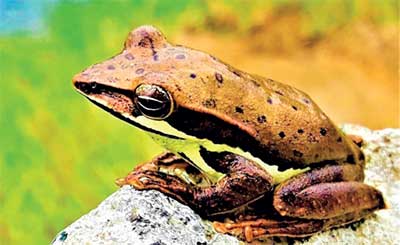
A study on the abnormalities and polymorphisms of amphibians found within and outside the Horton Plains National Park has identified a distinct frog species that does not belong to its generic “hourglass frog” classification.
The study was conducted by graduate research assistant Praneeth Silva of Sri Jayewardenepura University’s Department of Zoology under the supervision of Prof. W. A. D. Mahaulpatha, senior lecturer and head, Department of Zoology.
“Our study on amphibian abnormalities and causes found that Taruga eques species is faced with bigger threats in both localities in comparison to other amphibian species”, Silva told The Sunday Island.
Within and outside regions of the Sri Lankan Plains, habitat modifications due to human activities were the main threat on Taruga eques. The study also found that natural predators were the main cause for formation of amphibian abnormalities found within the Plains.
The study revealed a novel pattern polymorphism of Taruga eques in that a variety of the species without the hourglass was identified within and outside the Plains, indicating that the common name Taruga eques cannot be broadly classified as an “hour-glass frog”. At the end of the study, new six dorsal colour variations and five dorsal pigment patterns of Taruga eques could be newly introduced to the science.
 Amphibian body colouration and pigment patterns play a vital role for their survival in the environment. Polymorp-hism (happening together in the same habitat of two or more distinct species results in rarest of them getting mutated to be like the main species) has probably led Taruga eques to be seen as hourglass tree frog though in reality the situation is likely to be rather different.
Silva said that a total of 694 amphibians belonging to four families and 11 species were recorded in five lentic water bodies which were studied. Five hundred and eleven (511) individuals were examined inside the Plains and 183 outside the region. Of the 511 individuals, only 4.5 percent of the amphibians had abnormalities. Of the 183 individuals examined outside the Plains, 80.87 percent had abnormalities.
Of the 511 inspected amphibians within the Plains, 0.59 percent suffered from ectromelia and four percent had cysts. Of the 183 amphibians examined outside the Plains, 80.33 percent had cysts and 0.55 percent had femoral projections. Cysts accounted for most of the abnormalities in both environments. Most of the infections (60 percent) recorded in the amphibians inside the Plains were mild. In contrast 77.55 percent of the infections recorded in the amphibians outside the Plains were moderate.
A research associate attached to the University of Indonesia Research Centre for Climate Change Thasun Amarasinghe said that not only hourglass tree frogs but almost all amphibians in Sri Lanka are under threat.
“They are called hourglass tree frogs as they have a colour pattern like an hour glass mark on their dorsum (back). They are highland species, and are very sensitive to temperature and humidity so in addition to habitat loss and forest fragmentation, there will be a future threat to them due to climate change”, he warned.
The major conclusion of the study was the natural selection results in the ‘polymorphisms’ to face the threat of predation. Moreover, colour and pattern polymorphisms manifest due to strong selection by visually oriented predators and the polymorphisms are highly valuable for the species to ensure their survival in the environment, while helping them to avoid abnormalities.
(Pix courtesy Praneeth Silva)

Latest News
Advisory for Severe Lightning issued to the Western and Sabaragamuwa provinces and Nuwara-Eliya, Galle and Matara districts

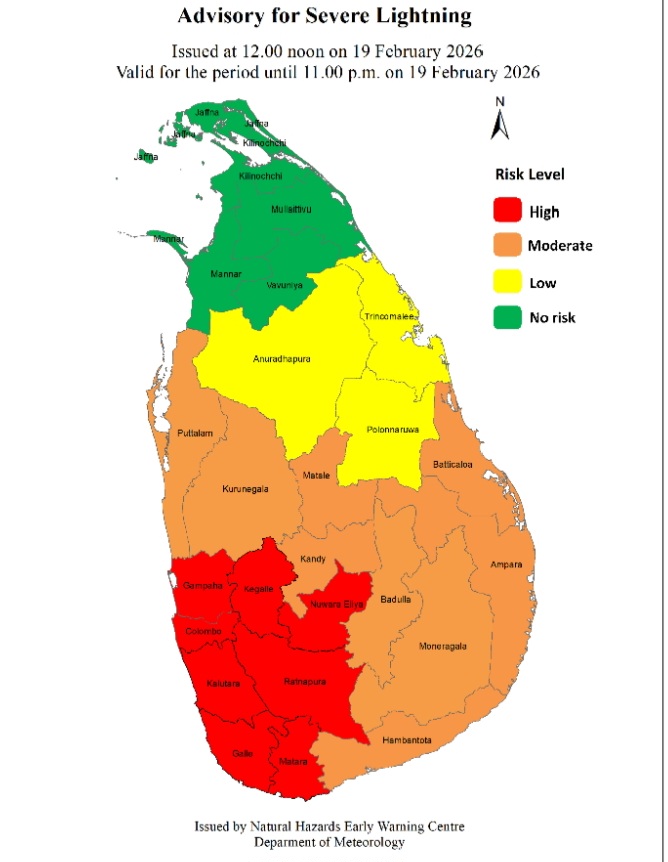
Advisory for Severe Lightning
Issued by the Natural Hazards Early Warning Centre at 12.00 noon 19 February 2026 valid for the period until 11.00 p.m. 19 February 2026
The public are warned that thundershowers accompanied with severe lightning are likely to occur at some places in in the Western and Sabaragamuwa provinces and in Nuwara-Eliya, Galle and Matara districts after 2.00 p.m.
There may be temporary localized strong winds during thundershowers.
General public is kindly requested to take adequate precautions to minimize damages caused by lightning activity.
ACTION REQUIRED:
The Department of Meteorology advises that people should:
Seek shelter, preferably indoors and never under trees.
Avoid open areas such as paddy fields, tea plantations and open water bodies during thunderstorms.
Avoid using wired telephones and connected electric appliances during thunderstorms.
Avoid using open vehicles, such as bicycles, tractors and boats etc.
Beware of fallen trees and power lines.
For emergency assistance contact the local disaster management authorities.
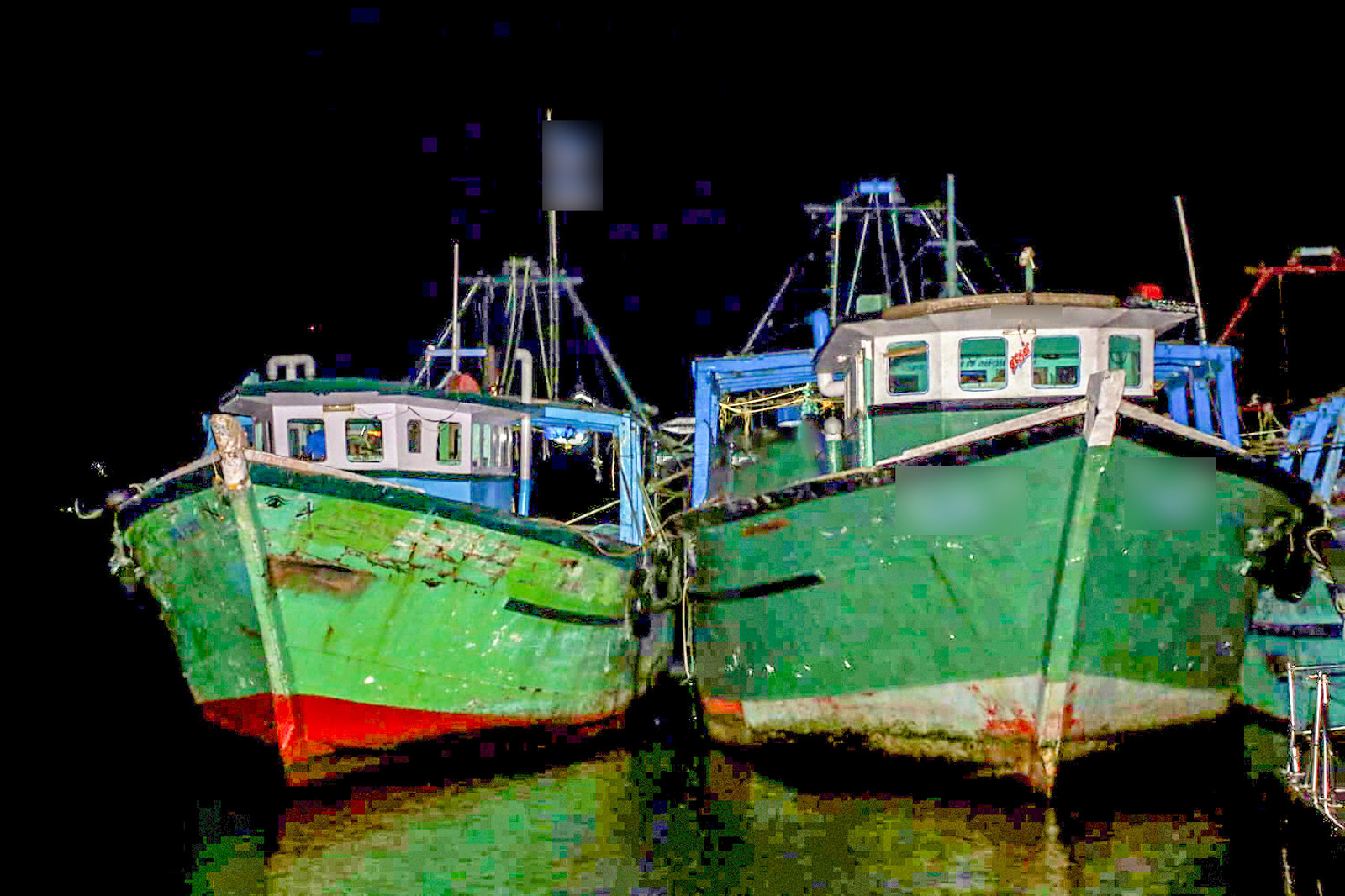
During operations conducted in the dark hours of 18 Feb 26, the Sri Lanka Navy and Coast Guard seized 04 Indian fishing boats and apprehended 22 Indian fishermen, while they were poaching in Sri Lankan waters north of Mannar and off the Delft Island, Jaffna.
Recognizing the detrimental effects of poaching on marine resources and the livelihoods of local fishing communities, the Sri Lanka Navy and Coast Guard continue to conduct regular operations as proactive measures to deter such activities. These efforts underscore the collective robust approach and steadfast commitment to safeguarding the nation’s marine ecosystems while ensuring the economic security and wellbeing of its citizens.
The 02 fishing boats along with the 10 fishermen held in Mannar were handed over to the Fisheries Inspector of Mannar and the remaining 02 fishing boats intercepted off the Delft Island, together with 12 Indian fishermen were handed over to the Fisheries Inspector of Myliddy for onward legal proceedings.
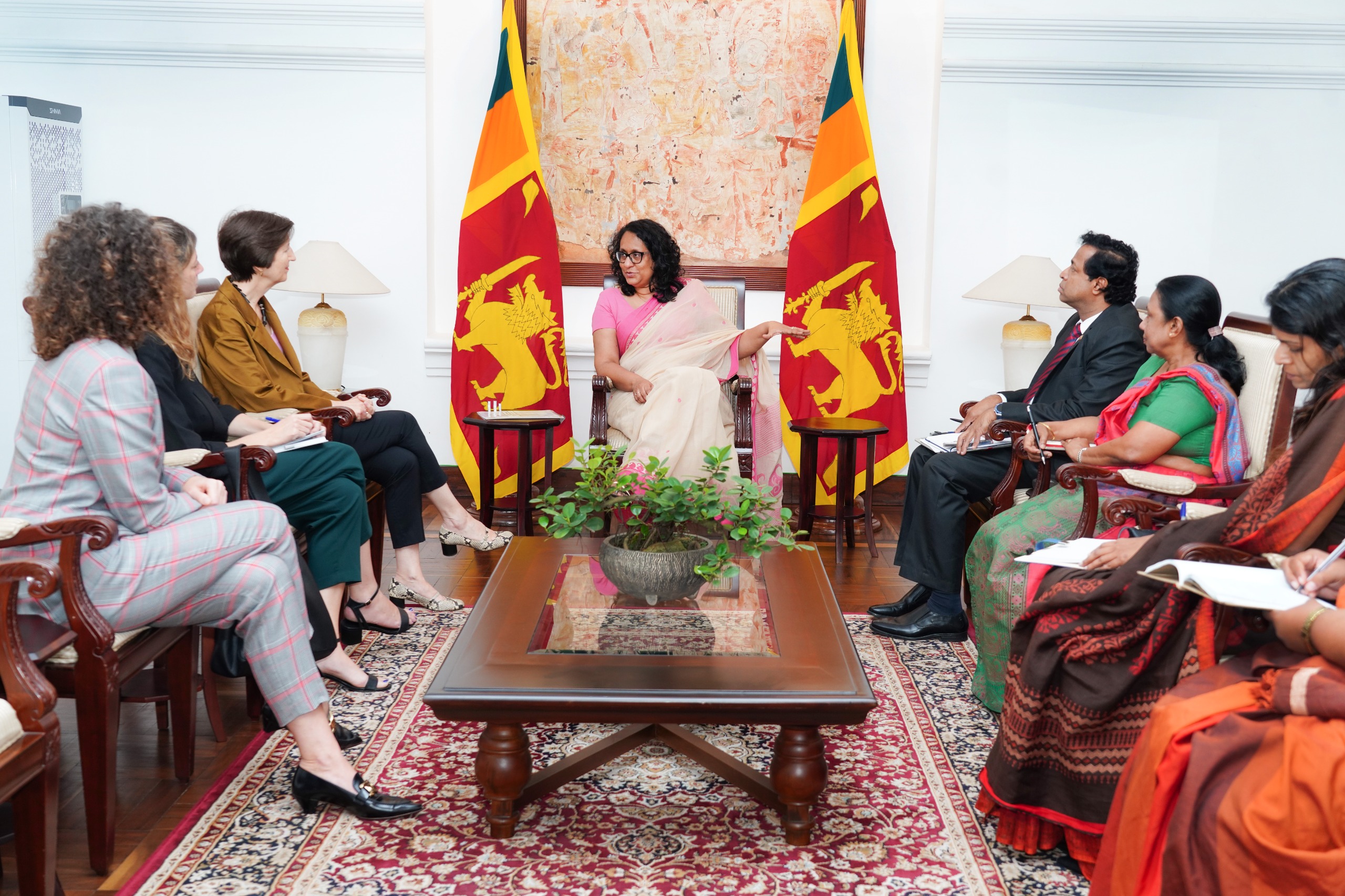
The Ambassador of Switzerland to Sri Lanka Dr. Siri Walt paid a courtesy call on Prime Minister Dr. Harini Amarasuriya on the 17th of February at the Temple Trees.
Welcoming the Ambassador of Switzerland to Sri Lanka the Prime Minister briefed the Ambassador on her recent visit to Davos to participate in the World Economic Forum Annual Meeting noting that the series of high-level bilateral meetings held on the sidelines of the Forum, along with two important industry visits provided valuable insights for Sri Lanka’s economic engagement.
The discussion focused on Switzerland’s vocational education and training (VET) system, with particular interest in exploring possible cooperation and knowledge-sharing opportunities.
The Prime Minister also conveyed her appreciation for the assistance extended by the Government of Switzerland following Cyclone Ditwah. She emphasized Sri Lanka’s need for enhanced technical assistance during the ongoing rebuilding phase, especially in relation to the reconstruction of bridges and railway infrastructure.
Both sides reaffirmed their shared commitment to further strengthening bilateral relations between Sri Lanka and Switzerland, and to expanding cooperation in areas of mutual interest.
First Secretary (Political) of the Embassy of Switzerland in Colombo Ms. Justine Boillat, First Secretary (Migration) of the Embassy of Switzerland in Colombo Ms. Andrea Kienast and the Secretary to the Prime Minister, Pradeep Saputhanthri, Additional Secretary to the Prime Minister, Ms. Sagarika Bogahawatt and officials from the Ministry of Foreign Affairs , Foreign Employment, Tourism.attended the meeting.
[Prime Minister’s Media Division]

Ex-UK Prince Andrew arrested on suspicion of misconduct in public office

Advisory for Severe Lightning issued to the Western and Sabaragamuwa provinces and Nuwara-Eliya, Galle and Matara districts

Navy and Coast Guard seize 04 Indian fishing vessels poaching in Sri Lankan waters

Hope’s 75, Forde and Joseph’s wickets help West Indies go into playoffs unconquered

Sri Lanka opt to bat against Zimbabwe, play Madushanka and Madushan

South Korea’s ex-president jailed for life for masterminding an insurrection

‘Dates have the highest sugar content to fight Coronavirus’

Sunday Island 27 December – Headlines

#SundayIsland 17th December – Headlines

Sunday Island – 28th March

Sunday Island Headlines – 21 March

Sunday Island – 21st February – Headlines
-

 Life style5 days ago
Marriot new GM Suranga
-

 Business4 days ago
Ministry of Brands to launch Sri Lanka’s first off-price retail destination
-
 Features5 days ago
Monks’ march, in America and Sri Lanka
-

 Features5 days ago
The Rise of Takaichi
-
 Features5 days ago
Wetlands of Sri Lanka:
-
 News4 days ago
Thailand to recruit 10,000 Lankans under new labour pact
-
 News4 days ago
Massive Sangha confab to address alleged injustices against monks
-

 News2 days ago
IMF MD here