
News
Stop Child Cruelty Trust launches project to protect children

Encourages children to reflect on their welfare via National Art and Speech Competition
Taking a novel approach to commemorate Children’s Day, Stop Child Cruelty Trust (SCC) recently launched the ‘#JustANumber Child Protection Month’ to increase awareness of the fundamental rights of children through various public programmes. One of the key objectives of this advocacy campaign is to compel the Parliament to change the Penal Code on Cruelty to Children, especially following the Supreme Court’s recognition of corporal punishment of children by schools as unlawful and a violation of a child’s right. To bolster this purpose, SCC will also join hands with like-minded Civil Society Organisations and Non-Governmental Organizations to form Sri Lanka’s first ever Child Protection Alliance.
The highlight of the virtual event was the introduction of the first initiative taken under the #JustANumber Child Protection Month – a National Art and Speech Competition. The competition aims to create a platform for children as young as 6 years up to 18 years to share their own, unique perspective on the country’s child protection crisis and encourage them to directly get involved in the decision making related to their welfare. For more details regarding the competition, please visit www.facebook.com/groups/211381800981039.
Commenting on the purpose behind the #JustANumber Child Protection Month was Chairperson of Stop Child Cruelty Trust, Dr. Tush Wickramanayaka. “Even with the unprecedented rise in child abuse on our paradise island, the relevant authorities appear to be crippled in their efforts to protect and promote our children’s rights. Child protection is a collective social responsibility and Stop Child Cruelty is fully committed to becoming the powerful force behind increasing knowledge and engagement to empower Sri Lankans across the country to recognise the child as a rights holder.”
During the past year, five children had been physically and sexually abused and killed in Sri Lanka. Despite having signed the United Nations Convention on the Rights of the Child (UNCRC) three decades ago and being the only South Asian country committed to Sustainable Development Goal 16.2 to end violence against children, the country still lacks a national child protection framework.
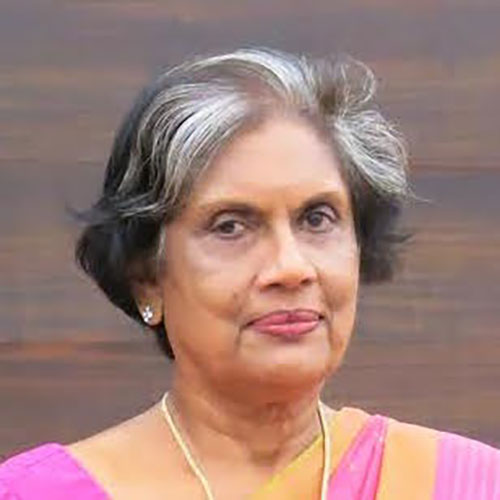
Addressing the event as the Chief Guest was former President of Sri Lanka, Chandrika Bandaranaike Kumaratunga – a pioneering figure in implementing child protection legislation in the country. After signing the UNCRC in 1991, she authorised amendments to the Penal Code 308A Cruelty to Children in 1996, established the Child Protection Authority in 1998, and approved the Ministry of Education Circular 17/2005 to ban corporal punishment in schools in 2005.
While reflecting on the tremendous achievements of the special Child Protection Task Force of experts during her tenure, Mrs Kumaratunga reiterated that Government authorities should resolve the child protection crisis effectively without politicising matters by working cohesively with Non-Governmental Organizations. “Child protection is the ultimate measurement of the level of civilization in a society and I applaud the efforts of Stop Child Cruelty Trust in establishing the Child Protection Alliance to find solutions to the current child protection crisis in Sri Lanka,” she stated. Mrs Kumaratunga will also be the judge of the National Art and Speech Competition.
Professor Savithri Goonesekere, Emeritus Professor of Law and former Vice Chancellor at the University of Colombo was the keynote speaker at the event. As a former member of the Committee on the Elimination of Discrimination against Women and the Global Partnership to End Violence against Children, Prof. Goonesekere has been actively contributing towards legal and policy child protection reforms. “Strengthening law enforcement by rejecting the proverbial rhetoric by relevant authorities and responding to child cruelty by engaging with children is a creative strategy and perhaps the one effective way to address Sri Lanka’s child protection crisis”, she said.
The #JustANumber Child Protection Month will be hosting a range of events including a series of online forums that will take place every weekend from the 1st of October until the 20th of November 2021. To stay updated regarding the upcoming activities under the campaign and other events, visit www.facebook.com/stopchildcruelty. Those interested in getting involved towards the protection of children in Sri Lanka can visit www.stopchildcruelty.com or email info@stopchildcruelty.com.


The Cabinet of Ministers has approved the resolution furnished by the Minister of Agriculture, Livestock, Land, and Irrigation to determine the price of the maize by a committee appointed by the Secretary to the Ministry of Agriculture, Livestock, Land, and Irrigation in the future and to import only the quantity of maize that could not be supplied locally for the production of animal feed, under the supervision of the Department of Animal Production and Health.
The Cabinet of Ministers has approved the joint resolution furnished by the President in his capacity as the Minister of Finance, Planning, and Economic Development and the Minister of Industries and Entrepreneurship Development to phase the removal of Cess tax imposed on imported goods under 2,634 combined classification codes identified over 4 years [from 2026 to 2029\.
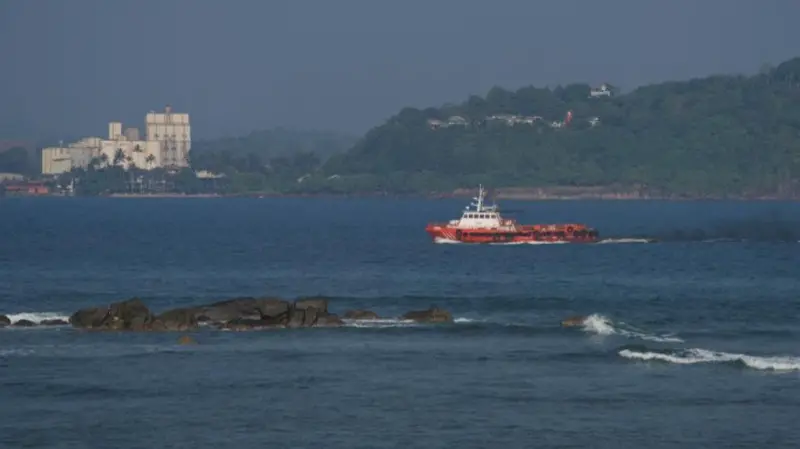
Around 140 people are missing after an Iranian navy ship sank off the coast of Sri Lanka.
The Sri Lankan navy says around 180 people were on board, with 32 rescued. A spokesman tells the BBC the cause of the sinking is not known
Sri Lanka’s navy has confirmed that it’s rescued 32 people after it received a distress call from Iranian navy ship ‘IRIS Dena’ early this morning.
Budhika Sampath, the spokesman of Sri Lanka’s navy says: “Though it was beyond our waters, it was within our search and rescue region. So we were obliged to respond as per international obligations.”
He adds: “We found people floating on the water, rescued them, and later when we inquired we found that those people are from an Iranian ship.”
He also says that according to the documentation of the ship 180 people are believed to have been on board, although the exact number of missing is unknown.
The spokesman says at the time of launching the rescue operations they did not see the vessel but saw oil patches on the water and floating life rafts.
He also tells the BBC that he rejects the reports of a submarine attack causing the sinking, and that the cause is unknown.
Earlier the secretary of the country’s defence ministry Air Vice Marshal Sampath Thuiyakontha told BBC Sinhala that around 140 people are thought to be missing.
So far, Sri Lanka’s military has not been able to confirm what might have caused the ship to sink.
[BBC]

Cabinet approves import of Maize to meet shortfall

Cabinet nod for the removal of Cess tax imposed on imported good

Around 140 people missing after Iranian navy ship sinks off coast of Sri Lanka

South Africa strong favourites as quest for elusive silverware hots up

Australian girl, 8, killed in snowmobile accident in Japan

Russia, China raise diplomatic voices against US-Israeli attacks on Iran

‘Dates have the highest sugar content to fight Coronavirus’

Sunday Island 27 December – Headlines

#SundayIsland 17th December – Headlines

Sunday Island – 28th March

Sunday Island Headlines – 21 March

Sunday Island – 21st February – Headlines
-

 Opinion6 days ago
Jamming and re-setting the world: What is the role of Donald Trump?
-
 Features3 days ago
Brilliant Navy officer no more
-
 Features6 days ago
An innocent bystander or a passive onlooker?
-
 Features7 days ago
Ratmalana Airport: The Truth, The Whole Truth, And Nothing But The Truth
-

 Opinion3 days ago
Sri Lanka – world’s worst facilities for cricket fans
-
 Business7 days ago
IRCSL transforms Sri Lanka’s insurance industry with first-ever Centralized Insurance Data Repository
-

 Business6 days ago
An efficacious strategy to boost exports of Sri Lanka in medium term
-
 Features4 days ago
Overseas visits to drum up foreign assistance for Sri Lanka