
News
Statement issued by Margaret Satterthwaite, Special Rapporteur on the independence of judges and lawyers on the controversial 22 Amendment:


I have the honour to address you in my capacity as Special Rapporteur on the independence of judges and lawyers, pursuant to Human Rights Council resolution 62/12.
In this connection, I would like to bring to the attention of your Excellency’s Government information I have received concerning the reported proposal to amend the Democratic Social Republic of Sri Lanka Constitution of 1978, more specifically to increase the retirement age of superior court judges.
This amendment, in the form reportedly proposed, and in its implications, may not be in line with international human rights standards related to the independence of the judiciary and the right to a fair trial, including: the separation of powers, the ability of judges to perform their functions free from undue influence, pressure or interference, and the public’s confidence in the judiciary’s independence.
I refer to your Excellency’s Government’s international human rights obligations, specifically those related to the independence of the judiciary and the right to a fair trial, protected in both the Universal Declaration of Human Rights (UDHR), and in the International Covenant on Civil and Political Rights (ICCPR), which the Democratic Socialist Republic of Sri Lanka acceded to on 11 June 1980.
In the present communication, I do not intend to undertake an exhaustive assessment of the proposed amendment. Instead, I focus on those areas that fall under my mandate and are related to judicial independence. Domestic legal framework and proposed amendment.
Domestic legal framework and proposed amendment
The current provision in the Constitution’s section on the Independence of the Judiciary regulates the retirement age of superior court judges. Under article 107, paragraph 5, the age of retirement of judges of the Supreme Court is established a tsixty five years and of judges of the Court of Appeal at sixty-three years.
The proposed change to the retirement age of superior court judges
While the reported proposed amendment to article 107 presented by the Minister of Justice as an administrative reform has not yet been officially published and its precise language remains publicly unavailable, it is understood that the amendment would increase the retirement age of superior court judges by two years. Consequently, the mandatory retirement age would be extended to sixty-seven years for Supreme Court judges and sixty-five years for Court of Appeal judges.
The amendment as it stands would reportedly affect the tenure of sitting judges rather than applying prospectively.
Applicable international human rights law and standards
Judicial tenure is a core safeguard of judicial independence. International human rights treaties and standards are understood to require security of judicial tenure, protection from improper influence and measures to ensure public confidence in judicial processes.
Article 14, paragraph 1, of the ICCPR guarantees the right of all persons to a fair and public hearing by a competent, independent and impartial tribunal established by law.1 In its general comment No. 32 (2007), the Human Rights Committee emphasized that the requirement of competence, independence and impartiality of a tribunal is an absolute right that is not subject to any exception. The requirement of independence refers, in particular, to the procedure and qualifications for the appointment of judges and guarantees relating to their security of tenure until a mandatory retirement age or the expiry of their term of office, where such exist, the conditions governing promotion, transfer, suspension and cessation of their functions, and the actual independence of the judiciary from political interference by the executive branch and legislature. States are therefore required to adopt specific measures to ensure judicial independence and to protect judges from any form of political influence in the exercise of their functions. The Committee further explains that judges must also be protected against conflicts of interest, external pressure and intimidation. In order to safeguard their independence, the remuneration, conditions of service, pension and the age of retirement shall be adequately secured by law.
Principle 1 of the UN Basic Principles on the Independence of the Judiciary provides that judicial independence shall be guaranteed by the State and respected by all governmental and other institutions. Principle 2 provides that the judiciary shall decide matters before them impartially, on the basis of facts and in accordance with the law, without any restrictions, improper influences, inducements, pressures, threats or interferences, direct or indirect, from any quarter or for any reason. Principle 11 provides that the independence, security, adequate remuneration, conditions of service and pension of judges shall be adequately secured by law. Principle 12 provides that judges shall have secure tenure until retirement age or expiry of their term.
Regional soft law principles provide similar guidance. Principle IV of the Commonwealth Latimer House Principles make clear that an independent, impartial, honest and competent judiciary is integral to the rule of law, good governance and democracy. The Beijing Statement of Principles outlines the fundamental principles governing judicial independence in the Asia-Pacific region. Principles 3, 4 and 18 reiterate standards similar to principles 1, 2, 11 and 12 of the UN Basic Principles on the Independence of the Judiciary. Principle 5 provides that all other branches and institutions of government have a duty to respect the proper role and functions of the judiciary.
The European Commission for Democracy through Law (hereinafter “the Venice Commission”) has emphasized that security of tenure until the mandatory retirement age or the expiry of the term office is a fundamental guarantee of judicial independence, and is even more important in the case of the judges of a Constitutional Court, as such an institution plays a paramount role in the functioning of democracy as a final arbiter on constitutional issues, the respect of the rule of law and the protection of human rights.4 Moreover, the Venice Commission has repeatedly been critical of changes to the retirement age or term of office of judges even as a part of a general reform of the judiciary if such changes apply retroactively to the term of office of sitting judges, as such changes could affect the independence of the judiciary.5 The Venice Commission generally recommends that changes to judge’s retirement age be carefully considered and based on well-reasoned justifications, and that they be accompanied by appropriate transitional arrangements to avoid negative effects on the tenure of sitting judges .
Compatibility of the proposed changes with international standards
Immediate application of the amendment
In analyzing the proposal, I am mindful of the timing and scope of the proposed amendment. If adopted in the form reportedly proposed, the amendment would alter the tenure of sitting judges through an ad hoc constitutional amendment and thereby may give rise to concerns regarding executive and legislative interference. In this regard, I again recall the Human Rights Committee’s general comment No. 32 (2007), which emphasizes that a situation in which the respective functions and powers of the judiciary and the executive are not clearly separated, or in which the executive is able to direct or control the judiciary, is incompatible with the concept of an independent tribunal.6
While increasing the judicial retirement age may be justified by considerations such as preserving judicial expertise and ensuring institutional continuity, reforms affecting judicial tenure require meaningful debate and discussion, as well as particularly robust safeguards, given the judiciary’s constitutional role in reviewing and constraining the executive and legislative power.
Although individual judges have not been expressly identified as beneficiaries, the practical effect of the proposal may nevertheless be to prolong mandates of specific members of the superior courts. The absence of transitional arrangements or other objective safeguards increases the risk that the amendment may be perceived as altering the composition of the judiciary for immediate institutional purposes rather than establishing a generally applicable constitutional rule. These shortcomings may render the proposed amendment incompatible with article 14(1) of the International Covenant on Civil and Political Rights (ICCPR) and principles 1, 2, 11 and 12 of the United Nations Basic Principles on the Independence of the Judiciary.
Moreover, the amendment as it stands reportedly does not address the circumstances which may arise in which judges who stand to benefit from the proposed extension may subsequently be required to determine its constitutionality under article 121 of the Constitution. Although such circumstances do not, by themselves, establish actual bias, the absence of mechanisms to prevent or manage potential conflicts of interest or the appearance of such conflicts, may undermine public confidence in the appearance of judicial impartiality. If passed without amendment, I am concerned that the proposal as reported may suggest that the judiciary is insufficiently protected from executive influence, internal pressures, or career-related considerations.
In light of the foregoing, I respectfully recommend that any proposed amendment to the judicial retirement age be pursued through a transparent, inclusive, impartial, consultative and comprehensive justice reform process. Any ad hoc permanent change to the tenure of judges, without proper consultation and necessary safeguards, may erode the public’s confidence in the administration of justice and pose a serious threat to independence of the judiciary.
In the spirit of cooperation and dialogue, and in line with the mandate entrusted to me by the Human Rights Council, I would be grateful for any information and comments your Excellency’s Government may wish to provide regarding the above mentioned concerns. In particular, I respectfully invite clarification on the measures taken to ensure that the proposed amendment and the process to bring it forward complies with international standards on the independence of judges, including: 1. Any further information on this reform, including the current draft and status of the proposed reform.
2. Please provide any additional information and/or comments you may have concerning the analysis set out in the present communication. 3. Please provide information on the rationale and objective underlying the proposed amendment, including the reasons why the increase in the retirement age is intended to apply to currently serving judges rather than only to judges appointed in the future.
4. Please provide information on the safeguards in place to ensure that the proposed amendment does not give rise to actual or perceived interference by the executive or legislative branches in the composition and functioning of the judiciary.
5. Please provide information on any consultations undertaken with the judiciary, the Bar Association of Sri Lanka, legal professionals, civil society organizations, academic experts, and other relevant stakeholders regarding the proposed amendment.
6. Please provide information on any assessment undertaken by the Government concerning the potential impact of the proposed amendment on public confidence in the independence, impartiality and integrity of the judiciary.
7. Please provide information on whether the Government intends to pursue broader and comprehensive constitutional or justice-sector reforms addressing judicial tenure and related institutional matters through an open, transparent, inclusive, and participatory process. If so, please provide information on how such a process would ensure compliance with international human rights standards concerning judicial independence and the rule of law.
This communication, as a comment on pending or recently adopted legislation, regulations or policies, and any response received from your Excellency’s Government will be made public via the communications reporting website after 48 hours. They will also subsequently be made available in the usual report to be presented to the Human Rights Council.






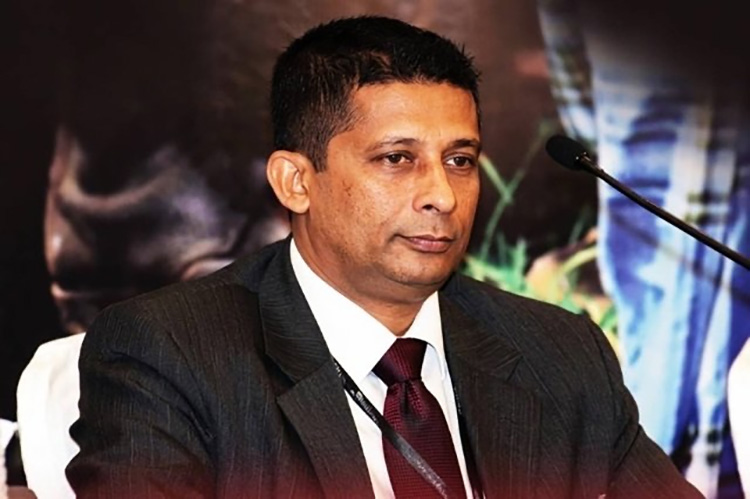
The government has chosen not to respond to questions raised by the United Nations Human Rights Council (UNHRC) regarding the detention of retired Maj. Gen. Suresh Sallay in connection with the ongoing investigations into the 2019 Easter Sunday attacks.
The Criminal Investigation Department (CID) arrested the ex-official in late February this year. The Special Rapporteur on the promotion and protection of human rights and fundamental freedoms while countering terrorism, the Working Group on Arbitrary Detention, the Special Rapporteur on the right of everyone to the enjoyment of the highest attainable standard of physical and mental health and the Special Rapporteur on the independence of judges and lawyers have jointly raised the issue on 20 July, 2026.
Drawing attention of President Anura Kumara Dissanayake to what they called alleged arbitrary detention of Sallay, former Director General of the State Intelligence Service (SIS) and former Director of Military Intelligence (DMI), under the Prevention of Terrorism Act (PTA), as well as allegations of torture and other cruel, inhuman or degrading treatment while in custody, resulting in the grave deterioration of his health, and imminent risks of retaliation through further torture and ill-treatment resulting in irreparable harm, should he be released from hospital and returned to custody, the UN sought the government explanation with a 60-day period.
The UN has stated: “This communication, and any response received from your Excellency’s Government, will be made public via the communications reporting website at the 60 days mark. Should your Excellency’s Government respond within 60 days, both the communication and the response, may be published before the 60 days mark. The communications and responses
will also be made available in the subsequent periodic report to be presented to the Human Rights Council.”
In the absence of the government’s response, the UN posted the letter, dated 20 July, 2026, addressed to President Dissanayake. The full letter can be accessed https://spcommreports.ohchr.org/TMResultsBase/DownLoadPublicCommunicationFile?gId=31125
News
Section of wartime KKS High Security Zone vacated to facilitate economic development in the area

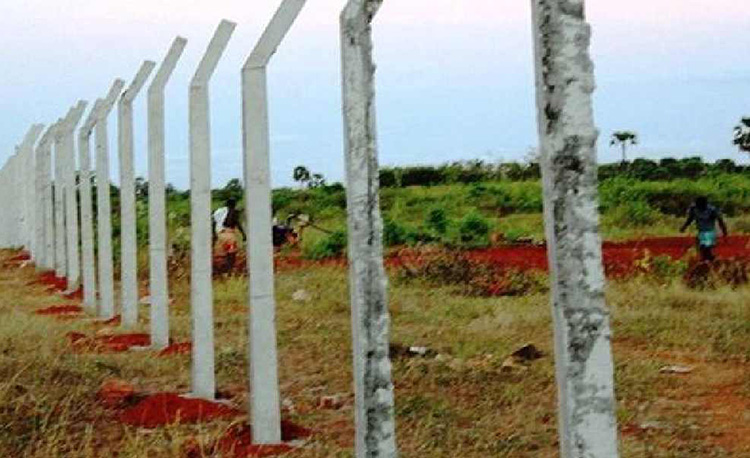
The Army, last week, vacated an area, within the wartime high security zone in the Jaffna peninsula. The Defence Ministry said that an extent of 187.56 acres of land, belonging to the Cement Corporation in Kankesanthurai, Jaffna, has been released by the military. The released land, located in Grama Niladhari Division J/233, Kankesanthurai West, within the Valikamam North (Tellippalai) Divisional Secretariat Division, had been utilised by the Sri Lanka Army since the middle of 1997.
The release of the 187.56-acre extent forms part of the initiative to make State land available for the proposed investment zone in Kankesanthurai, thereby facilitating future investment and economic development in the area.
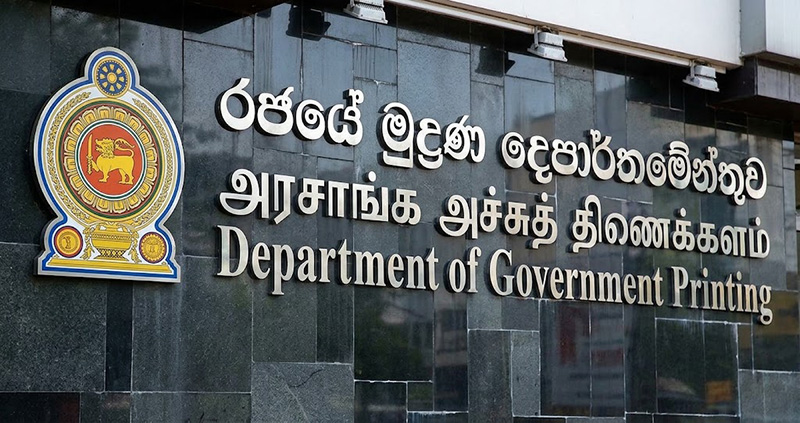
A complaint has been lodged with the Colombo Fraud Investigation Bureau against the Government Printer and the Secretary to the Ministry of Media regarding the online release of falsified documents bearing a forged Speaker’s certificate.
Attorney-at-Law Aruna Laksiri has lodged a complaint with the Colombo Fraud Investigation Bureau requesting legal action against the Government Printer of the Department of Government Printing (No. 118, Dr. Danister de Silva Mawatha, Colombo 08), Prasanna Jayaratne, and the Secretary to the Ministry of Mass Media (Asidisi Medura, 163, Kirulapone Mawatha, Polhengoda, Colombo 05), Dr. Anil Jasinghe.
The complaint alleges the commission of offences by forging and uploading falsified documents online using a forged Speaker’s certification, failure to perform statutory duties, and misappropriation of public property.
The complaint states that a copy of the English translation of the 22nd Amendment to the Constitution was downloaded and printed from the official website of the Government Printing Department (www.documents.gov.lk), which operates under the Ministry of Mass Media. On its outer cover and on page 1, the text “certified on 25th of September, 2026” is inscribed inside brackets.
The complaint pointed out that the Speaker has certified an English translation. Under Articles 23, 79, 83, and 80 of the Constitution, Parliament enacts laws and the Speaker certifies bills strictly in the Sinhala and Tamil languages; under the Constitution, therefore the Speaker cannot apply such certification to an English translation.

Showers or thundershowers will occur at several places in the most part of the island after 1.00 p.m

Geneva takes up Sallay’s case and govt. ignores opportunity to answer accusations

Section of wartime KKS High Security Zone vacated to facilitate economic development in the area

Lawyer lodges complaint against Govt. Printer, Media Ministry Secy.

Sri Lankan troops in joint anti-terrorist exercise in Russia

Nine Indian poachers brought to KKS with their boat

‘Dates have the highest sugar content to fight Coronavirus’

Sunday Island 27 December – Headlines

#SundayIsland 17th December – Headlines

Sunday Island – 28th March

Sunday Island Headlines – 21 March

Sunday Island – 21st February – Headlines
-

 Latest News6 days ago
Gold winner Tharanga gets brand-new Honda Vezel from SLAAJ
-

 Features6 days ago
Why Sri Lanka needs an Inclusive Civic Nationalism – urgently
-

 News5 days ago
US-assisted ‘Ice’ detection: NPC to examine IGP’s move to transfer drug-busting team
-

 Features7 days ago
Thailand’s biggest new global star …
-

 News7 days ago
First cases taken up by SC after enactment of 22A dismissed
-

 News6 days ago
Civil society activist accuses govt. of favouring Ven. Gnanasara
-

 Editorial4 days ago
Colombo Port drug bust: The plot thickens
-

 Editorial7 days ago
Aftershocks of 22A