
Latest News
Starc six-for, Boland hat-trick consign West Indies to 27 all-out and 0-3 defeat


There was a feeling that the stars had aligned for Mitchell Starc, playing his 100th Test with the pink ball he has so often dominated with, but few could have imagined the carnage that unfolded on the third day at Sabina Park as he claimed three wickets in his first over and the quickest five wicket haul in history including his 400th.
Yet that was not the end of it. Scott Boland claimed a hat-trick, removing Justin Greaves, Shamar Joseph and Jomel Warrican, leaving West Indies 26 for 9 and in danger of equaling the lowest ever Test total – made by New Zealand against England in 1955. They edged past it courtesy of a Sam Konstas misfield in the gully, but only by one run when Starc ended the text next ball to finish with a career-best 6 for 9. West Indies were all out in 14.3 overs.
Starc’s incredible performance propelled Australia to a 176-run victory and a 3-0 series margin after they had set West Indies 204 for victory in another match dominated by the quick bowlers. Alzarri Joseph, with a career-best 5 for 27, and Shamar shared nine wickets as Australia’s last four wickets fell for 22 runs but that was nothing compared to what followed.
Starc produced one of the great opening overs. He removed John Campbell first ball, the fourth time in his career he had struck with the opening delivery of an innings, when the left-handed edged a perfect outswinger to substitute wicketkeeper Josh Inglis who was standing in for the concussed Alex Carey.
Four balls later, Kevlon Anderson shouldered arms as the ball swung back to strike his shin in front of middle stump yet he reviewed the plumbest of lbws. Next delivery, another one arched back between Brandon King’s bat and pad to demolish the stumps. It was the sixth time in Test history a team had been 0 for 3.
Mikyle Louis survived the hat-trick ball at the start of Starc’s second over, but fittingly his 400th wicket came with another trademark inswinger as he trapped Louis lbw becoming the fourth Australian bowler to the landmark after Shane Warne, Glenn McGrath and Nathan Lyon.
The extraordinary scenes continued when, two balls later, he added Shai Hope lbw to bring up a five-wicket haul in just 15 deliveries, the fastest from the start of an innings – beating the previous record of jointly held by Ernie Toshack, Stuart Broad and Scott Boland by four deliveries.
Starc’s monopoly ended when Josh Hazlewood had Roston Chase caught behind to leave West Indies on a scarcely believable 11 for 6. In the eighth over, Greaves became the first batter into double figures as he and Alzarri managed to reach the tea interval which at one stage had been in doubt.
After the interval, Boland got into the act as Greaves edged to slip and Shamar was lbw via the DRS. Then, with the hat-trick delivery, he speared one through Warrican. Few would have bet against four-in-four, but Starc ended with the honour of wrapping up one of the wildest passages of play imaginable.
The ball had dominated from the very start of the day when Cameron Green shouldered arms to one from Shamar, which shaped back to cannon into off stump. Green had played superbly the previous evening to given Australia a cushion for the fourth innings, although in the end they didn’t come close to needing it.
Shamar took his series tally to 22 wickets at 14.95, the most for a West Indies bowler against Australia since Courtney Walsh in 1999, but not long later there was only one quick bowler being talked about.
Brief scores:
Australia 225 in 70.3 overs (Steven Smith 48, Cameron Green 46; Shamar Joseph 4-33, Justin Greaves 3-56, Jayden Seales 3-59) and121 in 37 overs (Cameron Green 42; Alzarri Joseph 5-27, Shamar Joseph 4-34) beat West Indies 143 in 52.1 overs (John Campbell 36; Scott Boland 3-34) and 27 in 14.3 overs (Justin Greaves 11; Mitchell Starc 6-9, Scott Boland 3-2) by 176 runs
[Cricinfo]

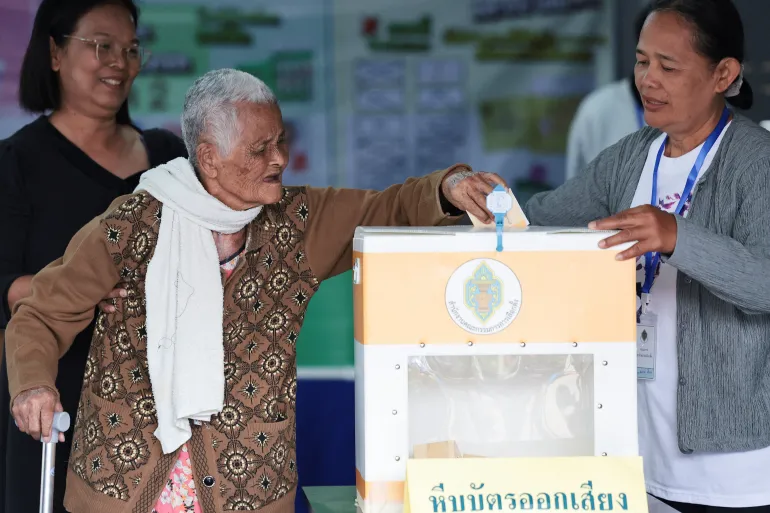
Thailand votes in a closely watched general election, with progressive reformers and military-backed conservatives vying for control in a country that has cycled through three prime ministers in as many years.
Polling stations opened at 8am local time (01:00 GMT) on Sunday and are set to close at 5pm (10:00 GMT).
While more than 50 parties are contesting the polls, only three – the People’s Party, Bhumjaithai, and Pheu Thai – have the nationwide organisation and popularity to gain a winning mandate.
With 500 parliamentary seats at stake and surveys consistently suggesting no party is likely to win an outright majority, coalition negotiations appear inevitable. A simple majority of elected lawmakers will select the next prime minister.
The progressive People’s Party, led by Natthaphong Ruengpanyawut, is favoured to win the most seats.
But the party’s reformist platform, which includes promises to curb the influence of the military and the courts, as well as breaking up economic monopolies, remains unpalatable to its rivals, who may freeze it out by joining forces to form a government.
The party is the successor to the Move Forward Party, which won the most seats in the House of Representatives in 2023, but was blocked from power by a military appointed Senate and later dissolved by the Constitutional Court over its call to reform Thailand’s strict royal insult laws.
The Bhumjaithai headed by caretaker Prime Minister Anutin Charnvirakul, is seen as the main defender and preferred choice of the royalist-military establishment.
Anutin has only been the prime minister since last September, after serving in the Cabinet of former Prime Minister Paetongtarn Shinawatra, who was forced out of office for an ethics violation over her mishandling of relations with Cambodia. Anutin dissolved parliament in December to call a snap election after he was threatened with a no-confidence vote.
He has centred his campaign on economic stimulus and national security, tapping into nationalist fervour stoked by deadly border clashes with neighbouring Cambodia.
The third major contender, Pheu Thai, represents the latest incarnation of political movements backed by jailed former Prime Minister Thaksin Shinawatra, and trades on the populist policies of the Thai Rak Thai party, which held power from 2001 until 2006, when it was ousted by a military coup.
The party has campaigned on economic revival and populist pledges like cash handouts, nominating Thaksin’s nephew, Yodchanan Wongsawat, as its lead candidate for prime minister.
Sunday’s voting also includes a referendum asking voters whether Thailand should replace its 2017 military-drafted constitution.
Pro-democracy groups view a new charter as a critical step towards reducing the influence of unelected institutions, such as the military and judiciary, while conservatives warn that it could lead to instability.
Some 53 million people are eligible to vote in today’s [Sunday’s] election, and the Election Commission said more than 2.2 million voters had already cast ballots during an early voting period that began on February 1.
[Aljazeera]
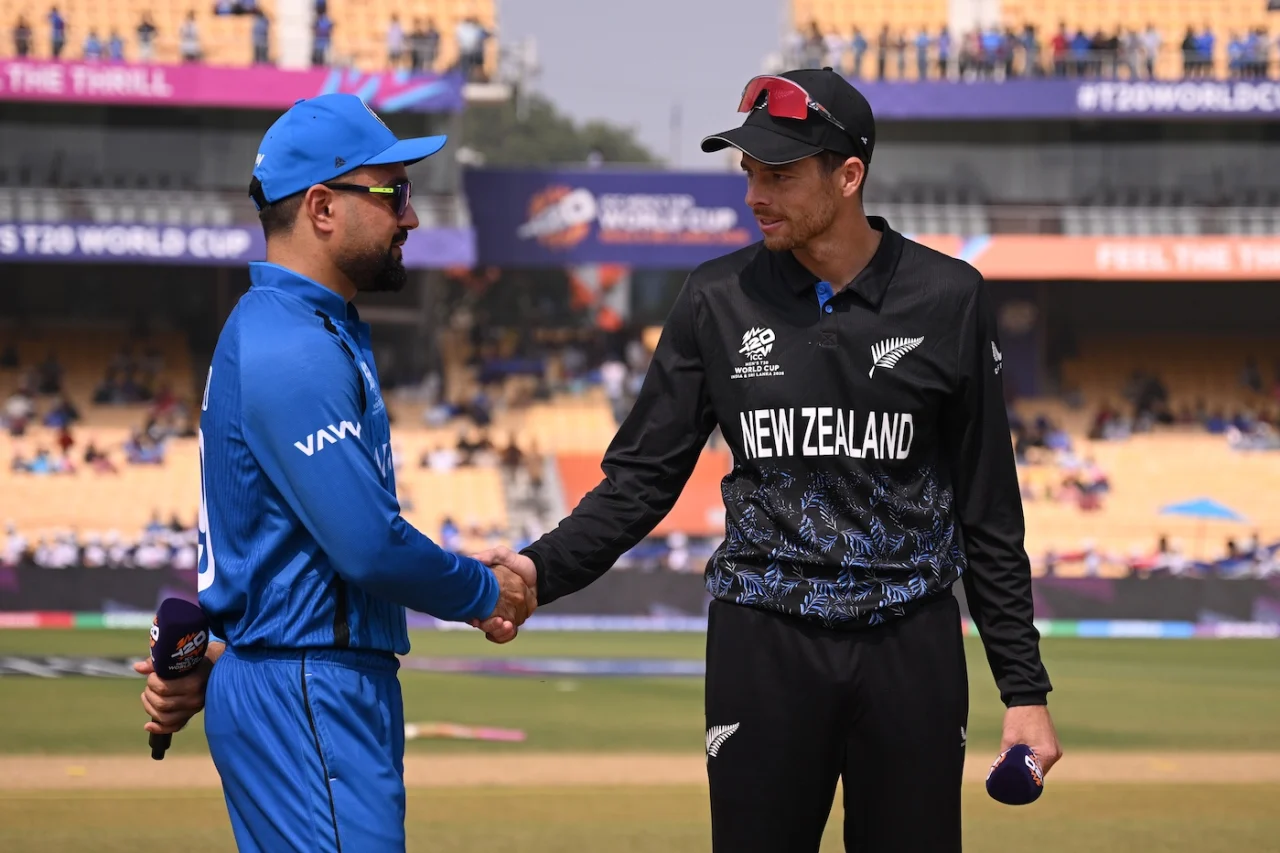
Afghanistan won the toss and elected to bat first in the 2026 T20 World Cup Group D encounter against New Zealand..
New Zealand XI Finn Allen, Tim Seifert (wk), Rachin Ravindra, Glenn Phillips, Mark Chapman, Daryl Mitchell, Mitchell Santner (capt), James Neesham, Matt Henry, Lockie Ferguson, Jacob Duffy
Afghanistan XI Rahmanullah Gurbaz (wk), Ibrahim Zadran, Sediqullah Atal, Darwish Rasooli, Azmatullah Omarzai, Gulbadin Naib, Mohammad Nabi, Rashid Khan (capt), Fazalhaq Farooqi, Ziaur Rahman, Mujeeb Ur Rahman
Latest News
‘I’d like to play on flat tracks’ – Shanaka links Sri Lanka’s batting woes to spin-friendly pitches at home
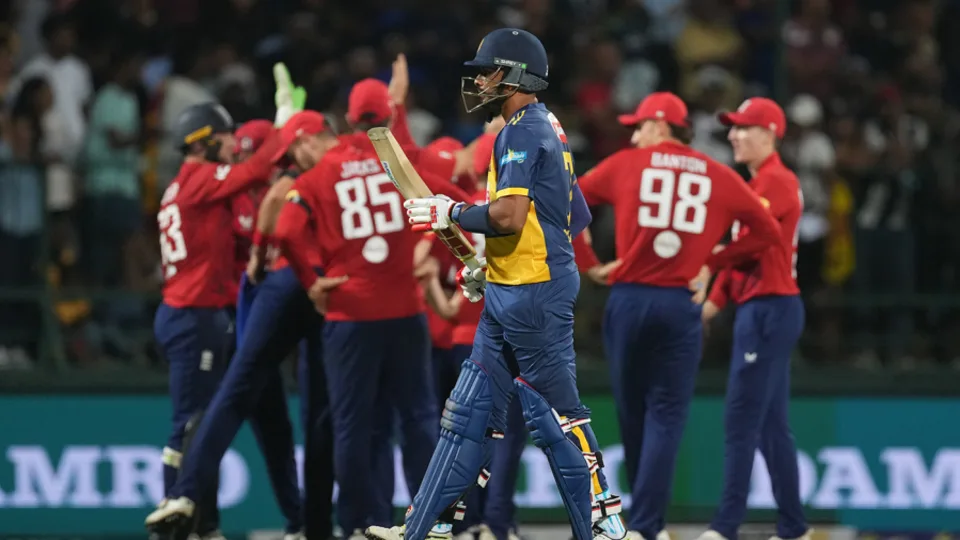
Dasun Shanaka’s got 99 problems, and the pitch is also one. If cricket writers misappropriating Jay Z lyrics from 22 years ago is getting kind of old, so is the complaint, sadly. For years now, Sri Lanka’s captains have been campaigning to get more batting-friendly tracks on the island. For years now, surfaces have been given to substantial spin, depressing totals while envenoming spinners through the middle overs, especially.
At the World Cup, though, a struggling Sri Lankan captain hopes his batters can perform on what he thinks will be better tracks. Sri Lanka arrive at this tournament fresh from a 3-0 bruising at home at the hands of England. Shanaka’s own returns in that recent series were modest. His scores were 20 off 16, 1 and 4.
“I think in this World Cup the ICC has told the groundstaff that they have to leave a certain amount of grass on the pitch,” Shanaka said. “Because of that, I think the number of dismissals will fall. Eventually, I’d like to get a good track on which to show how I can bat, because it’s harder to showcase my striking ability on turning wickets. Lots of people see me negatively because of this.”
In fact, there is no actual official requirement from the ICC regarding length of grass – it is only that there is greater pressure to produce surfaces conducive to good cricket (read: batting tracks) in global events.
In any case, Sri Lanka’s problems at home go back far further than the series against England, however. Since the start of 2024, Sri Lanka have lost 13 and won only nine T20Is at home. Previous captains – Charith Asalanka and Wanindu Hasaranga among them – had asked for flatter decks. But then Sri Lanka were having success on big turners in the ODI format.
“Recently, we’ve had a lot of issues with the pitches,” Shanaka said. “I know the middle order hasn’t performed well. If you want to know why that happened, you should look at the kind of pitches we played on. You’ll be able to figure out why the strike rates are low and we’re losing wickets.
“I was only recently reappointed as the captain. I didn’t know what the plan was before that. In my opinion I’d like to play on flat tracks. Yes, we have some good spinners in our side, but at the same time other teams also have quality spinners. I think giving 50-50 wickets will help in future. I’d like to bat on flat tracks.”
Although Shanaka expects Sri Lankan surfaces to be better for batting, there may still be a gap between Indian tracks and Sri Lankan ones in this World Cup. Since the start of 2020, the T20I strike rate in India is 143 (the highest in the world), compared with 123 in Sri Lanka.
“If you look at India you will see how good the pitches they play on are,” Shanaka said. “Some people have a problem with India scoring so many runs and ask why Sri Lanka can’t do the same. It totally depends on conditions. You’ll be able to assess what the numbers in the World Cup are and what the previous numbers were. I think this will be a good tournament for our batters.”
[Cricinfo]

Thailand votes as reformists, conservatives vie for power

Afghanistan to bat first against New Zealand

‘I’d like to play on flat tracks’ – Shanaka links Sri Lanka’s batting woes to spin-friendly pitches at home

Washington Post chief executive steps down after mass lay-offs

Australia’s opposition coalition reunites after row over hate-speech laws

Showers may occur in the Western, Uva and Sabaragamuwa provinces and in Matale, Nuwara-Eliya, Ampara, Batticaloa, Galle, Matara and Polonnaruwa districts

‘Dates have the highest sugar content to fight Coronavirus’

Sunday Island 27 December – Headlines

#SundayIsland 17th December – Headlines

Sunday Island – 28th March

Sunday Island Headlines – 21 March

Sunday Island – 21st February – Headlines
-

 Business1 day ago
Zone24x7 enters 2026 with strong momentum, reinforcing its role as an enterprise AI and automation partner
-

 Business5 days ago
SLIM-Kantar People’s Awards 2026 to recognise Sri Lanka’s most trusted brands and personalities
-

 Business6 days ago
All set for Global Synergy Awards 2026 at Waters Edge
-

 Business1 day ago
HNB recognized among Top 10 Best Employers of 2025 at the EFC National Best Employer Awards
-

 Business5 days ago
API-first card issuing and processing platform for Pan Asia Bank
-

 Business1 day ago
GREAT 2025–2030: Sri Lanka’s Green ambition meets a grid reality check
-

 Editorial3 days ago
All’s not well that ends well?
-

 Features3 days ago
Phew! The heat …