
Business
SriLankan Airlines intensifies survival strategy


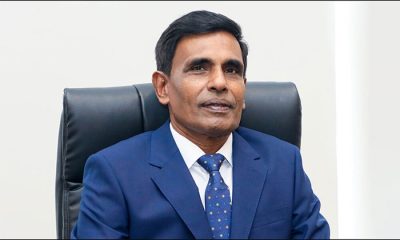
SriLankan Airlines has explored all business opportunities to keep the Airline afloat in the backdrop of a dramatic global drop in demand for passenger air transport, SriLankan Airlines Chairman Ashok Pathirage said issuing a press statement yesterday.
“Globally the airline industry has experienced a decrease in capacity of approximately 60% to 80% due to the Covid-19 pandemic with containment measures in place. SriLankan Airlines experienced a revenue reduction of 70% during the financial year 2020/21 compared to the year before,” he states.
Following are some excerpts from SriLankan Airlines chairman’s statement.
 “We have introduced several measures to ensure every function of the business remain fully operational to grab every business opportunity. As new variants emerge, we are carefully monitoring the situation and we will constantly reassess our strategic plans and adjust accordingly.”
“Despite ongoing border restrictions and airport closures, we have continued to fulfill our obligations as the national carrier by sustaining global trade and repatriating stranded Sri Lankans; 74,032 passengers were repatriated from 229 flights between April 2020 to March 2021. From April to June 2021, 35,612 passengers were repatriated using our scheduled flights. We also adapted to meet the increased demand for transportation of air cargo, resulting from the suspension of flights to Sri Lanka by other carriers.”
“We will be resuming flights to the Russian capital, Moscow this July, with a weekly scheduled flight between BIA and Moscow’s Domodedovo Airport. Using an Airbus A330 configured for 269 economy and 28 business class seats, we will not only facilitate travel but will be the impetus for building closer bilateral business connections between the two countries.”
“Despite the massive impact on global tourism, the airline opted to strategically steer into cargo operations. Our existing fleet was sufficient to cater to cargo operation and the limited passenger operations. The wide-body fleet was used prominently for cargo operations while the majority of the narrow-body fleet was kept grounded due to lack of utilization for passenger services. The expansion of our cargo operations strategically reduced the adverse effects of passenger travel.”
“The present schedule consists of a network optimizing passenger and cargo contributions to over 29 destinations. New destinations in the present schedule include Sydney, Incheon, and Nairobi with Frankfurt and Moscow to commence by the end of July. Over 60% of the uplifted capacity was allocated to local exports to ensure a continuous foreign currency inflow to Sri Lanka in the hope of strengthening the domestic export segment. SriLankan Airlines operated 3,039 scheduled flights and 165 cargo charters/ non-scheduled operations for uplifting Personal Protection Equipment (PPE) and essential goods connecting the Far East, Africa, the Indian Subcontinent, Europe, and the Middle East since the onset of the Covid-19 pandemic from April 2020 to June 2021. Cargo Flights carrying a tonnage of 77M Kgs supporting the national economy.”
“We managed to bring down the cash burnout substantially by approximately 44% through re-negotiating aircraft lease contracts to achieve both lease rent reductions and deferrals, employee-related cost savings, implementing a Voluntary Retirement Scheme (VRS), restructuring the organization to make it leaner, cross utilized the existing cadre and job amalgamations, ceasing external recruitments other than for operationally critical vacancies, reviewing unproductive policies and practices. However, the cash burn is forecasted to continue until at least the end of this year, as we expect continued severe revenue losses from the aviation industry.”
We have taken many steps precautionary measures to ensure the safety of passengers when flying with us. Our efforts were recognised by Airline Passenger Experience Association (APEX) with a diamond rating, and we pride ourselves as the only airline to receive such a rating in South Asia.”
“We expect that many countries will open their borders for air travel by the end of the year, enabling us to recommence our commercial passenger operations and begin our journey towards recovery. We will constantly reassess our plans based on the evolving nature of the crisis with appropriate adjustments. The future of SriLankan Airlines lies in rebounding passenger travel both in numeric and caliber. All our periodic targets are contingent on international air travel being restored,” says Ashok Pathirage.

Business
Cabinet nod to accept increased Loan Grant provided by the Asian Development Bank under Policy Based Loan Facilities – 2026


Approval of the Cabinet of Ministers was granted at their meeting held on 16.03.2026 to obtain United States Dollars 380 million from the policy – based loan facilities of the Asian Development Bank in the year 2026.
United States Dollars 100 million out of it is allocated for Trade, Investment and Industries Development Programme – Sub Programme 1. However, amidst the economic uncertainty resulting from the current Middle East crisis and the climatic tragedies, the Asian Development Bank has agreed to assist
by increasing a supplementary financing package of United States Dollars 100 million so that it will beMincreased up to United States Dollars 200 million.
Accordingly, the Cabinet of Ministers approved the resolution furnished by the President in his capacity as the Minister of Finance, Planning and Economic Development to take further measures to obtain the said loan grant.

Sri Lanka is not quite ready to join the Regional Comprehensive Economic Partnership (RCEP), since it is lacking sufficient development, Trade Ministry Secretary K.A. Vimalenthirarajah said.
‘At present the Trade Ministry is establishing Sri Lanka’s readiness to join RCEP, which consists of 15 countries, through several channels, Vimalenthirarajah said at a recent round table discussion titled, ‘Sri Lanka’s Pathway to RCEP and the Emerging Global Trading Order’, organized by the Pathfinder Foundation and held at the Colombo Club, Taj Samudra.
‘Sri Lanka is actively accelerating its compliance efforts to join the 15-nation RCEP having submitted its required accession questionnaire in early 2026, he explained.
Vimalenthirarajah added: ‘The Cabinet has established a high-level policy and working committee and also obtained some technical assistance from multilateral partners because complying with RCEP requirements is challenging. Subsequently, this body responded to the follow-up questions that came up and had discussions with RCEP representatives and it expects more follow-up questions with regard to Sri Lanka’s readiness to join RCEP.
‘Sri Lanka has also secured political and diplomatic support from current RCEP members, including Australia, New Zealand, and Indonesia, to facilitate its entry process.’
Meanwhile, state officials, including Industries and Entrepreneurship Development Deputy Minister Chathuranga Abeysinghe, are implementing key economic structural reforms, a new tariff policy, and transparent investment criteria required by the bloc. Because formal accession protocols for RCEP are still being finalized, Sri Lanka is also simultaneously negotiating bilateral trade and investment agreements with regional members to accelerate integration.
Abeysinghe, participating virtually in the event said that Sri Lanka cannot achieve sustained export growth and attract large-scale investment by relying solely on its domestic market. ‘As a small economy, the country’s future lies in deeper integration with regional and global value chains. RCEP connects 15 economies, including Japan, South Korea, Australia, New Zealand, China and ASEAN member states, collectively accounting for nearly 30% of global trade, he explained.
Abeysinghe added: ‘Access to such a market would create new opportunities for Sri Lankan businesses, particularly the country’s Small and Medium Enterprises (SMEs), which currently contribute only around 10 percent to national exports.
‘However, Sri Lanka is at least a decade behind in implementing many of the reforms required to fully participate in modern global trade. Recognizing this challenge, the government is now moving forward with several critical reforms: A new tariff policy to improve competitiveness and eliminate barriers to trade, transparent and predictable investment criteria, investment facilitation reforms to improve the ease of doing business, new legislation including the Public-Private Partnership (PPP) Act and SOE reforms to strengthen investor confidence and measures to improve investment protection and unlock new sources of capital, including venture capital and angel investment funds.
‘Sri Lanka’s exports currently stand at approximately US$ 17 billion and have grown only gradually over the years. Expanding market access through bilateral and multilateral agreements, while continuing domestic reforms, is essential if the country is to achieve its long-term economic ambitions.’
By Hiran H Senewiratne

In a landmark development for Sri Lanka’s organic spice sector, Pussalla Agri Ventures has been awarded both EU Organic and USDA Organic certifications for its premium Ceylon cinnamon products. The certifications were officially conferred at Control Union Sri Lanka, signaling a major milestone in the company’s strategic transformation toward fully certified organic operations.
The recognition strengthens Pussalla Agri Ventures’ position as an emerging exporter of certified organic products, with its flagship offering, organic Ceylon cinnamon (Cinnamomum verum, also known as Cinnamomum zeylanicum), cultivated in Sri Lanka’s traditional cinnamon-growing regions.
Notably, the dual certification opens doors to some of the world’s most lucrative and compliance-driven organic markets, including the European Union and the United States.
Pussalla Agri Ventures began its structured transition into organic cinnamon cultivation several years ago, building a fully integrated system covering cultivation, processing, and value addition. The company currently manages extensive cinnamon cultivation lands and operates under strict organic agricultural principles, ensuring compliance with global certification standards.
These certifications, issued through Control Union Sri Lanka, validate that the company’s farming and processing systems meet rigorous international requirements, including restrictions on synthetic chemicals, comprehensive traceability controls, and environmental sustainability practices. These certifications add to an existing portfolio that already includes SL GAP, Food GMP, and Cosmetic GMP certifications.
Company representatives described the achievement as a “milestone” in the Pussalla organic journey, one that paves the way for expanded access to premium export markets in Europe and the United States. According to them, the certifications are expected to enhance buyer confidence, particularly among health-conscious consumers and clean-label food brands.
Pussalla Agri Ventures emphasised that its organic cinnamon is sourced entirely from its own cultivated estates.
“This estate-to-exporter integration ensures full control over quality, traceability, and processing integrity. The company’s model allows cinnamon to be harvested, processed, and packed under continuously monitored conditions, maintaining strict alignment with international organic standards,” they noted.
Speaking further they said:
“Sri Lanka supplies the majority of the world’s True Ceylon Cinnamon, a spice prized for its delicate aroma, low coumarin levels, and reputed medicinal properties. The growing global demand for certified organic spices has created new opportunities for local producers who meet international compliance standards. Pussalla Agri Ventures’ certification achievement places it among a select group of Sri Lankan exporters adopting globally recognised organic systems, thereby enhancing the country’s reputation in high-value spice markets.”
“As organic food sales continue to rise in North America and Europe, certifications such as these are becoming essential rather than optional. For Pussalla Agri Ventures, the journey from conventional to certified organic is not merely a compliance exercise but a strategic repositioning aimed at long-term sustainability and premium pricing power.”
By Sanath Nanayakkare

Report on the Final Budgetary Condition (Annual Report) – 2025 submited to parliament
Cabinet nod to accept increased Loan Grant provided by the Asian Development Bank under Policy Based Loan Facilities – 2026
Submission of Revenue Protection Order Prepared under the Provisions of the Revenue Protection Act No. 19 of 1962 to the Parliament for its approval.
Resettlement of unauthorized settlers affected by the Land Acquisition process for the implementation of Phase III of the Baseline Road Extension Project
Cabinet approves project to modernize school hostel facilities during the 2026–2028 period at an estimated cost of Rs. 1,008 million
New National Action Plan for Human-Elephant Conflict Management to be drafted

‘Dates have the highest sugar content to fight Coronavirus’

Sunday Island 27 December – Headlines

#SundayIsland 17th December – Headlines

Sunday Island – 28th March

Sunday Island Headlines – 21 March

Sunday Island – 21st February – Headlines
-

 News5 days ago
CIABOC summons Yoshitha over his participation in British Navy training programme
-
 News7 days ago
Local firms move millions of dollars overseas for phantom imports: Govt.
-

 Midweek Review7 days ago
July 09: An inexcusable overall security failure and exceptional contingency plan
-

 Sports2 days ago
Tharanga set for high-profile javelin clash in Ostrava
-

 News4 days ago
Commonwealth lawyers urge Lanka to uphold rule of law
-

 News5 days ago
Justice Minister responds to social media claims he represented Easter Sunday ringleader
-

 Features3 days ago
Politics of protected species
-

 News7 days ago
AI raises concerns over arrest of Sallay and rapper under PTA